
How to choose what to bet on
The best longevity interventions are the ones with the strongest evidence that they work, and that they work for you. "Work" means more than extra years. The real goal is to maximize quality of life × lifespan: how long you live multiplied by how well. An intervention that gives you more energy, strength, mood or mental sharpness counts even if it adds no years, and one that adds a year spent frail counts a lot less. Instead of asking "does this work?", let's ask a sharper question: how strong is the evidence, and what kind of evidence is it? We score every candidate against four tests.
- Extending human lifespan. Did it lower all-cause mortality in randomized controlled trials (RCTs), the gold standard of clinical research? If the only evidence is a consistent association with reduced mortality in large observational studies, it drops a level.
- Longer mouse lifespan, backed by humans. Did it extend lifespan in mice, with supporting signals from short-term human RCTs (closer to causation) or retrospective analyses (association only)?
- Treat your biomarkers. Does it fix a lab value or biomarker that sits outside its ideal range? A better number shows a treatment is doing its job, not necessarily that it will lengthen your life.
- Track your N=1. Does it work for you, specifically? Statistics describe populations, not people. Measure before and after, change one thing at a time, and watch how you feel, your energy and any side effects.
The first two tests place an intervention on the pyramid below. The best-proven interventions form its base (Level 1), and the most speculative sit at its narrow peak (Level 4). The last two tests apply at every level and decide whether an intervention belongs in your routine. Each step up trades certainty for upside: Level 1 has randomized mortality data, while Level 4 has little more than a mechanism and a mouse. Within each level, a summary table ranks the interventions by expected payoff in both lifespan and quality of life, and the sections follow that order, strongest bets first.
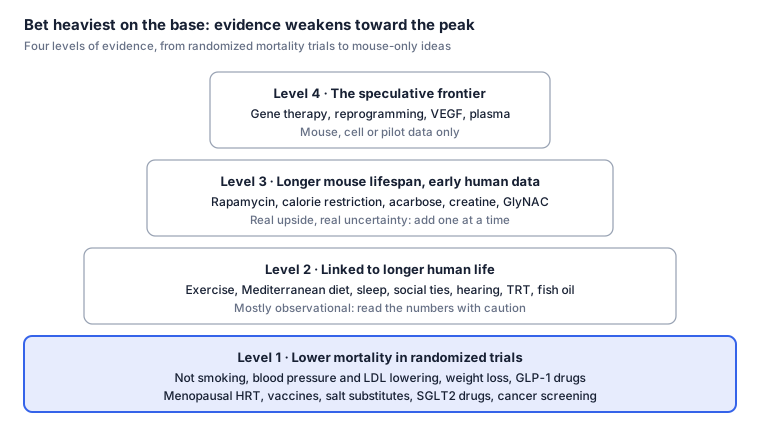
The short version: fix the Level 1 basics that apply to you, and build Level 2 habits around them. If you're highly adventurous or desperate, consider Level 3 bets, one at a time. Leave Level 4 to the researchers for now. The last section, "What to do with this data", turns this into seven steps, so you can read the plan first and come back for the evidence.
How to read the numbers
A hazard ratio of 0.80 means 20% lower risk. A ratio of 1.00 means no difference. Each result also comes with a 95% confidence interval, the range of values the data are consistent with. When that range crosses 1.00, the result is not statistically significant: I call it a trend, but it may be nothing.
Observational numbers usually overestimate. Healthier, wealthier and more conscientious people adopt good habits, so association-only results usually overstate what you will get by adopting the habit yourself.
Benefits do not simply add. Two drugs that each cut mortality by 20% through the same pathway, such as LDL, will not cut it by 40% together. At best, effects are multiplicative: the second drug cuts 20% of the risk that is left, for 36% in total. Often they overlap.
A note on the mouse data
The most rigorous mouse results come from the Interventions Testing Program (ITP), which tests compounds in genetically diverse mice at three independent labs at once. I mark those results "ITP". Single-lab studies ("not ITP") are still worth knowing, but they replicate less often. Many ITP effects appear in only one sex, usually males, which is a reminder that biology, not just dose, decides who benefits.
Start with your doctors
None of this is medical advice, and several of these interventions are prescription drugs with real risks. See a family doctor or primary care provider (PCP) once a year; that visit is where most of Level 1 gets checked and treated. And if you are at high risk of a heart attack, Rule #1 is to find a good cardiologist and listen to them.
Level 1 – Lower mortality in human clinical trials
These are the strongest bets on the board. Each has randomized-trial evidence for lower mortality, usually reinforced by large observational datasets and sometimes by mouse data. Some of these trials enrolled specific groups, such as people with diabetes, kidney disease or heart disease. Check whether you resemble the people who were studied: a drug that saves lives in heart patients has not been shown to lengthen life in healthy people. The interventions are ranked below by expected payoff for a typical adult, so skip the ones that don't apply to you.
| # | Intervention | Lifespan evidence | Quality-of-life payoff |
|---|---|---|---|
| 1 | Not smoking | Quitting at 35–44 wins back about 9 years | Easier breathing, fewer cancers |
| 2 | Lower blood pressure | 27% fewer deaths in SPRINT | Fewer strokes, better brain health |
| 3 | Lower LDL cholesterol | 10% fewer deaths per 39 mg/dL drop | Fewer heart attacks and strokes |
| 4 | Lose excess weight | About 15% fewer deaths in lifestyle trials | Easier movement, less diabetes |
| 5 | GLP-1 drugs | 20% fewer cardiac events in heart disease (SELECT) | Large weight loss; protect your muscle |
| 6 | Menopausal hormone therapy | 30% fewer deaths when started within 10 years of menopause | Relieves hot flashes, protects bone |
| 7 | Vaccines | Flu shot after a heart attack: deaths 4.9% → 2.9% | Avoids flu and shingles; may protect the brain |
| 8 | Salt substitutes | 12% fewer deaths in SSaSS | Fewer strokes |
| 9 | SGLT2 inhibitors | Up to 32% fewer deaths in diabetes, kidney or heart disease | Protects the heart and kidneys |
| 10 | Targeted cancer screening | 6.7% fewer deaths with lung CT in heavy smokers | Finds cancer earlier |
1. Not smoking
The single biggest lever is the one a longevity essay usually takes for granted. Smokers lose more than 10 years of life expectancy, and quitting wins most of it back: about 10 years for those who quit at 25–34, 9 at 35–44, 6 at 45–54 and 4 at 55–64. It also passes the randomized test. In the Lung Health Study, smokers assigned to an intensive cessation program had about 15% lower all-cause mortality over 14.5 years than those given usual care, even though only 22% of them quit for good. If you smoke, quitting outranks everything else on this list.
2. Lowering blood pressure (ACE inhibitors & ARBs)
Lowering high blood pressure is one of the best-proven ways to live longer; the open question is how low to go. In the SPRINT trial, targeting systolic pressure (the top number) below 120 mm Hg instead of 140 mm Hg cut all-cause mortality by 27% over about three years, and the intensively treated group showed better brain health. A later projection estimated it would add 2.9 years of life for a 50-year-old. In 2024, the ESPRIT trial in China extended the result to people with diabetes or a past stroke, whom SPRINT had excluded: deaths fell by 21%.
Two cautions. First, SPRINT measured pressure with an automated cuff after five minutes of quiet rest, which reads lower than a typical office check, so its 120 is stricter than it sounds. Second, its intensively treated group had more episodes of low blood pressure, fainting, electrolyte problems and kidney injury. So guidelines don't set 120 for everyone. The 2025 US guideline asks for under 130/80 and encourages going below 120 systolic, while the 2024 European one aims for 120–129 if treatment is tolerated.
ACE inhibitors and ARBs are two classes of blood pressure drugs. For people with high blood pressure, ACE inhibitors cut all-cause mortality by about 10%, a benefit the same analysis did not find for ARBs. In the ITP, two ACE inhibitors raised average mouse lifespan: captopril by 5% and enalapril by a non-significant 2.3%. A statin–ARB pair failed in a 2026 cohort. Like statins, ACE inhibitors are associated with better cancer outcomes.
3. Lowering LDL cholesterol (statins)
For LDL cholesterol, the optimal level appears to be as low as possible, held low from as early in life as possible. The March 2026 US guideline sets goals by risk: under 100 mg/dL for people at moderate risk, under 70 for high risk, and under 55 for heart patients at the highest risk. The payoff tracks how far LDL falls: across 26 statin trials with 170,000 people, each 1 mmol/L (about 39 mg/dL) drop cut major vascular events by 22% and all-cause mortality by 10%. In people with high cholesterol but no heart disease, statins cut deaths by 8% to 14%.
Newer drugs push LDL lower still. In VESALIUS-CV, evolocumab, an antibody that blocks a protein called PCSK9, cut first heart attacks and strokes by 25% in 12,257 high-risk people. Deaths fell from 9.7% to 7.9% over about five years, though that death result is formally preliminary.
Consider inherited risk and measure Lp(a) as well. It is a cholesterol-carrying particle, or lipoprotein, whose level is set by your genes, and it raises cardiovascular risk independently of LDL. Both the European Atherosclerosis Society and the 2026 US guideline recommend testing it at least once in every adult. There is no proven treatment yet: in September 2026, the first outcome trial of an Lp(a)-lowering drug, pelacarsen, missed its primary endpoint, and two more Lp(a) drugs should report outcome results around 2028–2029. For now, a high Lp(a) is a reason to push LDL and every other risk factor lower.
4. Weight loss
Excess fat, especially around the waist, is one of the most modifiable drivers of early death. The BMI linked to the lowest all-cause mortality sits between roughly 20 and 24, though after 65, being a little overweight carries no extra risk. Getting closer to that range pays off. In a meta-analysis of randomized lifestyle trials, an average loss of 5.5 kg cut all-cause mortality by about 15%. But in Look AHEAD, an intensive diet-and-exercise program for people with type 2 diabetes did not reduce heart attacks or strokes. Bariatric surgery is associated with 38% to 41% lower all-cause mortality, and in Sweden's SOS study, the closest thing to a trial, it added about three years of life.
The hard truth is that once someone becomes obese, lasting weight loss through diet and exercise alone is rare. Medication changes the math. In trials, tirzepatide produced about 22.5% weight loss and semaglutide about 17%. Both are GLP-1 drugs, which mimic a gut hormone that curbs appetite. A GLP-1 pill, orforglipron, was approved in April 2026, and the triple-hormone drug retatrutide reached up to 25% weight loss in its first large trial. Older, cheaper diabetes drugs help only at the margin: acarbose trims about 1.2 kg on average, and metformin about 2% of body weight.
5. GLP-1 drugs: semaglutide and tirzepatide
GLP-1 drugs are the first weight-loss medicines to pass test #1. An older one, liraglutide, had already cut deaths by 15% in type 2 diabetes. In SELECT, 17,604 adults with overweight or obesity and heart disease, but no diabetes, took weekly semaglutide or placebo. Semaglutide cut heart attacks, strokes and cardiovascular deaths by 20%, and deaths from any cause fell from 5.2% to 4.3% over about three years, though the death result was a secondary outcome. In FLOW, in people with type 2 diabetes and kidney disease, semaglutide cut serious kidney outcomes by 24% and all-cause deaths by 20%. In SURPASS-CVOT, tirzepatide matched the older GLP-1 drug dulaglutide on cardiac events and was linked to 16% fewer deaths from any cause, against an active drug rather than placebo.
The trade-off is lean tissue. In the STEP-1 trial, about 39% of the weight lost on semaglutide was lean mass, so pair these drugs with resistance training and enough protein. They also work only while you take them: a year after stopping, people had regained about two-thirds of what they lost. And they are not brain drugs, at least not yet: semaglutide did not slow early Alzheimer's disease in two large 2025 trials. No trial has yet shown lower mortality in obesity without heart disease or diabetes; the tirzepatide outcome trial SURMOUNT-MMO is due to finish around late 2027.
6. Menopausal hormone therapy (women)
Hormone therapy is the most effective treatment for hot flashes and night sweats, and it protects bone: in the Women's Health Initiative (WHI), it cut hip fractures by about a third. Whether it also lengthens life depends on timing. WHI, whose 2002 results made HRT use collapse, enrolled women with an average age of 63. Over 18 years, hormone therapy had no effect on all-cause mortality overall, but women who started at 50–59 had 31% lower mortality while on treatment. A Cochrane review of randomized trials found the same pattern: starting within 10 years of menopause meant 30% lower all-cause mortality and 48% less coronary heart disease, though with more blood clots. The review cautions that this benefit leans heavily on one Danish trial, DOPS.
The regimen decides the risks. In WHI's 20-year follow-up, estrogen alone, given to women without a uterus, cut breast cancer deaths by 40%, while estrogen plus the synthetic progestin MPA raised breast cancer by 28%. Estrogen with micronized progesterone showed no rise in breast cancer in a large French study. Oral estrogen raised the risk of blood clots by 58%, while patches and gels did not.
The brain is the open question: a Danish registry linked estrogen-progestin to 24% more dementia, while the KEEPS trial found no cognitive benefit or harm.
In November 2025, the FDA began removing the boxed warnings. If symptoms bother you and you are within 10 years of menopause, ask your doctor about transdermal estradiol (a patch or gel), with micronized progesterone if you have a uterus. A history of breast cancer, blood clots or stroke changes the math, and guidelines don't recommend hormones purely to prevent disease.
7. Vaccines: flu, shingles and RSV
The annual flu shot may be the cheapest intervention on this list, and one of the most underrated. The best randomized evidence comes from IAMI, in which people just hospitalized with a heart attack got a flu shot or a placebo: deaths over the next year fell from 4.9% to 2.9%. Observational studies average 43% lower mortality in vaccinated people, but that number is too good to be true: vaccinated seniors are less likely to die even before flu season starts, a sign that healthier people are the ones getting the shot.
Vaccines may also protect the brain. In Wales, eligibility for the shingles vaccine hinged on an exact date of birth. People born days apart were otherwise alike, but only some could get the shot, which made this a natural experiment close to a randomized trial. Over seven years, the older live vaccine cut new dementia diagnoses by about 20%, and a similar natural experiment in Australia found the same pattern. In US health records, the newer shingles vaccine (Shingrix) was linked to 17% more dementia-free time than the older one, and the RSV vaccine to 29% less time lost to dementia than the flu shot. Shingles itself is painful and can leave lasting nerve pain, so keeping your adult vaccines current is a cheap, low-risk bet on both the quality and the length of your life.
8. Salt substitutes
Swapping regular salt for a potassium-enriched substitute is one of the cheapest randomized wins on this list. In SSaSS, about 21,000 older villagers in rural China with high blood pressure or a past stroke were assigned to regular salt or a substitute that is part potassium chloride. Over almost five years, the substitute cut strokes by 14%, major cardiovascular events by 13% and deaths by 12%, and the 2025 US blood pressure guideline now recommends it. One caution: extra potassium is dangerous if you have kidney disease or take drugs that raise potassium, such as ACE inhibitors, ARBs or spironolactone, so check with your doctor first.
9. SGLT2 inhibitors
SGLT2 inhibitors make the kidneys spill glucose into the urine, and they protect the heart and kidneys well beyond what their glucose lowering would predict. In EMPA-REG OUTCOME, empagliflozin cut all-cause mortality by 32% in people with type 2 diabetes and heart disease. Dapagliflozin cut it by 31% in chronic kidney disease, with or without diabetes, and by 17% in heart failure. In the CANVAS program, canagliflozin's 13% reduction fell just short of significance.
The mouse data line up. In the ITP, canagliflozin extended lifespan by 14% in males with no effect in females, and the male gain held when treatment started at 16 months. Cell studies and case reports suggest early signals against kidney cancer and other cancers. The main side effects are genital yeast infections and, rarely, ketoacidosis, a risk that rises on very low-carb diets. Because the trials enrolled people with diabetes, kidney disease or heart failure, a healthy person taking one is making a Level 3 bet with a well-characterized drug.
10. Targeted cancer screening
Screening's case rests on cancer-specific deaths, and only one major trial has shown a drop in all-cause mortality. In NLST, annual low-dose CT in heavy smokers cut lung-cancer deaths by 20% and all-cause deaths by 6.7%, compared with chest X-rays. Colonoscopy is more nuanced. In NordICC, an invitation to a single colonoscopy cut colorectal cancer by 19% over 13 years, but only 42% of those invited went, and the 2026 update still showed no clear drop in colorectal cancer deaths.
A 2023 meta-analysis of trials with 2.1 million people puts this in perspective: no common screening test measurably extended overall lifespan, mainly because each one targets a small share of all deaths. The one borderline exception was sigmoidoscopy, a scope exam of the lower colon, at 110 extra days of life. Newer blood tests that look for many cancers at once have not passed the test either: in the 142,942-person NHS-Galleri trial, annual testing did not reduce advanced cancers, its main goal. So screen where your personal risk is high, based on age, family history and smoking history, rather than screening for everything.
A caveat before going further
Individuals vary enormously. A treatment that works for a population may not work for you, which is why tests #3 and #4 matter as much as the trials do. Make treatment decisions with your own labs in hand, and always work with a doctor.
Level 2 – Linked to longer human life
These interventions are tied to longer life in large observational studies, but randomized evidence on mortality is missing, mixed, or limited to narrower outcomes. Read their numbers with caution: observational data overstate benefits whenever healthier people are the ones who choose the habit. A lower level does not mean a lower priority, though. The top of this list, exercise, sleep and the people around you, may do more for the quality of your years than any pill, and exercise has strong trial evidence for preventing disability.
| # | Intervention | Lifespan evidence | Quality-of-life payoff |
|---|---|---|---|
| 1 | Exercise | About 40% lower mortality; trials mixed | Strength, mobility, independence |
| 2 | Mediterranean diet and fiber | 20–38% lower mortality; 30% fewer cardiac events in PREDIMED | Lower weight and blood pressure |
| 3 | Sleep, 7–8 hours | Short sleep linked to 12% higher mortality | Energy, mood, focus |
| 4 | Purpose and social connection | 50% higher odds of survival with strong ties | Enjoyment, motivation |
| 5 | Hearing aids, if you need them | 24% lower mortality in regular users | Easier conversation; may slow cognitive decline |
| 6 | TRT, for men with low testosterone | Heart-safe in TRAVERSE; lifespan unproven | Better sexual function and mood |
| 7 | Fish oil | 7–8% fewer cardiac deaths in trials | May ease depression |
| 8 | Vitamin D3 | Trend toward 5% fewer deaths | 22% fewer autoimmune diseases |
| 9 | Multivitamin | Trend toward 6% fewer deaths | May slow cognitive aging |
| 10 | Coffee | 12–16% lower mortality at 4–5 cups a day | Alertness |
| 11 | Sauna | 40% lower mortality in Finnish men | Relaxation |
| 12 | Green tea | 13–20% lower mortality | Low-risk habit |
| 13 | Natto | 10% lower mortality with fermented soy | Low-risk food |
| 14 | Cocoa extract | 27% fewer cardiac deaths in COSMOS | Low-risk treat |
| 15 | Garlic | 8–11% lower mortality | Modestly lower blood pressure |
| – | Aspirin (demoted) | 14% more deaths in healthy people over 70 | Bleeding risk |
| – | Alcohol (demoted) | No benefit over lifetime nondrinkers | Enjoyment only |
1. Exercise
Exercise is the clearest example of why association is not causation. People who combine aerobic and strength training have about 40% lower all-cause mortality. But the link runs both ways: exercise makes people healthier, and healthy people exercise more.
In randomized trials with about 50,000 participants, assigning people to exercise did not reduce all-cause mortality in older adults or in people with chronic conditions. Part of the reason is that many exercisers drifted off and many people in the control groups started exercising on their own. In Generation 100, 1,567 Norwegians in their seventies were randomized to high-intensity intervals, moderate training or the usual advice for five years. Mortality was 3.0% with intervals, 5.9% with moderate training and 4.7% with the usual advice, a trend favoring intervals that did not reach significance. And in a 30-year study of 22,750 Finnish twins, going from sedentary to moderately active was linked to about 7% lower mortality, with no further gain from more.
Where exercise clearly wins in trials is quality of life. In the LIFE study, a structured walking and strength program cut major mobility disability in sedentary older adults by 18%, the kind of gain that keeps people independent. It also helps after cancer. In CHALLENGE, 889 people who had finished chemotherapy for colon cancer were assigned to a three-year coached exercise program or to health-education materials. Eight years later, 90% of the exercisers were alive versus 83% of the others. In mice, exercise extended average lifespan by about 14%. Even where it adds few years, exercise is the best-proven way to keep the years you have strong and independent.
2. Mediterranean-style diet and fiber
People who follow a Mediterranean-style diet have 20% to 38% lower all-cause mortality in observational studies. The randomized data are more modest but real. The PREDIMED trial was retracted and republished in 2018 after problems with its randomization, and the re-analyzed results still showed about 30% fewer heart attacks, strokes and cardiovascular deaths. All-cause mortality, however, did not fall (HR 0.98 for the two diet arms combined). Among heart-attack survivors, the Lyon Diet Heart Study found a 50–70% lower risk of recurrent heart disease.
People who eat the most fiber have a 15–30% lower risk of death and chronic disease than those who eat the least. Most of the benefit arrived by 25–29 g a day, and the companion trials in the same review showed lower body weight, blood pressure and total cholesterol on higher-fiber diets.
3. Sleep
Sleep shows a U-shaped curve. Compared with 7–8 hours a night, people who sleep less have 12% higher mortality and those who sleep more have 30% higher. The long-sleep risk is likely partly reverse causation, since illness makes people sleep more. The practical target is 7–8 hours of good-quality sleep, plus a check for sleep apnea if you snore or wake up unrefreshed.
4. Purpose and social connection
A strong will to live and genuine enjoyment of life are both associated with lower all-cause mortality. Causation is hard to prove here, and there is no evidence that pills taken to lift your mood reproduce the link. The practical lesson is to protect what feeds the will to live: purpose, enjoyment, exercise, good sleep, the people around you, and prompt treatment for depression.
Staying socially active has its own evidence base. Across 148 studies and 308,849 people, those with stronger social relationships had 50% higher odds of survival over the follow-up period, and the most socially integrated nearly twice the odds. That puts loneliness alongside well-known risk factors such as smoking and inactivity. Like the will to live, it is hard to randomize, but it costs nothing to act on.
5. Hearing
Hearing loss is common, treatable and linked to both dementia and death. Among US adults with hearing loss, regular hearing-aid users had 24% lower mortality than never-users over about 10 years. In the randomized ACHIEVE trial, a hearing intervention did not slow cognitive decline overall, but in a prespecified higher-risk subgroup it slowed decline by 48%. If you struggle to follow conversations, get tested, and wear the aids if you need them.
6. Testosterone replacement therapy (TRT) for men
For men with clinically low testosterone, TRT now looks safe for the heart, but whether it extends life is unproven. The best randomized data came in 2023 from TRAVERSE, which enrolled middle-aged and older men with low testosterone and existing heart disease or high cardiovascular risk, the group most feared to be harmed. Major cardiac events were the same with testosterone and placebo (7.0% versus 7.3%), which largely settles the worry that TRT causes heart attacks. But atrial fibrillation (an irregular heart rhythm), acute kidney injury and pulmonary embolism (a blood clot in the lungs) were more common on testosterone. A follow-up analysis found more fractures, not fewer (3.5% versus 2.5%).
Observational studies paint a rosier picture: a controlled registry study that followed hypogonadal men for 11 years found treatment associated with 53% to 79% lower all-cause mortality. No drug cuts deaths by 79%, so read these numbers as a portrait of who gets treated rather than of what treatment does. The quality-of-life gains are real but modest: in the T Trials, a year of testosterone in 790 men over 65 with low levels improved sexual function and mood, but not energy. In T4DM, testosterone plus a lifestyle program cut progression to type 2 diabetes by about 40% in men with prediabetes. TRT can sharply raise hematocrit, the share of your blood made up of red cells, so monitor it with your doctor.
7. Fish oil (EPA)
Omega-3 trials show a trend toward 3% lower all-cause mortality and a significant 7–8% reduction in cardiovascular death, with larger benefits at higher doses and with EPA-rich formulas. Observational studies link omega-3s to 13% to 18% lower mortality, though fish oil had no effect on lifespan in mice. For quality of life, omega-3s significantly reduce depression in several meta-analyses. In DO-HEALTH, three years of supplements in older Swiss adults modestly slowed three epigenetic clocks, tests that estimate biological age from chemical marks on DNA. The gain was worth about three to four months of aging, a hint from an analysis not planned in advance.
The strongest EPA trial is also the most debated. In REDUCE-IT, 4 g a day of purified EPA (icosapent ethyl) cut major cardiovascular events by 25% in people with high triglycerides on statins. But its mineral-oil placebo raised LDL and inflammatory markers in the control group, which muddies the comparison. A similar trial with a corn-oil placebo, STRENGTH, found no benefit at all. Across trials, more than 1 g a day of omega-3s raised the risk of atrial fibrillation by about half. Prescription EPA for high triglycerides and an ordinary fish-oil capsule are not the same bet.
8. Vitamin D3
Pooled trials show no effect of vitamin D overall on all-cause mortality, but vitamin D3 alone shows a trend toward 5% lower all-cause mortality and a clearer 15% reduction in cancer mortality. The two largest single trials temper the enthusiasm. In VITAL, 2,000 IU a day for about five years did not lower cancer, cardiovascular events or all-cause mortality. Cancer deaths did fall 25% once the first two years were excluded, and a follow-up analysis found 22% fewer autoimmune diseases. In D-Health, 60,000 IU once a month for five years had no effect on all-cause mortality.
The lesson fits test #3: vitamin D helps most where it fixes a deficiency, and daily dosing looks better than large monthly boluses. The Endocrine Society's 2024 guideline now suggests empirical supplementation for adults 75 and older, preferably in daily low doses, and advises against routine testing in healthy adults. Those who want to treat a measured deficiency should test anyway and dose to their level with a doctor.
9. A basic multivitamin
A plain, RDA-level multivitamin is unglamorous, yet it has more trial evidence behind it than most exotic supplements. Across primary-prevention trials, multivitamins show a trend toward 6% lower all-cause mortality (RR 0.94; 95% CI 0.89–1.00). In the COSMOS trial, three years of Centrum Silver slowed cognitive aging in healthy older adults, by about 60% in the investigators' estimate. In the Physicians' Health Study II, a daily multivitamin cut cancer risk by 8%.
The observational data are less kind. Among 390,124 US adults followed for up to 27 years, daily multivitamin users did not live longer, and early in follow-up they had a slightly higher risk of death (HR 1.04). Treat a multivitamin as cheap insurance against dietary gaps and, possibly, for the aging brain, not as a lifespan drug.
10. Coffee
People who drank 4–5 cups of coffee a day had a 12–16% lower risk of early death over the following 12–13 years, and even one cup a day was associated with a 5–6% lower risk. In a randomized trial, drinking 500 ml of coffee a day reduced DNA strand breaks by 23% compared with controls, and supplements of chlorogenic acid, a coffee compound, modestly lowered blood pressure.
11. Sauna
In a Finnish cohort of 2,315 middle-aged men followed for about 20 years, those who used a sauna 4–7 times a week had 40% lower all-cause mortality than those who went once a week, and 63% fewer sudden cardiac deaths. Only about 200 men were in the most frequent group, the cohort was all male, and sauna habits in Finland track health, so treat this as a promising association.
12. Green tea and EGCG
Drinking several cups of green tea a day is associated with 13% to 20% lower all-cause mortality, a finding repeated across several cohorts. In animals, green tea extract had no significant effect on lifespan in the ITP's genetically diverse mice, and outside the ITP it extended lifespan 14% in rats and 6% in mice. Brewed tea is safe, but concentrated EGCG supplements at 800 mg a day or more can raise liver enzymes.
13. Natto
Natto, a Japanese fermented soybean dish, packs three interesting compounds: spermidine, vitamin K2 and the enzyme nattokinase. A single 50 g serving holds roughly 5–13 mg of spermidine, 1,000–2,000 FU of nattokinase and 200–1,200 mcg of vitamin K2. In a large Japanese study, people who ate the most fermented soy, mostly natto and miso, had about 10% lower all-cause mortality, and heavy natto eaters had about 20% fewer cardiovascular deaths. High-dose nattokinase (more than 8,000 FU a day) may reverse the progression of coronary artery plaque. A three-year randomized trial at 2,000 FU a day, however, found no effect on carotid artery thickening.
You can buy natto in single servings at Japanese grocery stores, or ferment your own from soybeans.
14. Cocoa and epicatechin
Chocolate consumption is associated with 11–16% lower all-cause mortality. The large COSMOS trial tested a cocoa extract supplement directly. Its primary outcome, total cardiovascular events, fell by a non-significant 10%, but it cut cardiovascular deaths by 27%, a secondary outcome, along with a trend toward 11% lower all-cause mortality. Epicatechin and cocoa extended rodent lifespan by 5–8% outside the ITP, and in a 2025 ITP cohort, epicatechin added about 5% to median lifespan in male mice.
15. Garlic
Eating garlic occasionally or often is associated with 8–11% lower mortality. Trials show it slows the progression of coronary artery calcification, helps lower blood pressure, and has beneficial effects on the lipid profile, inflammation, fatty liver and thrombosis risk. Garlic has also extended the lifespan of senescence-accelerated mice and C. elegans.
16. Aspirin (demoted)
Aspirin, like alcohol below, is a demoted bet. Earlier studies showed 5–6% lower all-cause mortality in primary prevention, but the more recent data are decidedly neutral. Aspirin cuts major cardiovascular events by about 10% but causes a similar number of major bleeding events, which essentially cancels out the benefit. It remains associated with better outcomes across many cancer types. In the ITP, aspirin raised median lifespan in male mice, with no effect in females.
The clearest recent test is a warning. In ASPREE, healthy adults aged 70 and older who took daily low-dose aspirin had 14% higher all-cause mortality than those on placebo (HR 1.14; 95% CI 1.01–1.29), driven mainly by cancer deaths, a finding the authors urged readers to interpret cautiously. For primary prevention, aspirin now belongs only where a doctor judges the clotting risk to outweigh the bleeding risk. People who already have colorectal cancer are a different story: in ALASCCA, low-dose aspirin roughly halved recurrence in tumors with a common set of mutations.
17. Alcohol (the benefit that disappeared)
For decades, moderate drinkers looked healthier than abstainers. Much of that apparent benefit came from counting former drinkers among the abstainers. Many of them had quit because they were ill. In a 2023 meta-analysis of 107 cohorts and 4.8 million people that separated the two groups, low-volume drinkers had no significant mortality benefit over lifetime nondrinkers, and risk rose significantly from about 45 g of alcohol a day, roughly three drinks. Drink because you enjoy it, not for your health.
Level 3 – Emerging therapies from animal models
These interventions extended lifespan in mice and have some supporting human evidence, from short-term trials or retrospective analyses. They are bets with real upside and real uncertainty, ranked below by how well the mouse results have held up and how much human support they have. Several of the quality-of-life notes are costs rather than payoffs, so weigh both.
| # | Intervention | Lifespan evidence | Quality of life |
|---|---|---|---|
| 1 | Rapamycin | +24.5% in mice (ITP); no human lifespan data | Better well-being in early trials |
| 2 | Calorie restriction | Longer life in mice; slowed one aging clock in CALERIE | Hard to sustain |
| 3 | Acarbose | +22% in male mice (ITP) | Modest weight loss |
| 4 | Creatine | +9% healthy lifespan in mice | More muscle and strength |
| 5 | GlyNAC | +23.7% in mice (not ITP) | Faster walking and stronger grip in small trials |
| 6 | Pioglitazone | 24% fewer strokes and heart attacks after a stroke (IRIS) | Weight gain, swelling, fractures |
| 7 | 17α-estradiol | +19% in male mice (ITP) | No human data |
| 8 | Metformin | +2.4% in mice (ITP, not significant) | Blunts gains from training |
| 9 | Ketogenic diet | +13.6% in mice | Short-term diabetes remission |
| 10 | Taurine | +11% in mice | No human aging data |
| 11 | Spermidine | +10% in mice | No memory benefit in its one trial |
| 12 | NAD+ boosters | Mixed in mice | Better muscle insulin sensitivity (NMN) |
| 13 | Glylo | Longer remaining life in old mice | No human data |
| 14 | Grape seed extract | +9% in old mice (injected) | Modestly lower blood pressure |
| 15 | Vitamin C | +8.6% in mice | Lower blood pressure; kidney stone risk |
| 16 | Icariin | Longer healthspan in mice | Shows up in libido formulas |
| 17 | The long tail | Small or unreplicated ITP gains | Mostly unknown |
1. Rapamycin
Rapamycin is the ITP's most reliable performer, with a 24.5% increase in average lifespan, and it extends healthspan by delaying aging in several organ systems. Human data are early but encouraging. In a small trial, a rapamycin skin cream showed an anti-aging effect on human skin. In a trial in dogs, it improved age-related measures of heart function, both how the heart fills and how it pumps (E/A ratio, fractional shortening and ejection fraction). And everolimus, a rapamycin analog, boosted the immune response to flu vaccination by about 20% after six weeks.
The first placebo-controlled trial in healthy older adults was more sobering. In PEARL, 48 weeks of weekly low-dose rapamycin (5 or 10 mg) did not change visceral fat, its primary endpoint. The gains were in secondary measures, such as self-rated well-being and, in women on 10 mg, lean mass and pain. Side effects matched placebo apart from more stomach upset. The key test in a longer-lived mammal, the Dog Aging Project's TRIAD trial of weekly rapamycin in older dogs, is still enrolling.
2. Calorie restriction and one meal a day (OMAD)
In mice, eating one meal a day combined with 30% calorie restriction extended average lifespan by about 33%. A 2024 study of 960 genetically diverse mice backs this up: the more food was cut, the longer the mice lived, and calorie restriction beat intermittent fasting. The twist is that genes mattered more than diet. Humans are harder to test. The only clinical trial of one meal a day (OMAD) showed a significant reduction in fat mass, but it collected blood samples at different times of day, a significant source of confounding.
The best human data come from CALERIE, a two-year trial in normal-weight adults who were prescribed 25% calorie restriction and achieved about 12%, with good results on biomarkers. In a follow-up analysis, DunedinPACE, an epigenetic clock that estimates the pace of aging, ran about 2–3% slower in the restriction group. But two other clocks, PhenoAge and GrimAge, did not move, and the authors call the effects small. Even motivated volunteers managed only half the restriction they were asked for, so for most people the realistic version is simply not overeating.
3. Acarbose
Acarbose makes a strong case in mice and a mixed one in people. In the ITP it extended median lifespan by 22% in males and 5% in females when started early, and combined with rapamycin it reached 32.5%, versus 24.5% for rapamycin alone.
In people with prediabetes, the trials disagree. In one randomized trial, acarbose cut cardiovascular disease by about half. But the much larger ACE trial, in 6,522 Chinese patients with heart disease and prediabetes, found no drop in heart attacks, strokes or deaths, though it did cut new diabetes by 18%.
In type 2 diabetes, a pooled analysis of trials found 64% fewer heart attacks and 35% fewer cardiovascular events, and an observational 10-year study linked acarbose to 48% lower all-cause mortality. It is also associated with a 14% lower risk of developing any cancer in type 2 diabetes.
4. Creatine
Creatine's best human evidence is for strength: across 22 trials in older adults doing resistance training, it added about 1.4 kg of lean mass and extra strength. In mice it extended healthy lifespan by 9%, though the study did not report absolute lifespan. Lab studies raise a cancer question: in cell and mouse studies, supplementation may accelerate invasion and metastasis of colorectal, breast and pancreatic cancers, though nothing yet shows that ordinary doses raise cancer risk in people. One practical note: creatine raises serum creatinine, the blood marker usually used to estimate kidney function (eGFR), so your kidneys look worse than they are. While you take it, check kidney function with cystatin C, a different blood marker.
5. NAC and glycine (GlyNAC)
Combining NAC with glycine extended mouse lifespan by 23.7% outside the ITP, and NAC alone improved lifespan too, with a more pronounced effect in males. In older adults, GlyNAC improved a long list of markers: kidney function (eGFR), blood sugar control (glucose, insulin and HOMA-IR), inflammation (IL-6, TNF-α and hs-CRP) and physical function (exercise capacity, gait speed, six-minute walk and grip strength). Adults with HIV saw similar improvements. These were small trials from one group, whose lead researcher holds patents on the combination, so treat them as signals rather than proof.
The open question is whether NAC helps or harms in cancer. Some mouse studies are positive, while others are negative. Human trials show either no effect or a positive effect.
6. Pioglitazone (PPARγ activation)
Pioglitazone's mouse case is weak. In a single-lab study, low-dose rosiglitazone, a sister drug that hits the same PPARγ target, extended median lifespan in male mice by 11%. But when the ITP tested pioglitazone itself in a 2026 cohort, it did not extend lifespan in either sex and shortened it in females by about 6%.
The human data are better. In the randomized IRIS trial, pioglitazone cut stroke or heart attack by 24% and halved new diabetes in insulin-resistant people who had already had a stroke. In adults with type 2 diabetes, it is associated with 33% to 55% lower all-cause mortality in observational studies. In trials, it improves insulin sensitivity and targets many features of aging, consistently lowers hs-CRP, and reduces visceral fat, especially in the liver. The costs are real: in IRIS, more people gained weight, swelled up and broke bones, so it is not a drug for anyone with heart failure or fragile bones.
7. 17α-estradiol and other weak estrogens
17α-estradiol, a weak, non-feminizing mirror image of the main human estrogen, is one of the ITP's strongest results. Started at 10 months, it raised median lifespan in male mice by about 19%, with no effect in females. A related estrogen metabolite, 16α-hydroxyestriol, added 15% to male median lifespan in a 2024 ITP cohort. One reading of the male-only pattern is that these compounds hand males some of the protection that estrogen already gives females, which links this mouse result to menopausal hormone therapy in Level 1. There are no longevity trials of either compound in men.
8. Metformin
Metformin's mouse results are underwhelming: a non-significant 2.4% in the ITP and 5.8% outside it. It does work synergistically with rapamycin, with the combination outperforming rapamycin alone in the ITP. People with type 2 diabetes who take it have 20% to 28% lower all-cause mortality, but in randomized trials the survival advantage is very small and not statistically significant. It is also associated with better outcomes across many cancers, but in the best randomized test, MA.32, it did nothing to stop breast cancer from coming back.
Metformin also carries a trade-off for anyone who trains. In the MASTERS trial, adults over 65 taking 1,700 mg a day gained significantly less lean mass and thigh muscle from 14 weeks of resistance training than those on placebo. In a second trial, metformin blunted the gain in insulin sensitivity that aerobic training normally brings. And TAME, the long-planned trial of metformin against aging, still has not launched for lack of funding.
9. Ketogenic diet
A ketogenic diet extended mouse lifespan by 13.6%. Notably, that diet was not carnivorous or high-protein; protein was moderate, closer to a Mediterranean keto pattern. Randomized trials show good short-term results: in type 2 diabetes, more than half of people on low-carb diets reached remission at six months, though the gains faded by a year. Over a year or more, small drops in blood pressure and triglycerides came with slightly higher LDL. Associations between low-carb eating and long-term health outcomes, however, are contradictory and controversial. Watch your LDL and ApoB on keto: in some people, especially lean ones, a high-saturated-fat version raises them sharply, which would undo a Level 1 gain.
10. Taurine
Taurine supplementation extended mouse lifespan by about 11%. Human studies haven't shown broad-based benefits yet.
The premise behind taurine has also taken a hit. A 2025 NIH study across humans, monkeys and mice found that blood taurine rises or stays flat with age rather than falling. Low taurine is therefore unlikely to be a marker of aging, and any benefit from supplementing it may depend on context. No human trial with aging endpoints exists yet.
11. Spermidine
Spermidine supplementation extended mouse lifespan by 10% outside the ITP. Its effect depends on autophagy, the process by which cells break down and recycle their own damaged parts. In humans, higher dietary spermidine intake is associated with 26% lower all-cause mortality, and higher intake of natto, a spermidine-rich food, with fewer cardiovascular deaths. Its effects on cancer are debated: polyamines like spermidine can fuel tumor growth in theory, yet in mice spermidine made chemotherapy work better.
The one randomized trial in humans was null. In SmartAge, 12 months of spermidine from wheat-germ extract did not improve memory in 100 older adults with subjective cognitive decline. The dose, though, was only 0.9 mg a day, a fraction of what a single serving of natto delivers.
12. NAD+ boosters
The mouse data on NAD+ boosters are inconsistent. These supplements aim to raise NAD+, a molecule cells need for energy and repair. Nicotinamide riboside (NR) changed lifespan by a non-significant −2.6% in the ITP but extended it in old mice outside it. Nicotinamide did not extend lifespan. And a 2024 preprint reported 8.5% longer median lifespan with nicotinamide mononucleotide (NMN) in female mice only. In people, NMN has thin but real data: in a 10-week randomized trial in 25 women with prediabetes, 250 mg a day improved muscle insulin sensitivity, while glucose, blood pressure, lipids and inflammation did not change.
Niacin, the oldest NAD+ precursor, is a cautionary tale. In the Coronary Drug Project, mortality was 11% lower in the niacin group than with placebo, but that trial predates statins. Added to a statin, niacin did nothing for heart events in AIM-HIGH and HPS2-THRIVE, and it caused more diabetes, infections and bleeding, though those results concern niacin, not necessarily NR or NMN. The cancer picture is controversial too: nicotinamide helps against non-melanoma skin cancer, while other studies suggest that boosting NAD+ can be dangerous in the context of cancer.
13. Glylo
Glylo, a mix of thiamine, nicotinamide, vitamin B6 and lipoic acid, extended the remaining lifespan of old mice in a 2025 study. It appears to work by inducing voluntary calorie restriction, reducing glycation and improving insulin sensitivity. Notably, it worked when started late in life, at 24 months, roughly the equivalent of a 60- to 70-year-old human.
14. Grape seed extract
A grape seed compound, procyanidin C1, extended lifespan by 9% in old mice when injected at high doses outside the ITP, which says little about oral grape seed capsules. The compound shows senotherapeutic activity, meaning it helps clear or quiet senescent cells, which have stopped dividing and secrete inflammatory signals. Taken by mouth, grape seed extract modestly lowered blood pressure across several trials. Lab and early clinical studies show anticancer activity against many cancers.
15. Vitamin C
Vitamin C extended average mouse lifespan by 8.6% outside the ITP. Its metabolic effects in trials are encouraging: it lowers elevated hs-CRP and high blood pressure, and, in people with type 2 diabetes, improves fasting glucose and HbA1c as well as fasting insulin. One caution: men taking vitamin C supplements had about twice the risk of kidney stones, and high doses can blunt the benefits of exercise (see Step 6), so aim to fix a shortfall rather than megadose.
16. Icariin
Icariin, the active compound in horny goat weed, extended healthspan and average lifespan in mice. It activates SIRT6, a protein responsible for repairing DNA damage, and is a weak PDE5 inhibitor, which is why it shows up in formulas for erectile function and libido. In cell studies it inhibited tumor formation across many cancer types.
17. The long tail
- Glycine: +4.57% lifespan in the ITP. At high doses in humans, it raised growth hormone and blunted the rise in blood sugar after a meal.
- Protandim (bacopa, milk thistle, ashwagandha, turmeric and more): +4.31% lifespan in the ITP.
- Alpha-ketoglutarate (AKG): +4–5% lifespan outside the ITP but none in a 2026 ITP cohort, and in an uncontrolled study run with the company that sells it, about 8 years lower epigenetic age.
- Curcumin: a non-significant +1.15% in the ITP, though its metabolite tetrahydrocurcumin added 11.7% to mean lifespan outside it.
- Resveratrol: non-significant gains of 2.14% and 3.64% in two ITP cohorts, yet in mice on a high-calorie diet it cut all-cause mortality by 31%.
- Astaxanthin: +12% median lifespan in male mice in the ITP, with no effect in females, though a 2026 ITP cohort found no benefit at other doses.
- Fisetin: +11% lifespan outside the ITP, but no lifespan extension in the ITP.
Newer ITP results. A 2025 cohort found small male-only gains for epicatechin (about 5%), halofuginone (about 9%) and mitoglitazone (about 9%). But a 2026 cohort found no benefit from astaxanthin or meclizine at other doses and start ages, and pioglitazone and mitoglitazone shortened lifespan in females.
Level 4 – The speculative frontier
These ideas carry the most hype and the least evidence. They rest on mouse studies, uncontrolled pilots, or shifts in biomarkers that have never been tied to longer human life. They are worth following closely and not yet worth betting your health on. They are ranked by how strong the mouse data are and how close each idea is to a real human test.
| # | Idea | Best evidence | Quality of life |
|---|---|---|---|
| 1 | Gene and antibody therapies | 20–25% longer life in mice (Klotho, FGF21, anti-IL-11) | Unknown; anti-IL-11 is in early human trials |
| 2 | Partial reprogramming | More than doubled remaining life in very old mice | First human eye trial began in 2026 |
| 3 | Better blood flow (VEGF) | Longer, healthier life in one mouse study | Better coordination, less fat in mice |
| 4 | Young blood and plasma exchange | About six weeks more life in mice | Invasive and costly |
| 5 | Senolytics | +36% remaining survival in old mice | Missed its main goal in a human bone trial |
| 6 | Hyperbaric oxygen | Longer telomeres in an uncontrolled pilot | Sixty sessions over three months |
1. Gene and antibody therapies
Three mouse results stand out. In 2025, a gene therapy that raises secreted Klotho, a hormone that declines with age, extended lifespan by about 20%, apparently in males only. In 2026, a single injection of an FGF21 gene therapy into 13-month-old male mice extended median lifespan by about 20%, a result announced by Kriya, the company developing it. And in a 2024 study, an antibody that blocks the inflammatory signal IL-11, given from late middle age, extended median lifespan by 22.5% in male mice and 25% in females. Anti-IL-11 drugs are in early human trials for lung fibrosis, but none of these therapies has been tested for aging in humans.
2. Partial reprogramming
The Yamanaka factors are the genes that turn adult cells back into stem cells. Switched on briefly, they appear to reset some epigenetic marks of aging, the chemical tags that control which genes are active, without erasing a cell's identity. Cyclic reprogramming extended lifespan by about 30% in mice with a premature-aging disease. In normal mice treated at 124 weeks, very late in life, a gene therapy using three of the Yamanaka factors (OSK) more than doubled median remaining lifespan, a large relative gain on a short remaining life.
The first human trial began in 2026. Life Biosciences' ER-100 is injected into the eye to treat glaucoma and optic nerve damage, and it was well tolerated in its first three patients. Two of them had visual-field gains, which the trial is not designed to confirm. ER-100 is a local eye therapy, far from whole-body rejuvenation.
3. Better blood flow (VEGF)
Aging thins out the network of tiny blood vessels that feeds every tissue, and a 2021 study in Science suggests this loss may drive aging rather than merely accompany it. Grunewald and colleagues gave adult mice a modest, sustained boost in VEGF, the main signal that grows new capillaries. The treated mice kept their capillaries and blood flow. They lived longer, in both median and maximal lifespan and in both sexes. They also aged better: they stayed on a rotating rod longer, gained less fat, had less fatty liver and inflammation, kept more bone (in females) and developed fewer tumors.
The caveats are big. The mice were a mixed, relatively short-lived strain, so, as a discussion on the rapamycin.news forum points out, the gain in normal, longer-lived mice may be smaller. VEGF is also double-edged: doctors block it to treat some eye diseases and cancers, because the same signal can feed abnormal vessels and tumors, so this is not something to chase with a supplement. The practical lesson points back to Level 2: exercise is the best-proven way to build and keep capillaries, and regular sauna use may help your blood vessels too.
4. Young blood and plasma exchange
Joining the circulation of an old mouse to a young one rejuvenates many tissues, but the lifespan gain was modest: three months of this parabiosis added about six weeks of median life. In people, the first placebo-controlled trial of therapeutic plasma exchange, which removes the liquid part of the blood and replaces it, enrolled 42 adults over 50. The procedure lowered biological age on epigenetic clocks by about 1.3 years, and by about 2.6 years when combined with immunoglobulin, antibodies pooled from donors. The effect faded by the later measurement, clocks are not lifespan, and plasma exchange is an invasive, costly procedure.
5. Senolytics
Senolytics are drugs that kill senescent cells, which stop dividing and secrete inflammatory signals. In old mice, intermittent dasatinib plus quercetin raised remaining survival by 36%. The human results so far disappoint. In a randomized trial in 60 older women, the combination missed its primary bone endpoint, and a bone-density gain appeared only in the subgroup with the most senescent cells. Fisetin, the supplement senolytic, failed in the ITP (see the long tail in Level 3), and dasatinib is a chemotherapy drug with real side effects.
6. Hyperbaric oxygen
In a pilot study, 35 adults aged 64 and older had 60 sessions of hyperbaric oxygen over three months, breathing oxygen in a pressurized chamber. Telomeres, the protective caps on the ends of chromosomes, lengthened by more than 20% in their blood immune cells, and senescent helper T cells fell by 37%. There was no control group, only 24 telomere samples were usable, and blood telomere length is a noisy marker, so this is a hypothesis, not a result.
How to treat the frontier
Watch, don't buy. Before a Level 4 idea earns your money, look for two things: replication in a second lab, ideally the ITP, and a placebo-controlled human trial with a clinical endpoint rather than a clock or a biomarker. The 2026 ITP null results for astaxanthin and meclizine are a reminder of why.
What to do with this data
Spend your effort where the evidence is deepest. Fix the Level 1 basics that apply to you, build Level 2 habits around them. If you're highly adventurous or desperate, consider Level 3 bets, one at a time. Leave Level 4 to the researchers for now.
Step 1: See your doctors
A yearly visit with your family doctor or PCP is where most of Level 1 actually happens: blood pressure, cholesterol, blood sugar, vaccines and cancer screening get checked there, and treated when needed. The visit itself is not the treatment. In randomized trials, general health checks did not lower total mortality, so the value comes from acting on what the visit finds. Bring your home blood pressure readings, your questions and a list of everything you take, supplements included. If you are at high risk of a heart attack, because of existing heart disease, diabetes, a high calcium score or a strong family history, find a good cardiologist and listen to them.
Step 2: Get a baseline
You cannot apply tests #3 and #4 without numbers. These are the measurements that map most directly onto the interventions above.
| Measure | Why it matters | Target or trigger |
|---|---|---|
| Blood pressure, averaged home readings | Treating it saves lives (SPRINT) | Under 130/80 for most adults; lower if your doctor agrees |
| LDL-C and ApoB | Lifelong exposure drives plaque | Set by your risk: under 100, 70 or 55 mg/dL |
| Lp(a), at least once | Inherited risk on top of LDL | Above 50 mg/dL (125 nmol/L) counts as high risk |
| HbA1c, fasting glucose and insulin | Metabolic health; guides acarbose, metformin, SGLT2 and GLP-1 drugs | Under 5.7% is normal; with diabetes, agree a target with your doctor |
| hs-CRP | Inflammation; adds to heart-risk estimates | Under 1 mg/L |
| eGFR with cystatin C, urine albumin | Kidney health; the SGLT2 and GLP-1 trials | Albumin-to-creatinine ratio under 30 mg/g |
| Vit D3 25(OH)D, if you are at risk of deficiency | Fix a deficiency rather than megadose | Under 20 ng/mL is deficient |
| Testosterone (men), menopause timing (women) | TRT and HRT decisions | HRT works best within 10 years of menopause |
| Complete blood count, liver enzymes | Safety baseline before any drug | Within the lab's reference range |
| Waist, body composition (DEXA) | Visceral fat, and lean mass on GLP-1 drugs | Track the trend |
| A fitness estimate such as VO2max, walk test, grip strength etc. | Two of the strongest predictors of survival | Track the trend; aim to climb a fitness category |
| Coronary artery calcium scan, men 40+ and women 45+, when risk is unclear | Shows plaque directly | A score of zero predicted about 15 years of low mortality in low- and intermediate-risk people |
Step 3: Fix the base of the pyramid
These steps have the largest expected payoff, and most cost little.
- Stop smoking, if you smoke. Nothing else comes close.
- Treat LDL and blood pressure to the targets your risk calls for. For LDL, use a statin first, then ezetimibe or a PCSK9 drug if needed. For blood pressure, use an ACE inhibitor or similar, and a potassium-enriched salt substitute if your kidneys are healthy.
- Trim excess fat, especially around the waist. A BMI of 20–24 is the lowest-risk range in midlife, but after 65, being a little overweight carries no extra risk. If diet and exercise stall, ask about a GLP-1 drug, and pair it with resistance training to protect muscle.
- Women near menopause with bothersome symptoms: discuss transdermal estradiol, with micronized progesterone if you have a uterus.
- Keep your vaccines current: a yearly flu shot, plus shingles and RSV vaccines as your age and risk allow.
- If you have diabetes, kidney disease or heart failure, ask whether an SGLT2 inhibitor or a GLP-1 drug fits; this is where their mortality data are strongest.
- Screen by risk: low-dose CT if you are a heavy current or former smoker, colon screening by age and family history, and the standard breast, cervical and bone-density checks for your age.
Then treat any lab that is still out of range, which is test #3 in practice. High glucose or insulin calls for diet, exercise and weight loss first, then a glucose-lowering drug your doctor chooses, such as metformin, acarbose, an SGLT2 inhibitor or a GLP-1 drug. High triglycerides despite a statin call for prescription EPA. Here the goal is to fix the number; whether a drug also lengthens life is a separate question, answered by its level on the pyramid. Recheck about three months after each change.
Step 4: Build the Level 2 habits
Train for both aerobic fitness and strength, gated by your health conditions, and measure the results. Sleep 7–8 hours and screen for sleep apnea if you snore. Invest in your friendships and in whatever gives you purpose and enjoyment. Eat a Mediterranean-style diet with 25–29 g of fiber a day, legumes (natto counts), garlic, and green tea or coffee. Get your hearing checked. Drink little or no alcohol. Use a sauna if you enjoy one.
Step 5: Add Level 3 bets one at a time
Level 3 bets are a different kind of decision. They rest mainly on mouse data, so they are optional experiments for longer life, not treatments for a number that is off, and they belong only after Steps 1–4 are in place. A better lab result on one of these bets does not show it is lengthening your life. So judge each bet by test #4: change one thing at a time, recheck safety labs after about three months, and track how you feel and any side effects. Stop if the downsides outweigh the benefits you notice.
Rapamycin is the most compelling of these bets in mice, but no human trial has shown that it extends life. If you're highly adventurous, try it only under a doctor's supervision, with lipids, glucose and infections monitored, and don't expect too much.
Step 6: Watch for interactions
Several of these bets work against each other or stack their risks.
- Bleeding. Aspirin, high-dose fish oil, garlic supplements and nattokinase all thin the blood. Nattokinase taken with aspirin has been linked to a brain hemorrhage, and Memorial Sloan Kettering advises against combining it with anticoagulants or daily aspirin. Natto's vitamin K2 also counteracts warfarin.
- Exercise blunters. Metformin blunted gains in muscle and insulin sensitivity from training (see Level 3), and high-dose vitamins C and E blocked the insulin-sensitizing effect of exercise in young men. If training is your main lever, think twice before stacking them.
- Muscle loss. GLP-1 drugs take lean mass with fat; resistance training and protein are part of the prescription.
- Misleading labs. Creatine raises serum creatinine and makes kidney function look worse than it is; use cystatin C.
- Ketosis. SGLT2 inhibitors on a very low-carb diet raise the risk of ketoacidosis, and keto can raise LDL sharply in some people.
- Cancer history. Be cautious with bets that may feed established tumors, such as NAD+ boosters, spermidine and creatine. This is a lab-based concern, not a proven human risk.
- Hormones. TRT raises hematocrit and suppresses fertility; menopausal HRT needs a progestogen if you have a uterus.
- Potassium. Salt substitutes combined with ACE inhibitors, ARBs or spironolactone can push potassium dangerously high.
- Heart rhythm. More than 1 g a day of fish oil raises the risk of atrial fibrillation.
- Vitamin B12. Long-term metformin lowers B12, so have it checked.
- Drug levels. Grapefruit and some common antibiotics and antifungals raise the levels of rapamycin and many other drugs, such as statins.
- Before surgery. Tell your surgeon about GLP-1 drugs, which slow stomach emptying, and SGLT2 inhibitors, which are usually paused beforehand.
Step 7: Track your N=1
Recheck your labs about three months after each change, then once or twice a year (blood test you can order yourself). Log the results in a tracker. Track blood pressure at home, waist and weight monthly, and fitness and grip strength yearly. Note how you feel, your energy and any side effects. Many labs bounce around on their own (hs-CRP jumps after any cold), so measure twice before you start and don't read too much into small swings. Statistics describe populations; your own numbers describe you.
Comments