A Deep Dive into the Latest Dietary Guidelines from the American Heart Association
The full dietary guidelines can be found here:
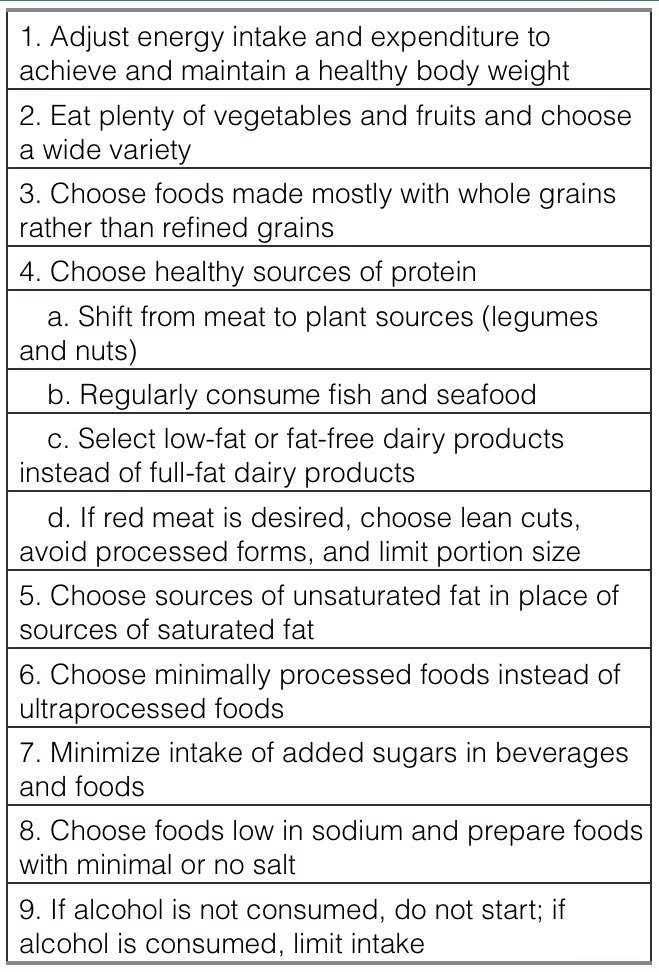
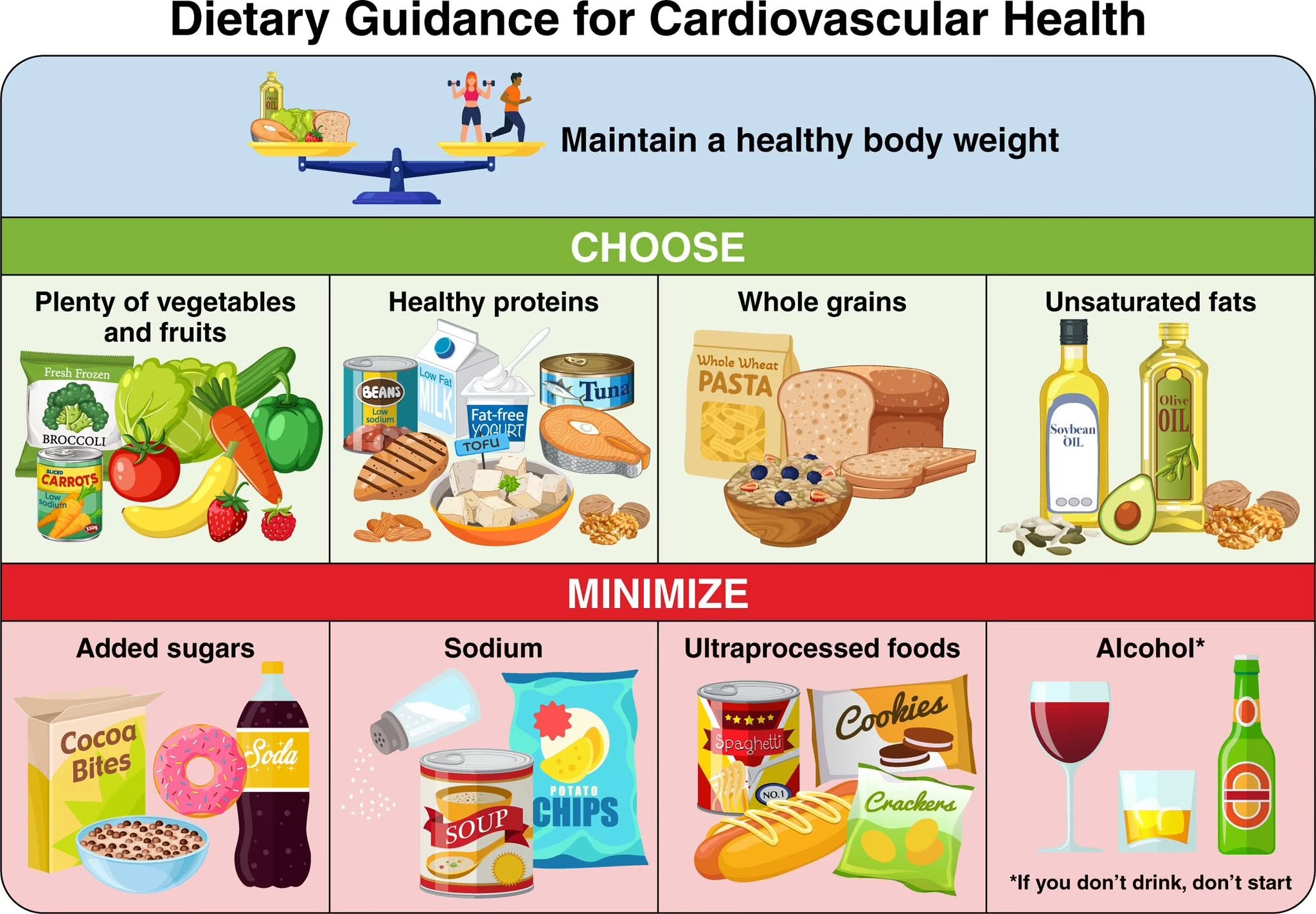
An abbreviated version can be found in this previous post:
↪ AHA's new dietary guidance: nine features of a Mediterranean/DASH-style pattern
They are basically recommending a traditional Mediterranean / DASH diet, very similar to what we recommend in this group. The details are given below:
- Adjust Energy Intake and Expenditure to Achieve and Maintain a Healthy Body Weight
“Excess body fat contributes to the development of type 2 diabetes, hypertension, and cardiovascular-kidney metabolic syndrome, which negatively influences cardiovascular health [17].”
“Adults should engage in at least 150 min/wk of moderate to vigorous physical activity [18]. All individuals should be encouraged to participate in muscle-strengthening activities throughout the life course [19].”
“A range of dietary patterns, including healthy versions of commonly named diets when implemented as intended such as DASH (Dietary Approaches to Stop Hypertension), Mediterranean style, pescetarian, and ovo/lacto vegetarian, can support cardiovascular health and are aligned with achieving and maintaining a healthy body weight [20].”
“Some popular weight loss diets may result in short-term benefits but have uncertain long-term cardiovascular impact and can worsen cardiovascular risk factors [21].”
- Eat Plenty of Vegetables and Fruits and Choose a Wide Variety
“Whole or minimally processed vegetables and fruits are core components of heart-healthy dietary patterns. These patterns are consistently associated with cardiovascular health, including blood lipids, blood pressure, and type 2 diabetes control [22–26]. Vegetables and fruits provide essential nutrients and in their whole form, rather than juice, provide much-needed dietary fiber.”
- Choose Foods Made Mostly With Whole Grains Rather Than Refined Grains
“Whole grains are defined by the presence of all 3 components of the grain kernel—the starchy endosperm, inner germ, and outer bran—and provide a complex matrix of dietary fiber, vitamins, minerals, and other bioactive compounds [27].”
“A substantial body of observational evidence from large cohort studies demonstrates that regular consumption of whole-grain foods compared with infrequent intake is associated with lower risks of CVD, coronary heart disease, stroke, type 2 diabetes, and metabolic syndrome and more favorable cardiovascular risk factors, including blood pressure, blood lipids, and glycemic control [28]. Randomized controlled feeding trials have demonstrated that replacing refined grains with whole grains leads to improvements in cardiovascular risk factors [29]. In addition, diets high in fiber and whole grains have been linked to favorable modulation of the gut microbiota, laxation, and a reduction in inflammatory cytokines [30,31].”
- Choose Healthy Sources of Protein
“The relationship between protein quantity and cardiovascular health is uncertain [32]. Thus, recommendations for protein center on promoting heart-healthy protein sources which are determined predominantly by fatty acid profile and fiber content.”
A. Shift From Meat to Plant Sources (Legumes and Nuts)
“Dietary patterns higher in legumes and lower in red and processed meat have been associated with lower CVD and coronary heart disease risk [33–35]. Likewise, dietary patterns higher in nuts have been associated with lower CVD and all-cause mortality risk [36,37].”
B. Regularly Consume Fish and Seafood
“Prospective cohort studies have concluded that dietary patterns containing nonfried fish and seafood are associated with lower overall CVD events and myocardial infarction risk [39–41]. These associations may be due to the omega-3 fatty acid content of the fish and seafood, replacement of other sources of animal protein that tend to be high in saturated fat and low in unsaturated fat, or both [39].”
“Fish oil supplementation alone has not been demonstrated to lower CVD risk in otherwise healthy adults and in some people may be associated with an increased risk of atrial fibrillation [42–44].”
C. Select Low-Fat or Fat-Free Dairy Products Instead of Full-Fat Dairy Products
“The potential benefits of low-fat and fat-free dairy products compared with full-fat dairy products are not without controversy and continue to be debated.”
“A recent systematic review indicates that some dietary patterns that include low-fat dairy are associated with a lower CVD risk [23]. However, another systematic review specific to food sources of saturated fat concluded that limited evidence suggests that substituting higher-fat dairy with lower-fat dairy results in similar CVD risk [45].”
“Of note, the effect of replacing full-fat dairy products with nonfat and low-fat dairy products or other nondairy sources of unsaturated fat shifts the composition of dietary patterns toward higher unsaturated to saturated fat ratios, those associated with most favorable cardiovascular health [46].”
“Independently of fat content, the possibility has been raised that there are cardiovascular benefits of consuming fermented dairy such as yogurt and kefir that contain live bacteria because of modifications they induce in the gut microbiota [47]. However, the long-term clinical implications of these changes have yet to be determined [48].”
D. If Red Meat Is Desired, Choose Lean Cuts, Avoid Processed Forms, and Limit Portion Size
“Replacing red meat, including lean, unprocessed meat, with healthier sources of protein, especially plant sources, improves CVD risk factors [22,49]. Substitution analyses based on large cohort studies concluded that the replacement of red and processed meat with alternative foods (legumes, nuts, poultry, dairy, and eggs) was associated with a lower coronary heart disease risk [50]. The associations were strongest for processed than unprocessed red meat.”
“The term processed meats generally refers to meat, poultry, or seafood products produced by smoking, curing, or salting or the addition of chemical preservatives [51]. Common examples include bacon, sausage, hot dogs, and deli meat (eg, turkey, ham, pepperoni, and salami). In addition to a meat base, common ingredients include salt, nitrates, flavor enhancers, binders and fillers, and smoke flavor. These additions are used to extend shelf life and to enhance flavor, texture, and appearance. Substitution analyses indicate that the replacement of processed meats with other protein sources is associated with lower mortality rates [52].“
- Choose Sources of Unsaturated Fat in Place of Sources of Saturated Fat
“Clinical trial evidence consistently shows that replacing sources of saturated fat with sources polyunsaturated fat and, to a lesser extent, sources of monounsaturated fat reduces low-density lipoprotein cholesterol concentrations, a causal risk factor for CVD [53,54]. In alignment, modeling analyses indicate that replacing sources of saturated fat with polyunsaturated fat is associated with reduced coronary heart disease risk [55,56].”
“Strong evidence shows that replacing butter with plant oils and spreads containing predominantly unsaturated fat decreases low-density lipoprotein cholesterol concentrations [22]. Limited evidence shows that substituting butter with plant oils and spreads with predominantly unsaturated fat is associated with a lower CVD morbidity and mortality risk [22,57]. Similarly, replacement of beef fat/tallow or lard with nontropical plant oils lowers low-density lipoprotein cholesterol concentrations [58–61]. Replacement of tropical plant oils with nontropical plant oils also lowers low-density lipoprotein cholesterol concentrations [22,62].”
- Choose Minimally Processed Foods Instead of Ultraprocessed Foods
“Worldwide, the sales of ultraprocessed foods are relatively high and are projected to increase. The major concern with this trend is the strong evidence base linking dietary patterns high in ultraprocessed foods to multiple adverse health outcomes, including overweight and obesity, CVDs, type 2 diabetes, and all-cause mortality [67–70].”
- Minimize Intake of Added Sugars in Beverages and Foods
“Added sugars are defined as all forms of sugar that are added to foods and beverages during processing or preparation. These include brown sugar, cane sugar, confectioner’s sugar, coconut sugar, invert sugar, raw sugar, white granulated sugar, corn syrup, high-fructose corn syrup, rice syrup, malt syrup, maple syrup, pancake syrup, fruit juice concentrates, nectar, concentrated vegetable juices, honey, molasses, dextrose, fructose, glucose, maltose, lactose, and agave nectar.”
“There is strong evidence to support recommendations to minimize added sugar intake across the life course [22,55].”
“Dietary patterns high in added sugars are consistently associated with adverse cardiovascular health and higher CVD risk [72]. Systematic reviews have linked sugar-sweetened beverages to higher risk of obesity, type 2 diabetes, coronary heart disease, and cardiovascular mortality [73,74]. It has been estimated that adults consuming ≥25% of energy from added sugars have a nearly 3-fold higher risk of CVD mortality compared with those consuming <10% of energy from added sugars after adjustment for adiposity and other potential confounders [75].”
- Choose Foods Low in Sodium and Prepare Foods With Minimal or No Salt
“In general, dietary sodium intake and potassium intake have opposite effects on blood pressure, the leading modifiable risk factor for preventable mortality. An increased intake of sodium chloride (salt) raises blood pressure, whereas an increased intake of potassium lowers blood pressure.”
“In prospective cohort studies, lower sodium intakes are associated with blunted age-related rise in systolic blood pressure and lower CVD risk, especially in studies with rigorous assessment of sodium intake [77,78]. In general, the effects of sodium reduction on blood pressure tend to be greater in Black individuals, middle- and older-aged adults, and people with hypertension and diabetes.”
“Evidence for an independent blood pressure–lowering effect of potassium is consistent but not as persuasive as corresponding evidence for sodium. In meta-analyses of intervention trials, increased potassium intake, from either diet or supplements, lowered blood pressure [79]. In prospective cohort studies, higher potassium intake was associated with a lower CVD risk [78].”
“Potassium intake can be increased by consuming a dietary pattern rich in vegetables and fruits.”
“Available evidence supports a combined approach of reducing sodium intake and increasing potassium intake for hypertension prevention and control [80].“
- If Alcohol Is Not Consumed, Do Not Start; if Alcohol Is Consumed, Limit Intake
“Understanding the relationship between alcohol intake and CVD is challenging [83].”
“Prospective cohort studies have identified a possible protective association of low/moderate alcohol intake and coronary heart disease risk, but these findings are subject to residual confounding by socioeconomic and lifestyle factors also related to CVD risk.”
“More recent approaches into estimating the impact of alcohol on CVD risk such as mendelian randomization have called these observations into question and identified no significant association between genetically predicted alcohol consumption and risk of coronary artery disease [84–86].”
“It is important to note that the relationship between alcohol intake and blood pressure (and the risk for hypertension) appears linear and progressive, beginning at the lowest intake levels [83,87].”
“Avoiding alcohol intake has also been advocated by the US Department of Health and Human Services and the World Health Organization to reduce the risk of certain cancers, including oral, esophageal, breast, liver, and colorectal cancer [89,90].”
“Initiation of alcohol intake at any level to improve cardiovascular health is not recommended given the uncertainty about net health effects and especially considering the deleterious effects of alcohol on numerous other outcomes.”