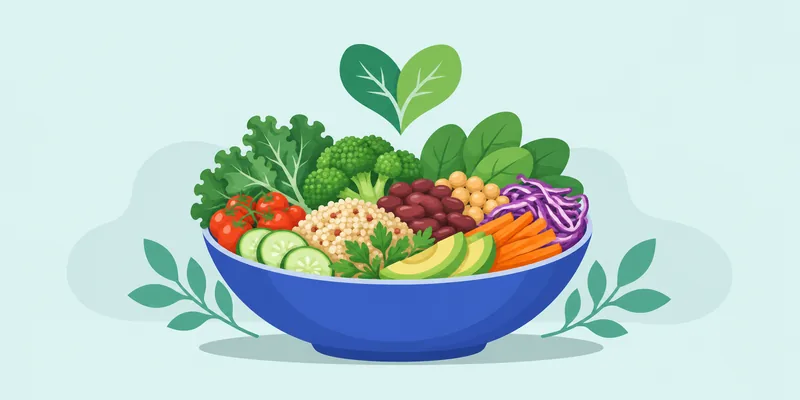
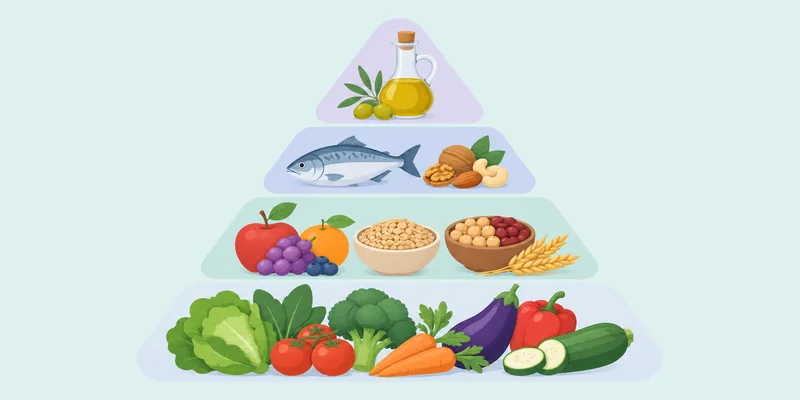
If you are trying to choose between the Portfolio, DASH and MIND diets, the most useful starting point is that they are less different than their names suggest. DASH (Dietary Approaches to Stop Hypertension) was designed to lower blood pressure. MIND (Mediterranean-DASH Intervention for Neurodegenerative Delay) is a hybrid of the Mediterranean and DASH diets that was designed to protect the brain.12 The Portfolio diet is a plant-based pattern built from cholesterol-lowering foods such as nuts, seeds and plant oils.3
In the group's reading of the evidence, DASH has the best direct proof for reversing artery plaque, because it was tested in a randomized trial with CT imaging.4 MIND has the largest collection of brain-health studies, mostly observational, plus a randomized trial whose secondary analysis the group has discussed.5 Portfolio has the thinnest coverage here: it appears in a single short post, without numbers.3
This article explains what each pattern contains, what the posts say about the evidence, where the evidence is mixed, and what the group's admins suggest taking from it. It is a summary of group discussion, not medical advice; the admins repeatedly encourage members to discuss changes with their own doctor.
What each diet is
DASH
DASH promotes vegetables, fruits, whole grains, fat-free or low-fat dairy, fish, poultry, beans, nuts and vegetable oils, and recommends limiting foods high in saturated fat, sugary drinks and sweets, and sodium.8 In the DISCO-CT trial, the diet was described as 52% to 55% of calories from carbohydrate, 16% to 18% from protein and 30% from fat, rich in fruit, vegetables, whole grains and low-fat dairy, and poor in saturated fat, cholesterol, low-fiber high-glycemic cereal products and sweets.4
Louis Nervegna, one of the group's admins, stresses that this is not a low-fat diet. The fat in that trial was around 30% of calories, but the vast majority was unsaturated, from sources such as olive oil, nuts, seeds and fatty fish.49 He also describes DASH as very similar to the traditional Mediterranean diet.10
For blood pressure, a post summarizing a Dr Brad Stanfield video lists the DASH diet alongside salt of 1,500 mg per day or less, regular exercise, weight control and medication when lifestyle changes are not enough.11
MIND
MIND combines elements of the Mediterranean and DASH diets and was developed in 2015 by researchers at Rush University in Chicago.12 According to a quick-reference list Louis posted, the pattern encourages:
- Green leafy vegetables, 6 or more servings per week
- Other vegetables, at least 1 per day
- Berries, especially blueberries and strawberries, 2 or more servings per week
- Whole grains, 3 per day
- Nuts, 5 per week
- Olive oil as the main fat
- Fish, at least 1 per week
- Legumes, 3 or more per week
- Poultry, 2 or more per week
- Wine, optional, 1 per day213
The same list says to limit processed meat, red meat, butter and margarine made with trans fat, full-fat cheese, whole milk and cream, pastries and sweets, ultraprocessed and fast foods, and foods fried in saturated or trans fat.2 Another summary describes ten food groups to eat and five unhealthy groups to limit.13
MIND differs from its two parent diets in a few ways. In an interview shared by Louis, Harvard's Walter Willett explained that MIND puts particular emphasis on carotenoid-rich vegetables (carrots, dark orange squash, leafy greens), on berries rather than all fruit, and on omega-3 fats from nuts and oily fish.7 Willett's reasoning is that carotenoids get into the brain and that about a quarter of the brain is made up of omega-3 fatty acids; berries contain anthocyanins, which are associated with reduced inflammation.7
Portfolio
The only Portfolio material in the group is a short post about two Canadian studies suggesting that the plant-based Portfolio diet, which features cholesterol-lowering food choices, can reduce cardiovascular disease risk and mortality across diverse groups. The post notes the diet had previously been evaluated mostly among older White participants. It gives no numbers, no trial names and no food-by-food list.3 Because of that, this article cannot responsibly say how large Portfolio's benefit is, or how it compares numerically with DASH or MIND. The tags on that post (nuts, seeds, olive oil, canola oil, soybean oil) do indicate the foods the group associates with it.
At a glance
| Diet | Built to | Distinctive emphasis | Strongest evidence in the group's posts |
|---|---|---|---|
| DASH | Lower blood pressure | Fruit, vegetables, whole grains, low-fat dairy; limits saturated fat, sweets and sodium8 | A randomized plaque trial, DISCO-CT, on top of statins4 |
| MIND | Protect the brain | Leafy greens 6 or more times a week, berries, nuts, olive oil, fish, legumes2 | Mostly observational cohorts, plus a secondary analysis of a randomized trial15 |
| Portfolio | Lower cholesterol | Cholesterol-lowering plant foods such as nuts, seeds and plant oils3 | One news post about two Canadian studies, with no numbers3 |
What the evidence shows
DASH: the plaque trial
The strongest dietary result the group cites is DISCO-CT. In this randomized trial, 92 non-diabetic patients with non-obstructive coronary disease were randomized, and 91 completed the study. The intervention arm followed a DASH-model diet with a dietitian and increased physical activity.4
Non-calcified plaque volume (NCPV, the softer, more rupture-prone plaque measured on CT angiography) fell by 51.3 mm3 in the intervention arm and by 21.3 mm3 in the control arm, which Louis notes was on intensive medical therapy including statins.4 He highlights that DASH plus statins therefore gave 2.4 times more plaque reversal than statins alone.14 Calcified plaque did not increase in either group, and the total soft plaque went down rather than simply being converted into another type.4
Louis also reports a one-year adjusted figure: -39.5 mm3 of soft plaque (the trial lasted 66 weeks and was adjusted back to 52 weeks for comparison with other studies). He compares that with the roughly 5 mm3 per year that a typical at-risk person on a standard American diet gains, and calls it the equivalent of about 8 years of typical progression.410 He adds an important caveat: he is not saying participants reversed 8 years of their own plaque growth, only that the change equals what would be 8 years of a typical American's growth.4
Mediterranean and DASH in the wider plaque literature
Louis lists six randomized trials in which diet reversed plaque: the Lifestyle Heart Trial (1990, Ornish diet), STARS (1992) and SCRIP (1994) with an AHA diet, PREDIMED (2013) and CORDIOPREV (2021) with a Mediterranean diet, and DISCO (2021) with a DASH diet.1516 None used a purely vegan diet; even the Ornish trial allowed egg whites and non-fat dairy.16
The common themes were fruit and vegetables, legumes, whole grains, yogurt and some dairy, unsaturated fats, nuts, olive oil, fish and some eggs and poultry. All trials limited junk food, refined grains, sugary foods, large amounts of butter, fatty red meat and large amounts of alcohol.1517 In a separate post he notes that Ornish's small randomized trial showed regression no better than the large Mediterranean trials, and similar to PREDIMED and CORDIOPREV (both with statins) but less than DISCO-CT.1819
In another post, Louis says that, in his view, three of these trials used higher-fat Mediterranean or DASH diets with nuts and avocado, which answers the claim that nut-rich diets have not shown plaque reversal.17 These are admin interpretations of the trial literature; Gokhan Can has also compiled a longer evidence review on plaque reversal for members.20
Guidelines point the same direction
Several posts note that major guidelines converge on Mediterranean- and DASH-style eating:
- The European Society of Cardiology scientific statement describes diet as a primary factor in cardiovascular prevention and treatment, and says the Mediterranean, DASH and vegetarian diets reduce risk, with no extra benefit shown for pure vegan diets.21
- The American Heart Association's 2026 dietary guidance lists nine features, including controlling calories, plenty of fruit and vegetables, whole grains, legumes, nuts and seafood in place of red meat, unsaturated fats, minimally processed food and minimal added sugar and salt. Louis calls it essentially a traditional Mediterranean/DASH diet.2223
- That guidance still recommends seafood; the shift is mainly away from red and processed meat toward plant proteins.24
- The 2025 Dietary Guidelines Advisory Committee report recommended more fruit, vegetables, legumes, nuts, whole grains and seafood and less red and processed meat, saturated fat, sodium and added sugars, which Louis says matches a Mediterranean/DASH pattern.2526
- A 2025 JACC: CardioOncology review says that guidelines from AHA, ACC, ACS, NCCN and WCRF/AICR all favor a predominantly whole-food plant-based diet, with Mediterranean and DASH counted as plant-forward patterns that include moderate fish, poultry and dairy.27
- The American College of Cardiology says plant-based, Mediterranean and DASH diets all show cardioprotective benefits in primary and secondary prevention.28
DASH and the brain
A prospective analysis of the Nurses' Health Study and Health Professionals Follow-up Study found that six healthy eating patterns were tied to less cognitive decline, with DASH showing the lowest subjective decline risk and the strongest link to objective cognition. Plant-based and traditional Mediterranean patterns also did well.8 An npj Aging perspective, shared by Louis, proposes that diet acts as a signal that modulates biological aging, and says long-term adherence to plant-rich patterns such as Mediterranean, AHEI and DASH can up to double the odds of aging healthily.29
MIND: observational and trial evidence
Most MIND data are observational, meaning they show associations that cannot prove cause and effect. The numbers shared in the group include:
- Rush University: strict adherence was associated with a 53% lower Alzheimer's risk, and moderate adherence with about a third lower risk. High adherers had cognition equivalent to someone 7.5 years younger.1 A WebMD overview gives the same 53% for close adherence and 35% for looser adherence.30
- Hippocampal sclerosis: in 809 people with brain autopsy and diet data, MIND followers were less likely to show hippocampal sclerosis, a severe loss of brain cells in a memory region.1
- Framingham MRI study: in 1,647 adults followed about 12 years, every 3-point increase in MIND score was linked to 20% less age-related grey matter decline, about 2.5 years of slower structural brain aging, as reported in the Journal of Neurology, Neurosurgery & Psychiatry (2026).6 A second post highlights the same direction of finding in a separate MedPage Today report.31
- US multiethnic data: a study presented at the American Society for Nutrition meeting in nearly 93,000 US adults aged 45 to 75 found 9% lower dementia risk with close MIND adherence, and 25% lower risk in people who improved their adherence over 10 years compared with those whose adherence declined. People eating 7 or more weekly servings of leafy greens had brain plaque levels corresponding to being almost 19 years younger than those eating one or fewer.32
- Chinese cohort in Alzheimer's patients and controls: 1,500 adults aged 50 to 75 followed for five years. Each additional MIND adherence point corresponded to +0.33 on the MMSE and +0.31 on the MoCA cognitive tests, versus +0.11 and +0.13 for the Mediterranean diet.33
- Lifestyle and pathology: in an autopsy cohort of 586 people, a healthy lifestyle that included the MIND diet was linked to protection from cognitive decline even when amyloid or tau pathology was present.12
On the randomized side, the group shared a secondary analysis of the 3-year MIND trial in 602 adults aged 65 to 84 without cognitive impairment. Cognitive benefits of the MIND diet differed by baseline blood levels of amyloid-beta 40 and p-tau181, with larger improvements in people with higher levels, suggesting the diet may help most those with early biological signs of Alzheimer's disease.5 The posts discuss this secondary analysis only; they do not give the trial's main result, so it is worth reading the primary paper before drawing conclusions.
A separate randomized trial, DIRECT-PLUS, compared a standard healthy diet, a Mediterranean diet and a "Green" Mediterranean diet with green tea and mankai over 18 months in nearly 300 people. Both Mediterranean diets beat the standard diet on a brain-shrinkage marker in people over 50.34
Dementia prevention in context
Louis shares a Lancet Commission estimate that 45% of dementia cases are attributable to modifiable risk factors, and Willett's comment that diet is the most important lifestyle lever and that the true figure may be higher. Willett says diet can "put it off for some years" rather than eliminate dementia.7
Related patterns
A Swedish cohort of more than 76,000 adults found that those following the updated Nordic dietary guidelines most closely had a 23% lower risk of premature death, with lower cancer and cardiovascular mortality.35 The Nordic pattern, favoring whole grains, legumes, low-fat dairy, fish and vegetables, is another example of the same broad theme.
Nuances, controversies and misconceptions
Observational versus randomized evidence. Most MIND findings come from cohort studies, which can only show associations. Louis calls the MIND diet the pattern with the strongest evidence for brain health, based on randomized trials and prospective cohorts, and says most neurologists now recommend it.236 Readers should keep in mind that this is his characterization, and that the posts shown here describe the randomized MIND data only through a secondary analysis.5
DISCO-CT is diet plus statins. Both arms took statins, so the 51.3 versus 21.3 mm3 comparison shows what diet added on top of medication, not what diet does alone.4 Louis's "8 years" comparison uses a typical American benchmark, not each participant's own history.4
Quality of plant foods matters. A study shared by Louis found that whole grains, vegetables, vegetable oils, nuts and legumes were linked to lower dementia risk, while refined grains, fruit juices, white potatoes and added sugars were linked to higher risk. People who improved diet quality had an 11% lower dementia diagnosis risk over 10 years. Louis's takeaway: a plant-based diet full of low-quality foods does more harm than good.37 A related CNN report suggests a high-quality plant-rich diet may help even when started in the late 50s and 60s.38
Alcohol: the sources disagree. MIND lists wine as optional, up to one glass daily.2 The ESC statement says one unit per day may contribute to reduced cardiovascular risk without an unfavorable risk profile,21 and an autopsy cohort found light to moderate alcohol protective against dementia.12 The AHA recommendation quoted in the group says "limited or preferably no alcohol intake."39 The AHA's 2026 guidance also lists limiting alcohol.22
Meat and APOE4. A Swedish observational study found that APOE 3/4 and 4/4 carriers who ate unprocessed meat or fish had lower dementia risk, with fish and poultry as good as red meat, while processed meat raised risk in everyone.40 Louis says causality is not shown, and points out that MIND already includes fish and poultry and a little red meat, and that people eating Mediterranean or MIND-style diets typically reach the roughly 2.5 oz per day associated with the largest benefit.4041
Plant-based does not have to mean vegan. The ESC statement found no added benefit for vegan diets beyond other plant-forward patterns.21 Louis says the Esselstyn diet is probably healthy but is supported mainly by case reports and case series, which rank low on the evidence hierarchy.19
Nuts and seeds are fine for most people. A cohort of nearly 30,000 women found no increase in diverticulitis from nuts, seeds, corn or seeded fruit, while DASH and Mediterranean-style patterns were linked to lower risk.42
Keto comparisons. Louis contrasts DISCO-CT with the Keto-CTA study of lean, metabolically healthy people with very high LDL on a ketogenic diet, where non-calcified plaque grew. He notes the original Keto-CTA paper was retracted over software concerns, and that re-analysis with other software gave smaller progression numbers (about +5.5 to +5.6 mm3 versus +18.8 mm3), still not better than the standard American diet comparison group in his view.434445 The other group posts on this topic reach similar conclusions, but these remain Louis's interpretation.4647
What this means for you
- The group's admins recommend discussing a Mediterranean/DASH-style pattern with your doctor as the common foundation: vegetables, fruit, whole grains, legumes, nuts, olive oil and fish, with minimal processed meat, refined grains and added sugar.2348
- If blood pressure is the main concern, the DASH diet is the pattern built for it. The Stanfield video summary also mentions salt of 1,500 mg per day or less, exercise and weight control.11
- If brain health is the main concern, the MIND emphasis list (leafy greens 6 or more times per week, berries, nuts, olive oil, fish, legumes) is a practical checklist.2 The ASN data suggest starting later still appears worthwhile.32
- Choose whole foods over refined ones: the quality of plant foods mattered in the dementia study.37
- Avoid processed meat; it was linked to higher dementia risk in the Swedish study.40
- For plaque, the DISCO-CT result applies to diet combined with statin therapy, so diet is a partner to medication rather than a replacement.14
- Treat Portfolio claims with caution until you have seen the underlying studies; the group's single post on it contains no numbers.3
- The group's HD-OPM food pyramid, proposed by Gokhan Can as a Mediterranean-inspired approach, is an example of how these patterns can be turned into a daily plan.49
Frequently asked questions
Which diet is best for heart disease?
The posts do not crown one winner. Louis argues that the traditional Mediterranean and DASH diets have the best evidence for plaque reversal and cardiovascular events.39 The ESC statement likewise names Mediterranean, DASH and vegetarian patterns.21 MIND is itself built from these two.2 A commentary shared alongside the ESC statement adds that the best approach and macronutrient ratio are highly individual, and that people should stay flexible and judge how their bodies respond.21
Is MIND just Mediterranean plus DASH?
Largely yes, but with a brain-focused emphasis: leafy greens, other vegetables, berries (not all fruit), nuts, beans, whole grains, fish, poultry, olive oil and optional wine.713 In the Chinese cohort, MIND showed a stronger link to cognitive scores than the Mediterranean diet.33
Does MIND also help the heart?
Louis says MIND is also a diet shown to reduce the risk of heart disease and diabetes, and that dementia and heart disease share the same lifestyle prevention.212 The posts give no MIND-specific cardiovascular numbers, so this rests on the overlap with Mediterranean and DASH evidence.
Is the Portfolio diet worth trying?
The group has shared one news item suggesting it lowers cardiovascular disease and mortality risk in diverse groups, but no specific numbers.3 Its emphasis on nuts, seeds and unsaturated oils overlaps with the other patterns the group recommends.348
Can I start later in life?
The ASN study found a 25% lower dementia risk among people who improved their MIND adherence over 10 years, including some who did not follow it closely at first.32 The study on plant-diet quality reached a similar conclusion.37
Does the diet have to be low in fat?
No. The DASH diet in DISCO-CT was about 30% fat, mostly unsaturated.49