🫒 Why 20 grams of olive oil may be more than just a healthy fat
Extra virgin olive oil isn’t just a staple of the Mediterranean diet, it’s one of the most studied functional foods in nutrition science.
Large prospective cohort studies and meta-analyses now consistently associate higher olive oil intake with lower risk of cardiovascular disease, cancer mortality, and all-cause mortality
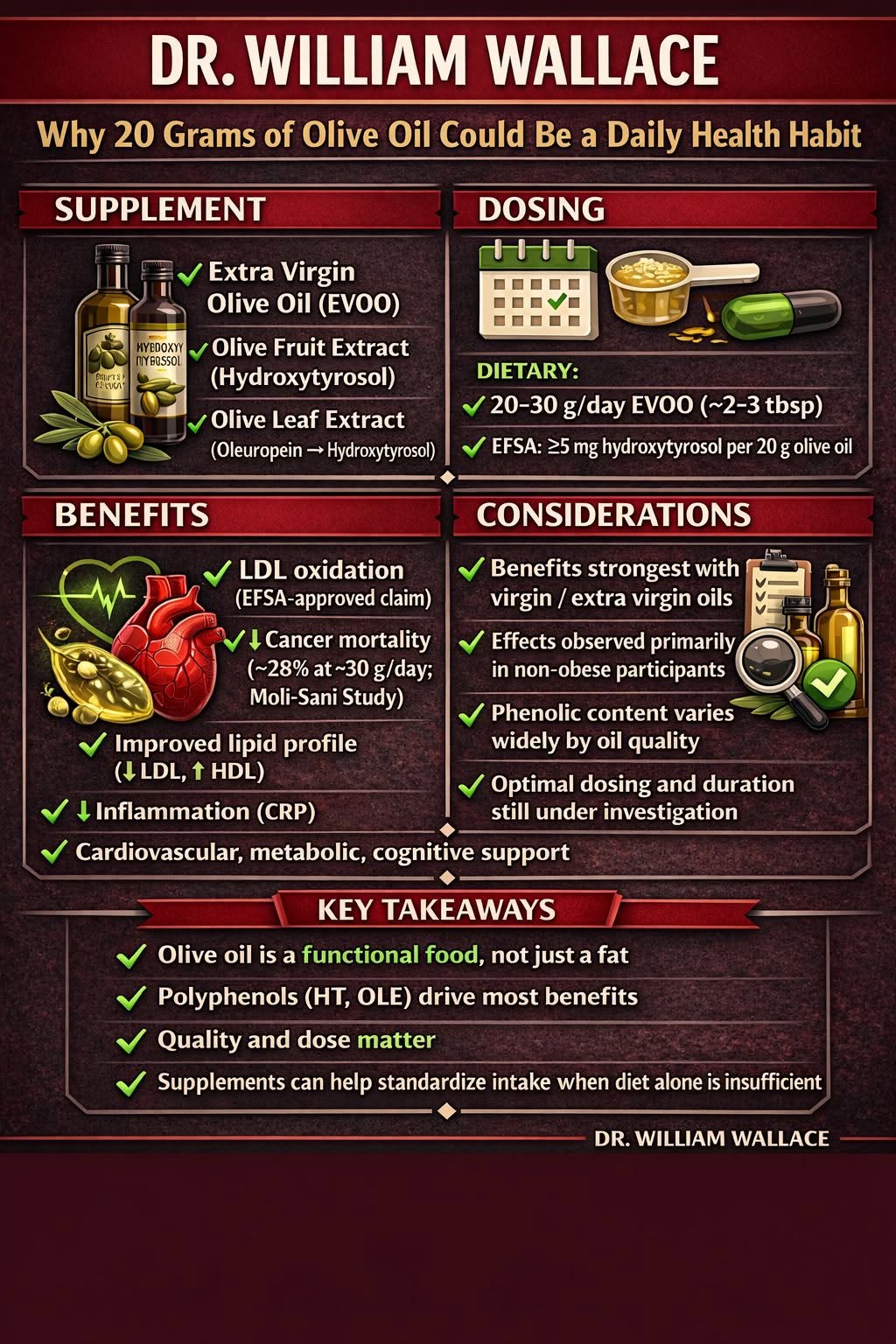
One of the most compelling datasets comes from the Moli-Sani Study, which followed ~23,000 adults for 12 years. Participants consuming ~30 g/day (≈3 tablespoons)of olive oil experienced:
- ~28% lower cancer mortality
- ~18% lower all-cause mortality
These associations held even after adjusting for diet quality, lifestyle, and socioeconomic factors. Part of the benefit was statistically explained by lower blood pressure and resting heart rate— two major predictors of long-term disease risk. Notably, the strongest effects were observed in non-obese participants
Mechanistically, much of olive oil’s benefit appears to come from its polyphenols, especially hydroxytyrosol and its derivatives. There is enough evidence for this effect that EFSA has approved a health claim stating that:
A daily intake of 20 g of olive oil providing ≥5 mg of hydroxytyrosol and related compounds helps protect LDL cholesterol from oxidative damage.
Randomized controlled trials and systematic reviews further show that olive oil polyphenols:
- Improve lipid profiles (↓ LDL, ↑ HDL)
- Reduce inflammatory markers like CRP
- Support cardiovascular, metabolic, and cognitive health
How to apply this:
- Choose extra virgin, cold-pressed olive oil (phenols are stripped during refining)
- Aim for ~20–30 g/day (2–3 tbsp)
- Robust, peppery oils often indicate higher phenolic content
- Supplements can help standardize intake (olive fruit extract → hydroxytyrosol; olive leaf extract → oleuropein)