What are the benefits of extra virgin olive oil, and how much is optimal? According to the group's admins, extra virgin olive oil (EVOO) has the strongest evidence of any added fat: it is the main fat in three large, long randomized trials of the traditional Mediterranean diet, and in all three the olive-oil-rich diet beat the comparison diet on heart attacks, strokes or related outcomes12. Large cohort studies also link higher intake to lower cardiovascular, cancer and dementia-related mortality34.
There is no single "optimal dose" in the group's posts. The numbers that appear range from about 7 grams a day (half a tablespoon) in dementia research to roughly four tablespoons a day in clinic advice for fatty liver and in a diet trial567. What the admins stress more than quantity is the type of oil, how fresh it is, and what it replaces in your diet, with butter and other saturated fat being the usual comparison89.
Treat what follows as a summary of group discussion and the research it cites, not as personal medical advice. Olive oil is energy dense, a point plant-based critics raise10, and people with specific conditions should discuss amounts with their doctor.
What olive oil is and why it matters
Olive oil is mostly oleic acid, a monounsaturated fat that makes up 70-80% of EVOO14. EVOO is the unrefined grade. Compared with refined olive oil it keeps polyphenols (plant compounds such as hydroxytyrosol and oleocanthal, the latter responsible for the peppery bite), and a review shared by Gokhan Can describes polyphenols acting on oxidative stress, inflammation, blood pressure, endothelial function and gut bacteria1415. The endothelium is the thin lining of blood vessels, and flow-mediated dilation (FMD) is a test of how well an artery widens in response to blood flow.
The review also reports that oleic acid lowers total, VLDL and LDL cholesterol, and one human trial it cites found a high-oleic-oil diet lowered LDL, apoB and non-HDL cholesterol compared with a control diet14.
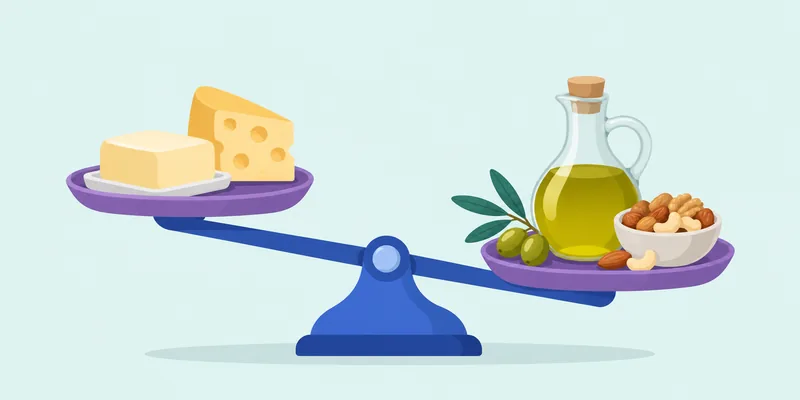
Much of the benefit seen in studies comes from what olive oil replaces. In Harvard cohorts, swapping butter for plant oils, with the largest benefits from olive, canola and soybean oil, was linked to lower mortality816. A Harvard Health list shared by Gokhan likewise places olive oil among anti-inflammatory foods and margarine, shortening and lard among those to avoid17.
What the evidence shows
The three big Mediterranean diet trials
Louis explains that he uses olive oil in all his own cooking because it is the only fat tested in several large, roughly 5-year randomized trials with hard heart outcomes: the Lyon Diet Heart Study, PREDIMED and CORDIOPREV. He allows that other fats, or no oil at all, might work as well or better, but says there is no equivalent trial proof for them1. In all three, the intervention groups cooked almost all their food with EVOO2.
Lyon Diet Heart Study (Lancet, 1994). More than 600 heart attack survivors were randomized to a Mediterranean-style diet or an American Heart Association diet. After a mean of 27 months there were 16 cardiac deaths in the control group versus 3, and 17 non-fatal heart attacks versus 5. The combined risk ratio was 0.27 (95% CI 0.12-0.59), and overall mortality 20 versus 8, an adjusted risk ratio of 0.30 (0.11-0.82)1118. The trial was stopped early for ethical reasons1920. EVOO was the main fat, canola oil and regular olive oil were also allowed, and a non-hydrogenated canola margarine replaced butter and cream11. Louis stresses this was not a low-fat diet19 and that the control group's AHA diet was far better than a typical American diet, so results might have looked even stronger against that21. He calls it the best result of any diet trial and says no drug has matched it; that comparison is his opinion2223. He also notes cholesterol levels were similar in both groups, concluding that diet and LDL are largely independent risk factors, so he suggests eating healthily whatever your LDL24.
Show data
| AHA diet (control) | Mediterranean diet | |
|---|---|---|
| Cardiac deaths | 16 | 3 |
| Non-fatal heart attacks | 17 | 5 |
| Deaths from any cause | 20 | 8 |
PREDIMED. A Mediterranean diet supplemented with extra-virgin olive oil or nuts reduced major cardiovascular events over 4.8 years in people with diabetes or other risk factors, as summarized from Harvard's Nutrition Source25. In an analysis of PREDIMED participants, those with the highest baseline olive oil intake had 48% lower cardiovascular mortality (HR 0.52, 95% CI 0.29-0.93). Each extra 10 g/day of EVOO was associated with a 10% lower risk of cardiovascular disease and 7% lower cardiovascular mortality. Louis notes the all-cause mortality effect did not reach statistical significance, and that this was primary prevention12. Note that this dose-response analysis is observational within the trial rather than a randomized comparison.
CORDIOPREV (Stroke, 2021). This trial in 1,002 people with coronary disease compared an EVOO-rich Mediterranean diet with a low-fat diet. Carotid artery thickness fell on the Mediterranean diet at 5 and 7 years while the low-fat diet showed no change, and recurrent major cardiovascular events were roughly 25% lower over 7 years. All patients were also on standard medication, with average LDL-C below 90 at baseline1326.
The three trials side by side, as described in the posts:
| Trial | Who took part | Compared with | Follow-up | Main result |
|---|---|---|---|---|
| Lyon Diet Heart Study | More than 600 heart attack survivors | American Heart Association diet | Mean 27 months | Cardiac death or non-fatal heart attack: risk ratio 0.2711 |
| PREDIMED | People with diabetes or other risk factors | Control diet | 4.8 years | Fewer major cardiovascular events with EVOO or nuts25 |
| CORDIOPREV | 1,002 people with coronary disease | Low-fat diet | 7 years | About 25% fewer recurrent major cardiovascular events13 |
Cohort studies and dose
- Dementia. In Nurses' Health Study and Health Professionals Follow-Up Study data (92,383 adults followed 28 years), at least 7 g/day of olive oil was associated with 28% lower dementia-related death versus never or rarely using it, regardless of genetics and diet quality45. This is observational.
- Moli-sani cohort. In 22,895 Italian adults followed 12 years, more than 3 tablespoons a day versus under 1.5 was linked to 28% lower cancer mortality, partly explained by lower blood pressure and resting heart rate. The summary stresses the observational design, self-reported diet and that results may be specific to an Italian population27. Another shared post reports roughly 30 g/day was linked to about 18% lower all-cause mortality and says large cohorts and meta-analyses consistently associate more olive oil with lower cardiovascular, cancer and all-cause mortality3.
- Butter swaps. The Harvard analysis of 221,054 adults modeled that replacing 10 g/day of butter with plant oils, with the largest benefits from olive, canola and soybean oil, was associated with 17% lower all-cause and cancer mortality81628.
Arteries, lipids and inflammation
- Endothelial function. A crossover randomized trial in adults at risk for type 2 diabetes found a single 50 mL dose of high-polyphenol EVOO improved FMD by an absolute 4.8% versus refined olive oil, with no acute blood pressure effect. The authors noted that reports on olive oil should specify the oil's characteristics2930. A 2015 meta-analysis of 30 trials (3,106 participants) found olive oil lowered CRP by 0.64 mg/L and interleukin-6 by 0.29, and raised FMD by 0.76 percentage points, versus controls31.
- Lipoprotein(a). In a 50-person, 4-week randomized trial in people with hyperlipidemia, EVOO lowered Lp(a) from 30.2 to 27.6 mg/dL (about 9%) and raised HDL. A lower-dose, higher-phenolic oil (8 g/day) improved total cholesterol more than a higher-dose, lower-phenolic one (20 g/day)32. A PREDIMED-Plus analysis of 348 people found a higher EVOO share of olive oil was associated with about 22% lower Lp(a), significant only in one subgroup33.
- Small dense LDL. A clinical review reports 25 mL/day of high-polyphenol olive oil for 3 weeks cut small LDL particles by 15.3%34.
- Clotting. A magazine article describes mechanistic studies in which monounsaturated fats such as EVOO raise apoA-IV, which limits platelet aggregation. Louis presents it as mechanistic, and it is partly animal evidence35.
- Liver and glucose. Louis says randomized trials show olive oil reduces liver fat and a meta-analysis shows it reduces insulin resistance36. In a 3-week overfeeding trial, liver fat rose 15% when extra calories came from olive oil and nuts versus 55% from butter and dairy37. In people with type 1 diabetes, a meal with EVOO gave lower glucose exposure and higher GLP-1 than one with butter38. A review reported by the press concludes that oleic acid counteracts insulin-impairing effects of palmitic acid39, and another review discusses olive oil bioactives and genes tied to insulin resistance40.
- Plaque. Louis argues randomized trials show plaque can be reversed on this kind of diet, while sharing a magazine anecdote of one man reversing plaque in 16 weeks. The anecdote is not evidence by itself41.
Some evidence is weaker. A rat study found olive oil protected against age-related cardiac hypertrophy, which says little about people42. A 10-day "olive oil protocol" anecdote citing PREDIMED and oleocanthal is a self-experiment43.
Nuances, controversies and misconceptions
"Olive oil damages your arteries"
Caldwell Esselstyn and some whole-food plant-based advocates advise avoiding added oils, including olive oil, because oils are calorie-dense and refined10. Louis disputes this strongly. His points:
- The 2000 Vogel study often cited tested refined olive oil, not EVOO, looked only at the first few hours after eating, and was not randomized44.
- A brief dip in FMD after a meal resembles the transient dip after exercise, which is considered hormetic, meaning a small stress that triggers protective adaptation. He says over 30 randomized trials show long-term improvement3145.
- All randomized trials of EVOO so far show neutral or improved endothelial function and FMD, acutely and long term44464748.
- Esselstyn's published results are case series in heavily medicated patients with no randomized trial, he says, while Mediterranean-diet trials show comparable results49.
Louis's tone on this subject is forceful and personal, and some readers may want to weigh that. The factual claim to note is that he knows of no human randomized trial showing EVOO impairs FMD3046.
The "zero-oil beats olive oil" trial
A diet trial claimed a zero-oil diet lowered LDL more than one with 4 tablespoons of olive oil daily. Louis points out the overall LDL and apoB differences were not statistically significant and the no-oil group ate 1,338 kcal a day, over 400 fewer than the olive oil group, so he reads it as a calorie restriction study rather than an oil-versus-no-oil comparison7.
Is a low-fat diet better?
Louis argues there is no good-quality evidence that limiting total fat improves cardiovascular outcomes as long as most fat is unsaturated, noting that the Lyon trial's diet exceeded 30% of calories from fat20.
Is olive oil the only good oil?
No. In the Harvard cohort, canola and soybean oil also did well compared with butter8, and a substitution analysis cited in the group found olive oil and vegetable oils gave similar outcomes50. Louis's argument for olive oil is the quality of trial evidence behind it, not that others are harmful1.
Which kind and how to use it
- Choose extra virgin for polyphenols. Refined olive oil lacks them, and in the FMD trial it did not give the benefit that high-polyphenol EVOO did29. Gokhan adds 1 tablespoon of high-polyphenol EVOO to lunch and dinner as part of his own Mediterranean diet routine, inspired by Bryan Johnson, and is watching his labs51.
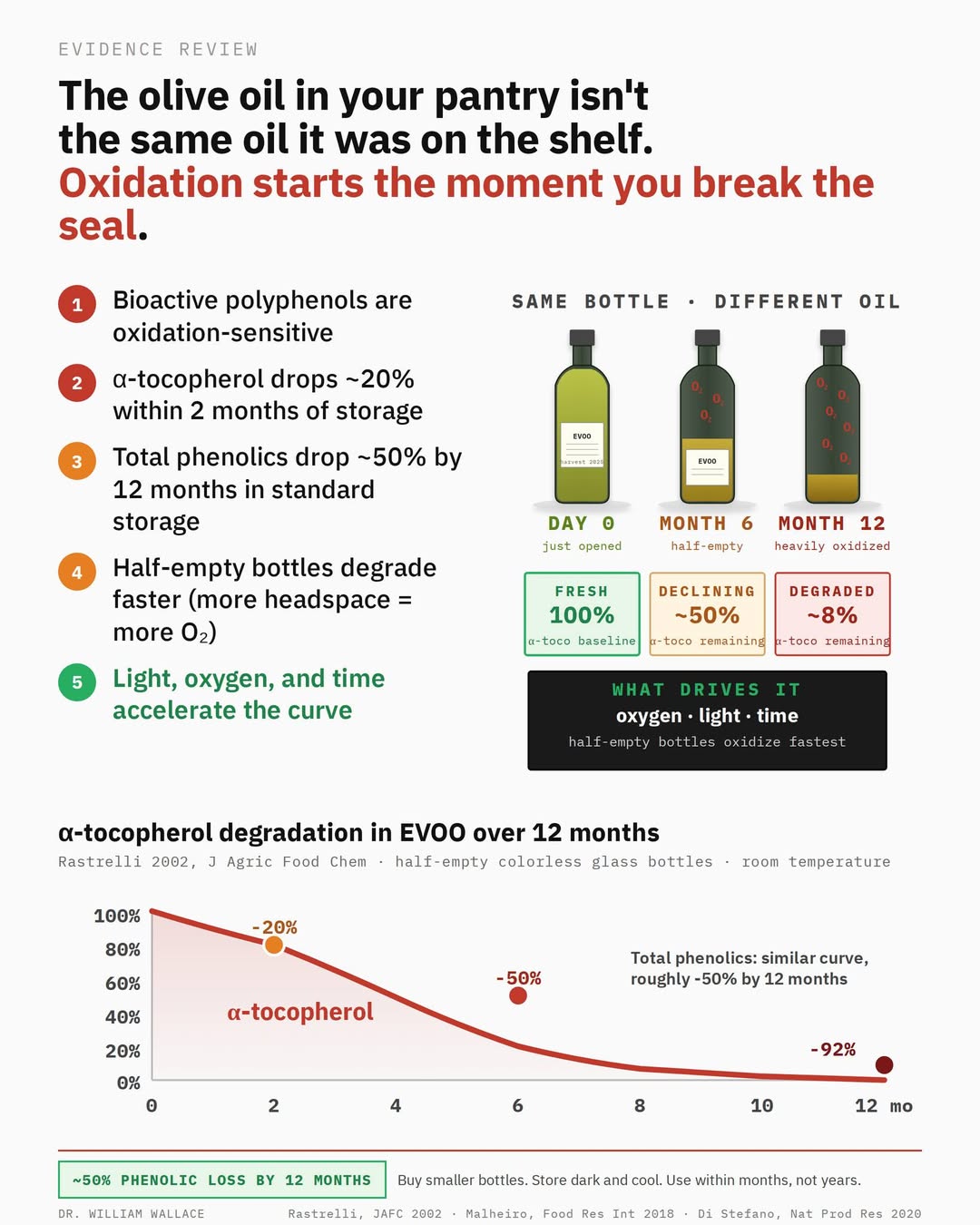
- Buy small bottles, store them well. Louis suggests using EVOO within about 6 weeks of opening, keeping it cool, dark and tightly capped, and buying bottles far from the "use by" date. A storage study found alpha-tocopherol fell 20% by 2 months and 92% by 12 months, with half-empty bottles degrading most. Old oil is not harmful, you just lose the advantage over refined oil9.
- Fake olive oil. Louis calls the claim that most supermarket olive oils are fake a myth, pointing to a North American Olive Oil Association program that buys and tests certified oils from supermarkets several times a year. That program comes from an industry group, which is worth keeping in mind5253.
- Cooking. Louis says the trials' intervention groups cooked nearly everything with EVOO; the one caution is not to exceed the oil's smoke point2. For high heat he points to light or refined olive oils with smoke points of roughly 410-446 F (220-230 C), above typical deep-frying temperatures, with almost no olive flavor54.
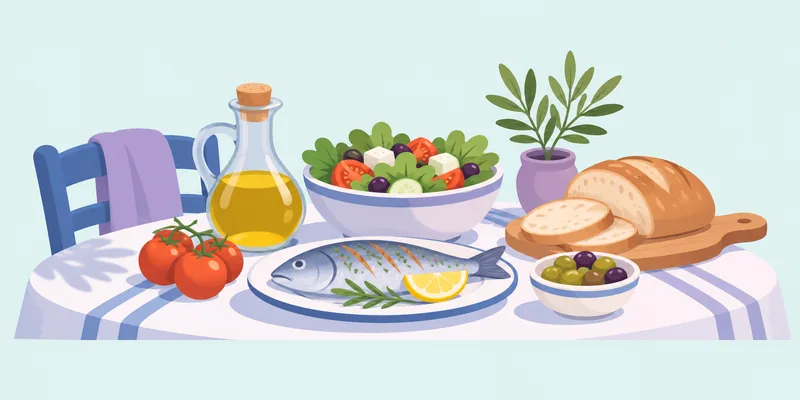
- Pair it with the rest of the pattern. Olive oil sits within a Mediterranean pattern of fruit, vegetables, whole grains, legumes, nuts and fish, with limited red meat and minimal butter and cream1725. Overall diet quality matters more than any single food, in the words of a summarized NYT piece, and Gokhan cautions that observational findings can reflect reverse causality and confounding55.
What this means for you
- Consider olive oil, ideally extra virgin, as a main added fat in place of butter or other saturated fat837.
- Amounts in the research run from about 7 g/day (half a tablespoon) for dementia-related outcomes up to 3-4 tablespoons a day in Moli-sani and trial or clinic settings; discuss your own target with your doctor, especially if you are watching calories or weight5627.
- Look for high-polyphenol oils and keep them fresh932.
- Remember olive oil is one part of a dietary pattern. The trials tested the whole Mediterranean diet, not oil alone1113.
- If your LDL or Lp(a) is high, the admins still suggest working on diet and discussing medication with your doctor; the Lyon and CORDIOPREV participants benefited despite similar cholesterol or while on statins1324.
Frequently asked questions
Is cooking with extra virgin olive oil safe?
Louis says yes. It is a myth that olive oil cannot be used for cooking, since the trials used it for nearly all cooking, and refined or light olive oils tolerate even deep-frying temperatures254.
How much should I use per day?
The group does not give a single number. Cohorts associate benefits with at least 7 g/day, PREDIMED analyses with each extra 10 g/day, and some clinics advise about 4 tablespoons a day for fatty liver4612.
Does olive oil raise cholesterol?
The review shared by Gokhan says oleic acid lowers total and LDL cholesterol14. Louis's comment on the zero-oil trial is that its LDL and apoB differences were not significant7.
Is olive oil good for the brain?
Observational data link at least 7 g/day to lower dementia-related death, and Louis shares a video suggesting oleocanthal and other polyphenols may protect the brain, though this has not been shown by randomized trials in these posts415.
Does it matter if the oil is refined?
Yes, for the polyphenol-related benefits. In the endothelial trial refined olive oil did not improve FMD while high-polyphenol EVOO did29. Refined oils are still useful for high-heat cooking54.