Good advice

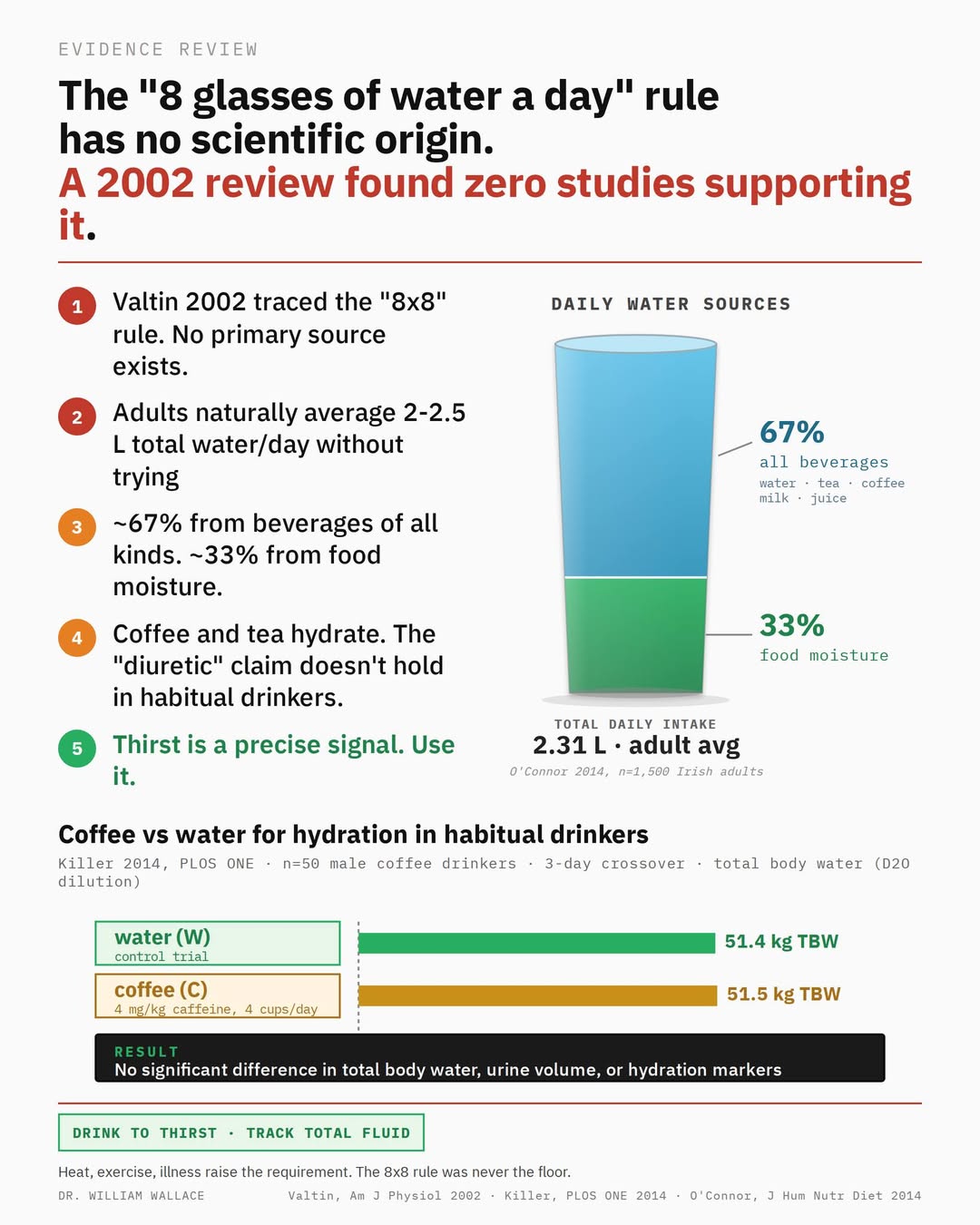
No evidence supports the 8-glasses-of-water rule, and coffee is not dehydrating
A shared summary of Valtin 2002 finding no source for the 8x8 rule, plus intake data from Irish adults, with Louis noting coffee is not dehydrating.
Louis endorses a post from longevity scientist Eric Verdin urging people to drink more water as the weather warms. It notes that after 65 chronic dehydration raises risks of falls, fractures and delirium, and thirst signals weaken with age.
Good advice
As the weather gets warmer, here is one of the simplest things you can do for your health:
Drink more water.
I know. Not exactly the longevity intervention you’d expect from a scientist who studies aging biology for a living. But it matters more than most people realize.
Dehydration is a major risk factor for death in older adults. After 65, chronic dehydration meaningfully raises your risk of falls, fractures, and delirium.
Part of the problem is that the body stops warning you. Your thirst mechanism declines with age. The brain circuitry that signals you to drink becomes less sensitive over time, so older adults genuinely feel less thirsty even when their body needs fluid.
Your kidneys also become less efficient. They lose some of their ability to concentrate urine, which means the body is worse at conserving water exactly when it needs to.
In other words, the signal telling you to drink gets quieter just as your margin for error gets smaller.
And the downstream effects of chronic mild dehydration are not trivial. It impairs cellular function across every system, accelerates skin aging, raises diabetes risk, and contributes to cognitive decline and delirium.
The takeaway: older adults can’t rely on thirst as a reliable signal. Drink consistently, before you feel the need.
Especially as summer arrives.
For more evidence-based insights from the front lines of aging research, sign up for the Buck Institute newsletter:
A shared summary of Valtin 2002 finding no source for the 8x8 rule, plus intake data from Irish adults, with Louis noting coffee is not dehydrating.
Louis shares a post on Toru Miyazaki's work: cats have a non-functional AIM gene, which stresses the kidneys, and kidney failure is their main cause of death. Louis frames it as each species having its own lifespan-limiting disease (kidney disease in cats, heart disease in humans). Claim is from a social post, not a cited paper.
Describes a trial of donor bone-marrow mesenchymal stem cells in 148 walking adults aged 70-85 with frailty (118 on varying doses, 30 on placebo). The cells lack immune-triggering surface proteins so no immunosuppressants were needed; at nine months the highest dose group walked about 60 m farther in a six-minute walk test than at baseline.
Summarises a proof-of-concept open-label pilot in six healthy men aged 70-76 taking rapamycin 1 mg daily for 8 weeks. It was safe and well tolerated; systolic function was unchanged but cardiac MRI showed better diastolic function (peak filling rate p=0.014) and endothelial function improved (p=0.020). Very small and uncontrolled; larger placebo-controlled trials are needed.
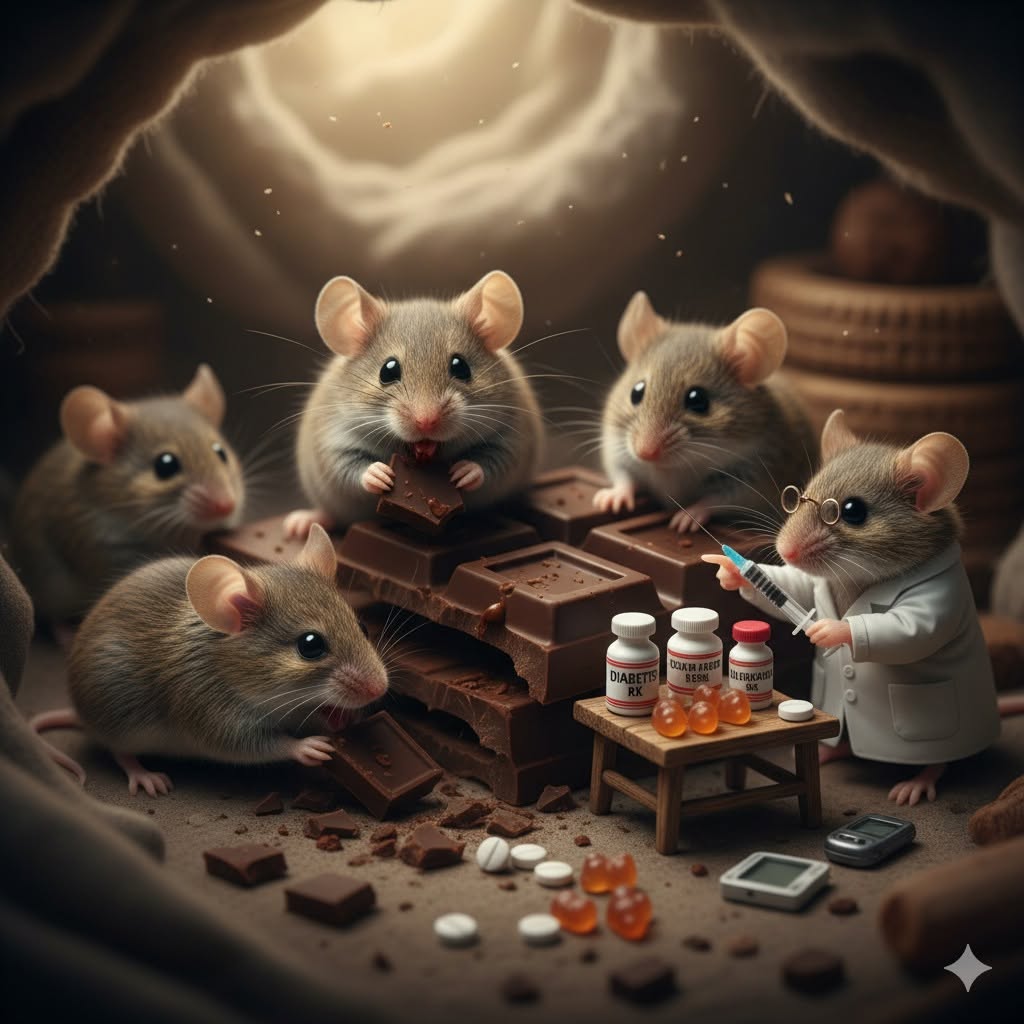
The NIA Interventions Testing Program found epicatechin raised median lifespan of male mice by about 5% and mitoglitazone, a next-generation TZD, by about 9%. Effects were seen only in males, and this is mouse data.
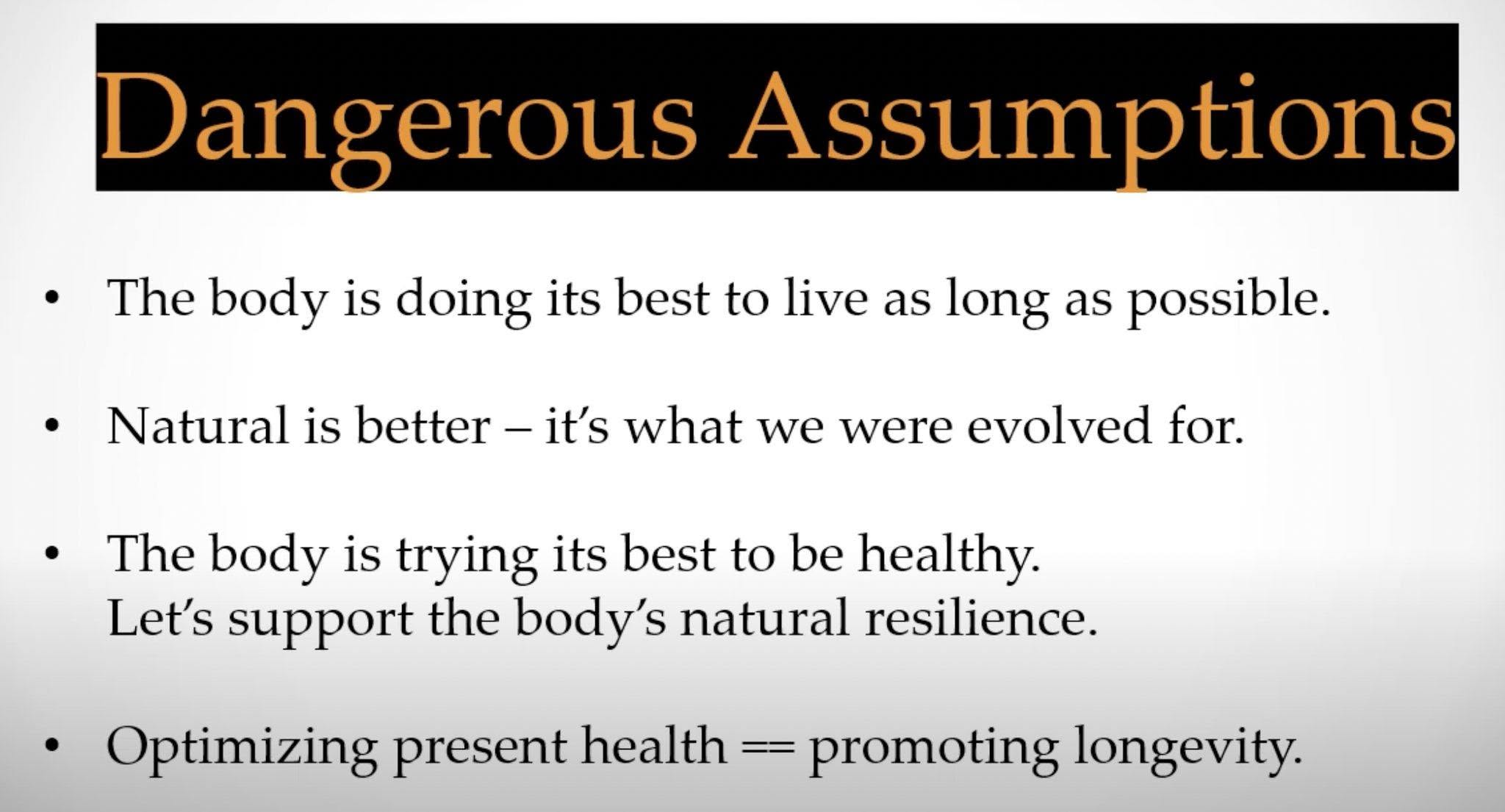
Gokhan endorses Josh Mitteldorf's iPAK 2024 talk arguing aging is an active, evolved process driven by inflammation, autoimmunity and telomere attrition, so we should intervene. This is a contested theoretical view, not a trial-based finding.