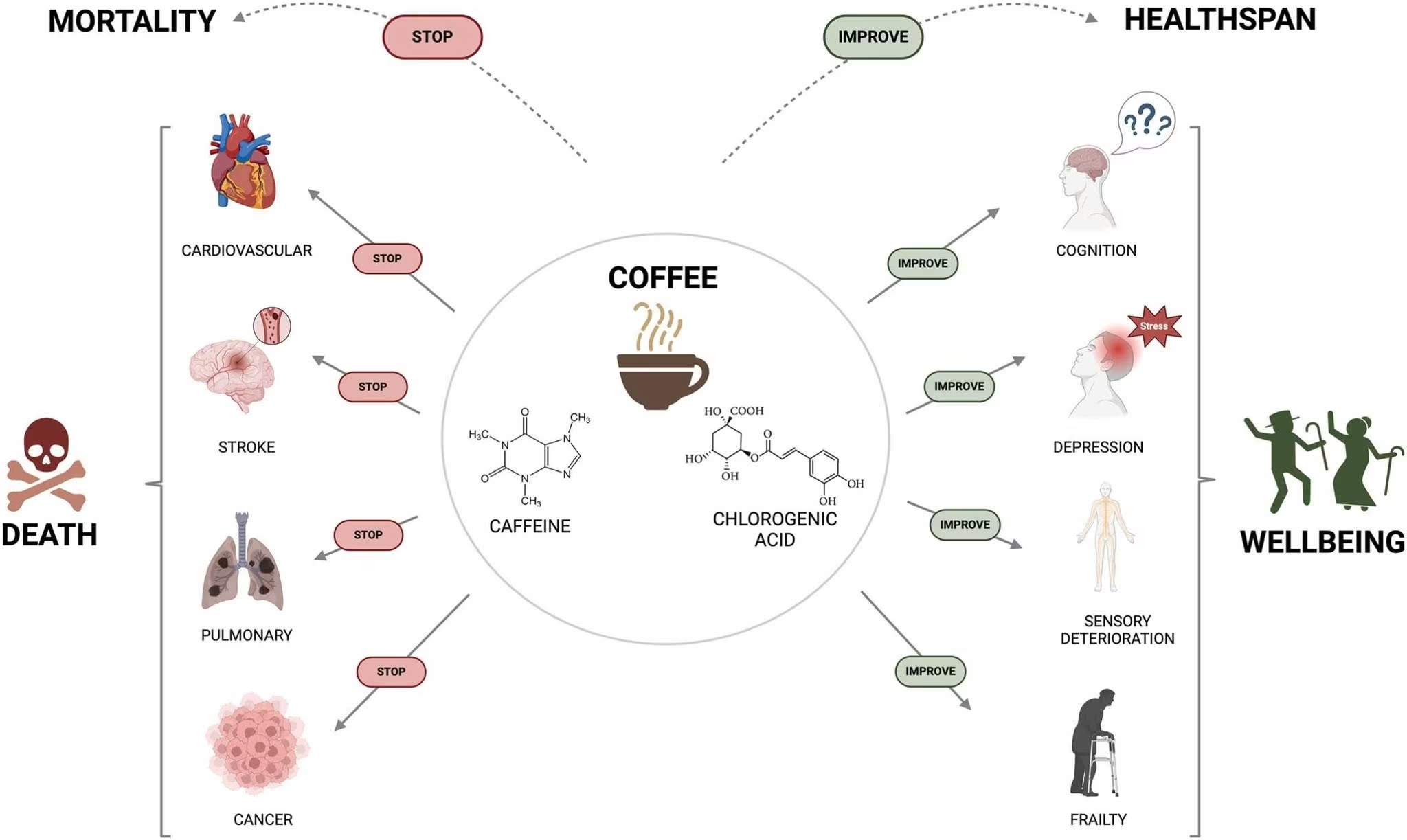
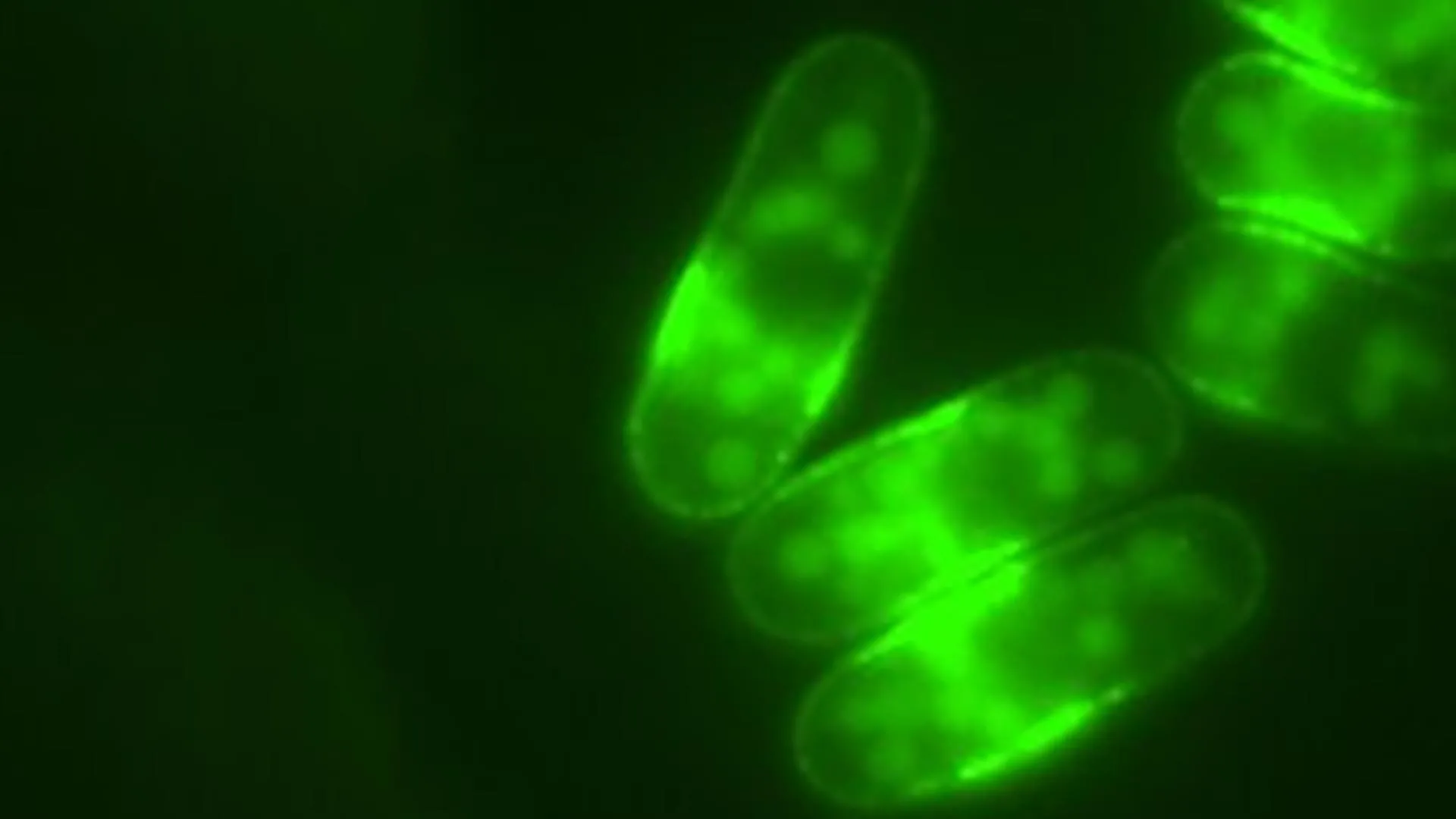
A new study from Queen Mary University of London reveals that caffeine, beyond its typical stimulant effects, may play a role in slowing cellular aging. Published in the journal Microbial Cell, the research, conducted on fission yeast (an organism with cellular similarities to humans), found that caffeine activates AMPK, a crucial cellular "fuel gauge" that helps cells manage stress and energy deficits. This activation of AMPK influences cell growth, DNA repair, and stress response—all factors linked to aging and disease. This discovery builds on previous findings that caffeine impacts TOR, a growth regulator, but clarifies that caffeine's effect is indirect, working through AMPK. These findings could help explain the observed health benefits and longevity links associated with coffee consumption and open doors for future research.
Coffee: observational data link 1-3 cups a day to about 30% lower all-cause mortality
Louis notes the coffee research is mostly observational but huge, and shares a video quote that 1-3 cups a day is associated with about 30% lower all-cause mortality.