HD-OPM Archive
Topics › Guidelines, policy & public health

Life's Essential 8 adherence for 10 years linked to 66% lower coronary heart disease risk

Louis Nervegna · Mar 13, 2026 · ♥ 6 reactions · 0 comments · original Facebook post
Guidelines, policy & public healthCardiovascular disease: the big picture
↻ This is a repost. The main version (highest ranked) is Following AHA Life's Essential 8 for ~10 years linked to 66% lower coronary heart disease · Jul 11, 2025.
AI summary & key facts

Louis shares an AHA report that close adherence to Life's Essential 8 over about 10 years was associated with 66% lower coronary heart disease risk, and lists the eight metrics: diet, activity, tobacco, sleep, weight, cholesterol, blood sugar and blood pressure.

(no text — see the shared post below)

Research cited

Closely adhering to 8 basic guidelines from the American Heart Association for an average of 10 years was associated with 66% lower risk for coronary heart disease— compared to people who did not closely adhere.

These 8 guidelines are described here:

heart.orgLink to heart.orgheart.org
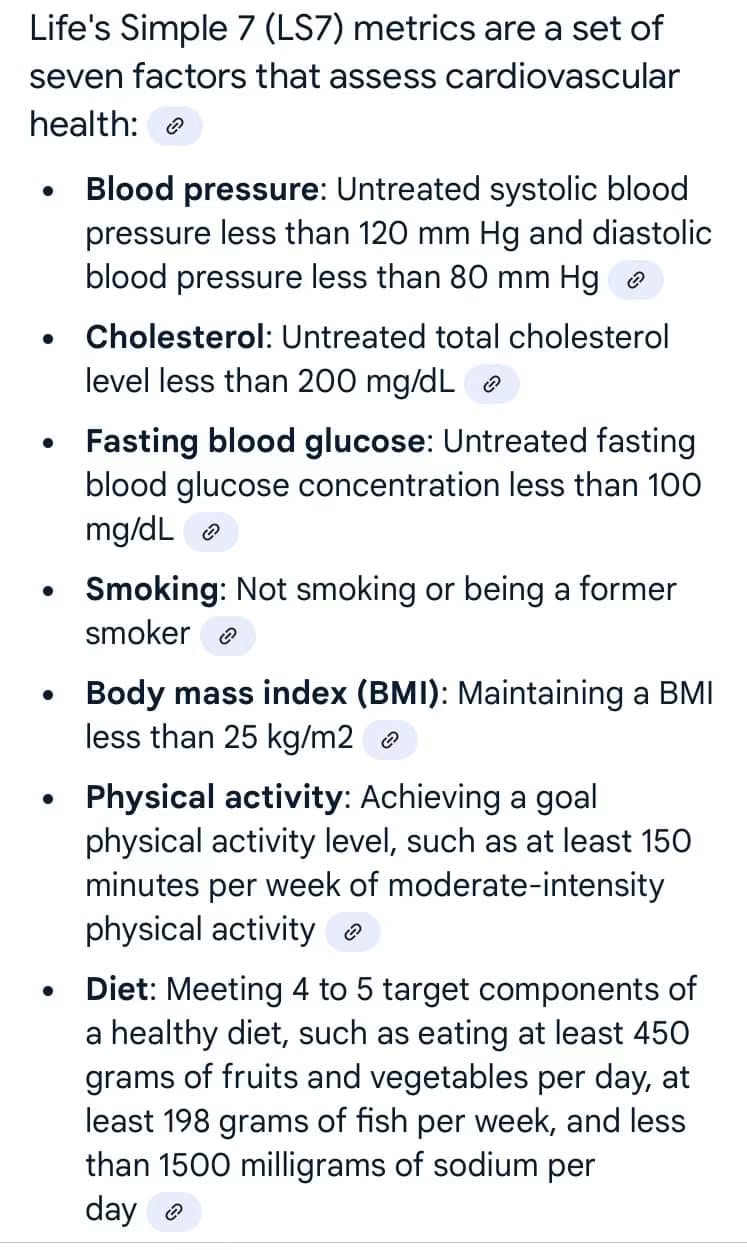
  1. Eat Better: Focus on a healthy diet rich in whole foods, fruits, vegetables, lean protein, nuts, seeds, and healthy cooking oils (like olive and canola). Limit sugary drinks, alcohol, sodium, and processed meats.
  1. Be More Active: Adults should aim for at least 150 minutes of moderate-intensity activity (like brisk walking) or 75 minutes of vigorous-intensity activity per week. Kids need 60 minutes of physical activity daily.
  1. Quit Tobacco: Avoid all forms of nicotine, including traditional cigarettes, e-cigarettes, and vaping, as well as exposure to secondhand smoke.
  1. Get Healthy Sleep: Most adults need 7 to 9 hours of sleep per night to support heart health, improve brain function, and reduce the risk of chronic diseases.
  1. Manage Weight: Maintain a healthy weight, aiming for a Body Mass Index (BMI) between 18.5 and less than 25.
  1. Control Cholesterol: Keep non-HDL cholesterol ("bad" cholesterol) levels low, ideally below 130 mg/dL, through diet, exercise, quitting nicotine, and potentially medication if needed.

Non-HDL = LDL + TG/5

  1. Manage Blood Sugar: Maintain healthy blood glucose levels to prevent diabetes and its related complications, such as damage to the heart, kidneys, eyes, and nerves.
  1. Manage Blood Pressure: Strive for a blood pressure reading less than 120/80 mmHg. Lifestyle changes, like maintaining a healthy weight, exercising, and limiting alcohol, can help achieve this goal.

Quoted:

“In the new analysis, researchers used data from the UK Biobank to score 137,794 adults who were free of cardiovascular disease on how well they adhered to Life's Essential 8. Using a 100-point scale, scores were grouped into low, moderate or high adherence. Genetic risk scores for coronary heart disease and stroke also were calculated. Participants were almost evenly split between men and women and were an average 55 years old.

After a median 10 years of follow-up, those with high adherence scores had a 66% lower risk for coronary heart disease, 55% lower risk for stroke and 64% lower risk for cardiovascular disease than those with low adherence. Using the Life's Essential 8 model, compared to the previous checklist, better predicted who would develop cardiovascular conditions.”

#guidelinesHD #ahaHD #lifesessential8HD

← newer: ESC scientific statement: diet is a primary factor in CVD prolder: 2026 ACC/AHA lipid guideline keeps LDL targets and adds Lp(a →