AI summary & key facts
Louis summarizes the European Society of Cardiology's statement: plant-rich whole-food patterns lower risk, while ultraprocessed foods, processed and red meat, salt, sugar and saturated fat raise it. Mediterranean, DASH and vegetarian diets reduce risk; vegan offers no extra benefit; fasting, coffee and potassium are favorable.
- Mediterranean, DASH and vegetarian diets reduce risk
- No additional benefit from pure vegan diet
- About 14 g alcohol (one unit) may be neutral to beneficial
- High potassium beneficial, high sodium detrimental
- Low-carb long-term effects not studied
(no text — see the shared post below)
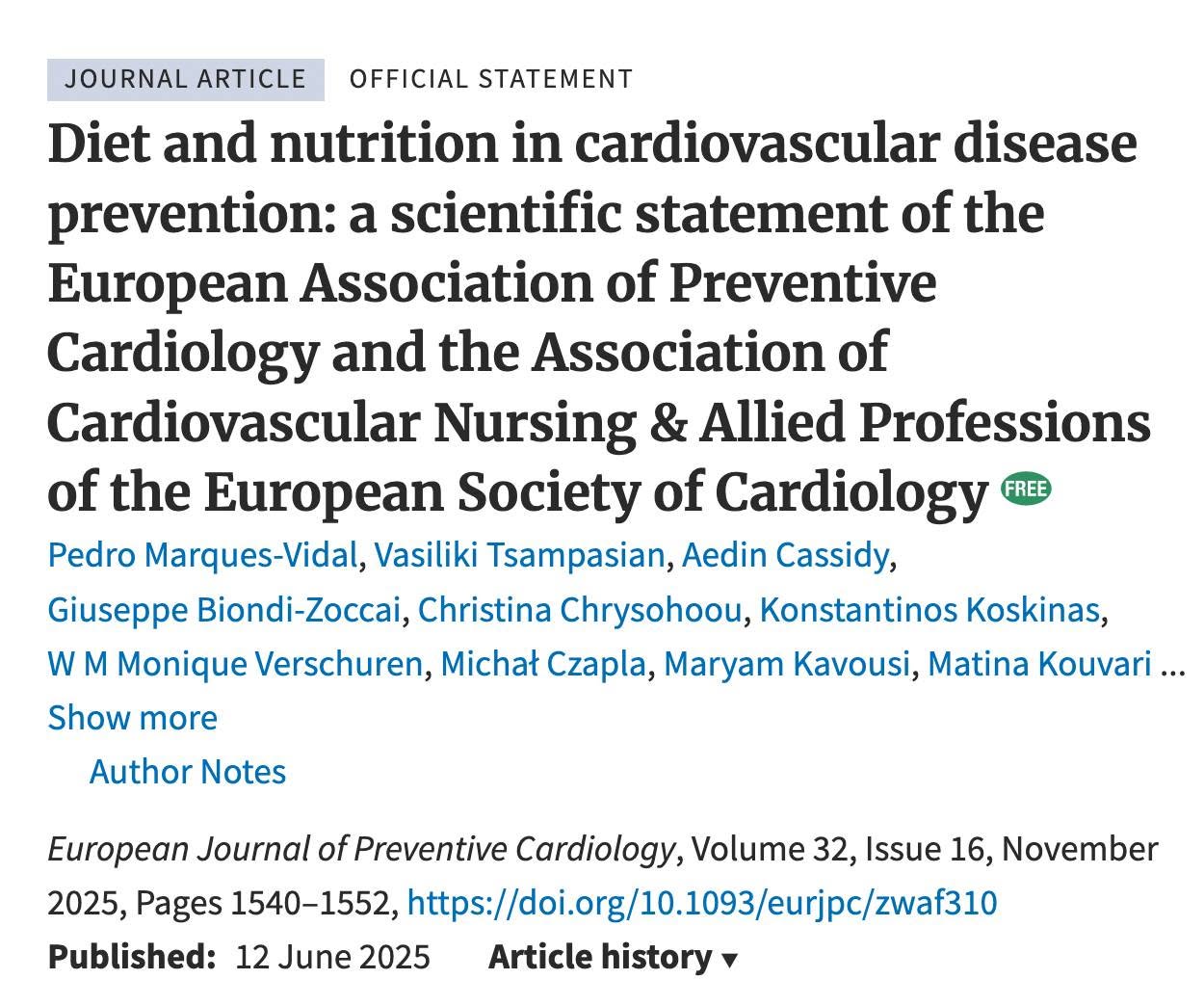
The European Society of Cardiology has released a scientific statement on the role that diet plays in the prevention and treatment of CVD:
Paper · Eur J Preventive CardiologyEur J Preventive Cardiology articleacademic.oup.com
Their intent is to summarize the preponderance of scientific evidence on this subject for practicing physicians.
Summary:
- Diet plays a major role in prevention and treament of CVD. It is not just a secondary factor. It is a PRIMARY factor.
- Plant-based dietary patterns rich in whole unprocessed foods decrease risk.
- Diets high in ultraprocessed foods (including processed meat), red meat, salt, sugar, and saturated fat increase risk.
- The traditional Mediterranean diet, DASH diet, and vegetarian diet reduce risk. The preponderance of evidence does not indicate that a pure vegan diet offers any additional benefit beyond this.
- Low carb diets might be beneficial, but their long term effects have not been properly studied.
- Controlling calories to stay in energy balance reduces risk.
- Fasting can reduce CVD risk.
- The consumption of 1/2 serving of alcohol per day (one unit) may reduce CVD risk, without presenting an unfavorable risk profile.
(Note: 14g of pure alcohol is considered a full serving. This is about 12oz of beer, 5oz of wine, or 1.5oz of distilled spirits.)
- Moderate intake of coffee is safe and does not raise risk for CVD. It might be beneficial.
- High potassium intake is beneficial. High sodium is detrimental.
- In general, there is not convincing evidence that vitamin/mineral supplements protect against CVD.
Quoted:
“Plant-based dietary patterns rich in minimally processed foods, vegetables, and fruits reduce CVD risk, while patterns rich in ultra-processed foods, [red] meat, salt, sugar, and saturated fat increase risk. The Mediterranean, Dietary Approaches to Stop Hypertension [DASH], and vegetarian diets reduce CVD risk, while vegan diets offer no additional benefit. Low-carbohydrate diets may be beneficial, but their long-term effect remains to be confirmed. Balanced distribution of caloric intake through different meals is associated with favourable effects. Fasting (e.g. alternate-day, intermittent, time-restricted, and periodic) can reduce CVD risk but is often challenging. Moderate coffee consumption is not associated with increased risk of CVD. The consumption of one unit of alcohol/day [1/2 serving] may contribute to a reduced cardiovascular risk without presenting an unfavourable risk profile. Generally, there is no evidence that vitamin and mineral supplementation reduces CVD risk. High potassium intake is beneficial in healthy individuals, calcium or selenium supplementation shows no added benefit, and high sodium intake is detrimental. Diet is a major component of CVD prevention, and health professionals should include dietary assessment and evidence-based recommendations in their clinical practice.”
#guidelinesHD #escHD #alcoholHD #mediterraneanHD #dashHD #vegetarianHD #veganHD #fastingHD #potassiumHD #sodiumHD #vitaminsHD #mineralsHD #coffeeHD #calorierestrictionHD #processedmeatHD #redmeatHD #saturatedfatHD #refinedsugarHD #ultraprocessedfoodHD #lowcarbHD