Iodized salt is not the problem; excess sodium is
Louis argues iodized salt is harmless in reasonable amounts, and the real risk is too much sodium overall.
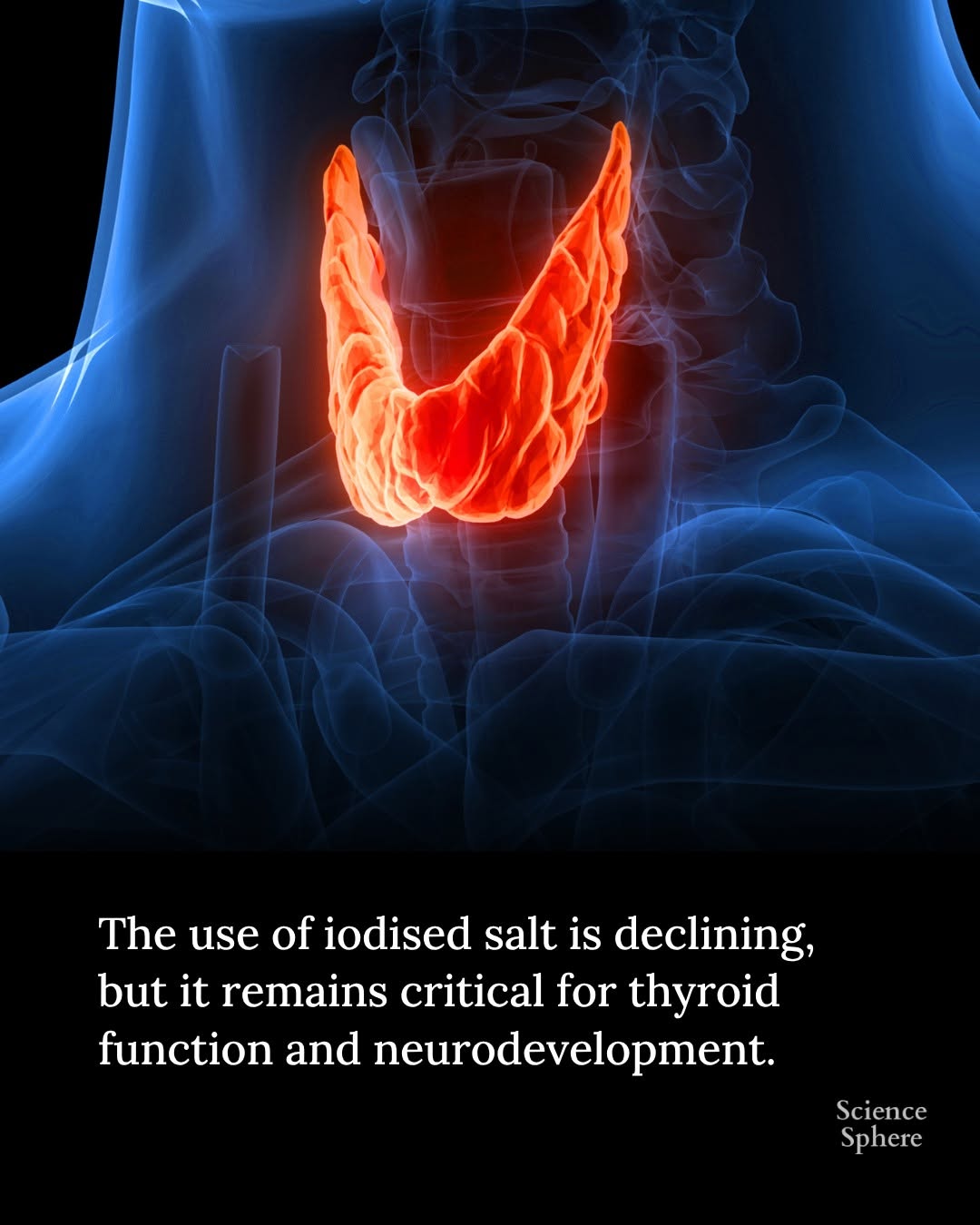
A shared piece argues that iodised salt, which eliminated goitre and raised national IQs, is being displaced by fashionable salts that lack meaningful iodine. Loosely related to heart health via salt choice, mainly a nutrition-adequacy point.
🧂 Iodised salt was one of the great public health triumphs of the 20th century. It eliminated goitre across entire continents and raised national IQs. Now, quietly, its gains are being reversed — and the culprit is good taste.
The core problem is aesthetic. Iodised salt has been steadily displaced by shimmering sea salt crystals, Himalayan pink rock salt, smoked flakes, and Kosher salt — while the few remaining packages of iodised salt sit in uninspired, drab packaging, decidedly out of step with contemporary trends. None of these fashionable alternatives contain meaningful iodine. And the people switching to them largely have no idea.
The consequences are showing up in exactly the population that can least afford them. 46 per cent of pregnant women in the US currently exhibit insufficient iodine levels. In Australia, 62 per cent of pregnant and breastfeeding women report insufficient iodine status. The stakes are not abstract: even subtle to moderate iodine deficiency in utero has been estimated to reduce intelligence by as much as 0.3 to 13 IQ points. Goitre, once effectively eradicated across the developed world, is edging back.
"The main message is that iodine deficiency is re-emerging as a public health concern in countries that had previously eliminated it," said one public health expert tracking the trend. The fix remains exactly what it was a century ago — and costs almost nothing to implement.
This is not a story about poverty or neglect. It is a story about wellness culture quietly dismantling a century of public health progress, one artisanal salt grinder at a time.Source: New Scientist
Louis argues iodized salt is harmless in reasonable amounts, and the real risk is too much sodium overall.
Louis cites a New Scientist column warning that fashionable salts are causing iodine deficiency to return. He lists seafood, dairy, seaweed, skin-on potatoes and lima beans as sources and suggests a basic multivitamin with iodine as insurance.
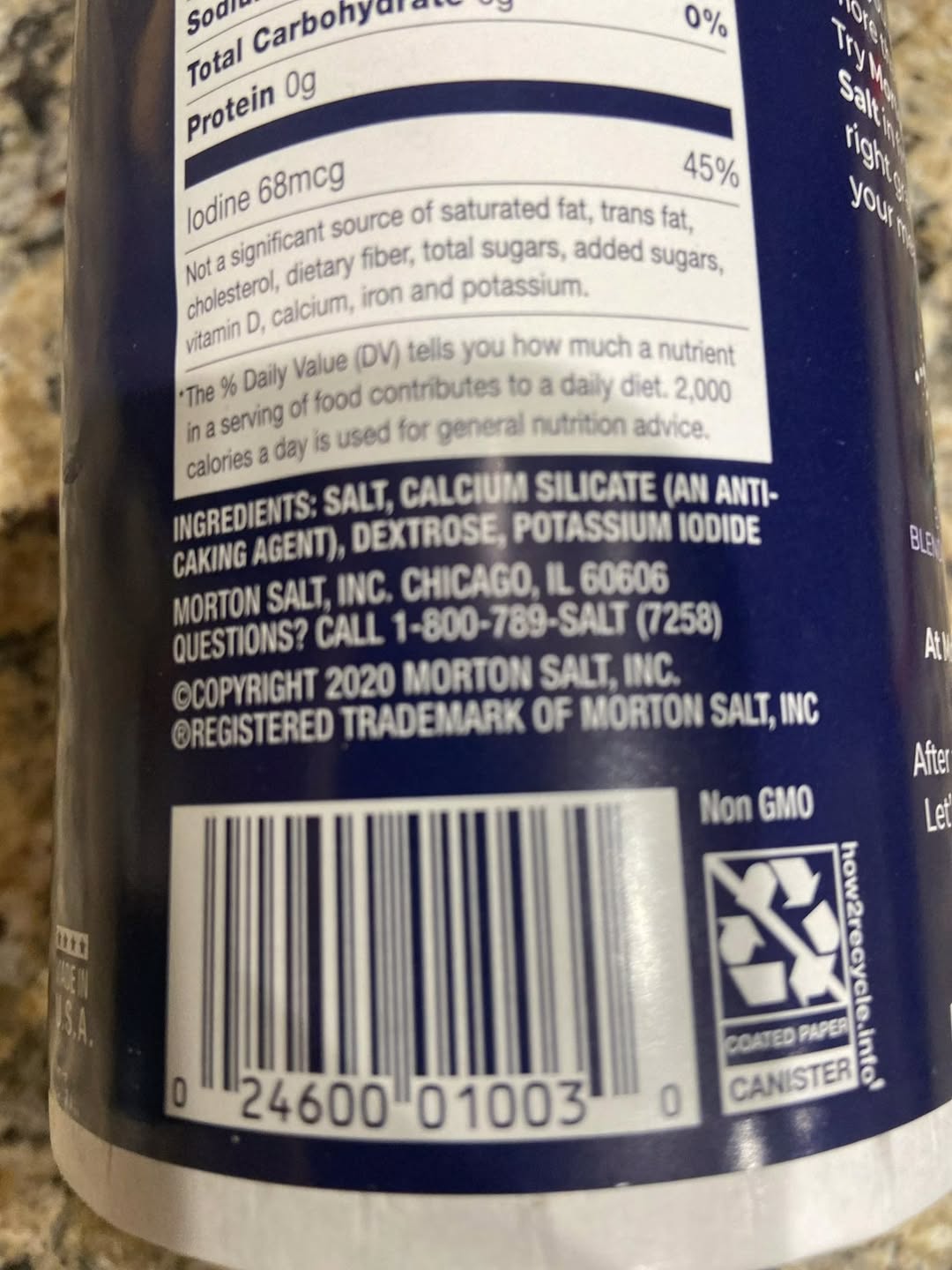
Louis recommends Morton Lite Salt, a 50:50 mix of regular salt and potassium chloride that is also iodized (60 mcg iodine per 1/4 teaspoon, 40% of the RDA). He warns people with kidney problems should not use potassium salts because excess potassium can cause fatal cardiac arrest.
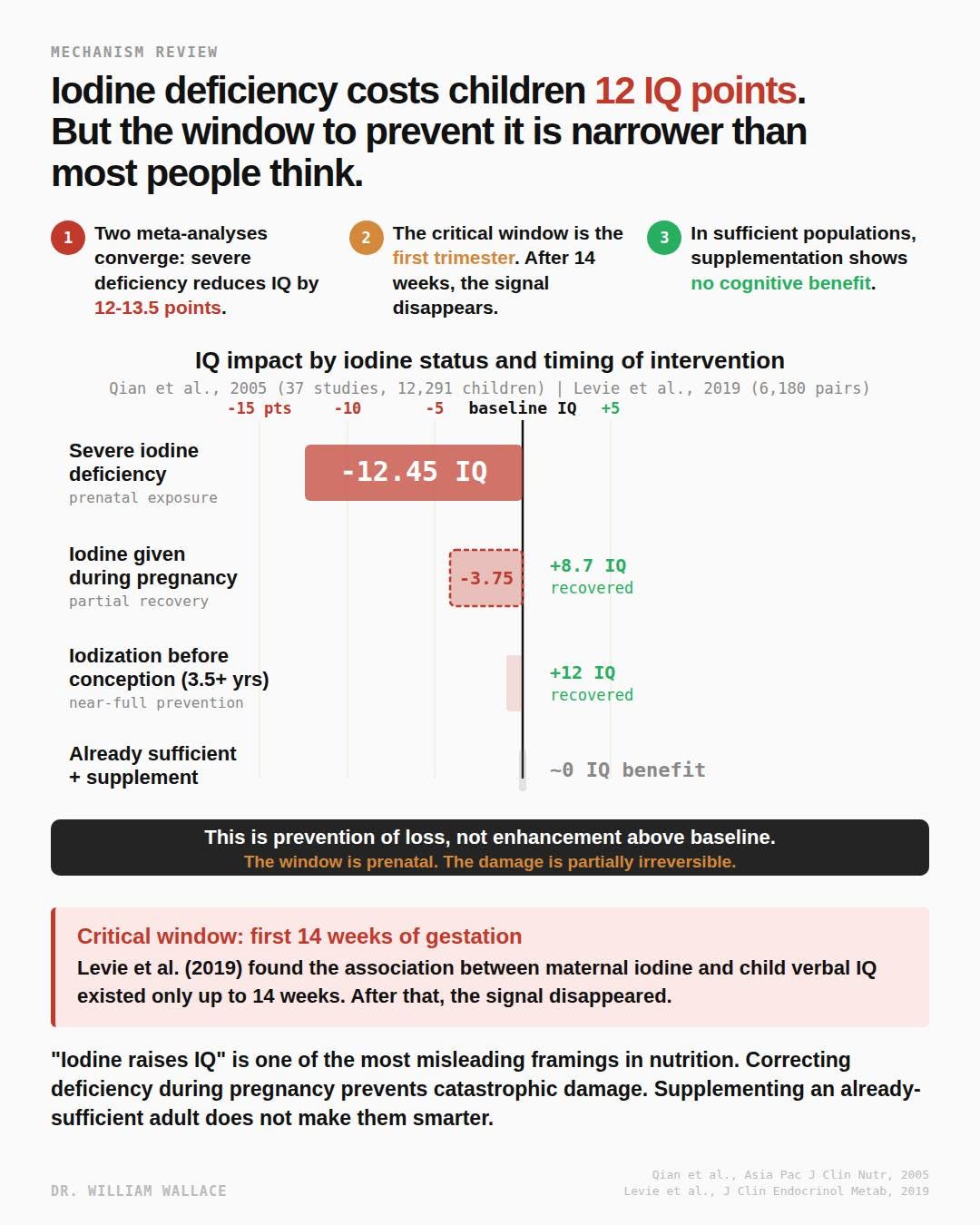
A shared summary of two meta-analyses of iodine deficiency and IQ: Bleichrodt and Born (1994, 21 studies) found 13.5 IQ points and Qian et al. (2005, 37 studies, 12,291 Chinese children) found about 12.45 points, in deficient regions. Hashtag-only post.
A University of Connecticut meta-analysis of nine studies linked regular kimchi intake to better cardiometabolic markers. The blood pressure benefit is attributed to potassium and fermentation bacteria despite kimchi's high sodium, though most studies were done in Korea.
A cluster randomized trial in rural northern China (a subgroup analysis of a larger trial) gave stroke survivors a salt substitute containing 25% potassium chloride. It reduced recurrent stroke, hemorrhagic stroke and stroke-related death compared with regular salt, suggesting a cheap, widely usable strategy where sodium intake is high.