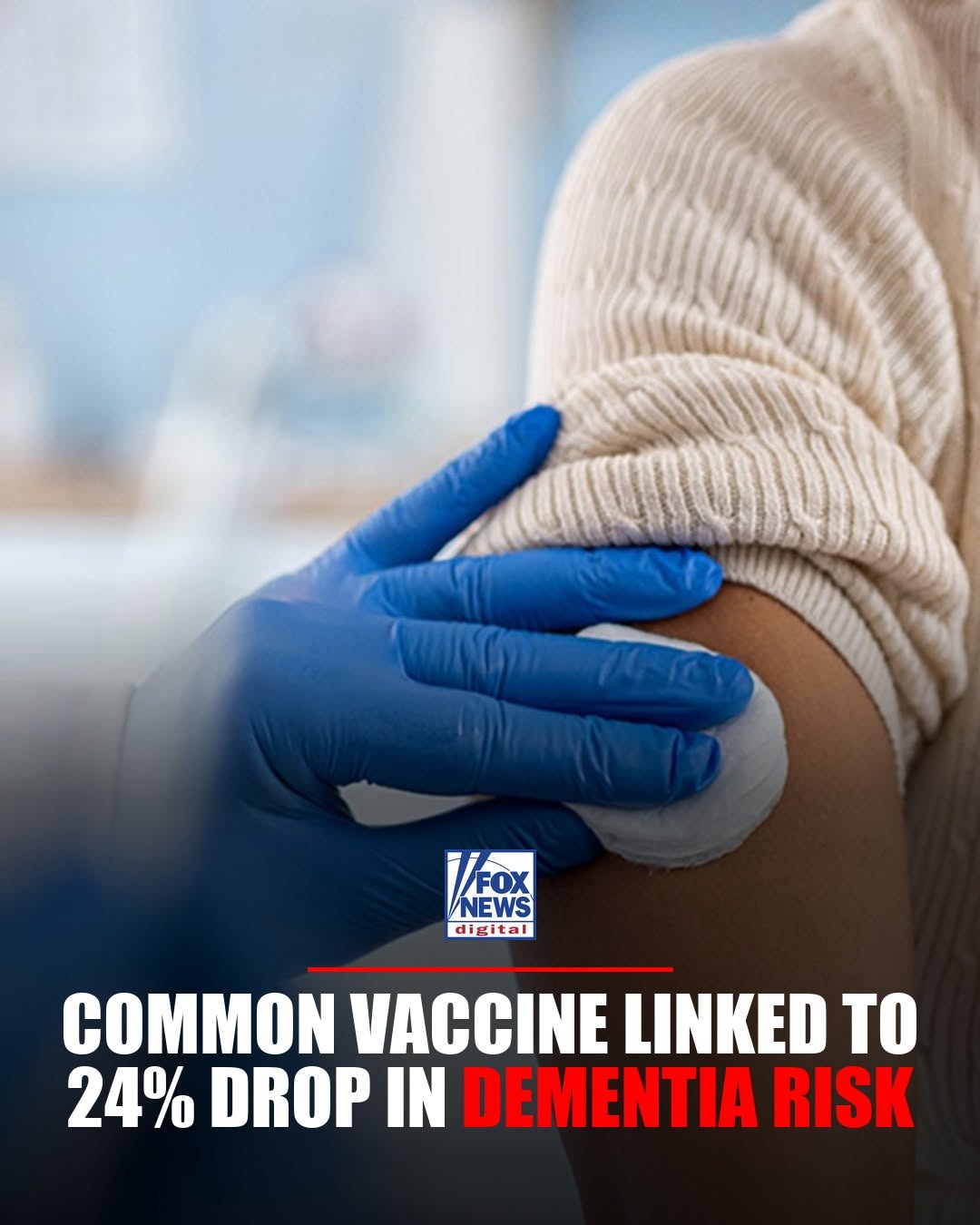
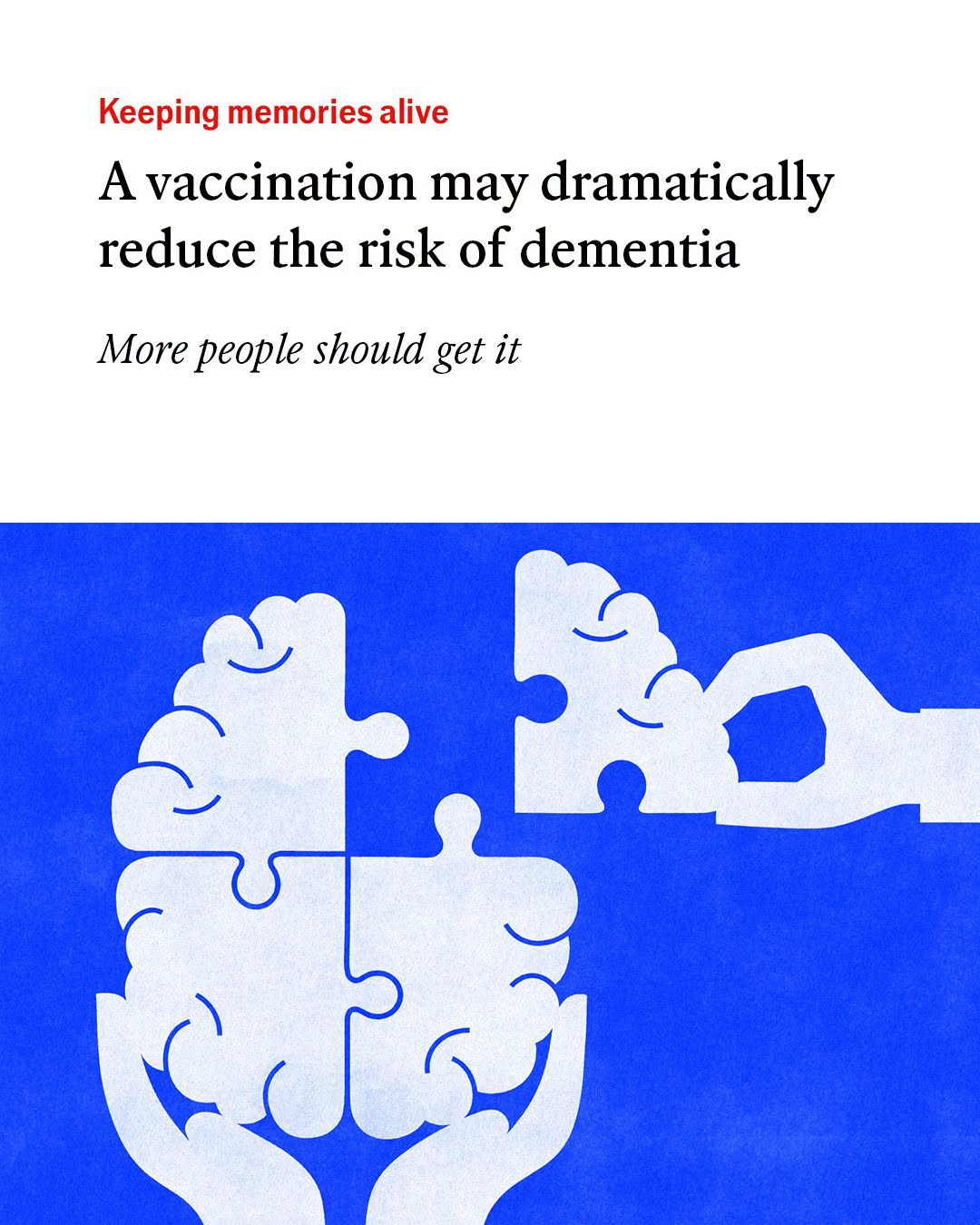
Could the shingles vaccine (Shingrix) help protect the aging brain — and could treating herpesviruses earlier in life matter too?
Maybe.
But this is a story where we need to carefully separate intriguing hypothesis from increasingly persuasive human evidence.
Herpesviruses are unusual: after infection, they can remain quietly in the body for life and periodically reactivate. Increasing evidence is linking repeated herpesvirus activity, immune activation and possibly brain degeneration — but the strength of evidence varies a lot depending on which virus and which intervention we’re discussing.
🔬 Cold sores (herpes labialis): intriguing, NOT proven
HSV-1, the virus that causes most cold sores, has long been investigated as a possible contributor to Alzheimer’s disease.
Observational studies have suggested that people with HSV who receive antiviral treatment may have lower later risk of dementia than those who do not.
Interesting? Absolutely.
Proof that aggressively treating every childhood cold sore prevents Alzheimer’s decades later? Absolutely not.
We do not have randomized trials showing that early treatment with antiviral medicines such as acyclovir or valacyclovir in children changes lifetime dementia risk.
But it raises a legitimate question:
Could reducing the duration, frequency or inflammatory burden of cold-sore outbreaks across a lifetime eventually translate into better brain health?
That remains a hypothesis — not practice-changing evidence.
💉 Chickenpox vaccination: proven infection prevention, possible long-term brain benefit
The virus that causes chickenpox and shingles is called varicella-zoster virus.
Natural chickenpox can leave this virus dormant in the body for decades, where it may later reactivate as shingles.
Childhood chickenpox vaccination clearly prevents chickenpox and its complications.
Could reducing lifetime exposure to wild-type virus and later reactivation eventually translate into less inflammation in the brain or lower dementia risk?
Plausible.
Proven? Not yet.
🧠 The shingles vaccine: this is where things get much more interesting
The shingles vaccine is already recommended because it very effectively prevents shingles and its complications.
But multiple human studies now suggest that shingles vaccination may also be associated with lower dementia risk.
Importantly, this includes natural-experiment data that are harder to dismiss as simply “healthier people are more likely to get vaccinated.”
That still does not make the shingles vaccine an Alzheimer’s treatment.
But I think it is increasingly reasonable to say:
The shingles vaccine has established clinical benefits, with a potentially meaningful brain-health bonus.
And then there is another fascinating wrinkle:
🧬 Age-related blood stem-cell mutations (CHIP) and the brain’s immune cells
CHIP — clonal hematopoiesis of indeterminate potential — means that a group of blood-forming stem cells acquires mutations and begins producing a growing share of our blood cells as we age.
Usually, CHIP gets our attention for the wrong reasons: higher risks of cardiovascular disease, blood clots and certain blood cancers.
Yet unexpectedly, some studies have found certain CHIP-associated mutations linked with lower Alzheimer’s risk.
One emerging explanation is that blood-derived immune cells may enter the brain, take on properties similar to the brain’s resident immune cells, and in some circumstances become unusually effective at clearing harmful material.
That is fascinating science.
But please do not interpret it as “CHIP is good.”
It is not something to seek, screen for to prevent Alzheimer’s, or intentionally create.
The real opportunity is to understand what potentially protective features these immune cells may have and eventually reproduce those benefits without the risks of CHIP.
So where does this leave us?
I’d frame the evidence gradient like this:
Treating childhood cold sores to prevent dementia → hypothesis.
Childhood chickenpox vaccination → proven infection prevention, theoretical future brain-health benefit.
Suppressing clinically significant herpesvirus reactivation → increasingly interesting observational signal.
Shingles vaccination → established clinical benefit PLUS increasingly persuasive evidence of possible dementia-risk reduction.
CHIP and replacement of brain immune cells → potentially transformative biology, but not yet clinically actionable.
And meanwhile, the most actionable dementia-prevention strategy remains much less exotic:
The Flex5 Lifestyle® — with particular attention to blood pressure, cholesterol and ApoB, insulin resistance and blood sugar, physical activity, sleep, nutrition, smoking avoidance and overall vascular-metabolic health.
Because whatever fascinating discoveries emerge about viruses, immune cells and future brain immunotherapy, the brain still depends enormously on the health of the blood vessels and metabolic environment supplying it.
So yes — follow the exciting science.
But don’t forget the fundamentals.
Literally.
#dementia #brainhealth #physician #TheFlex5Lifestyle