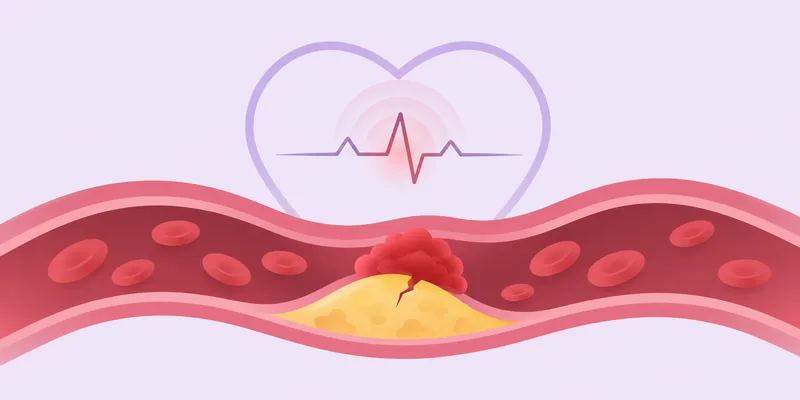
Infections do more than make you feel ill. When the immune system fights a virus such as influenza or SARS-CoV-2, it releases molecules that drive inflammation and make blood clot more easily. In someone whose arteries already contain plaque, that combination can tip the balance toward a heart attack or stroke. The group's posts describe this as well known in the medical literature, and as temporary for most acute infections: the extra risk is highest in the days and weeks around the illness and fades as the inflammation resolves12.
The posts also describe a second connection. Some researchers propose that hidden, chronic microbes, often oral bacteria, sit inside artery plaques and can be stirred up by a viral illness, helping a plaque rupture34. This is a newer and less settled idea, and the admins present it as a hypothesis.
On the protective side, the group focuses on vaccines against flu, shingles, COVID and RSV. Nearly all of the heart-related vaccine data discussed are observational, meaning they show an association and cannot fully rule out that vaccinated people are healthier to begin with. Louis repeats this caveat nearly every time56. This summary organizes what the posts say, what the numbers are, and where the evidence is strong or thin. It is a summary of group discussion, not medical advice.
How infections trigger heart attacks and strokes
The size of the effect
A report on a meta-analysis of 155 studies found that flu, shingles and COVID-19 raise heart attack and stroke risk both soon after infection and in the long term. It reported up to six times higher heart attack risk in the month after flu and nearly double the risk of heart disease or stroke after COVID-19, and said the more severe the illness, the higher the risk10. The American Heart Association summary of the same 155-study review that Louis shared gives somewhat different multiples: about 4 times the heart attack risk and 5 times the stroke risk in the month after laboratory-confirmed influenza, and about 3 times the risk of each in the 14 weeks after COVID, with risk remaining elevated for a year2. Another study shared in the group put the flu-related increase at about threefold for stroke and fivefold for heart attack, concentrated in the first week after infection5. The exact multiples differ between reports, but they all point the same way.
For chronic viral infections, the same AHA review reported a smaller but still clinically relevant long-term (more than 5 years on average) increase: 60% higher heart attack risk and 45% higher stroke risk with HIV, 27% and 23% with hepatitis C, and 12% and 18% with shingles2. Louis adds that shingles itself is extremely uncomfortable, can cause permanent nerve damage and raises the risk of heart attacks and strokes11.
Show data
| Heart attack | Stroke | |
|---|---|---|
| HIV | 60% | 45% |
| Hepatitis C | 27% | 23% |
| Shingles | 12% | 18% |
Why it happens
The mechanism described across the posts is consistent:
- Inflammation and clotting. The immune response to a virus releases molecules that trigger and sustain inflammation and promote blood clotting, effects that can last well after the infection has cleared2.
- Plaque destabilization. Inflammation contributes to the formation and rupture of plaques, which lead to heart attacks and strokes2. A study Louis cites hypothesized that increased metabolic demand plus inflammatory and coagulation effects destabilize plaque and cause an occlusion12.
- Heart failure and unstable disease. A short cath-lab note says that even mild viral infections can destabilize circulation and provoke inflammation, raising the chance of acute coronary syndromes or worsening heart failure in people with heart disease; it names COVID-19, flu and RSV and recommends vaccination, early symptom recognition and staying on treatment13.
- COVID clotting. Louis notes that COVID is well known to increase clot risk more than other infections do14, and a 2026 meta-analysis (20 studies reviewed, 5 with enough data to pool) found that people with post-COVID syndrome had increased risk of DVT, pulmonary embolism, ischemic stroke and heart attack15.
Severe COVID and long-lasting effects
A study in the journal Arteriosclerosis, Thrombosis, and Vascular Biology, covered by ABC News, reported that unvaccinated people with severe first-wave COVID-19 had about double the risk of heart attack and stroke, which could last up to three years16. A BMJ feature shared by Gokhan Can describes growing evidence that SARS-CoV-2 may cause lasting immune disruption, including more infections afterward than after flu or RSV in a study of over 830,000 US veterans, viral reactivation and persistent inflammation, challenging the "immunity debt" theory17. Two posts about the brain, not the heart, report cognitive effects: measurable cognitive impairment a year after a mild experimental infection in 18 young adults18 and cognitive deficits at one year after COVID hospitalization equivalent in size to aging from 50 to 7019.
The infectious hypothesis of plaque
Gokhan summarizes a 2025 JAHA study that found viridans-group oral streptococci in about 42% of coronary plaque samples, alongside other bacteria from the mouth, gut and respiratory tract, and frames this as part of an "infectious hypothesis" of heart disease3. A related summary describes how these bacteria may form protective biofilms inside plaques, shielded from the immune system and antibiotics, which a trigger such as a viral infection may awaken, causing inflammation, rupture of the plaque's fibrous cap and a clot4. Researchers at Tampere University are described as finding such biofilms and oral-microbe DNA in plaques, with the findings still needing validation20. Gokhan's broader overview lists viral infections, bacterial load from gum disease, gut metabolites (TMAO and imidazole propionate) and microplastics as additional contributors beyond LDL, blood pressure and weight21.
What the evidence shows for vaccines
Flu vaccine
Gokhan summarizes the flu vaccine literature in two tiers and labels each by study type. He lists an 11% to 42% reduction in all-cause mortality in randomized trials and prospective cohorts, and a 43% reduction in all-cause mortality as a consistent finding across more than 40 observational studies, with lower mortality also reported in adults with diabetes, hypertension, cardiovascular disease and cancer2223. The reviews he cites include a 2020 meta-analysis in Ageing Research Reviews on cardiovascular and respiratory disease, a 2021 JAHA meta-analysis in patients with cardiovascular disease, and a nationwide cohort study in hypertension22.
A more recent observational study found that influenza raised stroke risk about threefold and heart attack about fivefold, but that vaccination cut that increase roughly in half, even among people who still became infected5. Louis adds his usual caveat that people who vaccinate may take better care of their health in general5. In older adults, a UTHealth Houston study of nearly 200,000 people aged 65 and over associated high-dose flu vaccine with a nearly 55% lower Alzheimer's risk versus about 40% for standard dose; the post notes the CDC recommends high-dose vaccine at 65 and older, and that this study is observational and may reflect confounding24.
Shingles vaccine
The shingles vaccine has the most heart-related data in the posts, and it is the one Gokhan says has similar heart-protective effects to the flu vaccine7.
- Kaiser Permanente Southern California. Researchers matched 102,766 recipients of the recombinant vaccine (Shingrix) to 411,064 unvaccinated patients over an average of 2.5 years. Vaccinated patients had a 72.9% lower risk of herpes zoster ophthalmicus, an 83.7% lower risk of postherpetic neuralgia, a 28% lower risk of hospitalization for heart attack and a 42.5% lower risk of hospitalization for stroke7.
- High-risk patients (ACC.26). Among 246,822 US adults over 50 with atherosclerotic heart disease, half of whom had received Shingrix or Zostavax, vaccinated patients had at one year 46% fewer major cardiac events and 66% lower mortality, with 32% fewer heart attacks, 25% fewer strokes and 25% fewer heart failure cases; a 2025 European Heart Journal study reported 23% lower cardiovascular events25. Louis stresses it is observational, not yet peer reviewed and may reflect healthy-user bias, and a ScienceDaily report on the same work noted that scientists think preventing shingles may also prevent clot-related complications625.
- Evidence review at the ESC. A review presented at the European Society of Cardiology meeting suggested shingles vaccination lowered the risk of heart attack, stroke or other heart-related events by 18%11.
- Nature Medicine natural experiment. A 2026 study compared recombinant and live attenuated shingles vaccines and associated the recombinant vaccine with lower cardiovascular event incidence26.
Gokhan also shares a study of more than 3,800 Americans aged 70 and older in which shingles-vaccinated people showed slower biological aging and lower chronic inflammation, which may relate to "inflammaging", the low-grade inflammation tied to heart disease, frailty and cognitive decline2728.
Shingles and RSV vaccines and dementia
Because cardiovascular disease and dementia are closely linked, Louis links the heart findings to a growing dementia literature6:
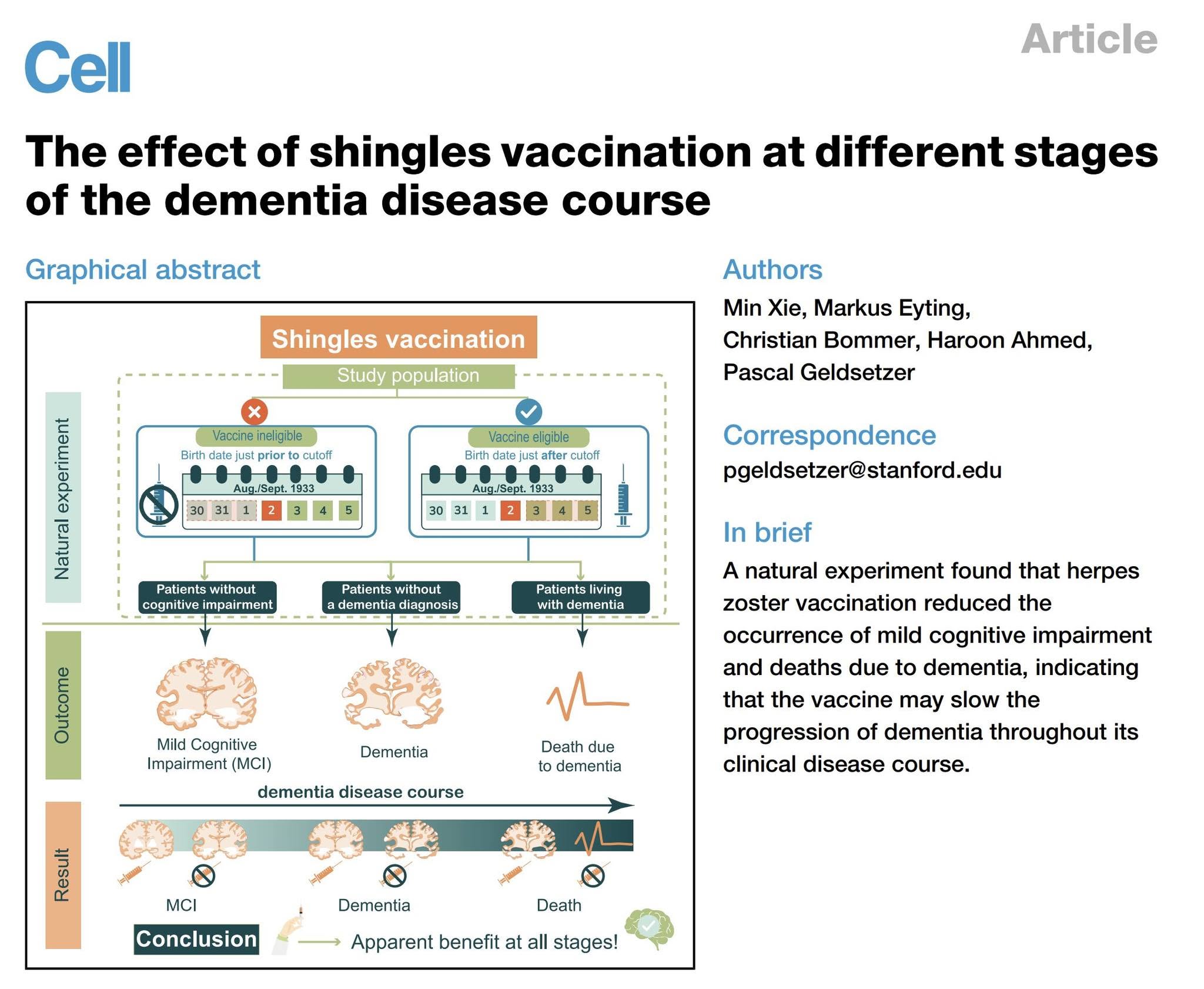
- A Cell paper associated shingles vaccination with less mild cognitive impairment and dementia in healthy people and fewer deaths in people with dementia29.
- A Korean study of 2.5 million adults found about 25% lower Alzheimer's risk, and a meta-analysis of 21 studies and 104 million people found 47% lower risk, with the caution that these are observational30.
- Brown University researchers analyzing more than 500,000 Medicare recipients aged 66 and over found 24% lower dementia risk over four years with at least one Shingrix dose31.
- A Welsh birthday-eligibility policy created a natural experiment (uptake 0.01% vs 47.2% between otherwise similar groups), which Louis calls some of the strongest evidence yet for a causal effect32.
- The Economist is quoted calling a roughly 20% reduction in dementia risk one of the most exciting findings in recent years33.
- Observational data associate the RSV vaccine Arexvy with roughly 25 to 30% lower dementia risk within about 18 months, with Shingrix at about 17%, and the shared AS01 adjuvant is hypothesized as a reason34.
- A Delphi consensus reviewing 80 existing medicines ranked a shingles vaccine, sildenafil and riluzole as top candidates for Alzheimer's repurposing35; a Mass General Brigham study suggests the BCG vaccine may remodel brain immunity over 12 months36. Proposed mechanisms include suppression of dormant varicella-zoster virus reactivation, described as a published hypothesis not yet proven in humans3738.
COVID vaccines
A French cohort of 22.7 million vaccinated and 5.9 million unvaccinated adults followed for nearly four years found 74% lower risk of dying from COVID-19 and 25% lower risk of dying overall, with no sign of "turbo cancers"39. Gokhan adds that vaccination against viruses is highly protective against heart disease deaths for people in high-risk groups, but says he personally prefers the flu vaccine, with fewer side effects, over mRNA COVID vaccines39. He has said he would happily take the non-mRNA Novavax vaccine, but later noted he could no longer find it1723. These are personal preferences of an admin, not trial-based recommendations.
Louis also addresses a post citing a Japanese paper on excess deaths after COVID vaccination: he explains it is a speculative opinion piece, not an empirical study, and argues that claims should be judged using the evidence hierarchy, since being indexed on PubMed does not make something true40. A separate preprint associating COVID vaccination before surgery with longer glioblastoma survival (743 vs 349 days in 187 patients) is described by Louis as stunning if causal, but he warns of possible reverse causality and calls for a randomized trial41.
Nuances and common misconceptions
- Observational is not proof. Most flu, shingles and RSV vaccine findings are associations. Louis repeatedly notes that vaccinated people may take better care of their health5624. The Welsh natural experiment is closer to a randomized comparison but is still not a trial32.
- Reports use different numbers. The flu-attributable heart attack multiple appears as "up to 6 times"10, 4 times2 and 5 times5 across reports. Treat them as pointing in one direction, not as a single exact figure.
- Vaccines can cause a small, temporary inflammatory response too. Louis says that in theory vaccines can do the same thing as infections but to a much lesser degree, with the effect dissipating in a week or two1.
- "Just a flu" understates risk. The post that quotes the post-hospitalization brain data headlines it "It's 'just' the flu..." to argue that respiratory viruses can leave lasting harm19.
- Hypotheses are not findings. The idea that EBV causes multiple sclerosis, and that other diseases may be virus-driven, is raised as a broader question42; the biofilm and plaque-microbe ideas are likewise still being validated20.
Practical steps discussed in the group
Baby aspirin during and after infection
Louis suggests that people with cardiovascular disease ask their doctor about taking a baby aspirin daily until they are well again, and for a period afterward, if they are not already on one212. He puts the window at the duration of the infection or vaccination plus a week or two, while the inflammation resolves, and says to proceed only if the doctor approves1. For COVID specifically, he points to a 2022 meta-analysis in which aspirin use was associated with lower COVID mortality without more bleeding14. The AHA-review post is explicit that this is his suggestion rather than something proven in trials2.
Timing of blood tests
CRP and hs-CRP measure the same thing, with hs-CRP being more sensitive for the low levels relevant to heart disease. They reflect inflammation anywhere in the body, spike temporarily with colds, vaccines, injuries, surgery or intense exercise, and vary from day to day, so one reading should not be relied on43. Louis advises not checking inflammatory markers during an infection or vaccination, when they are temporarily high and inaccurate1. The same logic applies to Lp(a): although largely genetic, it acts as an acute-phase reactant, so illness, surgery, extreme exercise, strong vaccine reactions or inflammatory flares can shift results for weeks, and guidelines advise against testing during acute inflammation9.
Lifestyle habits
Gokhan describes his own habits for reducing infectious and inflammatory burden: lots of fiber, brushing twice and flossing daily, three dental cleanings a year, a yearly flu vaccine, masking without embarrassment, and a bedroom air purifier, though he is unsure how much the purifier helps21. He also advises avoiding crowded places during COVID surges, which can be tracked through wastewater data, and masking if helpful17.
If you take statins and need COVID treatment
Louis points out a well-known drug interaction between statins and the COVID antiviral Paxlovid and advises telling your doctor that you take a statin if Paxlovid is prescribed44.
Vitamin C and vitamin D
A shared explanation describes neutrophils, a type of infection-fighting white cell, using vitamin C to survive the oxidative burst they use to kill microbes; in healthy people, neutrophil vitamin C is said to saturate at around 200 mg twice a day, and the dose needed rises during infection. This is a mechanism explanation, not an outcome trial45. In the large randomized VIVID trial (1,747 patients and 277 household contacts), high-dose vitamin D3 did not reduce healthcare use, death or symptom severity in COVID-19, though adherent participants showed a borderline signal for less long COVID (21% vs 25% with a persistent symptom)46.
Long COVID and drugs studied around infection
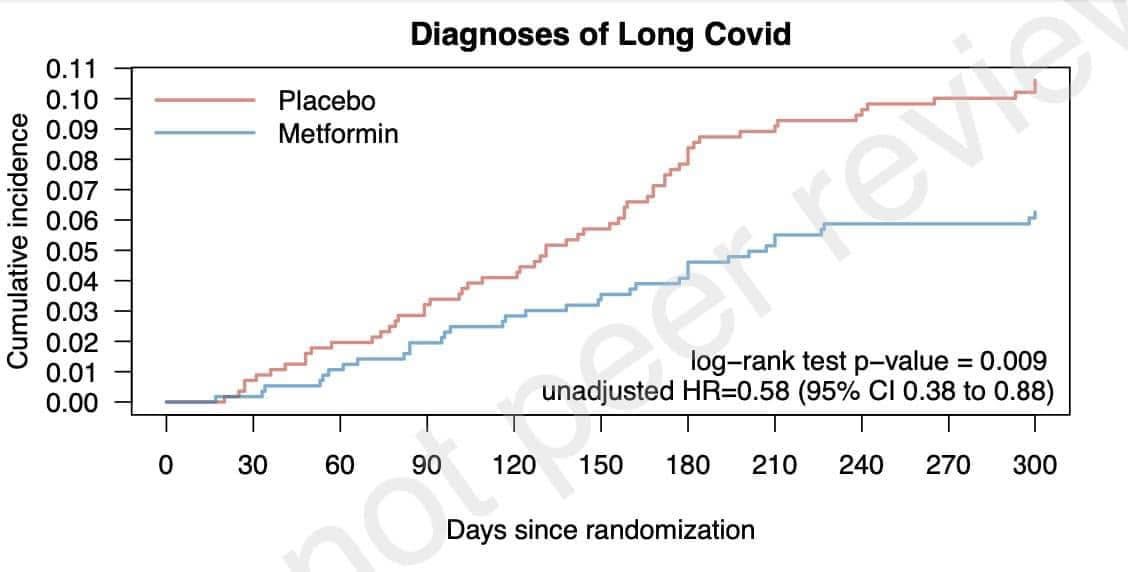
Metformin is the most discussed drug. In COVID-OUT, a randomized phase 3 trial of over 1,000 mostly non-diabetic outpatients, metformin lowered long COVID incidence by 42% relative to placebo (4.3% absolute), and by 63% when started within four days of symptoms; ivermectin and fluvoxamine did not prevent long COVID8. A trial analysis also found a 3.6-fold lower mean viral load with metformin, and reduced hospitalization or death by 58%47. The ACTIV-6 trial independently supported the long COVID finding, and a 2026 Clinical Infectious Diseases review concluded that starting metformin at acute infection is safe and lowers long COVID risk4849. The TOGETHER metformin trial was retracted in October 2025 after an analysis error led to early stopping, but Louis notes COVID-OUT and ACTIV-6 were never called into question50. Timing matters: a 396-patient trial found neither metformin nor UDCA helped people who already had established long COVID51, while fluvoxamine reduced fatigue in long COVID in a separate report, even though it did not work as an early COVID treatment in later higher-quality trials52. One long COVID hypothesis involves disrupted iron handling after infection, which Louis calls interesting but not clinically proven53.
What this means for you
- Think of acute infections as a temporary period of higher cardiovascular risk, especially if you already have plaque or heart disease, and consider asking your doctor about early symptom recognition and treatment adherence213.
- The group's admins recommend discussing flu vaccination with your doctor; Gokhan gets a yearly shot2122.
- If you are 50 or older, ask your doctor about shingles vaccination; the CDC recommends it from age 50, and observational data link it to fewer heart events and lower dementia risk711.
- If you have heart disease and catch an infection, Louis suggests asking your doctor whether a temporary baby aspirin makes sense112.
- Delay hs-CRP and Lp(a) testing until you have recovered from illness or vaccination19.
- Keep gums healthy and tell your doctor about any statin before starting Paxlovid2144.
Frequently asked questions
Can the flu really trigger a heart attack?
Yes, according to the studies shared: risk rose roughly 4 to 5 times in the month after confirmed flu in one review2, and Louis calls this effect well known and temporary12.
Does the flu shot protect the heart?
Observational data suggest so: the shot cut the flu-related increase in heart attack and stroke by about half, even in infected people5, and Gokhan lists lower cardiovascular mortality in vaccinated groups22.
Does the shingles vaccine lower heart attack risk?
In observational cohorts it was associated with 28% fewer heart attack hospitalizations7 and 46% fewer major cardiac events in high-risk people25, but causality is not proven.
Should I take aspirin when I am sick?
Louis suggests discussing this with your doctor if you have cardiovascular disease, and he is clear it is his suggestion and not trial-proven12.
Does COVID leave lasting heart risk?
Posts report about triple heart attack and stroke risk for 14 weeks after COVID, with risk elevated for a year2, double risk for up to three years after severe first-wave illness in unvaccinated people16, and higher clot risk in long COVID15.