Finland’s Cardiovascular Turnaround: What It Teaches About Saturated Fat, Seed Oils, and Public Health
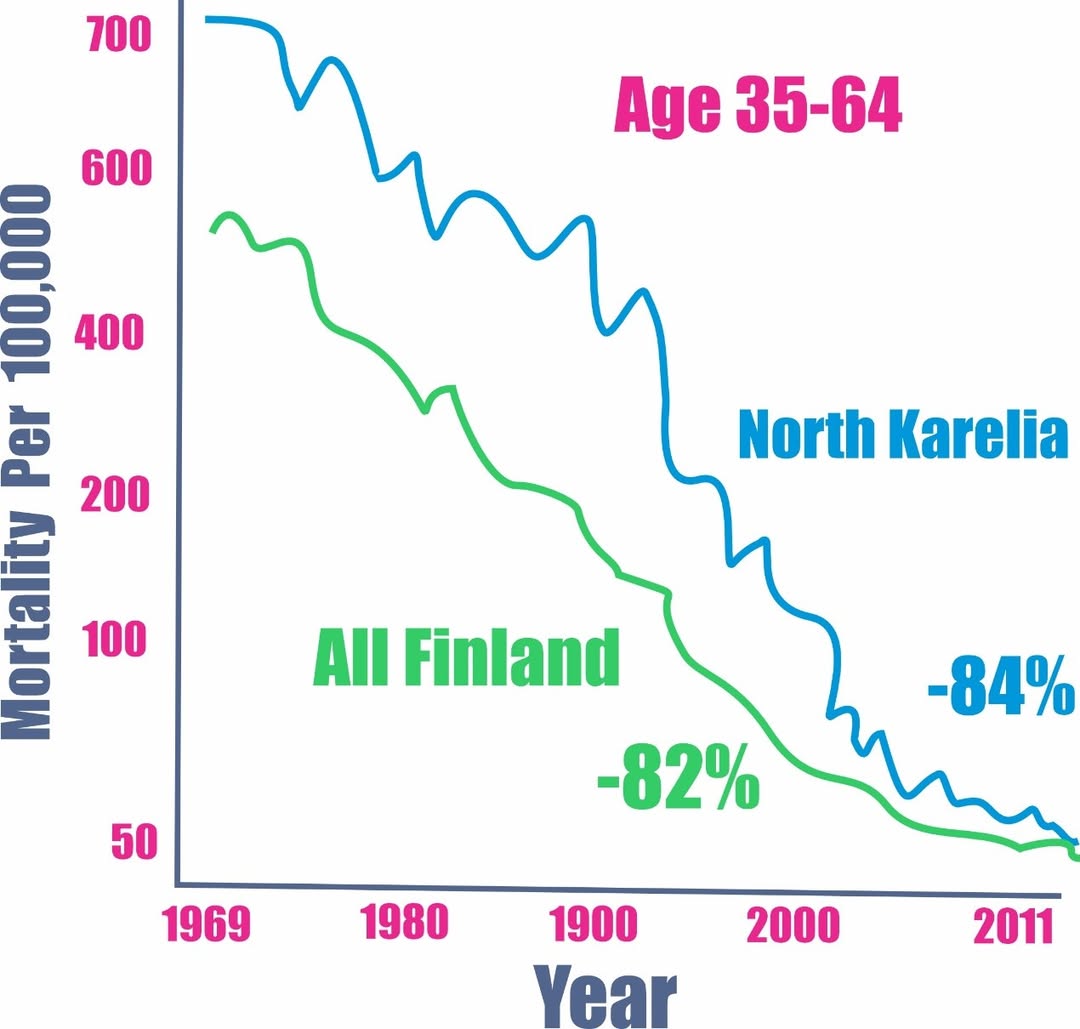
In the early 1970s, Finland faced a national health crisis. Middle-aged men had some of the highest coronary heart disease (CHD) mortality rates in the world, driven partly by diets very high in saturated fat from butter, whole-milk dairy, and fatty meats. Average cholesterol levels often exceeded 270–280 mg/dL.
The landmark North Karelia Project, led by Dr. Pekka Puska, addressed this with a broad public-health strategy. Reductions in smoking and improved hypertension control were important, but one of the strongest and most documented drivers of Finland’s turnaround was a major shift in dietary fat quality:
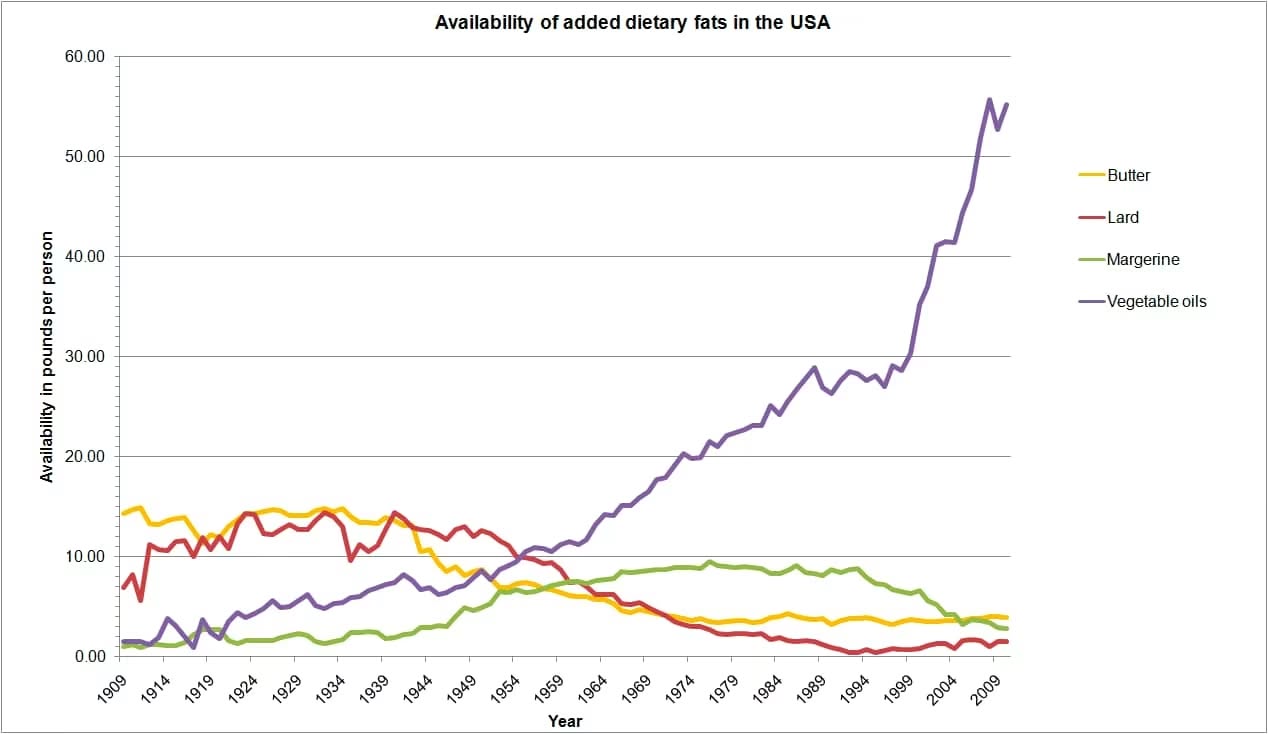
Finland decreased saturated fat intake and replaced it with unsaturated fats—primarily seed-oil–based margarines (rapeseed/canola, sunflower, soybean) and vegetable oils.
Results were striking:
- Serum cholesterol fell ~15–20%
- CHD mortality fell nearly 80% in working-age men
- Improvements closely tracked declining LDL-related risk
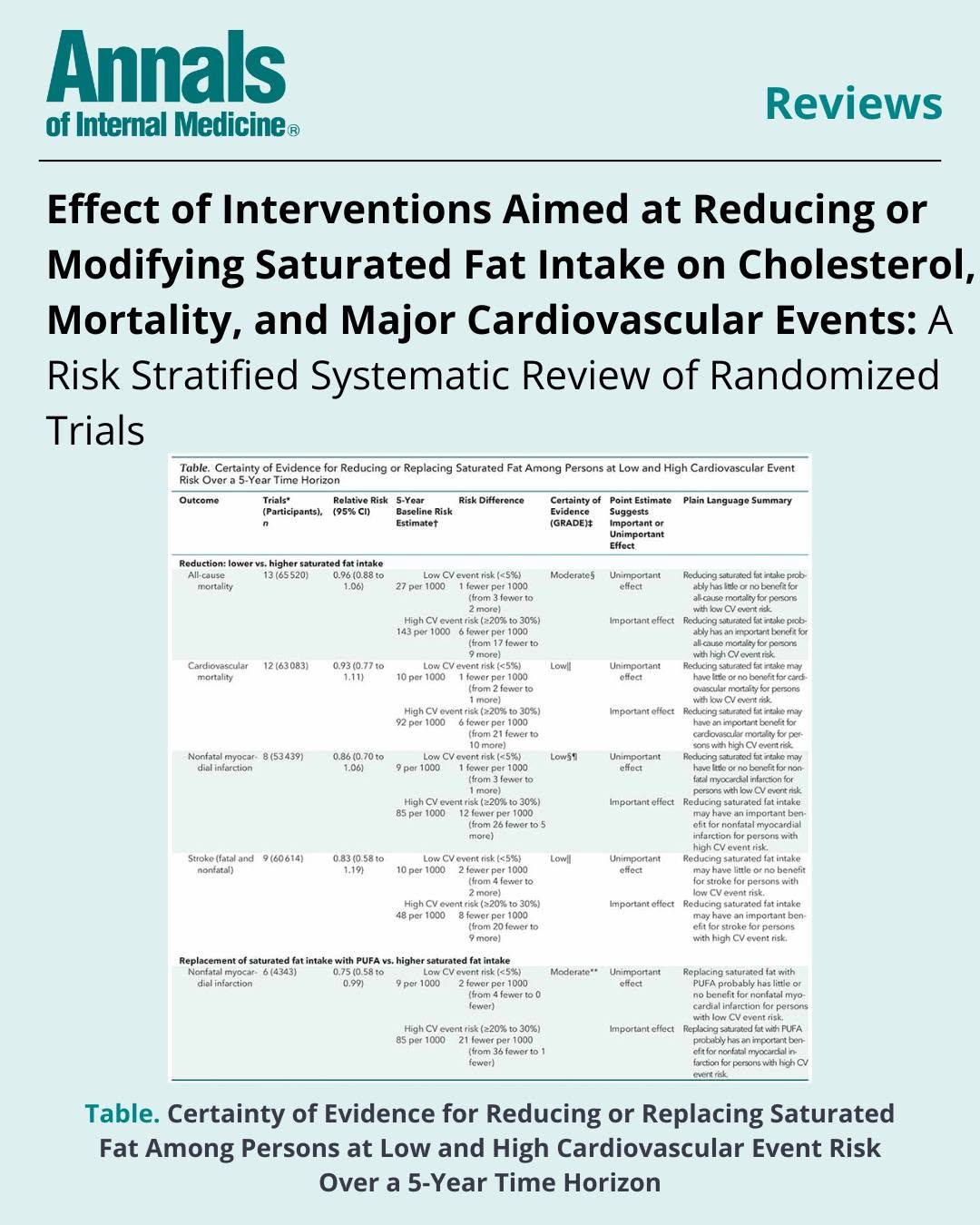
Finland remains one of the clearest real-world demonstrations of what decades of clinical and mechanistic evidence show: replacing saturated fat with polyunsaturated fats improves lipids and reduces cardiovascular risk.
Clarifying today’s debate
Seed oils are increasingly portrayed as harmful or “toxic,” and these narratives have been amplified by influential voices, including individuals in public leadership. People are not at fault for believing confident messaging, but clinicians and scientists have a responsibility to return the discussion to evidence.
There is no high-quality evidence showing that replacing seed oils with butter, tallow, lard, egg yolks, or tropical oils reduces cardiovascular events or all-cause mortality.
The weight of evidence points in the opposite direction:
- Polyunsaturated fats reliably lower LDL-C more than saturated fats
- LDL-C lowering is causally linked to reduced atherosclerotic disease
- Cohort data repeatedly associate higher PUFA intake (displacing SFA) with lower mortality
- No randomized trial has shown benefit from increasing saturated fat intake
Claims that properly refined seed oils are toxic are not supported by credible outcomes, mechanistic nor biomarker data.
The real issues: Seed oils are massively mass produced, ultra-calorie dense and all common in CRRAHP (Calorie Rich, Refined and Hyper-Palatable) products.
The problem lies in the ultra refined food (URF) matrix, not the seed oils.
Replacing seed oils in these foods with butter or tallow would actually further increase saturated fat exposure and raise, not lower, cardiovascular risk.
Misinformation shapes public behavior, clinical decisions, and policy. Finland’s experience shows clearly that shifting from saturated to unsaturated fats improves cardiovascular outcomes.
We need to better inform the public’s knowledge base. Public health depends on it.
Reality Meets Science®