HD-OPM Archive
Hashtags

#mesa

9 posts

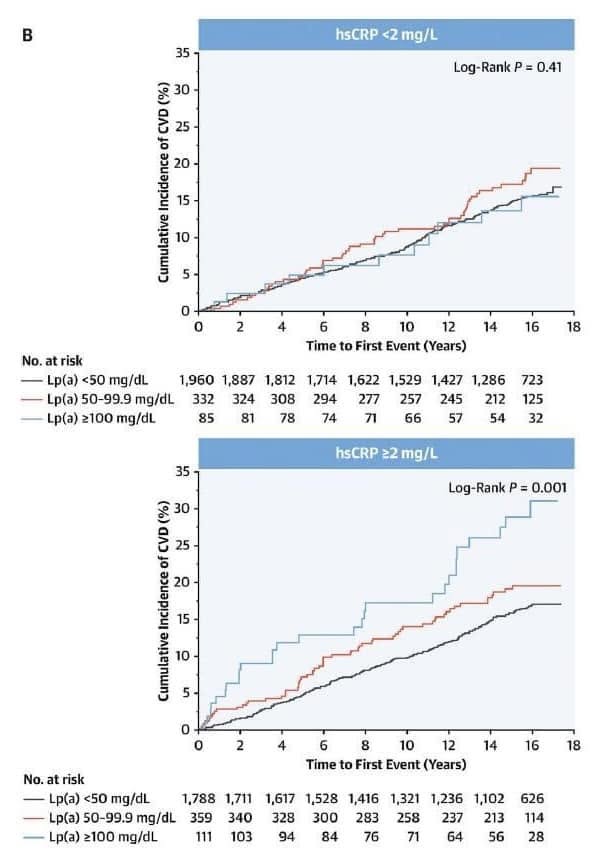
MESA: high Lp(a) raised CVD risk only when hsCRP was 2 mg/L or higher

Jul 12, 2024 · Louis Nervegna ♥ 16 · 💬 12 ↩ 4 Lp(a)

In MESA (mean follow-up 13.6 years, 684 CVD events), high Lp(a) conferred no significant risk when hsCRP was below 2 mg/L. With hsCRP of at least 2, Lp(a) of 50-99.9 mg/dL had HR 1.36 and 100 or more had HR 2.09. Participants were lower-risk, averaged age 62, so applicability to others is unclear.
In MESA, high Lp(a) mattered mainly when CAC was 100 or higher

Jun 01, 2024 · Louis Nervegna ♥ 8 · 💬 15 ↩ 5 Lp(a)

Louis shares a new MESA analysis suggesting that elevated Lp(a) raises 10-year heart attack and stroke risk mainly in people with CAC of 100 or more. With CAC between 1 and 99, high versus low Lp(a) mattered less, and a zero CAC appeared to 'trump' high Lp(a) over a decade.

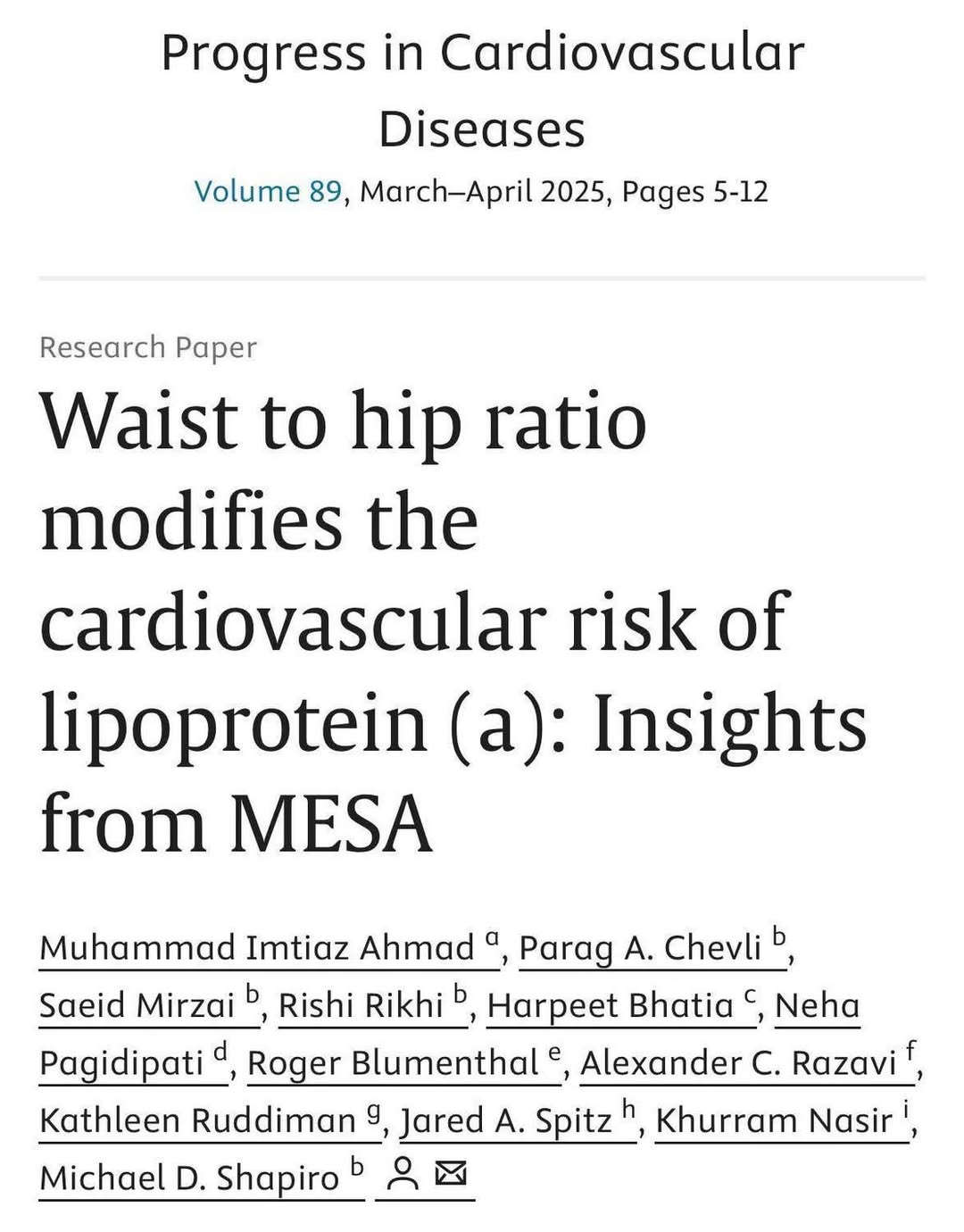
MESA: high Lp(a) raised ASCVD risk 2.34-fold only in people with large waist-to-hip ratio

Oct 18, 2025 · Louis Nervegna ♥ 10 · 💬 5 ↩ 4 Lp(a)

Louis summarizes a MESA cohort analysis in Progress in Cardiovascular Diseases showing waist-to-hip ratio (a visceral-fat and liver-fat proxy) modifies the ASCVD risk of Lp(a), while BMI did not. Lp(a) of 50 mg/dL or more with high WHR carried the excess risk, which mostly vanished when WHR was low. He stresses this is a prospective cohort, so it cannot prove causality, but suggests losing visceral fat is important with high Lp(a).

MESA: high Lp(a) mostly matters when CAC is 100 or above

Jul 18, 2024 · Louis Nervegna ♥ 4 · 💬 1 Lp(a)

A repost of a MESA analysis suggesting that people with high Lp(a), CAC under 100 and hsCRP under 2 mg/L have 10-year risk not much above those with normal Lp(a). The highest risk is with elevated Lp(a) and CAC of 100 or more. Louis notes this is a cohort study, not an RCT.