Coffee changes connectivity in the brain.
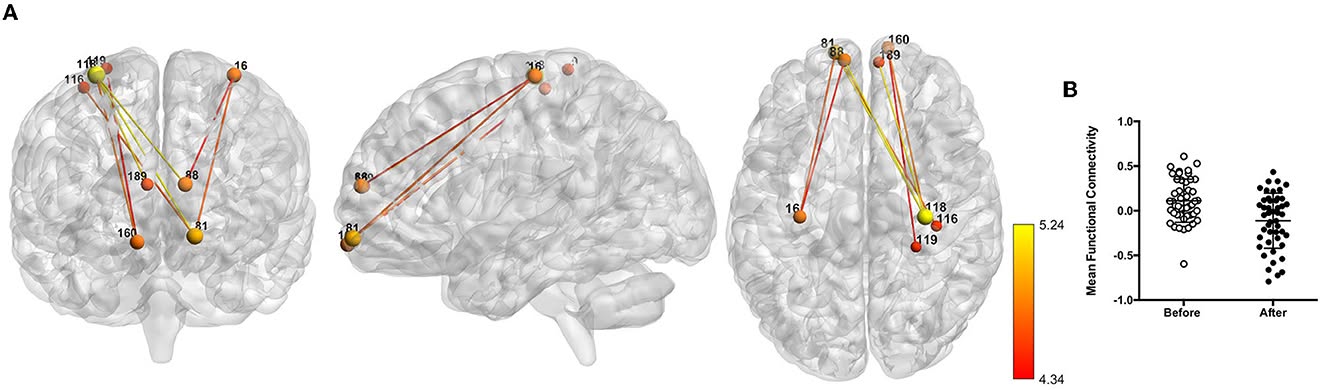
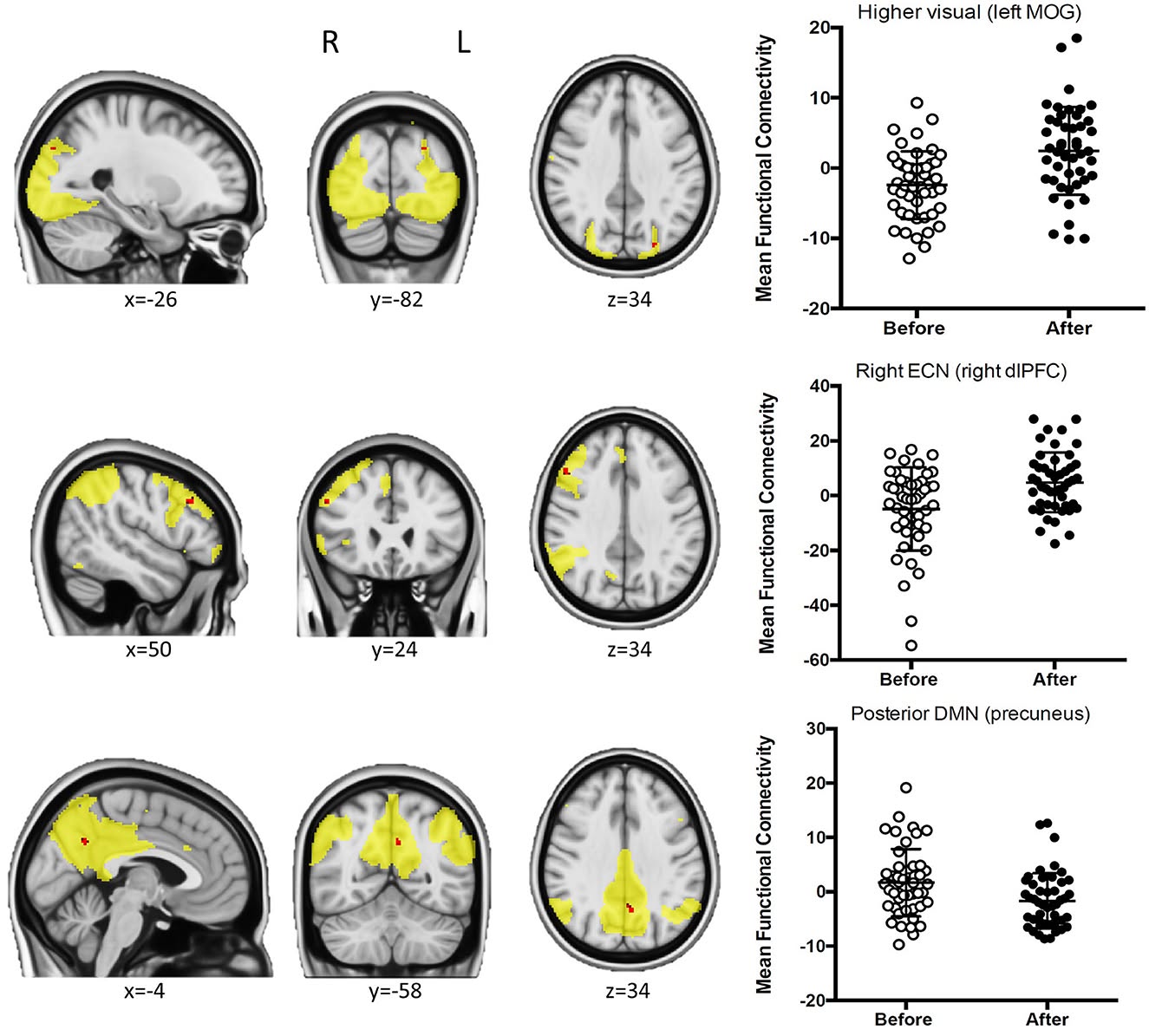
Increased functional connectivity of the higher visual & executive control networks were seen with coffee, but not caffeine alone.
Paper · Front Behav Neurosci · 2023Coffee consumption decreases the connectivity of the posterior Default Mode Network (DMN) at rest.Habitual coffee consumers justify their life choices by arguing that they become more alert and increase motor and cognitive performance and efficiency; however, these subjective impressions still do not have a neurobiological correlation. Using functional connectivity approaches to study resting-state fMRI data in a group of habitual coffee drinkers, we herein show that coffee consumption decreased connectivity of…frontiersin.org
How Coffee Affects Your Brain's “Idle Mode” – and It’s Not Just the Caffeine
Many of us reach for a cup of coffee to kickstart our day, hoping for sharper focus and a boost in energy. While coffee lovers often claim it helps them think better and act faster, science hasn’t always had a clear picture of what’s happening in the brain to back that up—until now.
A new study peered into the brains of regular coffee drinkers using functional MRI scans to explore what happens when they drink coffee—both the kind with caffeine and decaf-like control. Surprisingly, researchers found that coffee doesn't just wake you up—it reshapes the way your brain is connected at rest.
One key finding was a decrease in activity in the brain’s “default mode network” (DMN)—especially in its back portion. The DMN is most active when your mind is wandering, like when you're daydreaming or thinking about yourself. Coffee seems to “turn down the volume” on this mental idle mode, which might explain why it helps people feel more focused.
At the same time, connections between sensory and motor brain areas and the prefrontal cortex also weakened, while areas involved in visual processing and executive control (like decision-making and attention) became more tightly linked. This shift hints that after drinking coffee, your brain may reroute resources away from internal musings and toward getting things done.
Interestingly, when participants consumed only caffeine (not the full coffee experience), only the changes in the DMN showed up—meaning the mental shift coffee gives you isn’t entirely about caffeine. There may be psychological, sensory, or even ritualistic factors in drinking coffee that play a role in its brain effects.
In short, coffee changes the brain’s resting-state wiring, nudging it away from inward reflection and toward outward engagement. And while caffeine plays a role, the whole coffee experience seems to matter too.
#neuroscience #coffee #BrainConnectivity #cognition #DefaultModeNetwork