This study is still blowing me away…
I agree with the post: This is (by far) the most interesting bone-related study that I have read in a long time.
#brainHD #bonesHD #stemcellsHD #piezo1HD #braininjuryHD #dementiaHD #alzheimersHD #parkinsonsHD #resistancetrainingHD #runningHD #memoryHD #shintappingHD
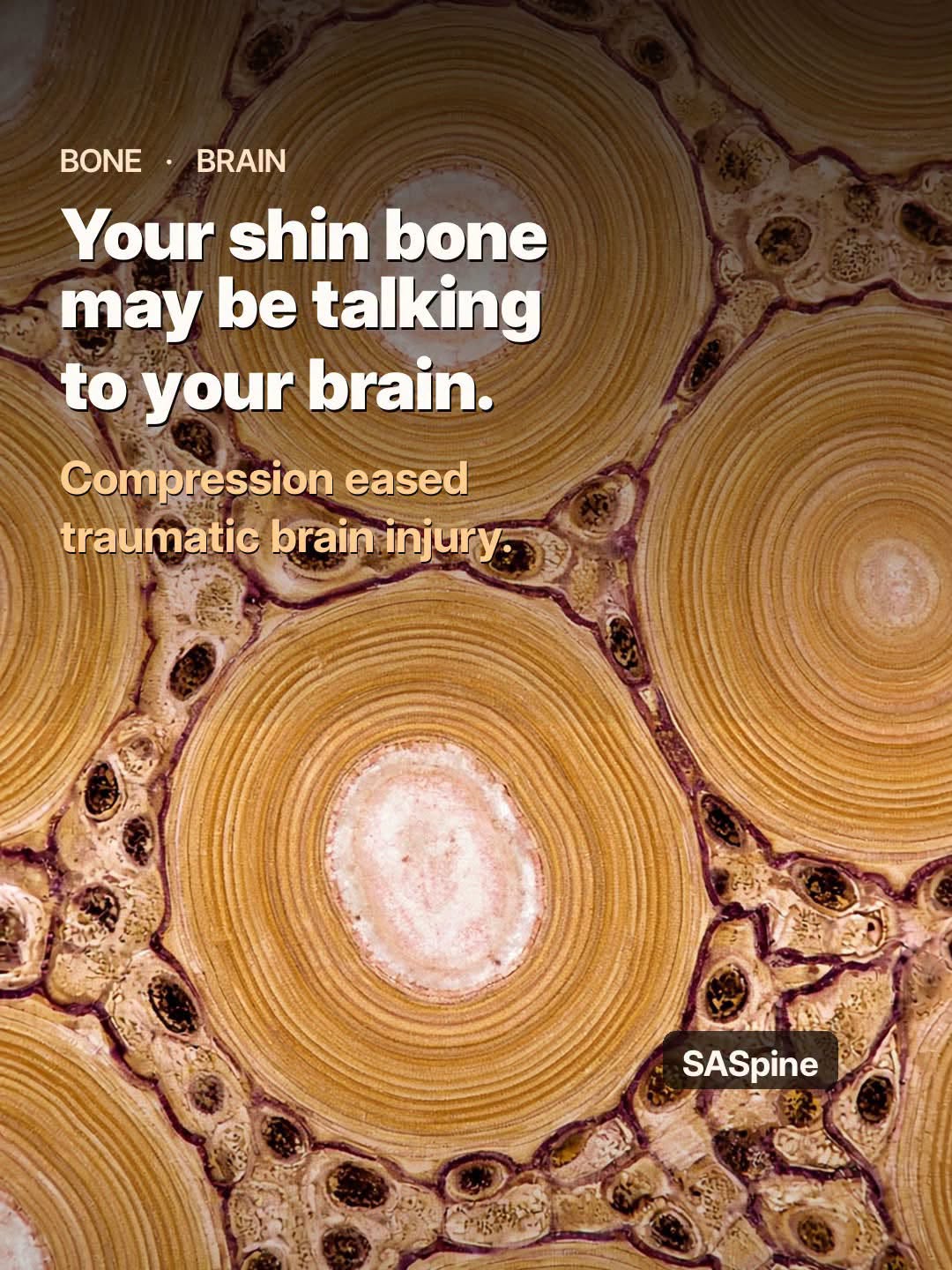
Your shin bone may be talking to your brain.
A Nature Neuroscience paper published in September 2026 compressed the tibia for a few minutes a day after traumatic brain injury in mice and pigs. Movement and memory both improved. The animals that skipped the loading did not get the same recovery.
That is the kind of result that makes me stop and reread a paper. Osteocytes, the cells buried in bone, felt the force through a pressure sensor called PIEZO1. Turn that sensor off and the brain benefit disappeared.
Blood from the treated mice then protected other injured animals whose bones were never touched. The bone sent the message. The brain picked it up.
If you just pictured Ben Affleck in The Accountant, working a dowel down his shin, do not try that. That is a movie routine, not this experiment, and it is a good way to bruise yourself. Do not grind a bar into your leg after a head injury and call it treatment.
The load in the study ran lengthwise through the bone, on a machine, at forces a person should not copy. The version your osteocytes already understand is simpler: walk, take the stairs, and lift something heavy a few days a week. Bone is already listening, and this paper just showed us, louder than usual, who it calls.
This is animal data, not a treatment I can offer on Tuesday. It is still the most interesting bone-brain paper I have read this year.
—Dr. Steven Cyr • Spine Surgeon
Source: Cai et al., “Tibial bone compression promotes recovery after brain injury through osteocyte PIEZO1,” Nature Neuroscience, 21 September 2026.
Follow our page for health news worth a surgeon’s time.
#BoneHealth #SpineHealth #TraumaticBrainInjury #BrainHealth #Neuroscience