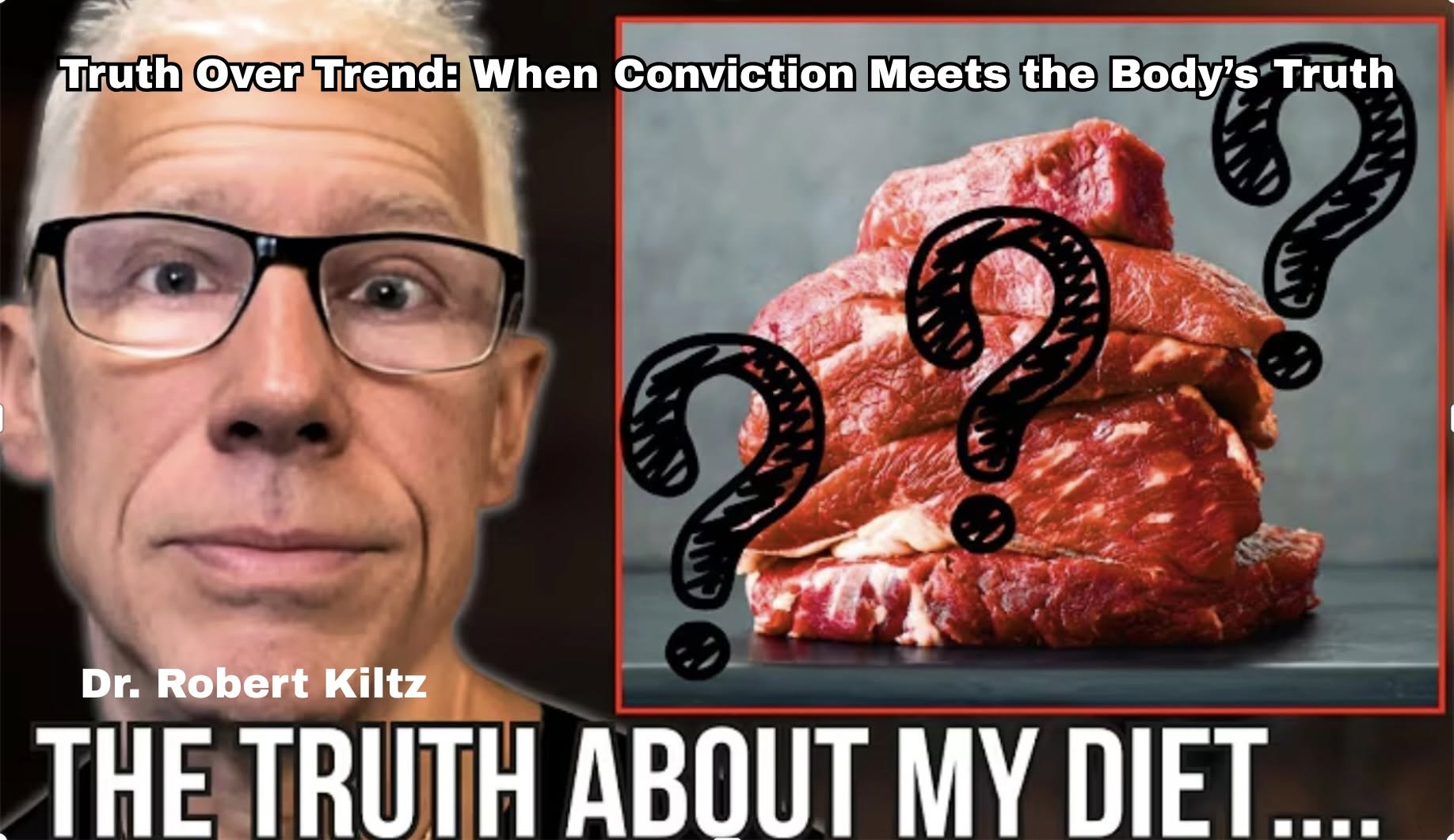
15 years on a strict carnivore diet. Now he has significant blockage in all 3 coronary arteries. His CAC score recently jumped from 700 to 800. And he received a diagnosis of acute colitis.
#carnivoreHD #carnivoreinfluencersHD
Truth Over Trend: When Conviction Meets the Body’s Truth
When a carnivore influencer opens up about health struggles, we all have a chance to learn.
After 15 years on a strict carnivore diet, Dr. Robert Kiltz recently shared that his coronary calcium (CAC) score rose from 700 to 800, revealing significant blockage in all three of his cardiac arteries, along with a diagnosis of acute colitis. Rather than hide this, he chose transparency… and that honesty is exactly what the health and nutrition communities need most.
Dr. Kiltz’s story reminds us that no diet is beyond questioning. Extreme restriction, whether plant-free or animal-free, can disrupt the balance our ancestors once protected…as many tribes still vow to stay true to their traditional diets.
A meat-only diet can alter the gut microbiome, deplete the fiber-fed bacteria that produce protective short-chain fatty acids, and elevate bile-tolerant inflammatory microbes, potentially setting the stage for intestinal inflammation such as acute colitis and cardiovascular stress. Emerging research also reveals how gut imbalance can extend far beyond digestion.
When beneficial, fiber-fed bacteria decline, the gut barrier weakens, allowing inflammatory compounds to enter the bloodstream. This “gut–heart axis” can trigger systemic inflammation, increase atherogenic compounds such as TMAO, and contribute to arterial plaque buildup and higher coronary calcium scores…linking directly to both colitis and cardiovascular risk. Studies have shown that within just days of removing plant foods, beneficial bacterial species decline while inflammatory species increase. (1–4)
This isn’t failure...it’s physiology. It takes courage and humility to pivot away from a platform built on certainty, but when our body speaks loud and clear, it is the right thing to do.
As a researcher with decades of rigorous research who has lived among the Hadza, Maasai, Dani, Datoga, Futunans, and many others, I can confidently say that no population on earth has ever excluded plants. Their health is built on animal and plant diversity within their region…alongside nature, sunlight, movement, gratitude, community, beliefs, and peace…not dogma.
With so many health issues, I’ve walked through seasons of veganism, carnivore, and now balance. I now follow what I call a more plant-based "Conscientious Omnivore" lifestyle... always learning, always transparent, and always listening to the body God designed with such wisdom.
I’m grateful for those, like Robert Kiltz, Paul Saladino MD, Dr. Lisa Wiedeman, and Zane Griggs who have had the courage to speak openly about their health journeys and inspire others to seek truth.
Here’s the link to Dr. Kiltz's candid video: “I’m Not Sure Beef-Only Is the Answer Anymore…” — Dr. Kiltz Is Beef-Only Enough? Dr. Kiltz’s Honest Confession (Robert Kiltz, MD)
Let’s hold Dr. Kiltz in prayer as he continues to heal and seek optimum health. May his courage help others pause, reflect, and listen when their own bodies speak.
✝️ Eat with gratitude. Live with grace.
In truth and peace, 💝
Suzanne
References:
- David, L.A. et al. (2014). Diet rapidly and reproducibly alters the human gut microbiome. Nature, 505:559–563. [PMID: 24336217]
- Lee, C. et al. (2023). Effect of Consumption of Animal Products on the Gut Microbiome Composition and Gut Health. Microorganisms, 11(9), 2292. [PMCID: PMC10493557]
- Duncan, S.H. et al. (2006). Reduced Dietary Fibre Intake and the Composition of the Human Gut Microbiota and Short-Chain Fatty Acid Concentrations. Applied and Environmental Microbiology, 73(4), 1077–1083. [PMID: 17189447]
- Alexandrescu, L. et al. (2024). Intestinal Insights: The Gut Microbiome’s Role in Atherosclerotic Disease—A Narrative Review. Biomedicines, 12(5), 1062. [PMCID: PMC11596410]