HD-OPM Archive
Topics › Nutrition

Meat, eggs & dairy

99 posts (58 primarily about this topic) · 58 reposts and set-aside posts not shown

Start here — the best posts in this topic

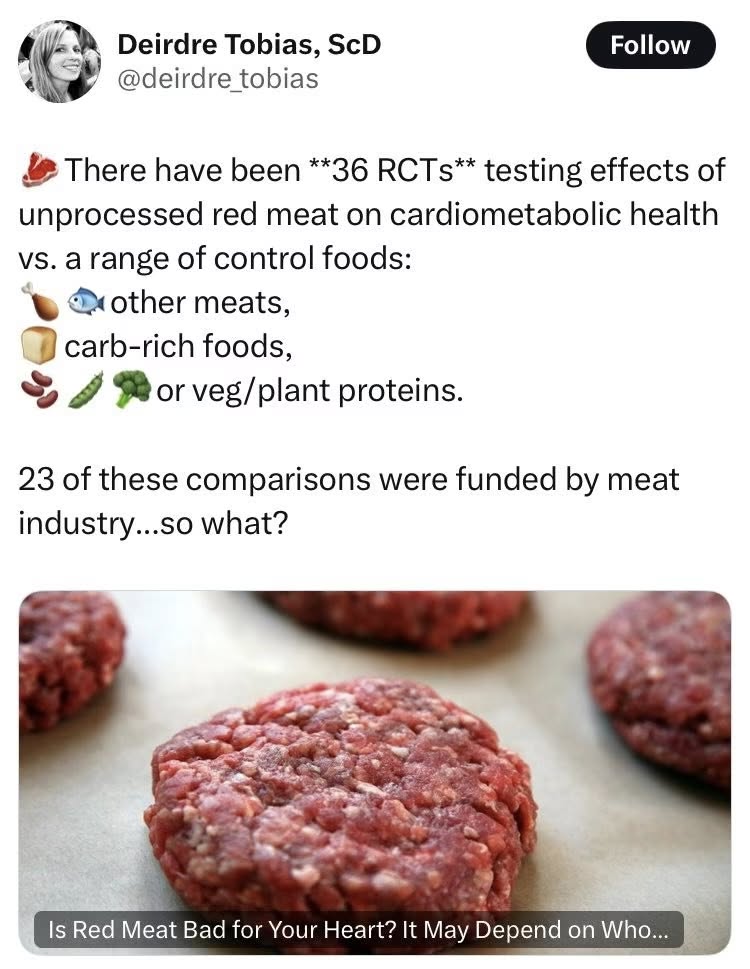
  1. Harvard's Tobias: independent red meat RCTs mostly show harm; industry-funded ones do not May 25, 2025
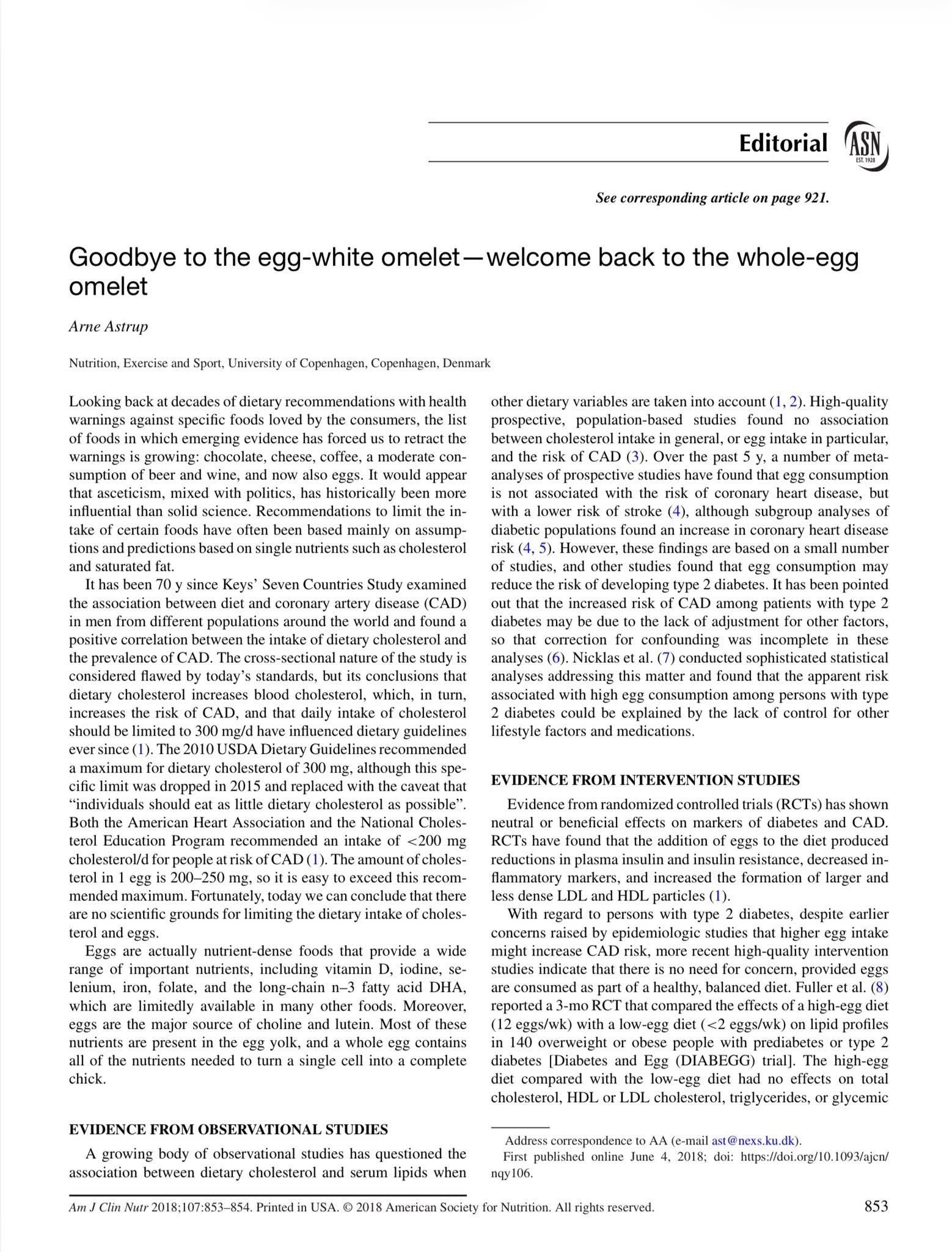
  2. Eggs lowered LDL when eaten in place of saturated fat, in a 61-adult trial Jul 27, 2025
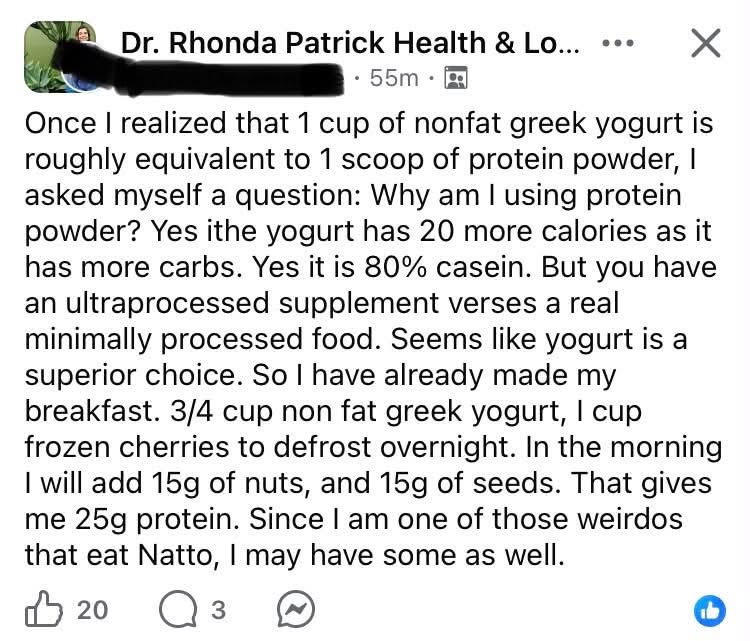
  3. Yogurt has long-term evidence behind it; processed whey supplements do not Jul 09, 2026
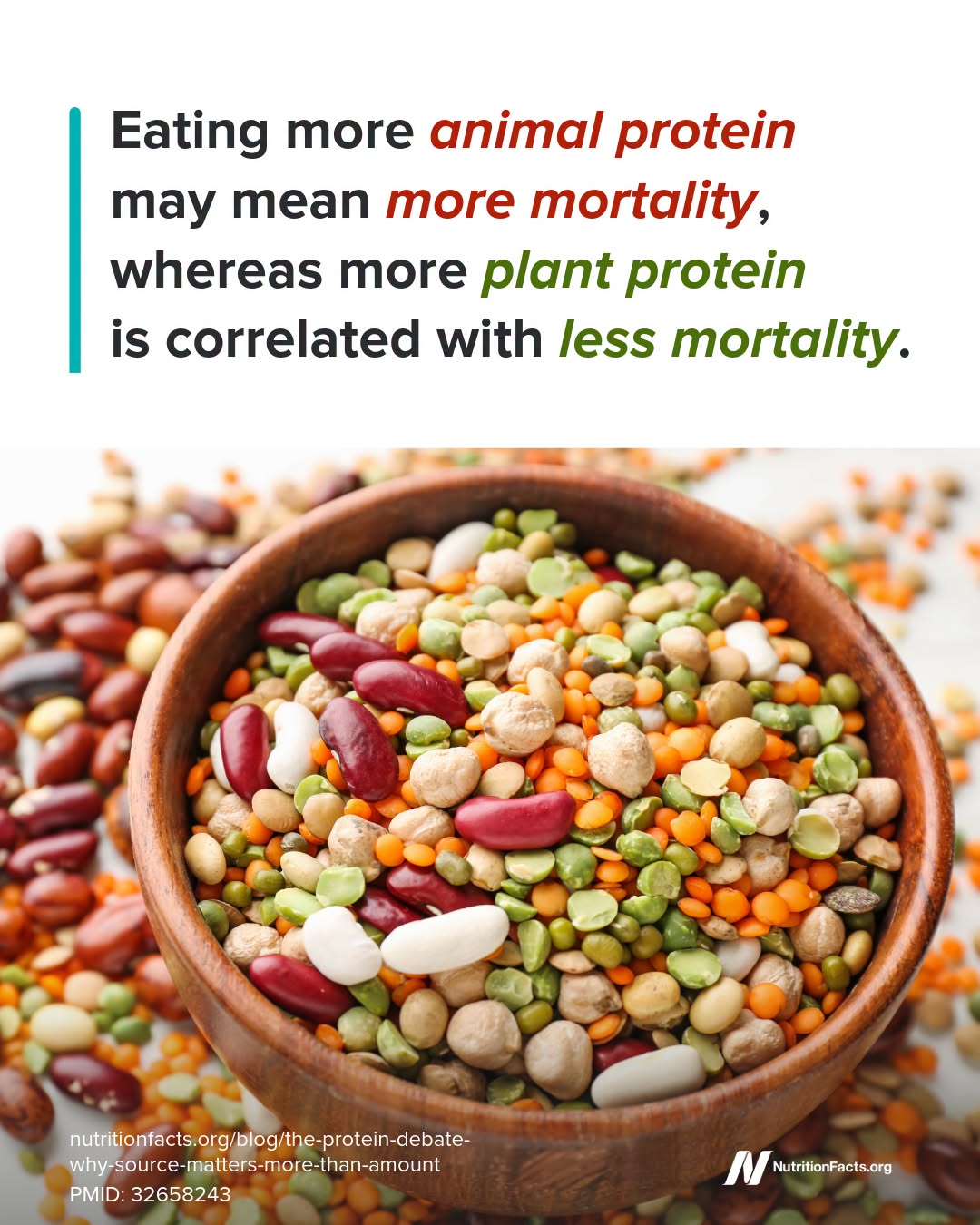
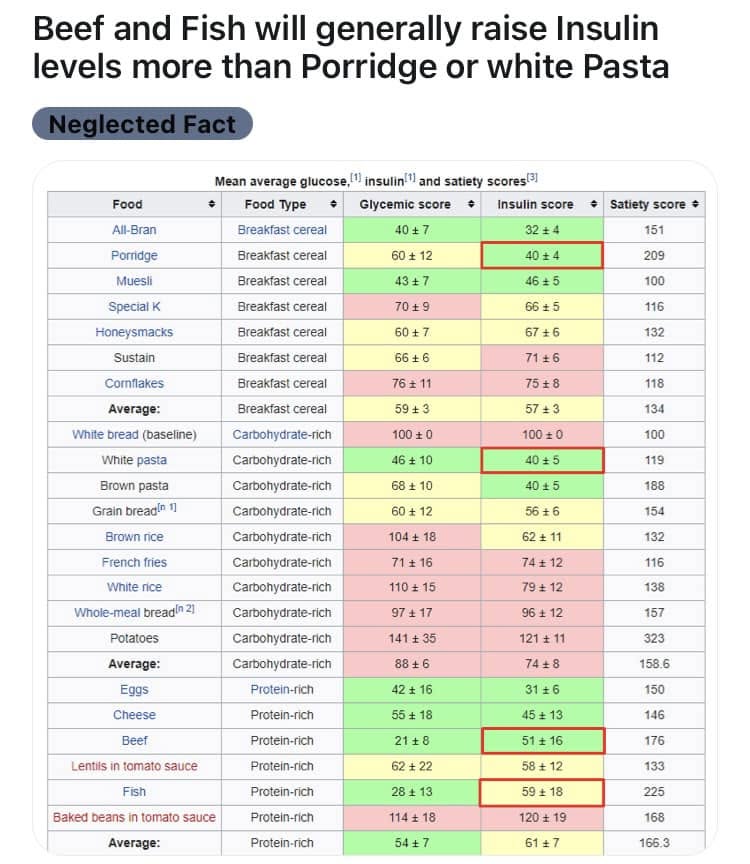
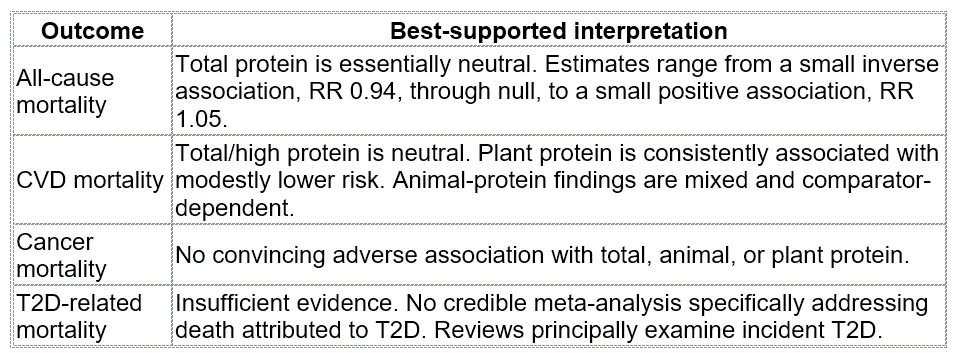
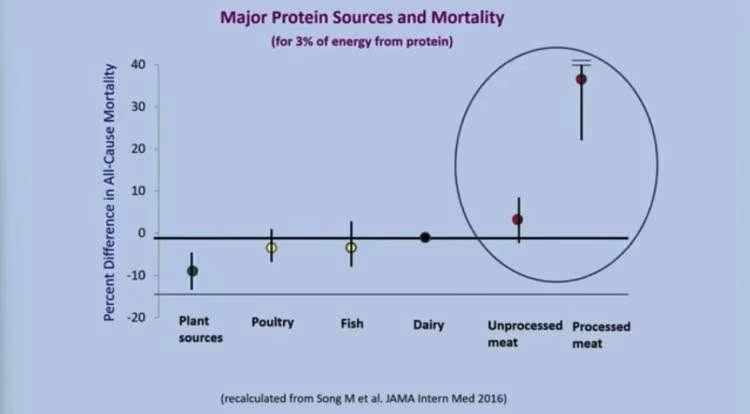
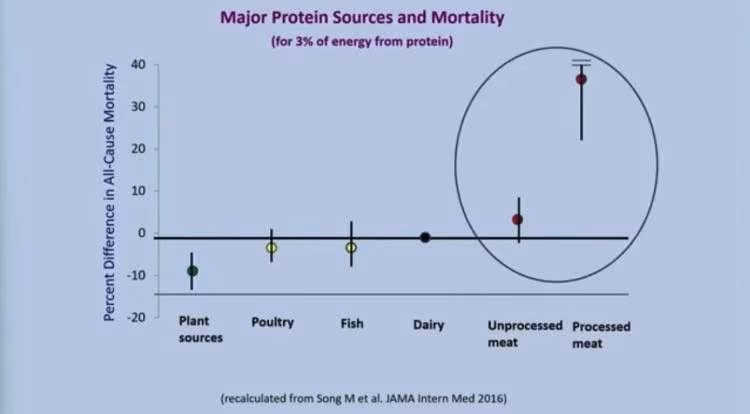
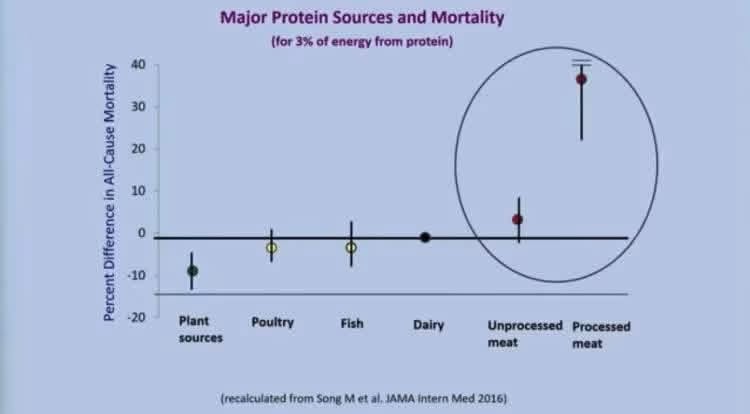
  4. Protein type matters more than restriction: whole-food plant protein beats processed meat Nov 12, 2026
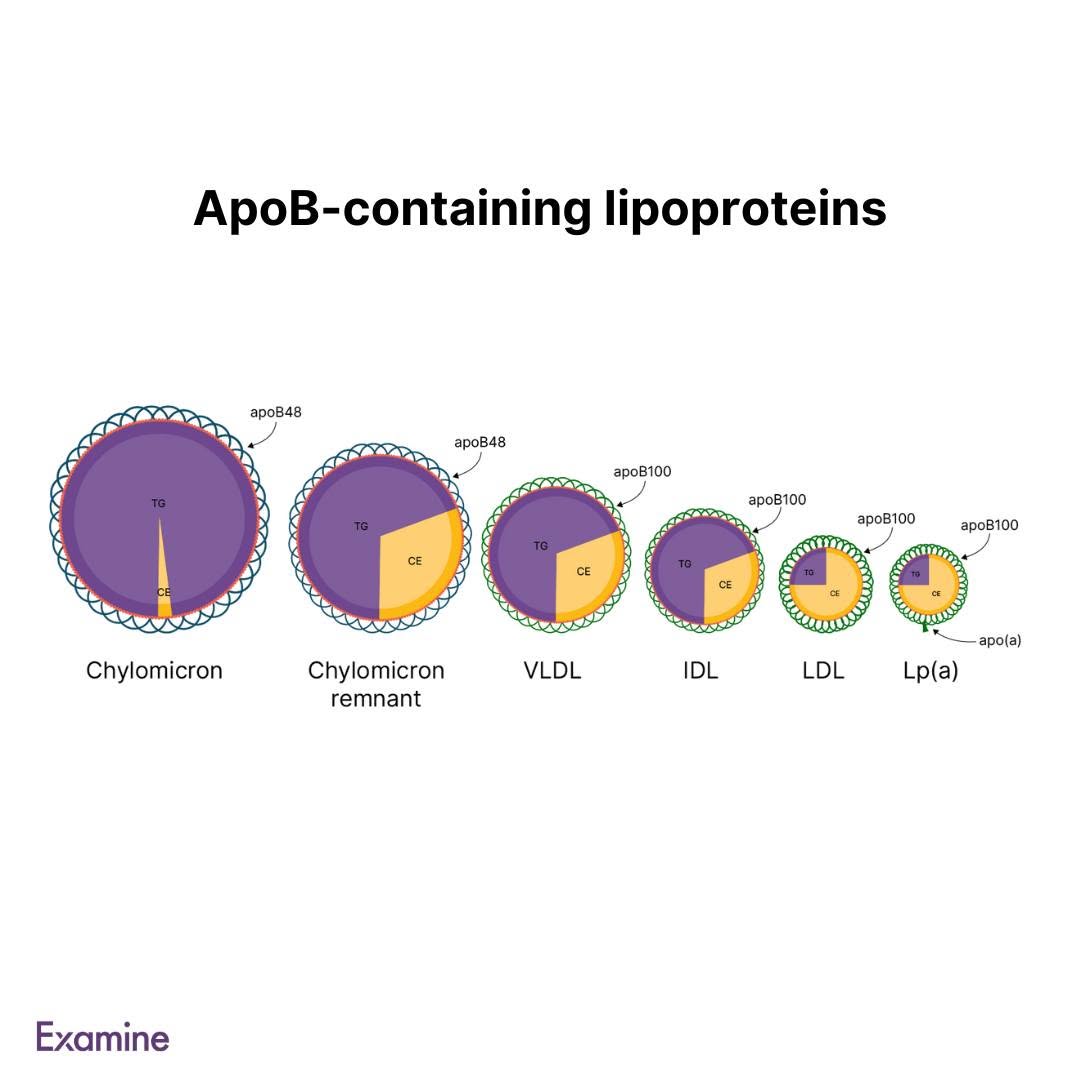
  5. Full-fat yogurt lowered ApoB while yogurt with butter raised it in a crossover trial Apr 02, 2025
  6. Full-fat yogurt lowered ApoB while low-fat yogurt plus butter raised it in a crossover RCT ↩ 1 · Jun 07, 2024
  7. APOE4 carriers eating unprocessed meat or fish had lower dementia risk in Swedish study ↩ 1 · Mar 23, 2026
  8. Full-fat yogurt lowered ApoB 4 mg/dL while butter raised it 10 mg/dL in a crossover trial Jan 19, 2026
#processedmeat 40#redmeat 29#dairy 22#protein 20#yogurt 20#harvard 19#cheese 17#alzheimers 16#cancer 16#dementia 15#eggs 14#hns 14#proteinsummary 12#plantprotein 12#hpfs 11#coloncancer 11#diabetes 11#butter 10#plantproteinsummary 10#saturatedfat 9#poultry 9#longevity 8#nitrosamines 8#willett 7#type2diabetes 7#choline 6#ultraprocessedfood 6#cardiovascular 5#milk 5#tmao 5#seafood 5#cvd 5#nitrates 5#whey 4#mfgm 4#apoe4 4#animalprotein 4#influencers 4#aging 4#mortality 4

Protein type matters more than restriction: whole-food plant protein beats processed meat

Nov 12, 2026 · Louis Nervegna ♥ 18 · 💬 38 Protein

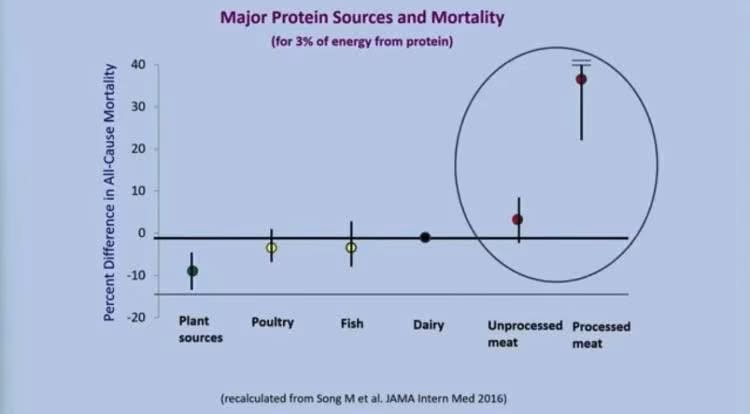
Louis argues against the 'protein craze': there is no good evidence protein restriction slows human aging, but long-term data show whole-food plant protein beats animal protein, especially processed and red meat. Among animal sources, seafood, poultry and fermented dairy have the lowest mortality and processed meat is worst. Plant protein's lower isoleucine, valine and methionine may explain part of it.

Full-fat yogurt lowered ApoB while yogurt with butter raised it in a crossover trial

Apr 02, 2025 · Louis Nervegna ♥ 17 · 💬 24

Louis summarizes a randomized crossover study that matched saturated fat in full-fat yogurt versus low-fat yogurt mixed with butter for 4 weeks each. The butter version raised ApoB while full-fat yogurt lowered it, which the authors attribute to the milk fat globule membrane (MFGM) that stays intact in yogurt but is lost in butter. This may partly explain yogurt's favorable epidemiology.

Full-fat yogurt lowered ApoB while low-fat yogurt plus butter raised it in a crossover RCT

Jun 07, 2024 · Louis Nervegna ♥ 21 · 💬 15 ↩ 1

Louis summarizes a randomized crossover trial matching saturated fat between full-fat yogurt and low-fat yogurt with added butter. Despite equal saturated fat, the butter arm raised ApoB while full-fat yogurt lowered it, which the study attributes to the milk fat globule membrane (MFGM) that is intact in yogurt but lost in butter. He suggests this may partly explain why yogurt looks better than other dairy in epidemiology.

Harvard cohorts: plant protein linked to lower CVD and total mortality over 30 years

Sep 16, 2026 · Louis Nervegna ♥ 19 · 💬 15 Protein

Louis summarizes Harvard Nurses' Health Study and Health Professionals Follow-up Study findings that higher plant protein intake is strongly associated with lower CVD and all-cause mortality over 30 years, whereas animal protein is not, driven by red and processed meat. Seafood and yogurt look favorable. The shared text cites a Rotterdam Study plus meta-analysis of protein intake and mortality.

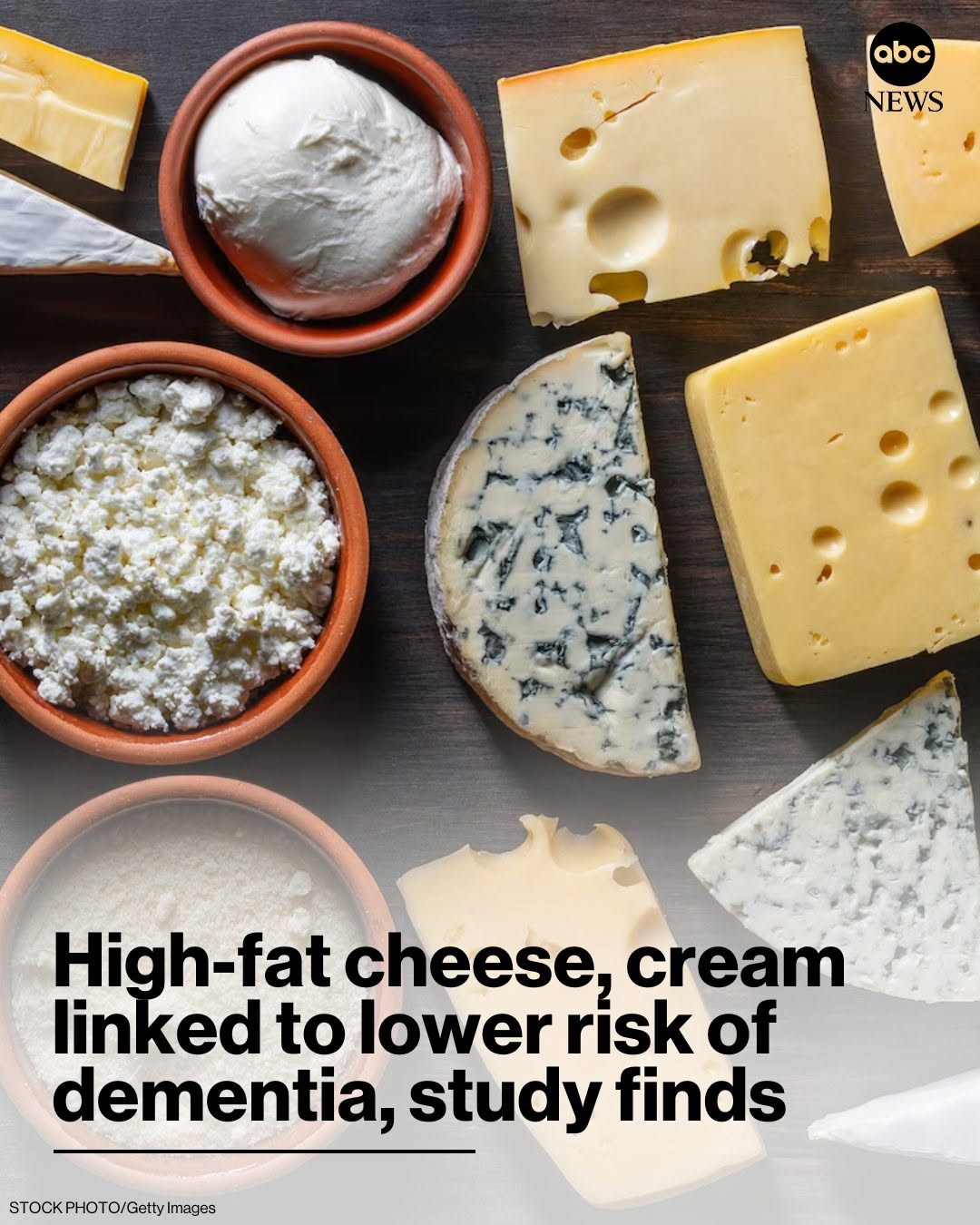
Full-fat cheese and cream linked to lower dementia risk over 25 years (observational)

Dec 18, 2025 · Louis Nervegna ♥ 13 · 💬 27

Louis comments on a news-covered observational study in which regular higher-fat cheese and cream, but not low-fat versions, butter or milk, were linked to lower dementia risk over 25 years. He cautions about confounding and reverse causality and notes dairy saturated fat, especially fermented dairy, may differ from red-meat saturated fat.

Replacing 10 g/day of butter with plant oils linked to 17% lower mortality

Oct 15, 2025 · Louis Nervegna ♥ 19 · 💬 13 Fats & oils (saturated fat, seed oils, omega-6, olive oil)

Louis shares Harvard research on 221,054 people from the Nurses' Health Studies I and II and the Health Professionals Follow-Up Study, published in JAMA Internal Medicine. Higher plant-oil intake (especially soybean, canola, olive) was linked to lower total, cancer and cardiovascular mortality, while butter was linked to higher total and cancer mortality; a modeled swap of 10 g butter for plant oils lowered mortality by 17%.

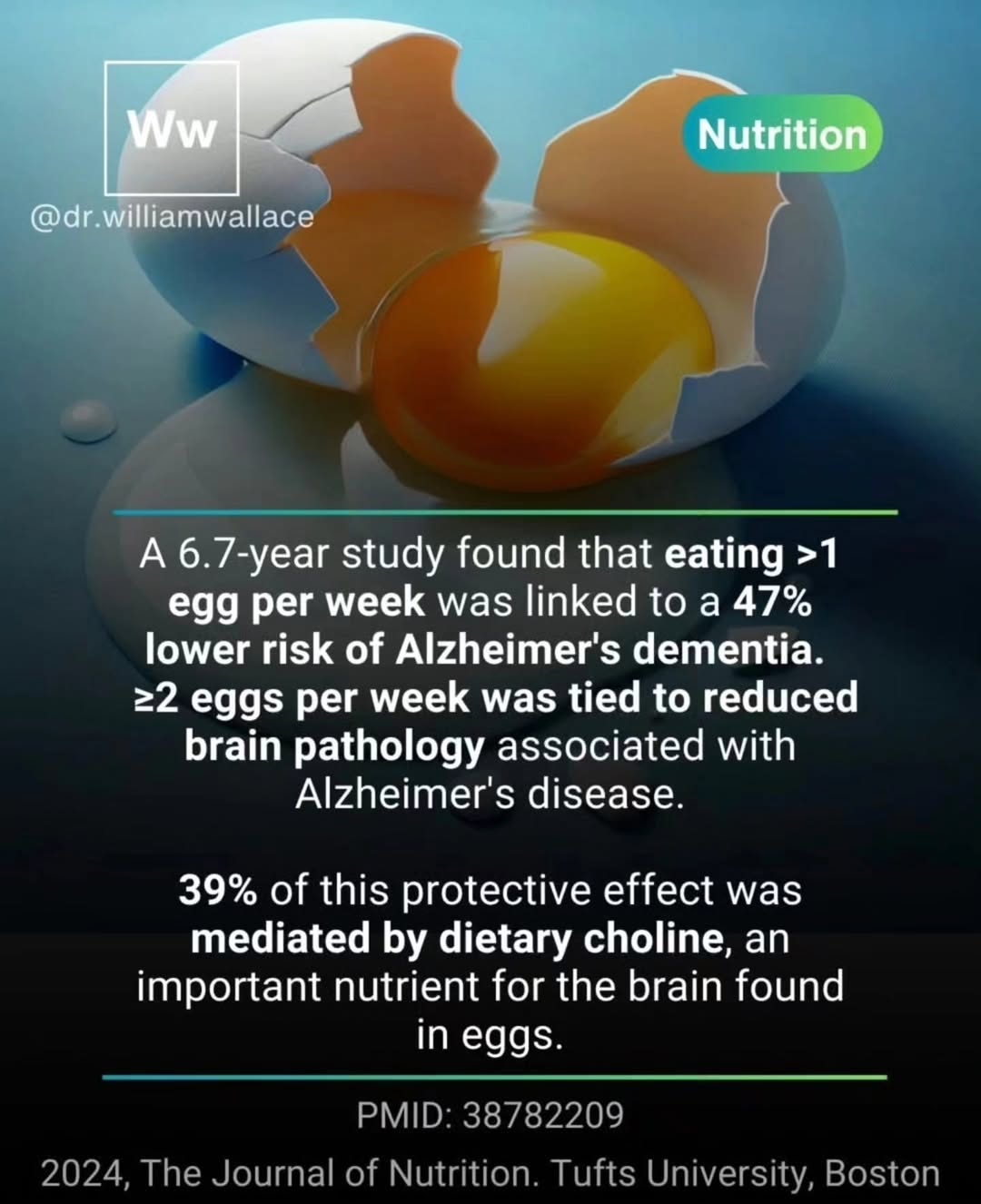
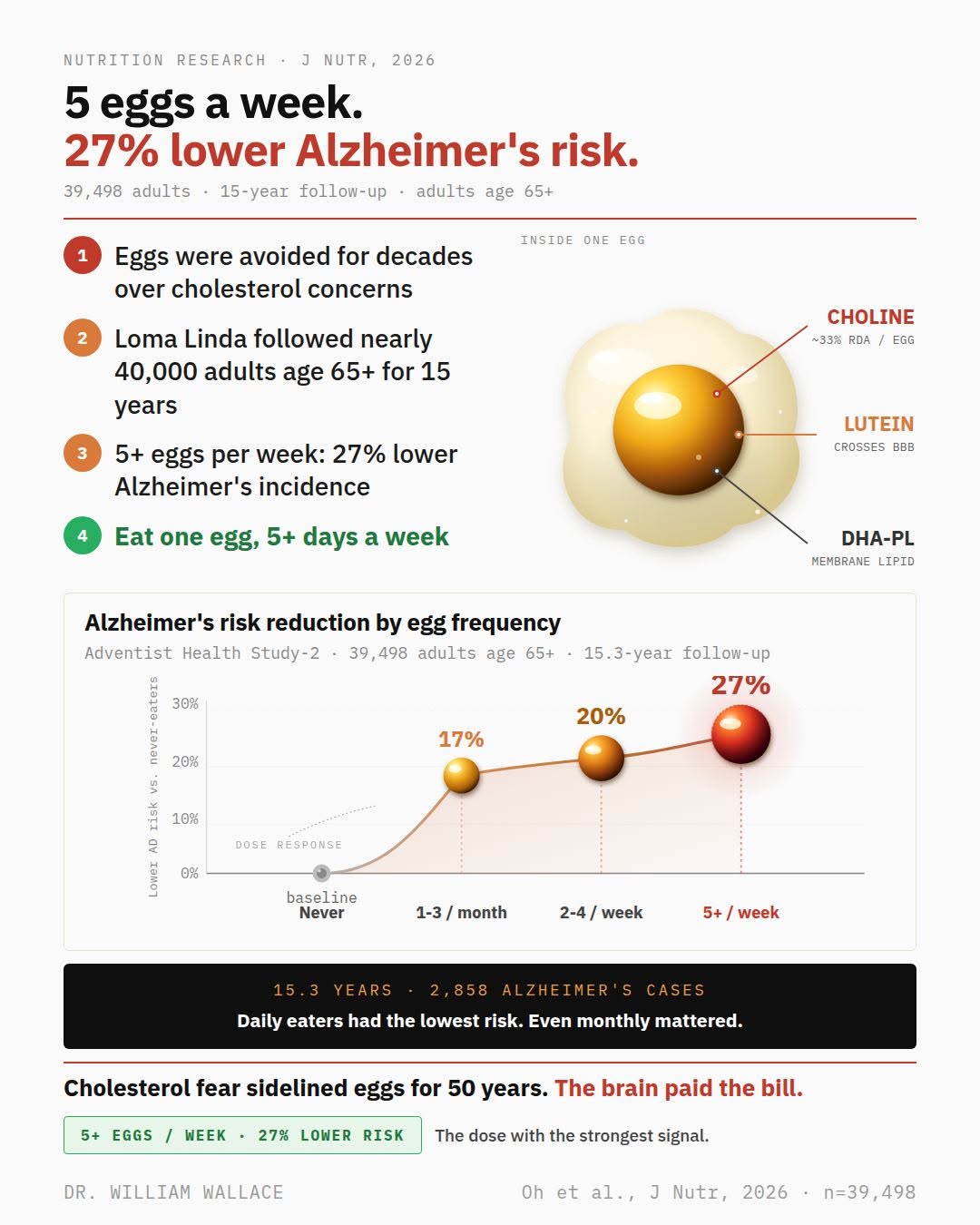
Rush study: more than 1 egg per week linked to 47% lower Alzheimer's dementia risk

Mar 13, 2025 · Louis Nervegna ♥ 19 · 💬 13 ↩ 1

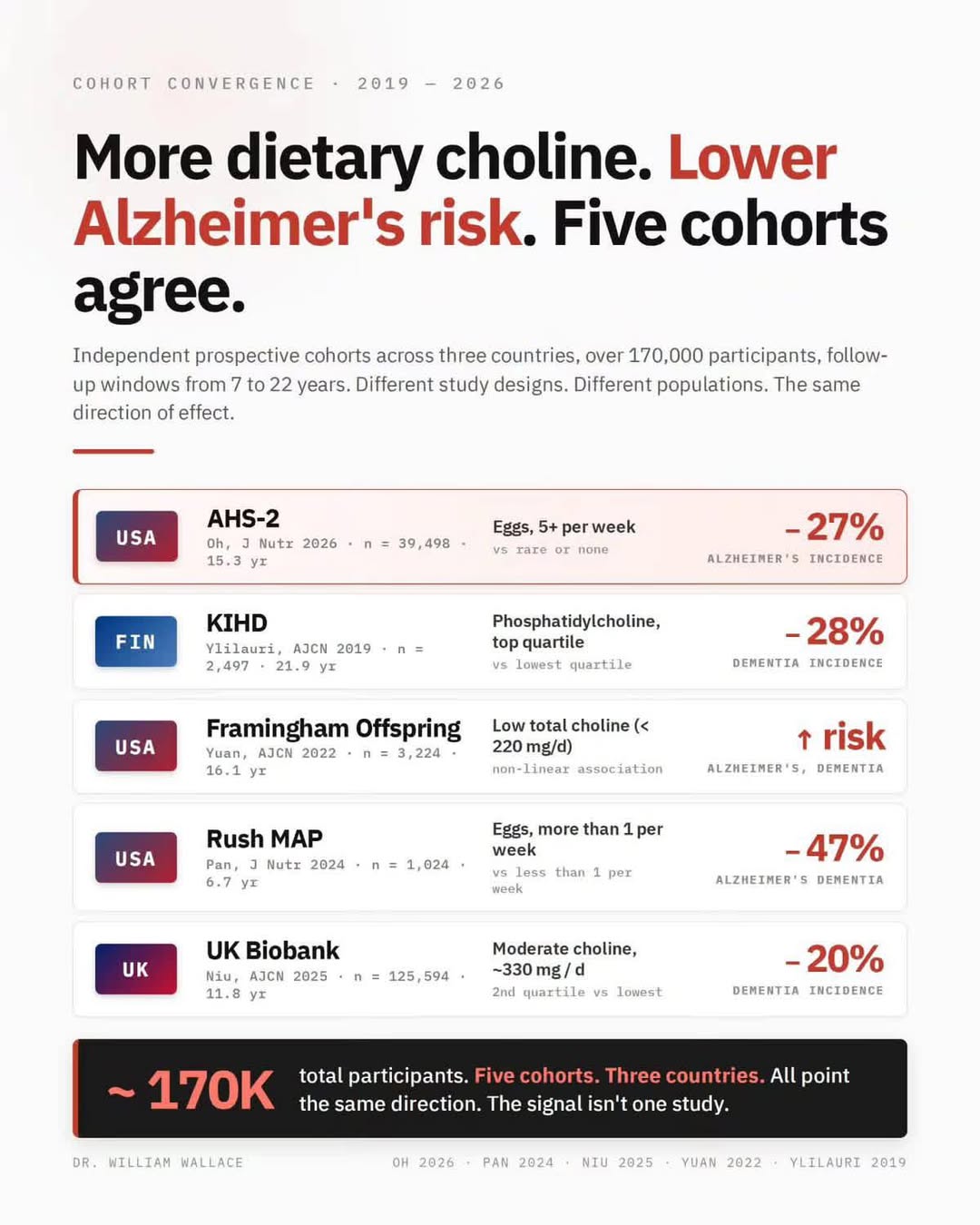
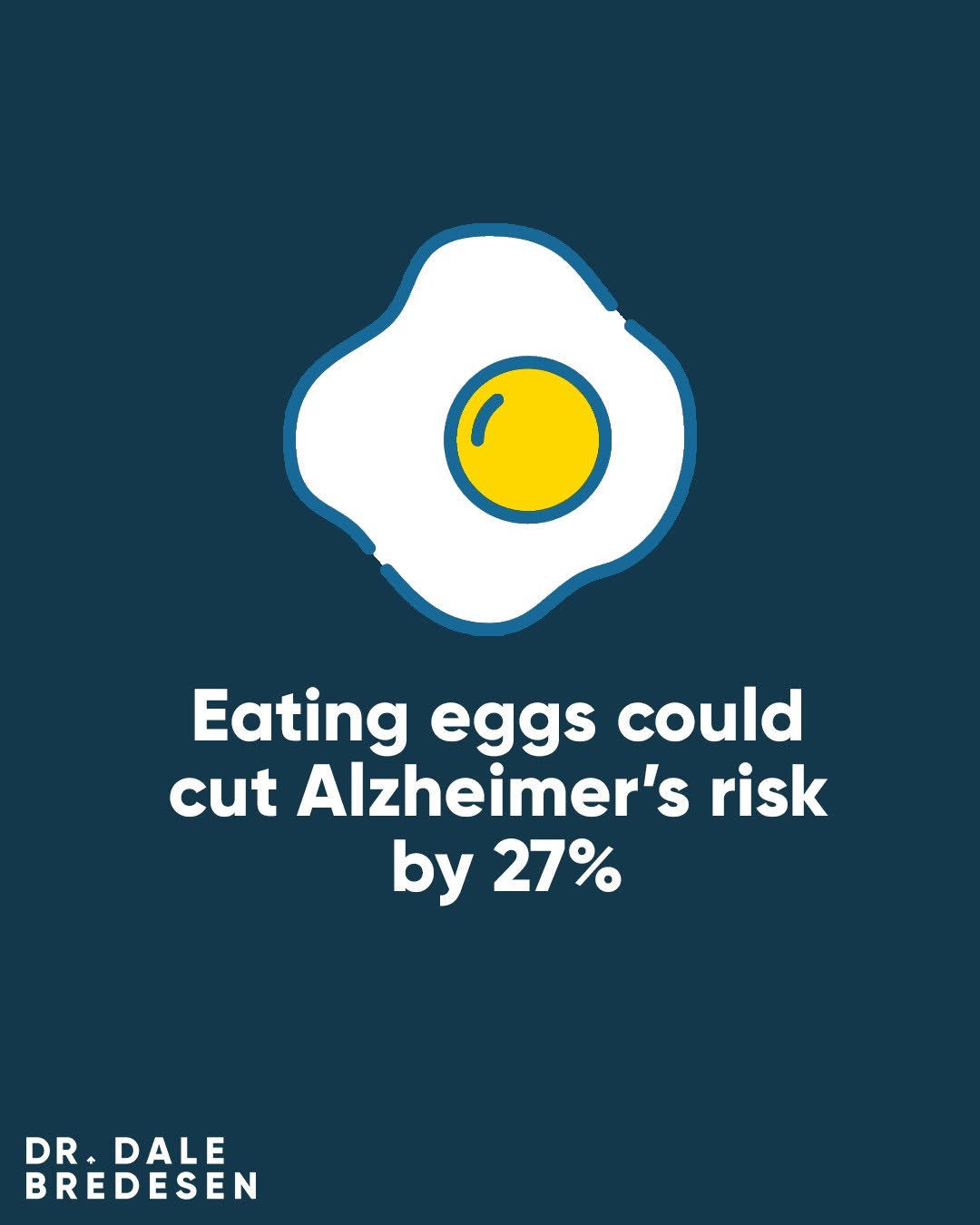
Louis shares a summary of a 6.7-year Journal of Nutrition study of 1,024 older adults (about 81 years) finding that eating more than one egg per week was associated with 47% lower Alzheimer's dementia risk, with choline explaining 39% of the effect. He notes the egg choline form (phosphatidylcholine) does not raise TMAO. The study is observational with self-reported diet.

Eating eggs weekly linked to lower Alzheimer's dementia risk in older adults

Jul 14, 2025 · Louis Nervegna ♥ 29 · 💬 11 ↩ 1

Louis shares a Journal of Nutrition cohort study reporting that older adults eating eggs weekly had lower rates of Alzheimer's dementia and fewer Alzheimer's-related brain changes at autopsy. About 39% of the association was explained by dietary choline; Louis adds that egg phosphatidylcholine does not raise TMAO.

Each daily yogurt serving linked to 14% lower CVD mortality in a 17-cohort meta-analysis

Feb 16, 2025 · Gokhan Can ♥ 19 · 💬 12

A systematic review and dose-response meta-analysis of 17 cohort studies (896,871 participants) found higher yogurt intake was associated with lower all-cause and cardiovascular mortality, with the largest benefit around 0.5 servings per day and no clear further gain above that. No significant association was seen with cancer mortality. As an observational analysis, it shows association, not causation.

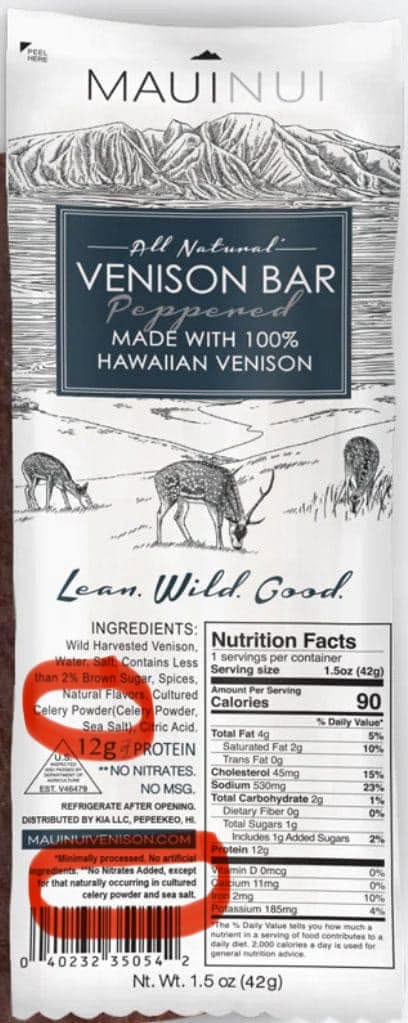
'Uncured' and 'nitrate-free' processed meats can carry as many or more nitrosamines

Jul 10, 2024 · Louis Nervegna ♥ 13 · 💬 16 ↩ 19

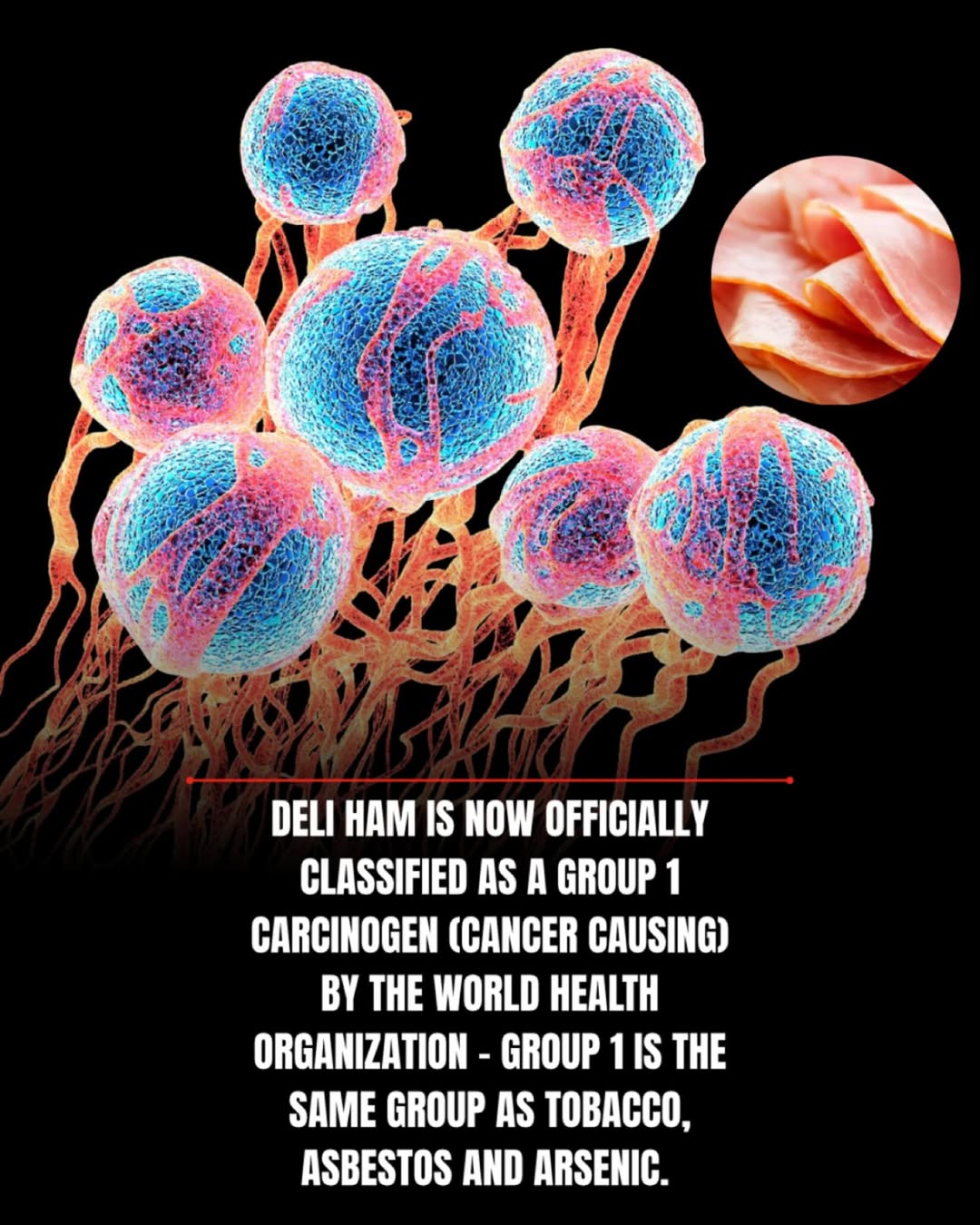
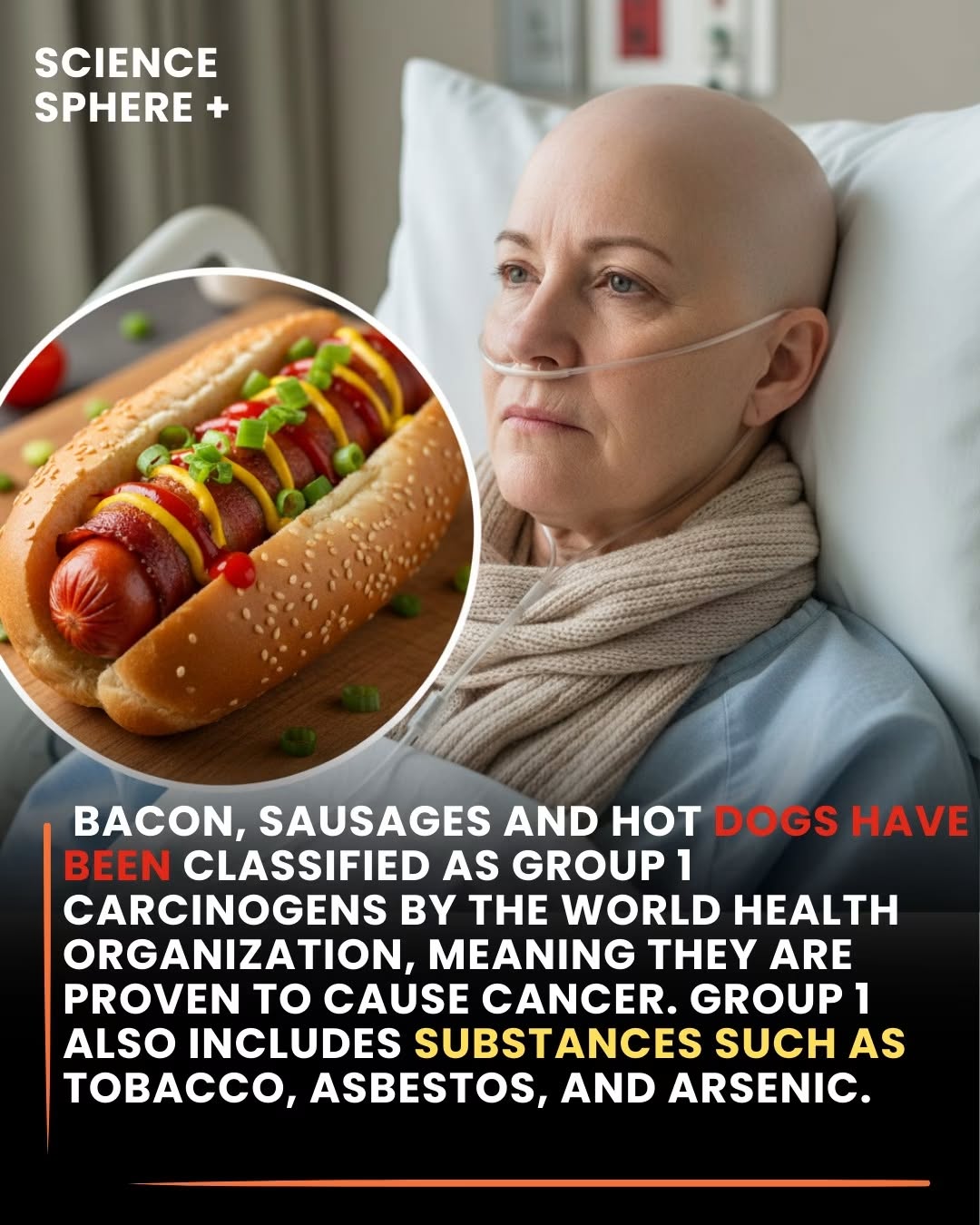
The poster warns that jerky, bacon, sausage and deli meats labeled natural or uncured use celery juice or powder as nitrate sources, avoiding USDA nitrite limits while still forming carcinogenic nitrosamines when cured and heated. Cured meat is a WHO group 1 carcinogen and shows the worst hazard ratios of any food besides trans fats in cohorts.
Two slices of deli meat a day linked to 44% higher dementia risk in a new review

Oct 02, 2026 · Louis Nervegna ♥ 14 · 💬 15

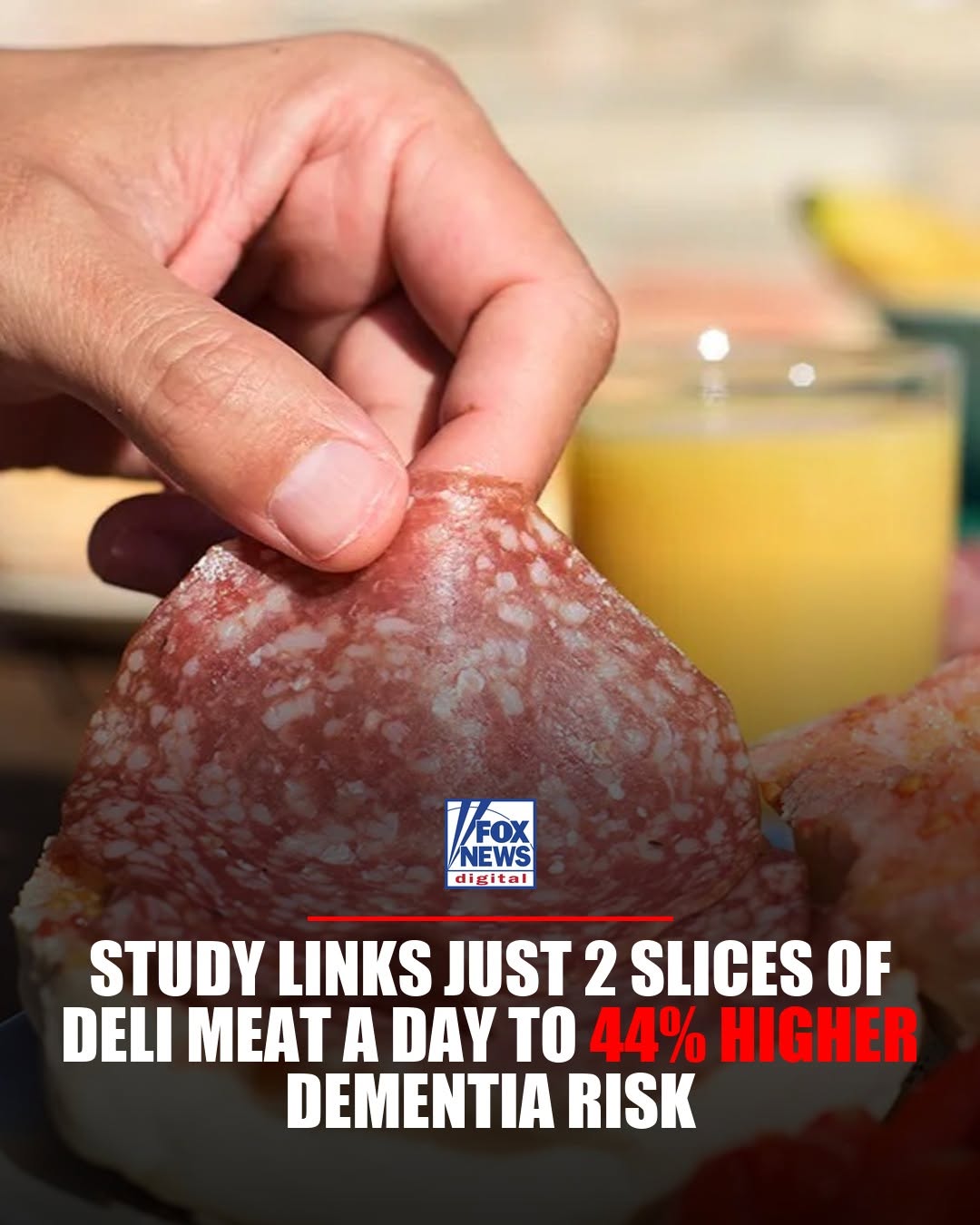
A review in the Annual Review of Nutrition reports that about two slices of processed meat daily is linked to 44% higher dementia risk and 52% higher Alzheimer's risk, drawing on dozens of studies including nearly 500,000 UK participants. Replacing 10% of ultra-processed food calories with unprocessed food was linked to 19% lower dementia risk. The poster says processed meat has the worst hazard ratios of any food category apart from trans fats.

NEJM 2020 dairy review: a mixed bag, best for fermented forms, weak for fractures

Jan 23, 2025 · Louis Nervegna ♥ 6 · 💬 21

Louis highlights the widely cited 2020 NEJM review on dairy and disease risk. It concludes that high dairy intake is not supported for preventing fractures, is not clearly linked to weight, diabetes or CVD, and may raise prostate and endometrial cancer risk while lowering colorectal cancer risk. Effects depend on the comparison food: dairy fares better than processed red meat or sugary drinks but worse than nuts.

Replace saturated fat with unsaturated fats; yogurt and cheese may be exceptions

Dec 10, 2025 · Louis Nervegna ♥ 19 · 💬 9 Fats & oils (saturated fat, seed oils, omega-6, olive oil)

Louis links a New York Times piece on whether saturated fat is actually good for you, after Robert F. Kennedy Jr. signaled a shift in dietary advice. His short answer is to replace saturated fat with unsaturated fats from olive oil, nuts, seeds and avocados, noting fermented dairy may blunt saturated fat's effects but this is still debated.
Adventist Health Study: nuts and beans protected against dementia as much as eggs

May 27, 2026 · Louis Nervegna ♥ 17 · 💬 6 Brain health & dementia

Louis notes this is the fifth large cohort linking eggs to lower dementia risk, but the same analysis showed nuts and beans gave equally large protection. Swap eggs for red and processed meat, not for nuts or beans. The shared post says roughly 12 almonds or a third cup of lentils matched the egg effect, undermining a choline-only explanation.
Most ultraprocessed food CVD risk in Harvard cohorts came from soda and processed meat

Sep 25, 2024 · Louis Nervegna ♥ 13 · 💬 8 Mediterranean, DASH, MIND & plant-forward diets

Louis shares a NY Times report on Harvard Nurses' Health Study and Health Professionals data. Of 10 ultraprocessed food categories, only sugar-sweetened drinks and processed meat, poultry and fish were clearly linked to higher cardiovascular risk. Excluding these two, most of the risk associated with ultraprocessed food disappeared.

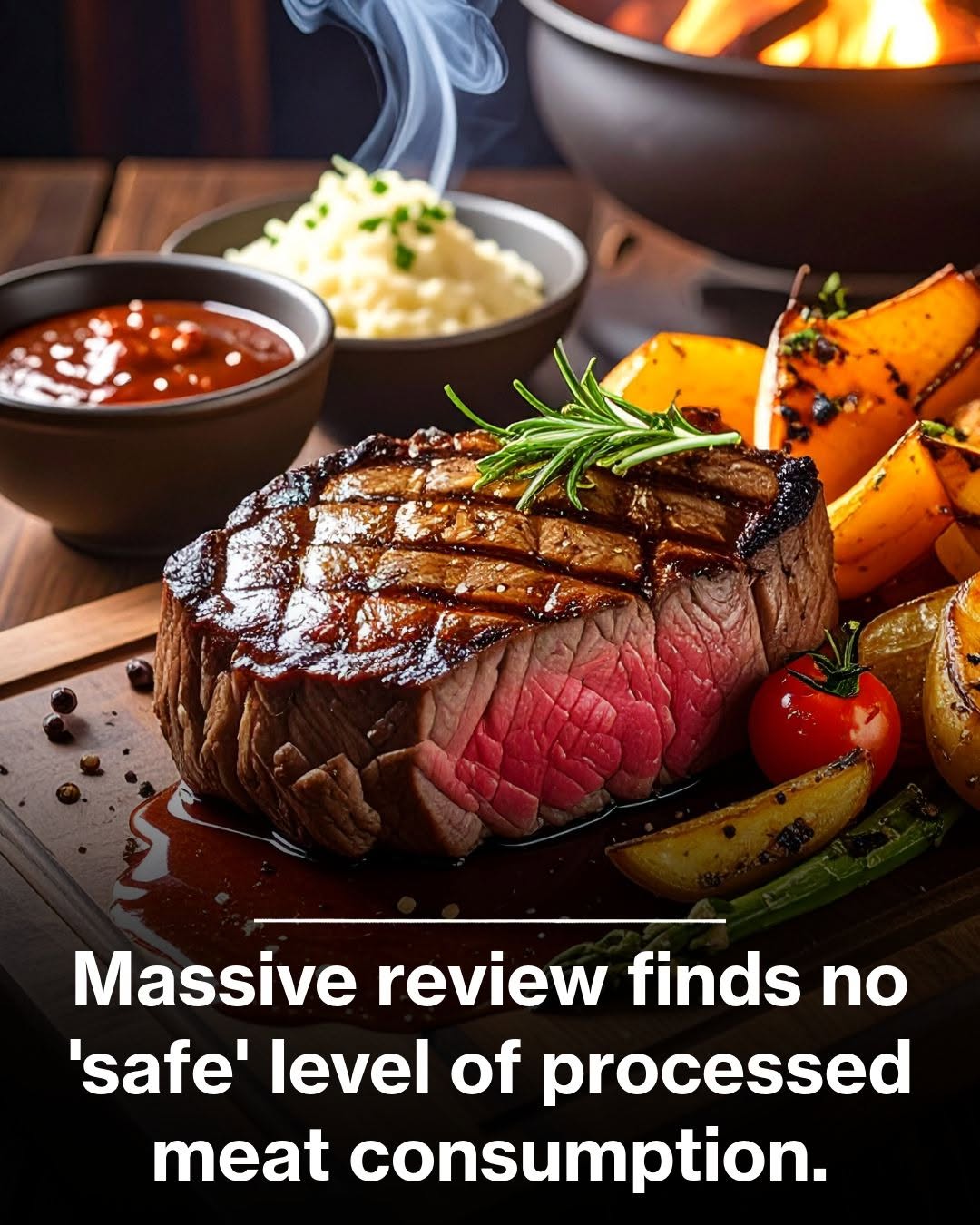
Processed meat has no safe intake level in Nature Medicine burden-of-proof review

Apr 13, 2026 · Louis Nervegna ♥ 9 · 💬 11

A shared summary of the IHME Burden of Proof analysis of 70+ studies finding a dose-response between processed meat and health risks with no apparent safe threshold. Louis clarifies that processed meat means chemically transformed by salting, curing, smoking or fermenting, including 'uncured' celery-powder products.

Harvard: swapping red and processed meat for beans, nuts, fish or poultry cuts heart risk

Apr 11, 2025 · Louis Nervegna ♥ 13 · 💬 7 Protein

Louis quotes the Harvard Nutrition Source: protein source matters more than quantity. Even small regular amounts of red meat, especially processed, are linked to higher heart disease, stroke and mortality, while replacing them with beans, soy, nuts, fish or poultry appears to lower risk, partly because plant proteins are more unsaturated and cholesterol-free.

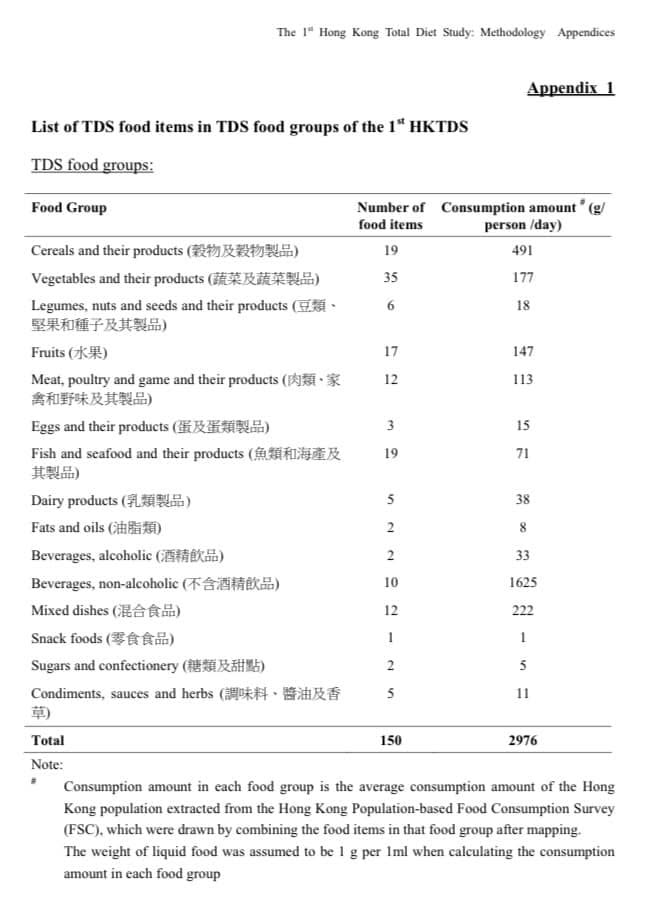
Hong Kong's 86-year life expectancy goes with a grain, vegetable and fruit heavy diet

Sep 03, 2024 · Louis Nervegna ♥ 8 · 💬 15 Mediterranean, DASH, MIND & plant-forward diets

Louis notes Hong Kong life expectancy of 86 years versus 76 in the US and cites a 2011 government Total Diet Study of 5,008 adults aged 20-84. Daily intake by weight was led by cereal grains (491 g), then vegetables (177 g), fruit (147 g), meat and poultry (113 g) and fish (71 g). Dairy, eggs, legumes, nuts, sugars and added fats were low, and he uses it to counter carnivore claims. It is an ecological observation.

Swapping red and processed meat for beans, nuts, fish or poultry lowers CVD risk

Feb 14, 2025 · Louis Nervegna ♥ 11 · 💬 10 ↩ 3

Louis summarizes the Harvard Nutrition Source: protein source matters more than amount. Even small regular amounts of red, especially processed, meat are linked to more heart disease and stroke, and swapping in legumes, nuts, seafood, whole grains or yogurt appears to lower risk.

Meat-heavy, low-carb health influencers rarely reach 90, per a video survey

Apr 19, 2025 · Louis Nervegna ♥ 13 · 💬 13 Aging & longevity

Louis shares a video series surveying ages at death of over 100 health influencers and says those advocating diets high in red and processed meat and low in whole grains, fruit, vegetables and legumes did not live long. Richard Bernstein, who died at 90, is the only one he found who reached 90. This is an anecdotal tally, not controlled evidence.

Red meat tied to lower mortality only in frail underweight over-80s (Chinese case-control)

Mar 20, 2026 · Louis Nervegna ♥ 4 · 💬 18

Louis comments on an AJCN 2026 nested case-control study of Chinese adults 80+: non-meat eaters were less likely to reach 100, but only if underweight and frail. He cautions that case-control studies are low on the evidence hierarchy and may not be causal, and suggests protein and IGF-1 may matter in frail old age.

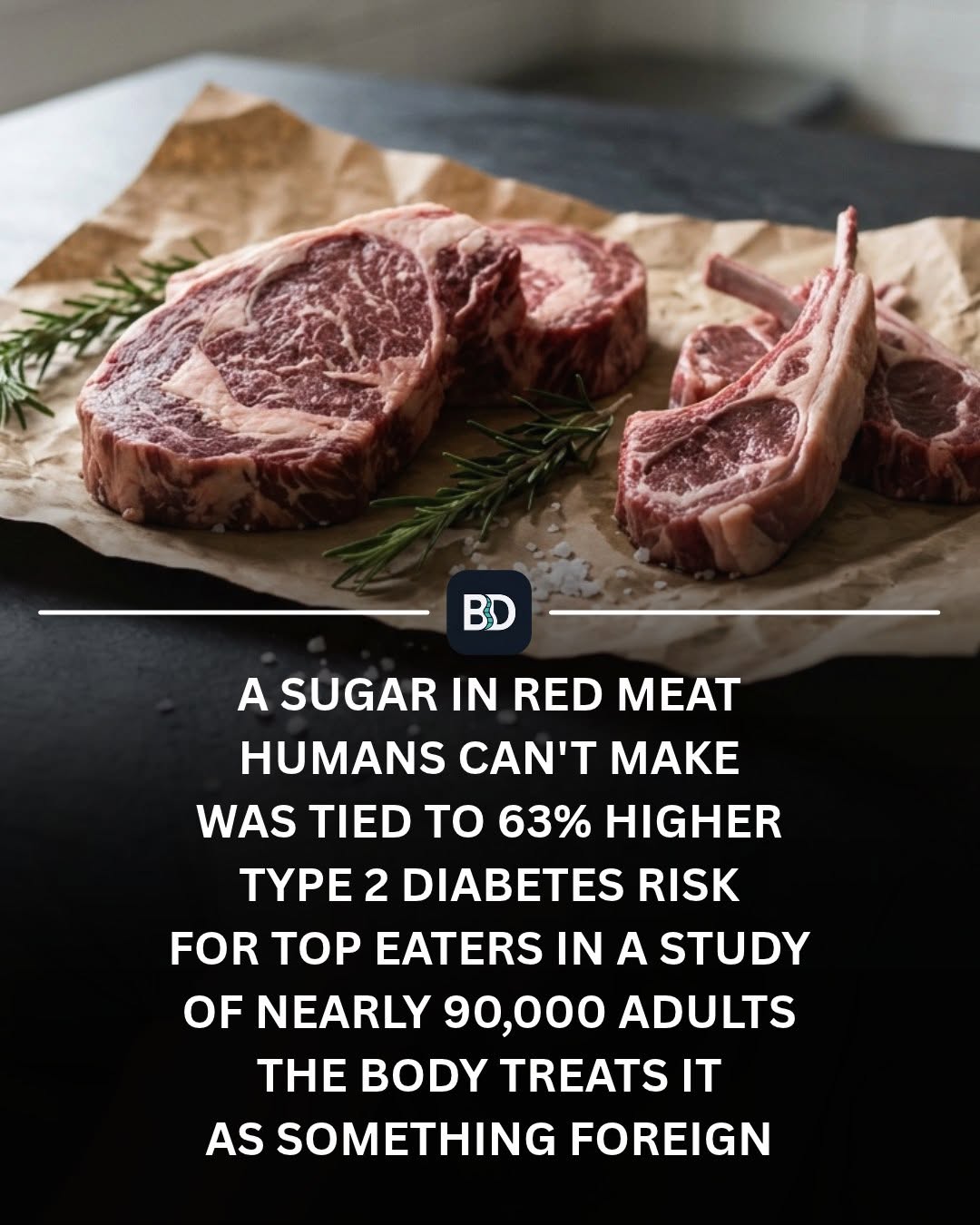
Red meat sugar Neu5Gc linked to 63% higher type 2 diabetes risk in 89,953 French adults

Oct 27, 2026 · Louis Nervegna ♥ 12 · 💬 6

Preliminary results presented at EASD 2026 followed 89,953 NutriNet-Santé participants for about 7 years. Those eating the most Neu5Gc, a sugar found in red meat that humans do not make, had a 63% higher risk of type 2 diabetes, holding after adjusting for exercise, diet quality and smoking. Louis suggests this may partly explain why cohorts like the Nurses' Health Study link red meat to diabetes; the study is observational and not peer reviewed.

The traditional Mediterranean diet was a cheap peasant diet of about 90% plant foods

Dec 02, 2025 · Louis Nervegna ♥ 19 · 💬 5 Mediterranean, DASH, MIND & plant-forward diets

Louis argues the traditional Mediterranean diet was mostly cheap plant food (legumes, nuts, seeds, whole grains) with about 10% seafood, yogurt, cheese, poultry and eggs, and rare unprocessed red meat. He says people ate this for cost and taste, and that the modern Mediterranean diet has drifted toward the standard American diet and is no longer healthy.

Yogurt linked to less weight gain and 14-18% lower type 2 diabetes risk

Jan 20, 2025 · Louis Nervegna ♥ 16 · 💬 6

Louis quotes Harvard's Nutrition Source on yogurt. Cohorts of 120,877 people suggested protection from weight gain, and two meta-analyses of prospective cohorts found 18% and 14% lower type 2 diabetes risk with daily yogurt. Helpful bacteria are suggested to reduce inflammation or improve insulin action, though the mechanism is unclear.

Even 'natural' uncured ham contains nitrates that form carcinogenic nitrosamines

Jan 09, 2026 · Louis Nervegna ♥ 21 · 💬 7

Louis reiterates that deli ham labeled uncured uses celery and sea salt nitrates to cure meat in the same way as sodium nitrite, yielding nitrosamines. The shared post cites WHO classification of processed meat as Group 1 carcinogen with 50 g/day linked to higher colorectal cancer risk.

Butter and cheese affect LDL differently despite similar saturated fat: the food matrix

Sep 02, 2026 · Louis Nervegna ♥ 11 · 💬 7

Louis highlights that butter and cheese contain similar saturated fat but affect LDL differently because of food matrix. Churning strips the natural milk-fat wrapper, while in cheese fat stays in a protein mesh, with calcium and fermentation also possibly modifying effects. The shared clip adds that cheese is no free pass given its calories and salt.

Review of 70+ studies: no safe level of processed meat for diabetes and colorectal cancer

Jul 12, 2025 · Louis Nervegna ♥ 17 · 💬 4

Louis quotes coverage of a University of Washington review of over 70 studies on ultra-processed foods and type 2 diabetes, ischemic heart disease and colorectal cancer. Risk rose steadily with processed meat intake, with about one hot dog a day linked to at least 11% higher diabetes risk and 7% higher colorectal cancer risk.

Six converging evidence lines favor plant protein over red and processed meat

Aug 27, 2026 · Louis Nervegna ♥ 11 · 💬 4 Protein

Louis shares an Ageproof article by group member Mert Erogul MD arguing that genetics, IGF-1 biomarkers, rodent experiments, amino-acid decomposition, short-term human trials and epidemiology converge: methionine, isoleucine and valine, not leucine or total protein, are implicated. Favoring whole-food plant protein over red and processed meat likely extends lifespan.

Most omnivores already eat enough fish or poultry for the APOE4 benefit in a Swedish study

Mar 24, 2026 · Louis Nervegna ♥ 12 · 💬 5 Brain health & dementia

Louis comments that participants with an APOE4 gene variant saw the maximum benefit at about 2.5 oz per day of unprocessed meat or fish, which people eating Mediterranean or MIND-style diets typically already reach. He notes the study is observational, benefit was seen only in APOE 3/4 and 4/4, and processed meat raised dementia risk in everyone.

Cheese umbrella review: modestly lower mortality, CVD, stroke and diabetes risk

Aug 06, 2025 · Gokhan Can ♥ 8 · 💬 5

An umbrella review of 54 meta-analyses found cheese consumption associated with lower risk of all-cause mortality, cardiovascular outcomes, type 2 diabetes, fractures and dementia, with moderate evidence quality. Gokhan flags this as interesting given the group's usual caution on saturated fat.

Ice cream's apparent diabetes benefit is probably not real; yogurt is better

May 27, 2026 · Louis Nervegna ♥ 9 · 💬 6

Louis shares an Atlantic article on odd observational links between ice cream and lower diabetes risk. He cautions that the comparisons are against the standard American diet, that interviewed scientists mostly attribute the association to reverse causality, and that fruit, nuts and dark chocolate are better desserts.

Hot dogs are not health food: processed meat has among the worst hazard ratios of any food

Oct 27, 2025 · Louis Nervegna ♥ 11 · 💬 6

Louis mocks a carnivore influencer's claim that hot dogs are healthy, noting the omission that they are high in nitrosamines (including 'natural' celery-juice-cured ones), which are likely carcinogenic and linked by him to atherosclerosis and diabetes. He backs the point with Harvard Chan School pages on processed meat, ultra-processed foods and the WHO carcinogenicity finding.

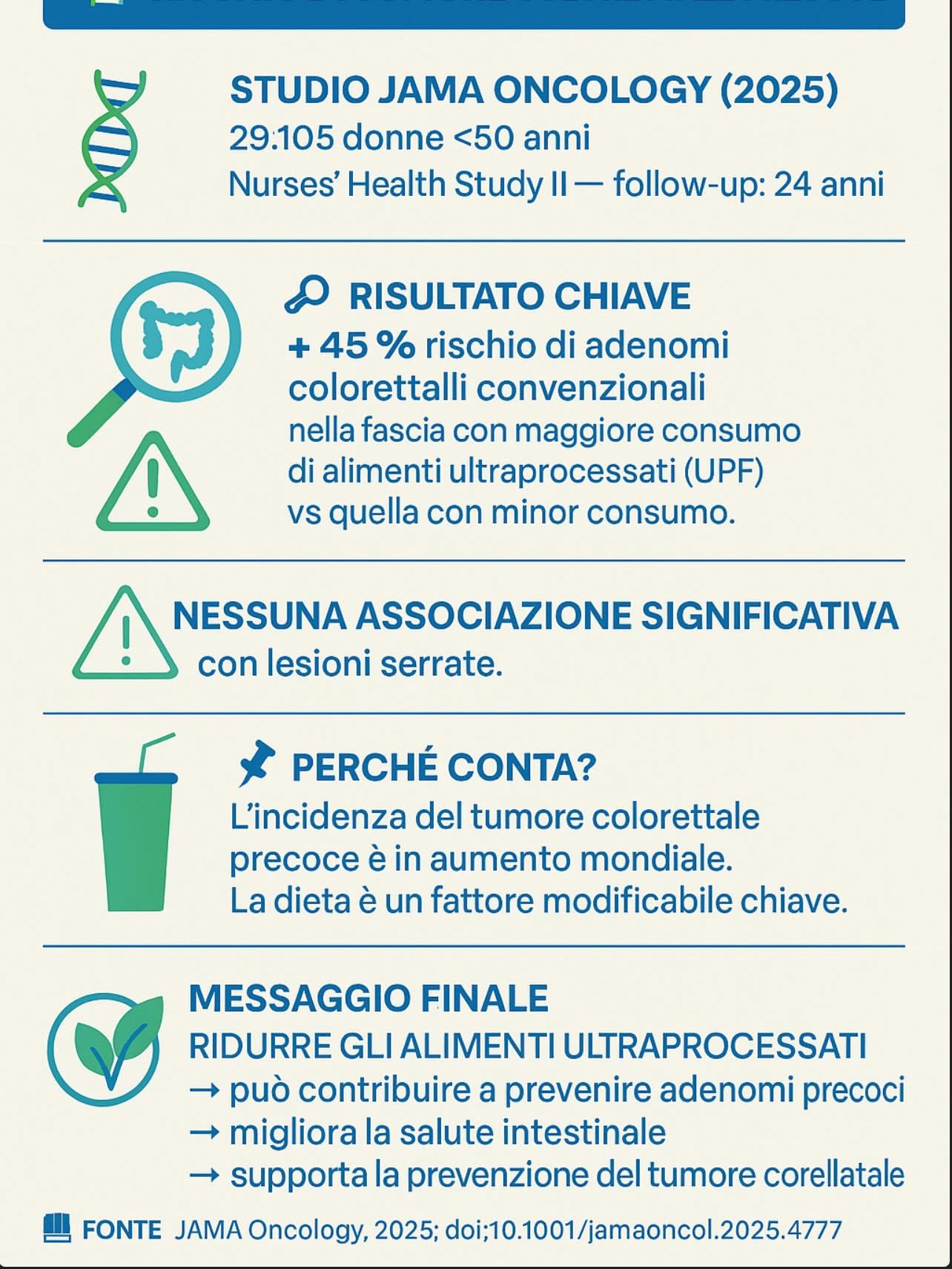
Ultraprocessed food linked to 45% higher early-onset colorectal adenoma odds

Dec 06, 2025 · Louis Nervegna ♥ 10 · 💬 2 Cancer

Louis shares a Luigi Fontana summary of a JAMA Oncology analysis of 29,105 Nurses' Health Study II women under 50 followed for 24 years. Higher ultraprocessed food intake was associated with 45% higher odds of conventional early-onset adenomas, with no clear link to serrated lesions. Louis adds that the same Harvard group previously found most UPF-related CVD risk came from processed meat and sugary beverages.

Butter raises LDL and offers no CVD protection; look at the totality of evidence

Sep 30, 2025 · Louis Nervegna ♥ 11 · 💬 2 Fats & oils (saturated fat, seed oils, omega-6, olive oil)

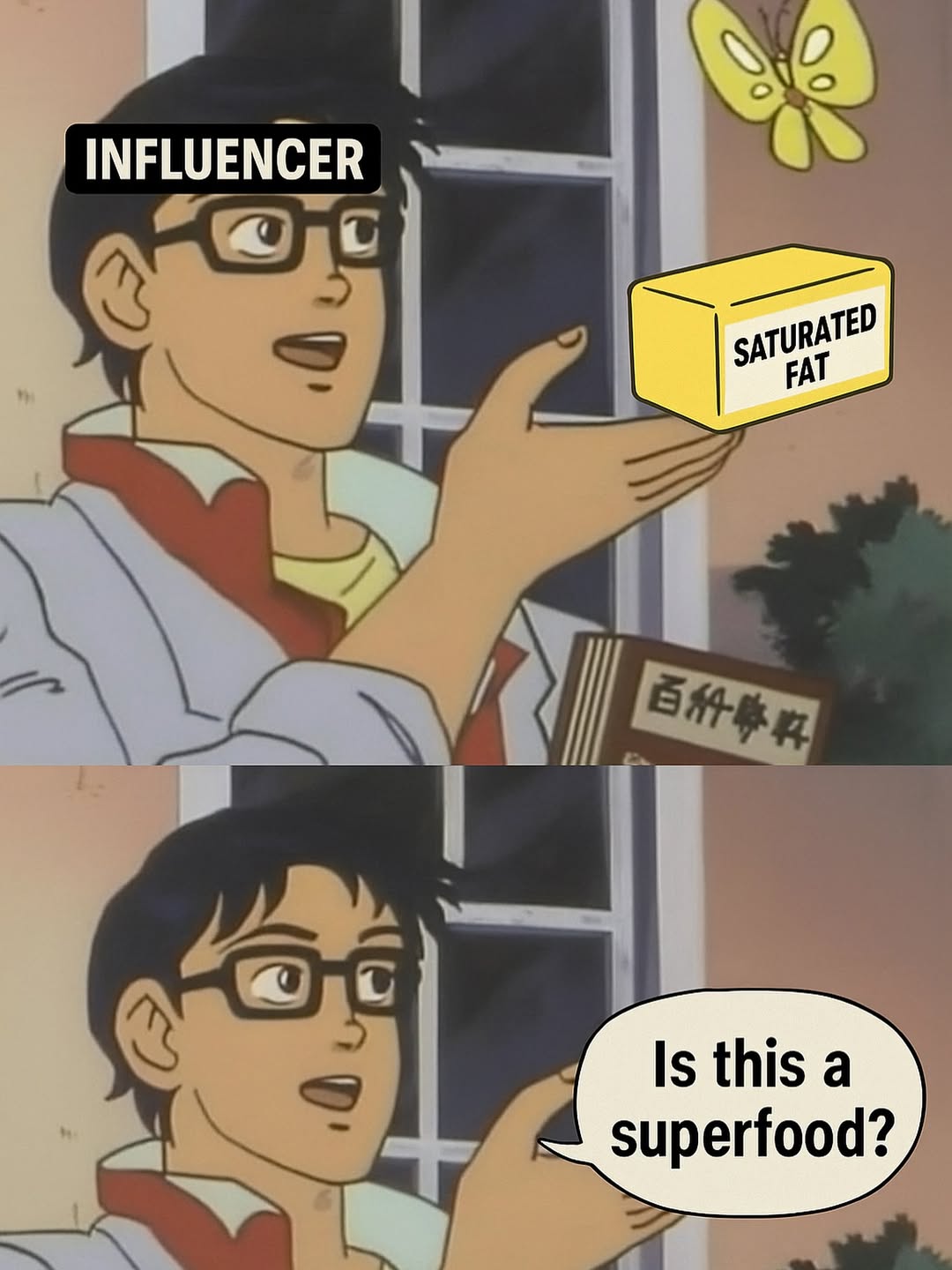
Responding to claims that butter is a superfood, the shared post says the butter literature shows neutral to slightly higher all-cause mortality and no CVD protection, and that butter's saturated fat reliably raises LDL-C in controlled feeding trials. Louis adds that conclusions should come from the totality of evidence rather than cherry-picked studies.

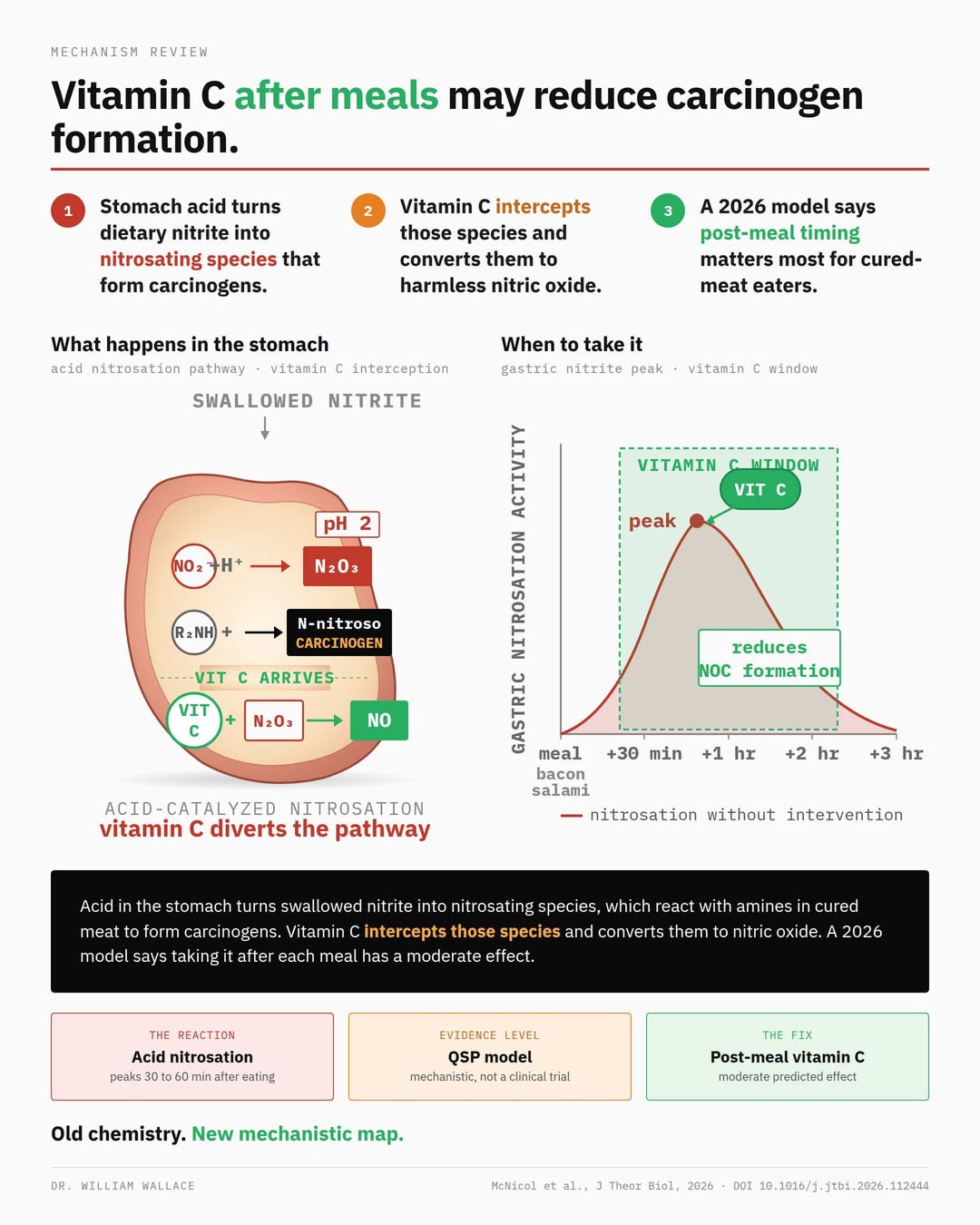
Processed meat forms nitrosamines in the stomach whatever the nitrite source

May 21, 2026 · Louis Nervegna ♥ 13 · 💬 1

Louis shares a Journal of Theoretical Biology paper: nitrite from curing (or celery juice) reacts in stomach acid to form nitrosamines such as NDMA and NDEA, a leading hypothesis for processed meat's link to stomach and colorectal cancer. Vitamin C might reduce their formation. WHO classes processed meat as a group 1 carcinogen.

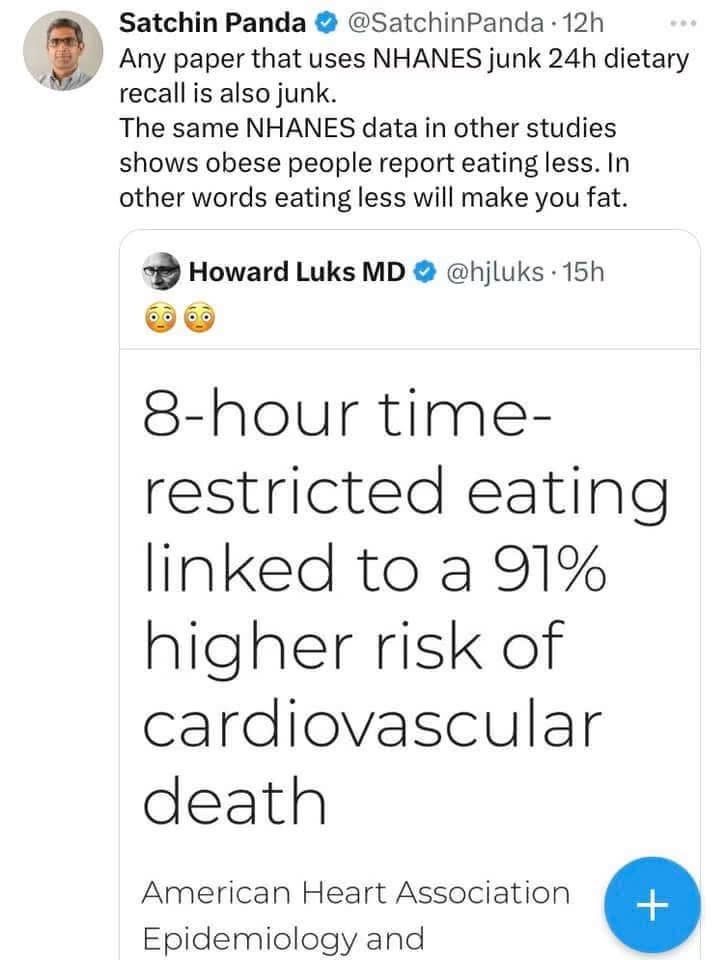
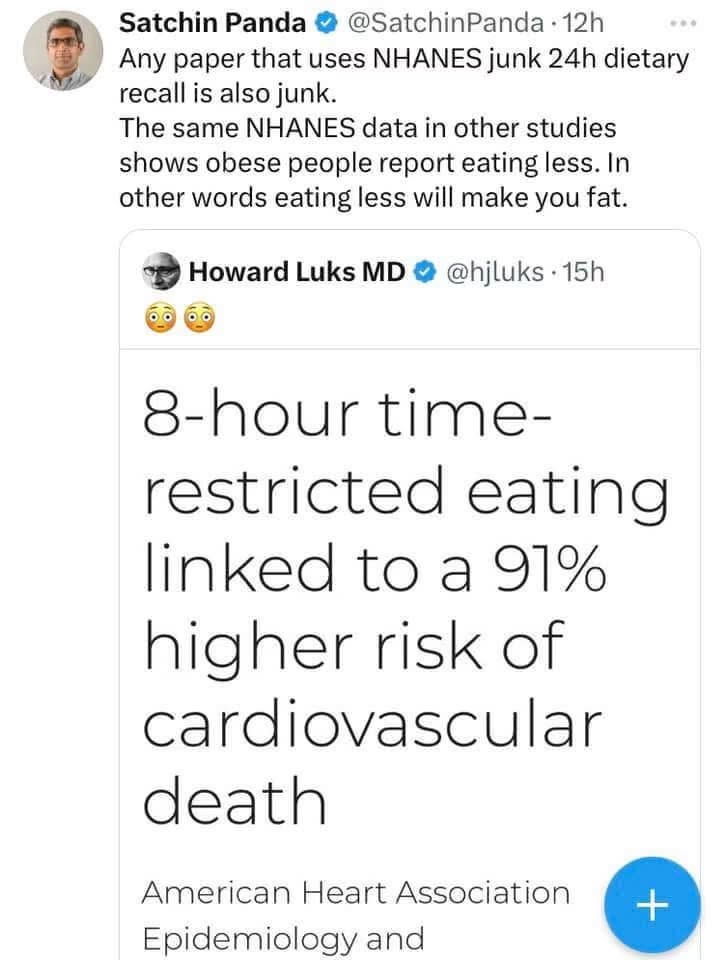
Beef-industry NHANES red meat and cancer paper rests on just 2 days of diet data

Oct 06, 2025 · Louis Nervegna ♥ 10 · 💬 1

Louis criticizes a paper circulating on social media that claims red meat lowers cancer risk. It was funded by the National Cattlemen's Beef Association and is an analysis of public NHANES data that links 12-18 years of outcomes to just two days of reported diet, which he argues is unreliable compared with long-term prospective cohorts.

Countries with the lowest milk intake have the lowest fracture rates, Willett notes

Nov 08, 2026 · Louis Nervegna ♥ 3 · 💬 4

Louis shares a Walter Willett clip noting that countries with low milk consumption, such as Indonesia and much of Asia, have the lowest fracture rates. His NEJM work suggests calcium needs may be lower than official recommendations, and bone health depends on diet, movement and lifestyle.

Whole-food plant protein beats animal protein for long-term outcomes in Harvard cohorts

Mar 30, 2026 · Louis Nervegna ♥ 11 ↩ 2 Protein

Louis summarizes 30-year follow-up in the Harvard Nurses' Health Study and Health Professionals Follow-up Study: whole-food plant protein is associated with better outcomes, especially for heart disease. The benefit depends on the animal protein type: plant protein is only slightly better than fish, poultry and fermented dairy but clearly better than red and processed meat.

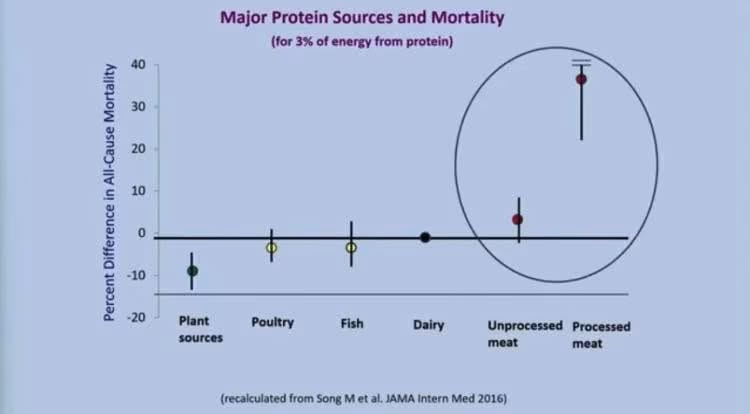
Protein type matters more than amount: processed meat worst, plant protein most protective

Jun 05, 2026 · Louis Nervegna ♥ 4 Protein

Louis reshares his summary of protein intake and mortality in nearly 300,000 people followed over 30 years in the Nurses' Health Studies and Health Professionals Follow-up Study. Plant protein was protective, fish and poultry slightly so, dairy and eggs neutral, while unprocessed red meat modestly and processed meat very strongly raised mortality.

Cleveland Clinic links gut-bacteria byproduct TMAO to atrial fibrillation risk

Jul 24, 2026 · Louis Nervegna ♥ 2 · 💬 1 ↩ 2 Heart rhythm & heart failure

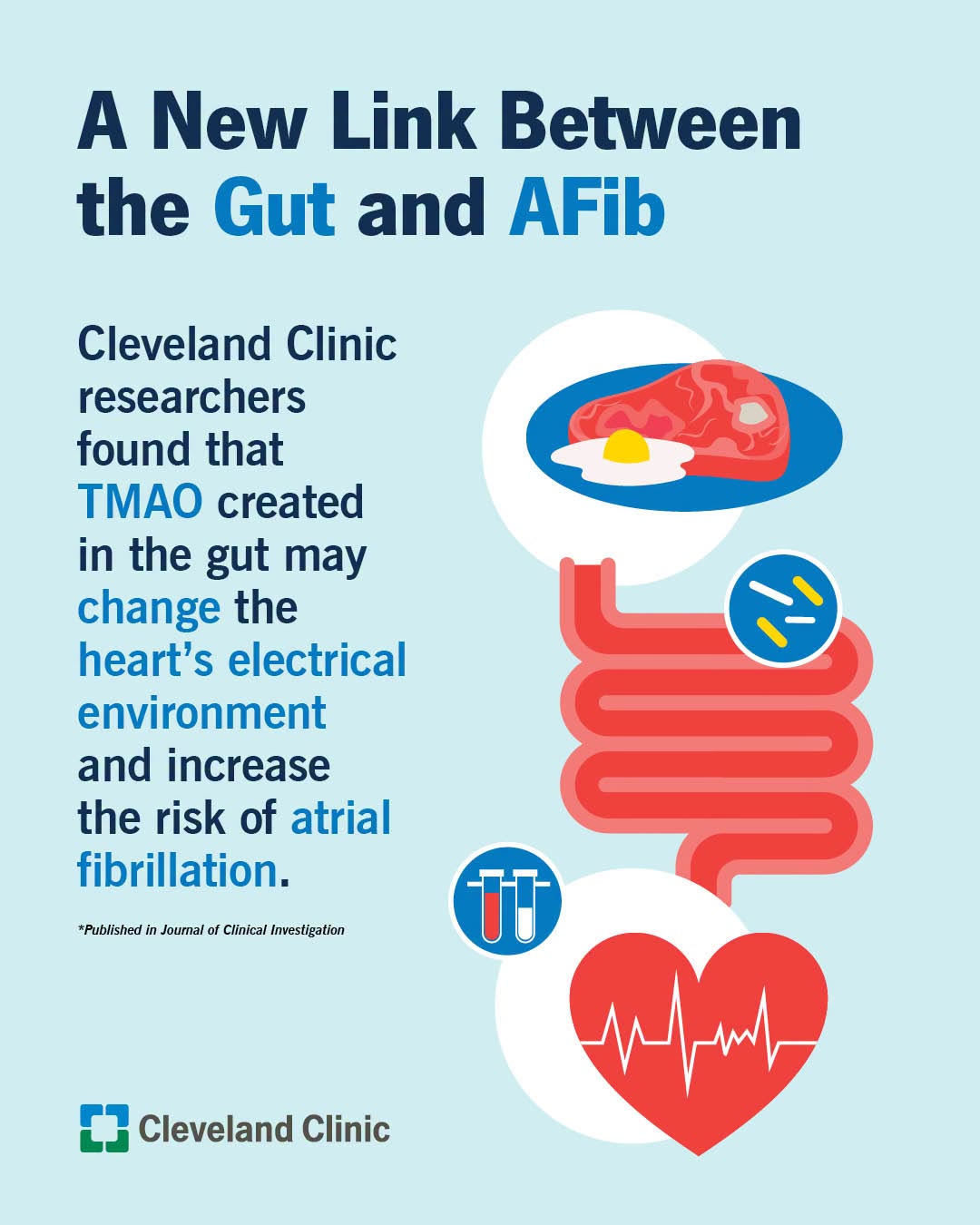
Cleveland Clinic researchers analyzed blood samples from over 5,000 people undergoing heart procedures and found TMAO, made by gut bacteria from nutrients in red meat and other animal products, was linked to higher AFib risk. Cell experiments suggested TMAO may alter the heart's electrical environment. Louis frames it as TMAO possibly raising AFib risk.

Full-fat cheese raises LDL less than butter, possibly due to the cheese matrix

Oct 29, 2026 · Louis Nervegna ♥ 4

Louis shares a summary suggesting full-fat cheese affects LDL less than butter or cream despite similar saturated fat. In a randomized trial full-fat cheese lowered LDL more than reduced-fat cheese supplemented with butter, and another study found cheese eaters excreted more fat in stool than butter eaters. Results are not perfectly consistent and benefits may level off around 50 g/day.

Experts: processed meats are worse than unprocessed, and processing itself is the problem

Oct 27, 2025 · Louis Nervegna ♥ 3 ↩ 1

Louis shares (via a paywall bypass) a 2022 NYT piece quoting Harvard's Frank Hu and the American Cancer Society on processed meat. Experts say regular processed-meat intake is linked to colorectal cancer, type 2 diabetes and cardiovascular disease, and that curing with nitrates/nitrites, which can create nitrosamines, may be a key culprit.

Fewer ultra-processed foods linked to 41% lower dementia risk; processed meat highest risk

Jun 05, 2026 · Louis Nervegna ♥ 0 · 💬 1 Brain health & dementia

Louis shares a 2026 American Journal of Public Health analysis of the Health and Retirement Study, in which lower ultra-processed food intake was linked to 41% lower dementia risk and processed meats such as bacon, hot dogs and ham showed the highest risk. He adds that processed meats have among the worst hazard ratios in nutrition epidemiology.