(no text — see the shared post below)
Reversing calcified plaque
The main reason that a high CAC score predicts risk is because:
The amount of calcified plaque that you have acts as a proxy for the amount of dangerous soft plaque that you have.
The calcified plaque per se is usually not the issue.
The calcified plaque doesn’t just appear out of nowhere. It develops from soft plaque over a long period of time. That’s why it predicts the amount of soft plaque.
It’s the soft plaque that poses a real danger. That is what typically causes the risk. Not the calcified plaque.
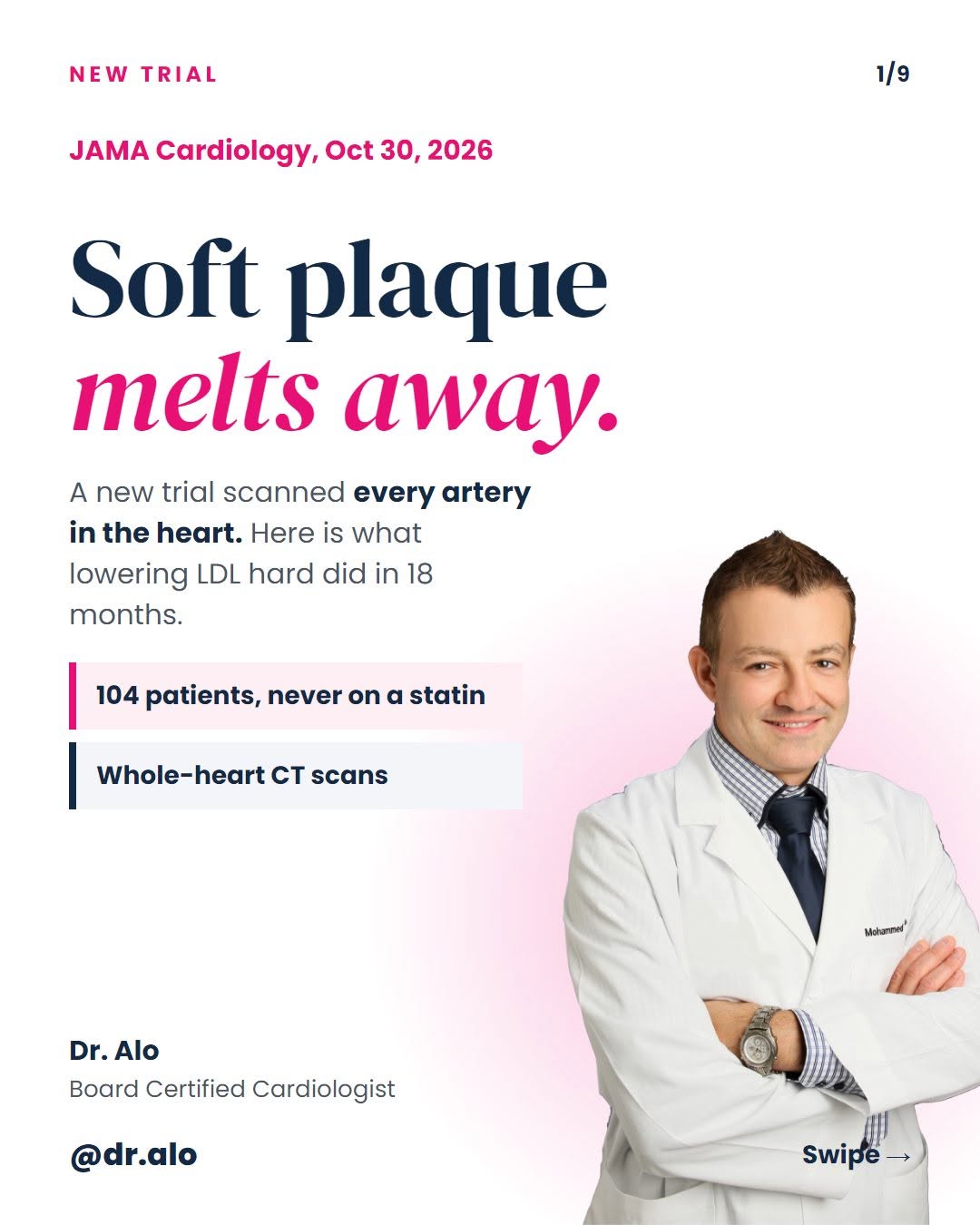
The focus should be on REVERSING SOFT PLAQUE, or at least stabilizing it and halting its progression.
Many studies have shown that reversing soft plaque is possible. You can read past posts on this topic by searching the group for the tag #reverseHD.
There is typically no point in trying to do anything about the calcified plaque, because it usually poses little danger. The obsession online over lowering CAC score is misguided and reflects a fundamental misunderstanding of what causes people to die from heart disease. What you should really be obsessed about is lowering the soft plaque.
There’s also the theoretical possibly that somehow removing the calcified plaque could destabilize the atheroma as a whole and actually make it more likely to rupture. Without rigorous studies, we have no way to know. That’s why it’s so important to run randomized trials that look at hard outcomes like heart attacks, strokes, and death— and not just rely on anecdotes or small studies only looking at imaging. What really matters in the end is preventing heart attacks, strokes, and death. Not CAC scores on a piece of paper.
I want to make sure people understand this, because there is a lot of misinformation on this topic online.
#cacHD #reverseHD #plaqueHD #statinreverseHD #cacreverseHD #calcifiedplaqueHD