About 64% of heart attacks caused by acute thrombosis come from rupture of soft lipid-rich plaque:
This is the same kind of plaque that statins and other lipid-lowering drugs have been shown to stabilize and reverse: facebook.com/share/v/1EhCbEQzek.
Another 25% of heart attacks caused by acute thrombosis come from gradual erosion of soft plaque:
When the blood touches exposed tissue in an eroded soft plaque, it can trigger a clotting response. (This doesn't happen with calcified plaque.)
Only about 5% of heart attacks caused by acute thrombosis involve calcified plaque:
Calcified nodules can cause heart attacks when dense pieces of calcium break through the inner wall of a heart artery, tear the protective covering, and trigger an acute thrombosis.
All together:
These acute thromboses drive what are called Acute Coronary Syndromes (ACS), and represent the classic presentation of an acute heart attack. 95% are caused by soft plaque.
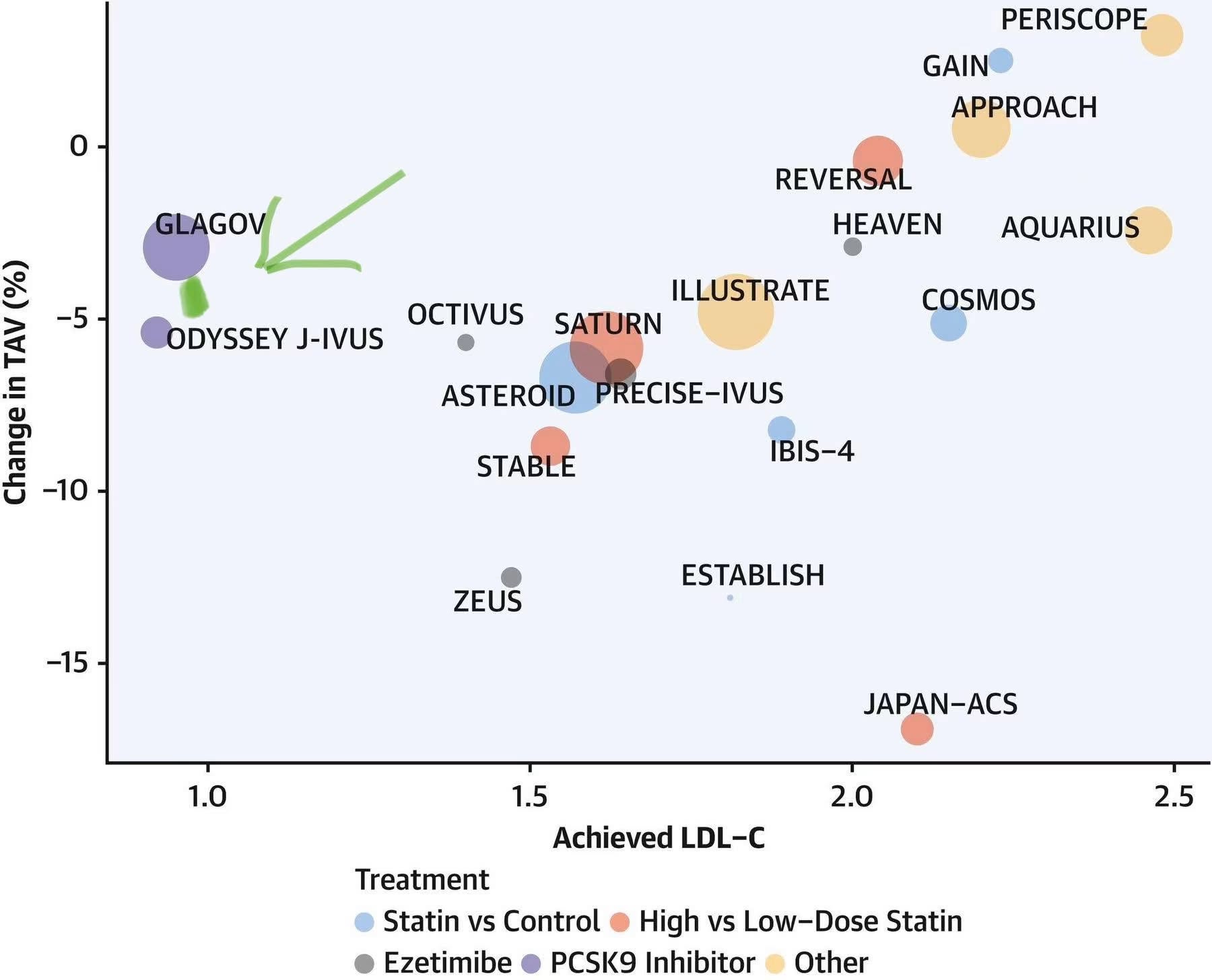
Statins have been shown to be very effective at reversing soft plaque in patients with acute coronary syndromes: ↪ Japan-ACS: pitavastatin and atorvastatin both regressed coronary plaque by about 17-18%.
Reference:
“Diagnosis and Treatment of Acute Coronary Syndromes: A Review” (JAMA, Feb 2022)
#cac0HD #cacHD #plaqueHD #lipidcoreHD #fibrouscapHD #plaqueerosionHD #calcifiednodulesHD #heartattackHD #reverseHD #statinreverseHD #pcsk9reverseHD #ezetimibereverseHD #calcifiedplaqueHD #ldlHD #asteroidHD #statinsHD #ncpvHD #acsHD