HD-OPM Archive
Hashtags

#cac

52 posts

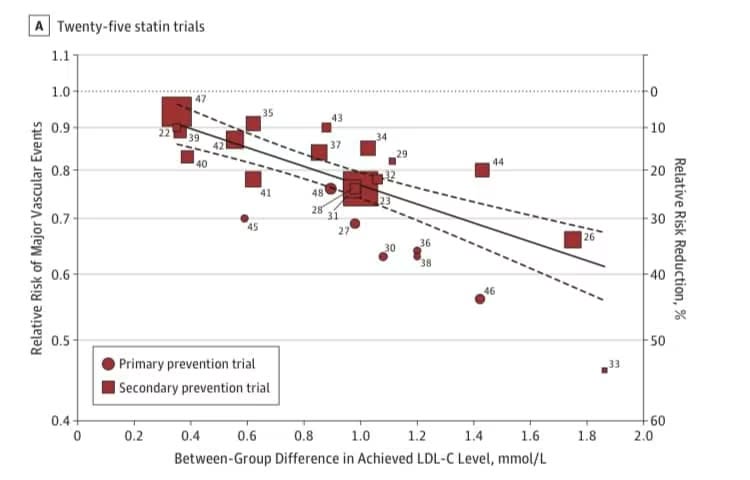
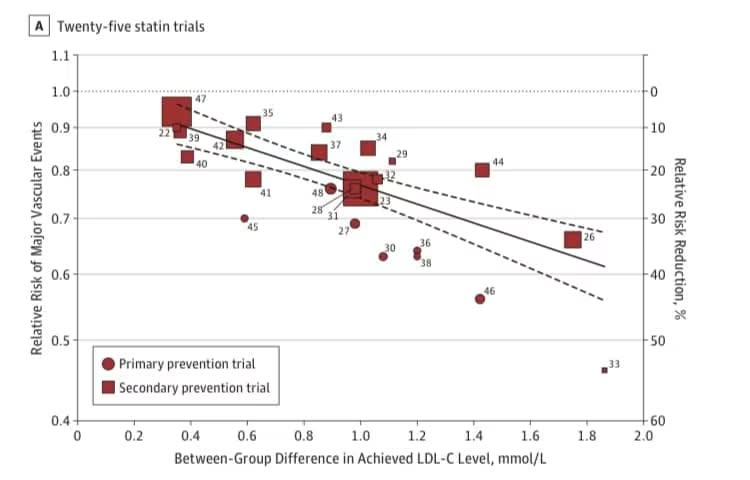
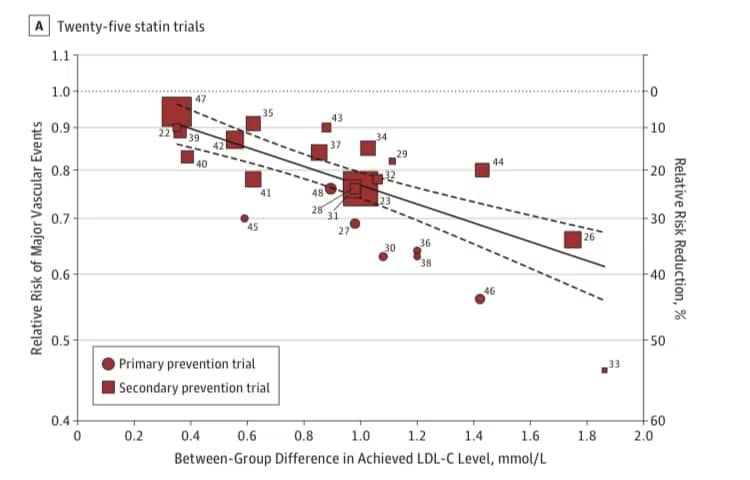
25 statin trials: about 40% fewer heart attacks and strokes per 75 mg/dL LDL drop

Mar 23, 2025 · Louis Nervegna ♥ 37 · 💬 35 Statins

Louis shares a graph of all 25 statin RCTs up to 2016 (excluding those under 6 months or under 50 events), showing about 40% lower MACE per 75 mg/dL LDL reduction, with larger effects in the 7 primary prevention trials. In his own comments he argues calcified plaque is the stable endpoint of soft plaque, and that statins and exercise help by preventing new soft plaque, regressing it and stabilizing the remainder through calcification.

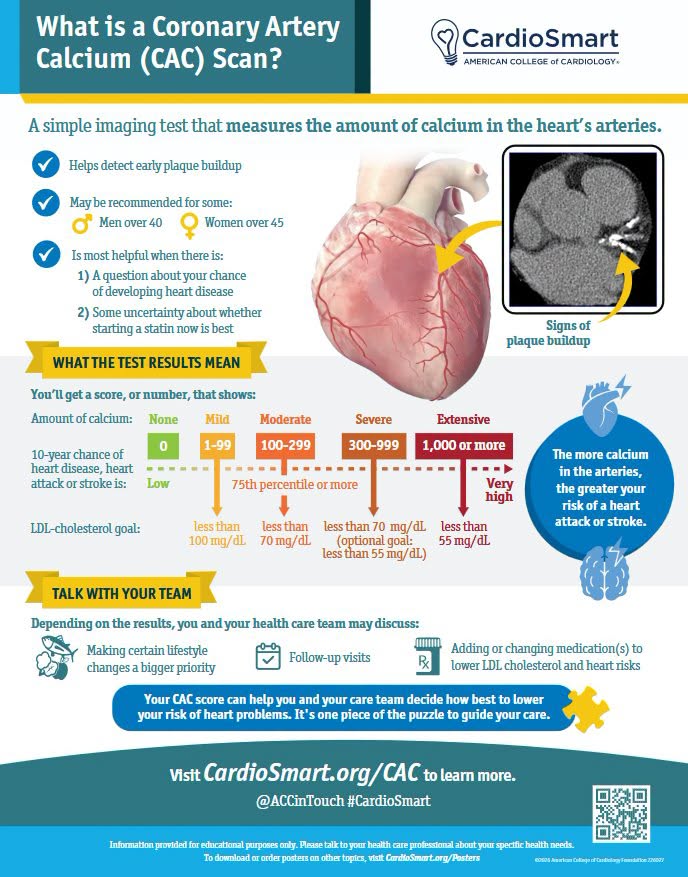
A zero CAC score does not rule out blockages: 54% of 23,759 symptomatic patients had CAC 0

Jan 01, 2025 · Louis Nervegna ♥ 28 · 💬 37 Plaque, CAC & CT angiography

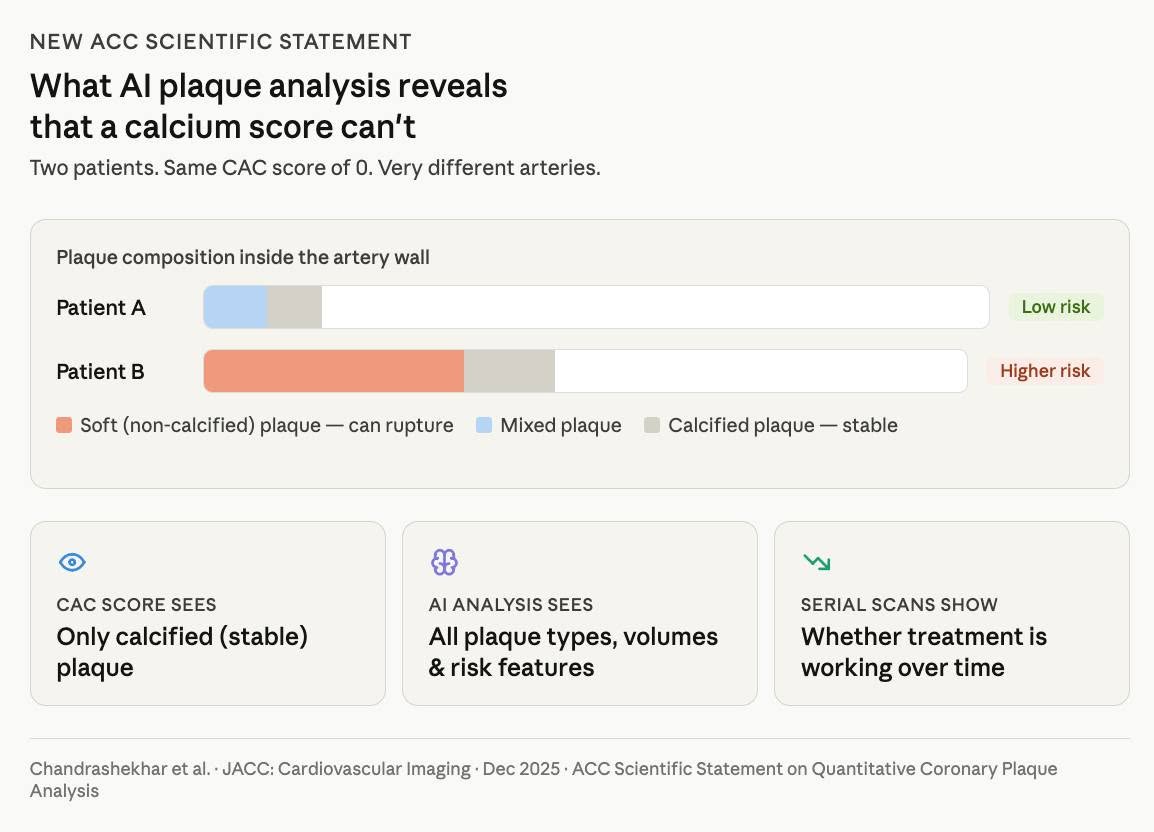
Louis challenges the myth that a CAC of zero means no risk. In the Western Denmark Heart Registry of 23,759 symptomatic patients undergoing CT angiography, 54% had CAC zero, and half of people with obstructive blockages have zero CAC. Soft plaque can grow without calcification, so CAC shows late-stage disease and is poor for early detection.

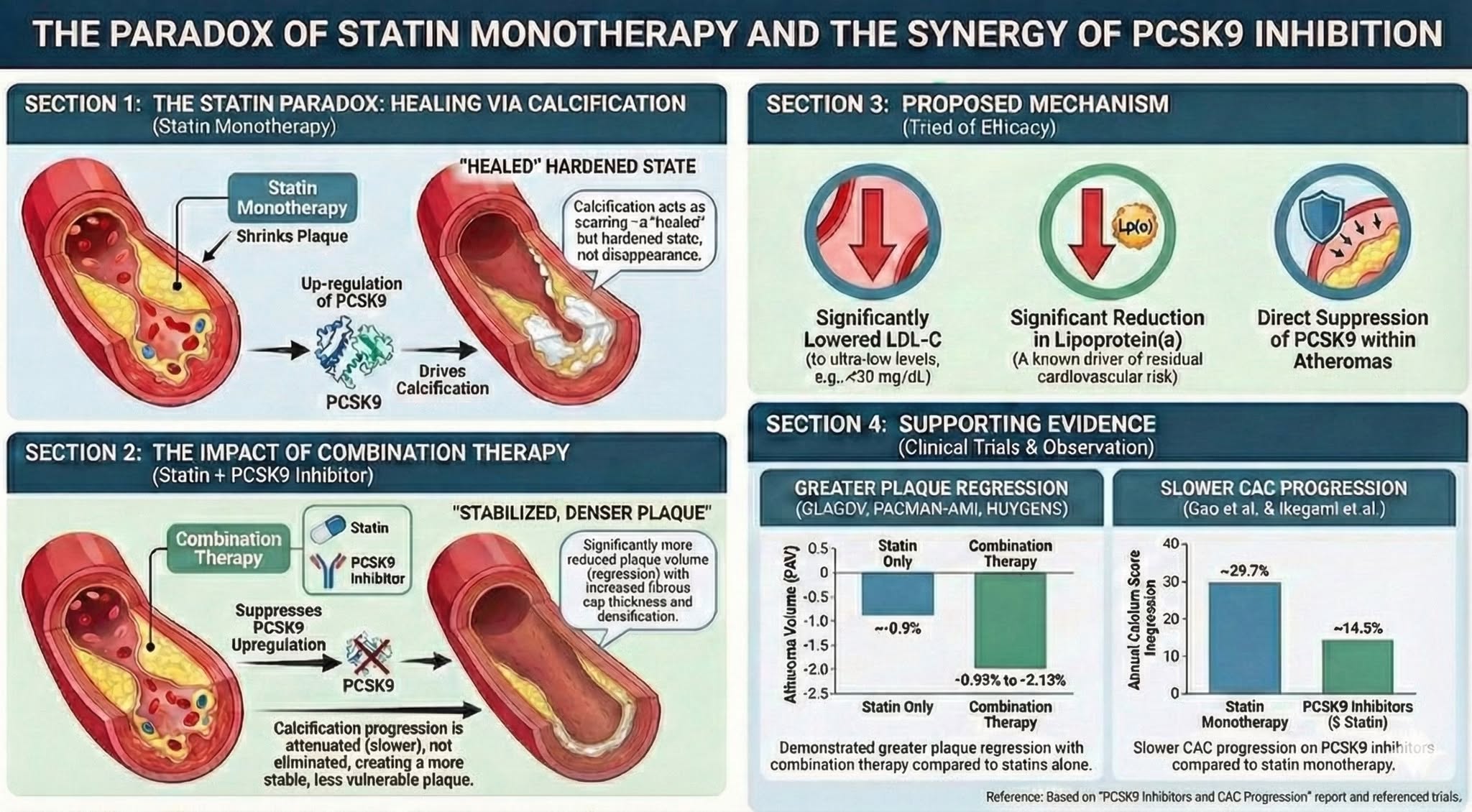
PCSK9 inhibitors regress soft plaque without the calcification surge seen with statins

Jul 02, 2026 · Louis Nervegna ♥ 28 · 💬 22 PCSK9, ezetimibe & newer drugs

Louis highlights Gokhan Can's article on imaging evidence that PCSK9 inhibitors shrink plaque without the calcific increase often seen with statins. He cautions that no randomized outcome trials test PCSK9 inhibitors as monotherapy, though adding one to a statin attenuates statin-induced calcification and lowers events more than statins alone.

All 25 statin RCTs through 2016 show benefit: about 40% less MACE per 75 mg/dL LDL drop

May 11, 2025 · Louis Nervegna ♥ 25 · 💬 12 Statins

Louis shares a graph of every statin RCT up to 2016 that showed a significant effect on cardiovascular outcomes, excluding trials under 6 months or with under 50 events. On average, a ~75 mg/dL (1.9 mmol/L) LDL reduction cut heart attack and stroke risk about 40% vs placebo, with primary-prevention trials showing even larger reductions than secondary-prevention trials.

Does a CAC scan change outcomes? Two 2026 randomized trials say not for the average person

Sep 04, 2026 · Louis Nervegna ♥ 8 · 💬 31 Plaque, CAC & CT angiography

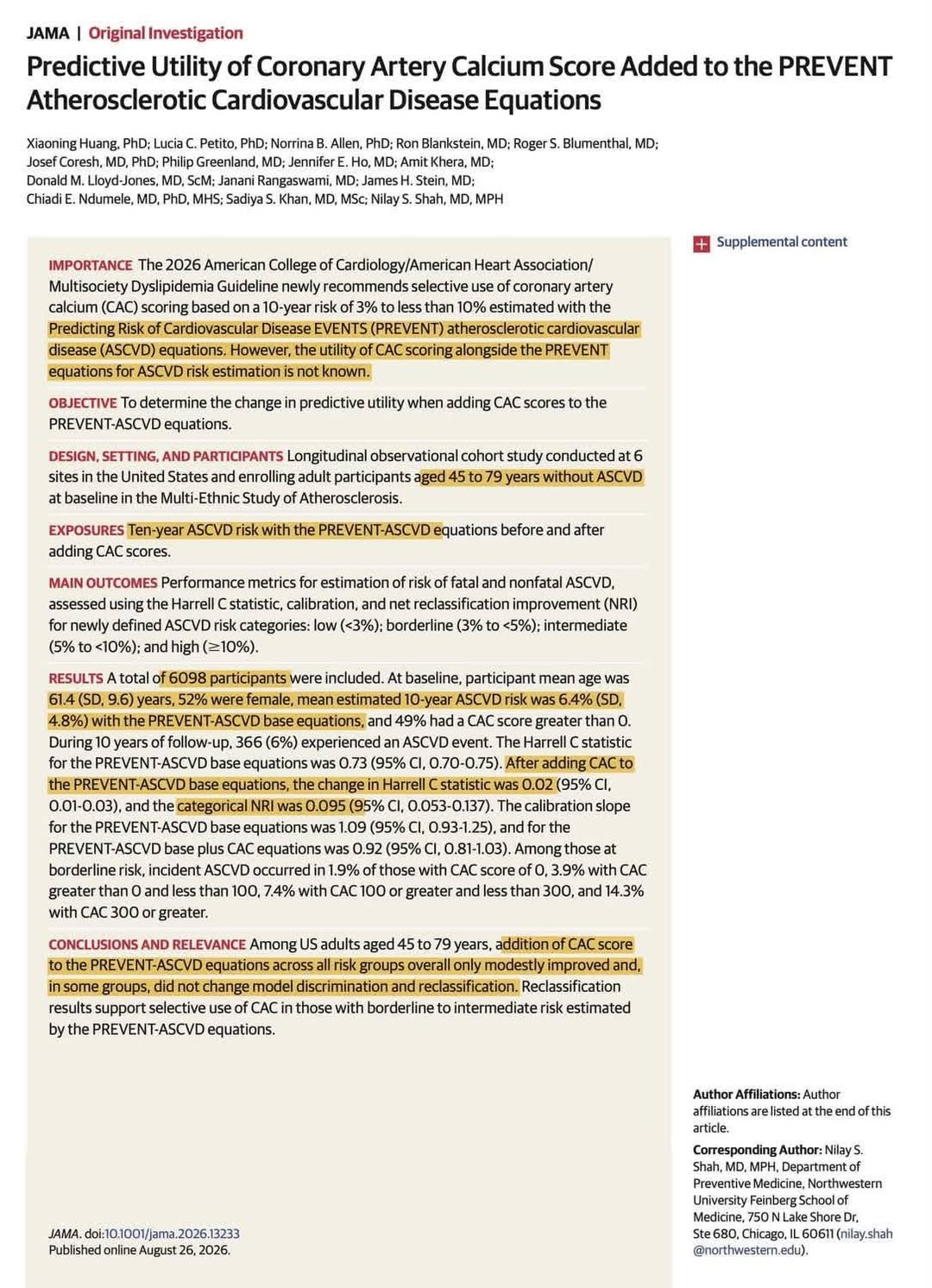
Louis asks whether CAC scanning changes whether you have a heart attack; for some it is a wake-up call, but for the average person it does not seem to change outcomes. The shared text cites a Danish trial of 30,000 men (no reduction in death, MI or stroke at seven years, more serious bleeding) and the US CorCal trial of nearly 6,000 people (same event rates as a risk calculator).

A zero CAC does not rule out plaque in symptomatic patients; 54% had CAC 0 in Denmark

Dec 22, 2023 · Louis Nervegna ♥ 13 · 💬 16 ↩ 3 Plaque, CAC & CT angiography

Louis shares a MedPage Today report that a zero calcium score is not a clean bill of health when symptoms are present, especially in young people and women. In the Western Denmark Heart Registry, over half of symptomatic patients undergoing CT angiography had a CAC of zero, and half of those with symptomatic blockages had zero CAC.

25 statin RCTs: about 75 mg/dL LDL lowering cut heart attack and stroke roughly 40%

Dec 11, 2024 · Louis Nervegna ♥ 24 · 💬 5 ↩ 9 Statins

Louis presents a graph of 25 statin RCTs through 2016, excluding only very short or small trials. Lowering LDL by about 75 mg/dL reduced MACE by about 40% versus placebo, with larger relative reductions in the 7 primary prevention trials than the 18 secondary prevention ones. More trials since have corroborated this.

Coronary CT angiography modestly improved lifestyle and therapy uptake vs risk scoring

Jun 22, 2025 · Louis Nervegna ♥ 16 · 💬 12 Plaque, CAC & CT angiography

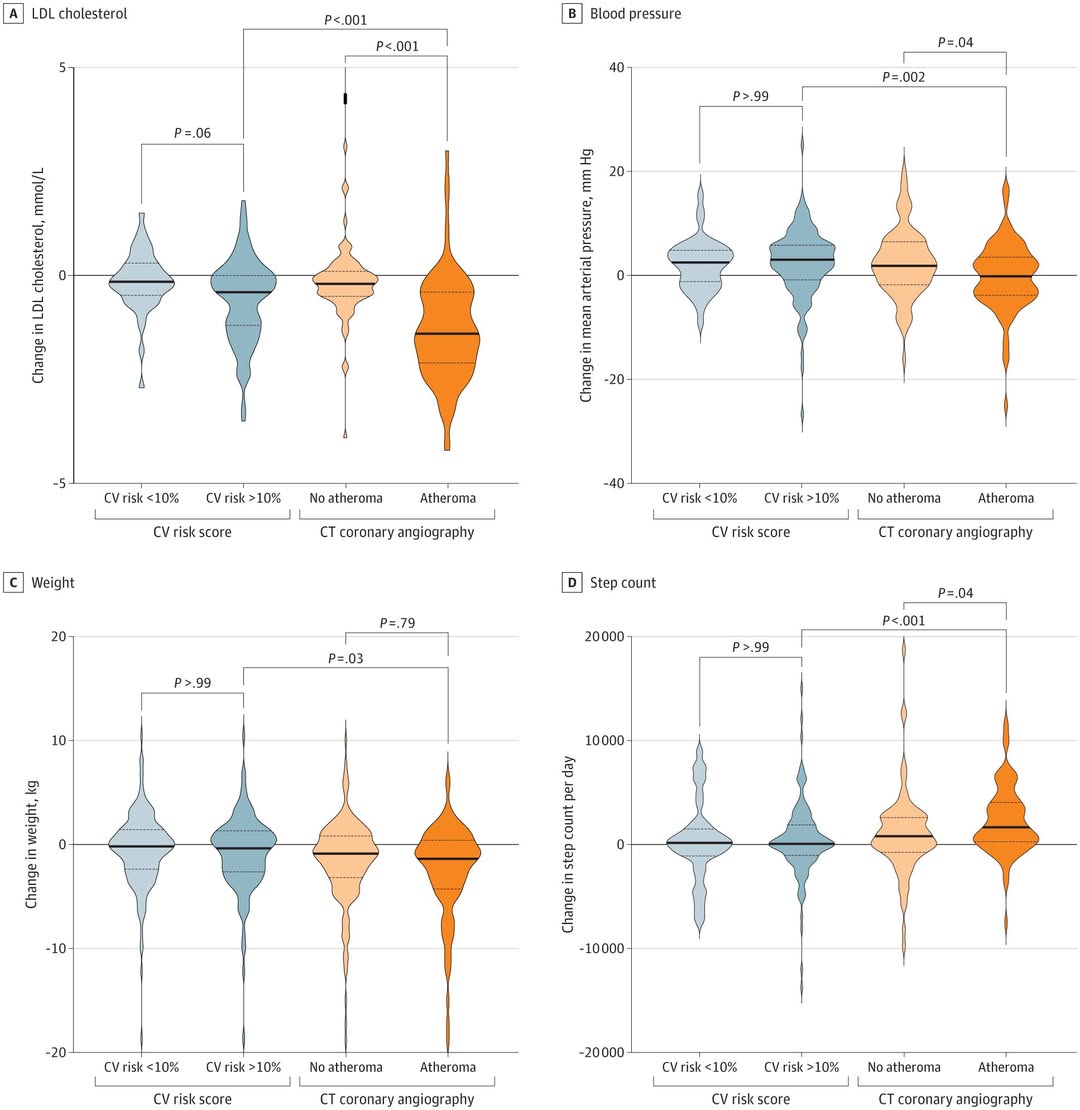
Louis shares a JAMA finding that, compared with cardiovascular risk scoring, coronary CT angiography was associated with modest improvements in healthier lifestyle behaviors, acceptance of recommended preventive therapy and risk factor modification. His comment is that higher-risk people become more motivated once they see their scan results.

In MESA, high Lp(a) mattered mainly when CAC was 100 or higher

Jun 01, 2024 · Louis Nervegna ♥ 8 · 💬 15 ↩ 5 Lp(a)

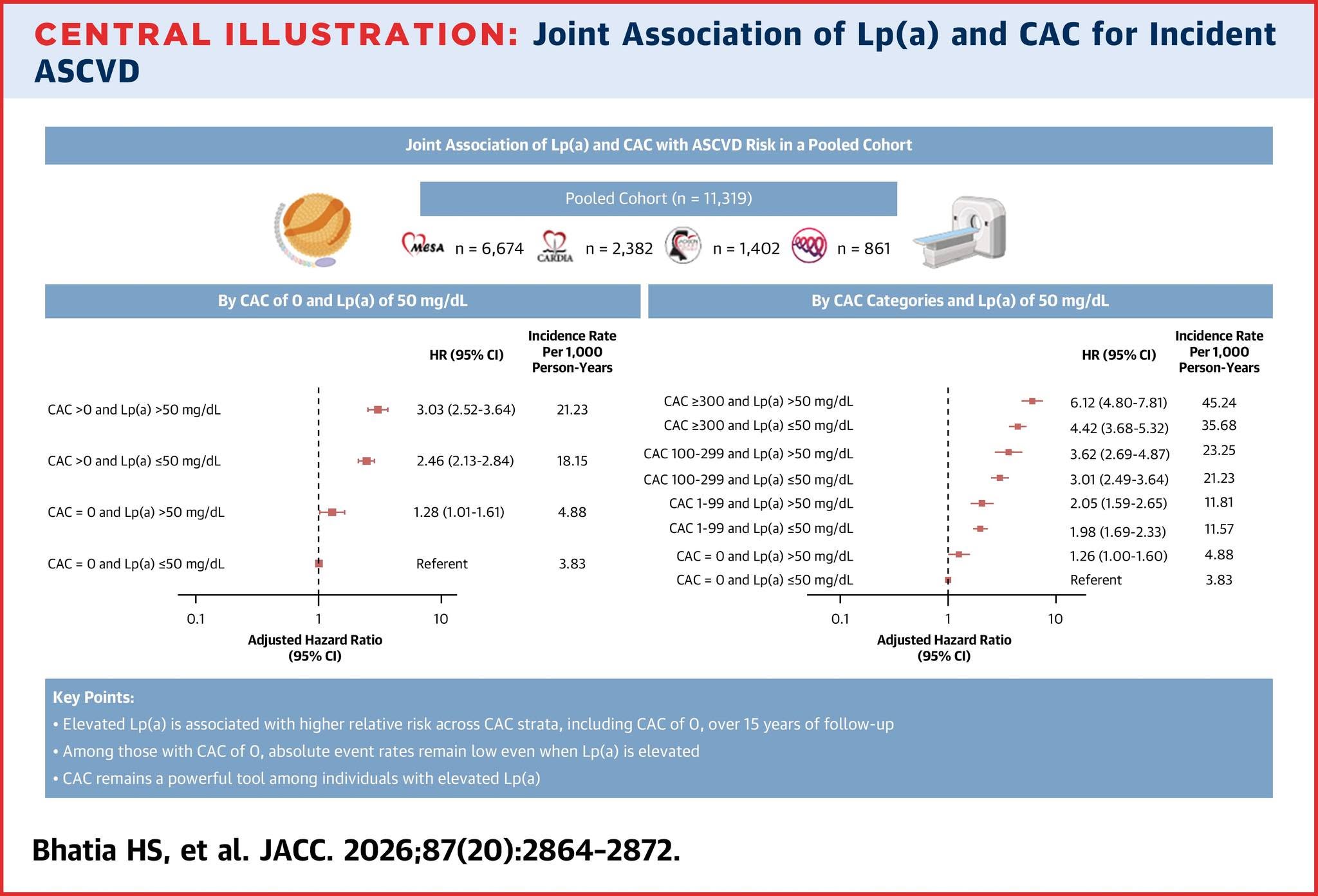
Louis shares a new MESA analysis suggesting that elevated Lp(a) raises 10-year heart attack and stroke risk mainly in people with CAC of 100 or more. With CAC between 1 and 99, high versus low Lp(a) mattered less, and a zero CAC appeared to 'trump' high Lp(a) over a decade.

About 95% of acute-thrombosis heart attacks involve soft plaque, not calcified plaque

Oct 03, 2026 · Louis Nervegna ♥ 9 · 💬 9 Plaque, CAC & CT angiography

The post says about 64% of heart attacks from acute thrombosis come from rupture of soft lipid-rich plaque and about 25% from erosion of soft plaque, while only about 5% involve calcified nodules. Because statins and other lipid-lowering drugs stabilize and reverse soft plaque, the poster argues they address the plaque type most responsible for heart attacks.

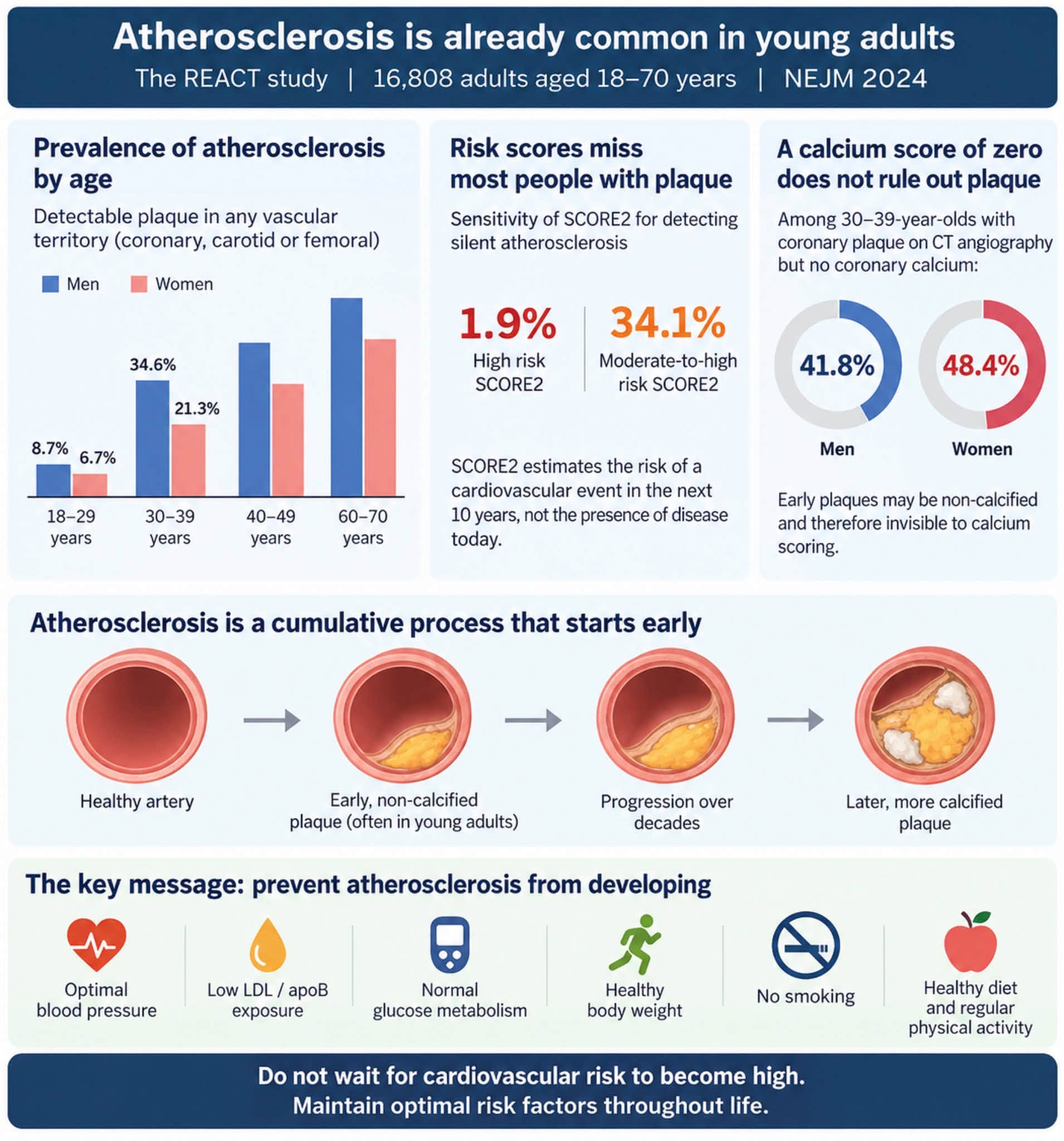
REACT: silent atherosclerosis found in 57% of 16,808 adults, 7-9% of 18-29-year-olds

Sep 26, 2026 · Louis Nervegna ♥ 11 · 💬 2 Plaque, CAC & CT angiography

The NEJM REACT study used carotid and femoral ultrasound plus coronary CT angiography in 16,808 adults aged 18-70 without known disease. Plaque was present in 57% overall, appeared in young adults, and a zero calcium score often missed early non-calcified plaque. Ten-year risk scores detected very little silent disease, so keeping risk factors favorable throughout life is the priority.

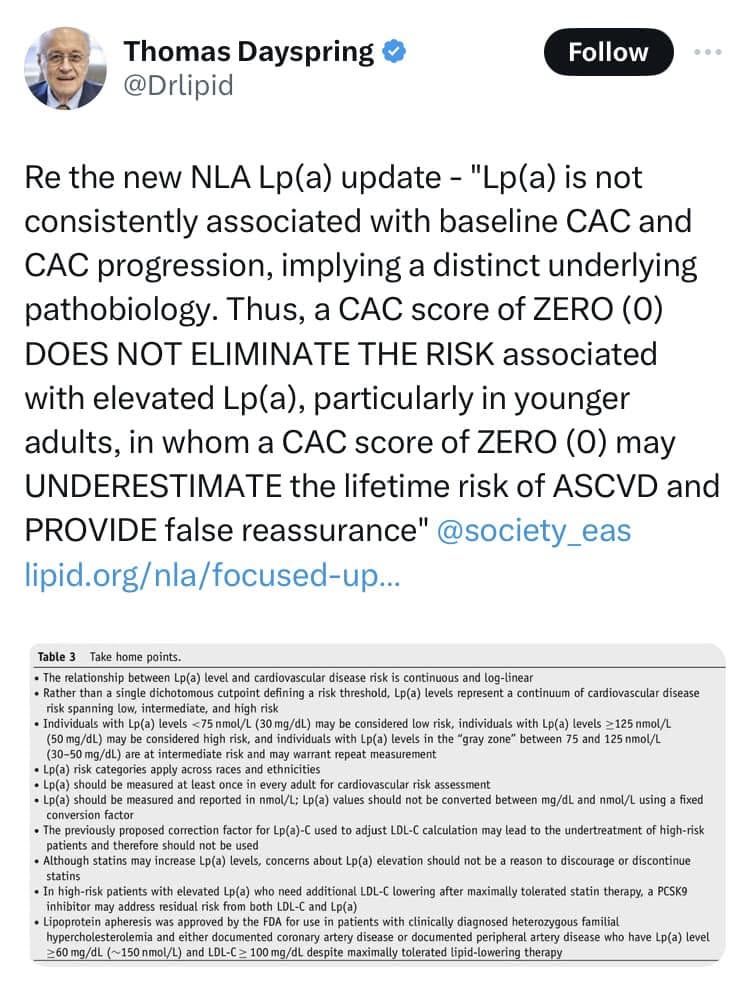
A CAC score of zero does not eliminate risk from high Lp(a), especially in younger adults

Apr 01, 2024 · Louis Nervegna ♥ 10 · 💬 1 Lp(a)

Louis relays Thomas Dayspring's quote from the new NLA Lp(a) update: Lp(a) is not consistently associated with baseline CAC or CAC progression, implying distinct pathobiology, so a zero calcium score does not remove the risk of elevated Lp(a), particularly in younger adults. This contrasts with his earlier MESA-based post focused on 10-year risk.

MESA: high Lp(a) mostly matters when CAC is 100 or above

Jul 18, 2024 · Louis Nervegna ♥ 4 · 💬 1 Lp(a)

A repost of a MESA analysis suggesting that people with high Lp(a), CAC under 100 and hsCRP under 2 mg/L have 10-year risk not much above those with normal Lp(a). The highest risk is with elevated Lp(a) and CAC of 100 or more. Louis notes this is a cohort study, not an RCT.

About 10% of people with a zero calcium score still have significant soft plaque

Nov 12, 2026 · Louis Nervegna ♥ 1 Plaque, CAC & CT angiography

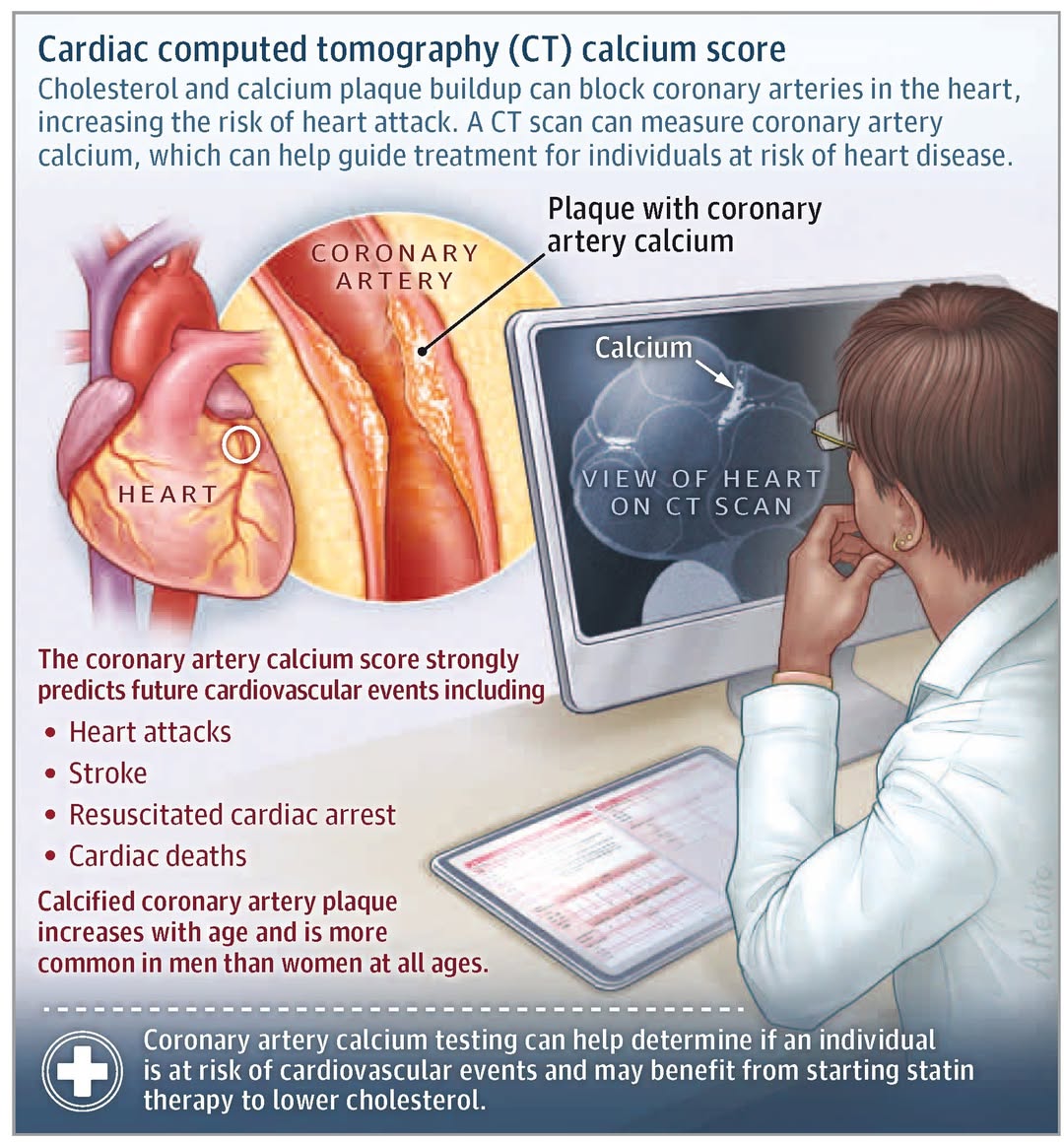
Louis notes that roughly 10% of patients with a CAC of zero have significant soft plaque, and shares a primer explaining why a zero score does not exclude heart disease. CAC detects only calcified plaque while CT coronary angiography shows both calcified and non-calcified plaque and narrowing. A zero score still means very low event risk over the following years, but low is not none.