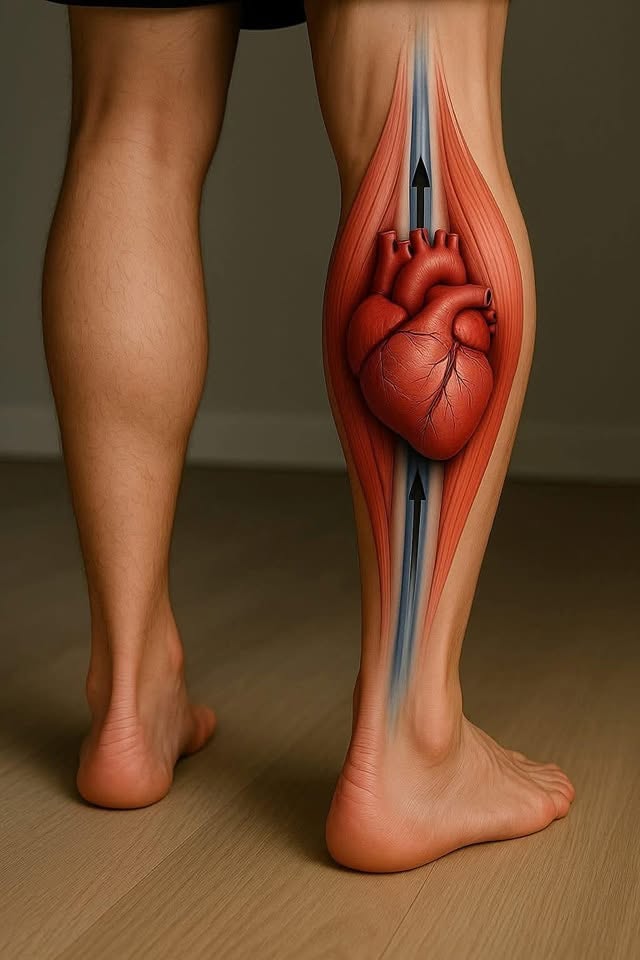
This is true. Vascular specialists tell people with chronic venous sufficiency (CVI) to do calf raises. They pump the blood through the lower legs, like having a second heart.
Anyone at higher risk of developing a DVT in the lower legs would likely benefit from doing daily calf raises. Even doing them while sitting in a chair against no resistance provides a benefit. So you can do them in a plane, bus, car, etc. or while sitting at a desk or on the couch.
#cviHD #veinsHD #dvtHD
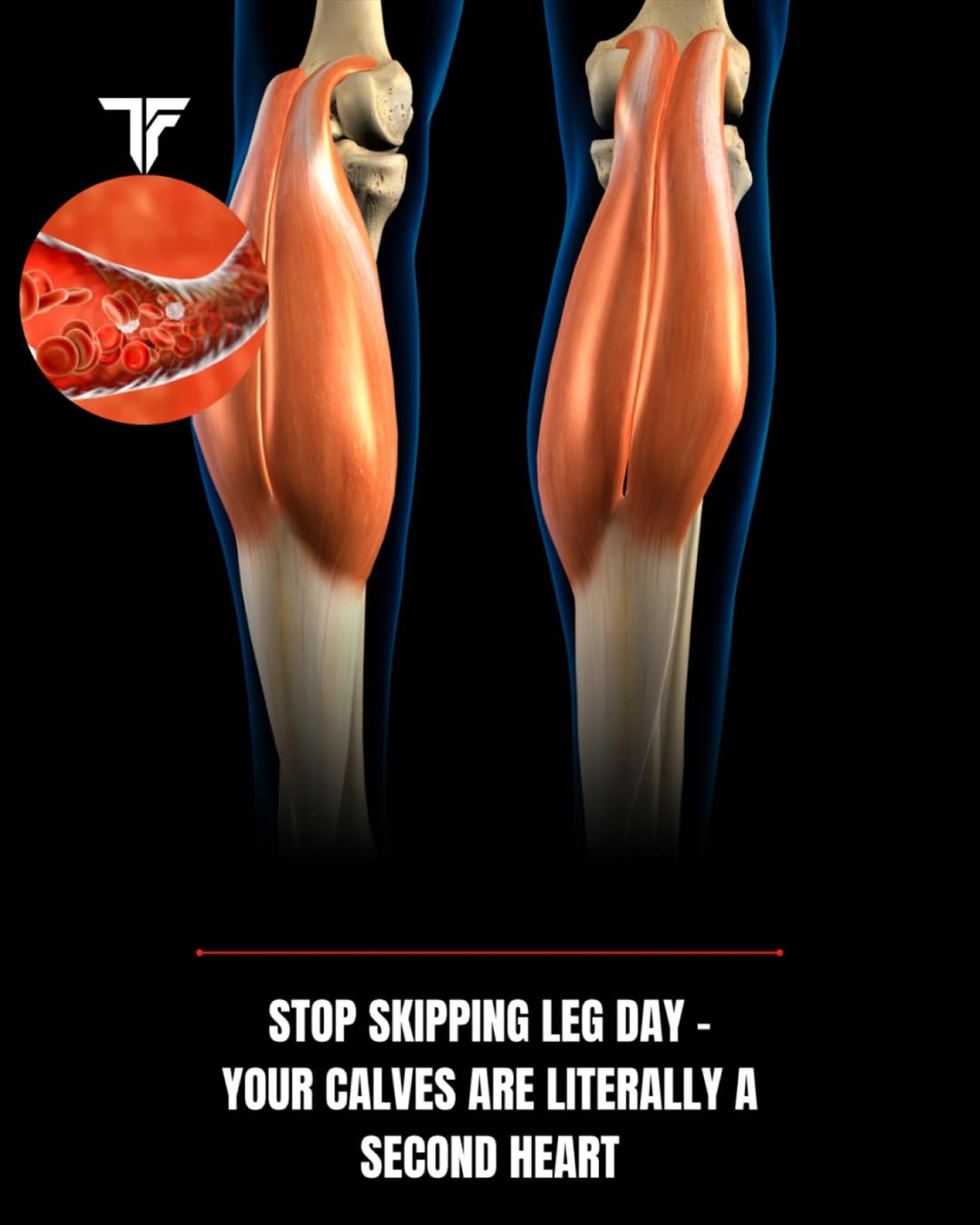
The calf muscles, especially the soleus, function as a muscular pump that plays a crucial role in the body’s circulation by pushing deoxygenated blood back toward the heart against gravity. This process is known as the skeletal muscle pump.
The heart actually pumps blood through arteries to the entire body, but the veins must return the blood from the extremities, like the feet and legs, back up to the heart. The calf muscles assist in this process:
📑Contraction: When the calf muscles contract, such as during walking, lifting or running, they squeeze the deep veins in the legs.
📑Upward Flow: This squeezing action pushes the blood upward toward the heart.
📑Valves: One-way valves inside the veins prevent blood from flowing backward.
📑Improved Circulation: This action is particularly important when standing or sitting for long periods, as it helps prevent blood from pooling in the lower legs.
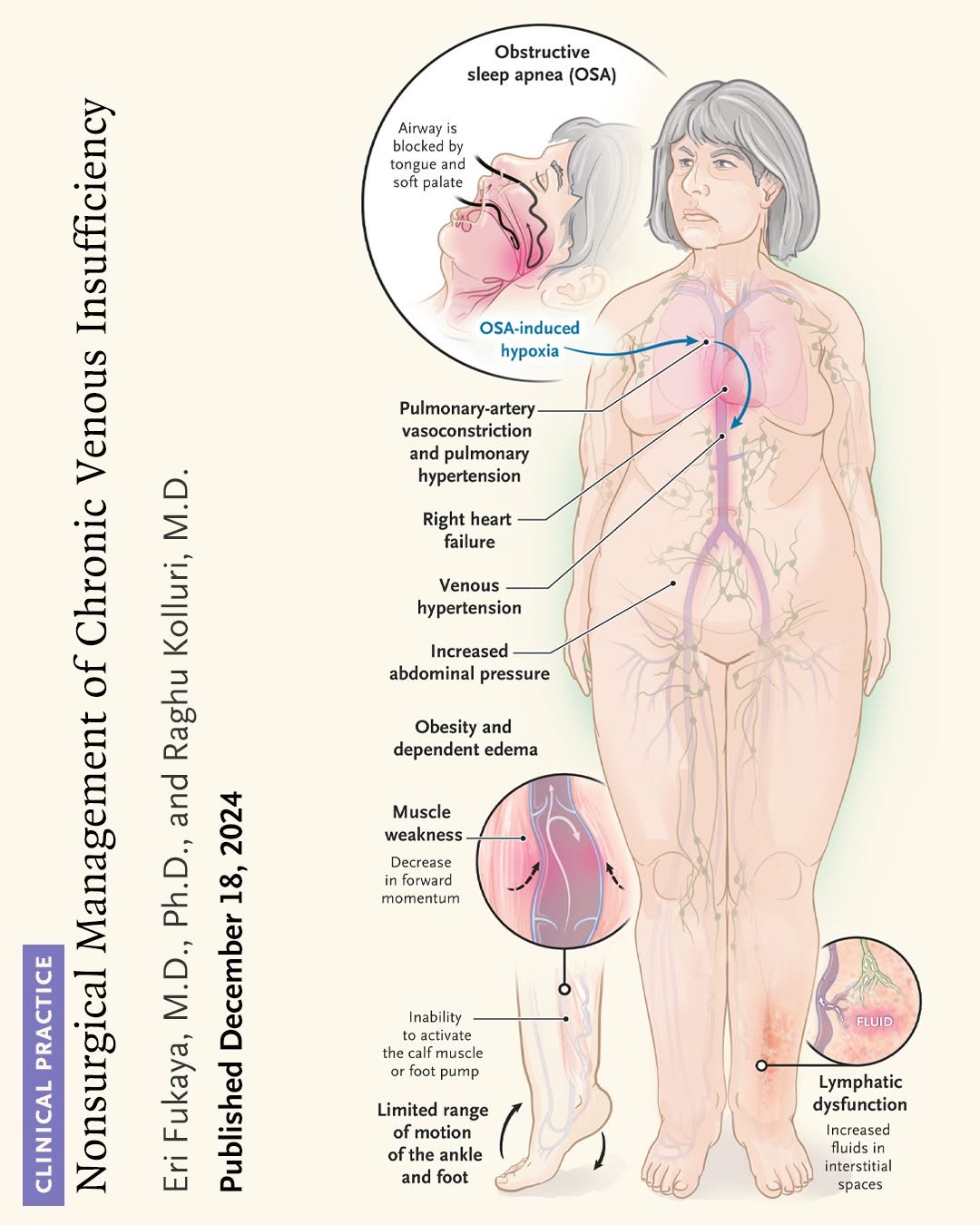
Neglecting your second heart can lead to serious health issues, especially for people with sedentary lifestyles. Stagnant blood increases the risk of deep vein thrombosis (DVT), a dangerous condition where blood clots form in the legs. Weakened or inactive calves can cause blood to pool in the veins leading to the development of varicose veins.
Also, an inactive calf pump forces the heart to work harder to circulate blood, putting extra stress on your cardiovascular system. Furthermore, without the pumping action of the calves, fluid can accumulate in the feet and ankles causing swelling.
PMID: 32603351, 28982943, 10747200