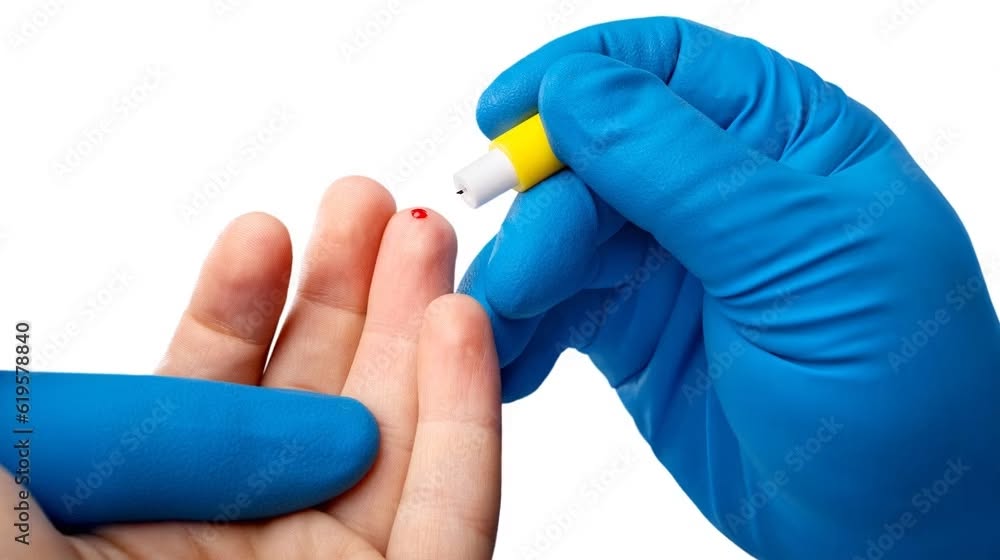
Finger prick tests for Alzheimer’s may be coming soon.
This will help with early detection, and allow people to more easily assess which interventions are helping and which are not.
A shared summary of a Nature Medicine paper describing a finger-prick test for Alzheimer's pathology (p-tau217). It could replace costly PET scans or spinal taps and help people track which interventions work.
Finger prick tests for Alzheimer’s may be coming soon.
This will help with early detection, and allow people to more easily assess which interventions are helping and which are not.
A Finger Prick Test for Alzheimer’s Disease Pathology May Be Coming
Paper · Nat Med · 2026A minimally invasive dried blood spot biomarker test for the detection of Alzheimer’s disease pathologyBlood biomarkers have emerged as accurate tools for detecting Alzheimer’s disease (AD) pathology, offering a minimally invasive alternative to traditional diagnostic methods such as imaging and cerebrospinal fluid (CSF) analysis. Yet, the logistics surrounding venipuncture for blood collection, although considerably simpler than the acquisition of imaging and CSF, require precise processing and storage specific to…nature.comNote: This summary was prepared with the help of ChatGPT. The source article is available in open access through the link above.
For years, detecting Alzheimer’s pathology meant brain scans (PET) or spinal taps (CSF)—accurate but expensive, invasive, and hard to scale up in rural areas or those far from large hospitals.
In the last decade, blood biomarkers have changed that landscape, with one marker in particular—p-tau217—emerging as a highly accurate signal of Alzheimer’s brain changes.
This study asked an important next question:
🔹 Can we detect Alzheimer’s-related biomarkers reliably from a simple finger-prick blood sample that could someday be done at home?
If the answer is yes, it opens the door to earlier detection, wider access, and large-scale screening, including for people at genetic risk such as ApoE4 carriers.
The study focused on three well-validated blood markers:
- p-tau217: This modified tau protein closely tracks amyloid plaques and tau tangles in the brain—core features of Alzheimer’s disease. It rises very early, even before symptoms.
- GFAP (glial fibrillary acidic protein): A marker of astrocyte activation, reflecting early brain responses to amyloid buildup.
- NfL (neurofilament light): A general marker of neuron (nerve cell) injury, useful for tracking disease progression, not specific only to Alzheimer’s.
Researchers recruited 337 participants with a mean age of 70 (standard deviation +/- 11.7 yrs), of whom 53% were women, across 7 European centers in Sweden, Denmark, Germany, Spain, and the U.K. ApoE was a not a variable tested in this study.
Participants included cognitively unimpaired older adults, people with mild cognitive impairment (MCI), people with Alzheimer’s demential people with non-Alzheimer’s dementias, and individuals with Down syndrome who are at extremely high risk of Alzheimer's.
Results from a staff-administered or self-administered finger-prick capillary blood dried on special cards were compared to venous blood draws and CSF (lumbar puncture). CSF or amyloid PET scan is currently the clinical gold standard for accuracy.
They wanted to determine whether finger-prick samples could:
- Accurately measure biomarkers
- Track cognition and age
- Predict Alzheimer’s pathology confirmed by CSF
Key findings:
🔹Finger-prick for p-tau217 levels works surprisingly well: the highest two-thirds strongly correlated with standard blood draws.
🔹 Higher finger-prick p-tau217 was linked to lower cognitive scores and older age
Bottom line: Finger-prick p-tau217 distinguished people with vs. without Alzheimer’s pathology fairly well. Accuracy was good, though not quite as high as venous blood tests.
🔹 Similar to current blood-based biomarker tests, a two-cutoff strategy worked especially well:
Low value = very unlikely to have amyloid plaques
High value = very likely to have amyloid (Amyloid is not sufficient for a diagnosis of MCI or AD)
Middle zone + would need follow-up testingA finger-prick blood test may one day be used to by primary care physicians to rule out or rule in amyloid pathology in a person with normal cognition at risk or someone with clinically diagnosed MCI or Alzheimer's to seek confirmation of Alzheimer’s pathology. Intermediate results could then be referred for a venous test or CSF or PET scan.
.
🔹 GFAP and NfL from finger-prick blood closely matched venous blood levels.
Both tracked with cognitive decline and age.🔹 NfL biomarkers testing from a finger prick test could enable remote monitoring for many neurological diseases—not just Alzheimer’s.
🔹 At-home testing could someday be realistic: In a small pilot study, 30 people collected finger-prick samples themselves, without supervision and results were nearly identical to staff-collected samples.
❤️ If you carry ApoE4, this study is especially relevant because p-tau217 rises well before symptoms, often years before diagnosis. Future prevention trials and early treatments are likely to focus on preclinical Alzheimer’s (people with biomarkers of amyloid and/or tau and normal cognition) and those at genetic risk
❤️ A finger-prick test could one day identify who should get more definitive testing
and enable large-scale prevention research without invasive procedures❤️ That said…
This is not ready for clinical decision-making yet!
Finger-prick testing is:
- Slightly less accurate than standard blood draws
- Technically challenging in some people (15–25% failed samples)
- Amyloid-β itself (Aβ42) could not be reliably measured this way
- More validation and standardization are needed
❤️ The Takeaway:
This study shows that a simple finger-prick blood test can capture key Alzheimer’s biomarkers, especially p-tau217, with enough accuracy to support early identification and large-scale research into biomarkers across diverse populations.For ApoE4 carriers and others focused on prevention, this represents a major step toward accessible, earlier, and more equitable detection—even if it’s not quite ready for everyday clinical use yet.

In the phase 3 BROADWAY trial, obicetrapib 10 mg cut LDL-C by 29.9%. A biomarker substudy of 1,535 participants (367 APOE4 carriers) found reduced p-tau217, greatest in APOE4 carriers, shaping a planned Alzheimer's prevention trial.
Louis shares a Swedish cohort of about 1,900 adults aged 60+ followed up to 15 years, in which healthier diet patterns were tied to lower dementia risk, including in people with high-risk blood markers such as pTau217. The strongest finding was for a low inflammatory-potential diet.
Louis shares Joel Kahn's note on the AD Detect lab panel, whose new data predict memory decline, and reminds readers that heart disease risk factors overlap with dementia risk. The idea is an early warning while lifestyle changes still matter.
Louis shares a pre-specified BROADWAY substudy (1,535 patients) in which obicetrapib improved five Alzheimer's biomarkers, with the largest benefit in APOE4/4 homozygotes. Caveats are that these are biomarkers, not cognitive outcomes, in a subgroup needing replication.
A cohort of 2,766 women followed up to 25 years found each SD rise in p-tau217 tripled dementia risk and the top quartile had 7 times the risk of the bottom, with stronger effects in women over 70 and APOE4/4 carriers.
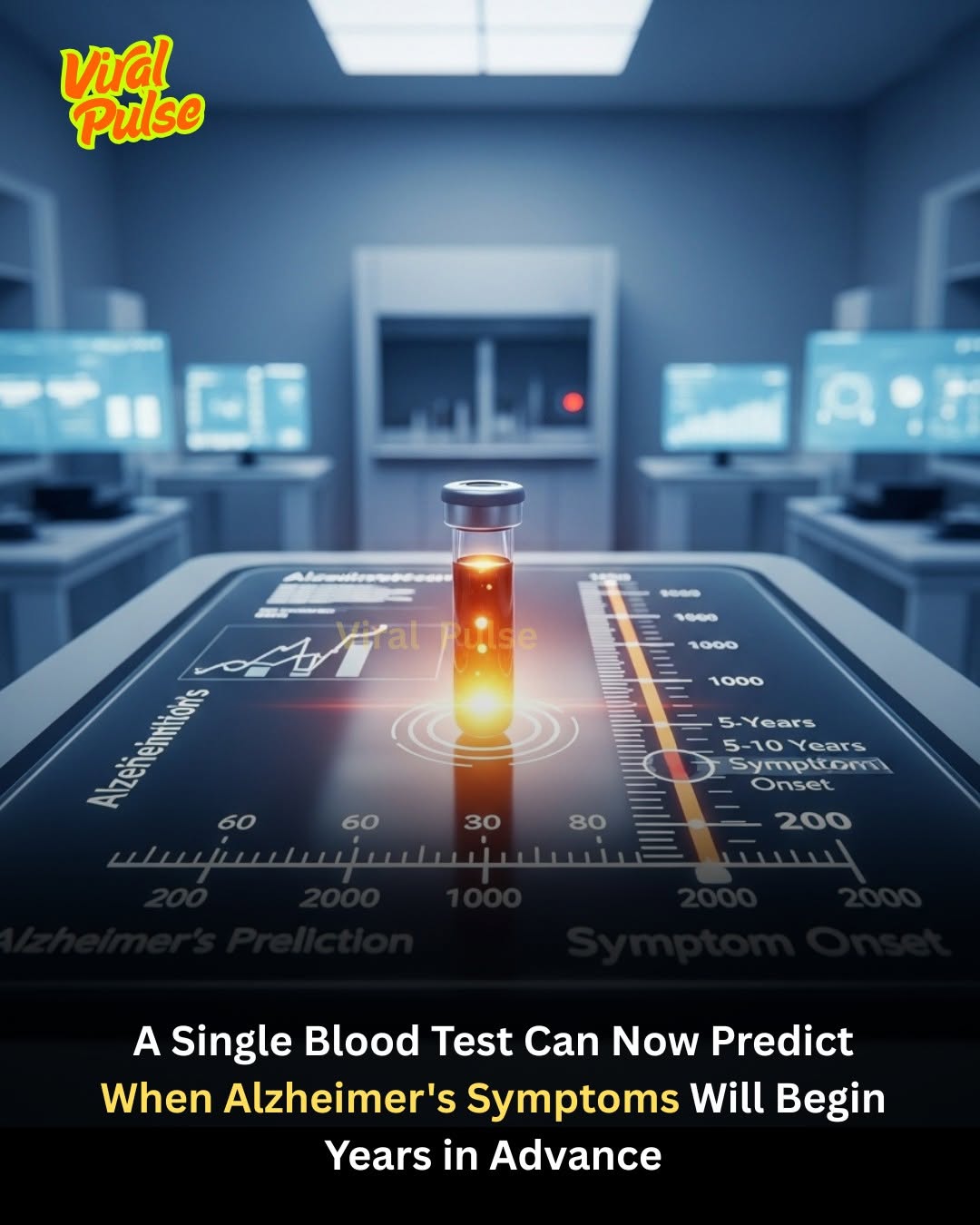
Shared post about a Washington University clock model using plasma p-tau217 to estimate when symptoms will appear: about 20 years after rising at age 60, about 11 years after rising at age 80.