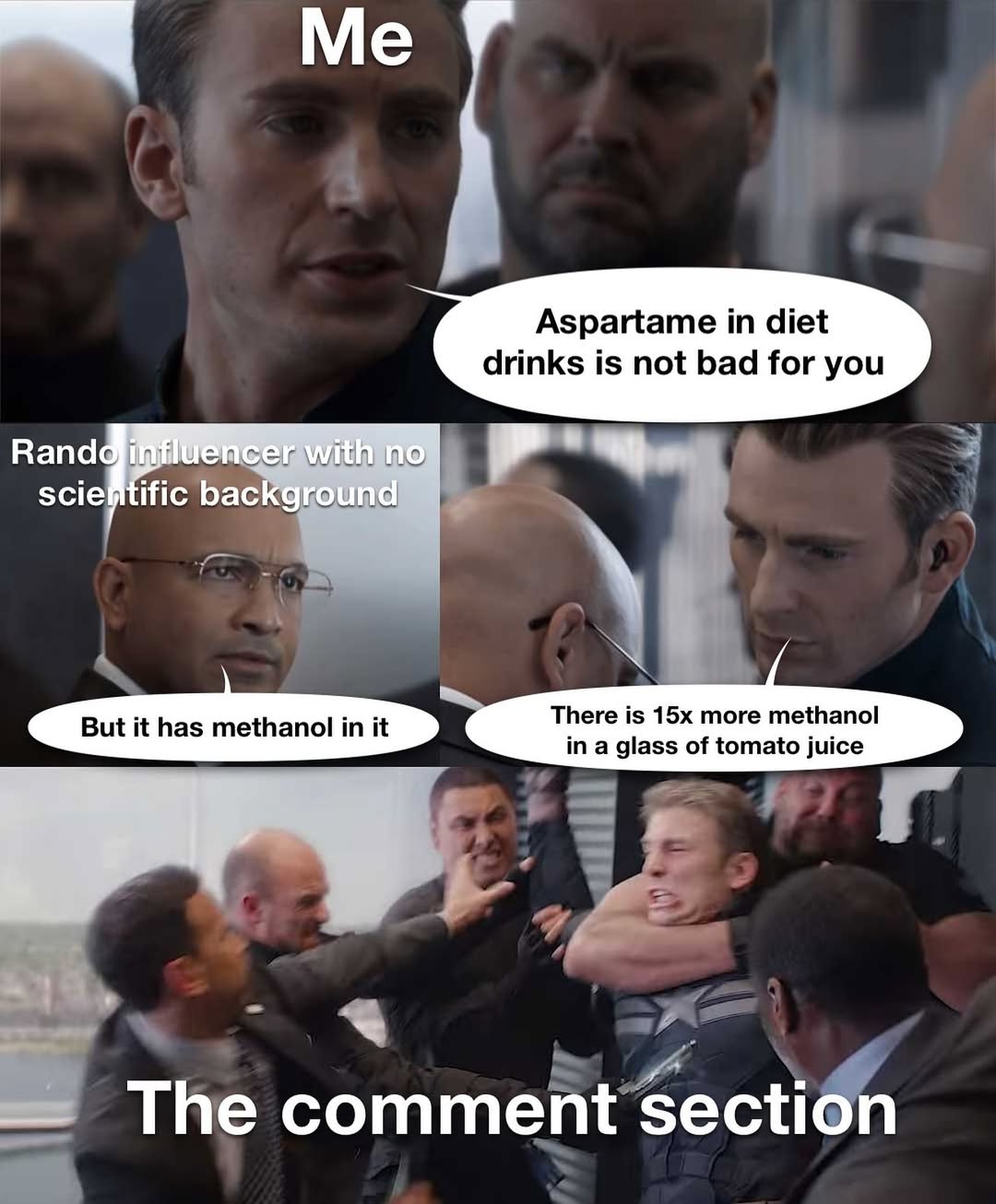
My usual caveat on this topic: I’m not encouraging anyone to consume artificial sweeteners. There are better choices.
But it’s important to be factually accurate about what the preponderance of scientific evidence actually shows on this subject.
Keep two words in mind when you read the post below - reverse causality. This is the central problem with many observational studies on artificial sweeteners that appear to link them with worse health outcomes. After properly accounting for this reverse causality, these links tend to disappear.
#artificialsweetenersHD #dietsodaHD #reversecausalityHD
Do artificial sweeteners help you live longer?
A new umbrella review tried to reconcile why RCTs and observational studies have seemed to disagree. Many epidemiological studies show an increased risk of mortality, CVD, obesity, type 2 diabetes, and cognitive decline with artificial sweetener intake, but the shorter human randomized controlled trials show that artificial sweeteners tend to reduce body weight and improve glycemic control. So why do the studies disagree?
It boils down to study design. In these cohort studies that aren’t controlled or randomized, you have to consider differences in confounding variables as well as reverse causality. Example, is it that artificial sweeteners cause obesity and these other diseases or is it that people who become unhealthy are more likely to start using artificial sweeteners? Additionally, there can be differences in baseline characteristics. People who are already obese and eating too much may make diet attempts where they use more artificial sweeteners whereas people who avoid them might tend to be more fit by nature
What made this paper different is that it separated analyses into:
- Naïve models (minimal bias adjustment)
- Bias-adjusted models (accounting for reverse causation, confounding, and baseline health)
Once bias was properly adjusted for, the results were remarkably consistent with randomized controlled trials.
Across bias-adjusted analyses, intake of low- and no-calorie sweeteners was associated with:
- Lower all-cause mortality
- Lower cardiovascular disease risk
- Lower obesity risk
- Reduced energy intake
- Reductions in waist circumference
In other words: when you account for the fact that people at higher cardiometabolic risk are more likely to choose diet products, the apparent harms largely disappear and the observational data line up with RCTs.
This doesn’t mean artificial sweeteners are magic.
It means methodology matters, and bias can completely flip conclusions if you don’t handle it correctly.
Study:
“Reconciling conflicting evidence on low- and no-calorie sweeteners and cardiometabolic health outcomes: an umbrella review using naïve and bias-adjusted methods”
PMID: 41428417