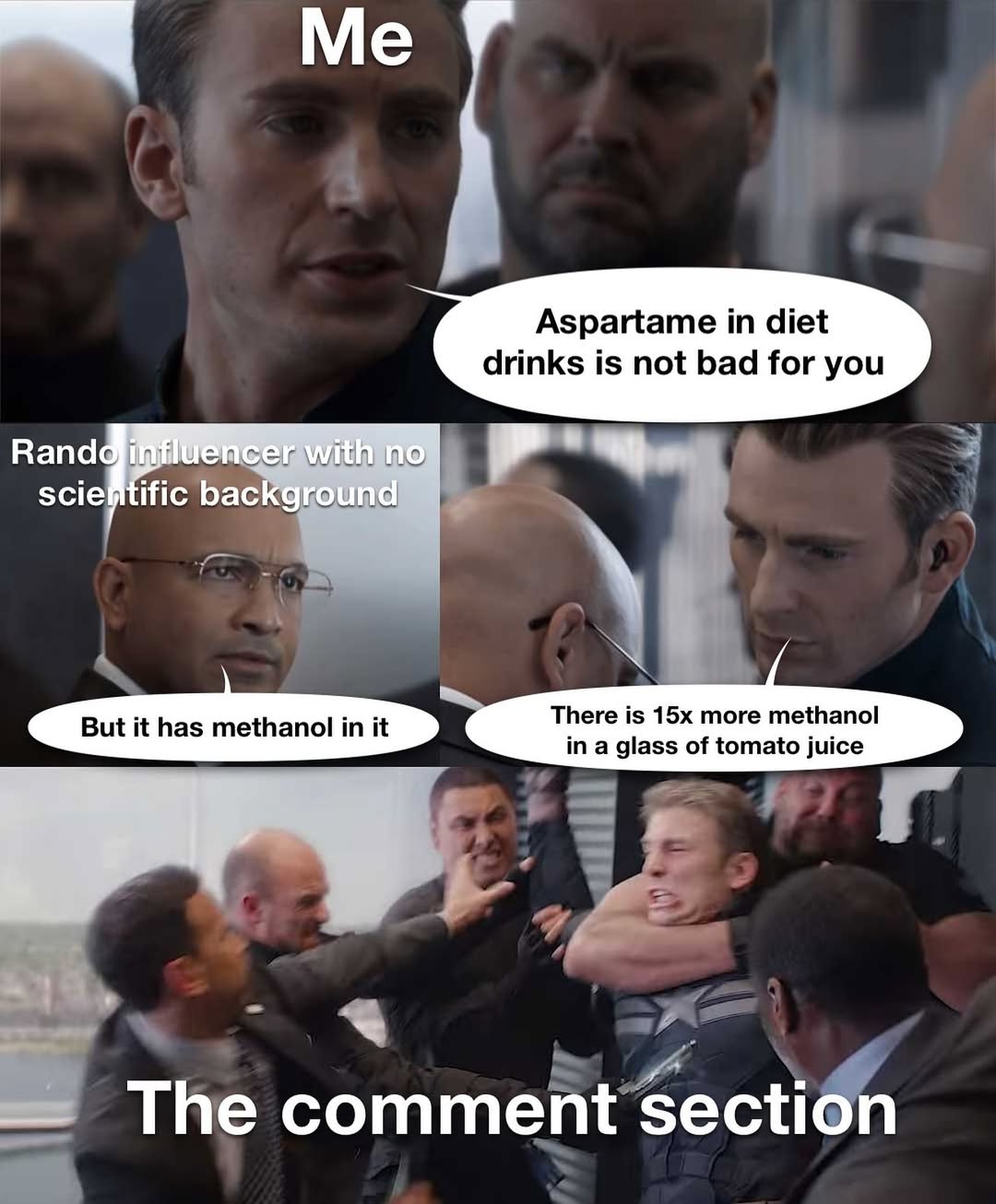
Quoted:
@peterattiamd claims that replacing 3 cokes, (either 408 or 681 calories depending on cans or bottles) with diet cokes won’t move the needle on weight loss, but replacing them with Topo Chico (sparkling water) could.
For starters, his reasoning for why replacing coke with diet coke wouldn’t lead to weight loss doesn’t make sense on the surface. If the sweetness of the Diet Coke leads one to consume more, wouldn’t that also apply to sugary coke? It’s just as sweet, so presumably would lead to consuming more calories on top of the substantial amount of calories it already contains, no?
Nonetheless, he appears to be wrong about the mechanism anyway. A systematic review and meta-analysis of 17 RCTs found that replacing sugar-sweetened beverages with low/no-calorie sweetened beverages found that the diet options could reduce weight, BMI, body fat percentage, and liver fat !Surprisingly, replacing sugary beverages with water did not yield statistically significant results, but the caveat is that there were very few studies looking at that swap.
To further rebut Dr. Attia’s claim replacing water with low/no-calorie sweetened beverages actually led to weight loss! If he’s right that the sweetness somehow drives people to consume more calories, we should see the opposite.
Now, I’m not suggesting that people who regularly consume water switch to diet sodas. Based on long-term prospective cohort studies, we don’t see a meaningful difference in weight or cardiometabolic outcomes between water and diet sodas, but we do see a 12% lower risk of obesity, as well as lower risks of CHD, CVD mortality, and all-cause mortality when one replaces sugary drinks with low/no-calorie options after adjusting for baseline weight and cardiometabolic health.
Reference:
Paper · JAMA Netw Open · 2022Association of Low- and No-Calorie Sweetened Beverages as a Replacement for Sugar-Sweetened Beverages With Body Weight and Cardiometabolic Risk: A Systematic Review and Meta-analysis.Conclusion: This systematic review and meta-analysis found that using LNCSBs as an intended substitute for SSBs was associated with small improvements in body weight and cardiometabolic risk factors without evidence of harm and had a similar direction of benefit as water substitution. The evidence supports the use of LNCSBs as an alternative replacement strategy for SSBs over the moderate term in adults with overweigpubmed.ncbi.nlm.nih.gov Paper · Diabetes Care · 2022Relation of Change or Substitution of Low- and No-Calorie Sweetened Beverages With Cardiometabolic Outcomes: A Systematic Review and Meta-analysis of Prospective Cohort Studies.Conclusion: LNCSB were not associated with cardiometabolic harm in analyses that model the exposure as change or substitutions. The available evidence provides some indication that LNCSB in their intended substitution for SSB may be associated with cardiometabolic benefit, comparable with the standard of care, water.pubmed.ncbi.nlm.nih.gov#peterattiaHD #artificialsweetenerHD #dietsodaHD #aspartameHD