The cause of long covid is still poorly understood.
This is one of the most interesting hypotheses that I have seen so far.
Shares a news summary proposing that infection makes the body sequester iron, which if prolonged could reduce iron available for red blood cells and contribute to persistent symptoms. Louis calls it one of the more interesting long-COVID hypotheses; it is not yet clinically proven.
The cause of long covid is still poorly understood.
This is one of the most interesting hypotheses that I have seen so far.
The article discusses COVID-19 and how the infection can disrupt the body’s handling of iron, which may contribute to persistent symptoms after the infection.
When the body fights COVID-19, the immune system tries to reduce the amount of free iron in the blood. This is a defense mechanism because many microorganisms need iron to grow. The body therefore “locks away” iron in different tissues so that viruses and bacteria cannot easily use it.
The problem arises if this condition becomes long-lasting. Then less iron is available for red blood cells, which means oxygen is transported less efficiently throughout the body. This can affect metabolism and energy production. White blood cells also require iron to function normally. A mechanism that initially protects the body can therefore, over time, create new problems.
The researchers suggest that this may help explain why fatigue and reduced exercise tolerance are common symptoms in long COVID and other post-viral conditions.
The study also points to possible ways of reducing the risk of long-term symptoms. One approach may be to dampen the strong inflammation early during the COVID-19 infection, before it has time to disrupt the body’s iron regulation. Another possible avenue is treatment related to iron. However, the issue is often not that the body has too little iron, but that the iron becomes trapped in the wrong tissues instead of circulating in the blood where it is needed.
The researchers therefore believe that future treatments may need to focus on restoring iron to the bloodstream, so that red blood cells and immune cells can use it again.
The results are also indirectly supported by other studies. In the IRONMAN study, which primarily investigated iron treatment in heart failure, preliminary signals suggested that participants receiving iron had a lower risk of severe COVID-19 complications. Similar observations have been made in people with the blood disorder beta-thalassemia, where iron levels in the blood are often high.
Overall, the research suggests that disrupted iron regulation during and after COVID-19 may contribute to persistent symptoms, and that treatments restoring the body’s normal iron distribution could become important in the future.
News-MedicalDisrupted iron levels after SARS-CoV-2 infection may trigger long COVIDProblems with iron levels in the blood and the body's ability to regulate this important nutrient as a result of SARS-CoV-2 infection could be a key trigger for long COVID, new research has discovered.news-medical.net Paper · Nat Immunol · 2024Iron dysregulation and inflammatory stress erythropoiesis associates with long-term outcome of COVID-19Persistent symptoms following SARS-CoV-2 infection are increasingly reported, although the drivers of post-acute sequelae (PASC) of COVID-19 are unclear. Here we assessed 214 individuals infected with SARS-CoV-2, with varying disease severity, for one year from COVID-19 symptom onset to determine the early correlates of PASC. A multivariate signature detected beyond two weeks of disease, encompassing unresolving…nature.com
A BMJ feature reports that the immunity debt theory is increasingly challenged and that SARS-CoV-2 may cause lasting immune disruption. Evidence includes more infections after covid than after flu or RSV, viral reactivation, T-cell exhaustion and persistent inflammation.
Louis shares a 2026 systematic review and meta-analysis finding that people with post-COVID syndrome have an increased risk of thrombosis. This raises risk of heart attack, stroke, DVT and pulmonary embolism.
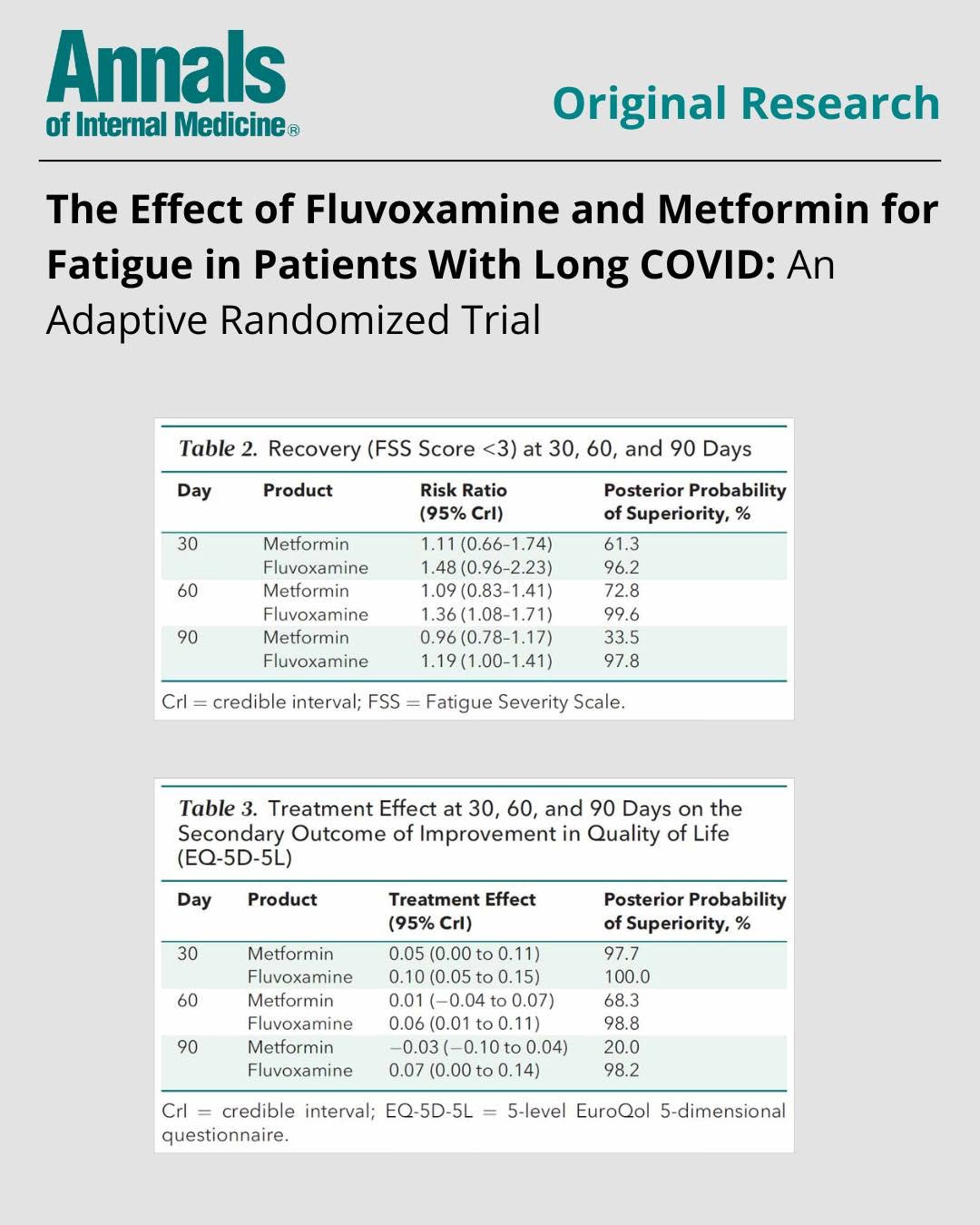
Louis shares an Annals of Internal Medicine report that fluvoxamine significantly reduced fatigue in Long COVID while metformin did not, and notes fluvoxamine's early COVID promise was not confirmed by better trials.
Louis reports the Harvard-led VIVID trial: 1,747 COVID patients and 277 contacts randomized to vitamin D3 or placebo for four weeks showed no difference in healthcare use, death or symptoms, though a signal for less long COVID emerged.

The TOGETHER trial of metformin for early COVID-19 was retracted by its authors in October 2025 after an analysis error led to premature stopping. Louis notes that two other large randomized trials, COVID-OUT and ACTIV-6, independently showed metformin lowers long-COVID risk, and hopes for a corrected re-publication.
A new trial found neither metformin nor UDCA relieved symptoms in people with established long COVID. Earlier randomized trials showed metformin lowers the risk of developing long COVID when started early in infection, so timing appears to matter.