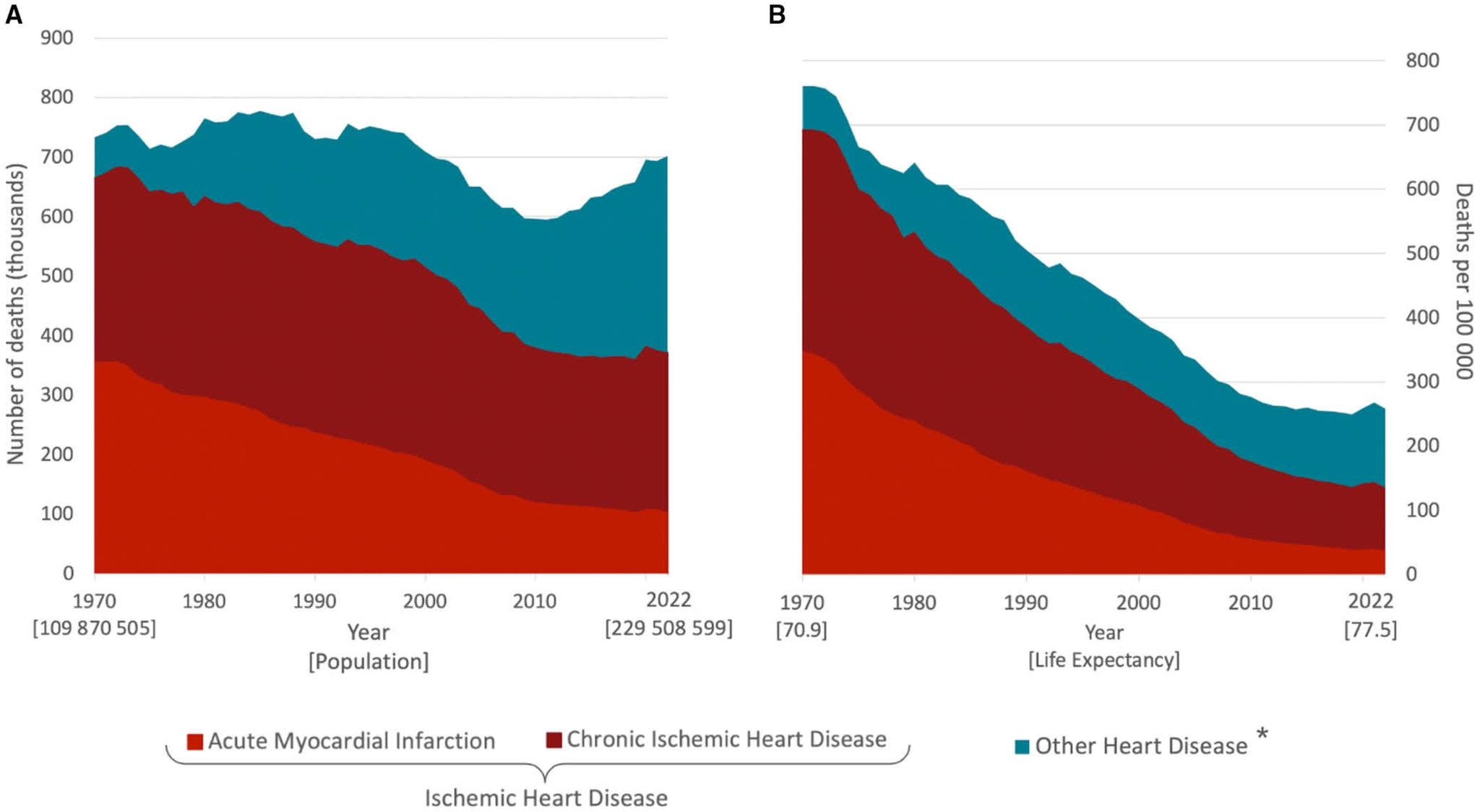
Death rates from CVD in the USA have dropped almost 5x since the 1950’s
We’ve gone from over 500 deaths per 100,000 people in 1950, down to almost 100 in 2019.
This is a much bigger drop than any other major disease.
The reference for these numbers is the WHO mortality database (2022). Note that these are age-adjusted death rates, as explained at the end of the post.
What used to be a terminal disease is now a manageable chronic disease, if treated aggressively.
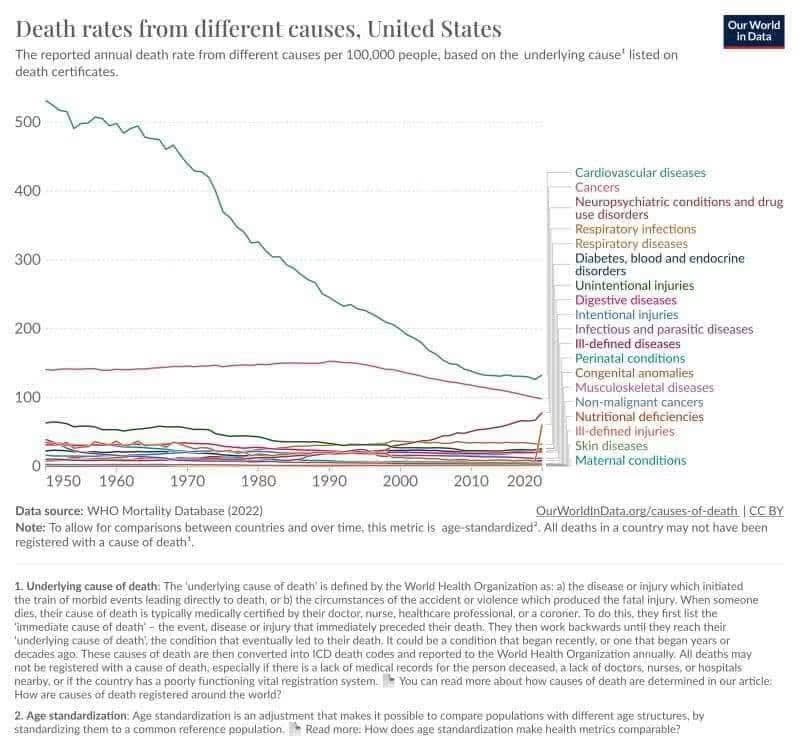
(The y-axis on this first graph is annual deaths per 100,000 people.)
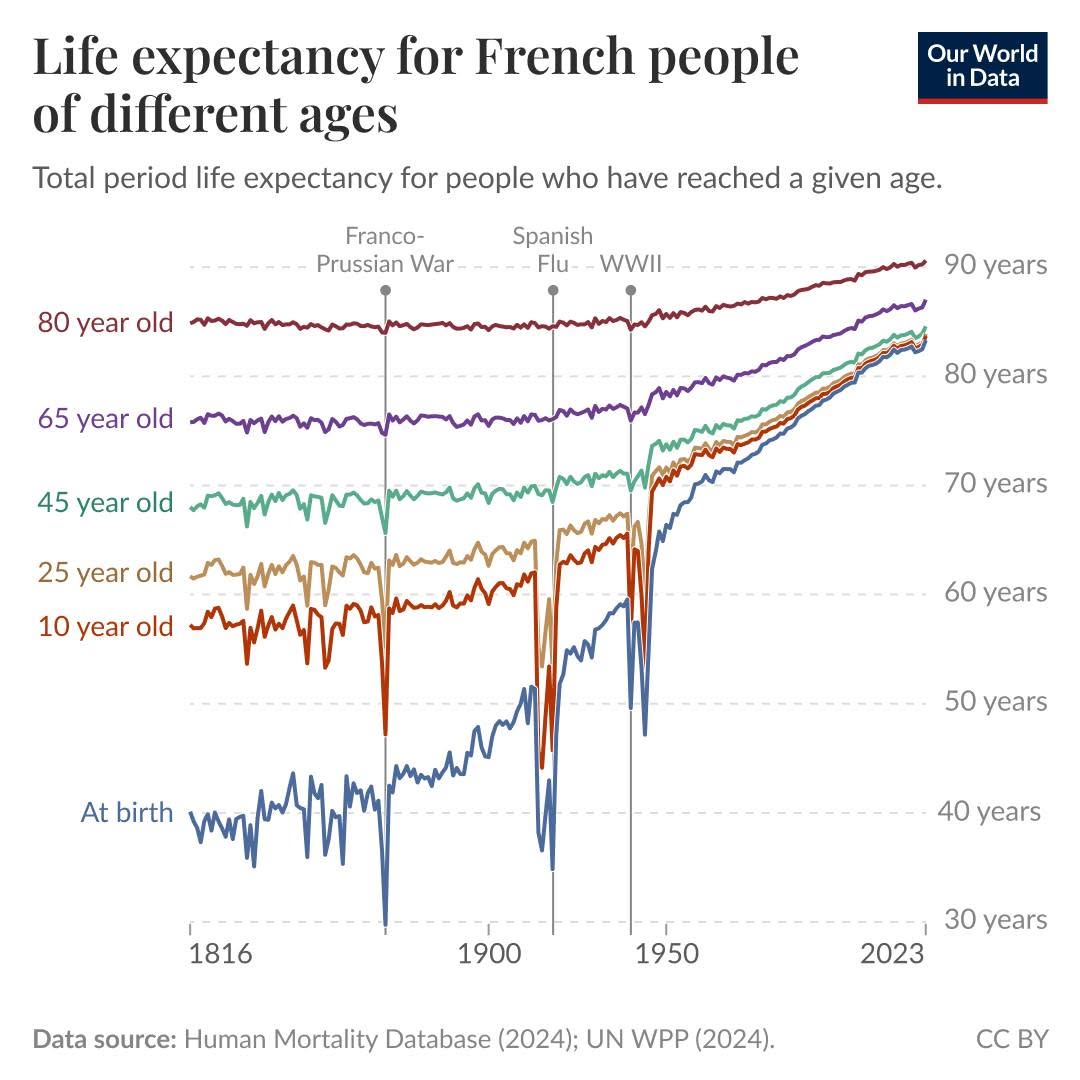
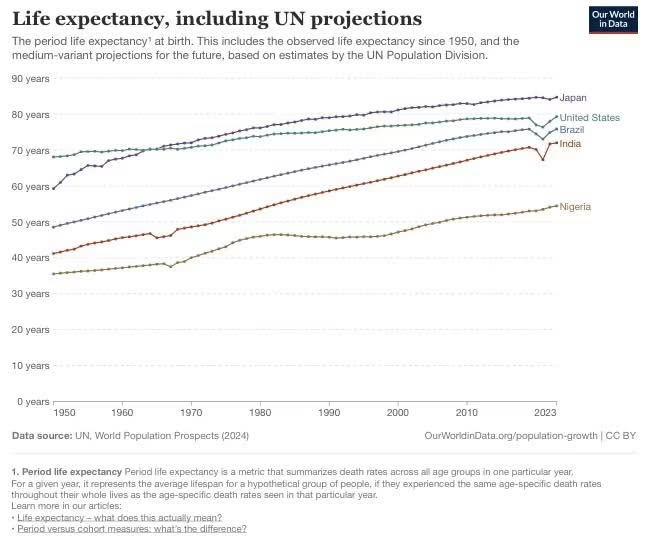
During this same time period, life expectancy has increased by 11 years.
We’ve gone from living 68 years on average in 1950, to living 79 years in 2019.
This increase in life expectancy was driven in large part by the much lower chance of dying from CVD.
It’s crazy to think that this huge a drop in death rates from CVD could have occurred unless age-adjusted rates of heart attacks and strokes also markedly decreased.
The key is the word “age-adjusted”. People are living 11 years longer. Since heart attacks are more common in old people, this inflates the rates. What really matters is the percentage of people at each particular age who have heart attacks. That’s the idea behind “age-adjustment”. You are considerably less likely to have a heart attack today at age 60 than you were in 1950 at age 60, and you are much less likely to die from a heart attack today at age 60 than in 1950.