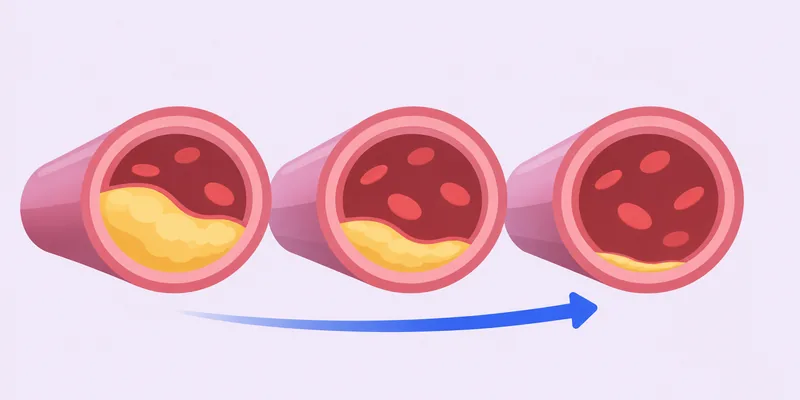
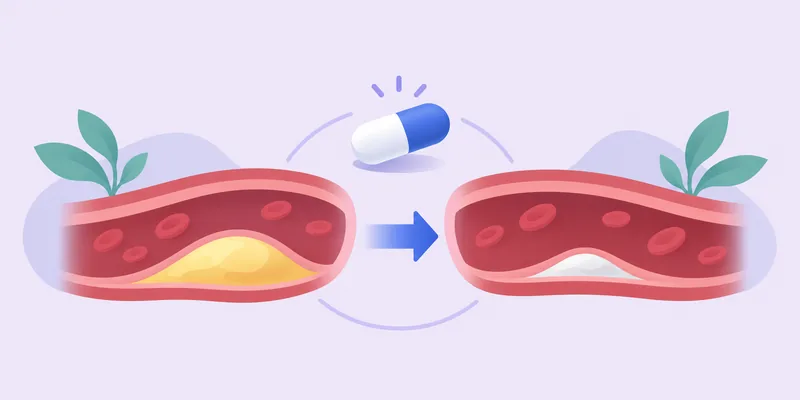
When people in this group ask what "optimal" treatment looks like, they usually mean a protocol that goes beyond treating a single number. The answer that emerges from the group's posts is a layered strategy: measure the disease (not just the risk factors), push LDL cholesterol and ApoB very low, control blood pressure, address inflammation and metabolic health, exercise, and keep monitoring so the plan can be adjusted. The best-known written example is the approach of Drs. Brad Bale and Amy Doneen.1
The group's two admins, Louis Nervegna and Gokhan Can, return to the same philosophy repeatedly: nobody has settled which risk factor matters most, so the rational approach is to target all of them as aggressively as is safe, using diet, exercise, supplements and drugs together.2 Louis also frames modern heart disease as something that "used to be a terminal disease" and is now "a manageable chronic disease, if treated aggressively."3
This article is a summary of group discussion and the studies the posts cite. It is not medical advice. Many items below are admin opinions or small studies, and they are labelled as such; the admins consistently suggest discussing any change with your own cardiologist.
The Bale-Doneen protocol as a template
Gokhan summarized the methodology from a 2016 paper under the heading "What does an Optimal Treatment look like?" The components were:1
- Lifestyle. Extensive behavioral, dietary and lifestyle counseling in keeping with accepted guideline practice.
- Regular testing. Clinicians review laboratory data and CAC (coronary artery calcium) and CIMT (carotid intima-media thickness) imaging, with markers such as inflammation and fasting insulin tested regularly.
- Lipid control. A statin, a statin plus niacin, a statin plus ezetimibe, or all three; people who could not tolerate statins received ezetimibe plus niacin. Fibrates, bile acid sequestrants and fish oils were added as needed to reach more aggressive lipid goals.
- Blood pressure. A systolic target below 120, ideally using an ACE inhibitor, with other classes (angiotensin receptor blockers, beta-blockers, diuretics and others) used as indicated.
- Antiplatelet therapy. Low-dose aspirin for secondary prevention and other high-risk individuals.
- Insulin sensitizers. Metformin and pioglitazone for people with insulin resistance, metabolic syndrome or diabetes.
- Anti-inflammatories. Colchicine (already FDA approved for secondary prevention) and possibly other agents such as high-dose omega-3.
- Supplements that might help with longevity or avoid deficiencies.
Gokhan adds one 2023 update in his own words: semaglutide or tirzepatide for weight loss if behavioral counseling fails.1
What the paper found
The cohort came from a community prevention clinic. The median time to the last carotid imaging was 3.0 years. At 2 years, maximum carotid wall thickness had fallen 52.7% and mean thickness 3.0% (the gap between max and mean fell 87.0%), and lipid-rich plaque decreased 78.4% in the first 2 years, with further but slower declines afterward.1 Keep in mind these are imaging results from an observational clinic cohort, not a randomized comparison and not a count of heart attacks.
The philosophy: target every risk factor, because age dominates
Several posts explain why the group favors breadth. Louis shared a graphic of 17 modifiable risk factors and noted some are far better proven than others, but suggested targeting as many as possible.9 He also argues that LDL or ApoB lowering is not a cure: in every randomized trial considerable residual risk remained, however low LDL went, and it appeared higher in older people. Other contributors he lists include family history, blood pressure, smoking, excess weight, chronic inflammation, poor diet, inactivity and insulin resistance or diabetes.7
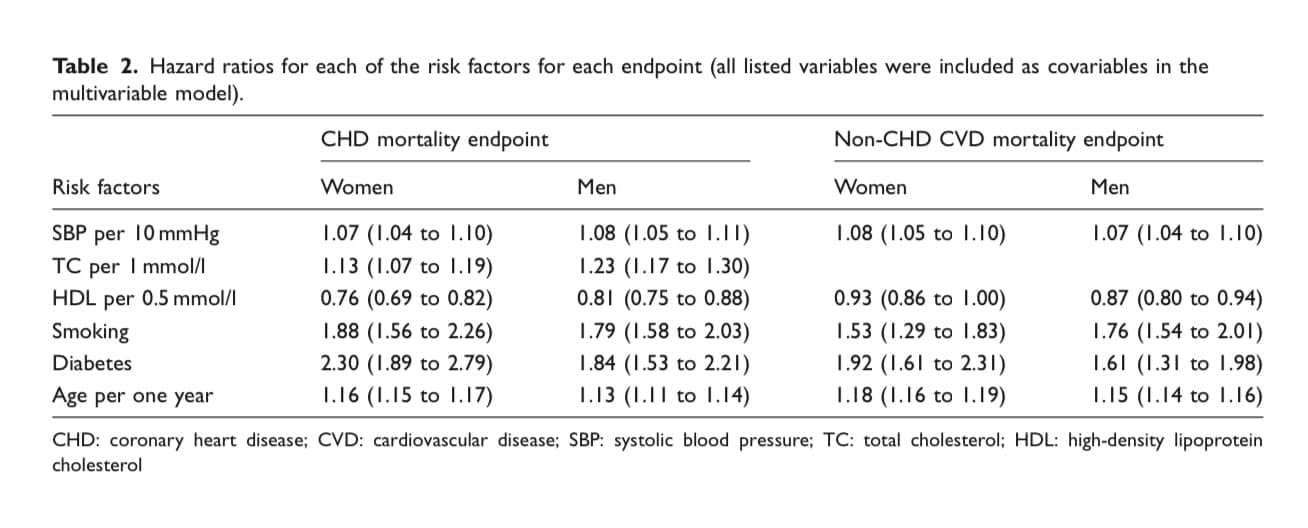
To illustrate how large aging is, he compared hazard ratios from the SCORE O.P. model for people over 65: each year of age multiplies risk by about 1.16, which compounds to roughly 19.5 times higher coronary death risk between 65 and 85, versus 2.3 times for diabetes and 1.88 times for smoking.6 He concludes that aging is more than 10 times bigger than any other single factor, which is why he argues against ranking the others.27
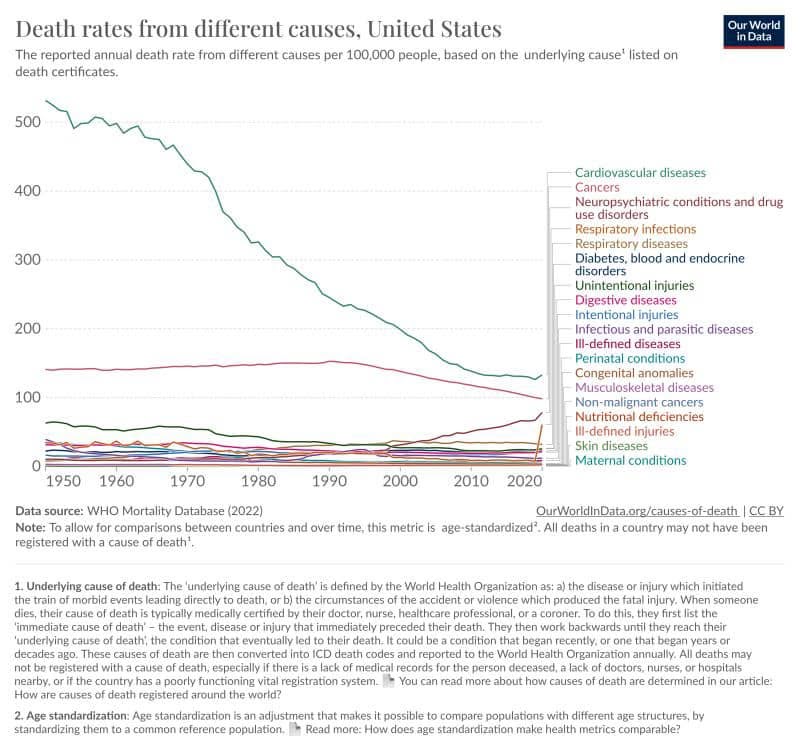
Evidence that treatment works at the population level is also offered. Louis shares WHO data showing US heart disease deaths falling from over 500 per 100,000 in 1950 to almost 100 in 2020, and attributes the drop mainly to better treatments such as medications, achieved despite rising obesity.310 He says the decline reflects fewer heart attacks and strokes, not merely better survival, and that age-adjusting the numbers matters because life expectancy rose from 68 to 79 years over the period.1112
Pillar one: very low LDL and plaque regression
Targets
Gokhan summarized a July 2025 review, "Pushing the limits of LDL cholesterol." It reports guideline targets of under 55 mg/dL for very high-risk patients and under 40 mg/dL after a recurrent event, PCSK9 inhibitors adding a 59-62% LDL reduction on top of statins, and the FOURIER trial's 15% reduction in primary events at a median LDL of 30 mg/dL. A meta-analysis cited there found a 21% relative risk reduction for every 38.7 mg/dL (1 mmol/L) drop, with benefit down to 21 mg/dL. The review concludes that fears about hemorrhagic stroke, cognitive decline or hormone disruption are unsupported, and that fewer than one in four high-risk patients reach the target.5
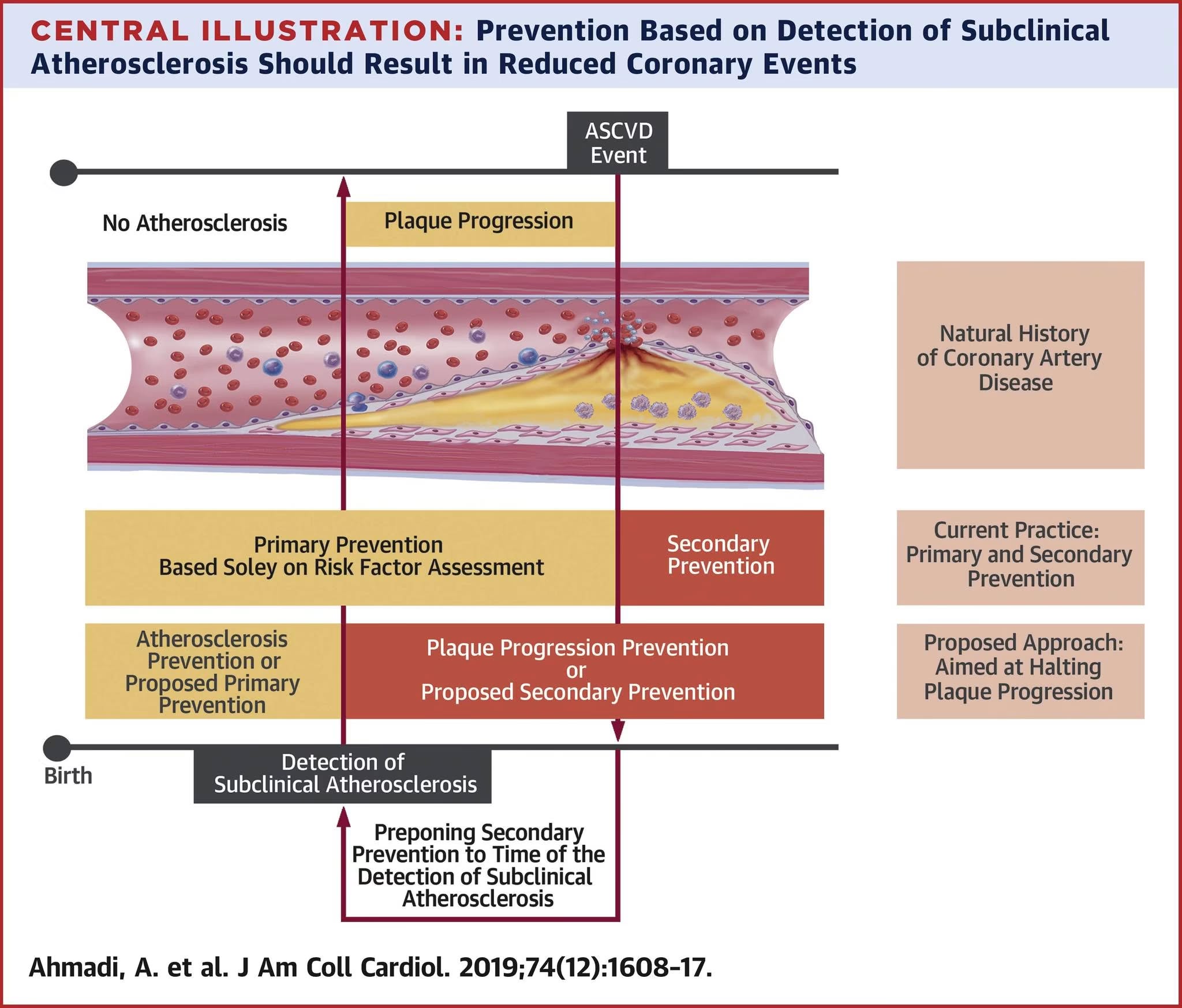
A 2019 JACC review that Gokhan summarized adds the plaque rationale. It reports that in the PROSPECT study culprit lesions grew from 32% to 65% stenosis before events, that progression stops at LDL below 70 mg/dL, and that regression generally needs LDL below 60 mg/dL.13
What statins do to plaque
Louis has posted many studies under a "statin reverse" theme. The core claims:
- Six large randomized trials showed statins reduce total plaque volume 5% to 17% within a few years; he lists COSMOS (~5%), SATURN (~5.5%), ASTEROID (~6.5%), IBIS-4 (~7.5%), STABLE (~8%) and JAPAN-ACS (~17%).14
- A Cleveland Clinic cardiologist explains the reversal comes mainly from shrinking the cholesterol-rich lipid core, which also stabilizes plaque; up to 24% of plaque volume can reverse when LDL is pushed below 70 mg/dL.15
- In JAPAN-ACS (over 300 patients with acute coronary syndrome at 33 centers), pitavastatin 4 mg and atorvastatin 20 mg reduced plaque volume 16.9% and 18.1% over 8 to 12 months.16
- The YELLOW study, using near-infrared spectroscopy and ultrasound, found lipid-core burden fell within 7 to 8 weeks of intensive rosuvastatin, stabilizing plaque rather than shrinking blockages; YELLOW III added the PCSK9 inhibitor evolocumab for greater improvement.17
- Statins also thicken the fibrous cap: a meta-analysis found an average gain of roughly 59 micrometers, and the EASY-FIT study saw 69% thickening on atorvastatin 20 mg versus 17% on 5 mg.18
- One case report documented a severe LAD blockage becoming mild over 4 years on 10 mg atorvastatin. Louis stresses this was an outlier, not what everyone should expect.19
FLOWPROMOTE: lower LDL, more regression
The newest trial the group discusses is FLOWPROMOTE (JAMA Cardiology, 2026), in 104 statin-naive adults in Denmark with stable coronary disease, scanned by CT angiography at baseline, 9 and 18 months.20 One arm received atorvastatin 40 mg, the other rosuvastatin 40 mg plus ezetimibe 10 mg. LDL reached 69.5 versus 42.5 mg/dL; total plaque volume fell 13.6% versus 21.1%, and non-calcified (soft) plaque fell 20.0% versus 28.2%.421 Louis notes lower achieved LDL was linearly associated with more regression, which he reads as supporting LDL as causal.14
Caveats noted in a shared write-up: the benefit was mainly in soft plaque, calcified plaque actually increased in both groups, and the trial measured imaging rather than heart attacks.22 Louis also cites a 2023 meta-analysis linking each 1-point drop in percent atheroma volume to about 19% lower odds of major cardiac events.4
Adding ezetimibe and PCSK9 inhibitors
- A meta-analysis of 15 trials (123,785 patients) of add-on lipid lowering (ezetimibe, bempedoic acid or PCSK9 inhibitors) found 19% fewer cardiovascular events than statins alone, but no improvement in all-cause mortality (odds ratio 0.99). A Canadian primary prevention cohort of 67,884 people found combination therapy beat high-intensity statin for all-cause death (HR 0.85) and stroke (HR 0.86), but not heart attack. Gokhan's digest also notes that in 264 STEMI patients, rosuvastatin 40 mg plus ezetimibe reached LDL below 55 in 90% versus 47.9% on rosuvastatin alone.23
- A 47-person uncontrolled study of evolocumab (Repatha) with average LDL near 30 mg/dL found non-calcified plaque fell from 607.3 to 562.1 microliters over 18 months while total plaque was unchanged. 37 of 47 had some soft plaque regression.24 Louis cautions that PCSK9 inhibitors have not yet been rigorously proven to reduce heart attacks and strokes as a monotherapy and that this study had no control group.8
- Alirocumab added to moderate statins in 61 patients limited calcium progression to a median of +2.9% versus +10.6% over 18 months.2526
Choosing a statin and side-effect questions
Louis shares a comparison in which both atorvastatin 40-80 mg and rosuvastatin 20-40 mg typically lower LDL by 50% or more; rosuvastatin is more potent per milligram, but in the randomized LODESTAR trial 3-year clinical outcomes did not differ significantly.27
On safety, Gokhan shared a review concluding that statins modestly raise new-onset diabetes in a dose-dependent way, mostly in people with existing metabolic risk factors (JUPITER saw a 26-27% increase alongside a 44% cut in major events), and that ezetimibe, PCSK9 inhibitors and pitavastatin are options that limit glycemic harm.28 Meta-analyses of randomized trials found no increase or decrease in cancer from statins.2930 Louis's argument that statins mildly stress mitochondria and activate AMPK is his own interpretation built on a 2006 laboratory study.31
The calcium paradox
A frequent source of alarm is a calcium score that rises on treatment. A review Gokhan shared argues that statins reduce events and soft plaque but do not slow Agatston score progression, citing the St. Francis trial (events down 33% with no CAC change), SALTIRE (progression 26% versus 18% on placebo) and a cohort where the odds of severe calcification rose to 4.48 after more than 10 years of statin use. It interprets this as plaque turning into stable scar.32 Louis recommends Gokhan's article on why a calcium score can rise as the heart gets healthier, noting that a score above 400 suggests significant risk.33 This interpretation is debated, so ask your cardiologist how to read your own trend.
Pillar two: blood pressure
Bale-Doneen aims for a systolic pressure under 120.1 Louis says the AHA lowered the definition of high blood pressure because several very large randomized trials showed that aggressively treating it early greatly reduces long-term heart attack and stroke risk.34
Pillar three: inflammation and Lp(a)
Inflammation is a more contested pillar. In a debate summarized by Gokhan, Peter Libby argued for substantial residual inflammatory risk even with LDL controlled, while Derick Raal argued LDL is the primary cause and inflammation largely a consequence; both agreed that addressing lipids and inflammation has value.35 Louis notes statins, especially combined with ezetimibe, lower Lp-PLA2, a marker of inflammation inside plaque.36
Lp(a) is a cautionary tale about markers. Lp(a)HORIZON, testing pelacarsen in people with prior heart attack, stroke or peripheral disease, missed its primary endpoint; participants were already aggressively treated.37 Louis floats a theory that high-intensity statins, used by 78% of participants, may already neutralize the oxidized phospholipids Lp(a) carries, but the supporting data is a laboratory study.38
Pillar four: metabolic health and weight
The Bale-Doneen protocol includes metformin and pioglitazone for insulin resistance.1 A meta-analysis Louis summarized (25 trials, 109,846 patients) found GLP-1 agonists cut heart attack 14%, cardiovascular death 13%, major cardiac events 13% and stroke 12% over about 3.5 years, on top of statins and blood pressure drugs, with larger effects at higher BMI and with gastrointestinal side effects common. Louis adds his view that these drugs work through calorie restriction, so similar benefit might come from sustained weight loss.39
Gokhan also shared an Attia article reporting that liver disease and type 2 diabetes together have a multiplicative effect on cardiovascular risk.40
Pillar five: exercise and diet
A shared review states regular moderate-to-high intensity exercise reduces coronary plaque burden, that exercise combined with LDL below 70 mg/dL is additive, and that extremely high volumes may increase calcification while producing more stable plaque.41 Louis also reshared a trial by Benjamin Levine in which sedentary 50-year-olds training 5-6 hours per week for two years made their hearts structurally younger, using Norwegian 4x4 intervals plus endurance and strength sessions.42
On diet, Louis summarized DISCO-CT: a DASH diet plus statins produced a 39.5 mm3 soft plaque reduction (adjusted to 52 weeks), which he equates to about 8 years of typical progression of roughly 5 mm3 per year.43
Pillar six: imaging and monitoring
An aggressive protocol assumes you can see the disease. Louis predicts coronary CT angiography will become standard in preventive cardiology, quoting a review that total plaque burden and non-calcified plaque often outperform stenosis in predicting events.44 Without imaging, Bale-Doneen relied on CAC and carotid measurements.1
Nuances and cautions
- Observational and single-person results. Charles Grashow's account of reversing his calcium trajectory with an intensive regimen (LDL target 30 mg/dL, hsCRP 0.5, high-dose nattokinase) is explicitly a one-person story, not a trial.45
- Low LDL and mortality. Louis explains that low LDL correlating with higher mortality in cancer reflects reverse causality, since tumors scavenge LDL.46
- Keto and very high LDL. Louis relays a critique that the LMHR study enrolled only extremely healthy people with no atherosclerosis and so could not detect progression.47 In the Keto-CTA analysis he quotes, the median non-calcified plaque increase was 18.8 mm3 over a year, versus 7 mm3 predicted.48
- Surrogate endpoints. Plaque imaging is not the same as fewer heart attacks, and several add-ons lack outcome proof.823
What this means for you
- The group's admins suggest asking your cardiologist which pieces of the protocol (lipids, blood pressure, glucose, inflammation, imaging) are covered in your plan.1
- Many posts discuss LDL goals under 70 and sometimes under 55 mg/dL; discuss your own target with your doctor.513
- Consider how you will track progress, whether CAC, CT angiography, ApoB or hsCRP, and interpret rising calcium with a clinician.3244
- Treat exercise, diet and weight as parts of the protocol rather than substitutes for it.4143
- Be cautious with markers and add-ons that lack event data; lowering Lp(a) with pelacarsen did not meet its primary endpoint in HORIZON.37
Frequently asked questions
Does an aggressive protocol cure heart disease?
No. Louis stresses residual risk remains in every randomized trial and age is the largest factor.7
How low should LDL go?
A 2025 review cites targets under 55 mg/dL for very-high-risk patients, and under 40 after a recurrent event.5
Can plaque really shrink?
Randomized trials cited in the group show total plaque shrinking 5% to 21% over 18 months to a few years with intensive lipid lowering.414
Is rosuvastatin better than atorvastatin?
Rosuvastatin is more potent per milligram, but outcomes in LODESTAR did not differ significantly.27
Why can my calcium score rise on treatment?
One review argues statins convert soft plaque into stable calcified scar.3233
Does blood pressure belong in the protocol?
Yes: the Bale-Doneen approach aims for a systolic pressure below 120.1