HD-OPM Archive
Topics › Cholesterol & lipid-lowering

LDL, ApoB & lipid panel

332 posts (130 primarily about this topic) · 119 reposts and set-aside posts not shown

Start here — the best posts in this topic

  1. A low-dose statin could roughly halve lifetime heart attack risk if taken for decades Feb 25, 2025
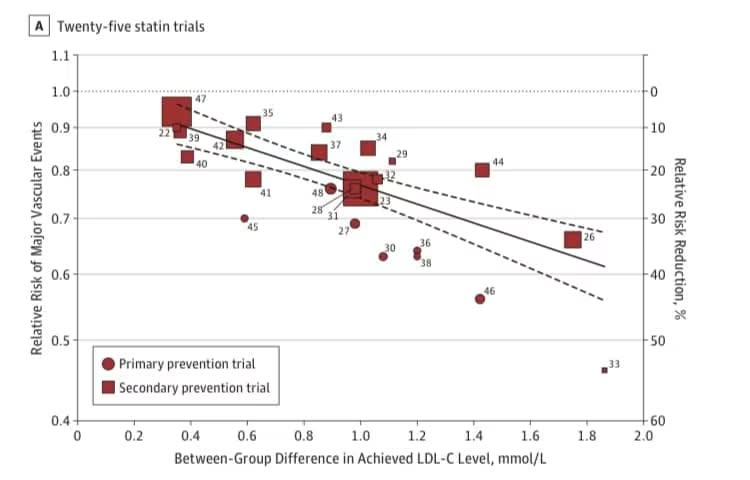
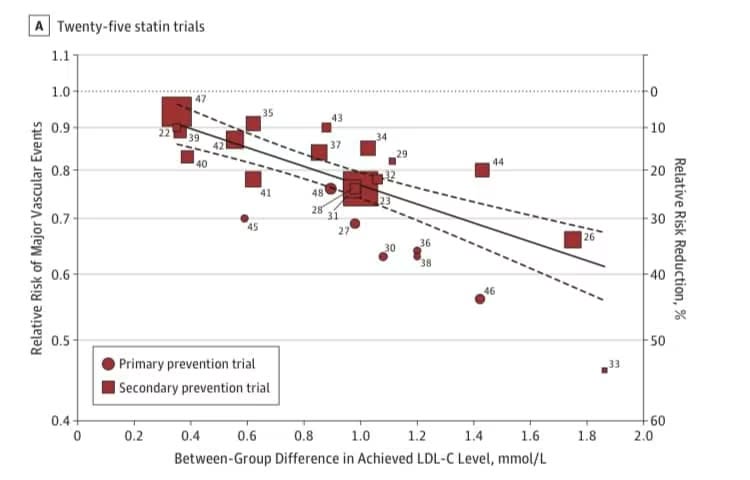
  2. 25 statin trials: about 40% fewer heart attacks and strokes per 75 mg/dL LDL drop Mar 23, 2025
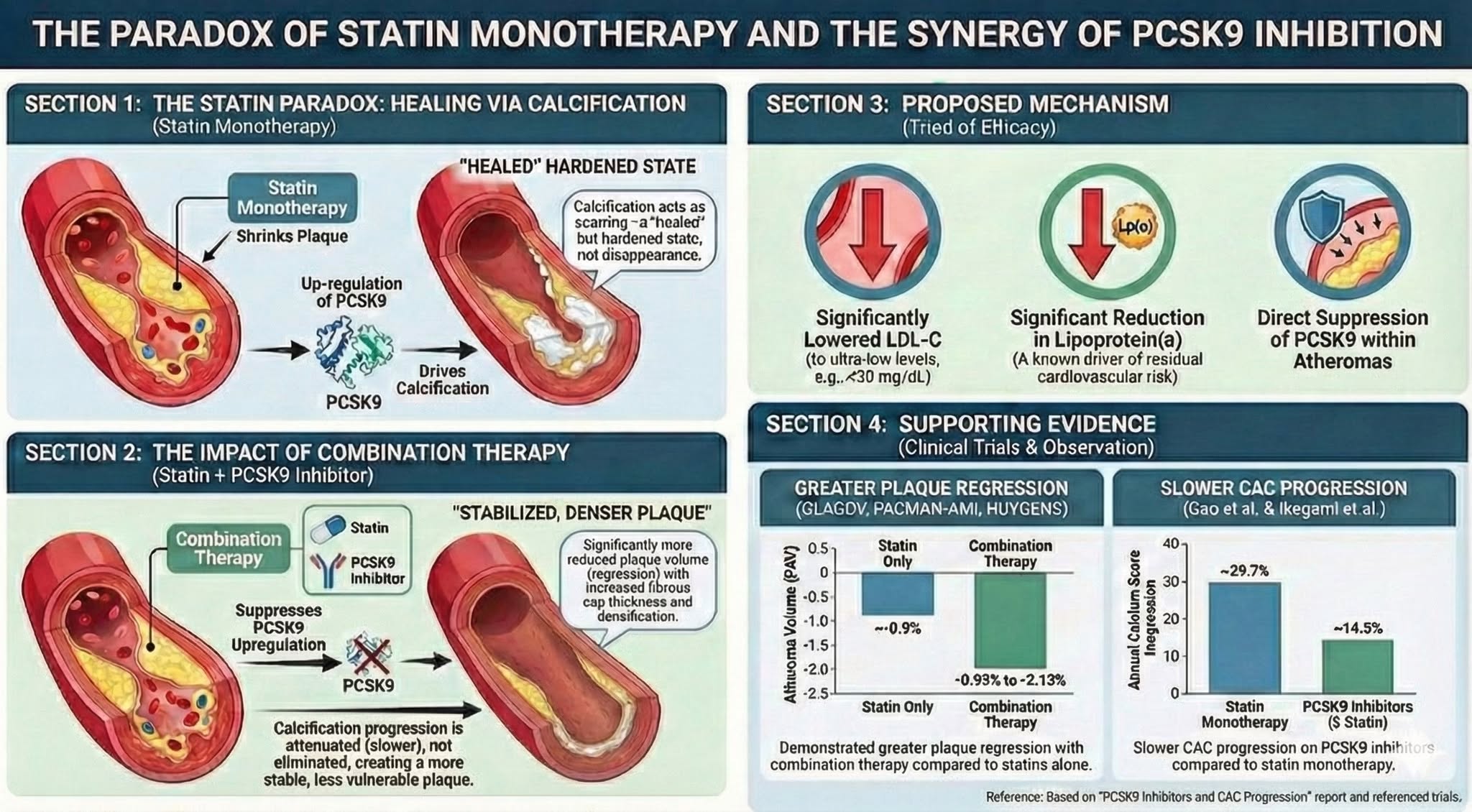
  3. PCSK9 inhibitors regress plaque without the calcification surge seen with statins Jan 01, 2026
  4. TG/HDL ratio tracks visceral fat; clearing liver and pancreas fat improves it ↩ 10 · Jul 27, 2024
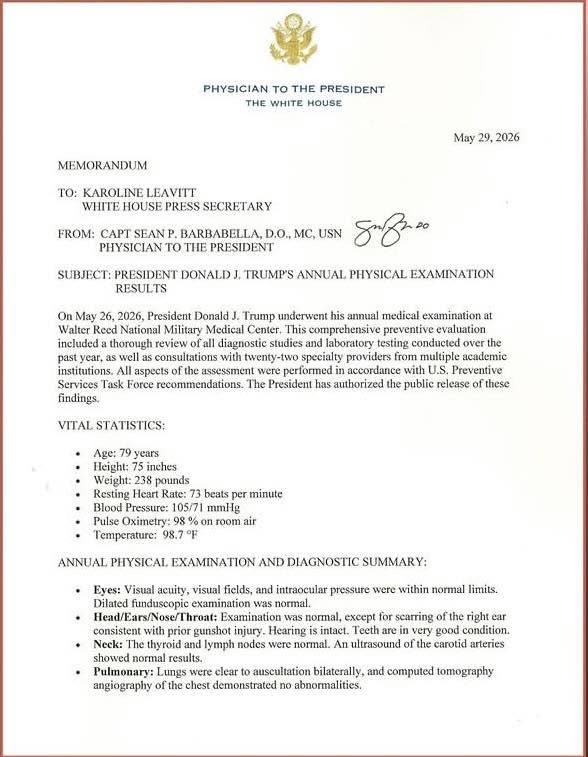
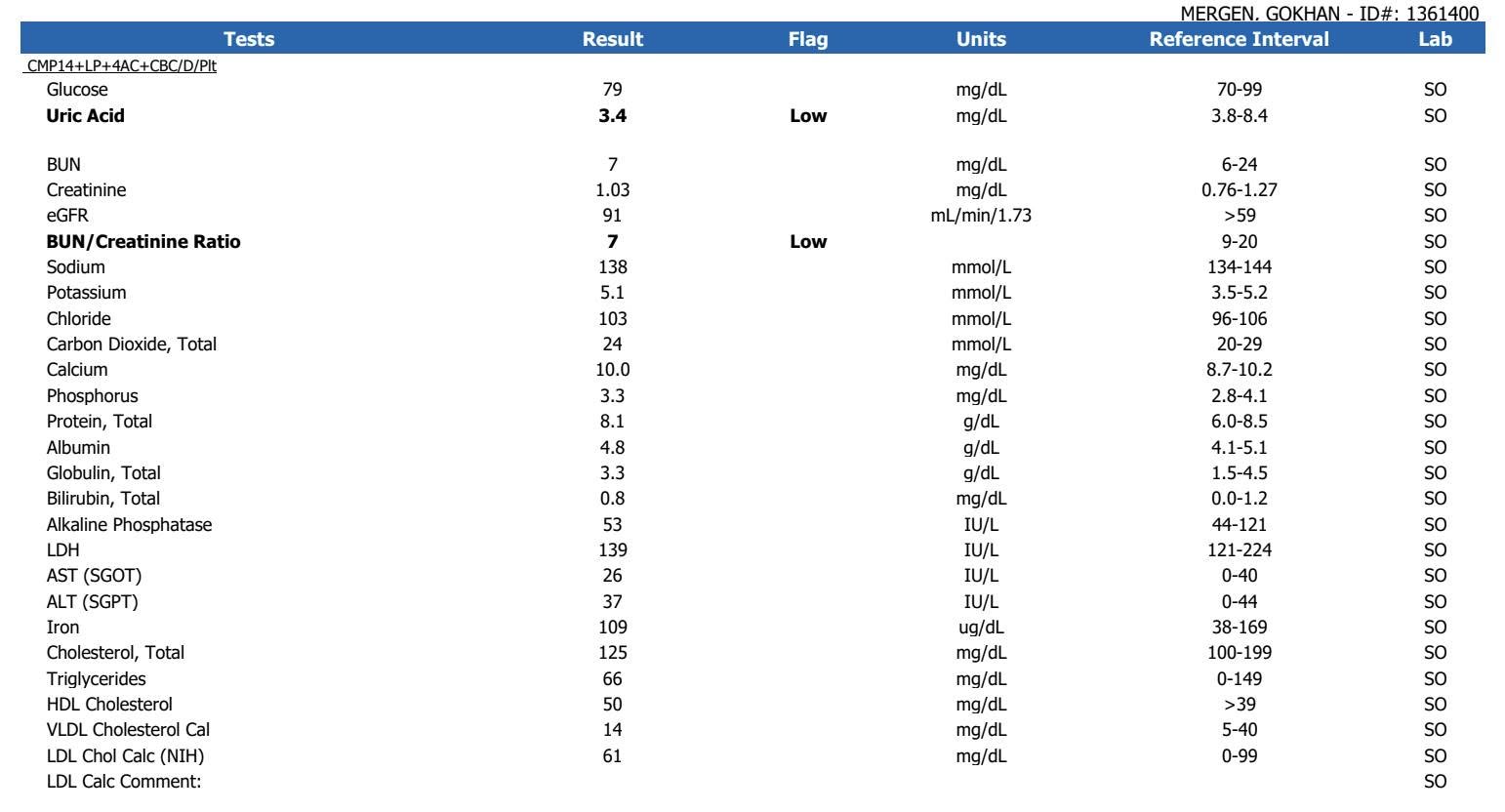
  5. Latest presidential health report shows LDL of 53 mg/dL on rosuvastatin plus ezetimibe May 30, 2026
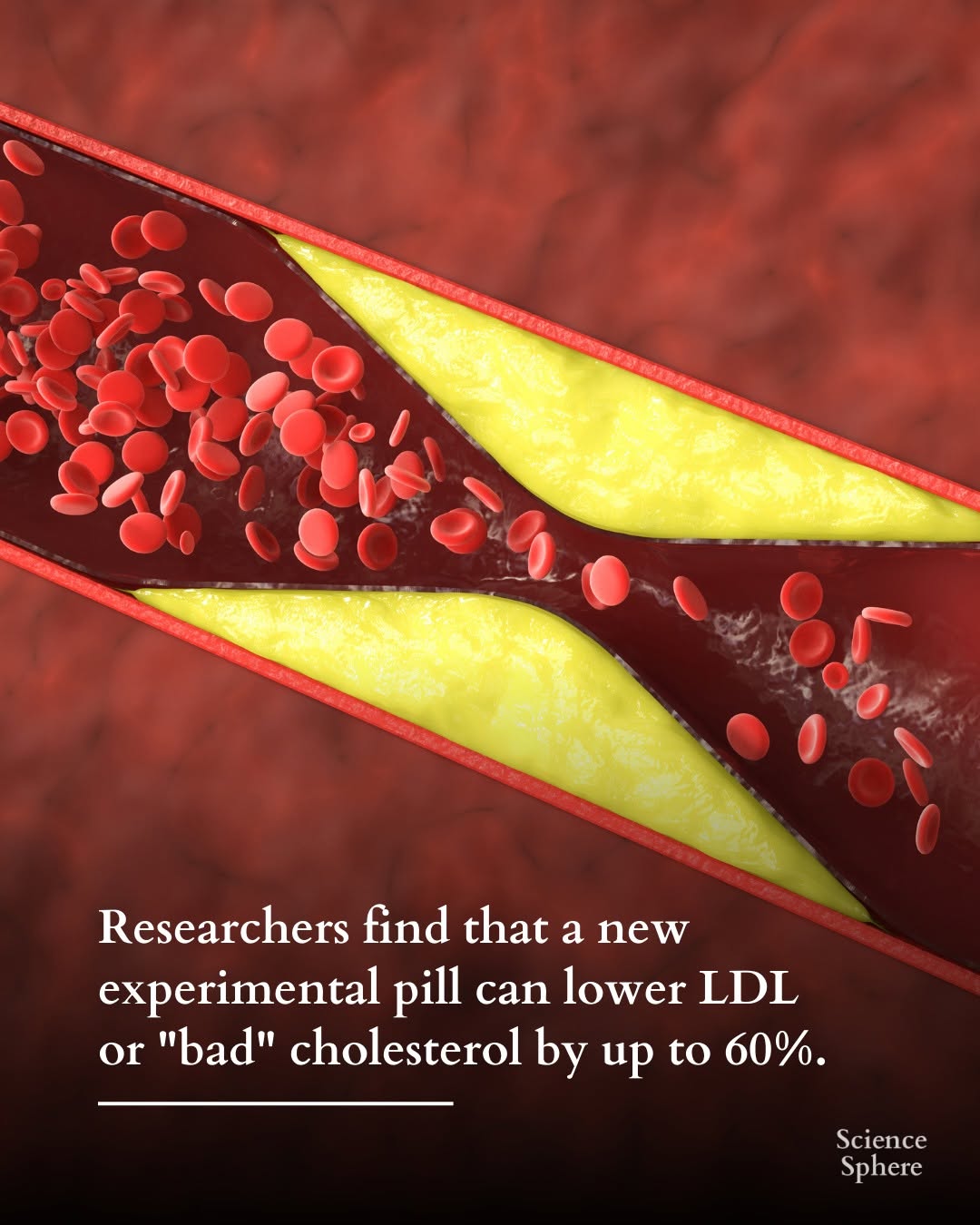
  6. Merck's oral PCSK9 pill Lipfendra approved by FDA, cut LDL 56-60% in Phase 3 Jul 16, 2026
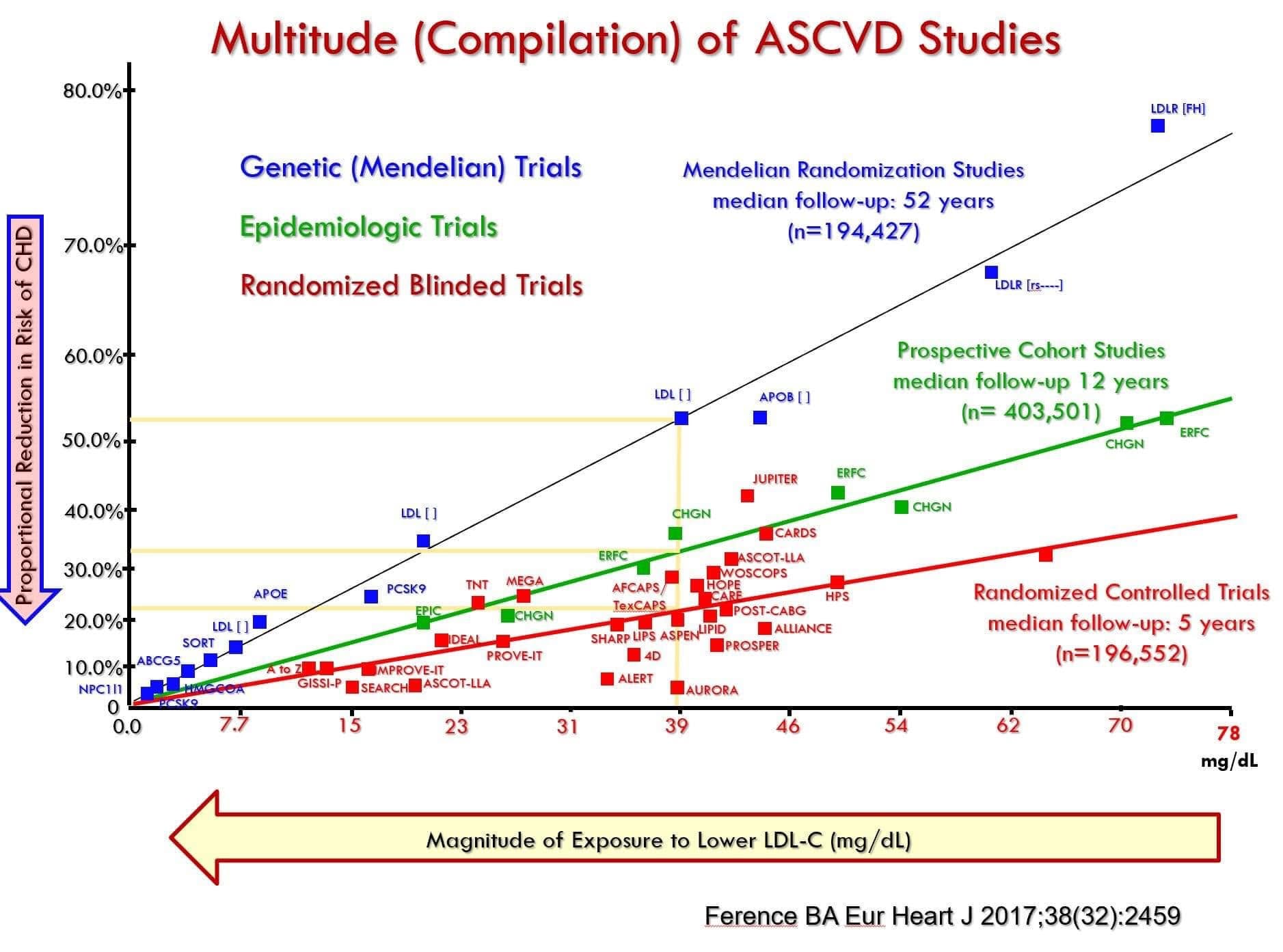
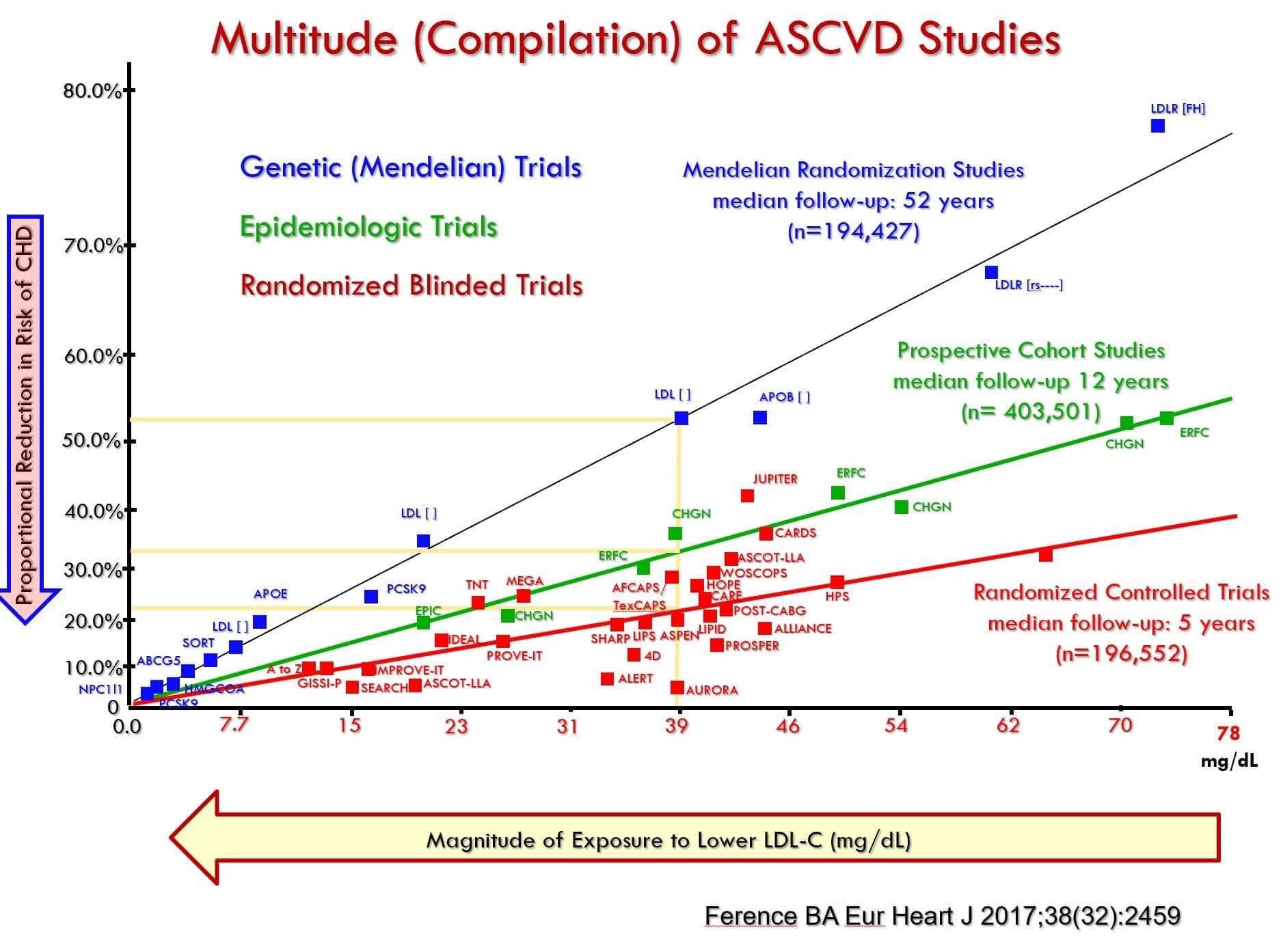
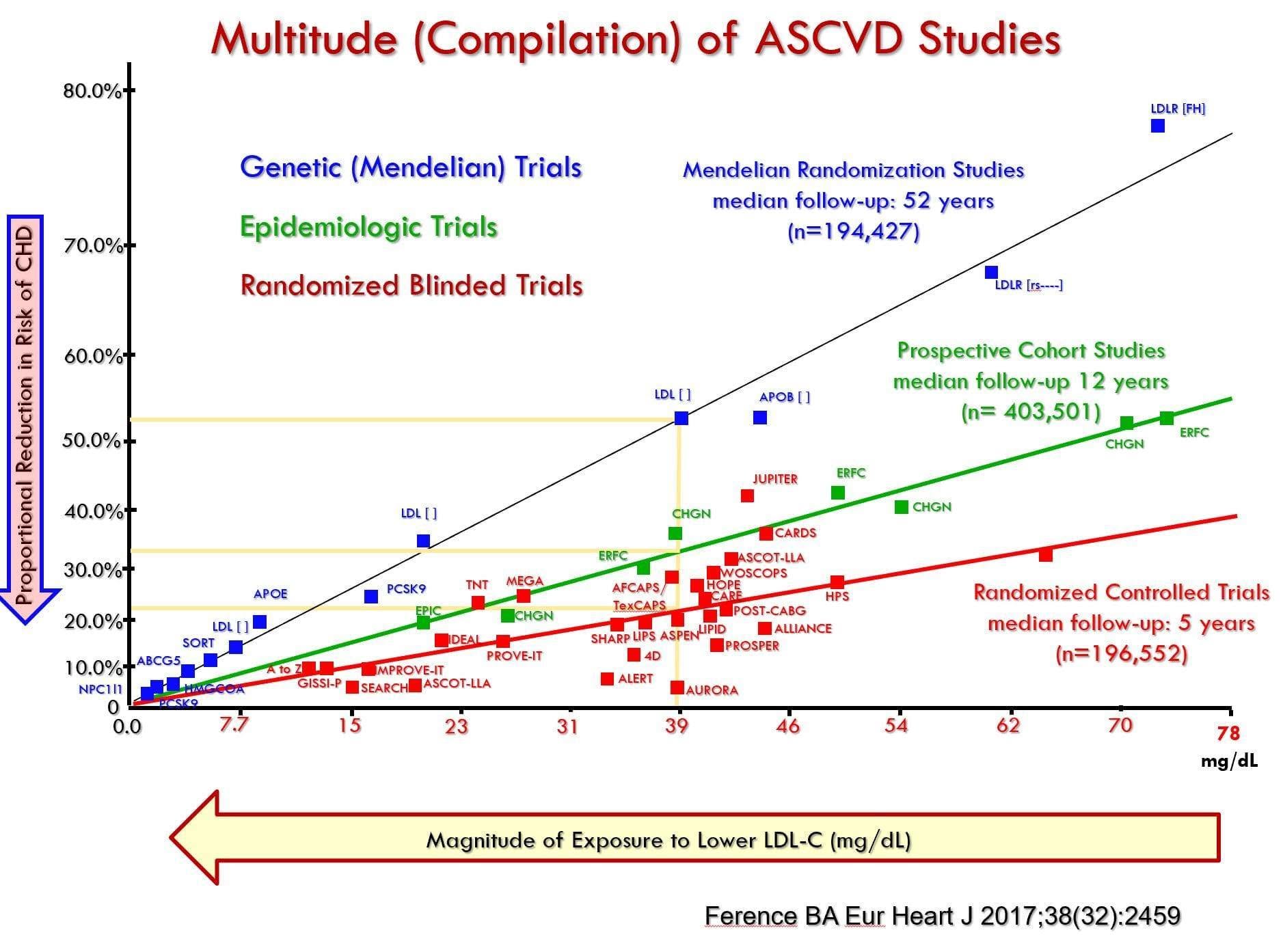
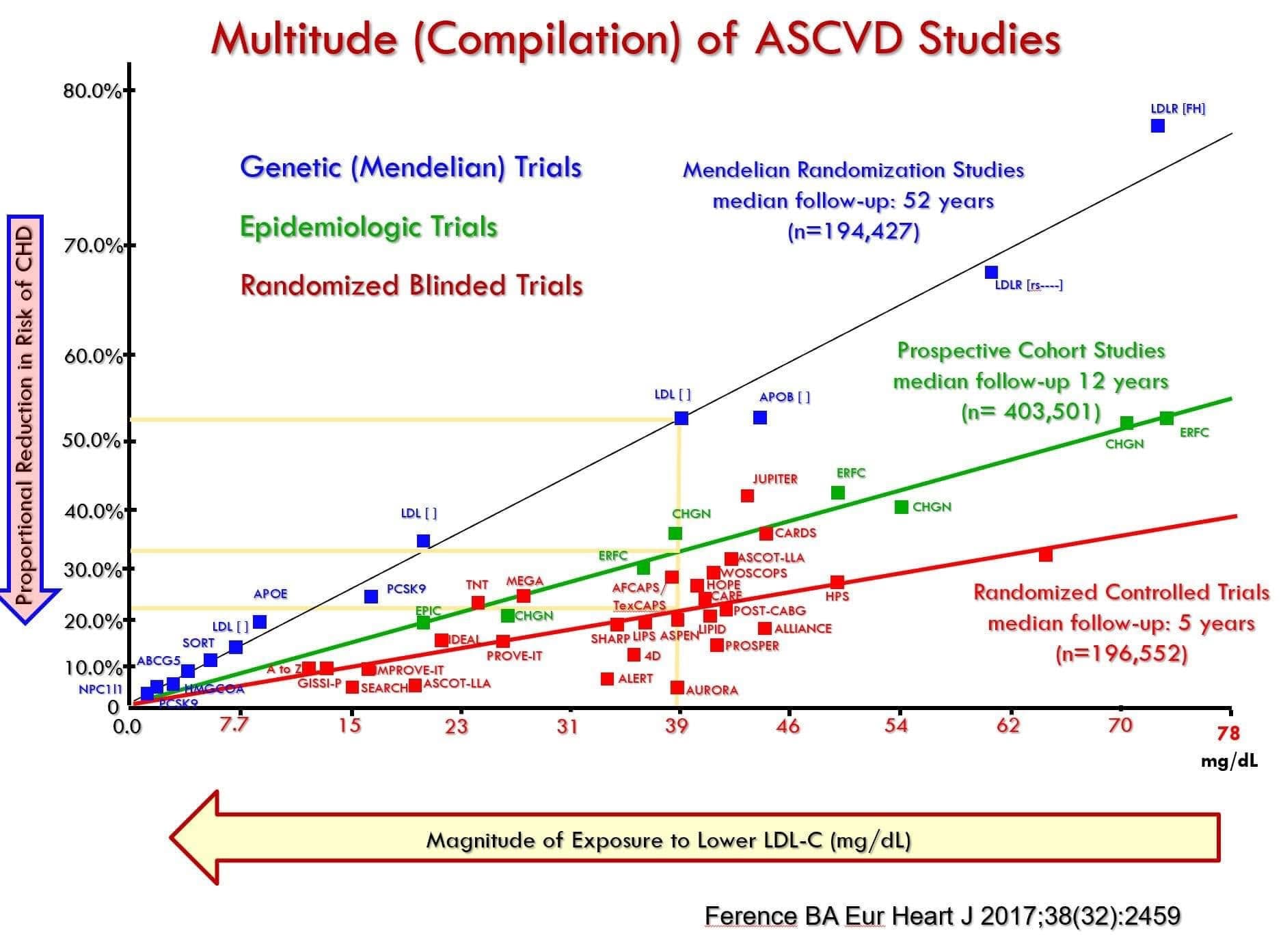
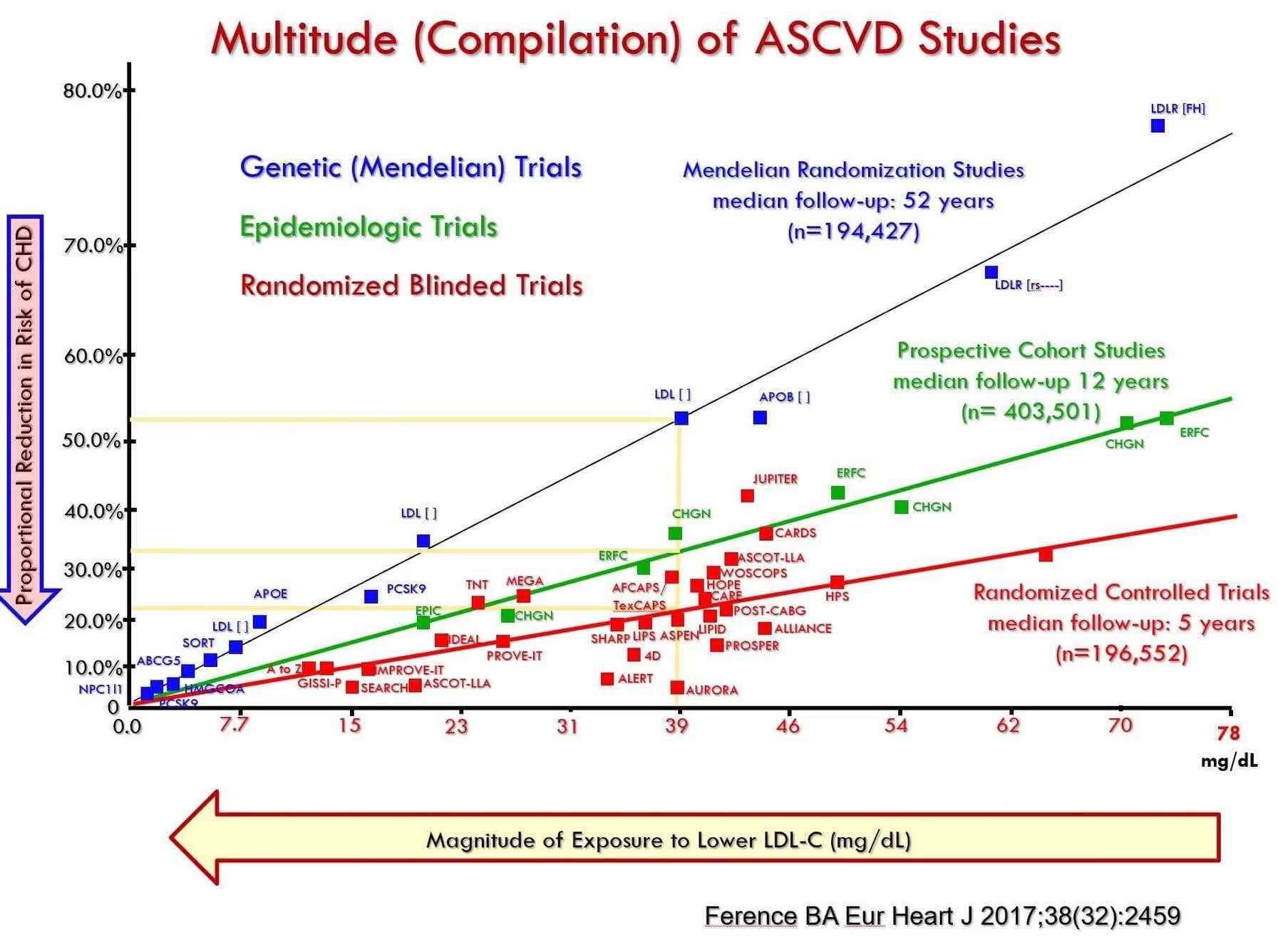
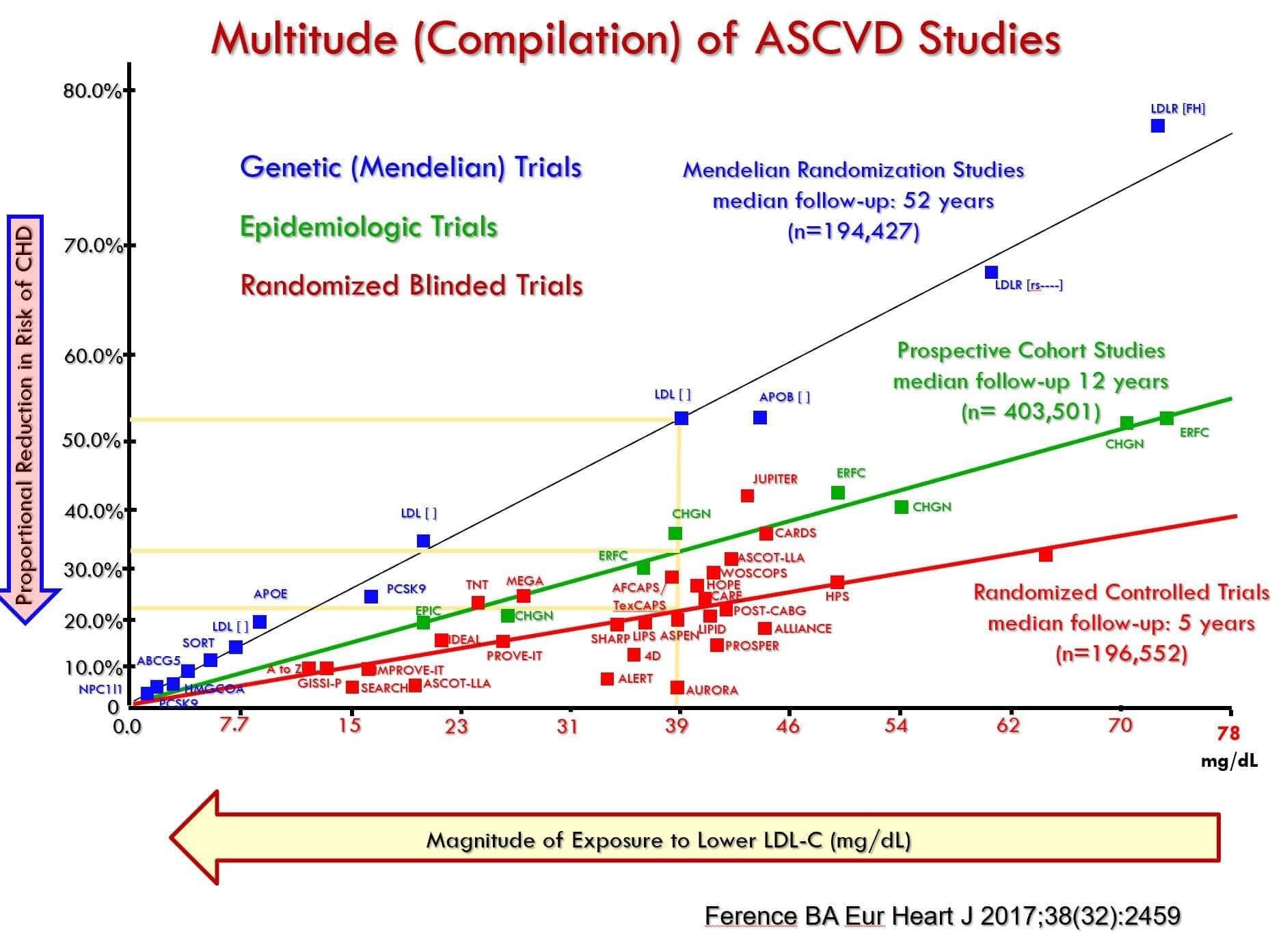
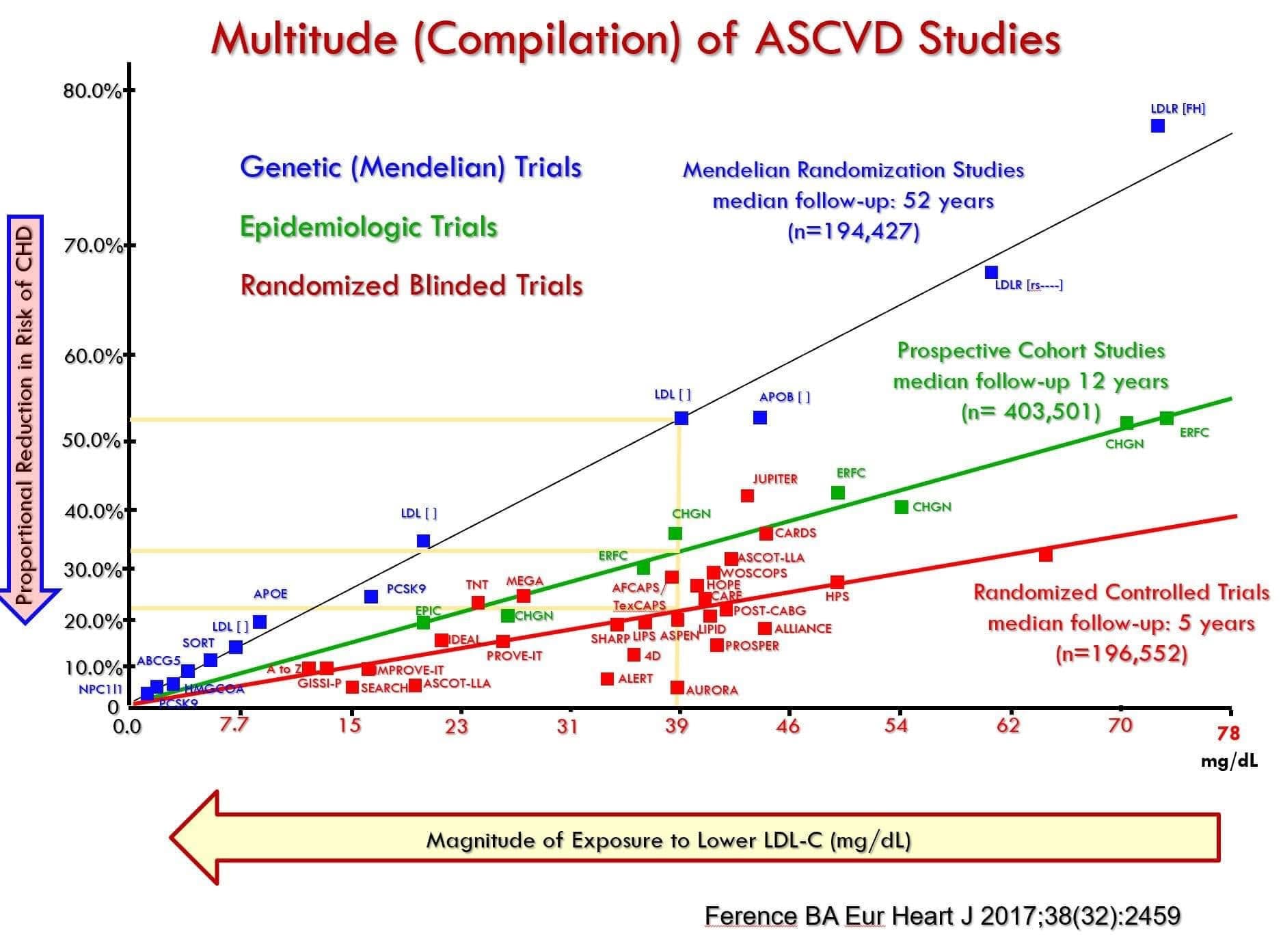
  7. LDL down 39 mg/dL: 20%+ fewer heart attacks in RCTs, 30%+ in cohorts, 50%+ genetically ↩ 9 · Dec 20, 2023
  8. Lp(a) carries LDL cholesterol, so LDL-C on a lab report includes Lp(a) cholesterol ↩ 3 · Jun 14, 2025
#ldl 86#cholesterol 67#statins 66#apob 56#cardiovascular 30#plaque 30#ezetimibe 28#triglycerides 25#ketocta 24#atherosclerosis 23#alzheimers 23#heartdisease 23#lowldl 23#hdl 22#dementia 21#lmhr 21#statinrcts 20#pcsk9 20#insulinresistance 20#riskfactors 18#mendelianrandomization 16#keto 16#reverse 16#ketoctasummary 16#cardiovasculardisease 16#ldlrcts 15#saturatedfat 15#guidelines 15#tghdlratio 14#lpa 14#heartattack 14#ushapedcurve 14#mrhd 12#statinreverse 12#hearthealth 12#inflammation 12#diabetes 12#bloodpressure 11#dayspring 11#carnivore 11

A low-dose statin could roughly halve lifetime heart attack risk if taken for decades

Feb 25, 2025 · Louis Nervegna ♥ 29 · 💬 47 Statins

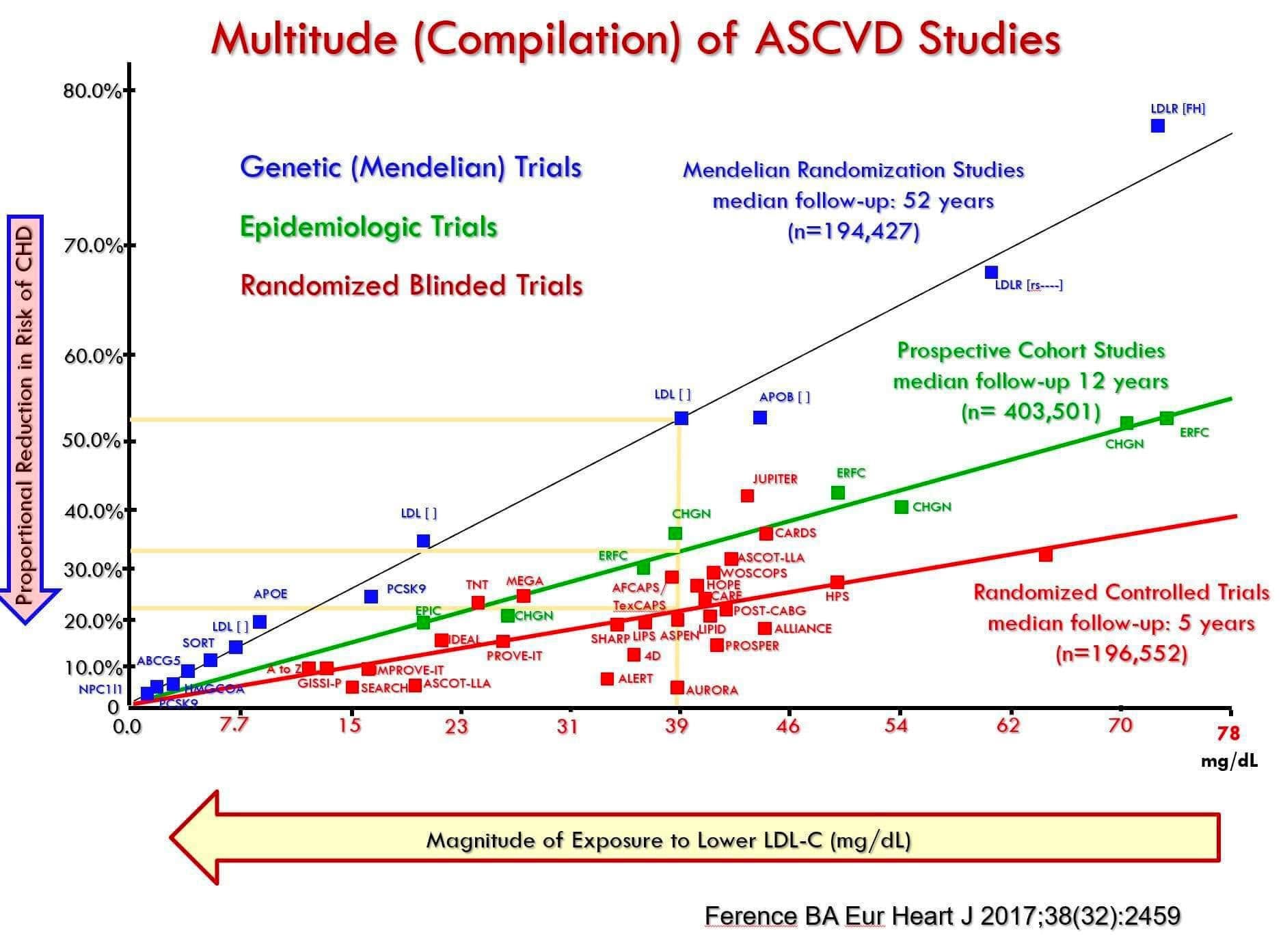
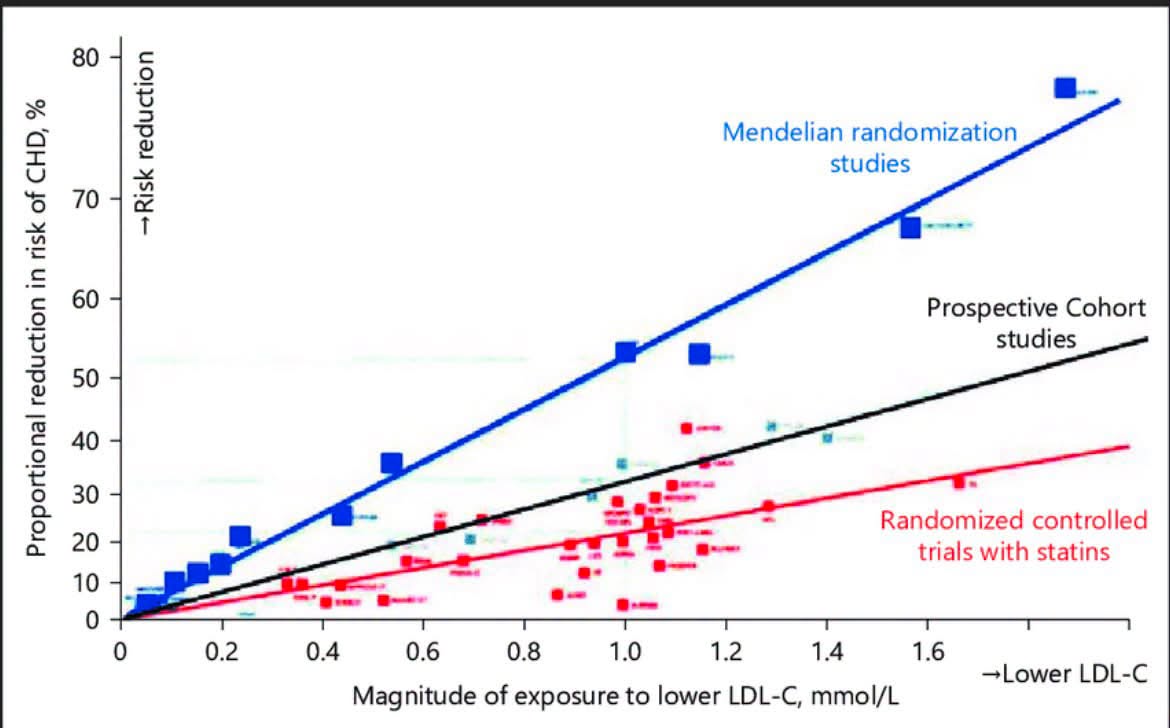
Louis explains a graph combining RCT, cohort and Mendelian randomization data: an LDL reduction of 39 mg/dL (reachable with a very low dose statin) lowers heart attack risk more the longer it is sustained. Translated to absolute risk, a roughly 20% lifetime risk could fall to about 10%, and the rest requires diet, lifestyle and other therapies.
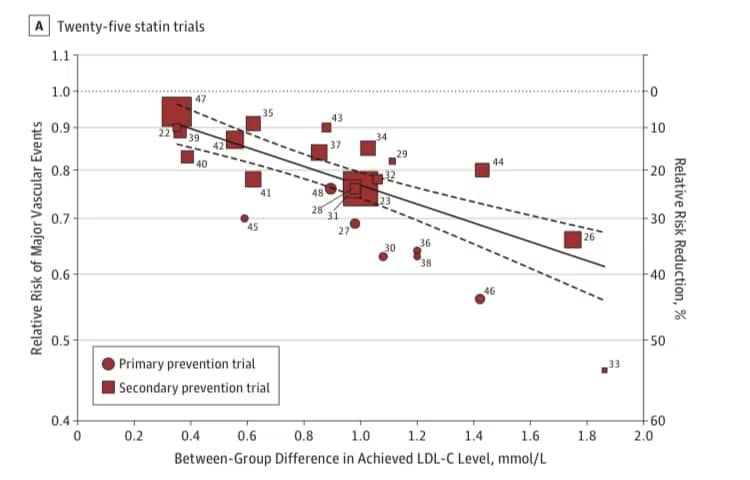
25 statin trials: about 40% fewer heart attacks and strokes per 75 mg/dL LDL drop

Mar 23, 2025 · Louis Nervegna ♥ 37 · 💬 35 Statins

Louis shares a graph of all 25 statin RCTs up to 2016 (excluding those under 6 months or under 50 events), showing about 40% lower MACE per 75 mg/dL LDL reduction, with larger effects in the 7 primary prevention trials. In his own comments he argues calcified plaque is the stable endpoint of soft plaque, and that statins and exercise help by preventing new soft plaque, regressing it and stabilizing the remainder through calcification.

Latest presidential health report shows LDL of 53 mg/dL on rosuvastatin plus ezetimibe

May 30, 2026 · Louis Nervegna ♥ 58 · 💬 46

Louis comments on a publicly released health memo: LDL 53 mg/dL on rosuvastatin and ezetimibe despite good metabolic markers, with CT angiography plaque tracking and vaccinations up to date. He uses it to illustrate appropriate CVD treatment versus health misinformation and asks that politics be kept out.

LDL down 39 mg/dL: 20%+ fewer heart attacks in RCTs, 30%+ in cohorts, 50%+ genetically

Dec 20, 2023 · Louis Nervegna ♥ 23 · 💬 43 ↩ 9

Louis presents a graph combining RCTs (5 years), prospective cohorts (12 years) and Mendelian randomization (52 years) to show that the benefit of lowering LDL grows with duration of exposure. A 39 mg/dL reduction, achievable with a very low-dose statin, is associated with larger risk reductions over longer periods. He translates the 50% figure to a lifetime absolute risk falling from 20% to 10%, and describes his own 10 mg atorvastatin. The absolute estimate is his extrapolation.

Lp(a) carries LDL cholesterol, so LDL-C on a lab report includes Lp(a) cholesterol

Jun 14, 2025 · Louis Nervegna ♥ 25 · 💬 49 ↩ 3 Lp(a)

Louis explains with a boats-and-cargo analogy that Lp(a) particles carry LDL cholesterol just as LDL particles do, so LDL-C counts cholesterol from both. In people with very high Lp(a), a significant part of reported LDL-C actually comes from Lp(a). He adds that Lp(a) seems dangerous partly because it deposits LDL cholesterol into artery walls.

Lp(a) carries LDL cholesterol, so lab LDL-C includes cholesterol from Lp(a) particles

Oct 10, 2025 · Louis Nervegna ♥ 37 · 💬 23 Lp(a)

Louis explains that Lp(a) particles are 'boats' carrying the same LDL cholesterol 'cargo' as LDL particles, so a lab LDL-C value includes cholesterol carried by Lp(a); in people with very high Lp(a), a significant portion of LDL-C comes from Lp(a). Lp(a)'s sticky apo(a) protein deposits cholesterol in artery walls and is prothrombotic.

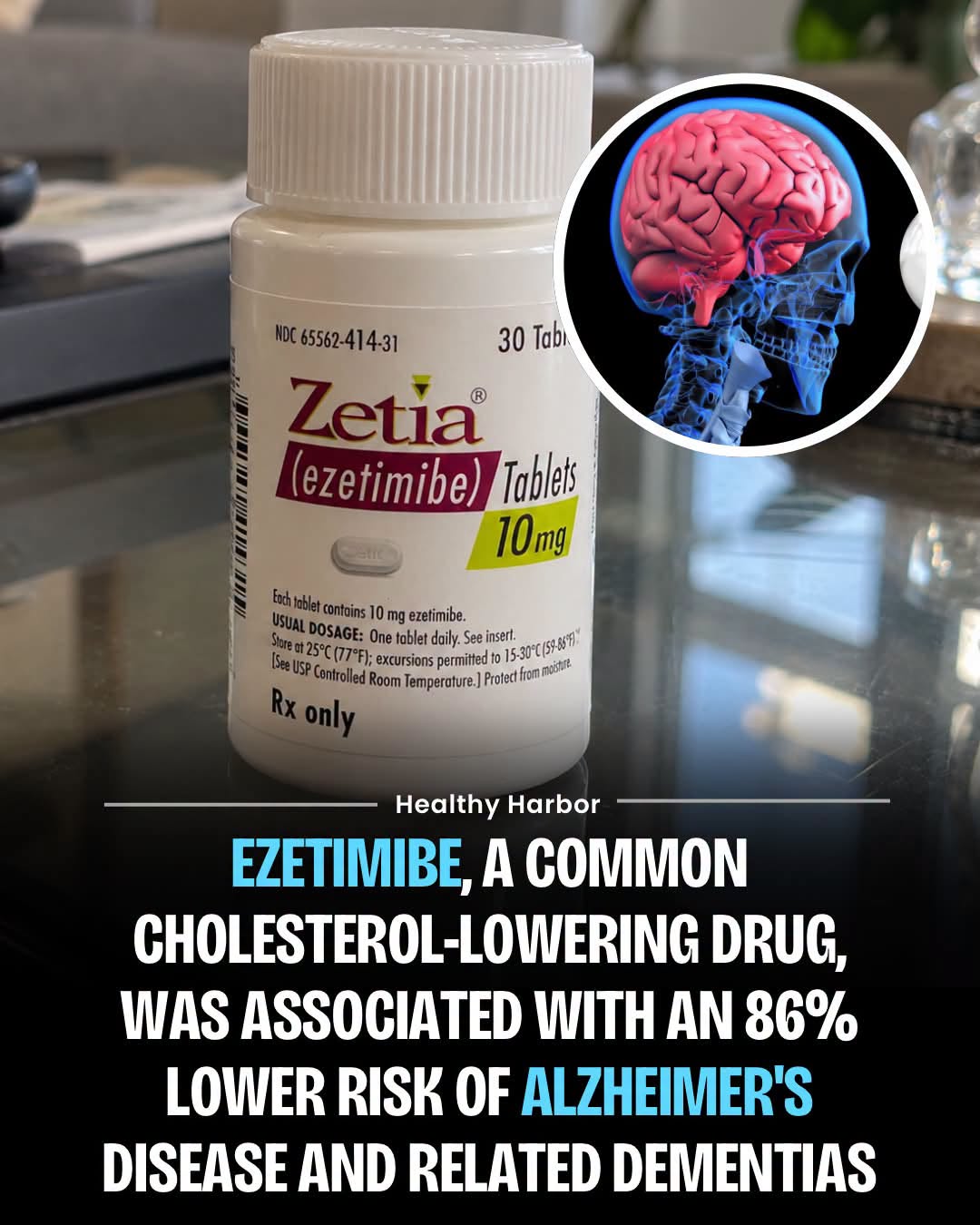
Ezetimibe use linked to 86% lower Alzheimer's and dementia risk in database analysis

Oct 19, 2026 · Louis Nervegna ♥ 38 · 💬 27 Brain health & dementia

A 2024 Aging Biology paper analysed clinical databases and found that people taking the LDL-lowering drug ezetimibe had a much lower risk of Alzheimer's disease and related dementias. Brain tissue from patients also showed more of two proteins, HK1 and 14-3-3 gamma. This is an observational association, so it does not prove the drug prevents dementia.

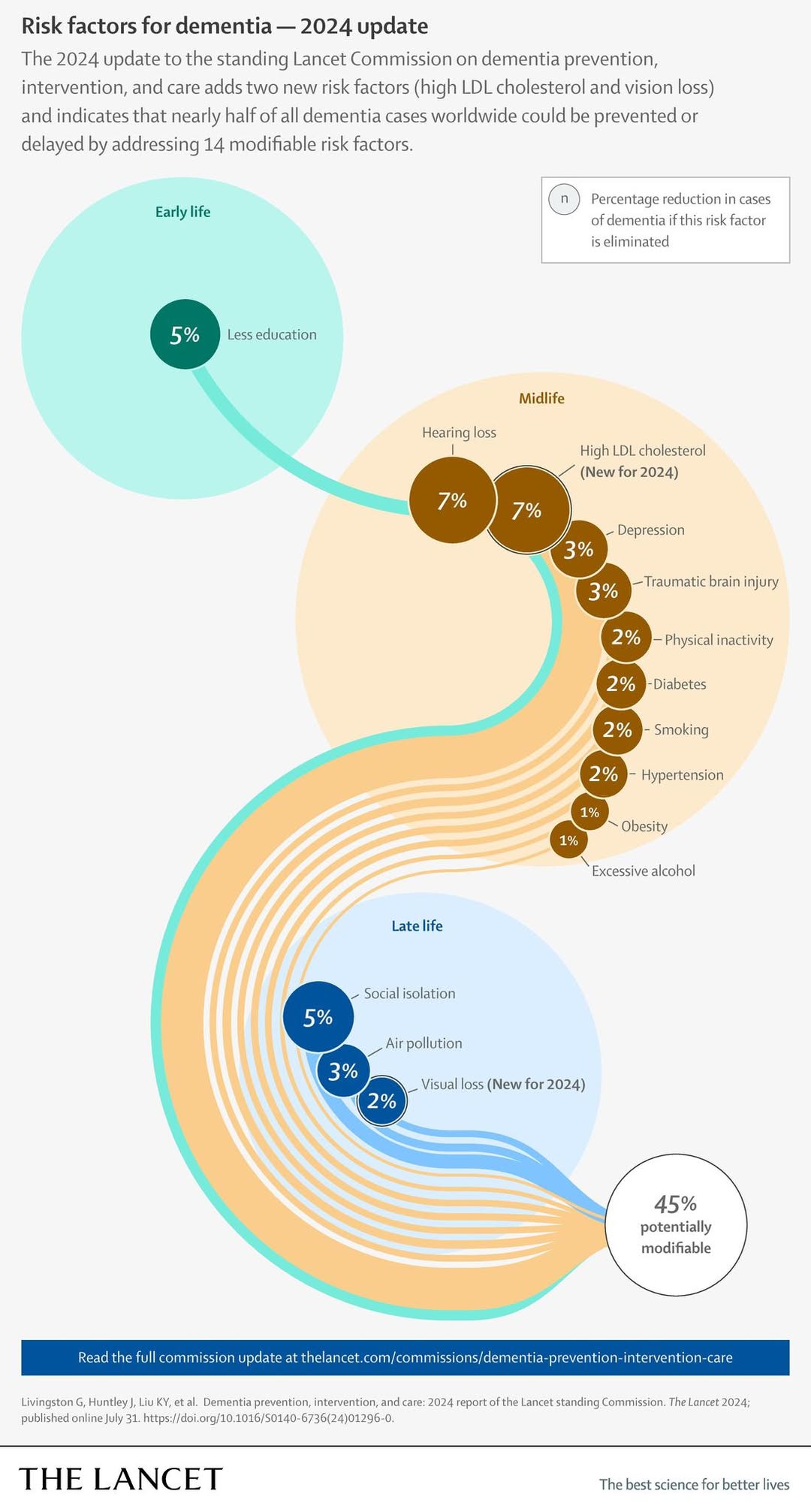
High LDL does not protect the brain: 2024 Lancet Commission lists LDL as top dementia risk

Dec 15, 2024 · Louis Nervegna ♥ 18 · 💬 38 Brain health & dementia

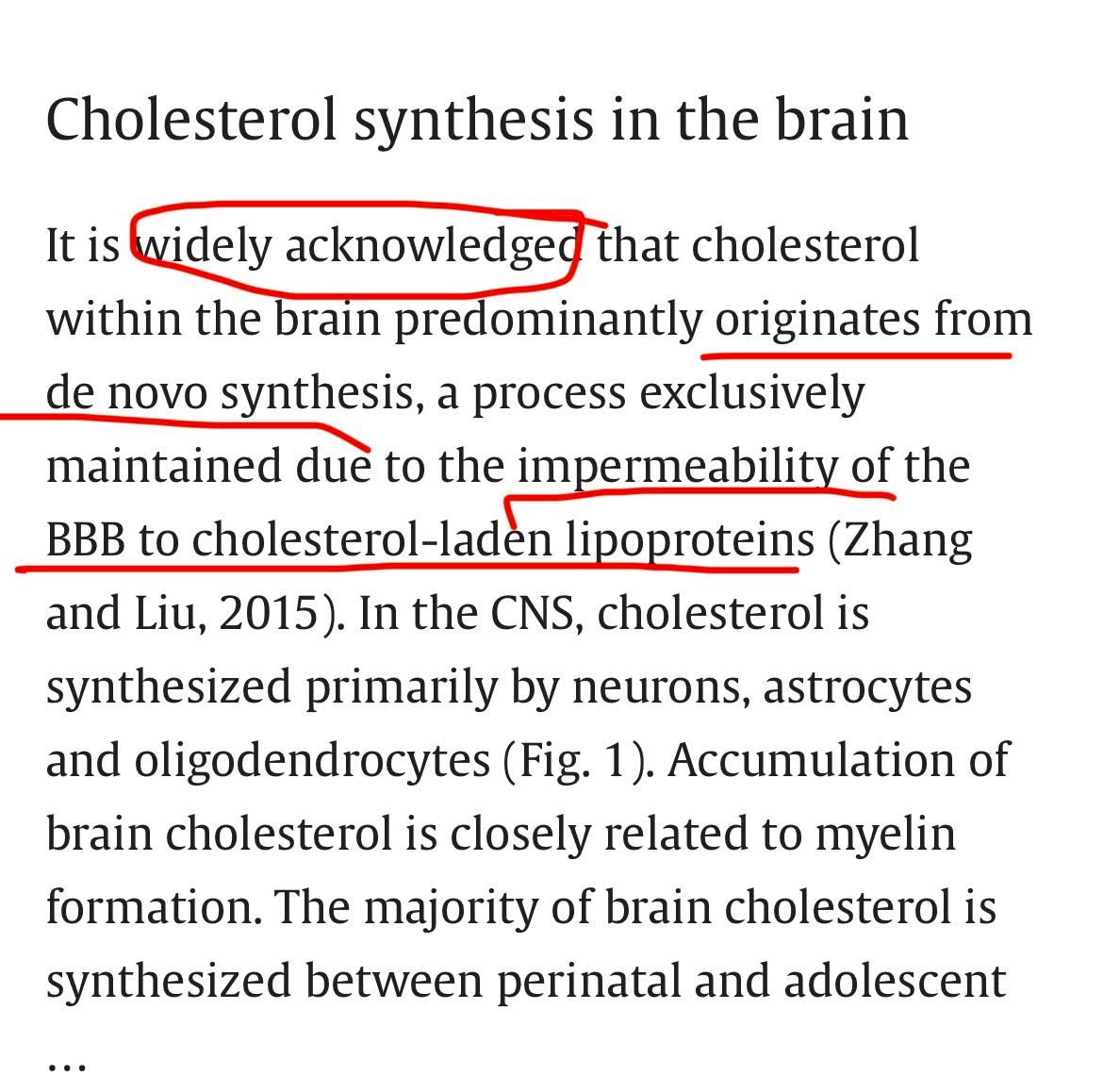
Louis counters the claim that high blood LDL protects against dementia. The 2024 Lancet Commission lists LDL cholesterol as the biggest modifiable dementia risk factor, accounting for 7% of cases among 14 factors that together account for 45%. He adds circulating cholesterol does not cross the blood-brain barrier; the brain makes its own.

Intensive statin reversed atherosclerosis on IVUS in a 2004 Cleveland Clinic-led trial

Dec 23, 2023 · Louis Nervegna ♥ 20 · 💬 40 ↩ 12 Plaque, CAC & CT angiography

Louis shares a Cleveland Clinic video to counter the claim that statins do not reverse plaque. The 2004 trial used intravascular ultrasound (IVUS), which he calls the gold standard for plaque imaging, and showed regression with high-dose statin driving LDL-C down to about 60 mg/dL. He stresses LDL must be very low to achieve regression.

Japan-ACS: pitavastatin and atorvastatin both regressed coronary plaque by about 17-18%

Sep 13, 2025 · Louis Nervegna ♥ 19 · 💬 23 ↩ 21 Plaque, CAC & CT angiography

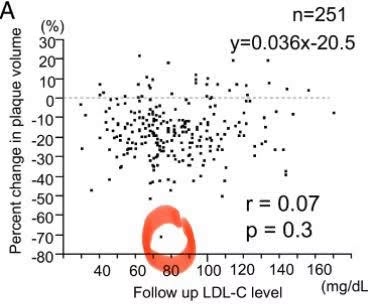
Summary of the Japan-ACS trial, in which over 300 acute coronary syndrome patients were randomized to pitavastatin or atorvastatin and imaged with IVUS. Both statins produced similar, substantial regression of non-culprit plaque volume as LDL fell into the 80s mg/dL, which is one reason statins remain standard care after ACS.

Zero-oil vs olive-oil diet trial was calorie restriction; LDL differences not significant

Sep 26, 2024 · Louis Nervegna ♥ 12 · 💬 42 Fats & oils (saturated fat, seed oils, omega-6, olive oil)

Louis critiques a trial claimed to show a no-oil diet lowers LDL more than a diet with 4 tablespoons of olive oil. He says LDL and ApoB results were not statistically significant overall, and the no-oil group ate only 1338 kcal per day, over 400 kcal less than the olive oil group. He concludes it was a short-term calorie restriction study, not an oil versus no-oil comparison.

Statin absolute risk reduction is small over years but can exceed 10% over a lifetime

Nov 10, 2025 · Louis Nervegna ♥ 20 · 💬 25 ↩ 2 Statins

Louis explains that short statin trials show only 1-2% absolute risk reduction because baseline risk over a few years is only 2-5%, the same as diet and exercise trials. Over a lifetime, with a 20% baseline risk of heart attack, cohort and Mendelian randomization data suggest cumulative reductions of 10% or more.

Keto-CTA (LMHR): very high LDL keto dieters with plaque kept progressing despite lean

Apr 07, 2025 · Louis Nervegna ♥ 14 · 💬 23 ↩ 1 Low-carb, keto & carnivore

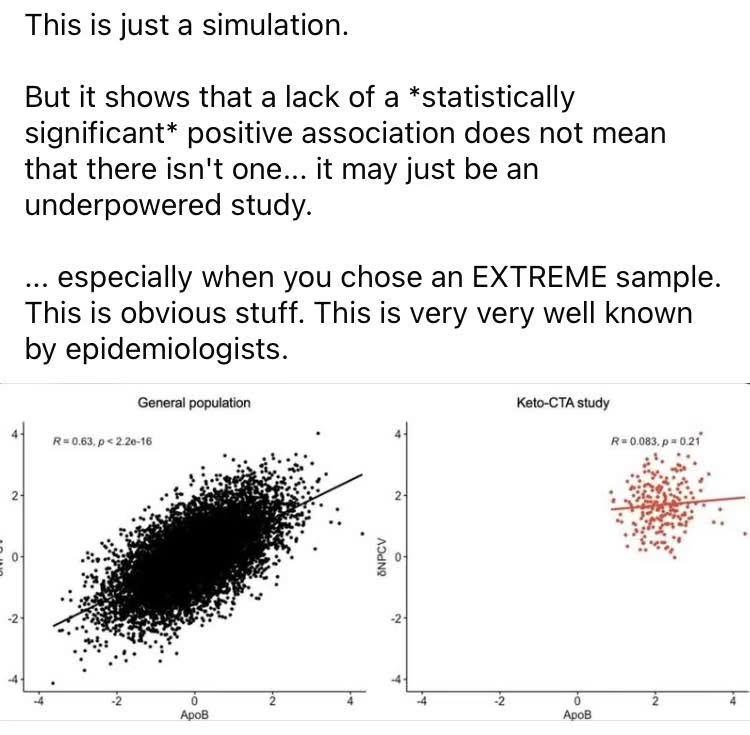
Louis summarizes the newly published one-year prospective Keto-CTA study of lean, metabolically healthy people on keto with very high LDL (mean 254 mg/dL). Those with baseline plaque progressed significantly at similar rates regardless of how high the LDL was, while those with zero plaque were unlikely to develop it within a year. There was no low-LDL comparison group.

Full-fat yogurt lowered ApoB while yogurt with butter raised it in a crossover trial

Apr 02, 2025 · Louis Nervegna ♥ 17 · 💬 24 Meat, eggs & dairy

Louis summarizes a randomized crossover study that matched saturated fat in full-fat yogurt versus low-fat yogurt mixed with butter for 4 weeks each. The butter version raised ApoB while full-fat yogurt lowered it, which the authors attribute to the milk fat globule membrane (MFGM) that stays intact in yogurt but is lost in butter. This may partly explain yogurt's favorable epidemiology.

PCSK9 gene-editing therapy may not be safe yet; patient deaths occurred in a trial

Mar 18, 2025 · Louis Nervegna ♥ 22 · 💬 24 PCSK9, ezetimibe & newer drugs

Louis warns that experimental PCSK9 gene therapies for lowering LDL may be unsafe because people have died in trials, and notes that safe, effective drugs already exist, including PCSK9 inhibitors. He clarifies that the deaths were specific to the gene therapy in that trial, with unclear cause, and were not seen in long PCSK9 inhibitor drug trials.

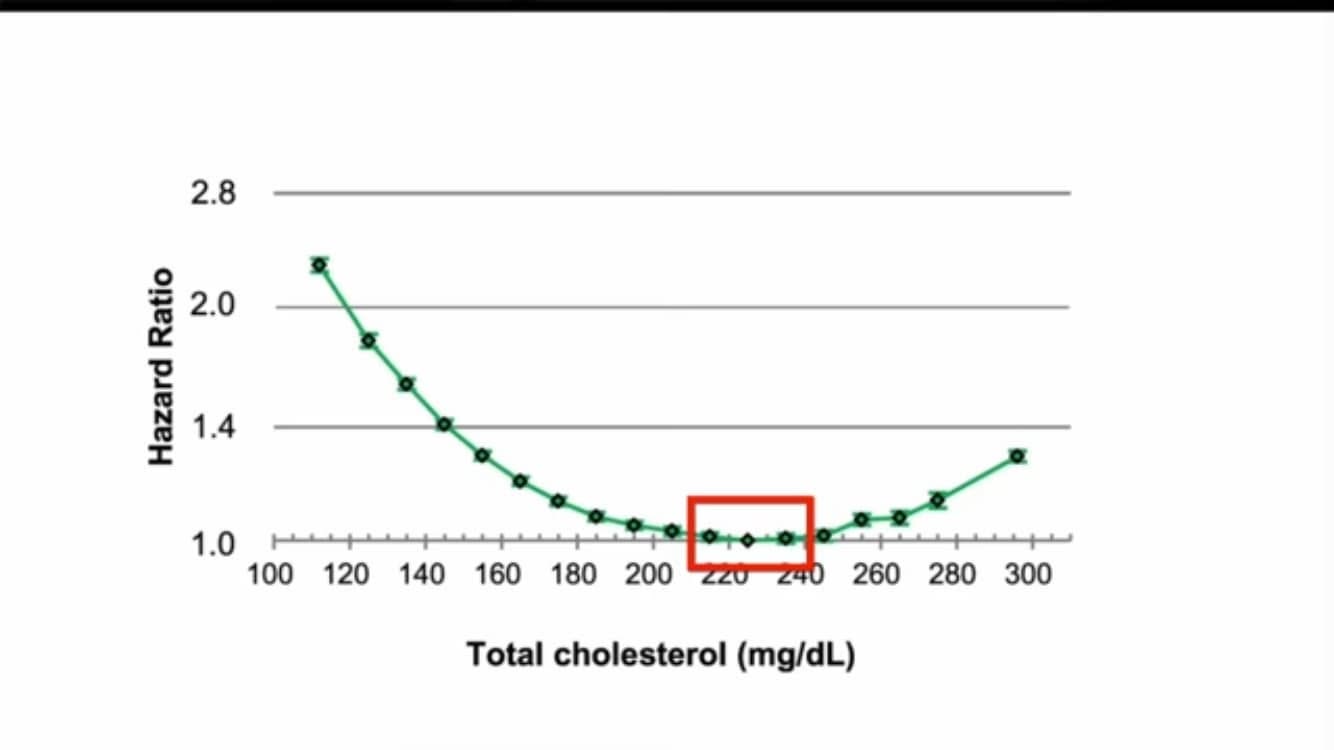
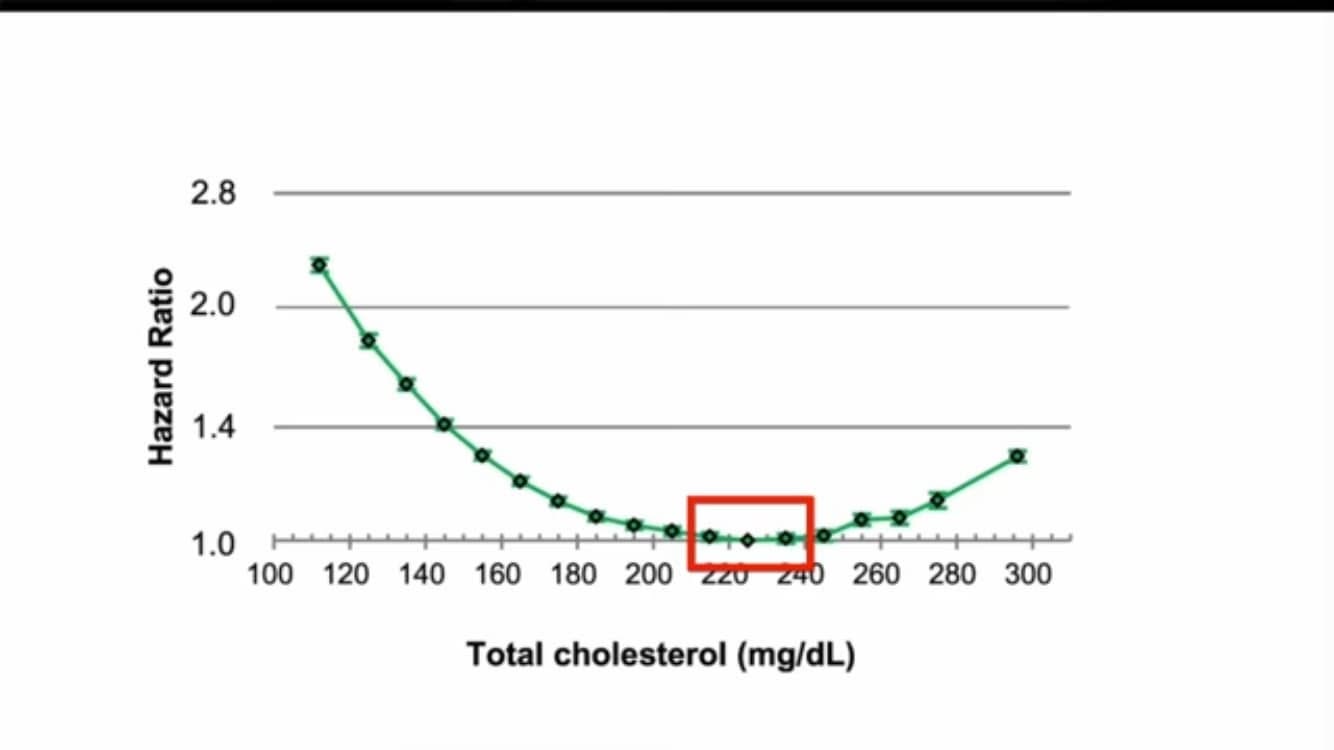
U-shaped mortality curves for cholesterol, BMI, A1C and BP reflect reverse causality

Jun 12, 2024 · Louis Nervegna ♥ 16 · 💬 24

A post explaining that U-shaped hazard curves in observational data appear for cholesterol, BMI, A1C and blood pressure alike, and are explained by reverse causality rather than benefit of high values. Illness lowers LDL, BMI, A1C or blood pressure, creating false appearances of protection.

All 25 statin RCTs through 2016 show benefit: about 40% less MACE per 75 mg/dL LDL drop

May 11, 2025 · Louis Nervegna ♥ 25 · 💬 12 Statins

Louis shares a graph of every statin RCT up to 2016 that showed a significant effect on cardiovascular outcomes, excluding trials under 6 months or with under 50 events. On average, a ~75 mg/dL (1.9 mmol/L) LDL reduction cut heart attack and stroke risk about 40% vs placebo, with primary-prevention trials showing even larger reductions than secondary-prevention trials.

Insulin stimulates liver cholesterol production, linking insulin resistance to high LDL

Jun 25, 2024 · Louis Nervegna ♥ 17 · 💬 22

The post explains that insulin signals the liver to make more cholesterol by keeping HMG-CoA reductase active, one reason insulin resistance and metabolic syndrome go with high cholesterol. It argues protein, especially animal protein, also raises insulin, partly offset by glucagon, and that swapping animal for plant protein lowers cholesterol beyond saturated fat and fiber effects. Much of the protein argument is the poster's inference.

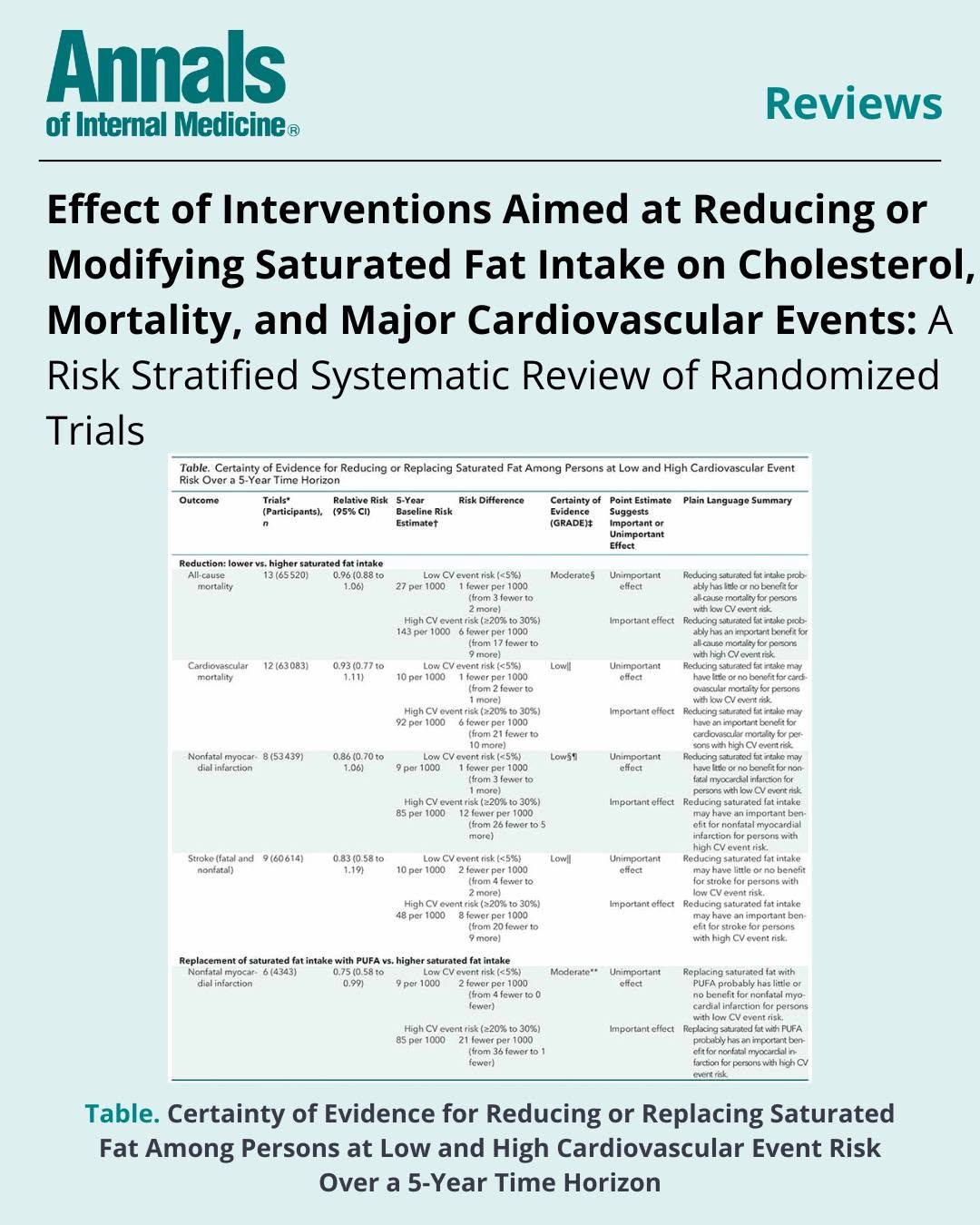
Replacing saturated with polyunsaturated fat cut non-fatal heart attacks 25%

Dec 16, 2025 · Louis Nervegna ♥ 15 · 💬 19 ↩ 1 Fats & oils (saturated fat, seed oils, omega-6, olive oil)

Louis summarizes an Annals of Internal Medicine systematic review of 17 randomized trials with hard endpoints. Replacing saturated fat with polyunsaturated fat lowered non-fatal heart attacks by 25% in higher-risk people over 5 years, similar to a lower-dose statin; other outcomes trended favorably but were not fully significant when the replacement was the general diet.

The longer the lower the better: lifelong LDL lowering and an estimated 60% risk reduction

Nov 20, 2023 · Gokhan Can ♥ 17 · 💬 21 ↩ 2

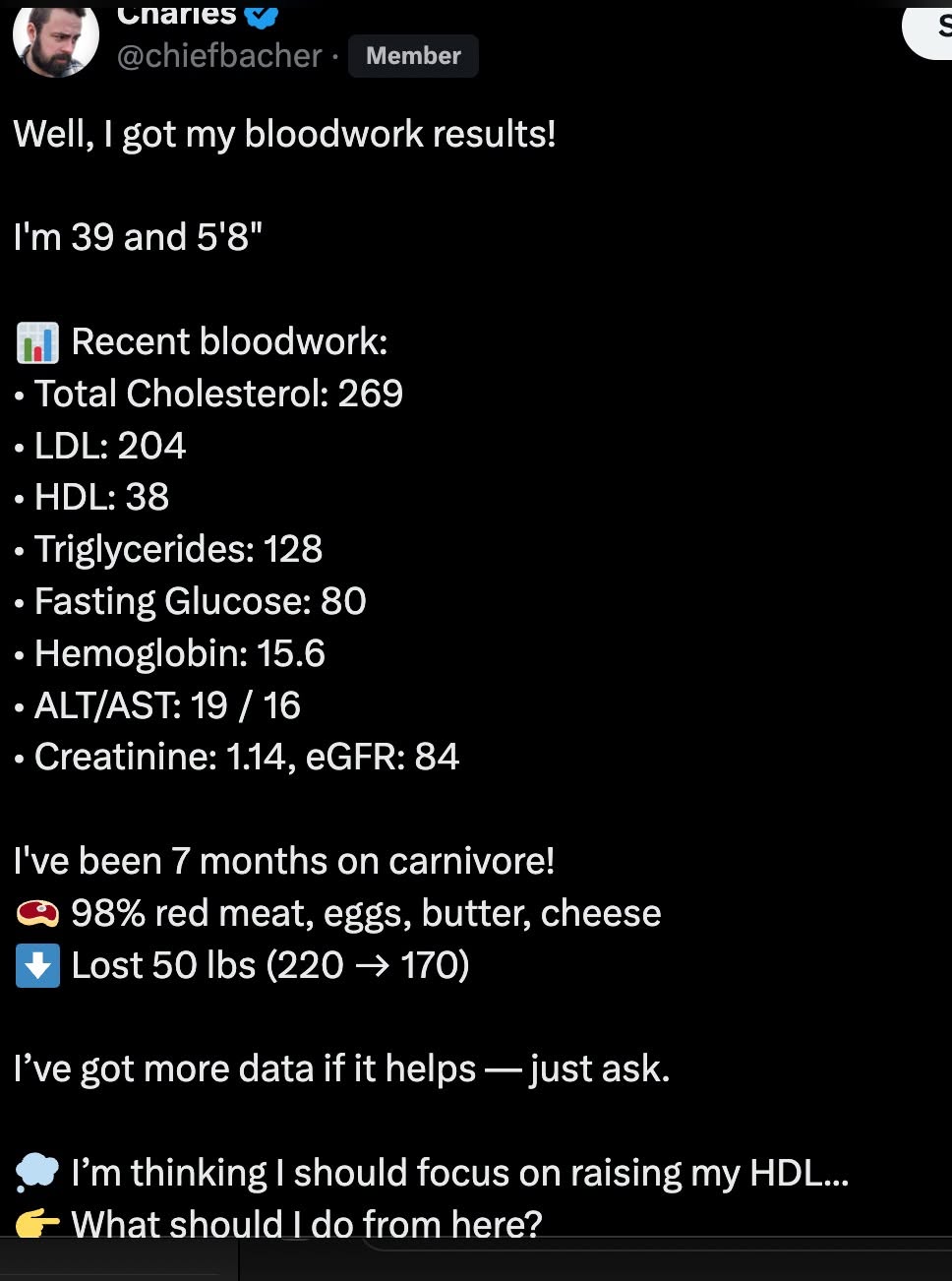
Argues that the benefit of LDL lowering depends on both how much and how long LDL is reduced. The author, one of the group's admins, is betting on very low-dose statins to hold LDL at 70-100 mg/dL, and estimates about 60% lifetime risk reduction from a 70-point lowering sustained for 30 years. The post also cites Charles Grashow as a case of CAC regression.

A 1.1-4.7% absolute risk reduction from statins is large against a 20% lifetime risk

Apr 28, 2024 · Louis Nervegna ♥ 14 · 💬 20 ↩ 2 Statins

Louis explains relative versus absolute risk in statin trials. Statins cut absolute heart attack or stroke risk by 1.1% to 4.7% in roughly 5-year RCTs, which is large against a lifetime risk of about 20%, and sustained over decades could lower lifetime risk toward 10%. He shares a graph combining RCTs (over 20% risk reduction after 5 years), prospective cohorts (over 30% at 12 years) and Mendelian randomization (over 50% at 52 years) for a 39 mg/dL LDL reduction.

Low-carb high-fat diet linked to higher LDL-C, ApoB and 2.18-fold MACE risk at 11.8 years

May 04, 2024 · Louis Nervegna ♥ 11 · 💬 24 Low-carb, keto & carnivore

Louis quotes a JACC: Advances cohort analysis comparing low-carbohydrate high-fat (LCHF) eaters with standard-diet controls. LCHF had significantly higher LDL-C and ApoB, more severe hypercholesterolemia, and more major adverse cardiovascular events at 11.8 years; the association remained after adjustment. People with a high LDL polygenic risk score had the highest LDL-C on LCHF.

Red yeast rice vs statins: lovastatin removed, other monacolins remain, no outcome RCTs

Feb 11, 2024 · Louis Nervegna ♥ 22 · 💬 15 Supplements & vitamins

Louis explains that the FDA forced US red yeast rice products to remove lovastatin (monacolin K), the first statin, approved in 1986 as Mevacor, yet they still lower cholesterol through related monacolins. Some people intolerant of statins tolerate it, but it is unregulated with variable potency and lacks large long-running RCTs proving fewer heart attacks and strokes, so it is a gamble for high-risk people.

Full-fat yogurt lowered ApoB while low-fat yogurt plus butter raised it in a crossover RCT

Jun 07, 2024 · Louis Nervegna ♥ 21 · 💬 15 ↩ 1 Meat, eggs & dairy

Louis summarizes a randomized crossover trial matching saturated fat between full-fat yogurt and low-fat yogurt with added butter. Despite equal saturated fat, the butter arm raised ApoB while full-fat yogurt lowered it, which the study attributes to the milk fat globule membrane (MFGM) that is intact in yogurt but lost in butter. He suggests this may partly explain why yogurt looks better than other dairy in epidemiology.

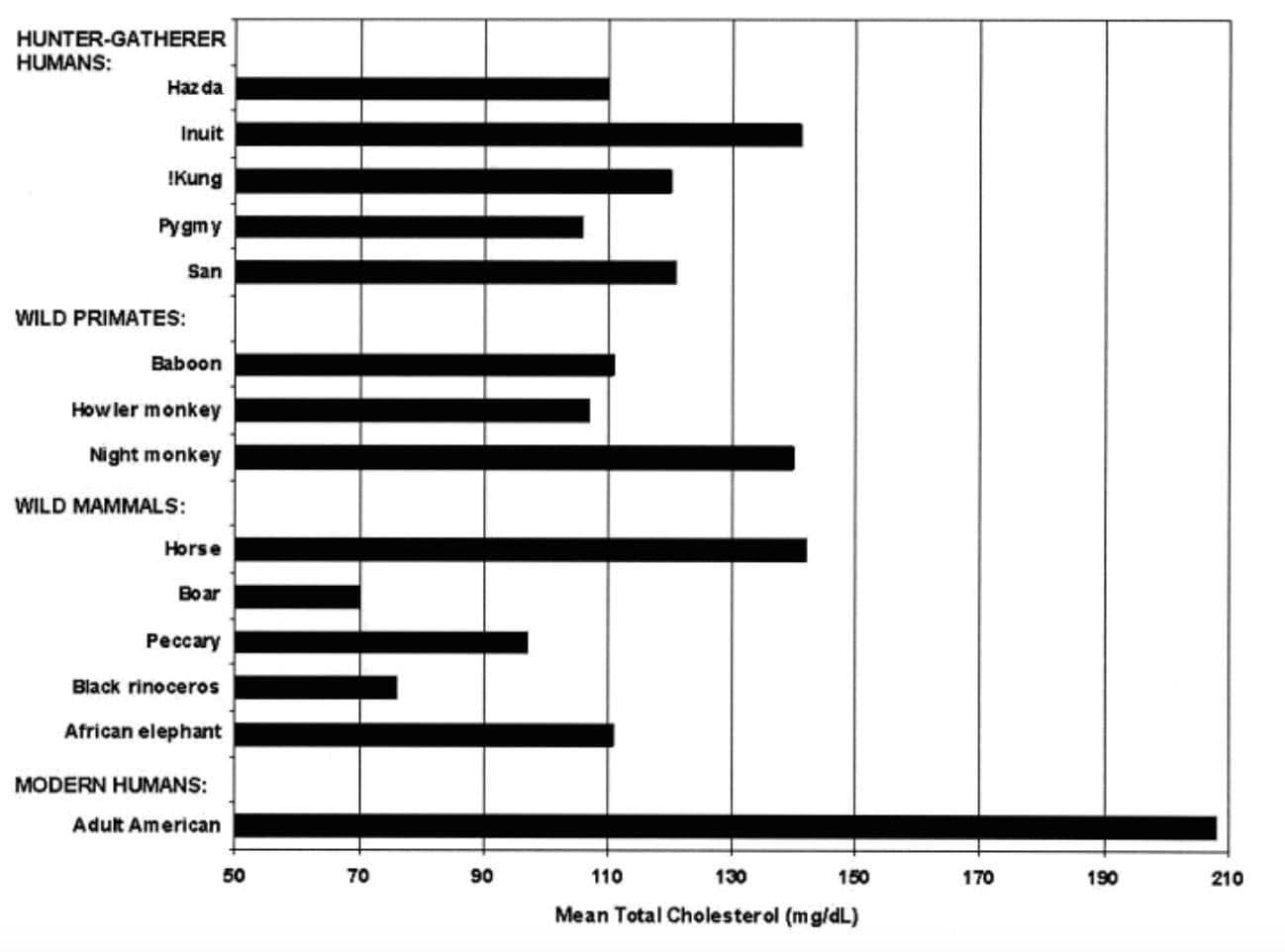
Hunter-gatherers have LDL of 50-70 mg/dL and no atherosclerosis, per a review

Aug 16, 2024 · Louis Nervegna ♥ 15 · 💬 20

The post counters carnivore/keto claims by citing a review stating that native hunter-gatherers, healthy neonates, free-living primates and wild mammals have LDL of 50-70 mg/dL and do not develop atherosclerosis. Per the review, RCTs show events minimized when LDL is below 70 mg/dL with no major safety concerns in that range.

Centenarians' higher LDL reflects survivorship bias, not a benefit of high LDL

Oct 15, 2025 · Louis Nervegna ♥ 8 · 💬 36

Louis explains that centenarians tend to have higher LDL simply because higher LDL is common in the general population; they reach 100 because of protective genes that let them survive despite high LDL. Low LDL is uncommon in Western countries, genetics is the main determinant of reaching 100, and low LDL may delay cardiovascular death but will not by itself get someone to 100.

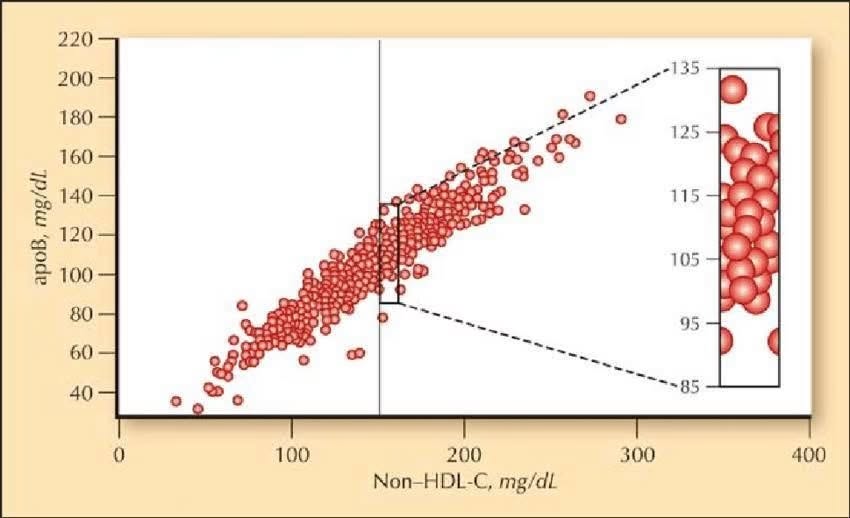
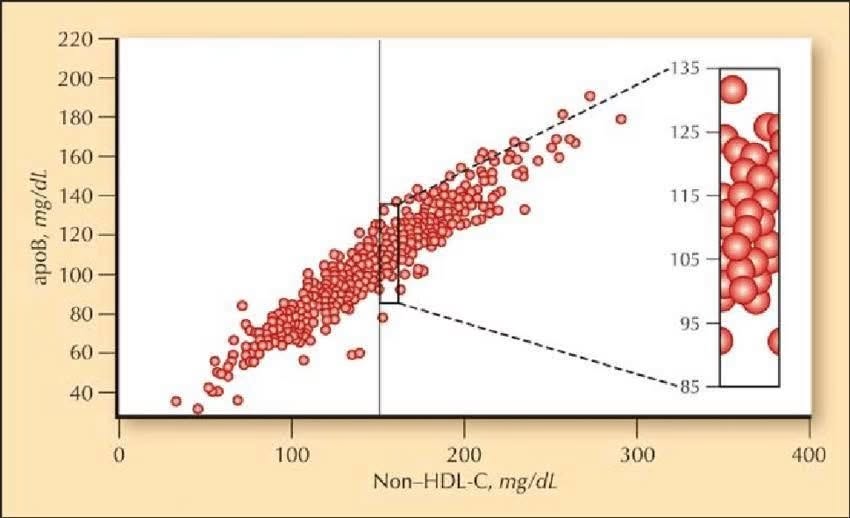
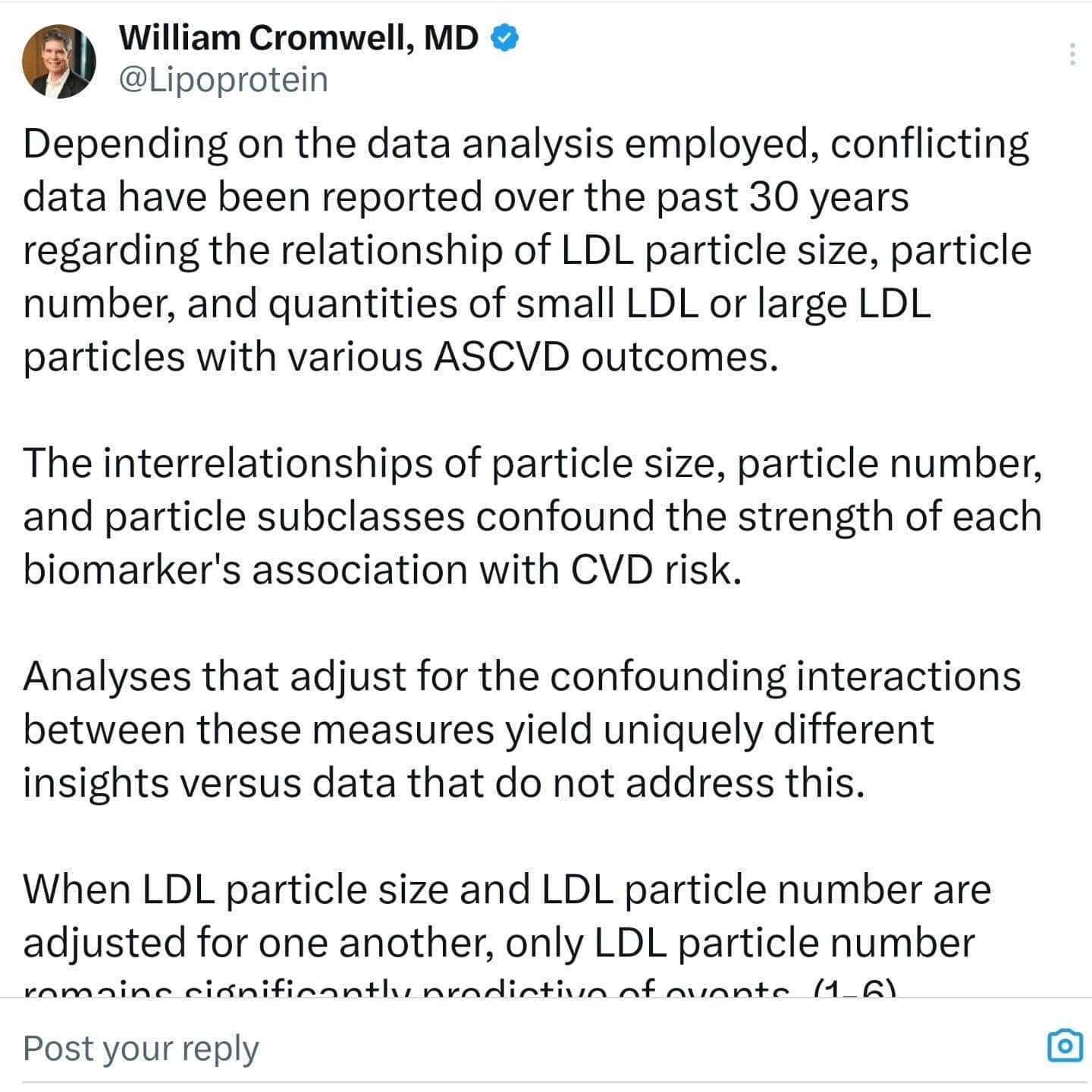
LDL-C vs LDL-P vs ApoB: particle number predicts risk better than cholesterol content

Jul 16, 2024 · Louis Nervegna ♥ 16 · 💬 14 ↩ 1

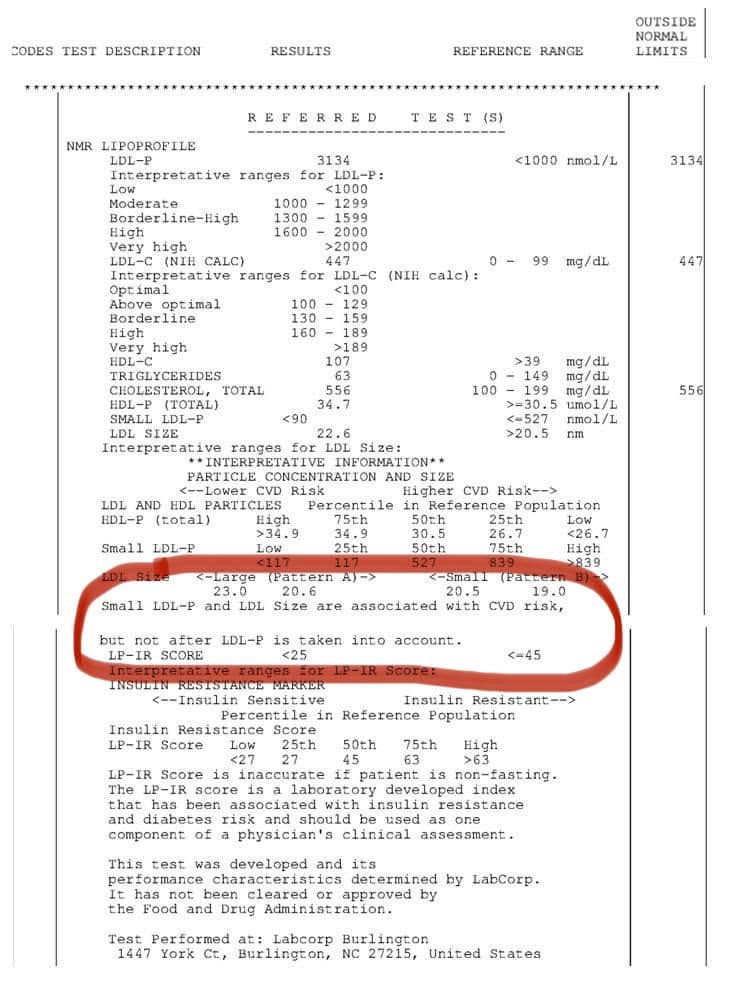
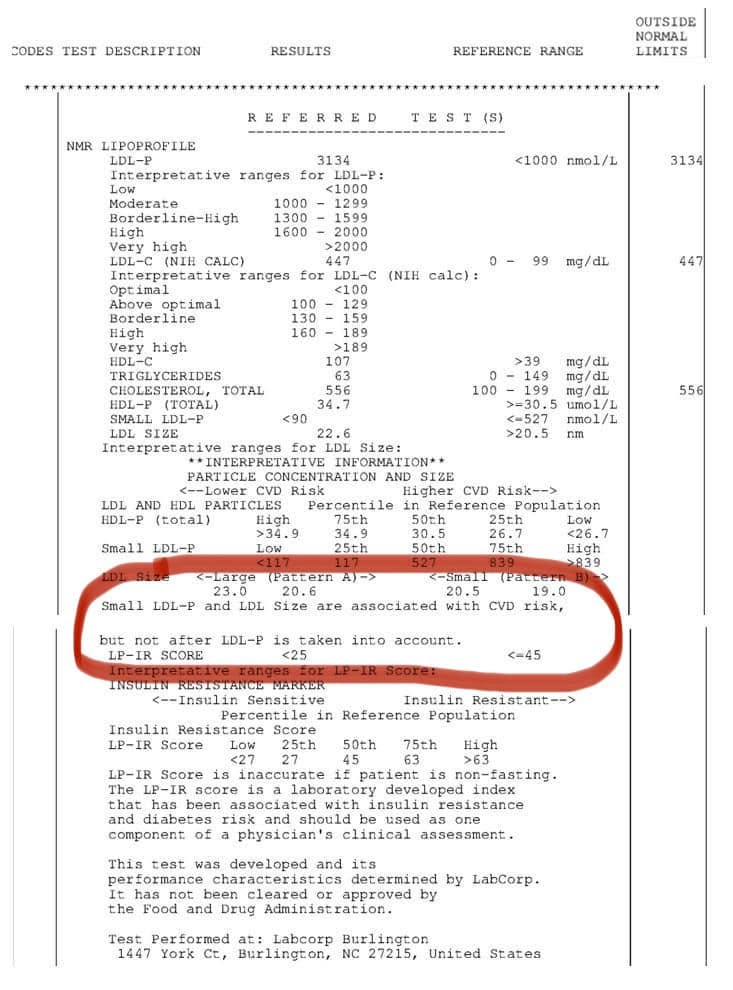
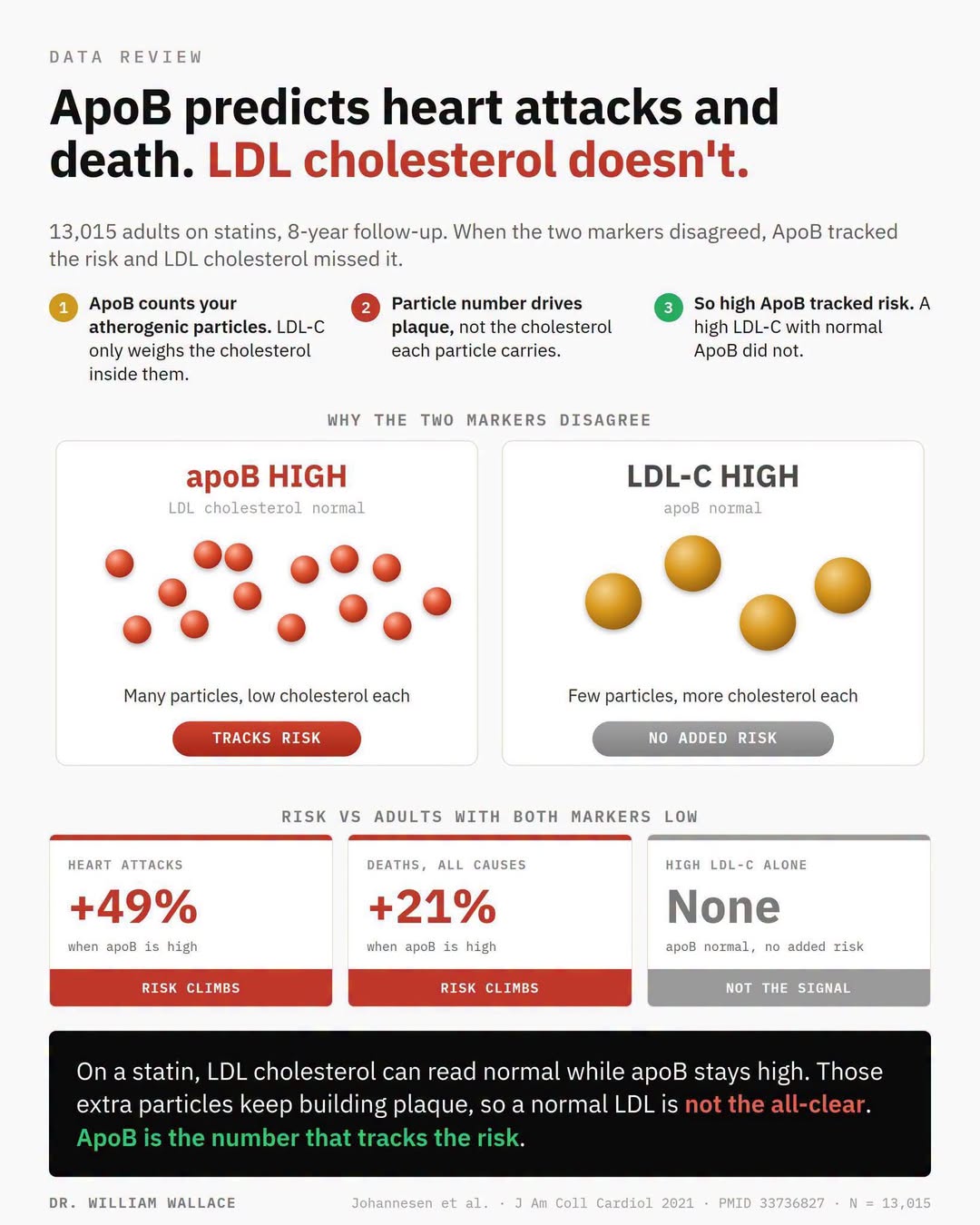
LDL-C measures cholesterol inside LDL particles while LDL-P counts the particles; they can be discordant (low LDL-C with many small particles), and particle number predicts risk better. Particle size adds little once number is accounted for, and ApoB, which counts all atherogenic particles, is the best test.

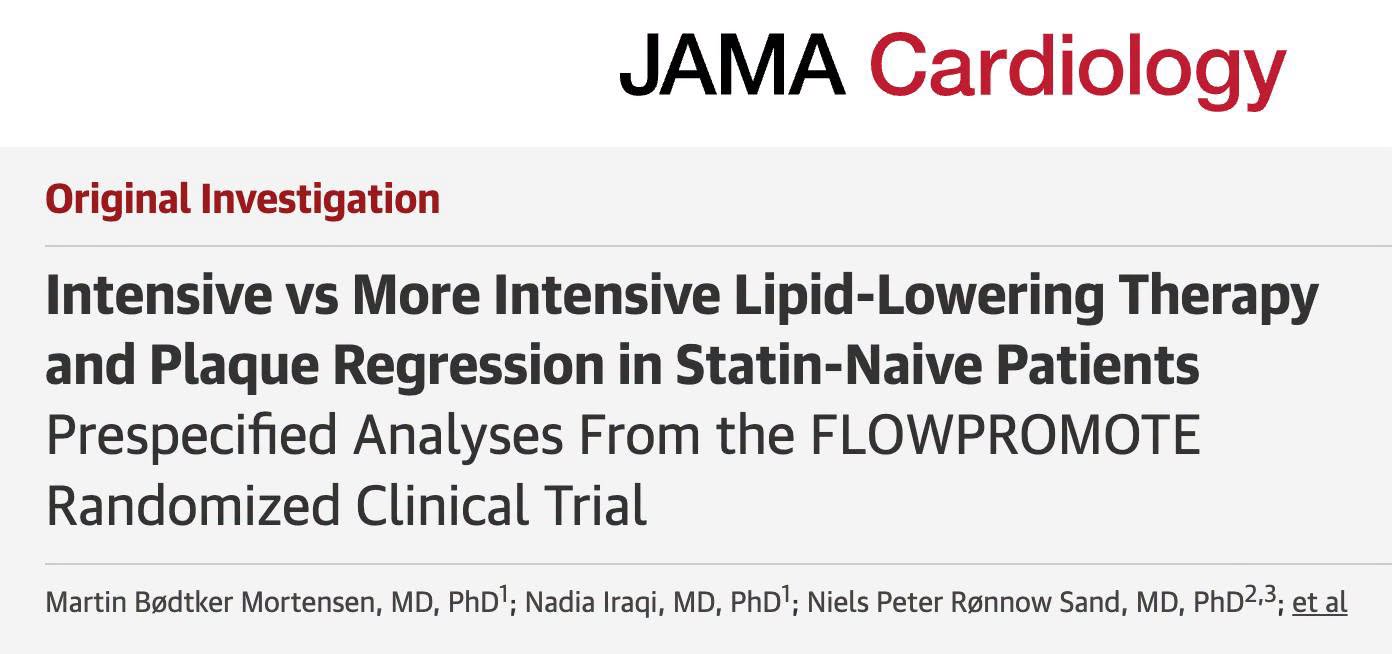
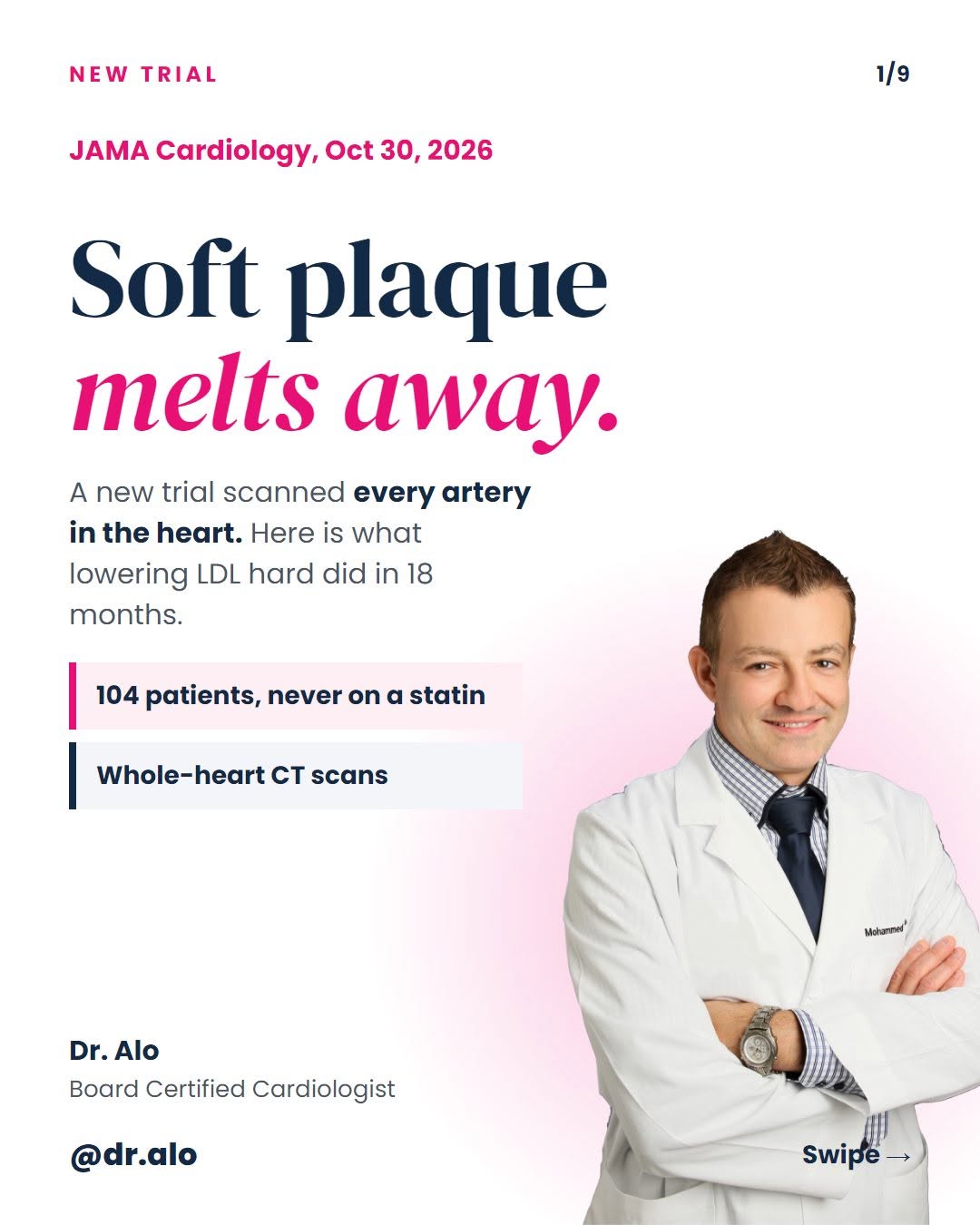
FLOWPROMOTE: LDL near 40 mg/dL on statin plus ezetimibe cut total plaque 21% in 18 months

Oct 31, 2026 · Louis Nervegna ♥ 25 · 💬 11 Plaque, CAC & CT angiography

Louis highlights the randomized FLOWPROMOTE trial in 104 statin-naive patients with coronary artery disease, scanned by CT angiography at baseline, 9 and 18 months. Rosuvastatin 40 mg plus ezetimibe 10 mg lowered LDL-C to 42.5 mg/dL versus 69.5 mg/dL with atorvastatin 40 mg and reduced total plaque volume by about 21%. The shared write-up frames this as evidence that coronary atherosclerosis can be reversed with intensive lipid lowering.

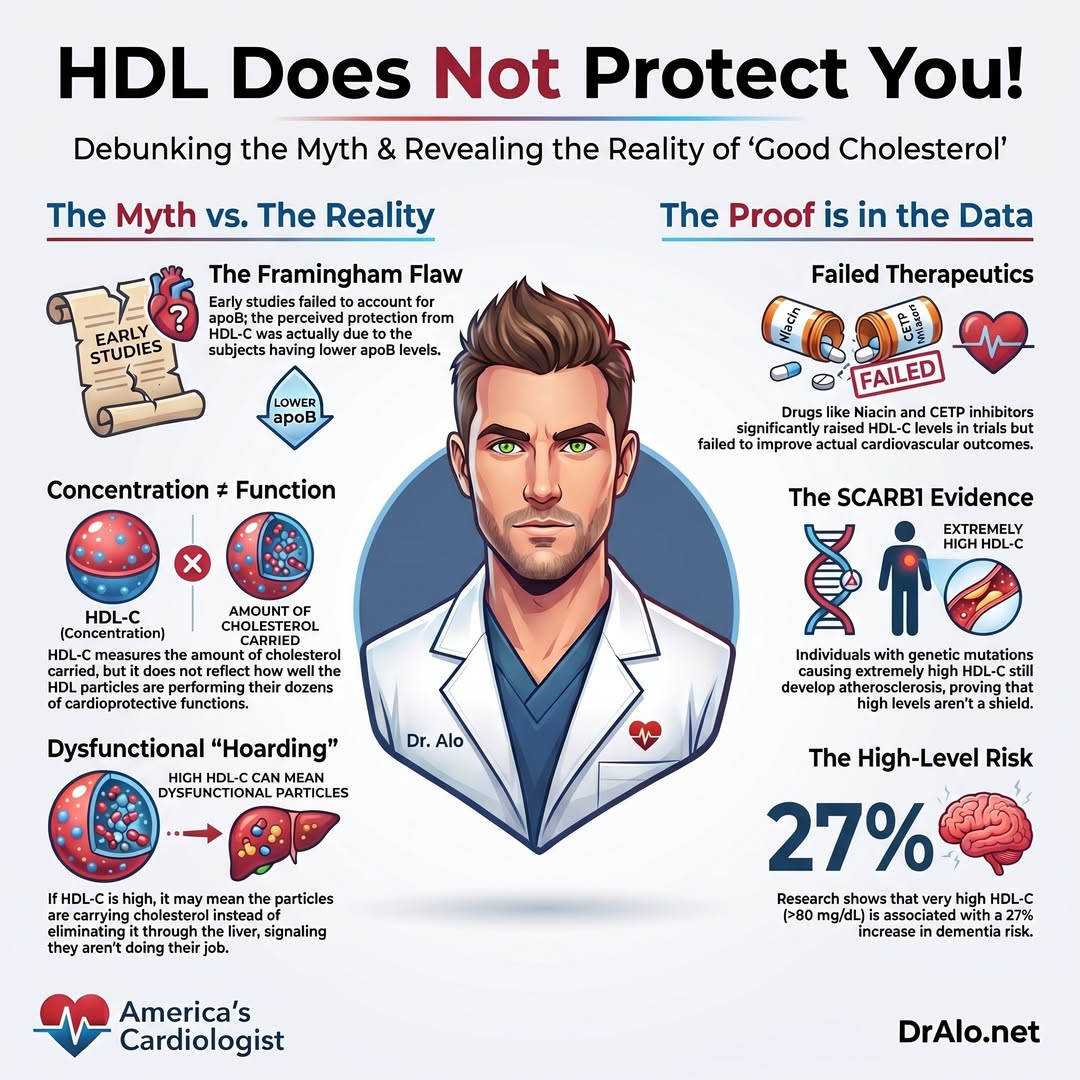
Drugs that raise HDL have repeatedly failed to cut cardiovascular events

Jun 12, 2026 · Louis Nervegna ♥ 13 · 💬 21

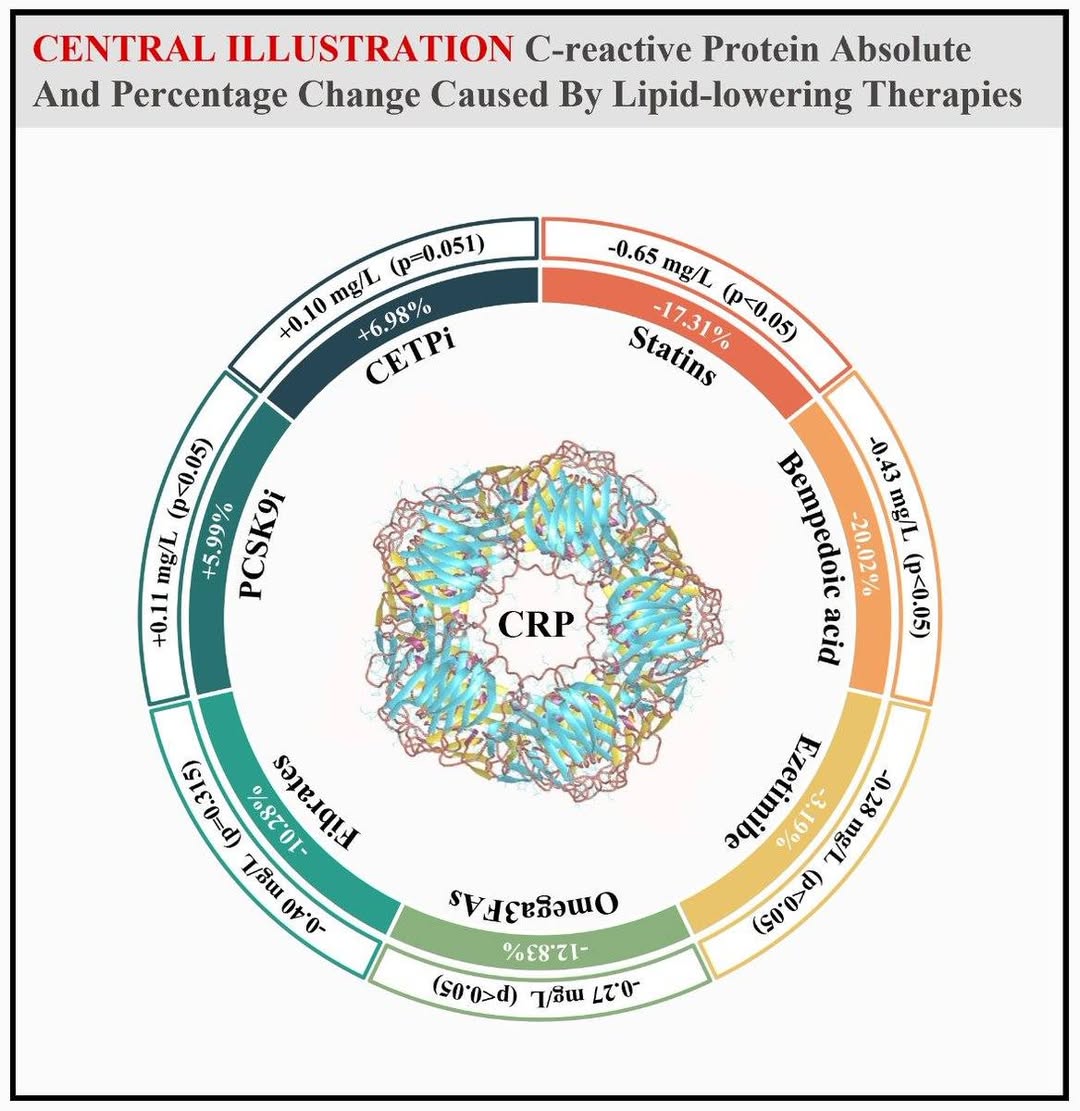
Louis agrees with a shared post that five major trials of HDL-raising drugs (niacin, CETP inhibitors) failed to reduce events. He adds that risk falls only when HDL rises as a side effect of improved insulin sensitivity, and that some HDL subfractions might still prove protective.

18 large RCTs plus cohort and Mendelian data show a straight-line LDL to heart attack link

Sep 06, 2024 · Louis Nervegna ♥ 15 · 💬 17 ↩ 1

Louis presents a chart of 18 large, long-running RCTs in which lowering LDL reduced heart attack and stroke risk. Prospective cohorts (about 12 years) and Mendelian randomization studies (about 52 years) show the same linear relationship, with steeper slope the longer the exposure. The axes show change in LDL and percentage change in risk, not absolute values.

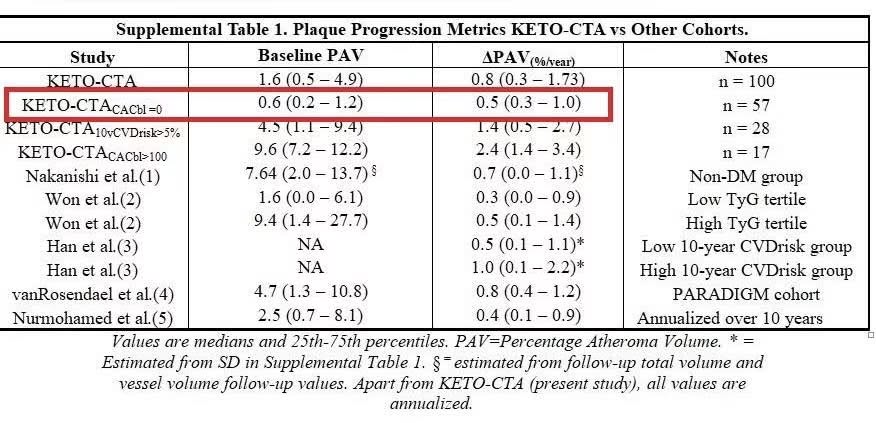
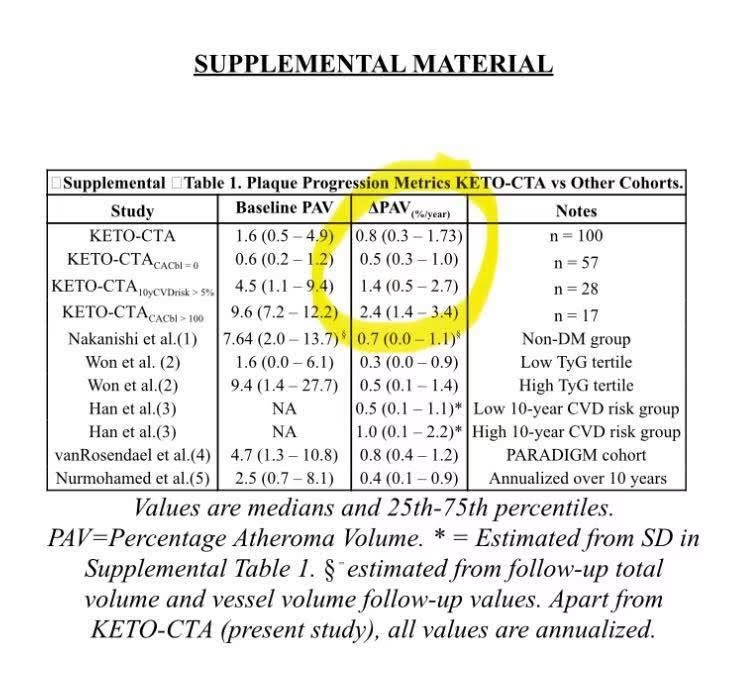
Keto-CTA: LMHR group's 0.8% plaque volume rise exceeded that of typical Western cohorts

Apr 08, 2025 · Louis Nervegna ♥ 18 · 💬 14 Plaque, CAC & CT angiography

Louis expresses disappointment in the LMHR prospective cohort study, in which lean, metabolically healthy keto dieters with very high LDL had total plaque volume rise 0.8% in a year. He cites the paper's supplemental table, which he says shows other Western cohorts progressing less, and notes that no participant showed NCPV regression and that those with the most baseline plaque progressed the most.

Ezetimibe beyond statins: fewer events, no mortality gain in trials, registry benefits

Nov 07, 2024 · Gokhan Can ♥ 11 · 💬 22 PCSK9, ezetimibe & newer drugs

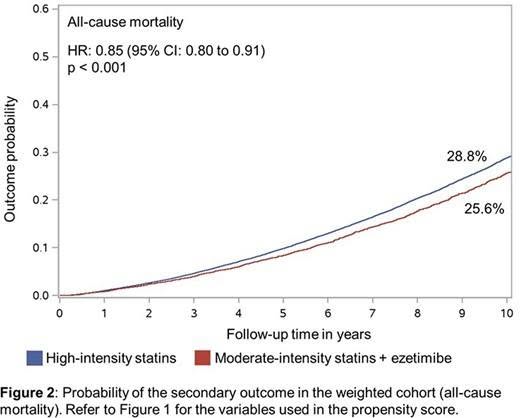
Evidence digest on ezetimibe. A meta-analysis of 15 RCTs (123,785 patients) found add-on lipid lowering cut cardiovascular events 19% versus statins alone but did not improve all-cause mortality. Other data show moderate statin plus ezetimibe matches high-intensity statins, and registry studies hint at lower mortality, with strong LDL-target attainment.

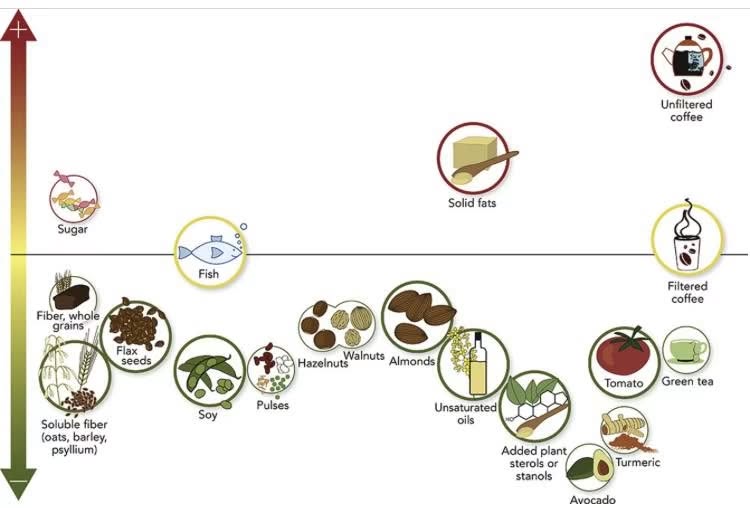
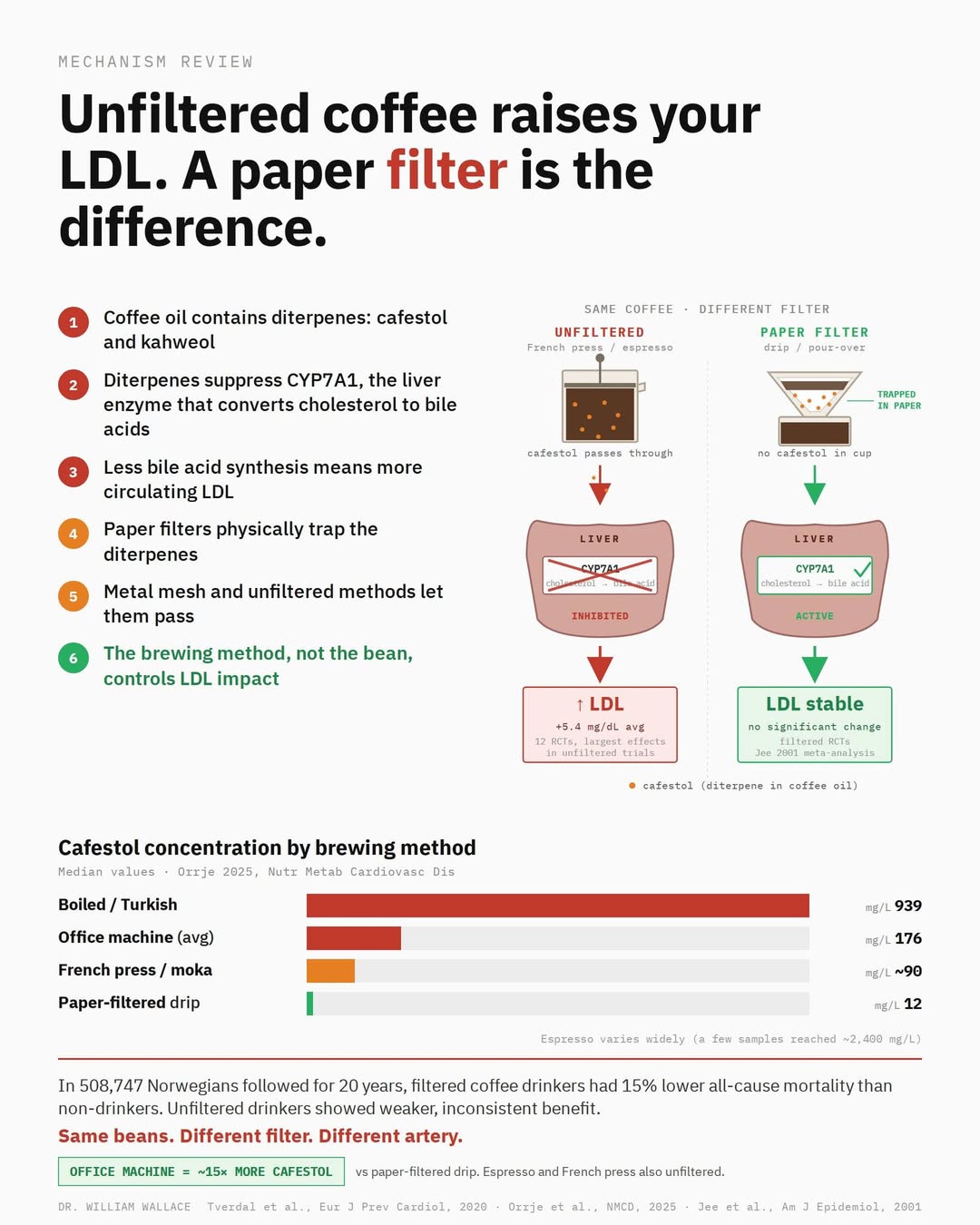
Unfiltered coffee raised LDL 9-14% in a 24-week trial; paper filtering removes the cause

Aug 15, 2026 · Louis Nervegna ♥ 13 · 💬 18 Nuts, fish, coffee, tea, cocoa & other foods

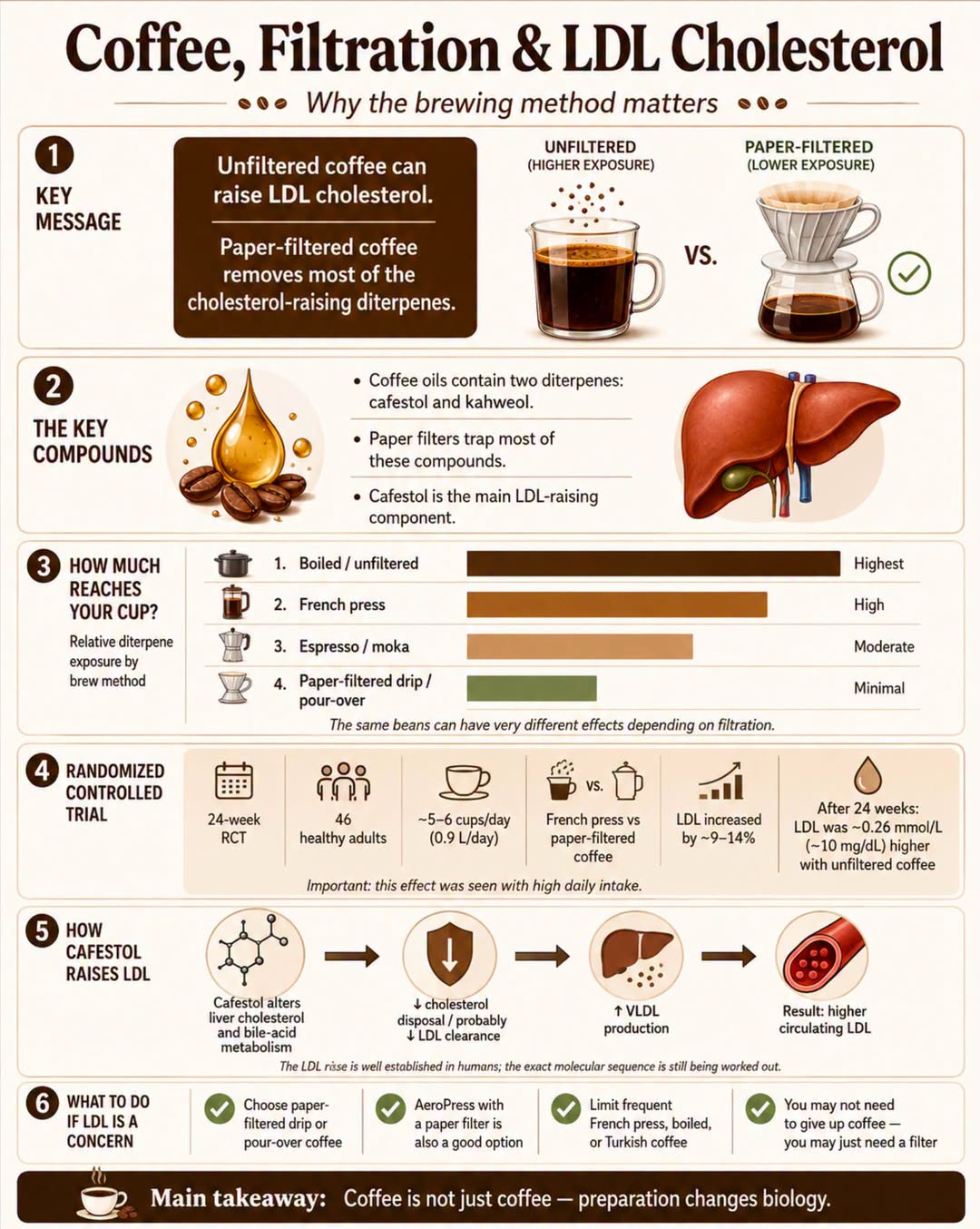
Coffee's diterpenes cafestol and kahweol raise LDL. In a 24-week randomized trial of 46 healthy adults drinking about 0.9 L/day, French-press coffee raised LDL about 0.26 mmol/L (~10 mg/dL) more than paper-filtered coffee. French press, boiled, Turkish, moka and espresso keep more diterpenes; paper filters remove most.

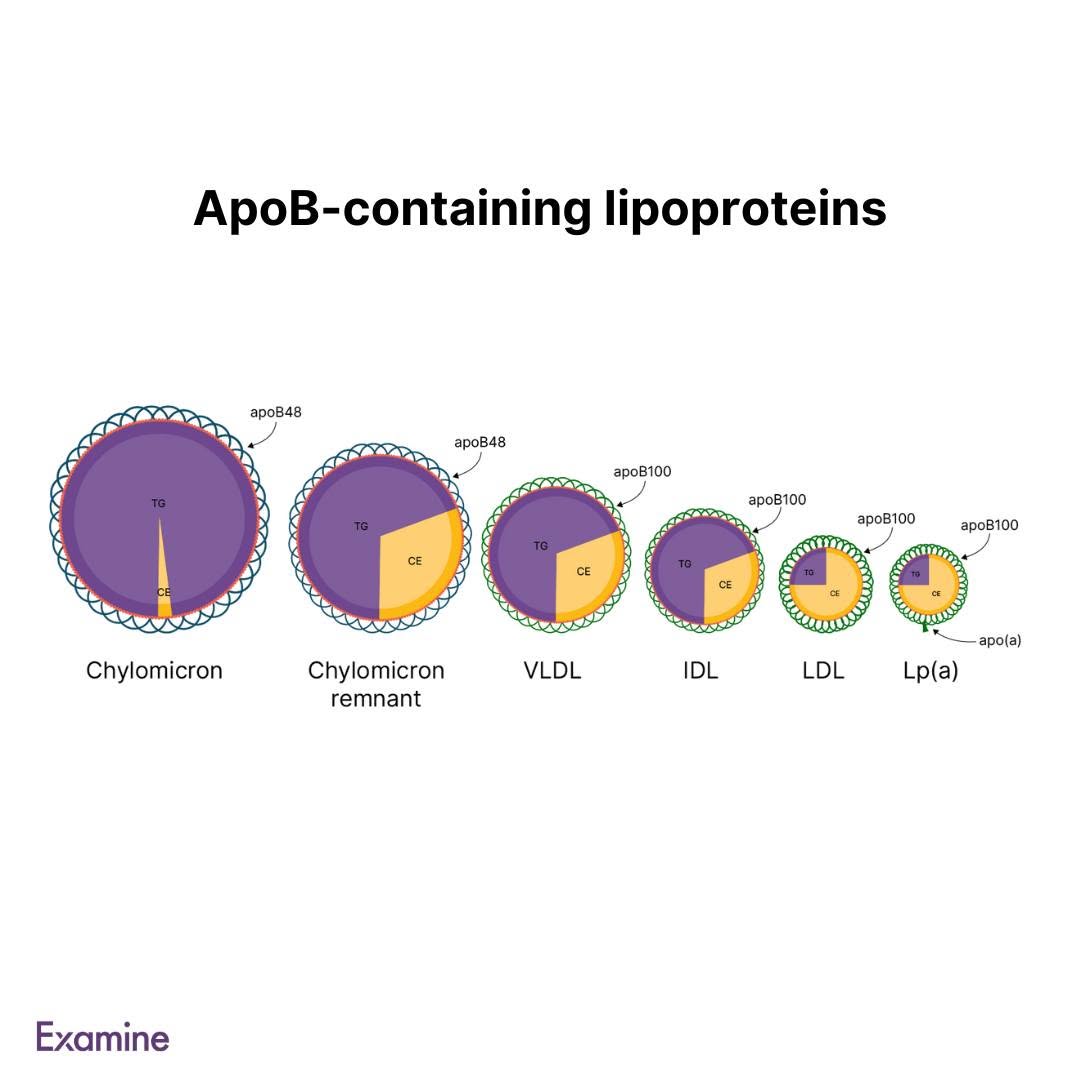
ApoB is the 'sign' on atherogenic particles; LDL and Lp(a) carry LDL cholesterol

Jun 15, 2025 · Louis Nervegna ♥ 21 · 💬 10

Louis extends a boat-and-cargo analogy: LDL, VLDL and Lp(a) particles carry an ApoB tag that makes them atherogenic, and an ApoB test counts the total number of such particles. LDL and Lp(a) particles carry LDL cholesterol, while VLDL carries triglyceride, so LDL-C on a lab report includes cholesterol carried by Lp(a).

The case for LDL lowering: statins, ezetimibe, PCSK9 inhibitors and diet all reduce events

Sep 07, 2024 · Gokhan Can ♥ 15 · 💬 13

Long article arguing skepticism about statins is no longer warranted. About 16 FDA-approved drugs lower LDL, nearly every method of lowering LDL reduces cardiovascular events, and high-dose statins combined with other agents can slow or possibly halt plaque progression. Diet changes such as reducing saturated fat also lower LDL.

Engineered regulatory T cells targeting oxidized LDL cut plaque 70% in mice

Nov 22, 2025 · Gokhan Can ♥ 35 · 💬 7 Inflammation & CRP

Summarises a University of Pennsylvania preclinical study adapting CAR T therapy: Tregs engineered to recognise oxidized LDL dampened arterial inflammation and reduced plaque 70% in cholesterol-prone mice. Unlike cancer CAR-T, the cells suppress rather than destroy; it is a possible add-on for patients at risk despite cholesterol drugs.

Mendelian randomization in 1 million people: statin-like genetics cut dementia risk 76-82%

Nov 06, 2025 · Gokhan Can ♥ 11 · 💬 17 Brain health & dementia

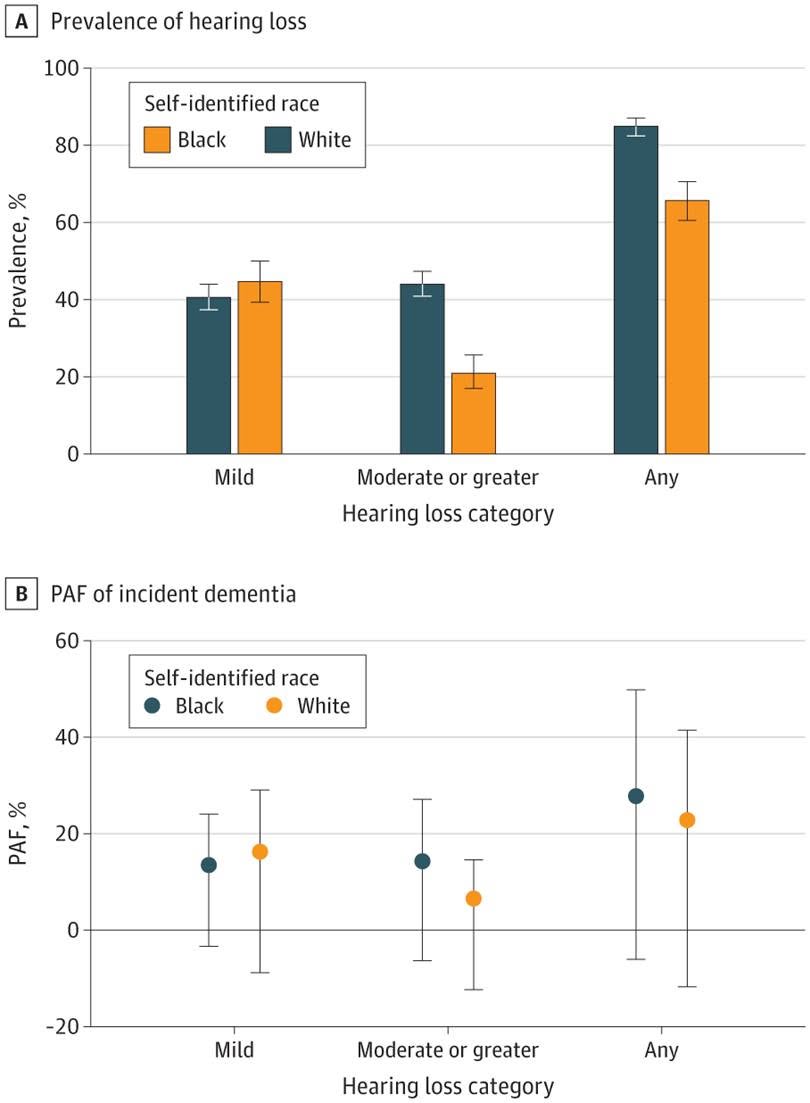
Summarises Dr Stanfield's video on a Mendelian randomization study of over a million people. Short RCTs show no cognitive harm or benefit and observational studies suggest protection; genetic variants mimicking lifelong statin and ezetimibe action were linked to 76-82% relative dementia risk reduction, implying long-term benefit missed by short trials. The video also notes treating hearing loss, vision loss and midlife depression.

Lp(a) and triglycerides are ApoB particles, so accepting them but not LDL is odd

Jul 21, 2024 · Louis Nervegna ♥ 17 · 💬 11

The poster points out that keto and carnivore influencers who deny LDL/ApoB causality but accept Lp(a) and triglycerides as causal are contradicting themselves: Lp(a) and VLDL (measured as triglycerides) are ApoB-tagged particles just like LDL. Most triglyceride is carried by VLDL, which differs little from LDL.

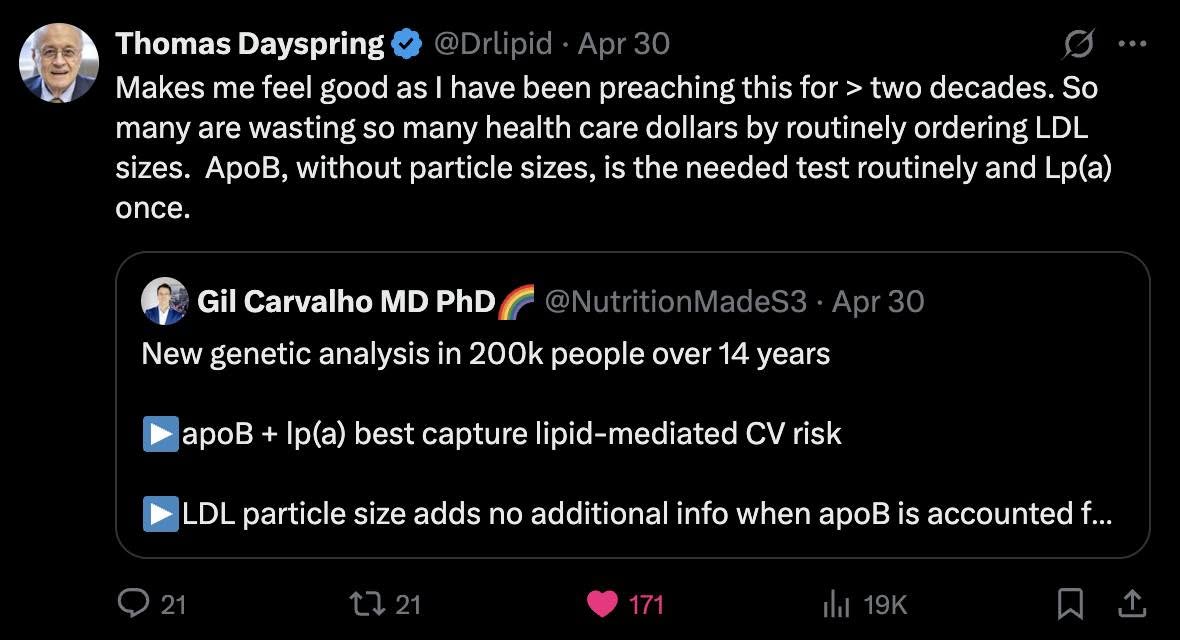
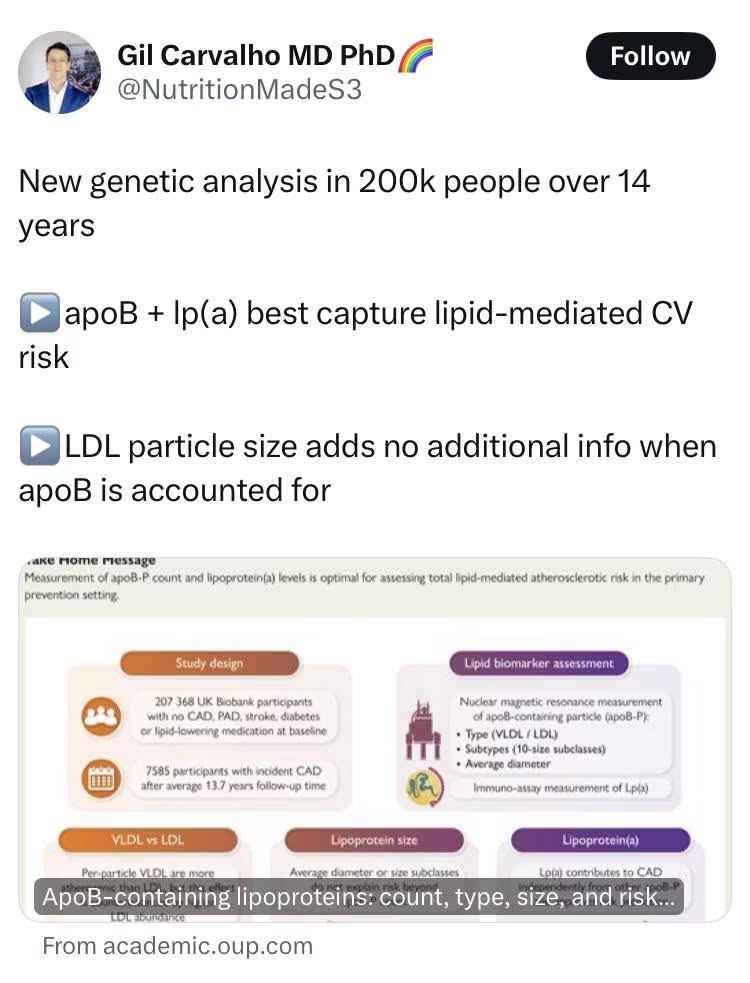
Eur Heart J 2025: apoB particle count, not size or type, drives coronary risk

Apr 30, 2025 · Louis Nervegna ♥ 18 · 💬 10 ↩ 2

Louis shares a 2025 European Heart Journal paper confirming that LDL particle size does not predict coronary risk once apoB is accounted for. The paper concludes lipid-related risk is best reflected by total apoB particle count, largely independent of particle type (VLDL, LDL) or size, with elevated Lp(a) adding risk.

Tissues make their own cholesterol: even very low LDL-C does not impair hormone production

Sep 17, 2026 · Louis Nervegna ♥ 15 · 💬 11

Louis explains that the blood holds only a small fraction of the body's cholesterol and that tissues, including the brain, mostly synthesize what they need. The steroid hormone demand supplied by blood is only tens of milligrams a day, easily met at very low LDL-C. He cites FOURIER and ODYSSEY OUTCOMES, in which LDL-C below 15-20 mg/dL did not impair adrenal or gonadal hormone production or vitamin D.

25 statin RCTs: about 75 mg/dL LDL lowering cut heart attack and stroke roughly 40%

Dec 11, 2024 · Louis Nervegna ♥ 24 · 💬 5 ↩ 9 Statins

Louis presents a graph of 25 statin RCTs through 2016, excluding only very short or small trials. Lowering LDL by about 75 mg/dL reduced MACE by about 40% versus placebo, with larger relative reductions in the 7 primary prevention trials than the 18 secondary prevention ones. More trials since have corroborated this.

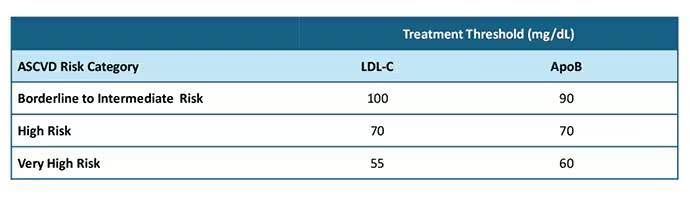
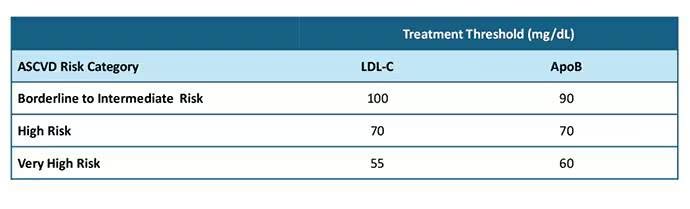
NLA consensus clarifies when to measure ApoB and matching LDL-C thresholds

Dec 13, 2025 · Louis Nervegna ♥ 8 · 💬 19

Shared from Gokhan Can: a summary of the National Lipid Association's Expert Clinical Consensus on apoB testing. ApoB is a more accurate predictor than LDL-C when the two diverge, particularly after statins, and testing is suggested for borderline-risk patients deciding on a statin or those considering intensifying therapy, with apoB thresholds matching LDL-C goals.

Low LDL in cancer patients reflects reverse causality: tumours scavenge LDL

May 25, 2026 · Louis Nervegna ♥ 17 · 💬 12

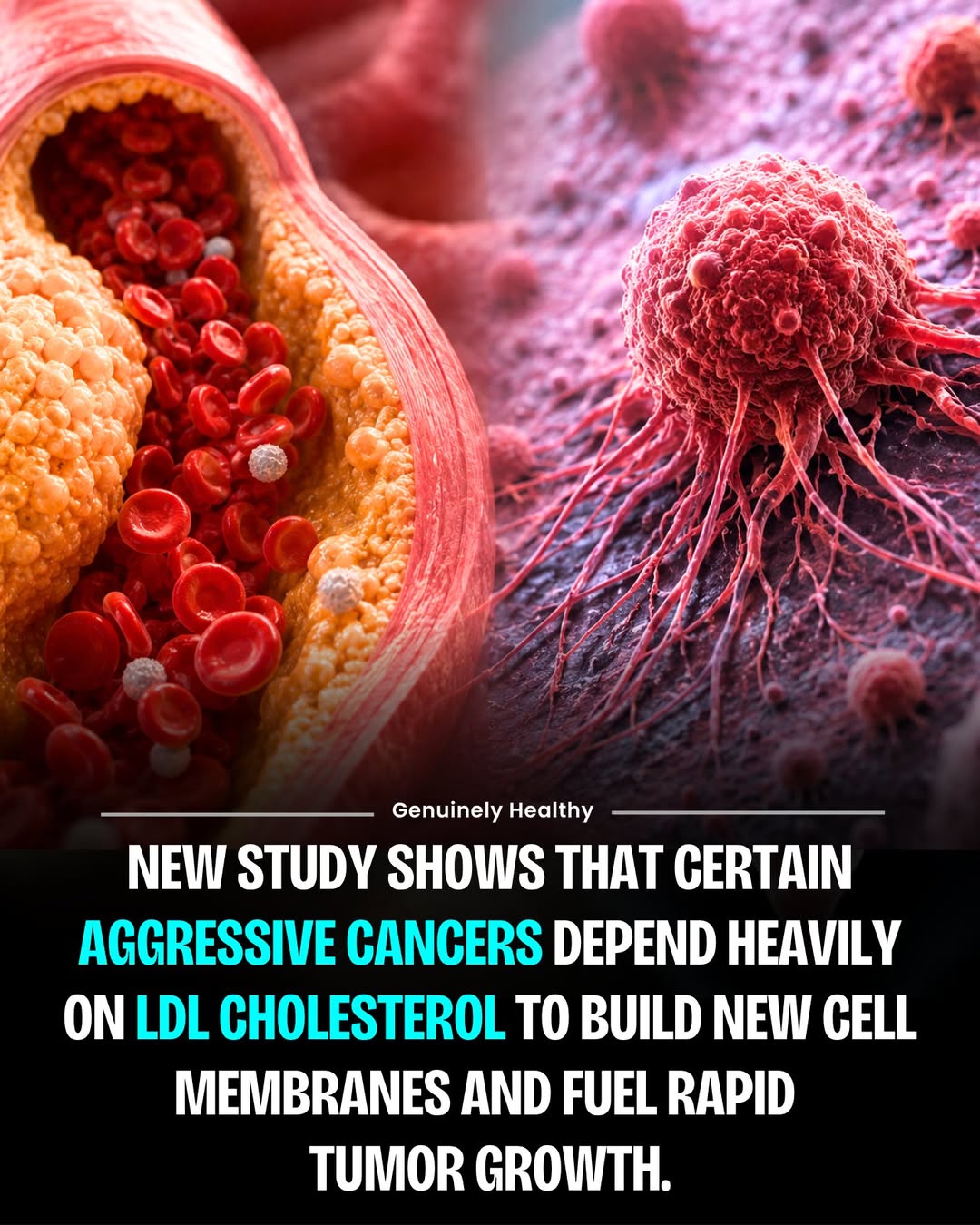
Louis explains that rapidly dividing tumour cells take up circulating LDL, so LDL falls in people with cancer and observational data show low LDL with higher cancer mortality. The shared 2026 Science Advances study found aggressive breast cancers with TP53 mutations depend on cholesterol, and blocking PI5P4K enzymes trapped cholesterol and disrupted mTOR signalling.

Native, non-oxidized LDL alone pushed endothelial cells into an oxidative state

Jun 18, 2026 · Louis Nervegna ♥ 15 · 💬 13

Louis shares a post describing a classic in-vitro study (PMID 7543827) where native LDL made endothelial cells release about four times more superoxide, partly from the enzyme that normally makes nitric oxide, forming peroxynitrite. It is cited to counter claims that LDL is harmless unless oxidized.

VLDL cholesterol (triglycerides / 5) may be more atherogenic than LDL

May 02, 2024 · Louis Nervegna ♥ 13 · 💬 11 ↩ 8

Louis explains that VLDL is an emerging atherosclerosis risk factor and may be more atherogenic than LDL, so people with low LDL but high VLDL may still be at risk. VLDL can be roughly estimated by dividing triglycerides by 5 on a standard lipid panel, which is one reason to watch triglycerides. A normal VLDL is below 30 mg/dL, corresponding to triglycerides below 150 mg/dL, though optimal is likely lower in high-risk people.

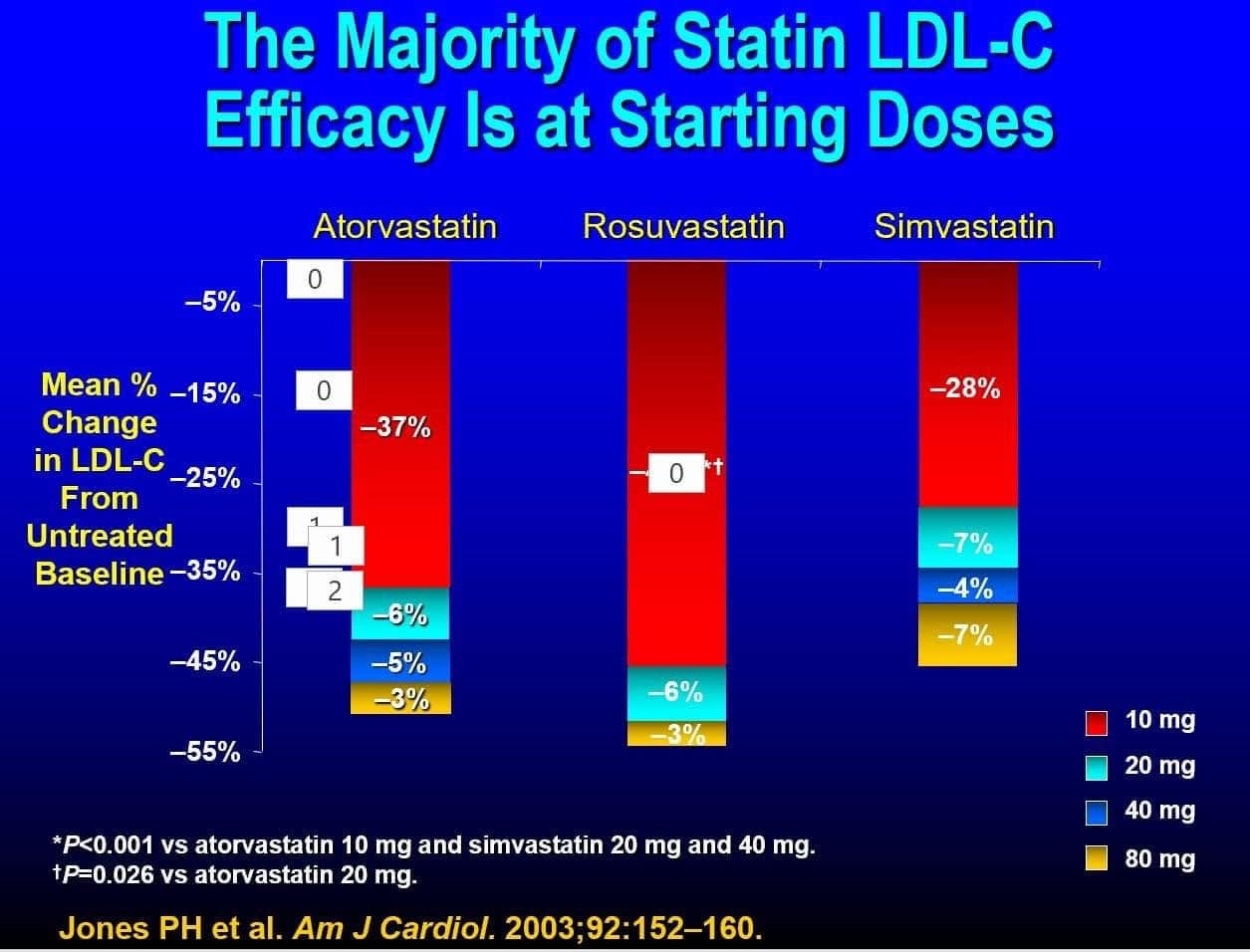
Statin dose-response: the lowest dose gives the biggest percentage LDL drop per mg

Oct 23, 2026 · Louis Nervegna ♥ 19 · 💬 7 Statins

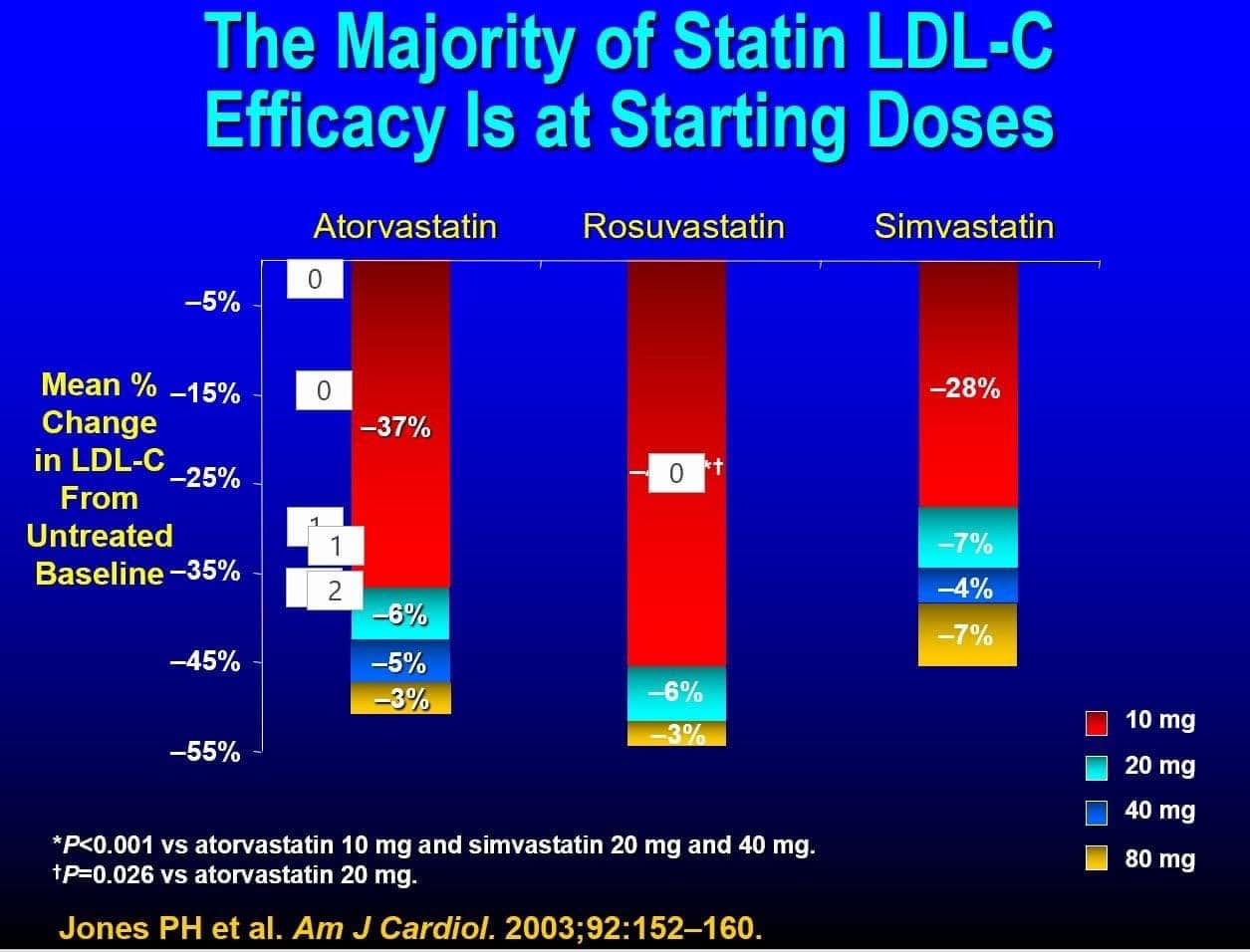
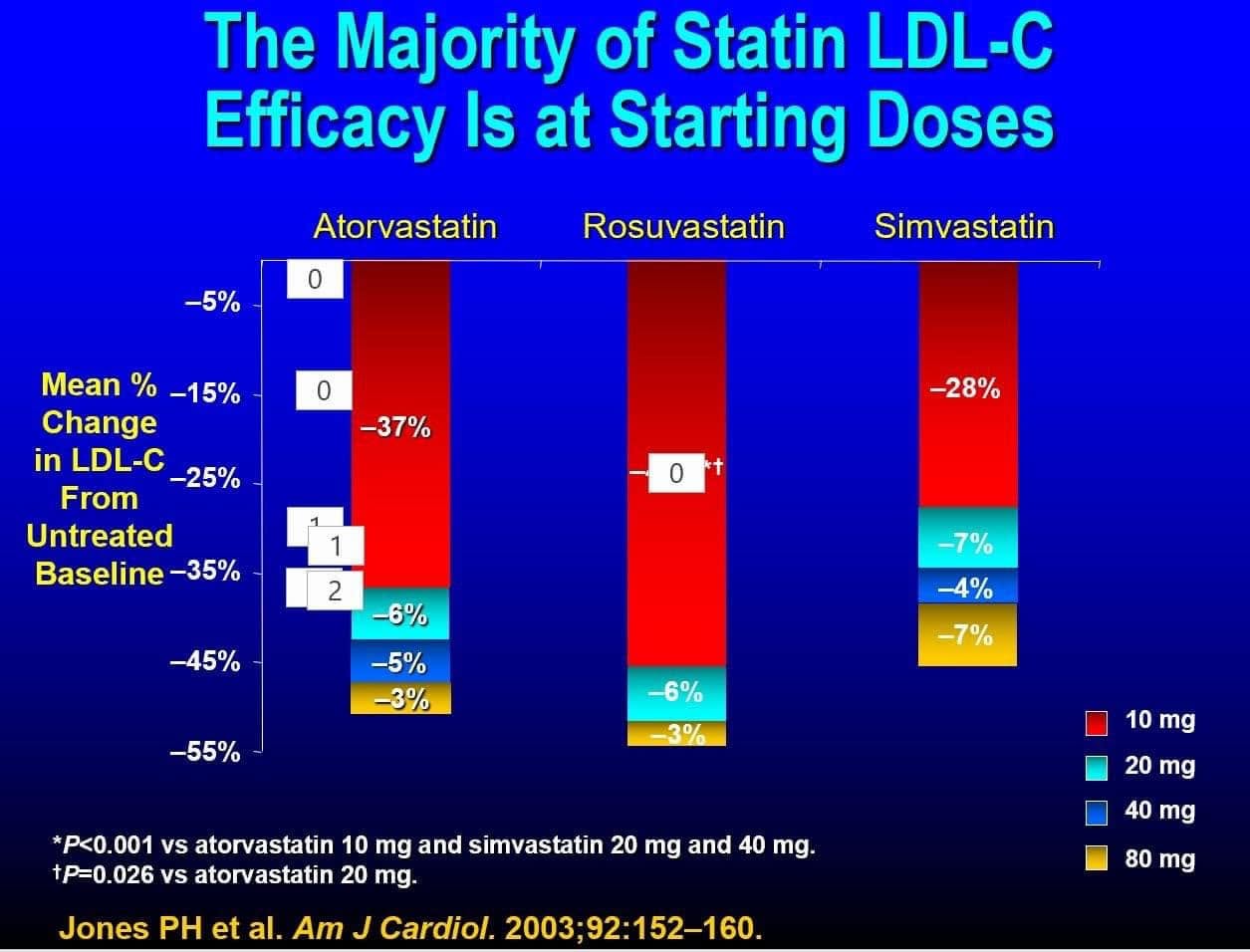
Louis shares a Tom Dayspring slide showing diminishing returns with statin dose: 10 mg atorvastatin lowers LDL about 37%, with 20 mg adding 6%, 40 mg adding 5% and 80 mg adding 3%. His advice is to lower LDL with lifestyle first, then use the lowest effective statin dose, taking a low dose being better than quitting.

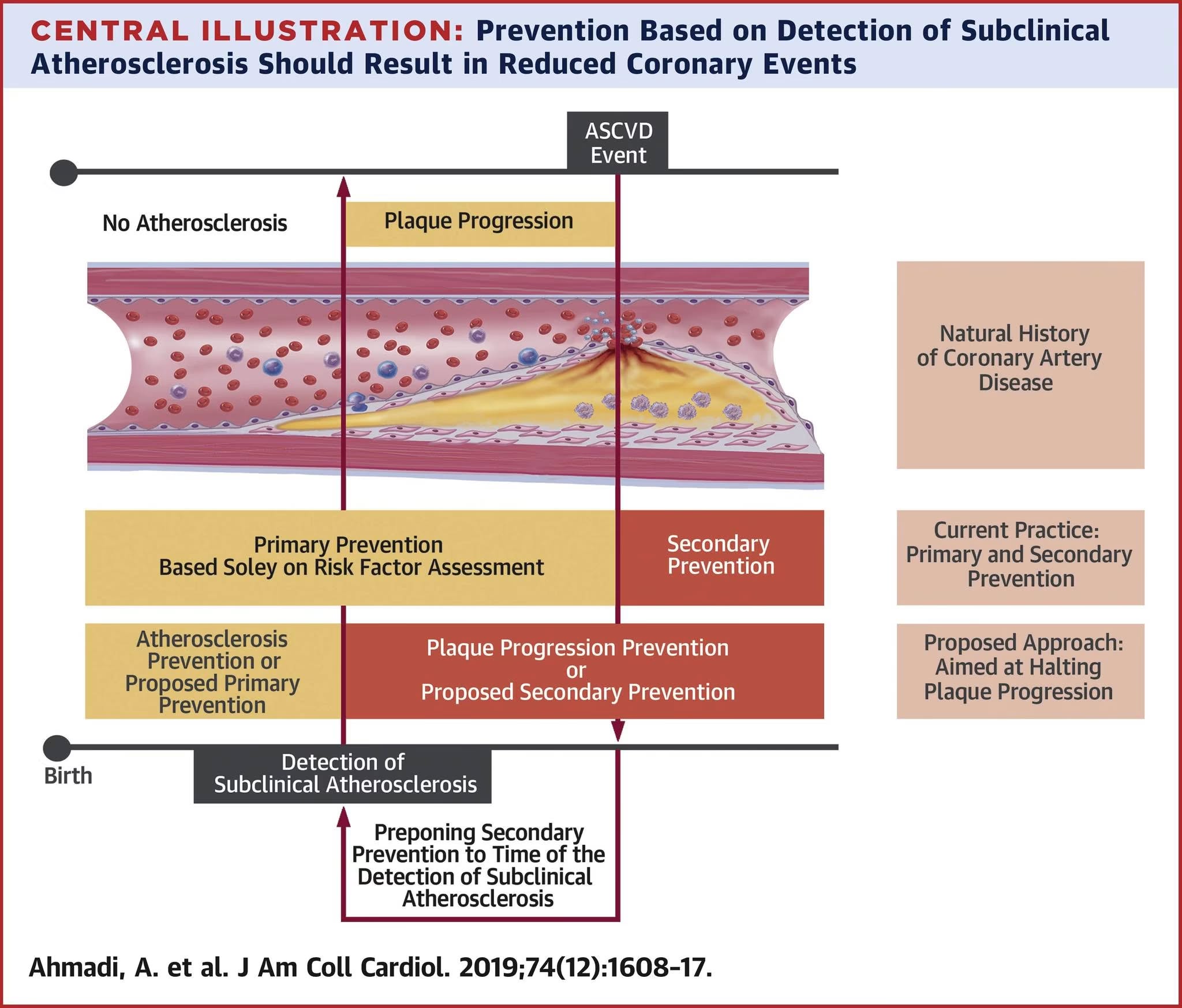
JACC review: rapid plaque progression precedes rupture and LDL below 70 mg/dL halts it

Jan 02, 2026 · Gokhan Can ♥ 19 · 💬 5 Plaque, CAC & CT angiography

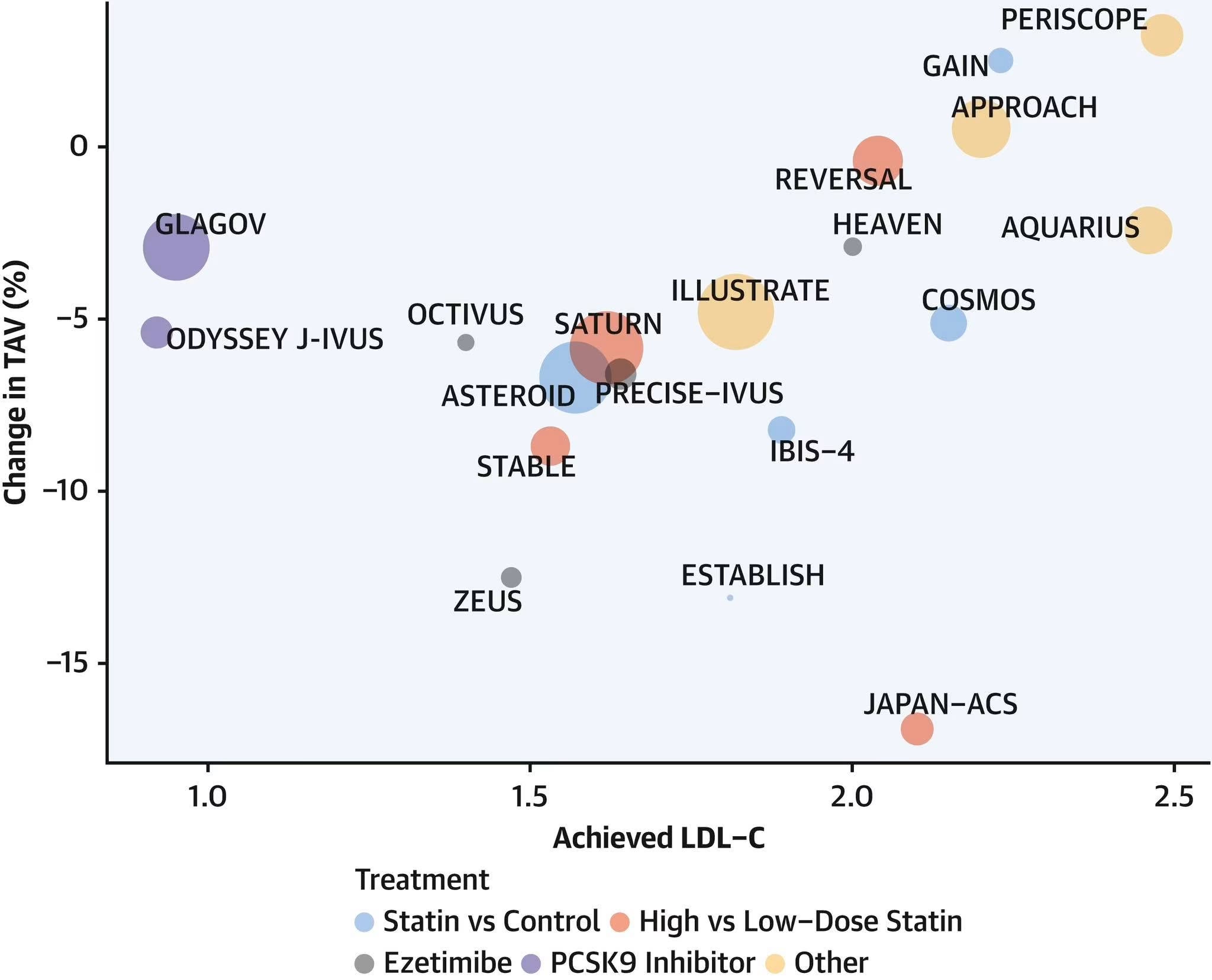
Summarises a 2019 JACC review arguing plaque progression is a necessary, modifiable step between subclinical atherosclerosis and MI, and that preventive strategy should shift toward imaging and aggressively treating subclinical disease. It reports data from PROSPECT, PARADIGM, GLAGOV and PESA showing progression stops at LDL <70 mg/dL and regression needs lower.

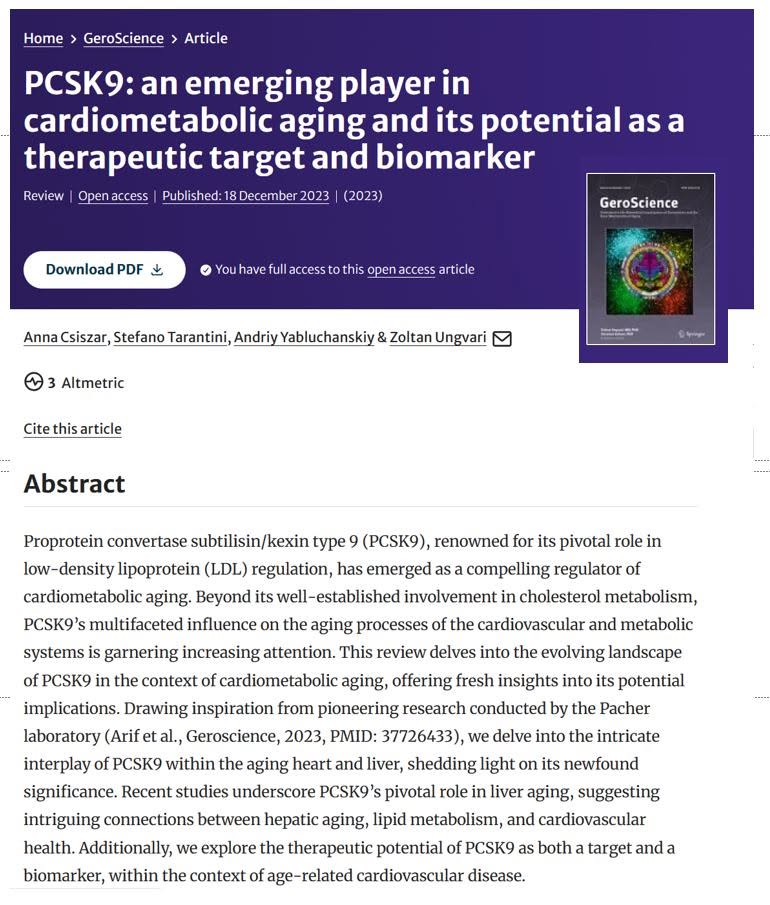
PCSK9 inhibition may slow cardiometabolic aging beyond lowering cholesterol

Dec 21, 2023 · Louis Nervegna ♥ 15 · 💬 11 PCSK9, ezetimibe & newer drugs

Louis highlights a GeroScience open-access review proposing PCSK9 inhibition may ameliorate age-related cardiac and liver pathology, and that a multivariate genome-wide analysis of aging traits identified PCSK9 as a potential drug target for healthy aging. He adds that botanical compounds such as berberine also inhibit PCSK9. The anti-aging role remains an emerging research area.

Circulating oxidized LDL tests do not predict CVD risk once ApoB is accounted for

Sep 12, 2024 · Louis Nervegna ♥ 10 · 💬 12

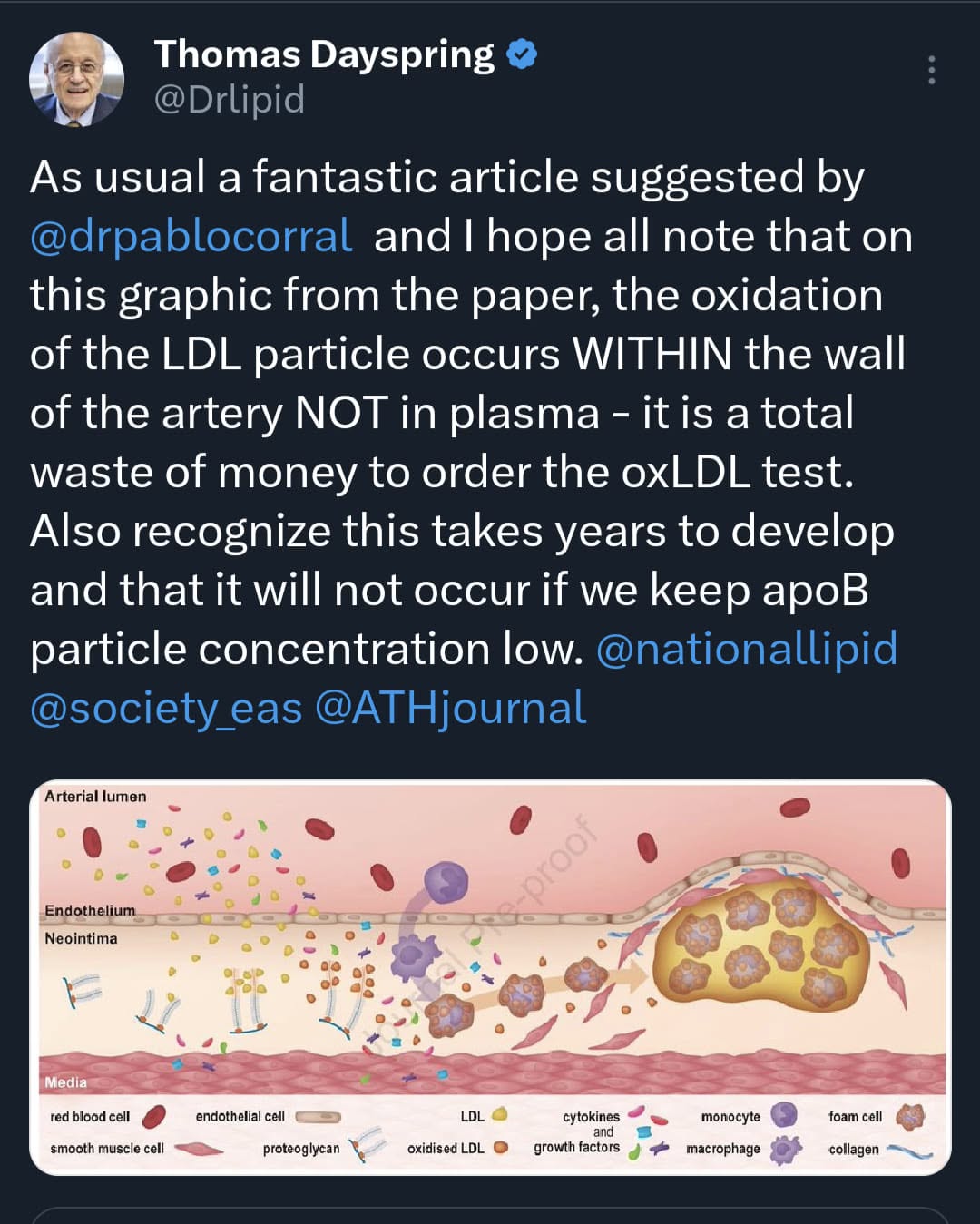
Louis explains that blood oxidized LDL tests do not predict cardiovascular disease after adjusting for total ApoB particles, because LDL oxidation that matters occurs within the artery wall, which no commercial test measures. He adds that interventions preventing oxidation of circulating LDL have failed in randomized trials.

Blood carries only 2-5% of body cholesterol; cells and the brain make their own

May 30, 2026 · Louis Nervegna ♥ 22 · 💬 5

Shared breakdown of why blood LDL cholesterol is not a measure of what cells need. The body holds roughly 120-150 g of cholesterol but only 3-7 g is in blood, and the brain makes all of its own. One cited model suggests only about 50-90 mg/dL total blood cholesterol is needed to keep transport functional, versus a US average near 200.

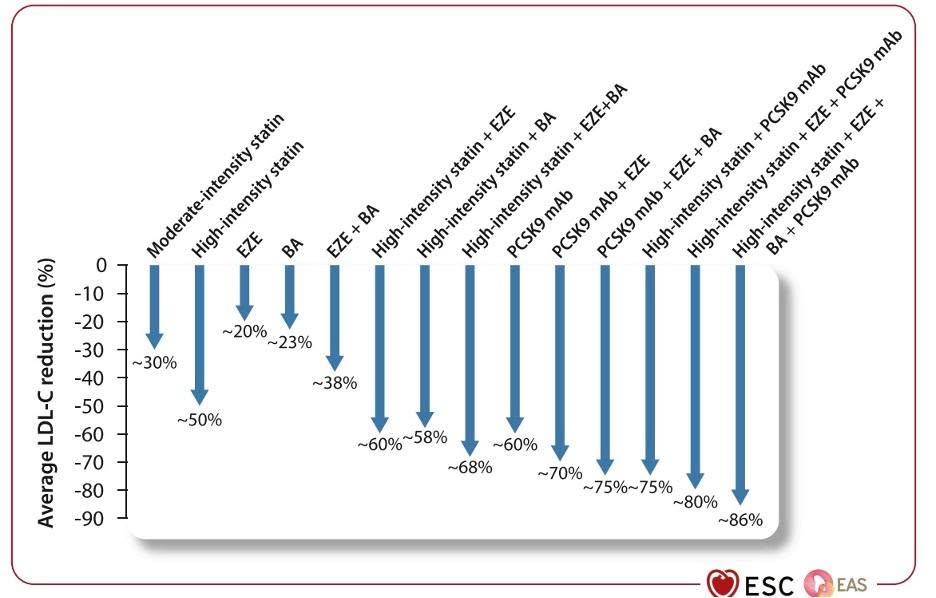
Every LDL-lowering method lowers cardiac risk in proportion to the LDL reduction achieved

Dec 08, 2024 · Louis Nervegna ♥ 17 · 💬 5

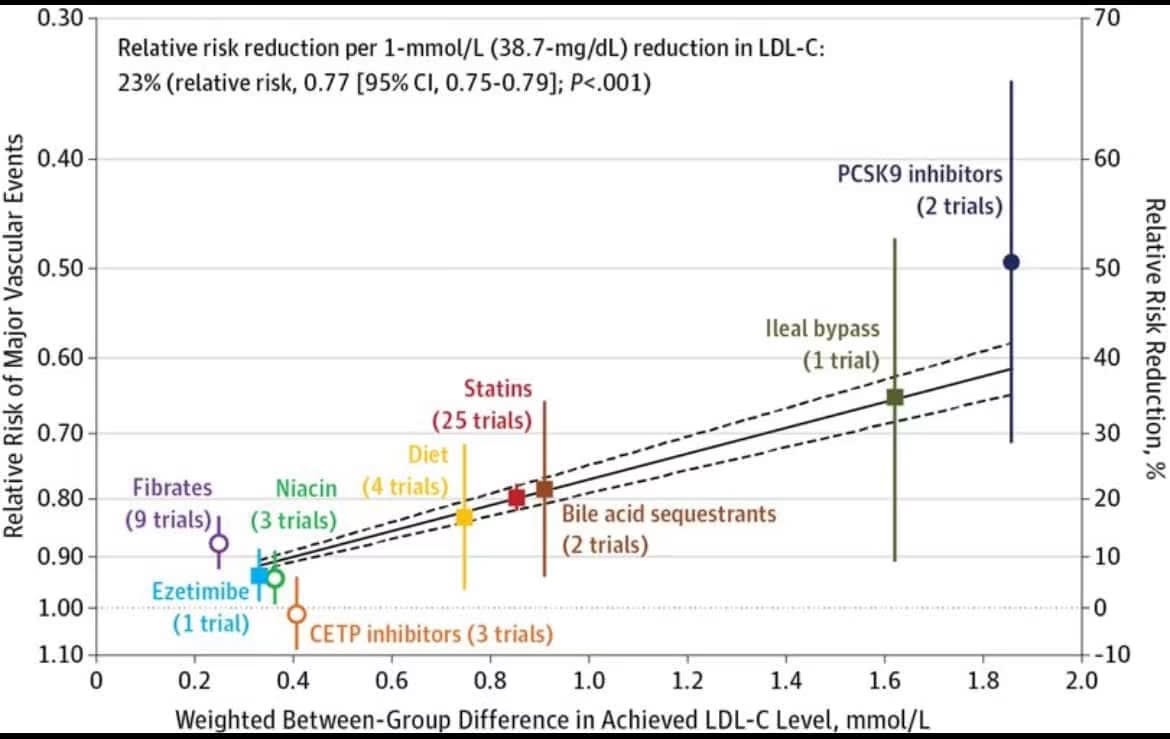
Louis shares a chart (originally from Dr. Daniel Chong) combining many trials of different LDL-lowering interventions. Risk reduction scales with the absolute LDL decrease regardless of mechanism: the two PCSK9 inhibitor trials lowered LDL ~1.9 mmol/L (76 mg/dL) with a more than 50% risk reduction versus placebo.

Why the LMHR phenotype happens: starvation-like physiology in lean keto dieters

Jan 25, 2024 · Louis Nervegna ♥ 10 · 💬 11 ↩ 9 Low-carb, keto & carnivore

Louis proposes that the lean mass hyper-responder (LMHR) pattern, with extremely high LDL-C on keto/carnivore diets, reflects an ancient starvation response described in calorie-restriction literature. With near-zero body fat and no carbohydrate, the body acts as if starving, raising circulating LDL to deliver fat as fuel, lowering leptin, LDL receptors and thyroid and sex hormones. He links a trial showing fasting raised LDL and ApoB in healthy non-obese people, and cautions that overdoing restriction is the danger. This is a hypothesis, not proof of harm or safety.

Mendelian randomization: higher ApoB shortens healthspan and may raise Alzheimer's risk

Feb 25, 2024 · Gokhan Can ♥ 25 · 💬 4

Summarizes Martin et al. 2024, a Mendelian randomization study finding that genetically higher ApoB shortens healthspan (time to first chronic disease), with a direct effect independent of LDL. ApoB, but not LDL, also appeared to raise Alzheimer's risk, though the replication attenuated in a larger sample.

Mendelian randomization: lifelong lower LDL tracks linearly with lower heart disease risk

Oct 10, 2026 · Louis Nervegna ♥ 13 · 💬 8

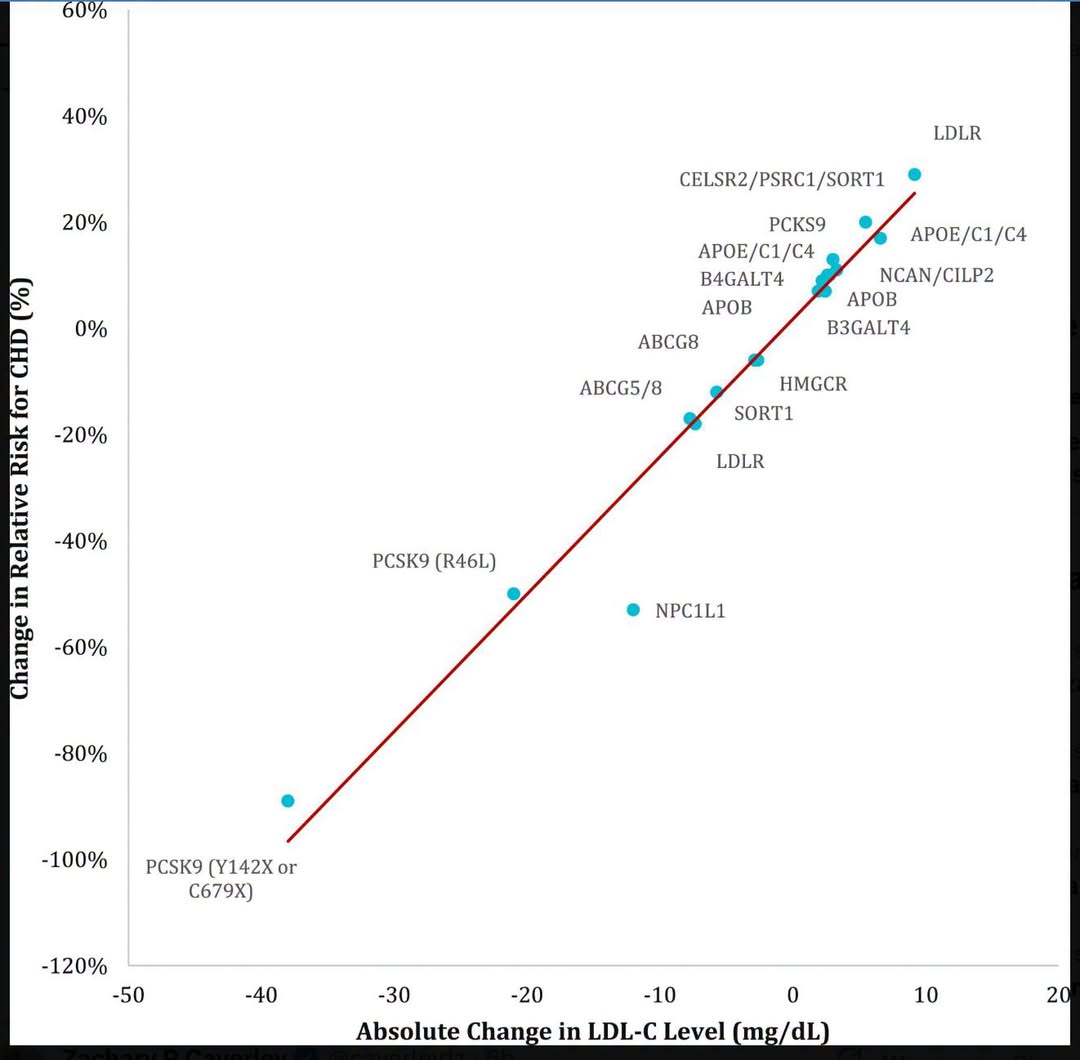
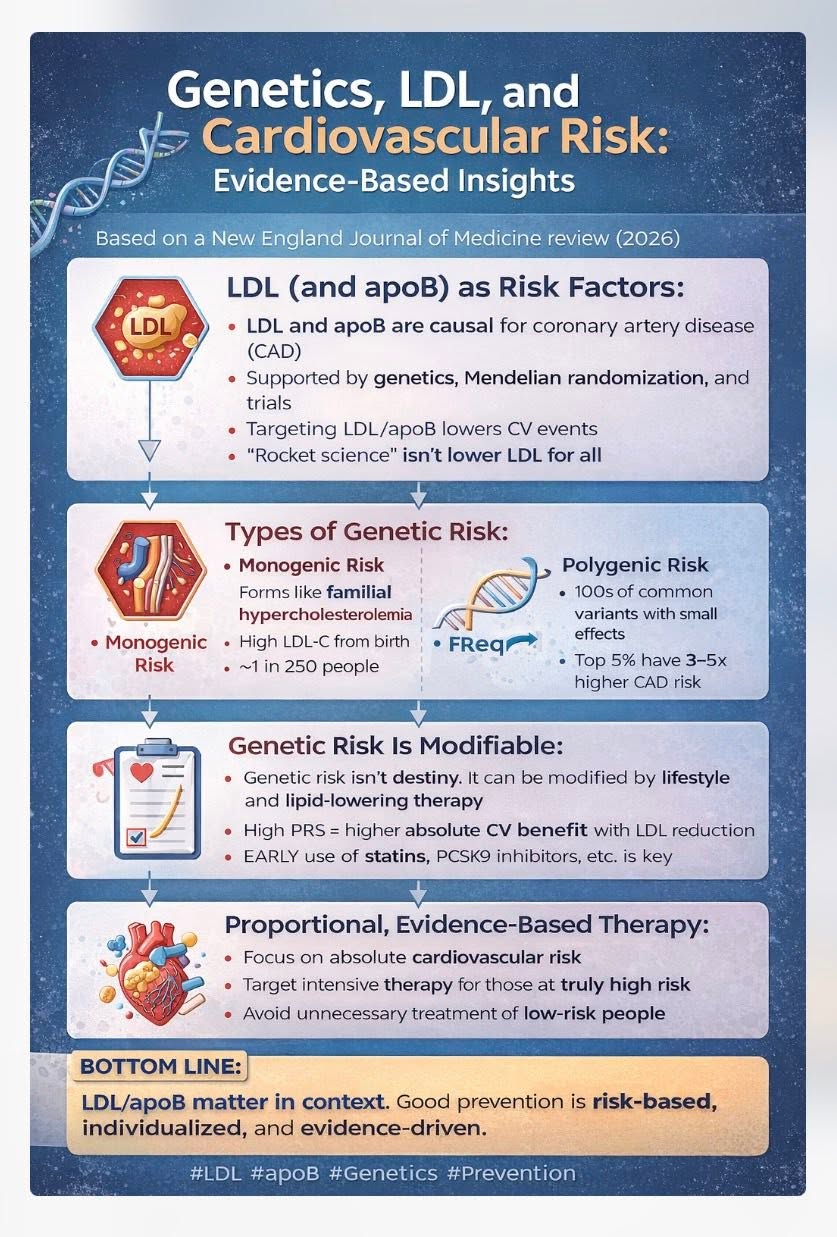
The post explains a chart from a European Atherosclerosis Society consensus statement showing that genetic variants affecting LDL through different pathways (LDLR, PCSK9, APOB, HMGCR, NPC1L1, SORT1, ABCG5/8) change coronary risk in proportion to the LDL change. This matches the linear relationship seen in statin trials. The poster also shows how to convert relative risk reductions into lifetime absolute risk.

Why high cholesterol 'protects' in observational data: reverse causation, not low-LDL harm

Sep 06, 2026 · Louis Nervegna ♥ 14 · 💬 7

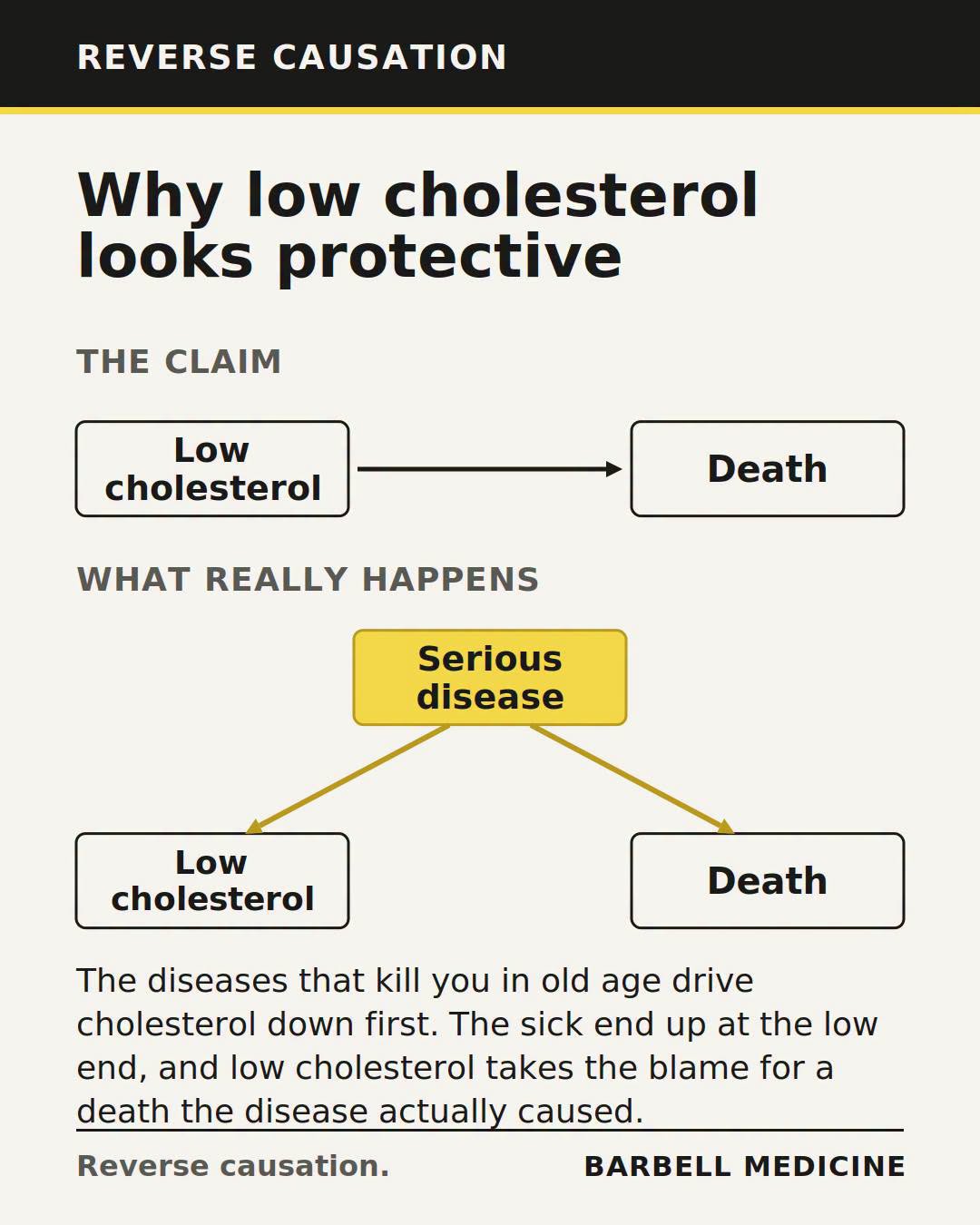
Louis quotes a Barbell Medicine explanation that low cholesterol in sick, older people reflects disease lowering cholesterol, not the reverse. Genetically low LDL lowers heart disease with normal cancer risk and lifespan, and lowering LDL on purpose cuts heart risk proportionally. The small diabetes risk is concentrated in people already near the metabolic edge.

Lipoprotein(a) explained: 80-90% genetic, stable for life, a risk factor beyond LDL

Oct 05, 2024 · Gokhan Can ♥ 12 · 💬 8 Lp(a)

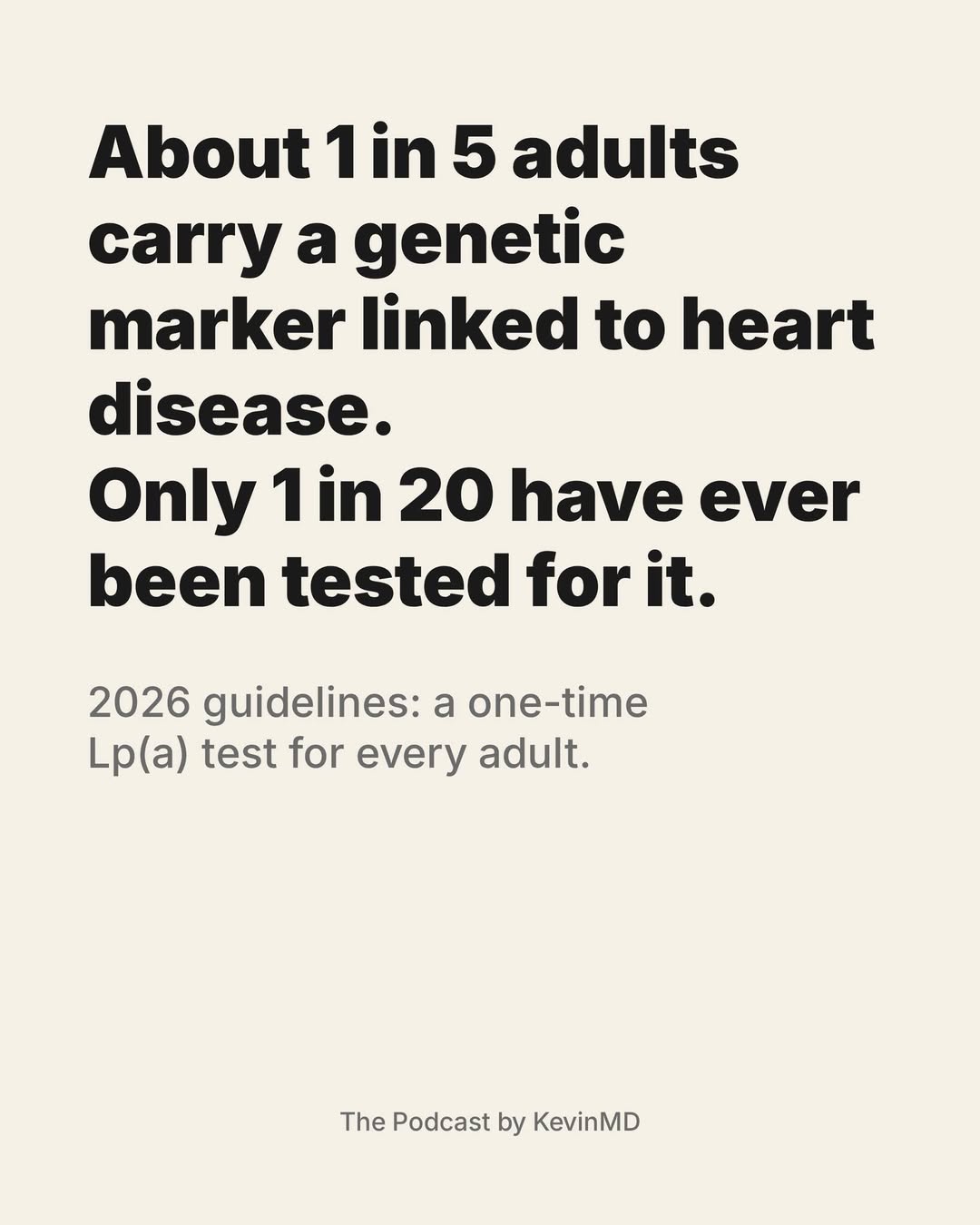
Explainer on Lp(a): an LDL-like particle with apo(a) attached, 80-90% genetically determined, fully expressed by 1-2 years of age, and elevated in about 1 in 5 US individuals (1.4 billion globally). Levels above 50 mg/dL or 125 nmol/L raise ASCVD risk, possibly via impaired fibrinolysis and cholesterol deposition, and may occur with normal lipid panels.

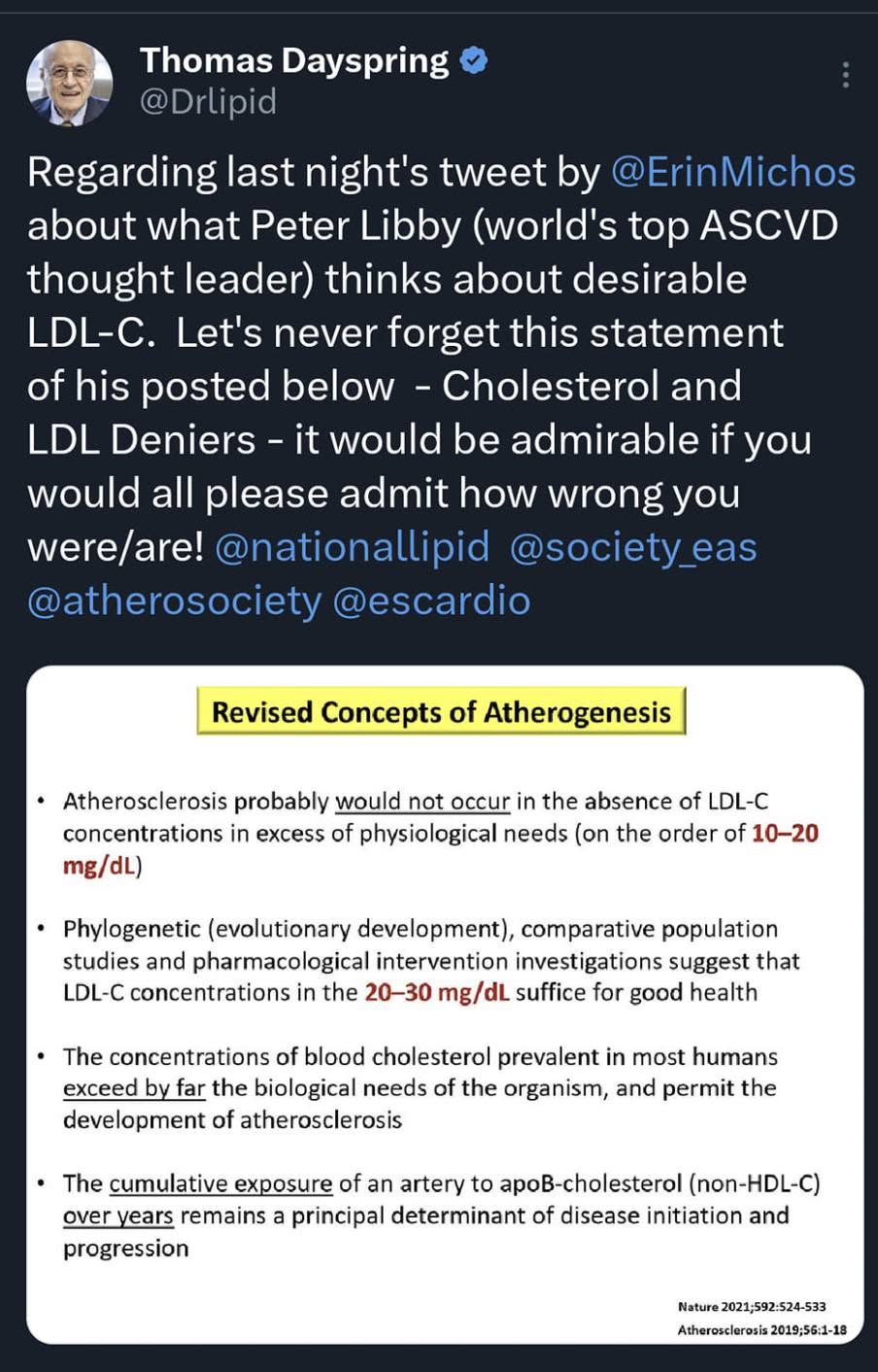
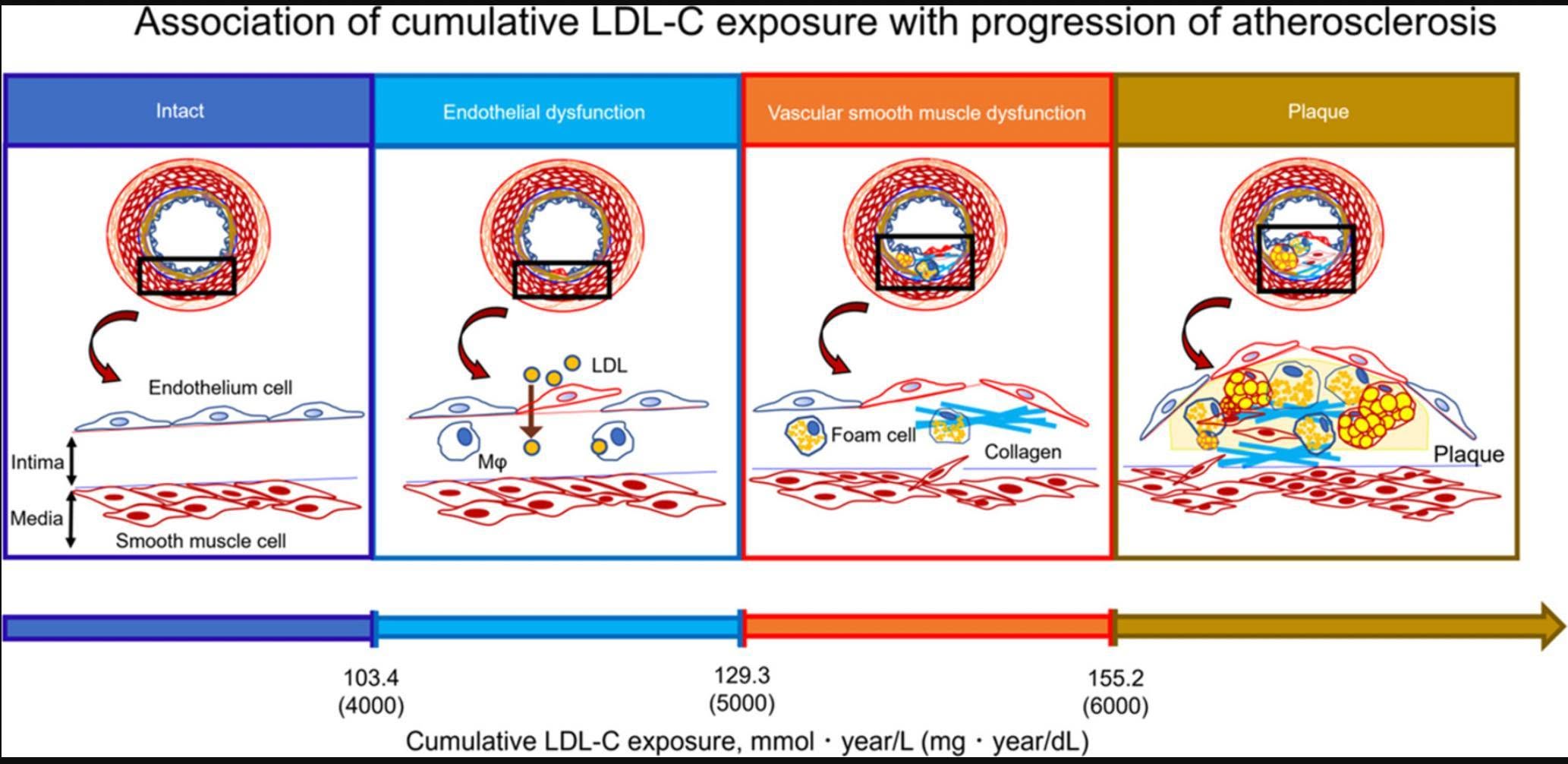
Cumulative LDL-C thresholds: endothelial damage above 4000, plaque from 6000 mg-year/dL

Sep 01, 2025 · Gokhan Can ♥ 10 · 💬 9

A synthesis of three studies showing cumulative LDL exposure predicts atherosclerosis better than one reading. In a cross-sectional study of 8,000+ people not on lipid drugs (Age x LDL-C), vascular damage appeared in stages as cumulative exposure rose, suggesting even moderate LDL sustained for decades crosses these tipping points.

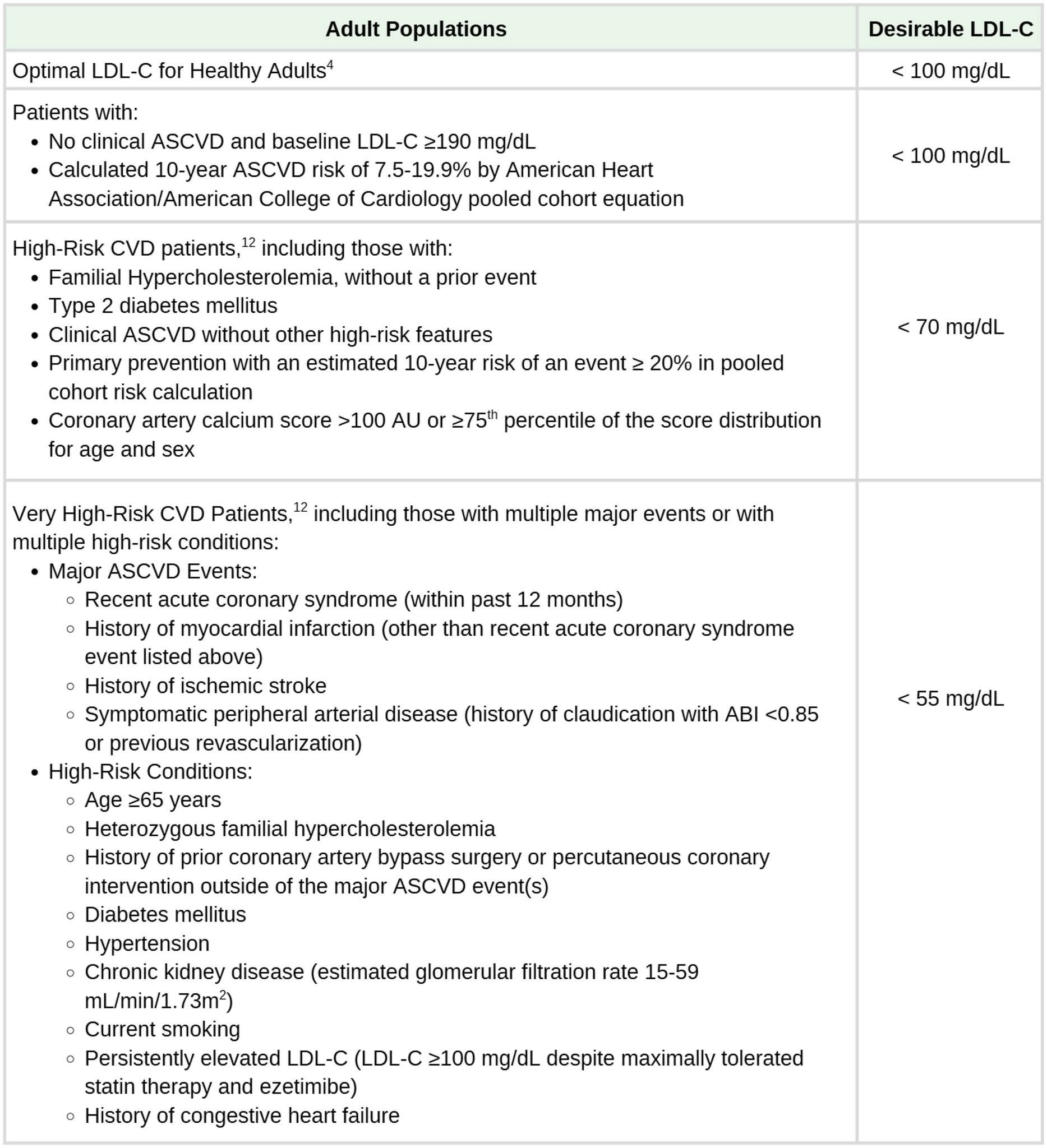
Evolving LDL-C management (JAHA 2023): risk categories, thresholds and treatment goals

Nov 25, 2023 · Gokhan Can ♥ 8 · 💬 11 ↩ 2

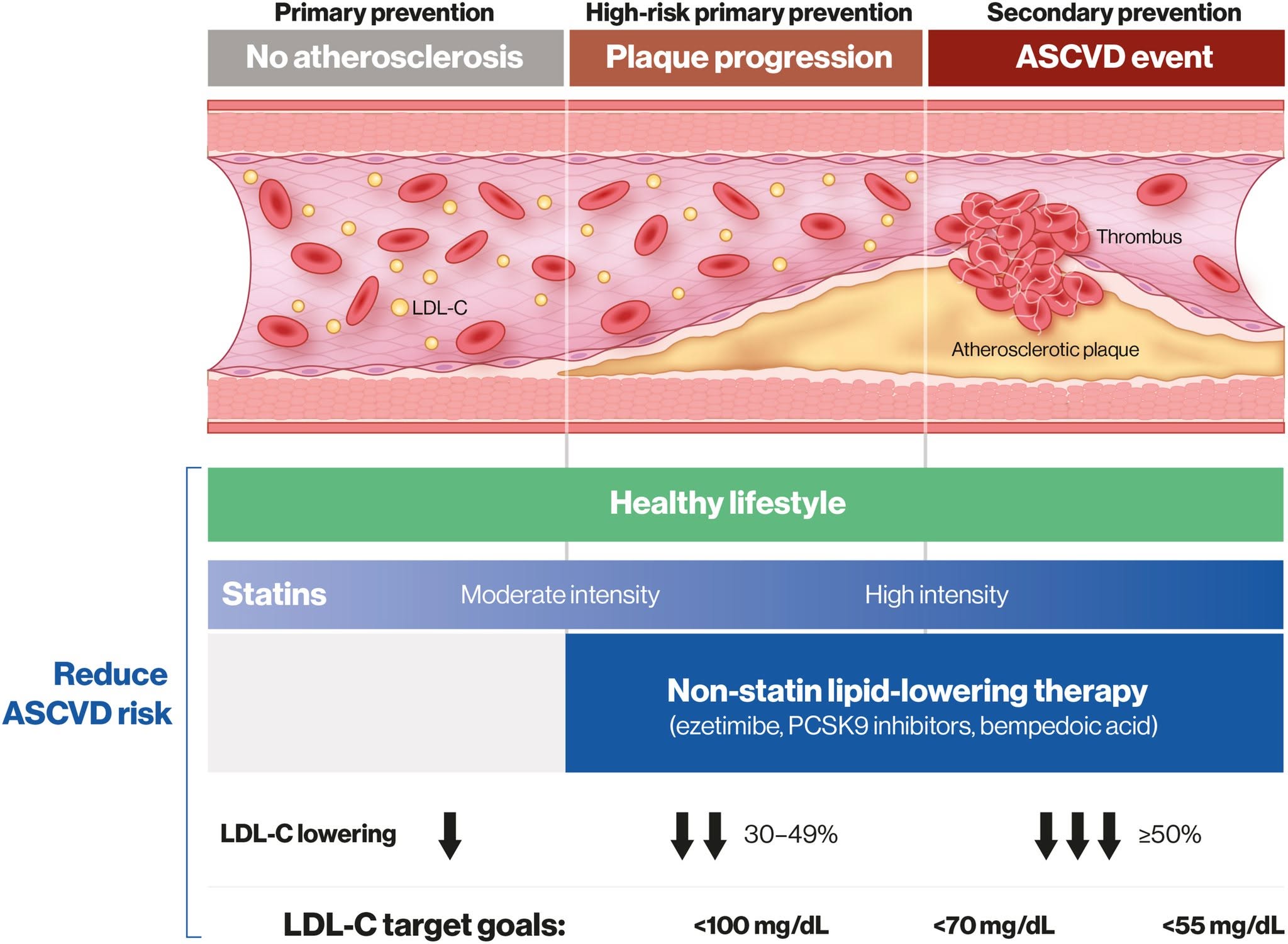
Summarizes a 2023 JAHA review of personalized LDL-C management, giving risk categories from low to very high and the LDL goals for each. High-risk patients should reduce LDL at least 50% to below 70 mg/dL, while very-high-risk patients should aim below 55 mg/dL, or below 40 after recurrent events on statins.

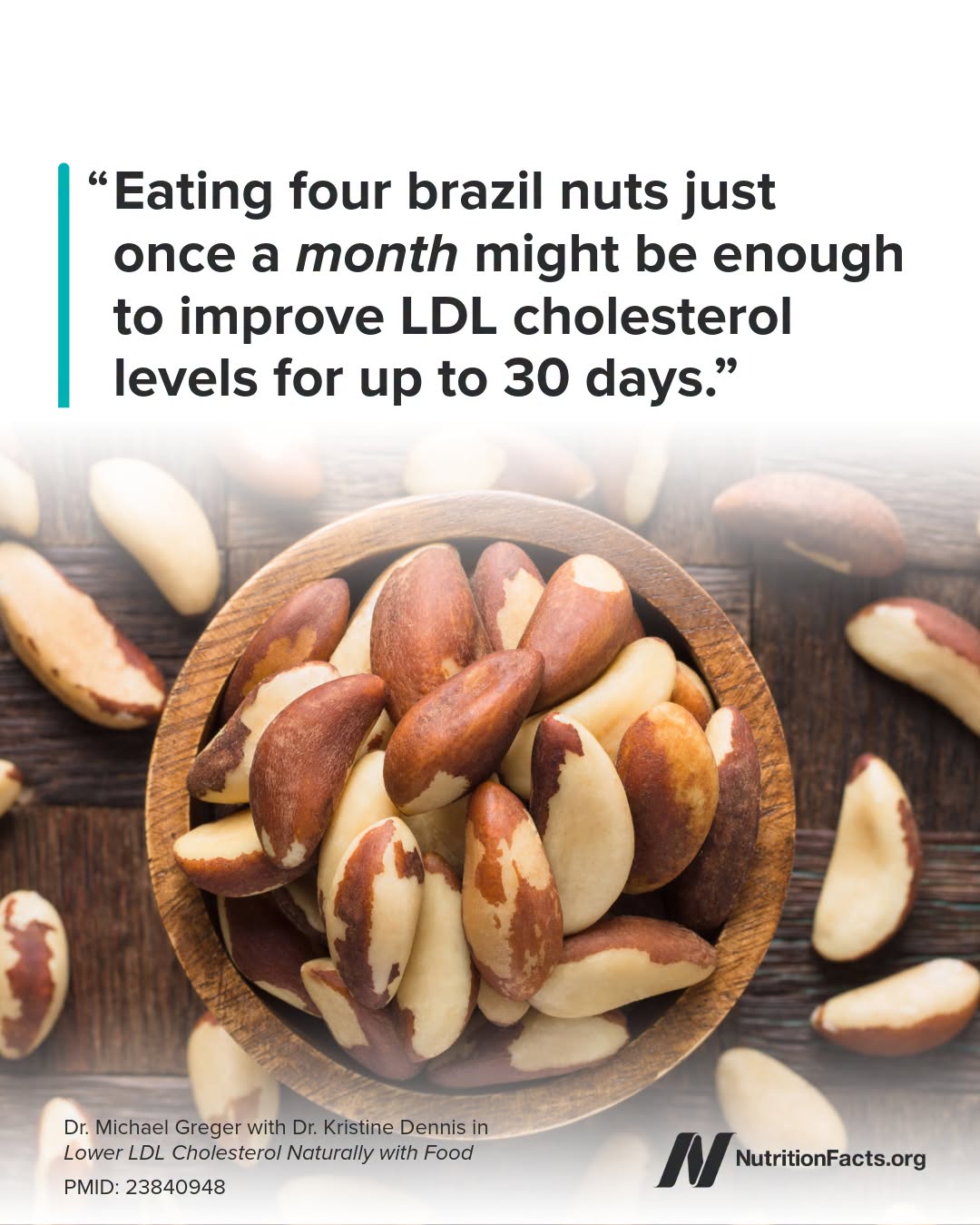
Can four Brazil nuts lower LDL? A small 2013 study says a single dose may

Oct 10, 2026 · Louis Nervegna ♥ 14 · 💬 13

The poster asks whether anyone has tried eating Brazil nuts to lower LDL and points to a small study suggesting a single large intake improved lipid profile in healthy volunteers. The shared text says four Brazil nuts once a month may improve LDL for up to 30 days, while daily intake risks selenium toxicity.

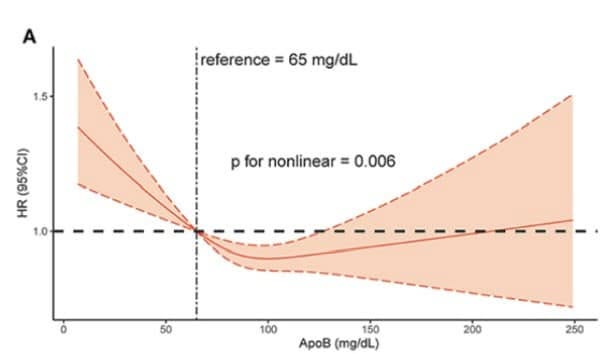
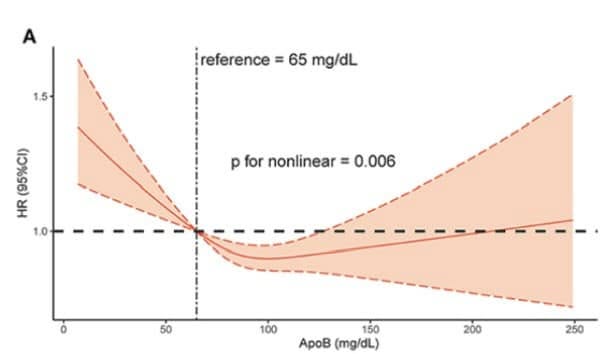
U-shaped ApoB-mortality curve turns linear after adjusting for bilirubin and malnutrition

Jun 01, 2024 · Louis Nervegna ♥ 13 · 💬 5 ↩ 1

Louis explains a 2022 Chinese cohort of about 36,500 people showing the commonly observed U-shaped relationship between ApoB and all-cause mortality disappears once comorbidities, bilirubin and malnutrition are corrected for. Low ApoB at older ages appears to be a consequence of illness and wasting rather than a cause of death, consistent with RCT and Mendelian randomization evidence that the low-end increase is not causal.

Finland's North Karelia Project: less saturated fat, CHD deaths down nearly 80%

Dec 03, 2025 · Louis Nervegna ♥ 7 · 💬 16 ↩ 1 Fats & oils (saturated fat, seed oils, omega-6, olive oil)

Louis shares a Tom Rifai summary of Finland's 1970s turnaround, led by the North Karelia Project, where the population cut saturated fat and shifted to rapeseed, sunflower and soybean-based margarines and oils. Serum cholesterol fell about 15-20% and CHD mortality fell nearly 80% in working-age men, although smoking and blood pressure improvements also contributed.

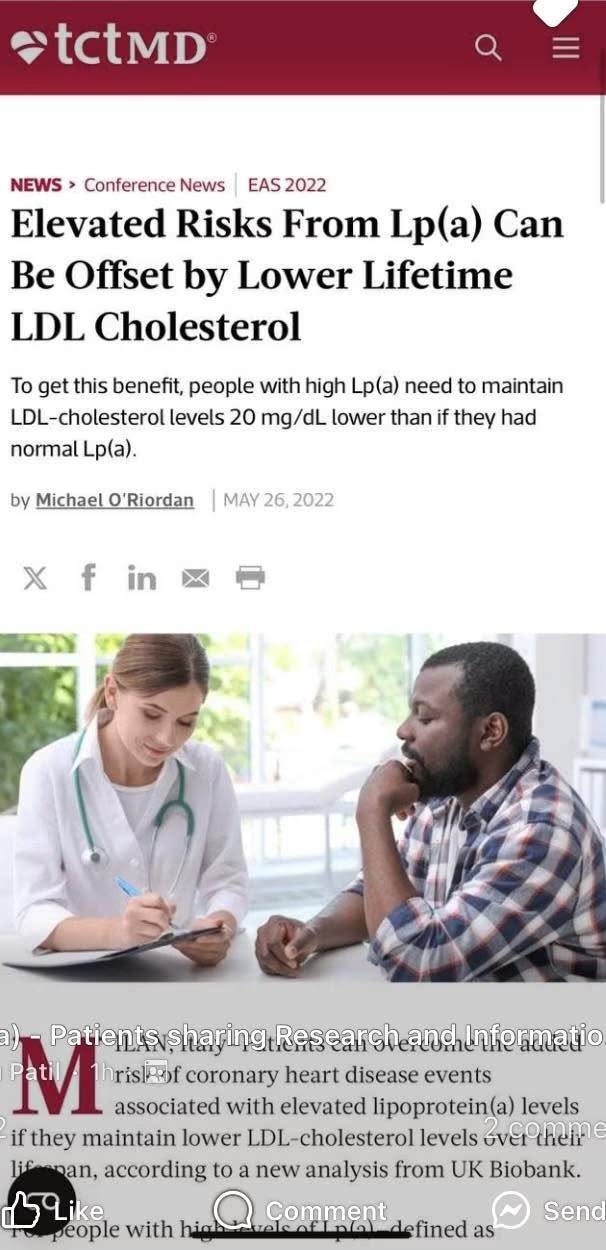
High Lp(a) risk offset by about 19 mg/dL lower lifelong LDL-C in UK Biobank analysis

Oct 23, 2025 · Louis Nervegna ♥ 13 · 💬 6 Lp(a)

Louis shares a TCTMD report on a Ference analysis of 445,765 UK Biobank participants using genetic (natural randomization) methods. Lifelong high Lp(a) was associated with a projected 37% higher risk of major coronary events, completely offset by lower lifetime LDL-C; the later LDL lowering starts, the larger the reduction required.

NLA consensus: apoB testing helps when LDL-C and risk are discordant

Oct 15, 2024 · Gokhan Can ♥ 13 · 💬 6

Summary of a National Lipid Association expert consensus on apoB testing. ApoB counts all atherogenic particles and may predict risk better than LDL-C, especially after statin treatment when the two diverge, and testing is suggested for borderline-risk patients deciding on a statin and in other discordant cases.

HDL is a poor intervention target: every large HDL-raising trial has failed

Jul 28, 2025 · Louis Nervegna ♥ 9 · 💬 12

Louis argues HDL is basically only a crude marker of insulin resistance and notes every large randomized trial of HDL-raising has failed to prevent heart attacks and strokes. A shared post adds that Mendelian randomization found no benefit of genetically high HDL.

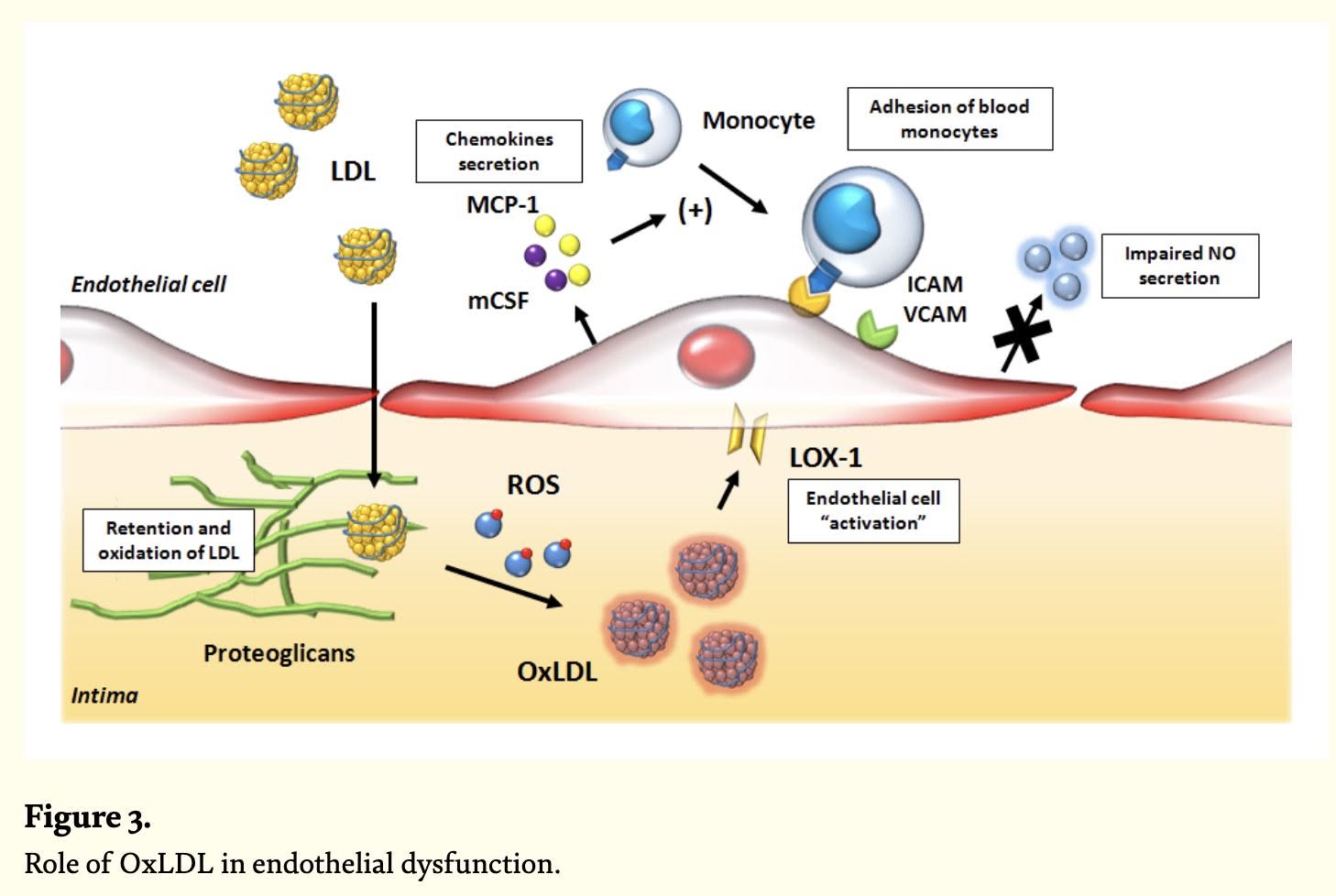
How LDL causes atherosclerosis: oxidation, inflammation, foam cells and genetics

May 19, 2024 · Gokhan Can ♥ 12 · 💬 9

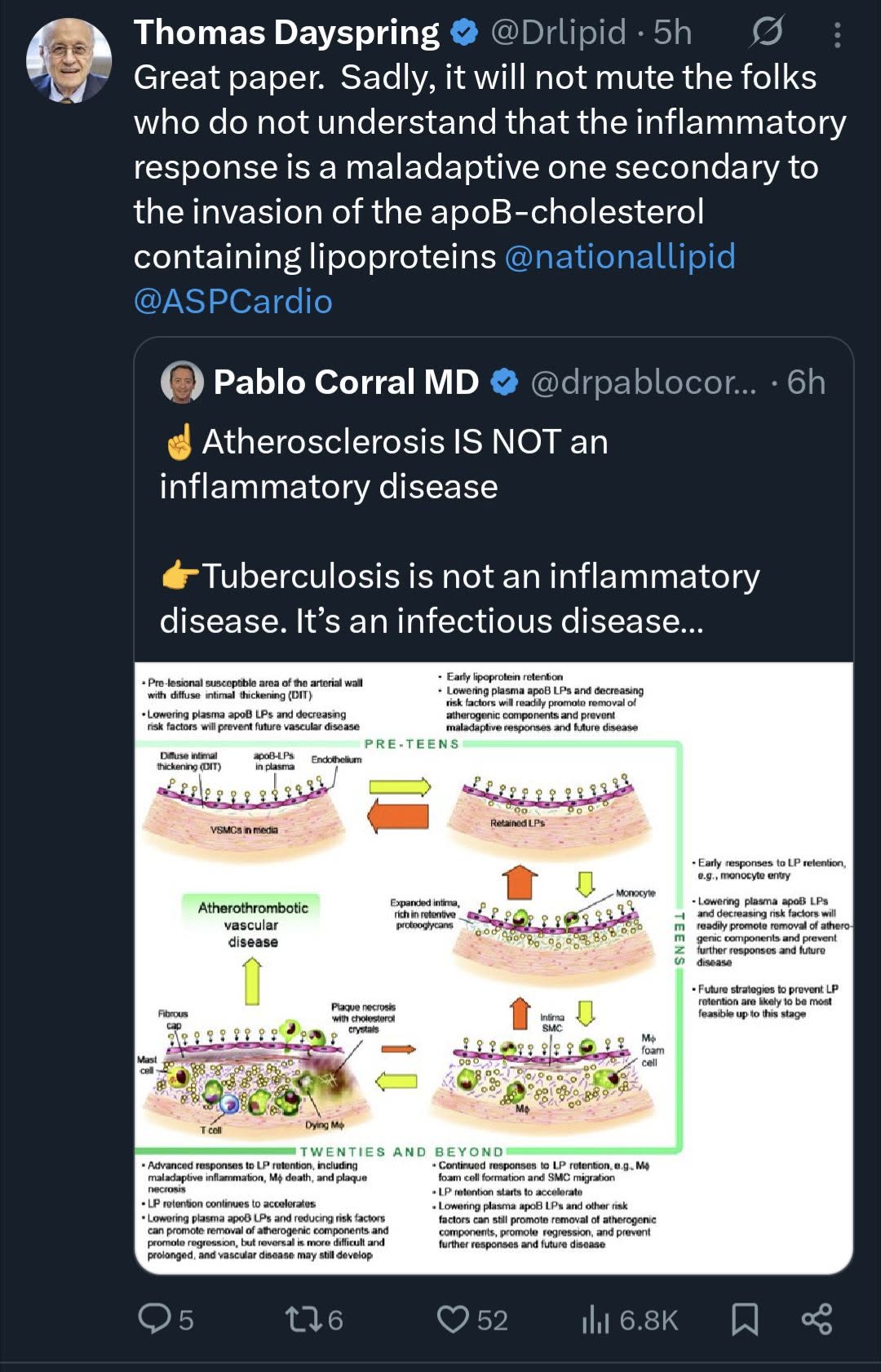
Explains five lines of evidence for a causal role of LDL in atherosclerosis: oxidized LDL in the artery wall, endothelial dysfunction and inflammation, macrophage foam-cell formation, Mendelian randomization and familial hypercholesterolemia, and the benefit of LDL-lowering therapies. Useful as a mechanism overview for readers who doubt that LDL is a cause rather than a bystander.
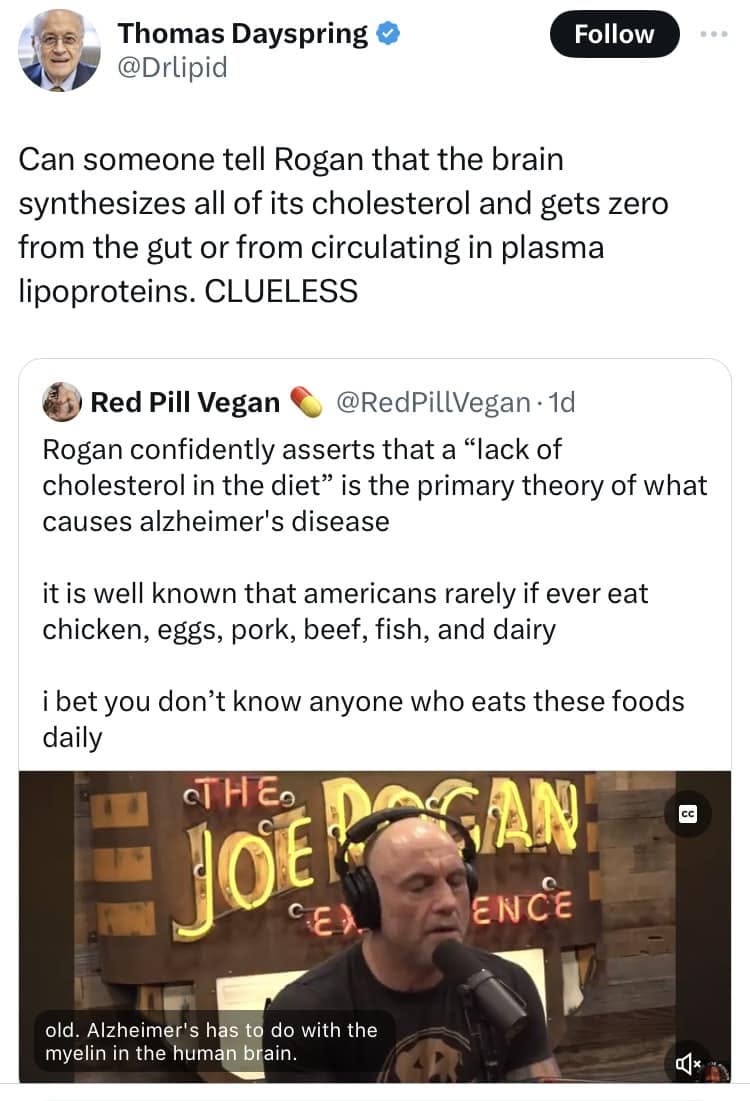
Circulating oxidized LDL is a poor test; measure ApoB instead, says Dayspring

Feb 04, 2024 · Louis Nervegna ♥ 9 · 💬 12

Tom Dayspring argues that oxidized LDL measured in the bloodstream is a 'useless' biomarker and that ApoB should be measured instead. Louis adds that this refers to circulating oxidized LDL, not oxidized LDL inside plaques, which still matters but cannot be measured by blood test. Newer studies that adjust for ApoB reportedly show circulating oxidized LDL is not related to CVD risk.

Statins cut heart attack and stroke risk in high Lp(a) despite raising it 5-20%

Jun 20, 2026 · Louis Nervegna ♥ 11 · 💬 7 Lp(a)

Louis explains that Lp(a) carries LDL cholesterol and sticks in artery walls, so lowering total LDL-C with statins cancels much of the risk from high Lp(a). Meta-analyses show statins raise Lp(a) 5-20%, but a Stanford expert argues this is clinically unimportant given the outcome benefit across 25 randomized trials.

Nicola Guess: Keto-CTA plaque rose ~20 mm3 in 1 year vs ~13 mm3 over 3 years in PARADIGM

Apr 12, 2025 · Louis Nervegna ♥ 7 · 💬 8 Plaque, CAC & CT angiography

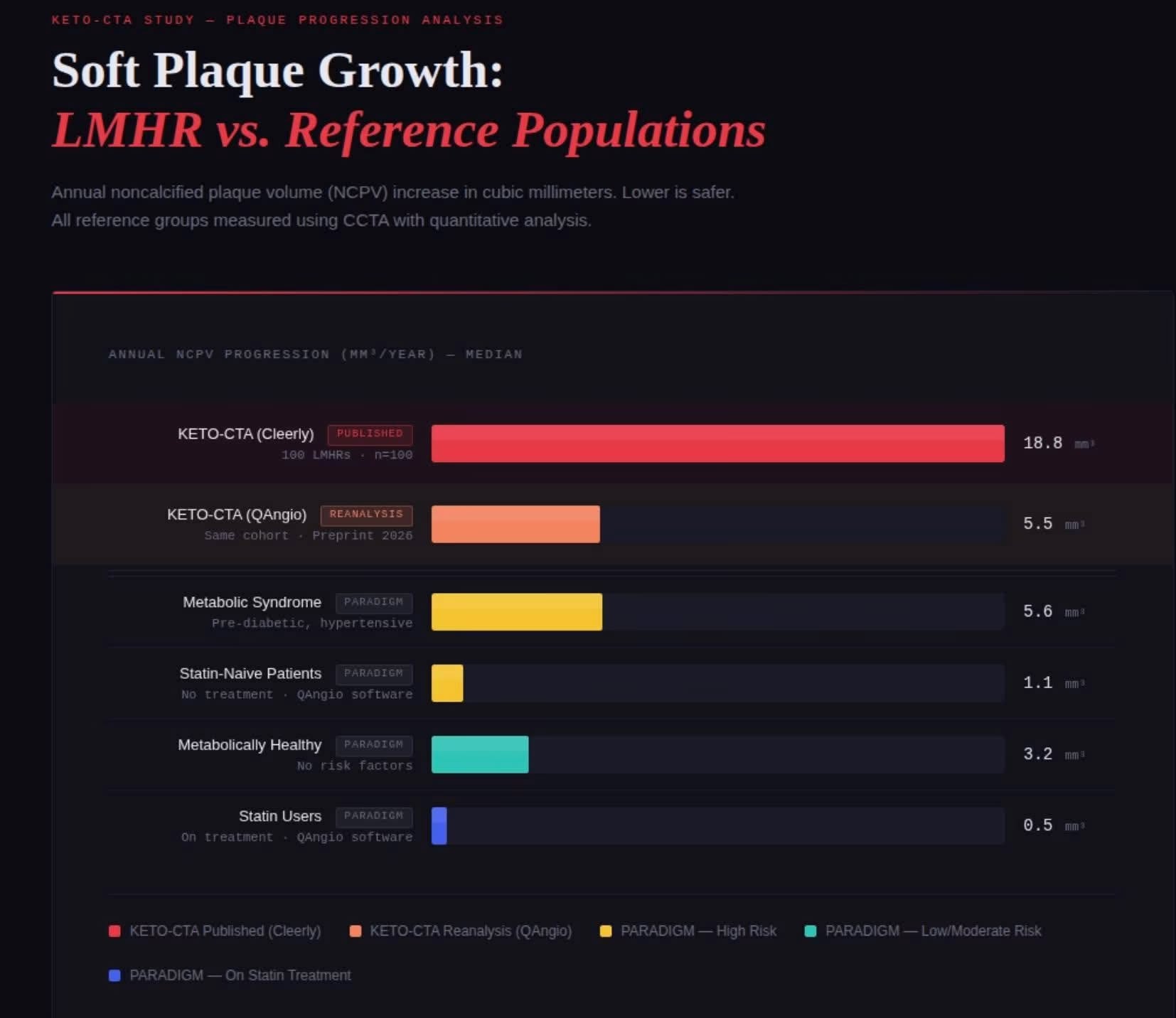
Louis shares Dr. Nicola Guess's critique of the Keto-CTA study: the abstract omitted the registered primary outcome (non-calcified plaque volume), but the figure suggests a rise of ~20 mm3 in one year in lean keto dieters. In PARADIGM, high-risk people on Western diets rose ~13 mm3 over three years (about 17 mm3 with metabolic syndrome). With no control group, the comparison suggests accelerated soft plaque growth.

Statins work as well in women as men: 27-trial CTT meta-analysis of 174,000 participants

Dec 19, 2023 · Louis Nervegna ♥ 5 · 💬 11 Statins

Louis rebuts the claim that statins are less effective in women using the Cholesterol Treatment Trialists' meta-analysis of 27 randomized trials. Per 1 mmol/L LDL reduction, proportional reductions in major vascular events and all-cause mortality were similar in women and men, with no adverse effect on cancer or non-CV mortality. Trials averaged 4.9 years, so longer-term benefit is likely larger.

Co-author of LMHR study protocol says the design could not detect plaque progression

Dec 10, 2023 · Louis Nervegna ♥ 4 · 💬 17 Low-carb, keto & carnivore

Louis paraphrases Dr. Spencer Nadolsky, who helped write the LMHR (keto hypercholesterolemia) study protocol, saying it enrolled only extremely healthy people with no diabetes, prediabetes, atherosclerosis, smoking, overweight or high hs-CRP and perfect blood pressure. Because soft plaque takes years to form even with very high LDL, little progression was likely after one year; enrolling people with existing atherosclerosis would have been more informative. The study's absence of progression should therefore not be read as proof of safety.

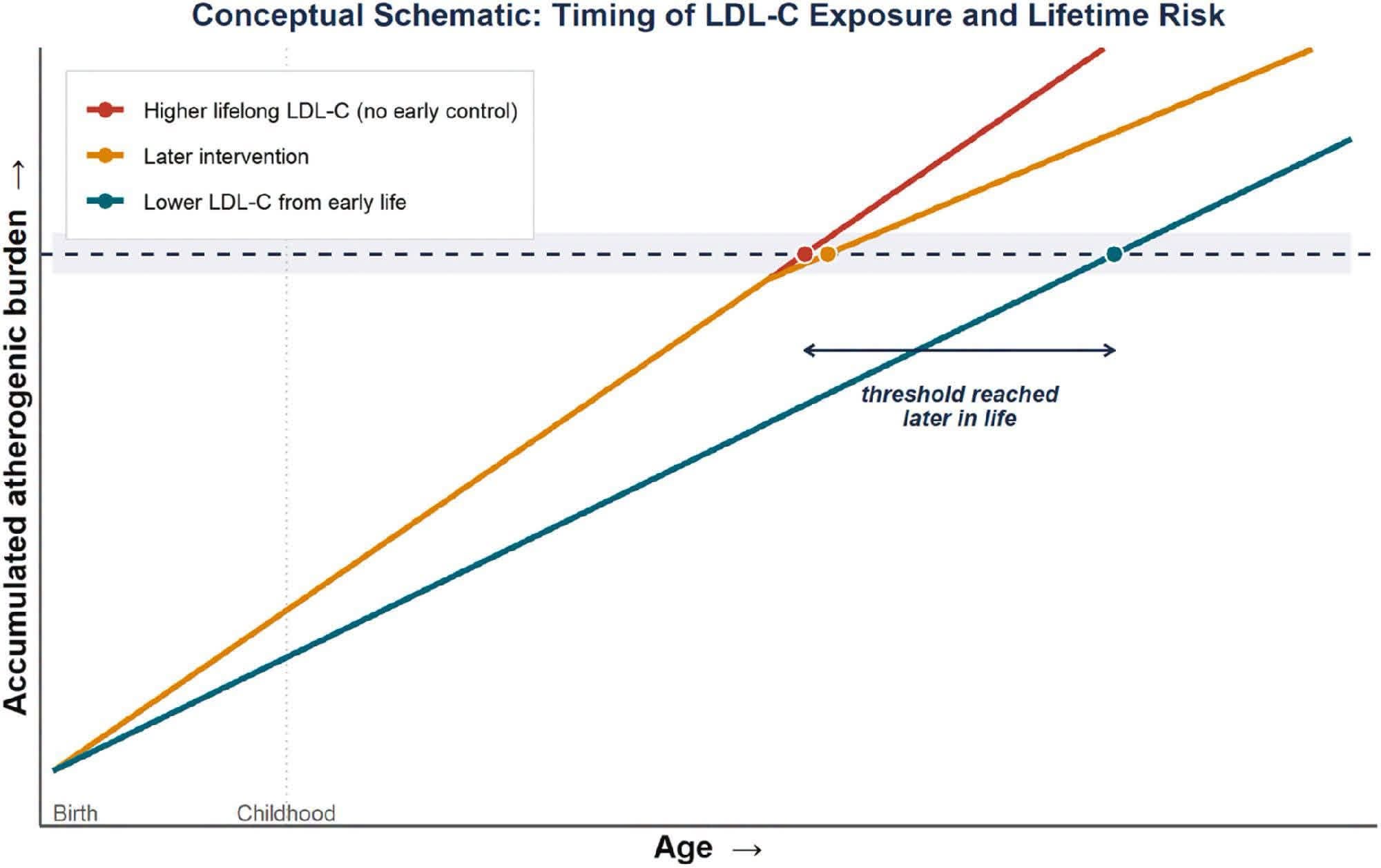
LDL-C is cumulative exposure: lowering it earlier and longer matters most

Jul 02, 2026 · Gokhan Can ♥ 16 · 💬 6

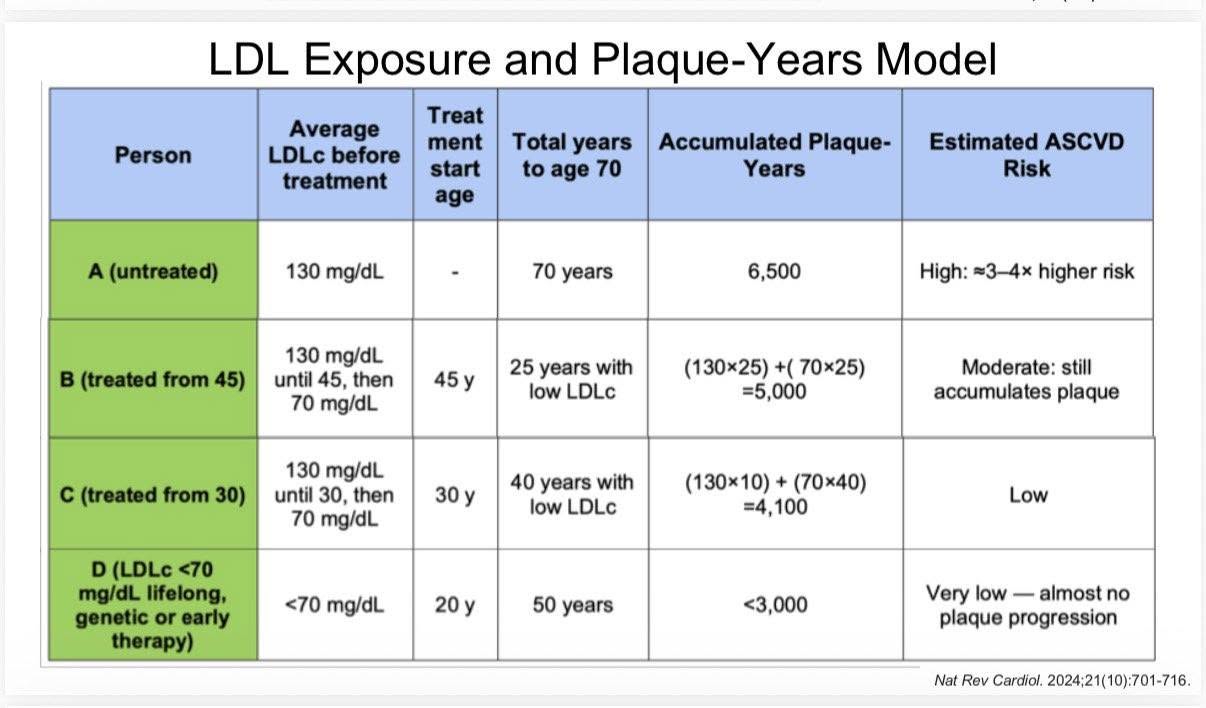
Reposts an infographic arguing that LDL-C should be seen as plaque-years: every year of elevated LDL adds arterial burden that cannot be undone, so starting treatment at 30 beats starting at 45, and early intervention may matter more than drug strength.

HDL and ApoA-I raising therapies repeatedly failed, so HDL is probably not directly causal

Mar 11, 2024 · Louis Nervegna ♥ 6 · 💬 9 ↩ 22

Louis reviews why HDL or ApoA-I is probably not causal for heart disease. CETP inhibitor trials failed (ILLUMINATE with torcetrapib was stopped for harm; dal-OUTCOMES with dalcetrapib and ACCELERATE with evacetrapib showed no benefit), as did fibrate and niacin trials and CSL112 infusions, and Mendelian randomization agrees. He proposes HDL and ApoA-I mainly act as a proxy for insulin sensitivity, which is the real causal factor.

Obicetrapib gets first approval worldwide in the EU, lowering LDL up to 40-50%

Sep 21, 2026 · Louis Nervegna ♥ 18 · 💬 5 PCSK9, ezetimibe & newer drugs

The European Commission approved obicetrapib, a low-dose oral CETP inhibitor, on 21 September 2026 in two versions: obicetrapib 10 mg alone and combined with ezetimibe 10 mg. Phase 3 trials reported LDL-C reductions of about 40% alone and about 50% with ezetimibe versus placebo. The poster says the drug has shown promise for both cardiovascular disease and Alzheimer's.

Review: aggressive LDL lowering outweighs theoretical risks, yet few reach <55 mg/dL

Oct 28, 2025 · Gokhan Can ♥ 13 · 💬 5

Summarises a July 2025 review: guidelines now target LDL-C <55 mg/dL (<40 after a recurrent event), PCSK9 inhibitors add 59-62% LDL reduction, and evidence (FOURIER, CTT meta-analysis, PCSK9 genetics) supports benefit to very low levels. It says safety concerns such as hemorrhagic stroke, cognitive decline (EBBINGHAUS) and hormone disruption are unsupported, while fewer than one in four high-risk patients reach target.

Lifelong lower LDL adds about 1.2 years of life per SD, and benefits compound over time

Sep 27, 2025 · Gokhan Can ♥ 8 · 💬 8

Mendelian randomization suggests each standard deviation of lifelong lower LDL-C adds about 1.2 years of expected lifespan, with proportionally more for larger reductions. A meta-analysis shows the relative risk reduction per mmol/L of LDL-C lowering grows with treatment duration, so earlier and longer lowering matters.

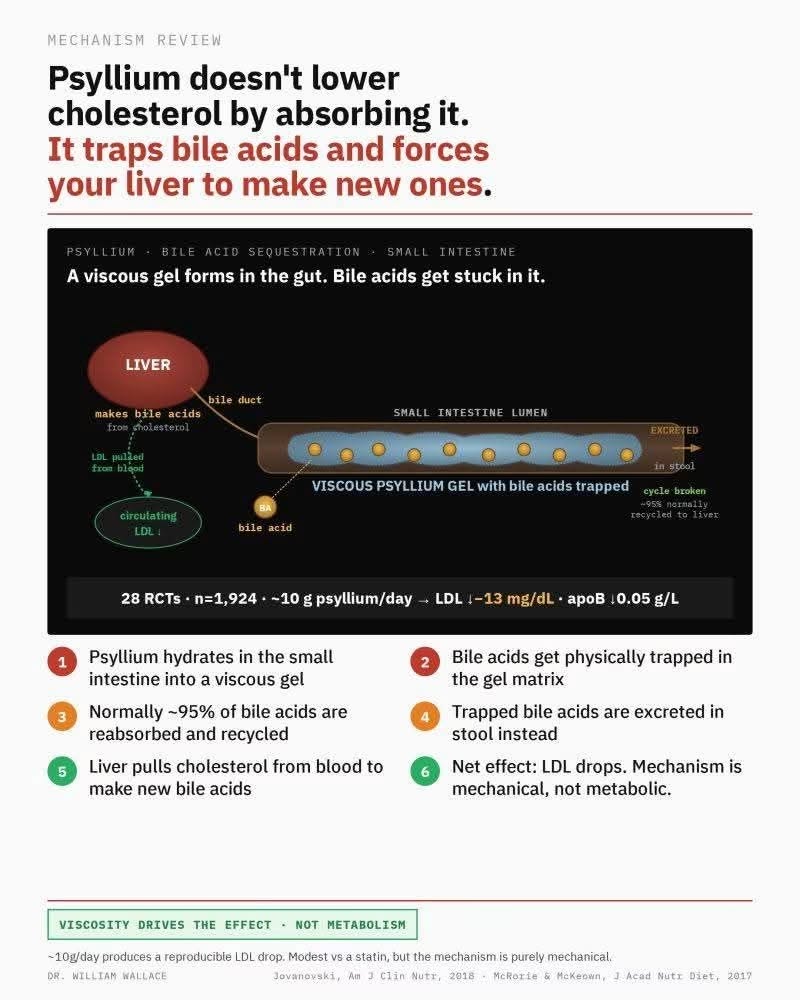
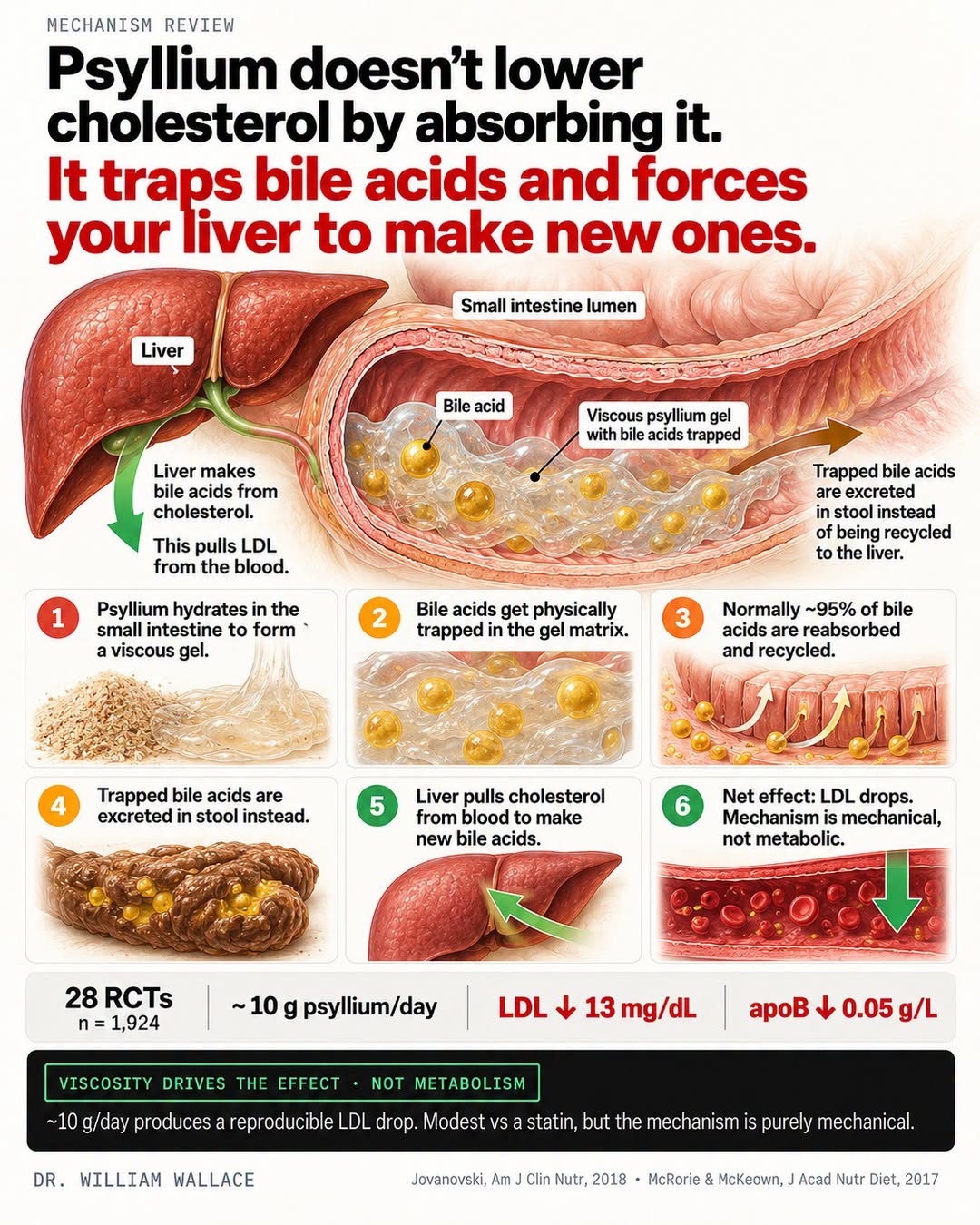
Psyllium lowers LDL about 13 mg/dL across 28 trials by trapping bile acids

Oct 31, 2026 · Louis Nervegna ♥ 15 · 💬 4 Carbs, fiber, sugar & whole grains

A shared explainer says psyllium lowers LDL by about 13 mg/dL across 28 randomized trials, and that the mechanism is mechanical: its viscous gel traps bile acids so the liver pulls cholesterol from the blood to make more, upregulating LDL receptors. It does not absorb cholesterol directly or scrub the gut, which is why most other soluble fibers do not work the same way.

Lowering LDL or ApoB is no cure: residual risk persists in every trial; age matters most

Aug 20, 2024 · Louis Nervegna ♥ 25 · 💬 2

The post argues that although aggressive LDL/ApoB lowering reduces risk in many RCTs, considerable residual risk remains in every trial, rising with age. It lists other risk factors (family history, blood pressure, smoking, weight, inflammation, diet, inactivity, insulin resistance/diabetes) and says age is the biggest risk factor, by over 10x versus LDL or ApoB.

Keto-CTA (LMHR): plaque volume rose 25-100% in one year across CAC and risk subgroups

Apr 09, 2025 · Louis Nervegna ♥ 10 · 💬 6 ↩ 2 Plaque, CAC & CT angiography

Louis walks through a table from the Keto-CTA (LMHR) paper showing percent atheroma volume (PAV) changes after one year in lean, metabolically healthy people on keto with average LDL 254 mg/dL. Plaque progressed in every subgroup, with the largest relative increase among those who started with zero CAC. He also explains what PAV measures.

FLOWPROMOTE: lower achieved LDL gave more plaque regression, 21.1% at LDL near 43

Oct 31, 2026 · Louis Nervegna ♥ 14 · 💬 4 Plaque, CAC & CT angiography

Louis adds FLOWPROMOTE to the pile of randomized trials showing statins reverse soft and total plaque. In 104 statin-naive stable CAD patients on CT angiography, LDL around 70 mg/dL gave a 13.6% total plaque reduction and around 43 mg/dL gave 21.1%, with 90% of the lower-LDL group showing regression. The linear LDL-to-regression relationship supports LDL being causal in atherosclerosis.

Why LMHR happens: starvation-like physiology in very lean people on keto raises LDL

Jul 23, 2024 · Louis Nervegna ♥ 14 · 💬 4

Reposting his earlier explanation, Louis argues that the lean mass hyper-responder phenotype reflects an old starvation response: with near-zero body fat, no carbohydrate and constant ketosis, the body raises circulating LDL to deliver fat as fuel, while lowering thyroid function and sex hormones. He links to a paper showing fasting increases total cholesterol, LDL-C and apoB in healthy nonobese humans.

Butter and cheese affect LDL differently despite similar saturated fat: the food matrix

Sep 02, 2026 · Louis Nervegna ♥ 11 · 💬 7 Meat, eggs & dairy

Louis highlights that butter and cheese contain similar saturated fat but affect LDL differently because of food matrix. Churning strips the natural milk-fat wrapper, while in cheese fat stays in a protein mesh, with calcium and fermentation also possibly modifying effects. The shared clip adds that cheese is no free pass given its calories and salt.

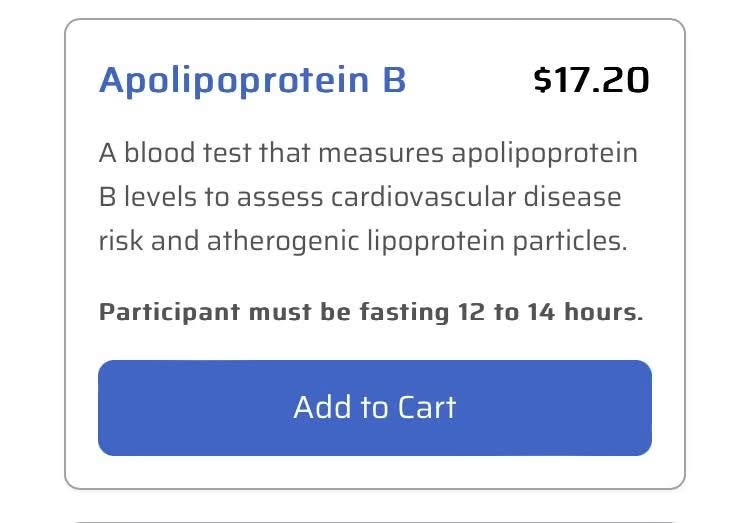
ApoB tests are cheap, about $28 if ordered yourself

Feb 22, 2024 · Louis Nervegna ♥ 10 · 💬 12

Louis points out ApoB tests are inexpensive and can be ordered out of pocket if a physician or insurer will not cooperate, citing Life Extension selling it for $28.

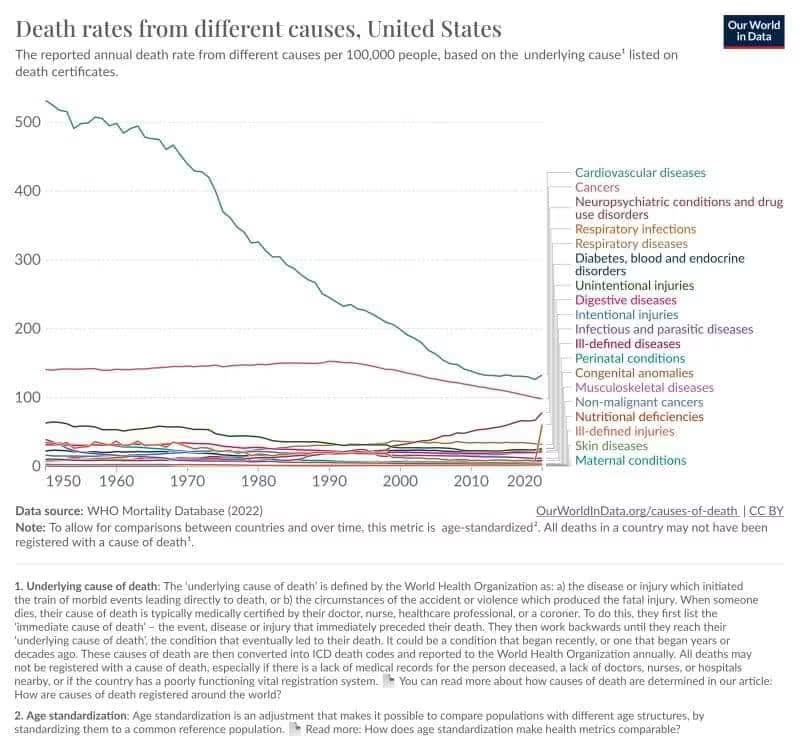
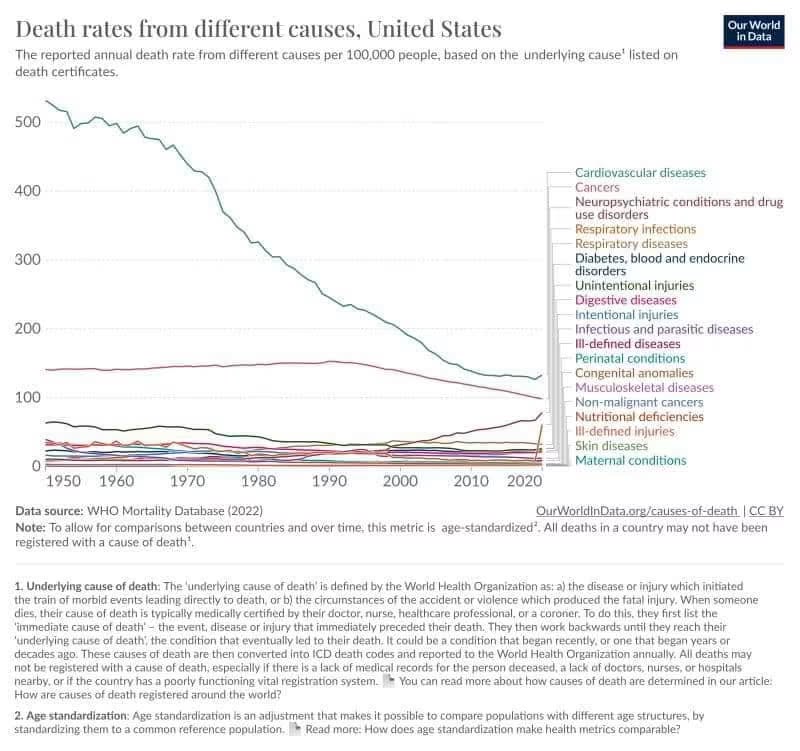
Heart disease deaths fell almost 5x since 1950 as LDL targets tightened

Nov 13, 2024 · Louis Nervegna ♥ 13 · 💬 9 ↩ 2

Louis notes US heart disease death rates dropped from over 500 to almost 100 per 100,000 since the 1950s, with timing correlating with statins and lower LDL targets. He quotes a group member's AI-style summary relating MI mortality eras to guideline LDL goals and trials like 4S, PROVE-IT and IMPROVE-IT, with the caveat that correlation is not causation.

APOE4 drives cholesterol buildup in brain astrocytes, promoting toxic protein deposits

Oct 06, 2026 · Louis Nervegna ♥ 17 · 💬 4 Brain health & dementia

Mount Sinai researchers using human stem-cell-derived miBrain tissue found APOE4 causes cholesterol to accumulate in astrocytes, impairing lysosomal clearance of alpha-synuclein and promoting amyloid and alpha-synuclein deposits. A second study showed APOE4 damages brain blood vessels through mechanisms unrelated to cholesterol. The poster reads this as cholesterol being potentially causal in APOE4 carriers.

Louis: forcing LDL-C below 20 in low-risk people is unwise, per Willett on brain bleeds

Mar 30, 2024 · Louis Nervegna ♥ 9 · 💬 8

Louis criticizes advice for low-risk people to use multiple drugs to push LDL-C below 20, noting major cardiology associations do not recommend it. He quotes Walter Willett saying very low LDL raises hemorrhagic stroke risk, citing Japanese experience and Mendelian randomization of the statin-target gene. The caveat is that high-risk people should push LDL low because heart attack and ischemic stroke risk outweigh this. His rule: LDL target should scale with risk.

Nick Norwitz's eight statements on ApoB, keto, LMHR and the J-shaped curve

Jul 23, 2024 · Louis Nervegna ♥ 10 · 💬 5 ↩ 8

The poster paraphrases the final hour of a Nick Norwitz interview: ApoB is causal and necessary for atherosclerosis but not alone sufficient; lowering it lowers risk; the J-shaped LDL mortality curve disappears after correcting for confounding and reverse causality. In LMHR, a distinct physiology may change absolute risk and the benefit of lowering ApoB is still unknown.

Genetics suggest statins' small diabetes risk is tied to LDL lowering (Gemini-assisted)

Sep 07, 2026 · Louis Nervegna ♥ 6 · 💬 11 Statins

Louis shares a post, written with Gemini AI, arguing that the small rise in new-onset type 2 diabetes with intensive lipid lowering reflects target-mediated effects rather than an off-target drug side effect. Genetic variants mimicking HMGCR (statin) and NPC1L1 (ezetimibe) inhibition show modestly higher glucose and diabetes risk.

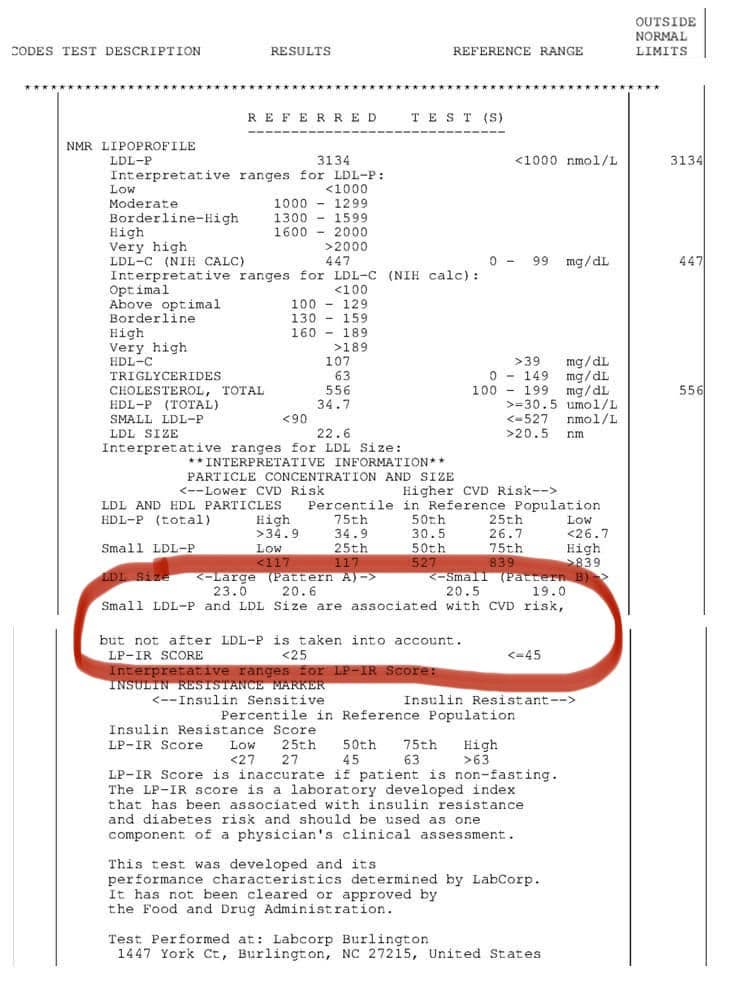
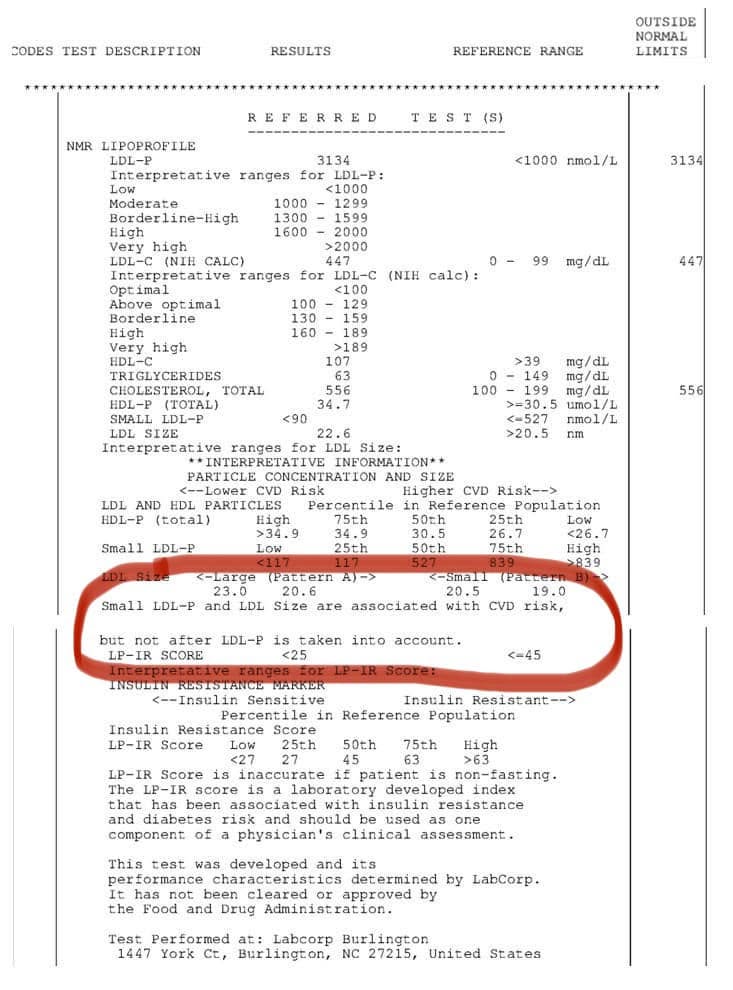
NMR lipid reports state LDL size adds no risk information once LDL-P is known

Aug 17, 2025 · Louis Nervegna ♥ 11 · 💬 6

Louis points out that NMR cholesterol reports themselves say small LDL-P and LDL size are associated with CVD risk but not after total LDL particle number is accounted for, and that ApoB is an equivalent particle count. He calls people claiming large size excuses high ApoB charlatans.

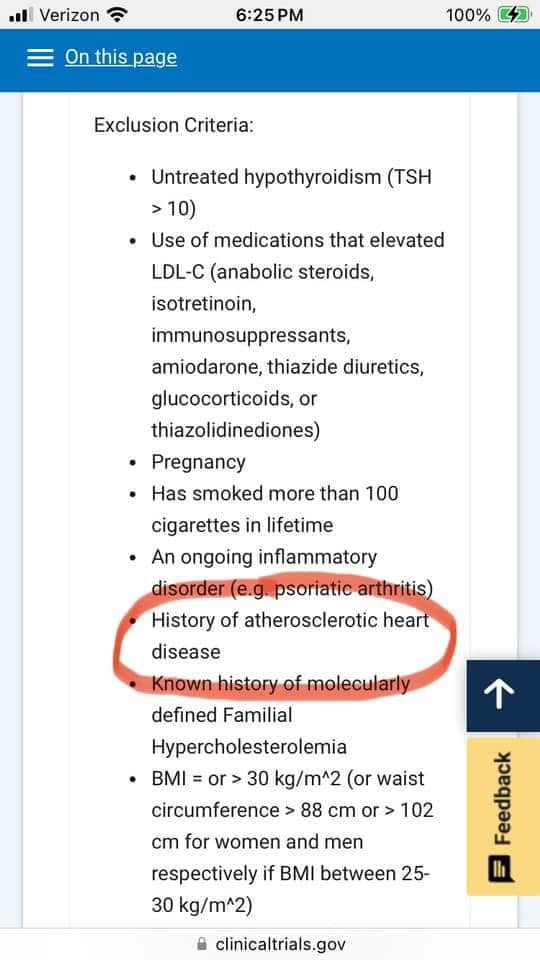
LMHR cross-sectional study critique: Miami Heart comparison group was sicker by design

Sep 01, 2024 · Louis Nervegna ♥ 8 · 💬 6

Louis compared official trial-registry exclusion criteria for the LMHR cross-sectional CT-angiogram study and the Miami Heart Study comparison cohort. LMHR excluded anyone with any atherosclerotic history, smokers, obesity, inflammatory disorders and familial hypercholesterolemia, whereas Miami excluded only advanced cases. He argues this creates selection bias because a healthy group cannot be matched to an unhealthy one.

Genetic study links higher LDL cholesterol causally to motor neurone disease risk

Oct 15, 2025 · Louis Nervegna ♥ 8 · 💬 8

Louis shares a 2019 Queen Mary University of London press release on the largest genetic (causal) study of motor neurone disease/ALS risk factors, which found higher LDL cholesterol was causally linked to greater risk. The investigators suggest studying whether cholesterol-lowering drugs such as statins could protect against the disease.

Video debunks four myths about cholesterol in nine minutes

Nov 18, 2024 · Gokhan Can ♥ 13 · 💬 7

Gokhan shares a Nutrition Made Simple video addressing four myths: that low cholesterol is deadly, that cholesterol is needed for hormones, that the brain needs high blood cholesterol, and that plaque appearing only in arteries clears LDL. Details are in the video.

Review: nuts, olive oil and nutraceuticals can lower small dense LDL

Sep 04, 2024 · Gokhan Can ♥ 7 · 💬 6

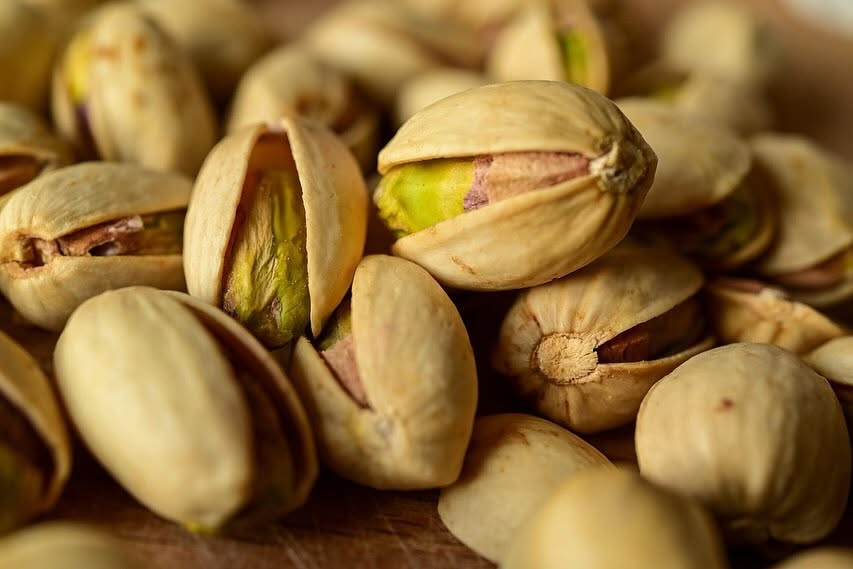
Clinical review of foods and supplements affecting small dense LDL, an independent risk factor. Pistachios, hazelnuts and mixed nuts in a Mediterranean diet consistently improve sdLDL and particle size, and high-polyphenol olive oil (25 mL/day for 3 weeks) cut small LDL particles 15.3%.

CSL112 ApoA-I infusion failed in phase 3 AEGIS-II, supporting HDL as marker not cause

Feb 13, 2024 · Louis Nervegna ♥ 8 · 💬 5 ↩ 14

Louis argues the failure of AEGIS-II, in which patients received native ApoA-I (CSL112), shows ApoA-I is not directly causal in heart disease. Every large pharmaceutical trial raising HDL or ApoA-I has failed to prevent heart attacks and strokes. HDL and ApoA-I remain good risk markers, probably standing in for insulin resistance, so raising them by means other than improving insulin sensitivity may not lower risk.

US heart disease death rate fell from over 500 to about 100 per 100,000 since 1950

Oct 15, 2025 · Louis Nervegna ♥ 9 · 💬 6

Louis notes that US heart disease death rates fell almost fivefold between 1950 and 2020, a bigger decline than any other disease, and that the drop correlates with cholesterol-lowering drugs and progressively lower LDL targets. A group member's comment lists MI mortality by era and LDL guideline targets; this is an ecological correlation, not proof of causation.

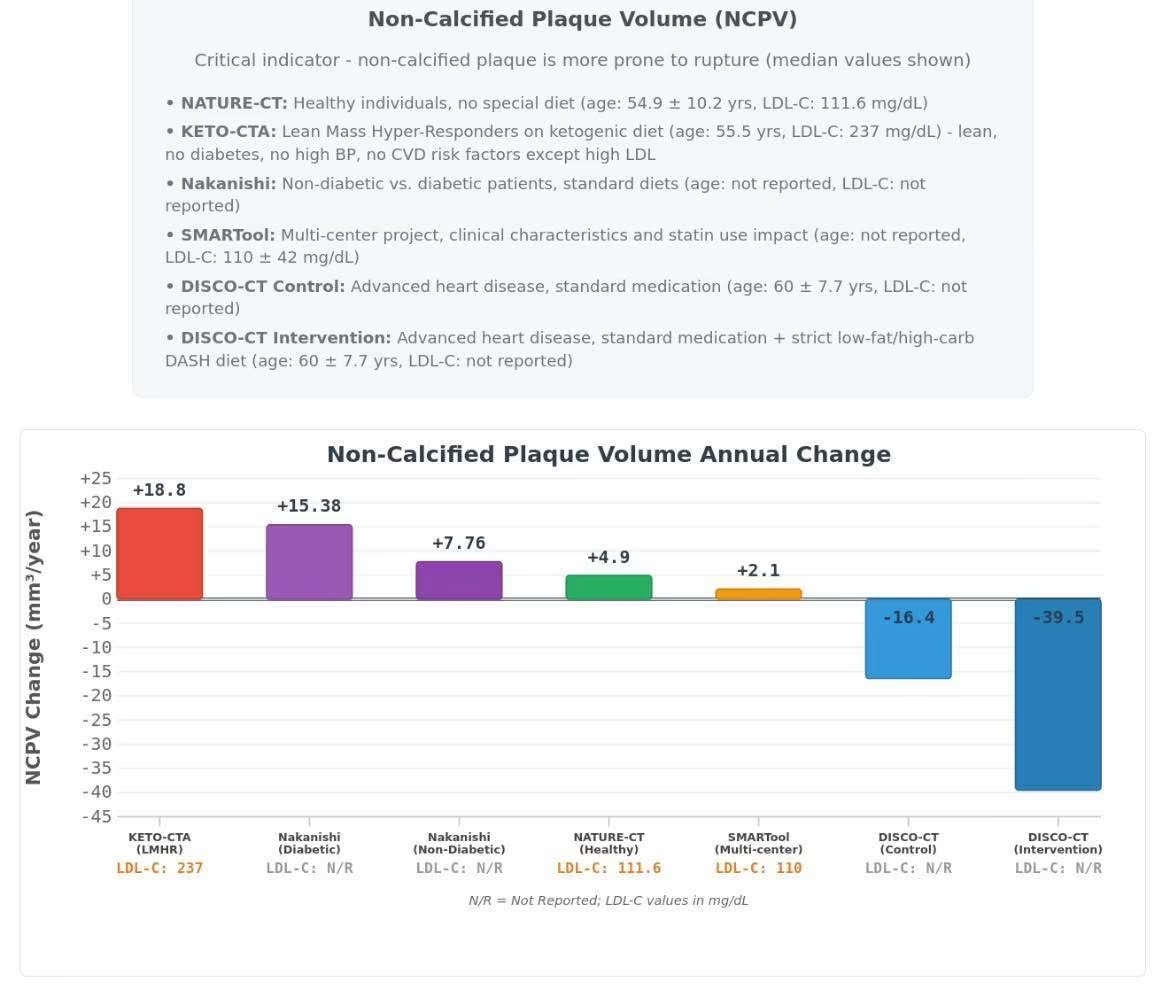
DISCO-CT diet-plus-medication group showed plaque reversal, unlike progression in Keto-CTA

Jul 17, 2025 · Louis Nervegna ♥ 6 · 💬 6 Plaque, CAC & CT angiography

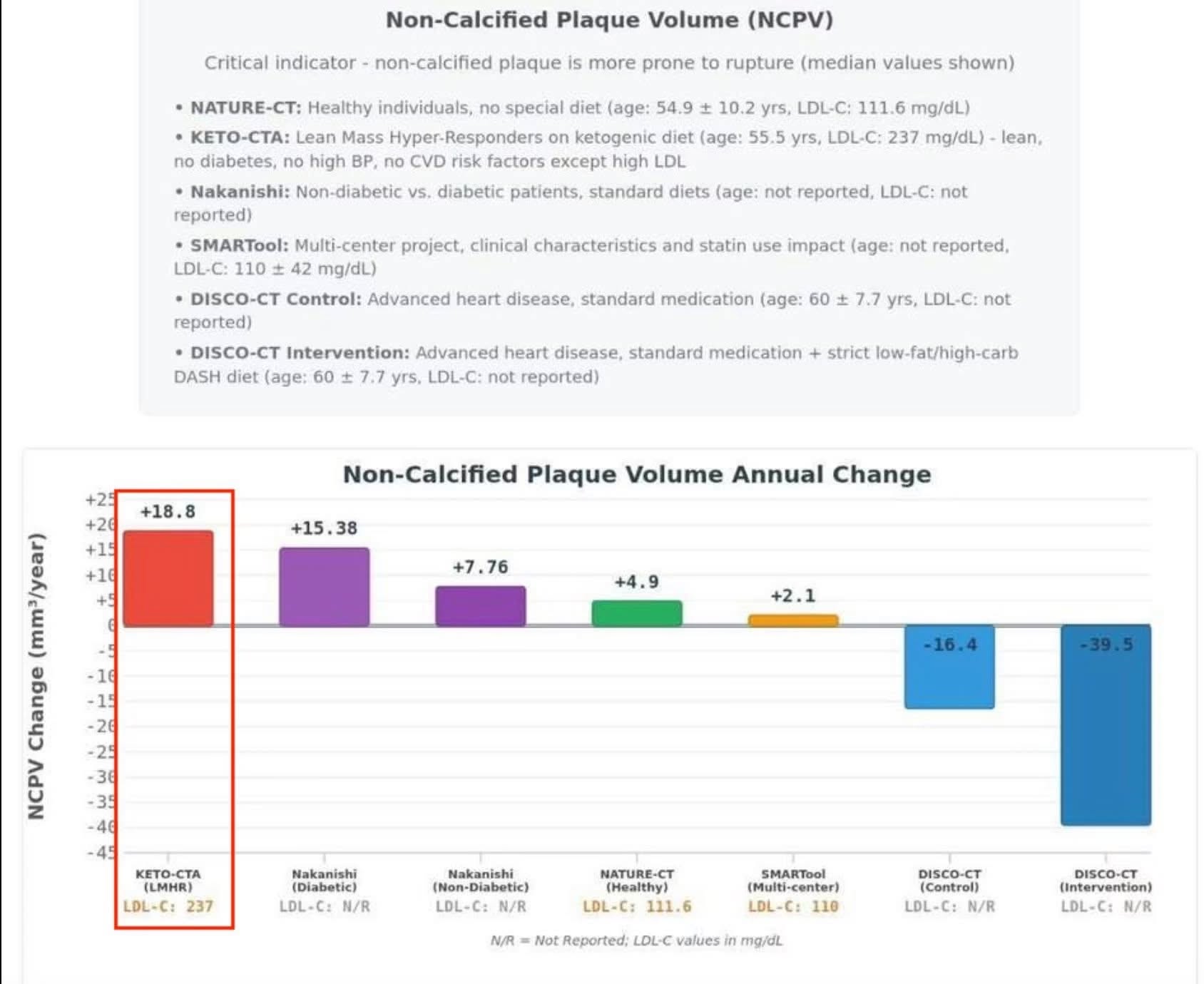
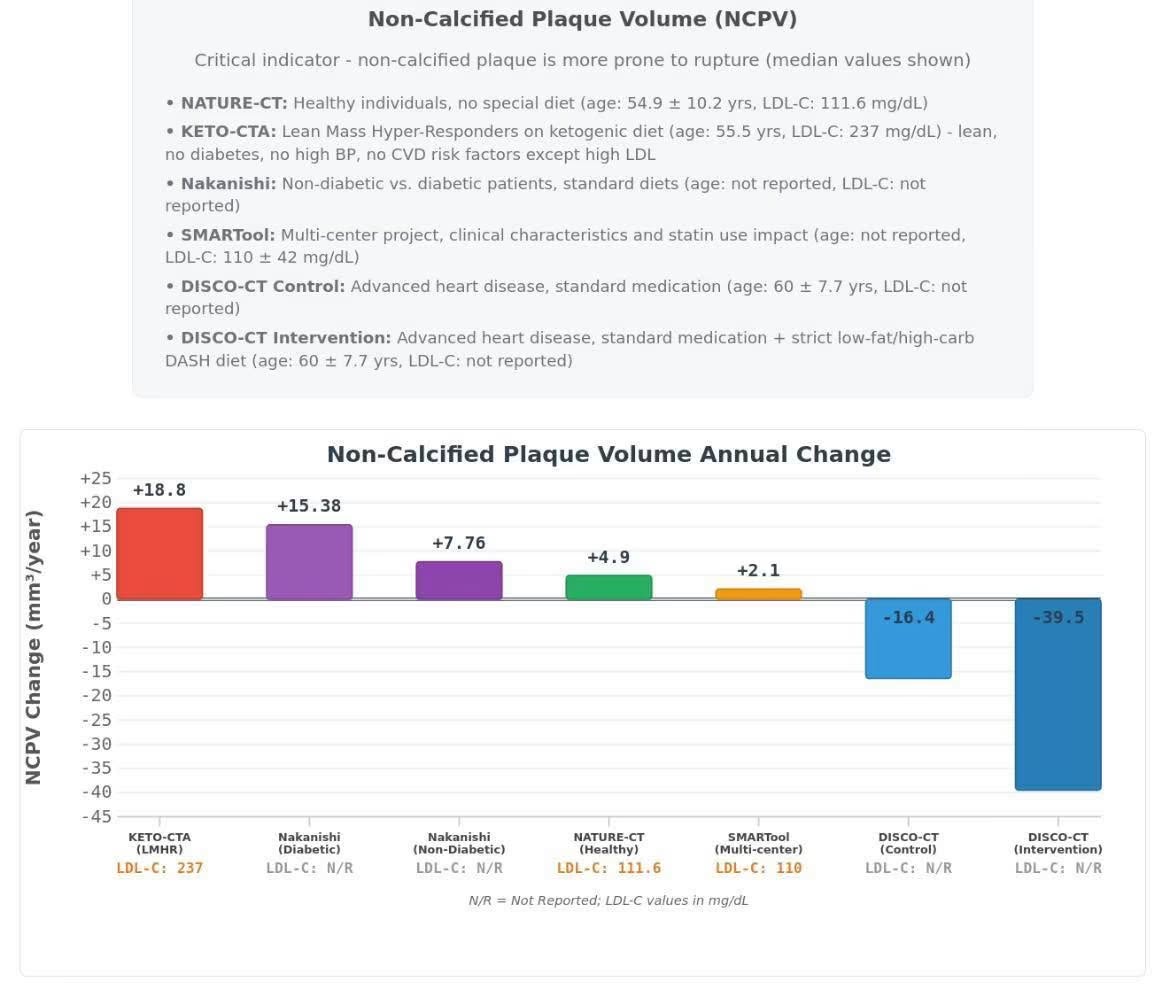
Louis shares a comparison of non-calcified plaque volume changes across several CT angiography studies. The DISCO-CT intervention group (statins, other medications and a DASH diet) showed significant plaque reversal at one year, while the Keto-CTA group of lean mass hyper-responders with LDL-C around 237 mg/dL showed progression. The linked Keto-CTA longitudinal paper is retracted per link metadata.
Bale-Doneen protocol: aggressive multi-drug risk management reduced carotid IMT

Dec 03, 2023 · Gokhan Can ♥ 11 · 💬 3 ↩ 2 Plaque, CAC & CT angiography

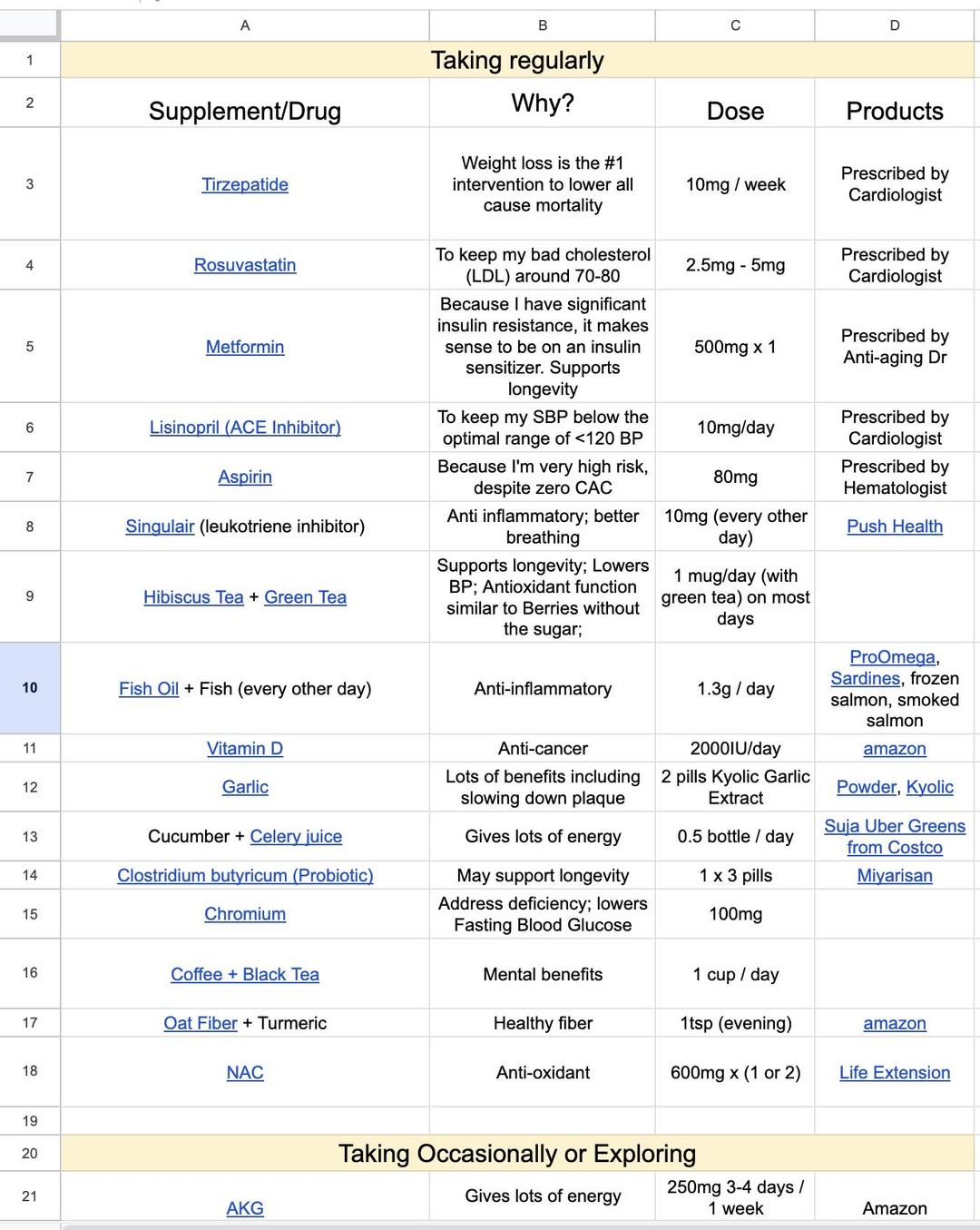
Describes the Bale and Doneen approach to reversing plaque: lifestyle counseling, regular imaging and biomarker testing, statin-based lipid control with ezetimibe or niacin, SBP under 120, low-dose aspirin, insulin sensitizers and anti-inflammatories. In the 2016 community-based paper, carotid IMT measures fell markedly over a median of 3 years.
Coconut oil raises LDL and ApoB, long-term outcomes unknown; MCT oil is a cleaner option

Oct 16, 2025 · Louis Nervegna ♥ 13 · 💬 2 Fats & oils (saturated fat, seed oils, omega-6, olive oil)

Louis summarizes a Nutrition Made Simple video: there are few long-term studies of coconut oil and heart disease, so claims rely on short-term biomarker studies. Because it is 80-90% saturated fat it raises LDL and ApoB (though less than butter); its HDL rise is unlikely protective, and he suggests plain MCT oil if one wants MCT benefits.
Cholesterol as a master regulator of blood stem cells, driving inflammatory hematopoiesis

Oct 19, 2025 · Gokhan Can ♥ 7 · 💬 4 Inflammation & CRP

Review of preclinical evidence that high LDL pulls hematopoietic stem cells out of dormancy, causing proliferation, oxidative stress, telomere shortening, impaired repopulation and lasting epigenetic changes that program blood and immune cells toward chronic inflammation. This offers a molecular basis for residual inflammatory risk after cholesterol is treated.

Small dense HDL tied to coronary calcium in insulin resistance; drugs may offset 40%

Nov 26, 2024 · Louis Nervegna ♥ 7 · 💬 4 Insulin resistance & diabetes

Louis highlights a paper in the International Journal of Cardiology reporting that small HDL particles are associated with prediabetes, diabetes and subclinical coronary atherosclerosis. The authors suggest lipid-lowering drugs may reduce up to 40% of the coronary calcification linked to high small HDL. Louis concludes that high HDL is not always good and that people with insulin resistance considering a statin should read the paper.

Dr. Chong on LDL misinformation, with RCT and Mendelian randomization evidence

Sep 02, 2026 · Louis Nervegna ♥ 10 · 💬 6 Myths, misinformation & controversies

Louis shares a Vital Human post in which Dr. Daniel Chong describes being repeatedly told his LDL science is wrong by people influenced by social media content that exaggerates or misreads evidence. The tags point to statin RCTs and Mendelian randomization as the supporting evidence; the post itself is largely about frustration with misinformation.

Mendelian randomization: BMI, BP, LDL and type 2 diabetes lower odds of longevity

Jan 25, 2025 · Gokhan Can ♥ 5 · 💬 5

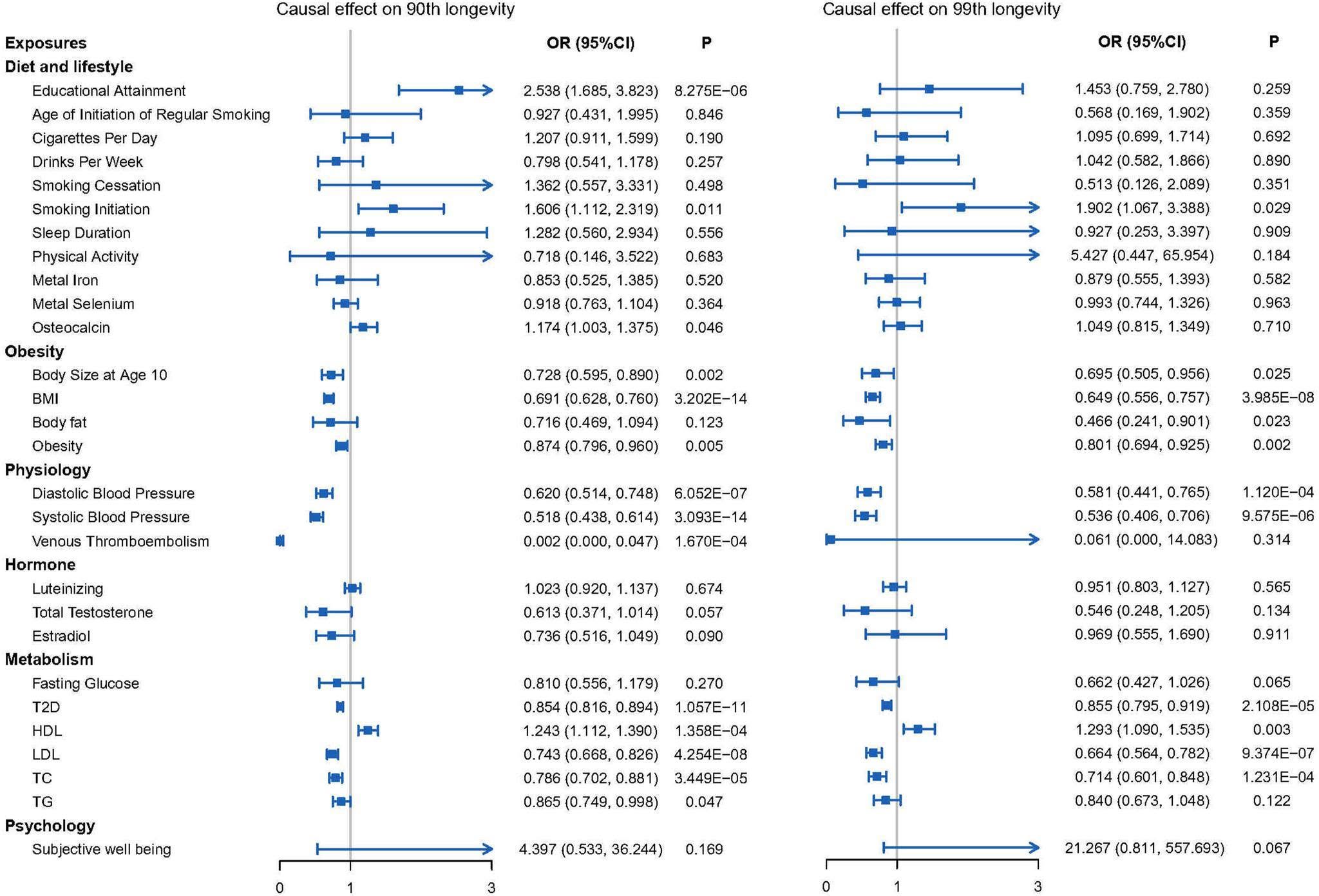
A Mendelian randomization study of 46 modifiable risk factors in people of European ancestry found nine linked to longevity (90+ years) and super-longevity (99+). Higher genetically predicted HDL was associated with greater odds of longevity, while higher BMI, obesity, blood pressure, type 2 diabetes, LDL and total cholesterol were associated with lower odds.

News report: statins may help slow Alzheimer's disease

Jun 12, 2025 · Louis Nervegna ♥ 13 · 💬 4 Statins

Louis shares a Brighter Side of News report that statins might offer a benefit beyond heart health by slowing Alzheimer's disease, calling it the latest of many studies showing this. No data or trial details are given in the post.

LDL is necessary but not always sufficient for atherosclerosis, among 25+ risk factors

Mar 25, 2024 · Louis Nervegna ♥ 14 · 💬 2

Louis summarizes a Joel Kahn video: there are at least 25 major heart disease risk factors, all of which should be addressed, but LDL is special because it appears necessary for plaque to form. It is not always sufficient, since some people with very high LDL never develop plaque. No other risk factor has been shown to be necessary, which is why cardiologists focus on LDL.

Meta-analysis of 119 trials: nuts did not cause weight gain and modestly lowered LDL

Oct 29, 2026 · Louis Nervegna ♥ 10 · 💬 2 Nuts, fish, coffee, tea, cocoa & other foods

A systematic review and meta-analysis of randomized trials (154 articles, 119 unique RCTs) found adding about 120 kcal/day of nuts did not significantly change weight, BMI or waist; body fat fell slightly and lean mass rose. Nuts were associated with small reductions in total cholesterol, LDL and triglycerides, with no significant effect on HDL.

U-shaped ApoB-mortality curve turns linear after adjustment in 36,500 people

Jan 13, 2025 · Louis Nervegna ♥ 10 · 💬 2

Louis explains that the U-shaped curve between ApoB or LDL and mortality is not causal at low levels per RCTs and Mendelian randomization. A 2022 Chinese cohort of 36,500 showed the curve becomes linear after correcting for comorbidities, bilirubin and wasting-related malnutrition. He clarifies that 'metabolic vulnerability' is a broad set of age-related disease processes, not simply insulin resistance, and is the source of the reverse causality.

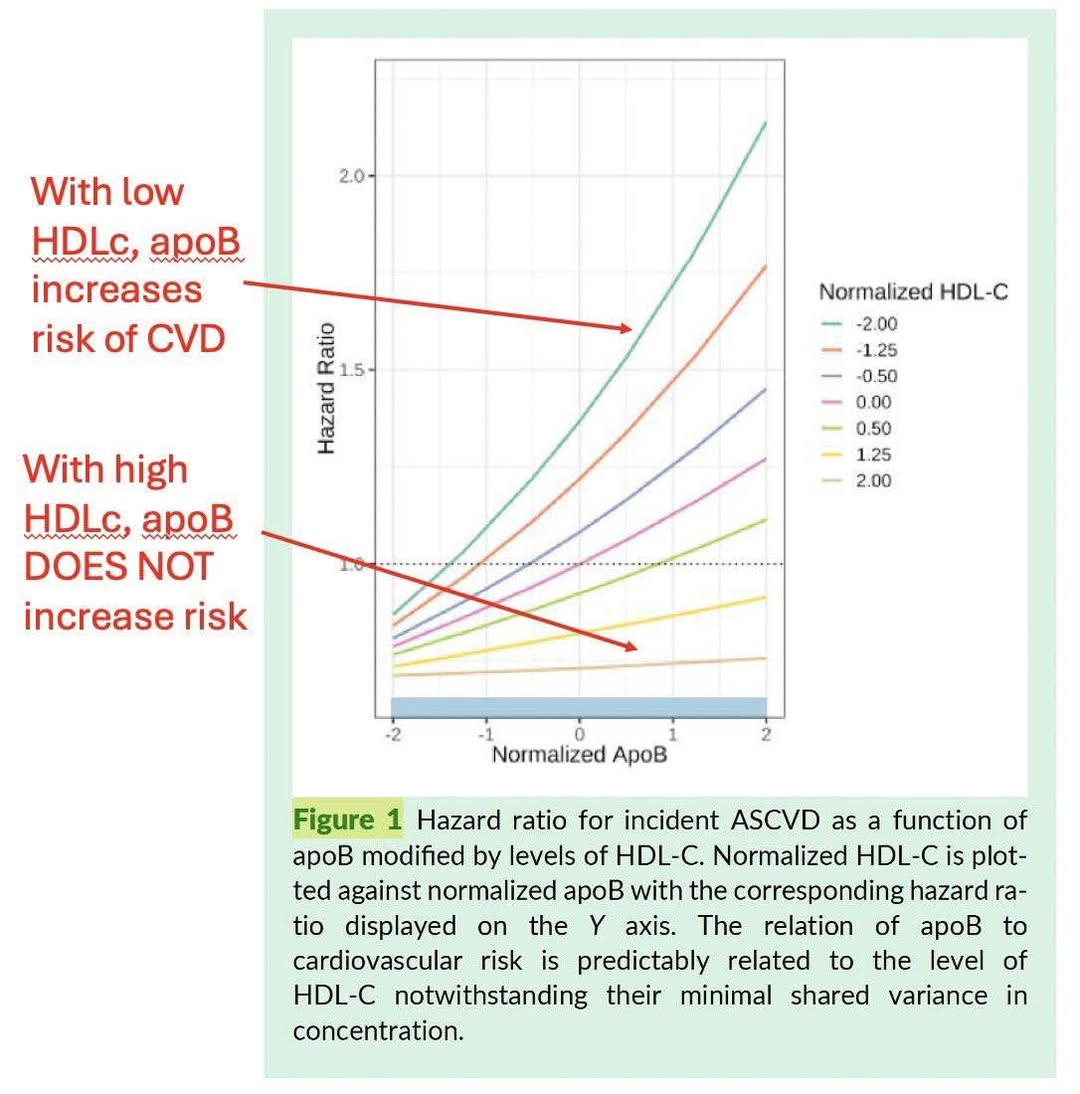
High HDL tracks with lower risk in UK Biobank, but HDL-raising drugs have failed

Oct 28, 2026 · Louis Nervegna ♥ 7 · 💬 3 ↩ 1

Louis explains that a viral UK Biobank graph shows higher HDL linked to lower ASCVD risk at any LDL/ApoB, as dozens of earlier observational studies have, though the effect size here is larger. Every randomized HDL-raising drug trial failed on hard outcomes, and Mendelian randomization shows no lifetime benefit from genes raising HDL, so HDL is thought to be a proxy for insulin resistance, which is better measured directly.

Atherosclerosis drivers such as high apoB and blood pressure also raise dementia risk

Jun 05, 2026 · Louis Nervegna ♥ 5 · 💬 5 Brain health & dementia

A shared post argues that atherosclerotic risk factors (atherosclerosis, endothelial dysfunction, high BP, high LDL/apoB) are consistently linked to Alzheimer's and dementia risk, with some genetic overlap between lipids, coronary disease and Alzheimer's. The message is that keeping apoB and blood pressure optimal, and improving endothelial function, insulin sensitivity and inflammation, protects both heart and brain.

Butter raises LDL and offers no CVD protection; look at the totality of evidence

Sep 30, 2025 · Louis Nervegna ♥ 11 · 💬 2 Fats & oils (saturated fat, seed oils, omega-6, olive oil)

Responding to claims that butter is a superfood, the shared post says the butter literature shows neutral to slightly higher all-cause mortality and no CVD protection, and that butter's saturated fat reliably raises LDL-C in controlled feeding trials. Louis adds that conclusions should come from the totality of evidence rather than cherry-picked studies.
Higher LDL linked to undereye bags and full cheeks in faster facial aging

Sep 28, 2024 · Louis Nervegna ♥ 6 · 💬 4 Aging & longevity

Louis shares a National Geographic piece on 3D facial imaging used to estimate biological age. Higher LDL and total cholesterol tracked with undereye bags and full cheeks, while inflammation and infection tracked with a narrowing forehead and sagging skin. Smoking, snoring and high cholesterol marked fast-agers, whereas yogurt, regular mealtimes and denser bones marked slow-agers.

Fact-checking keto and carnivore influencer claims about LDL, ApoB and saturated fat

May 28, 2025 · Louis Nervegna ♥ 12 · 💬 1

Louis lists what keto/carnivore influencers get right and wrong: ApoB is the best lipid marker, LDL-C usually tracks ApoB, particle size doesn't matter once particle number is counted, and most saturated fats raise LDL-P, ApoB and LDL-C. Studies finding saturated fat harmless used a standard Western diet as comparator.

Layne Norton rebuts seed-oil claims with human evidence on inflammation, LDL and oxidation

Nov 03, 2026 · Louis Nervegna ♥ 3 · 💬 5 Fats & oils (saturated fat, seed oils, omega-6, olive oil)

A shared post argues that human trial evidence does not support the claim that seed oils are harmful. Systematic reviews of randomized trials find that raising linoleic acid does not consistently increase inflammatory markers, replacing saturated fat with polyunsaturated fat lowers LDL and cuts coronary events, and trials show no significant increase in lipid peroxidation. It adds that LDL oxidation mostly occurs after retention in the artery wall, so LDL concentration still matters.

Examine: saturated fat raises LDL-C and apoB in WHO meta-analysis of 84 RCTs

Sep 05, 2024 · Gokhan Can ♥ 5 · 💬 3 Fats & oils (saturated fat, seed oils, omega-6, olive oil)

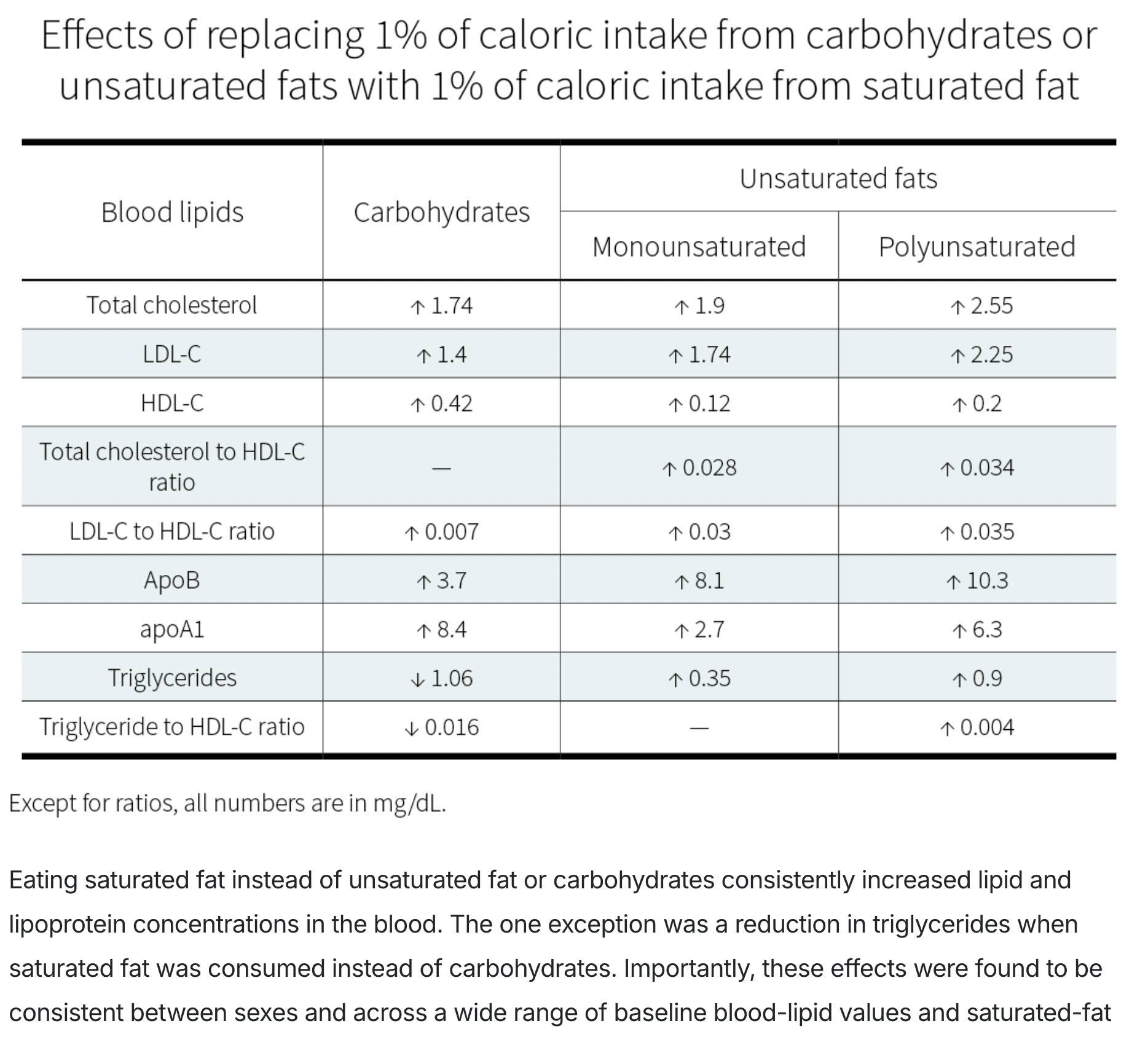
Summary of Examine's article on saturated fat. A 2016 WHO meta-analysis of 84 RCTs (2,353 healthy adults) examined replacing 1% of calories from carbohydrates or unsaturated fat with saturated fat. Saturated fat raised LDL-C and apoB (suggesting higher risk), and HDL rose only about one-tenth as much as LDL-C, raising the LDL/HDL ratio.

LDL lowering is essential but cardiometabolic health is bigger than LDL, says Fontana

Mar 30, 2026 · Louis Nervegna ♥ 14 · 💬 1

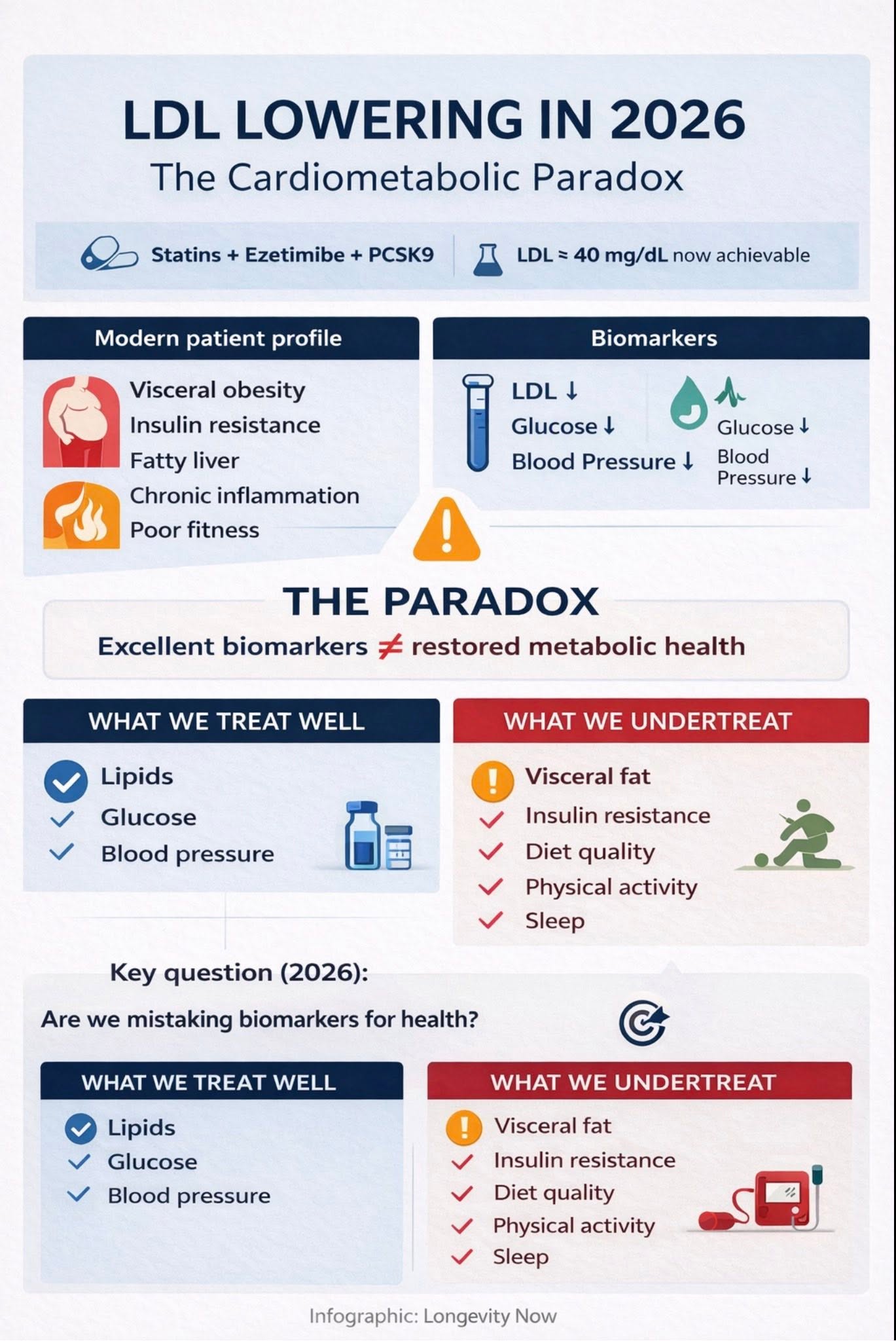
Luigi Fontana, reacting to a 2026 JAMA editorial on lipid lowering, argues that statins, ezetimibe and PCSK9 inhibitors now drive LDL very low, but many patients still have visceral fat, insulin resistance, fatty liver and inflammation. Louis agrees; lowering apoB remains essential but does not fix the underlying metabolic disease.

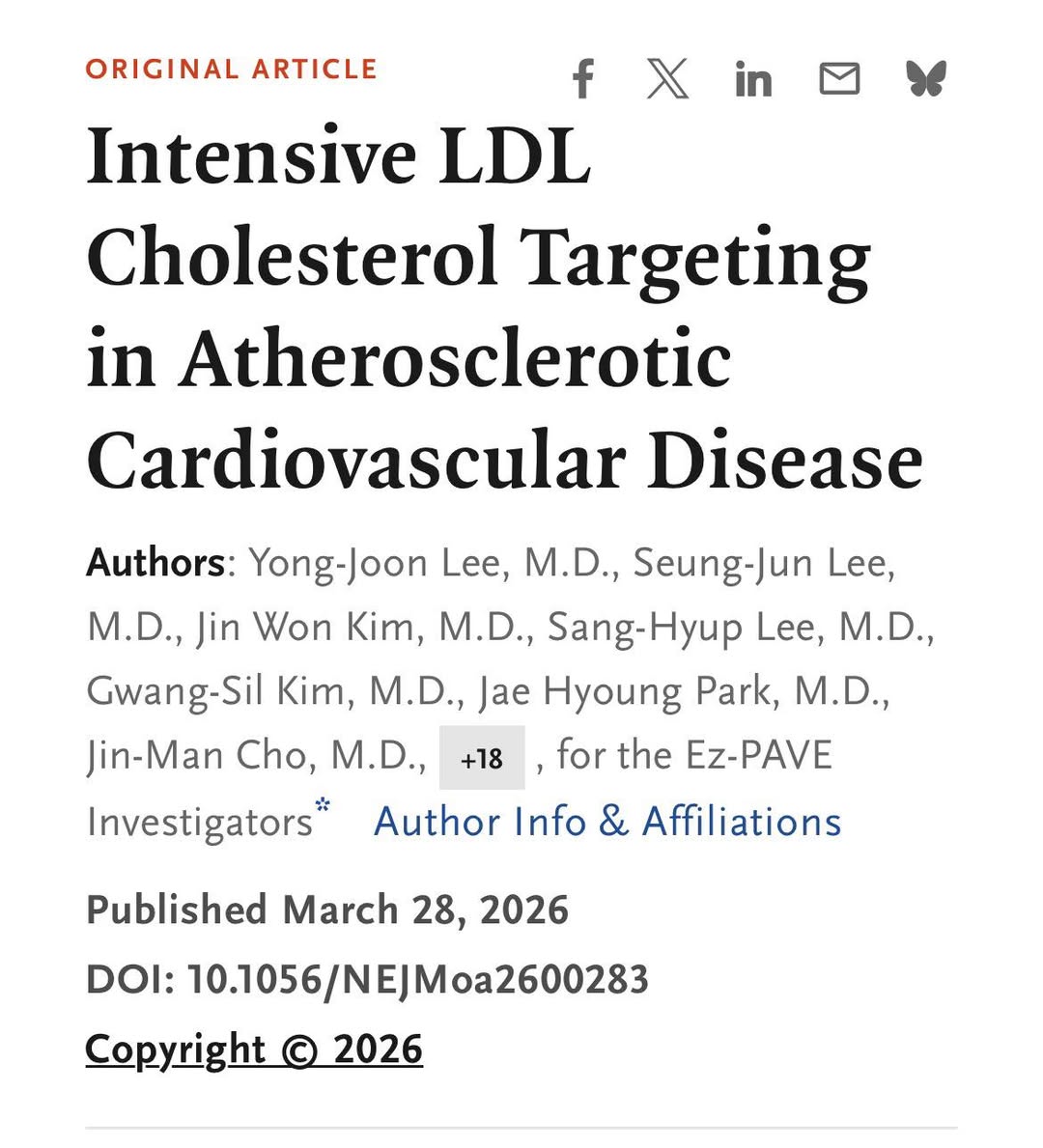
Ez-PAVE: LDL target below 55 mg/dL cut major events 33% versus below 70 mg/dL

May 29, 2026 · Louis Nervegna ♥ 10 · 💬 1

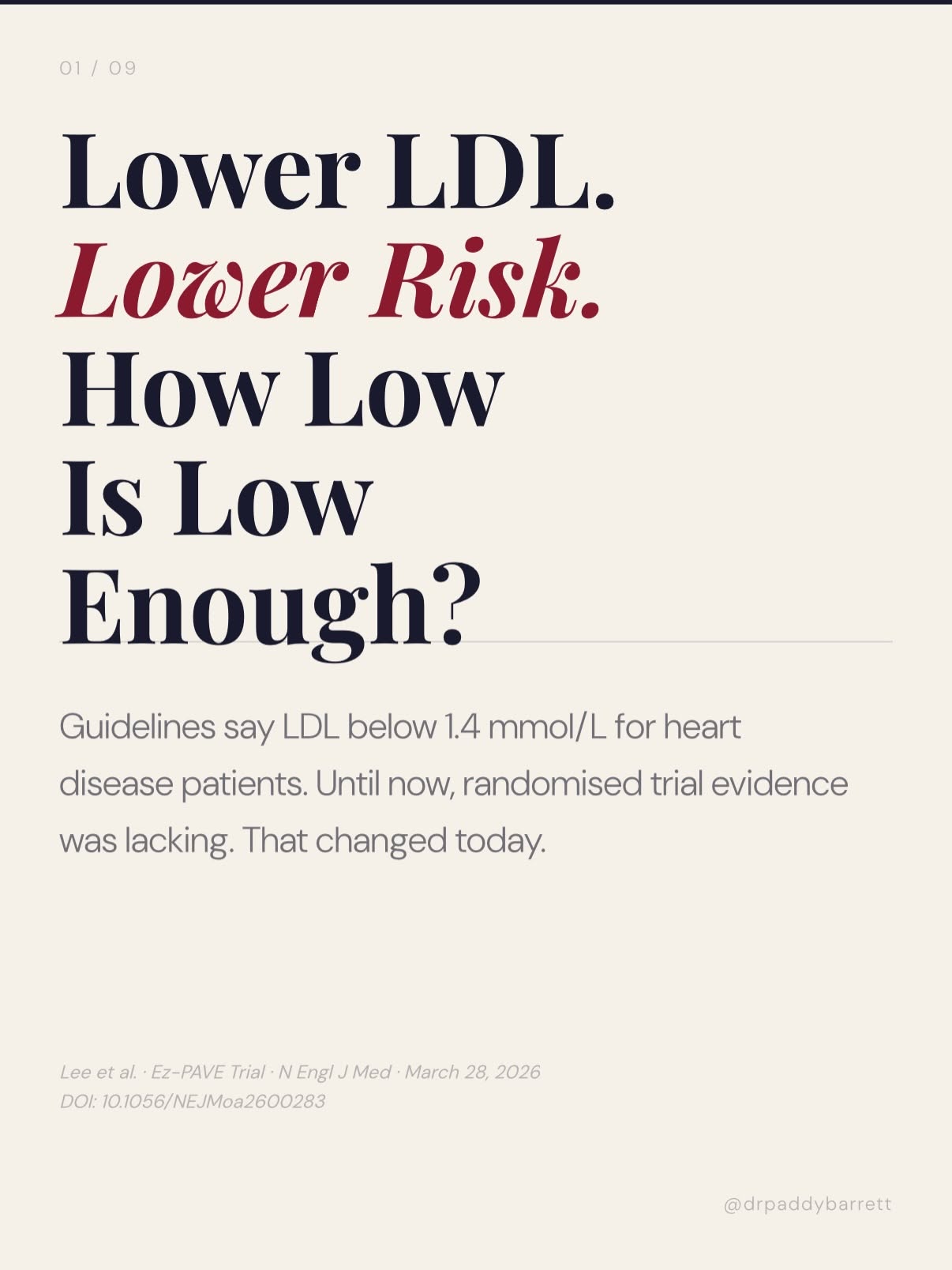
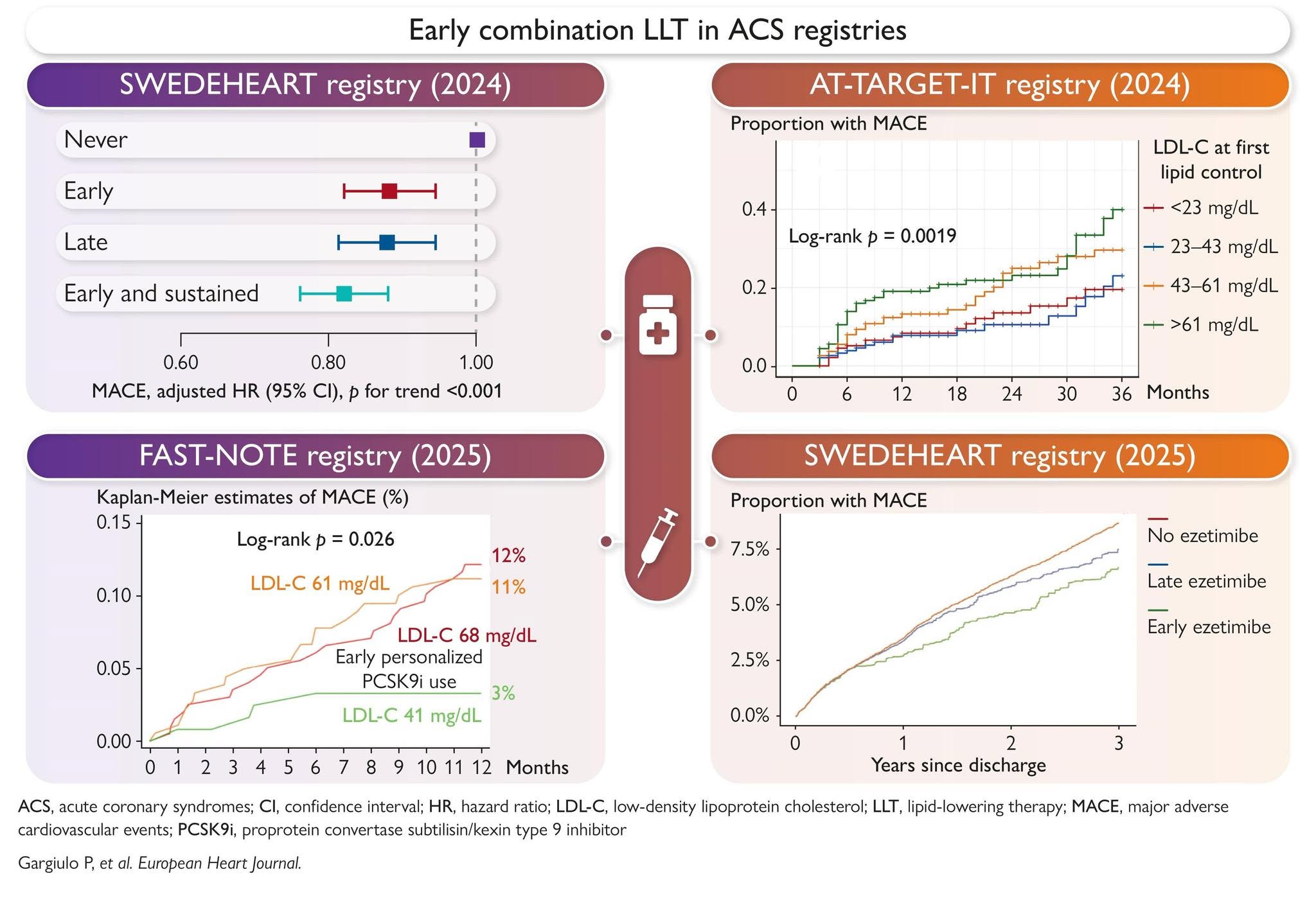
Shared summary of the Ez-PAVE NEJM trial randomizing 3,048 patients with ASCVD to LDL target below 1.4 mmol/L (55 mg/dL) or below 1.8 mmol/L (70 mg/dL) for 3 years. The intensive target had fewer events with equivalent safety, supporting combination lipid-lowering earlier.

2025 ACC/AHA ACS guideline: high-intensity statin plus a non-statin if LDL is 70 or above

Feb 27, 2025 · Louis Nervegna ♥ 10 · 💬 1

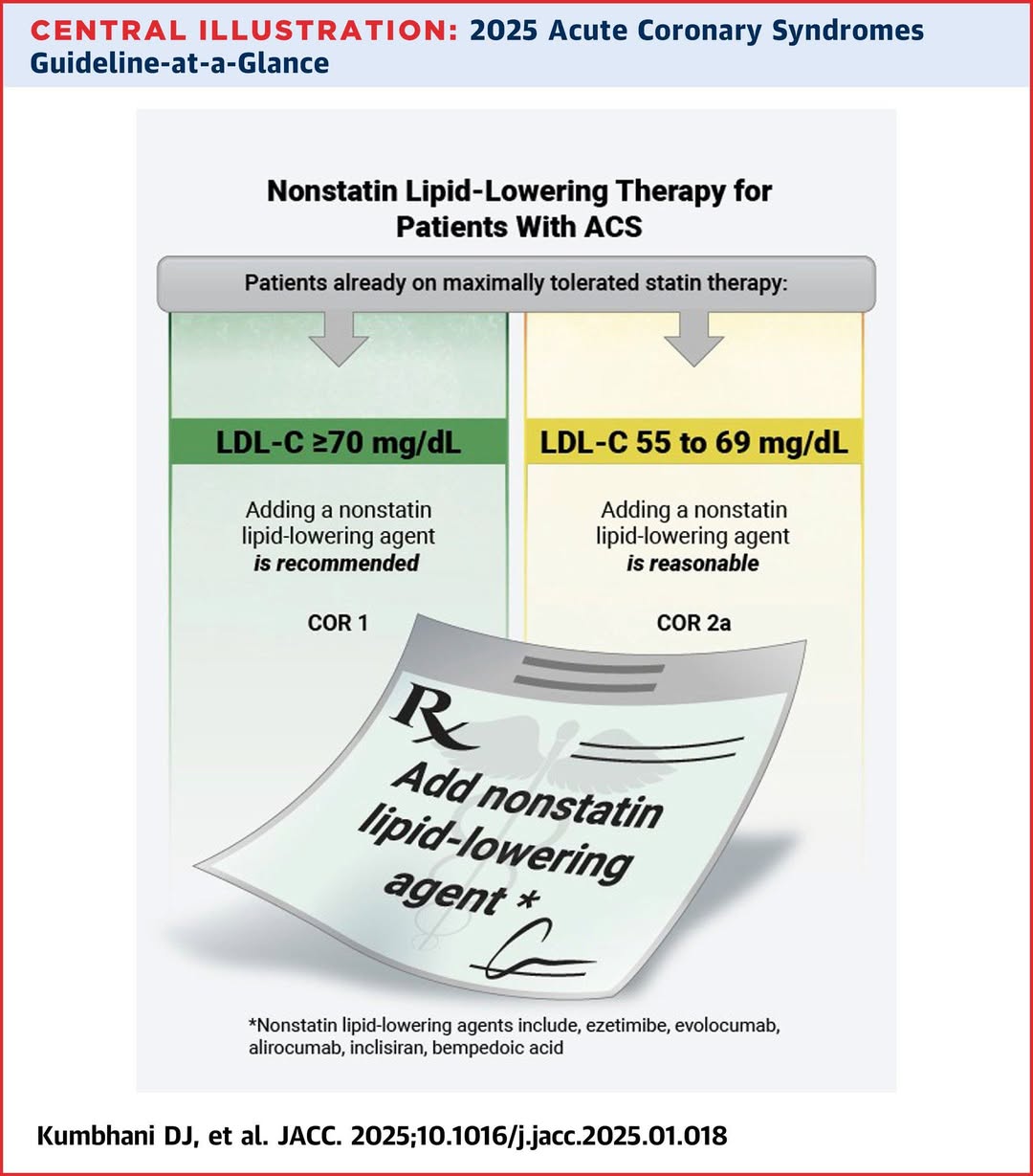
Louis summarizes lipid recommendations from the 2025 acute coronary syndrome guideline. All ACS patients should receive high-intensity statins with the option of ezetimibe, and a non-statin agent is recommended if LDL stays at 70 mg/dL or higher on maximally tolerated statin, with further intensification reasonable at 55-69.

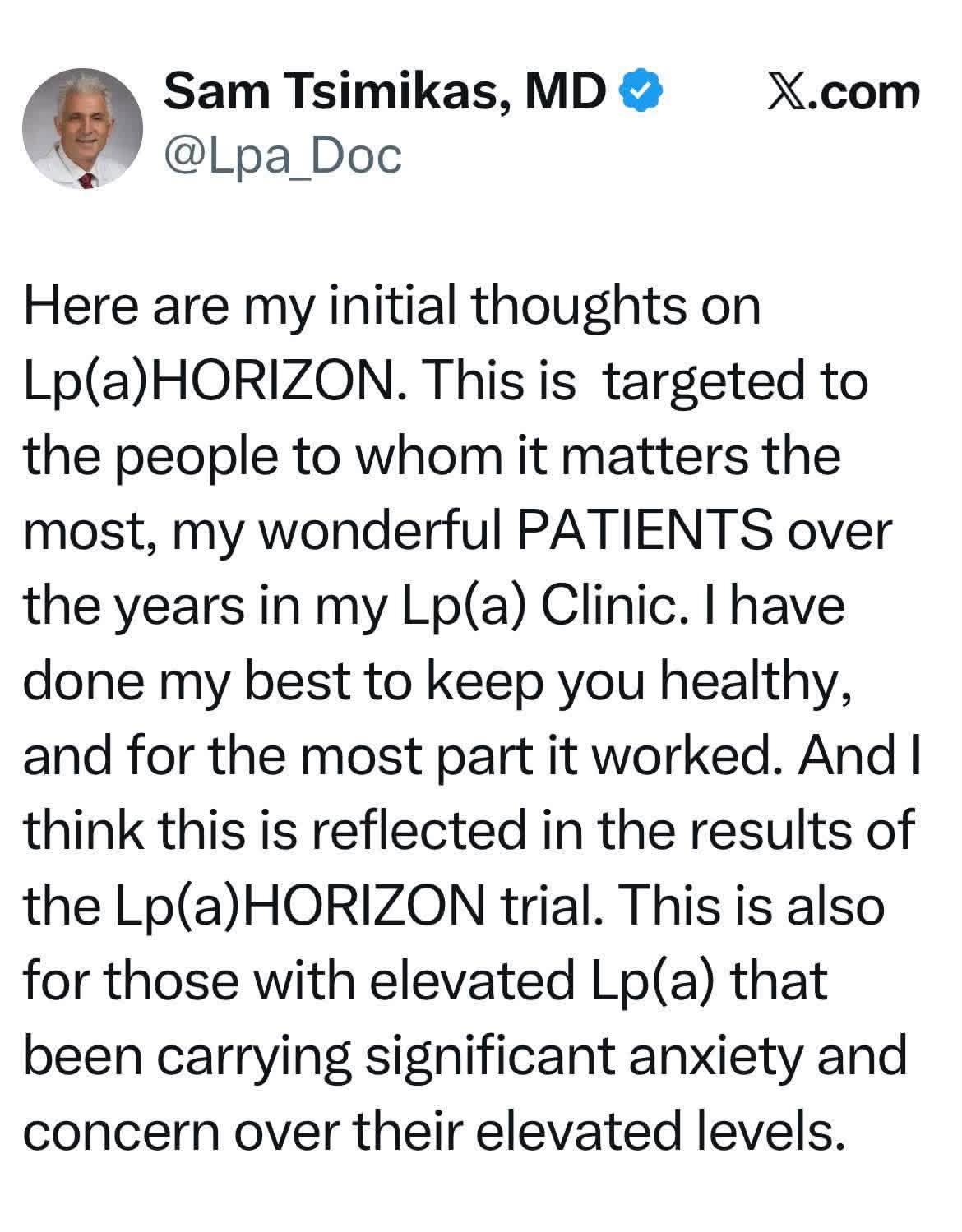
Tsimikas: Lp(a) risk can be managed with LDL under 65 and tight risk-factor control

Nov 10, 2026 · Louis Nervegna ♥ 13 · 💬 1 ↩ 1 Lp(a)

Louis quotes Sam Tsimikas, who calls Lp(a)HORIZON a success because it suggests Lp(a) risk can be reduced by keeping LDL-C at or below 65, blood pressure at 120 or lower, controlling other risk factors and taking proven medicines. In his Lp(a) clinic about 75% take a statin, 50% ezetimibe, 50% a PCSK9 inhibitor, plus aspirin.
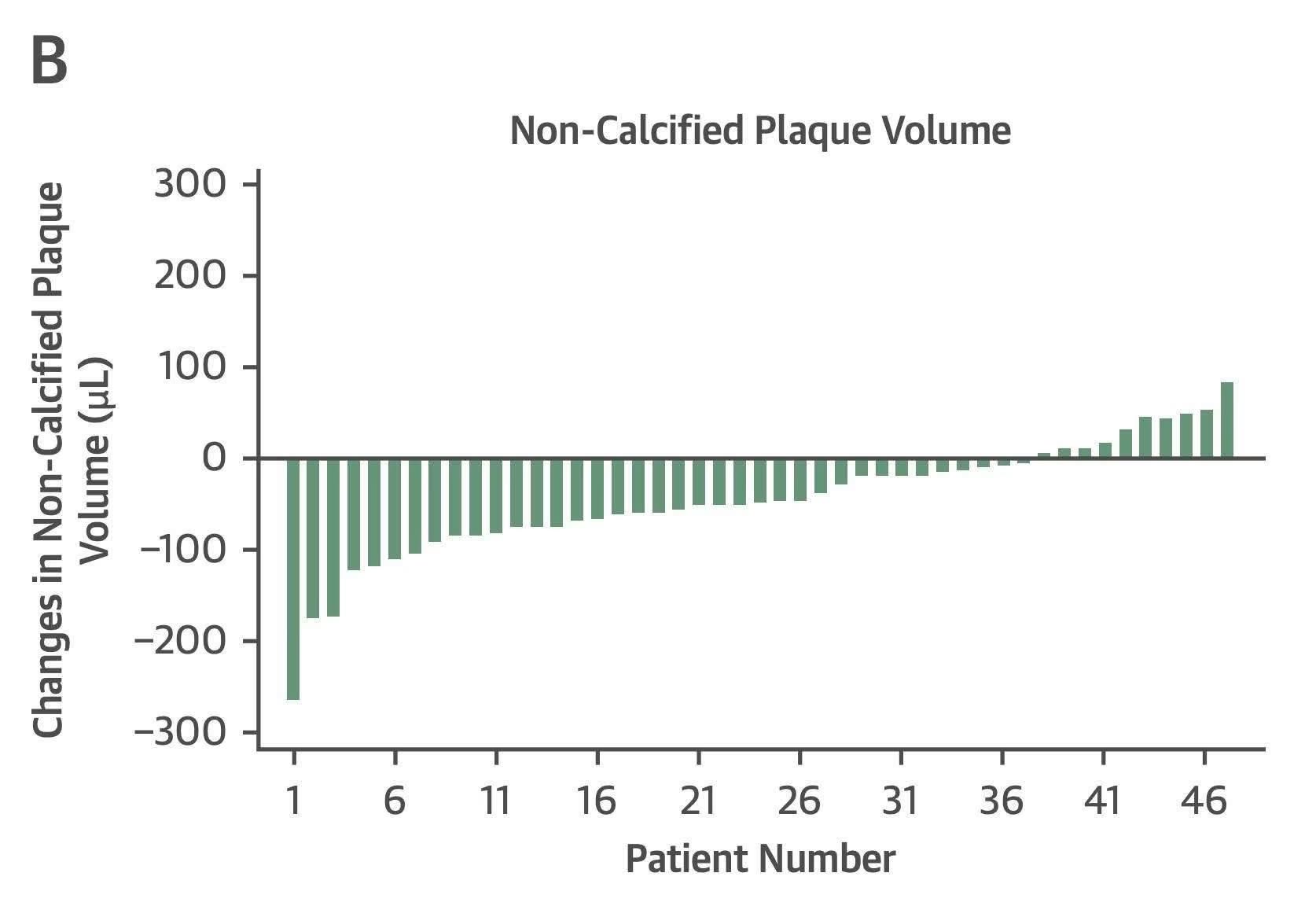
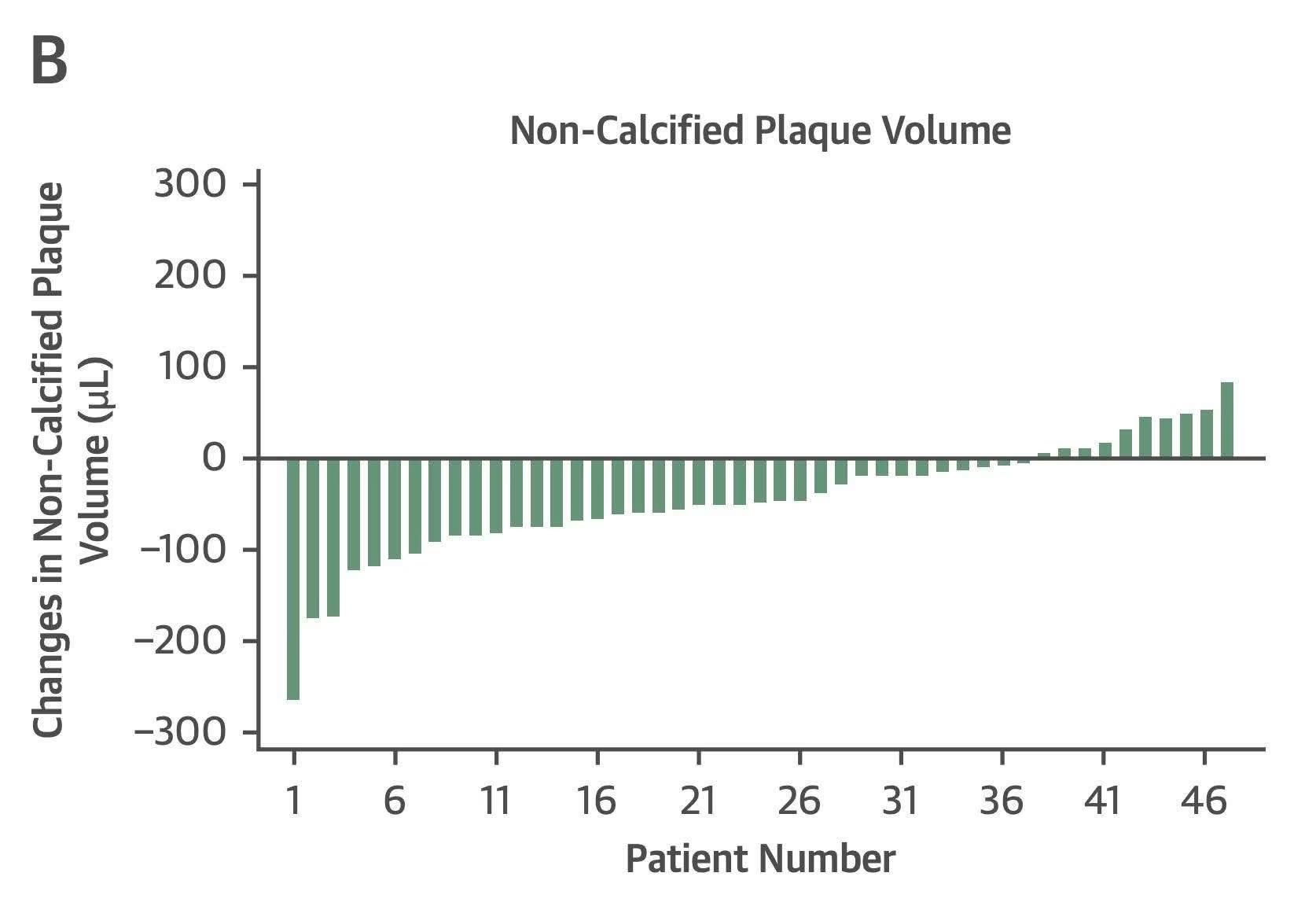
Repatha alone reversed soft plaque in 37 of 47 patients over 18 months at LDL near 30

Nov 13, 2026 · Louis Nervegna ♥ 9 · 💬 1 PCSK9, ezetimibe & newer drugs

Louis explains a small uncontrolled study of the PCSK9 inhibitor evolocumab with CT angiography. Average LDL was about 30 mg/dL, 37 of 47 patients had some non-calcified plaque regression, and many had large reversals worth years of typical growth (about 5 mm3 per year). He cautions it was small with no randomization or control group, and that PCSK9 monotherapy is not yet proven to reduce heart attacks.
Swapping refined carbs for unsaturated fat lowers LDL: meta-analysis of 60 feeding trials

Oct 08, 2025 · Louis Nervegna ♥ 5 · 💬 2 Fats & oils (saturated fat, seed oils, omega-6, olive oil)

A meta-analysis of 60 controlled human feeding trials found that replacing carbohydrate calories with monounsaturated or polyunsaturated fat lowers LDL cholesterol, while saturated fat raises it. The effect looked largest for polyunsaturated fat, which is why choosing oils and nuts over refined starch and sugar helps the lipid profile.
Fibrates lower triglycerides and may reduce CVD risk in metabolic syndrome

Mar 01, 2024 · Gokhan Can ♥ 5 · 💬 3

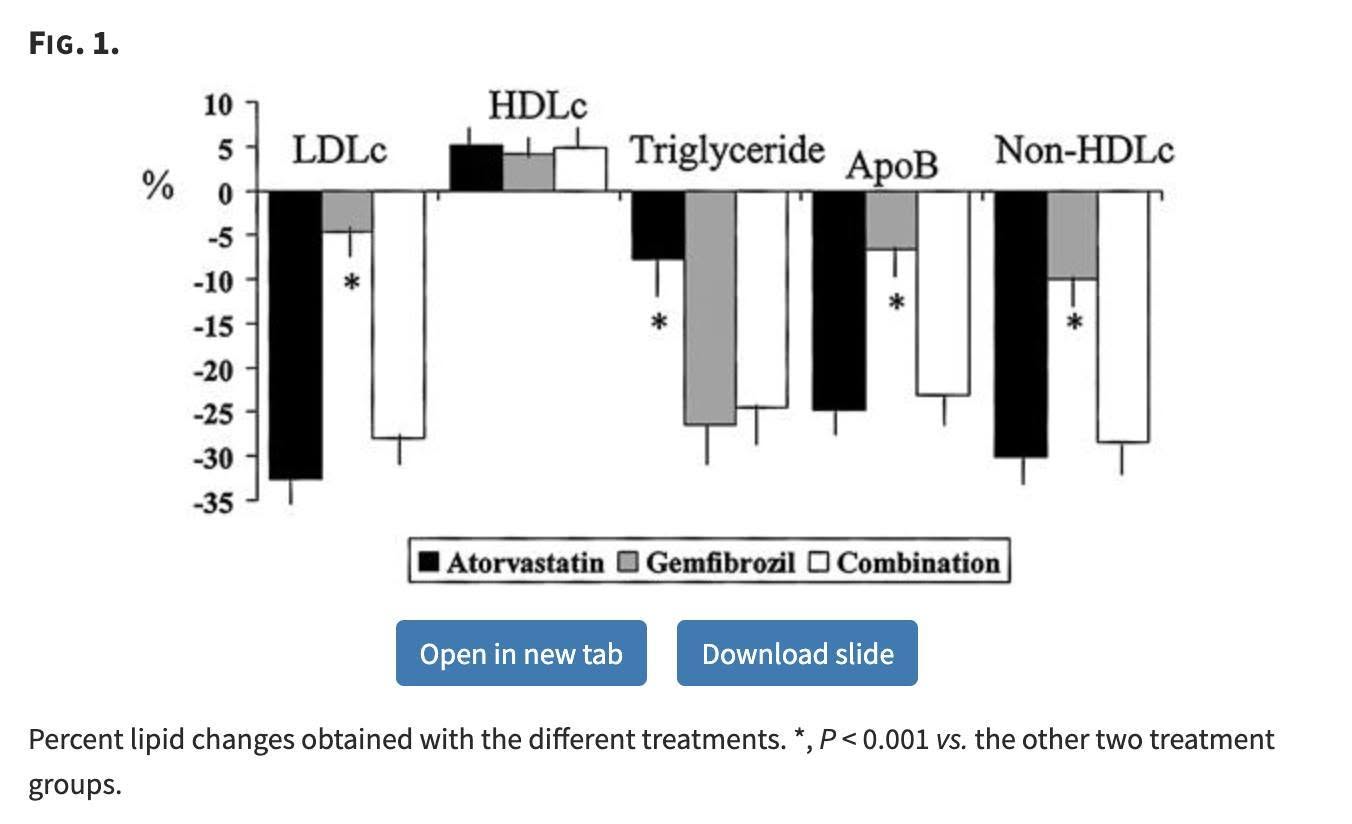
Brief overview of fibrates (fenofibrate, gemfibrozil), PPAR-alpha agonists that lower triglycerides, raise HDL and have anti-inflammatory effects. Meta-analyses and real-world data suggest a role for CVD risk reduction in people with metabolic syndrome, especially high triglycerides and low HDL. A 2020 review notes that several RCTs did not show clear benefit overall.

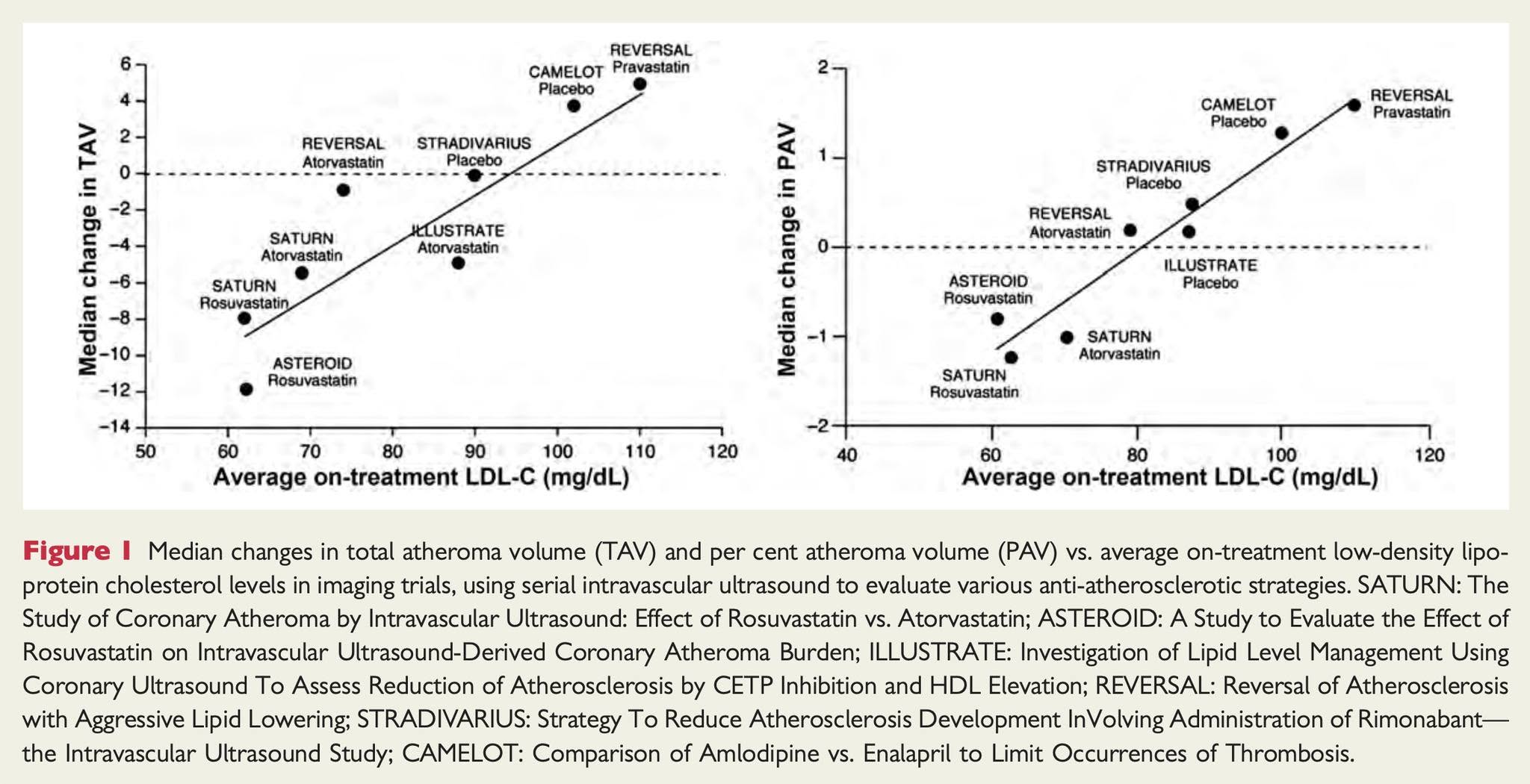
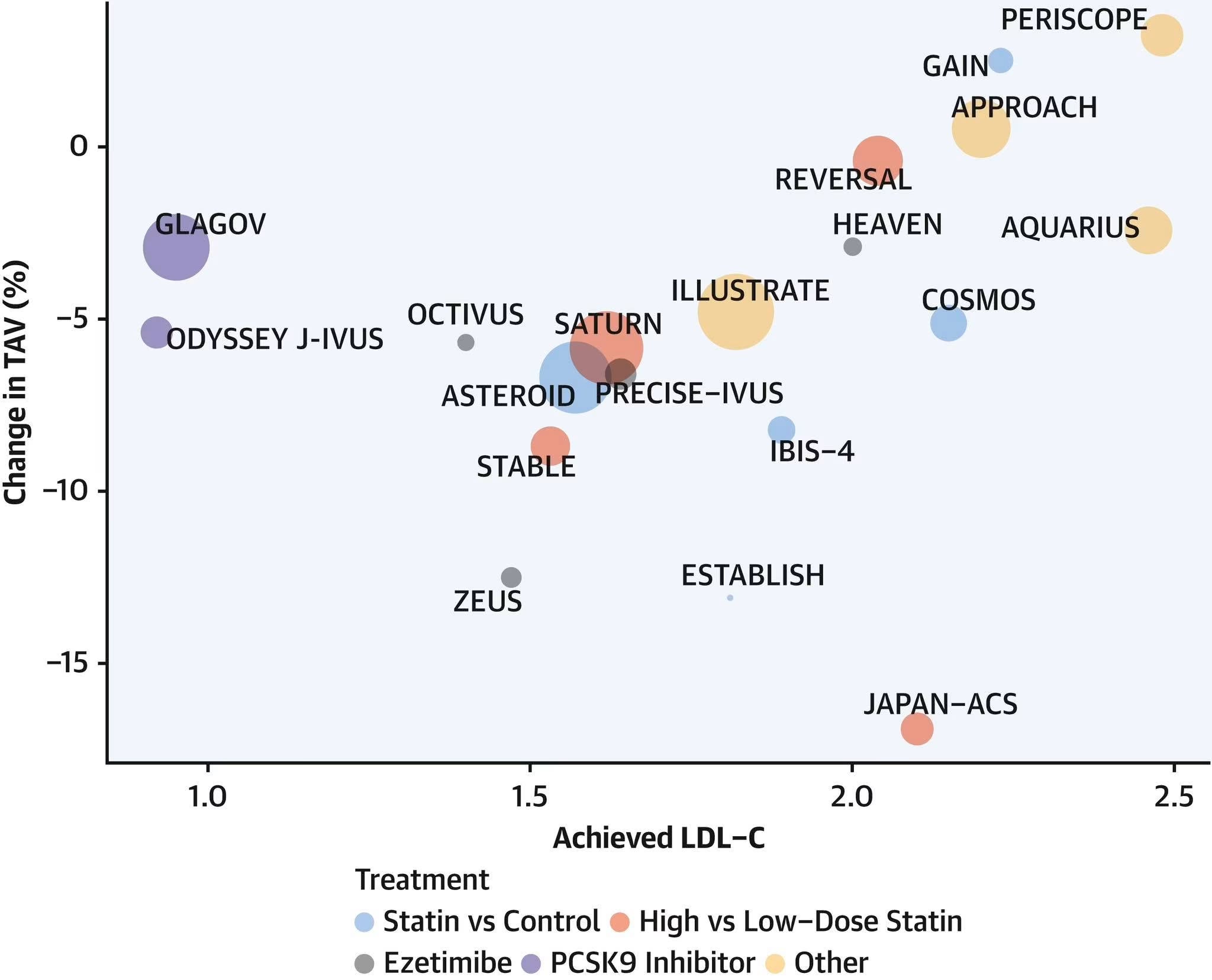
Six statin trials show 5 to 17% total plaque reversal, with the best results at lowest LDL

Oct 31, 2026 · Louis Nervegna ♥ 12 ↩ 1 Plaque, CAC & CT angiography

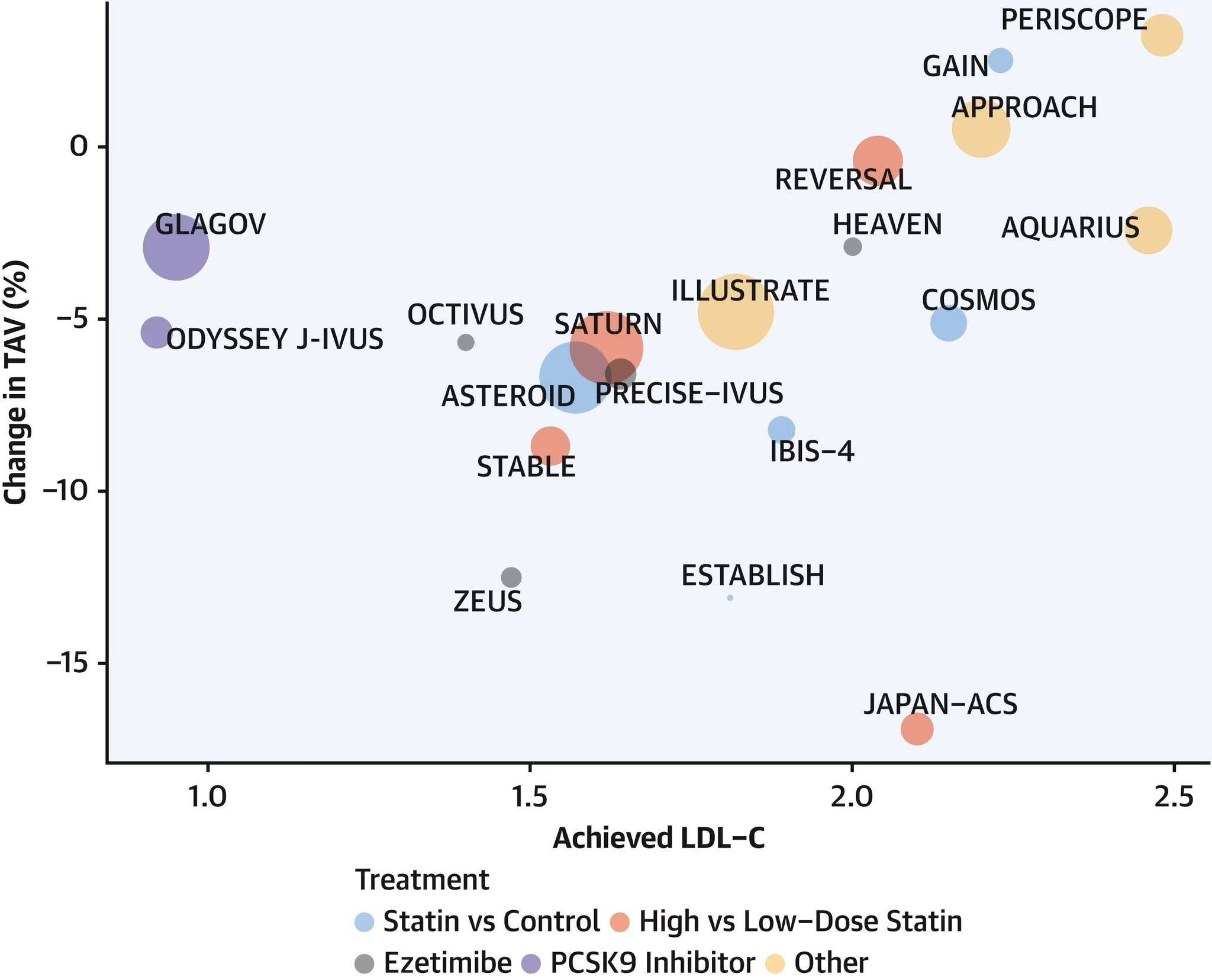
Louis shares a chart of randomized trials showing plaque reversal with statins, ezetimibe and PCSK9 inhibitors, with total atheroma volume change plotted against LDL-C. Total plaque reversal ranged from about 5% to 17% in six older statin trials, measured by CT angiography or IVUS, and came from soft rather than calcified plaque. The chart suggests total plaque reversal begins once LDL falls below roughly 90 mg/dL.

WOSCOPS 20-year follow-up: 5 years of pravastatin gave lasting mortality and event benefit

Apr 07, 2026 · Gokhan Can ♥ 7 · 💬 1 Statins

Describes the 20-year follow-up of the West of Scotland Coronary Prevention Study: 5 years of pravastatin in middle-aged men with high cholesterol and no prior CHD produced a lasting legacy effect, with reduced all-cause, CV and coronary mortality and fewer heart failure and MI hospitalizations. No excess cancer or non-CV mortality was seen.

Keto-CTA hyper-responders progressed soft plaque 3.8x faster than Nature-CT controls

Apr 18, 2025 · Louis Nervegna ♥ 5 · 💬 1 Plaque, CAC & CT angiography

Louis compares Keto-CTA (keto diet, LMHR) with the Nature-CT study, both from Budoff's UCLA group using CCTA and Cleerly software, with similar age (~55), no diabetes and no statins. After one year non-calcified plaque volume rose 18.8 mm3 in LMHR versus 4.9 mm3 in the Nature-CT standard-diet group. Budoff reportedly agrees it is a good comparison and plans a paper comparing them.

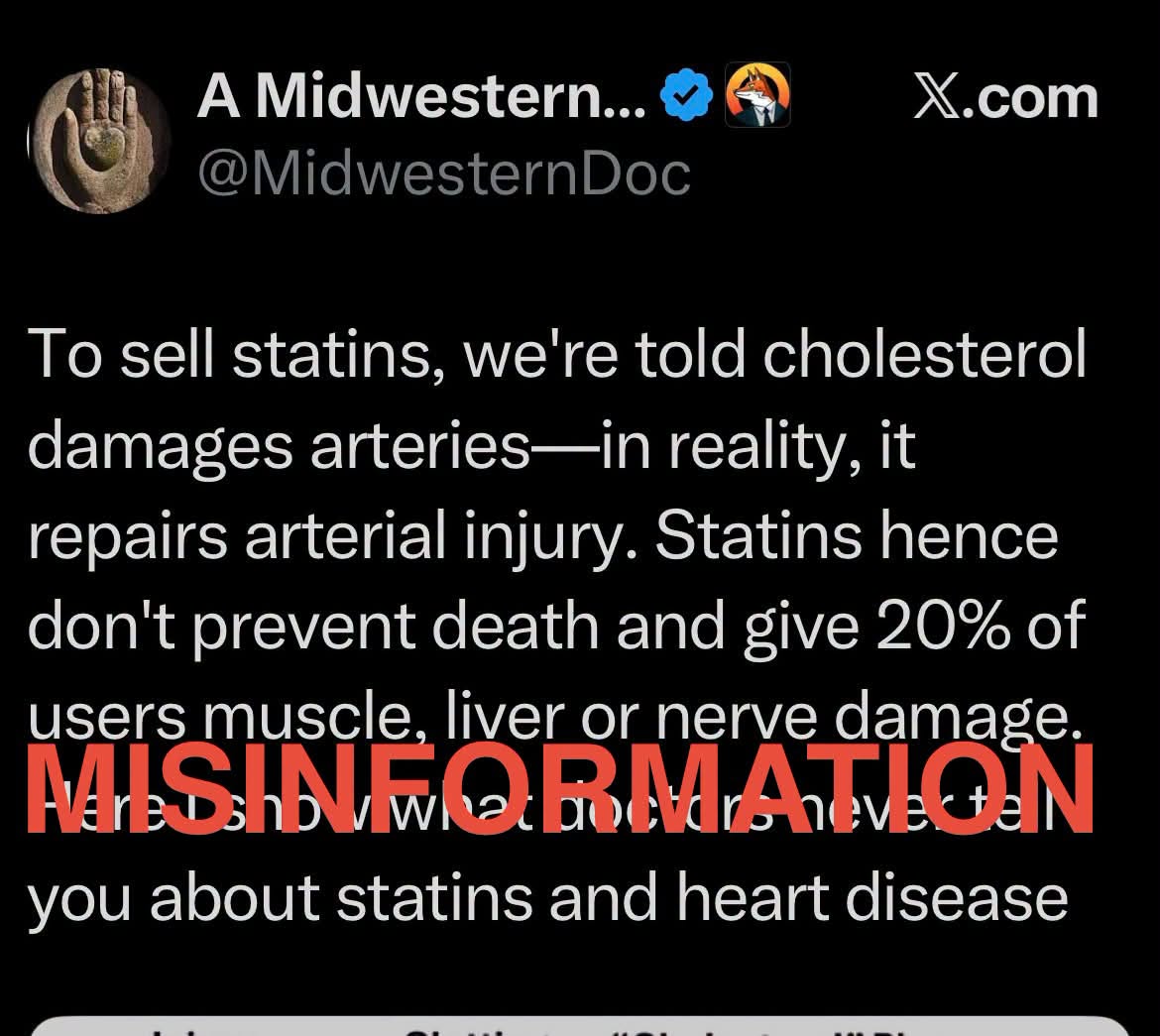
Native, unoxidized LDL itself impairs endothelial function, not just a 'repair' agent

Oct 01, 2026 · Louis Nervegna ♥ 8 · 💬 1

The post rebuts the claim that LDL is just there to repair damaged arteries. Cell studies cited show native LDL increased superoxide production and eNOS uncoupling in endothelial cells, and in 15 people with familial hypercholesterolemia a single LDL apheresis cut LDL-C about 87% and immediately improved endothelium-dependent dilation.

Psyllium and oat beta-glucan lower LDL because they gel; inulin does not

Jun 24, 2026 · Louis Nervegna ♥ 8 · 💬 1

Louis quotes a pharmacist's simple test: psyllium forms a thick gel in water while inulin dissolves clear. Only the gel-forming fibers trap bile acids, making the liver pull cholesterol from the blood, so for LDL choose psyllium or oat/barley beta-glucan, while inulin is a fine prebiotic.

Letter to JACC: Keto-CTA omitted pre-specified outcome, a 43% rise in non-calcified plaque

Apr 21, 2025 · Louis Nervegna ♥ 4 · 💬 1 Plaque, CAC & CT angiography

Louis shares a letter to the editor critiquing the Keto-CTA study of lean mass hyper-responders. It argues the primary outcome (non-calcified plaque volume) was not reported in the paper, but the lead author later shared a median increase of 18.8 mm3 (~43%), several-fold above normal annual progression and in contrast to regression seen in DISCO-CT. The 0.8% rise in percent atheroma volume also exceeds typical annual change in PARADIGM.

Keto-CTA plaque growth matched diabetics' and far exceeded high-risk statin-treated groups

Apr 16, 2025 · Louis Nervegna ♥ 4 · 💬 1 Plaque, CAC & CT angiography

Louis quotes an analysis of the Keto-CTA trial putting its plaque progression in context: median non-calcified plaque rose 18.8 mm3 in one year, comparable to type 2 diabetics (~17.4 mm3/yr), about triple PARADIGM metabolically normal people, and nearly 3x SMARTool high-risk non-statin users (6.4 mm3/yr). PAV rose 0.8% overall and 2.4% in those with CAC over 100.

Statins cut stroke overall but may raise hemorrhagic stroke after prior stroke at low LDL

Dec 23, 2023 · Louis Nervegna ♥ 5 · 💬 1 Statins

Louis reviews whether statins raise hemorrhagic stroke risk. Meta-analyses of RCTs in people who already had a stroke show lower overall stroke risk but higher hemorrhagic stroke when LDL is pushed very low. In people never having had a stroke, meta-analyses show no increase, though trials averaged under 5 years. For high-risk patients the benefit outweighs the small hemorrhagic risk, but those with strong family history of hemorrhagic stroke should discuss it with a doctor.

Low LDL's link to cancer is reverse causality: cancer lowers cholesterol, not vice versa

Dec 21, 2023 · Louis Nervegna ♥ 5 · 💬 1

Louis explains why observational studies linking low LDL to cancer are not causal. Citing a Circulation review on reverse causality, he notes cholesterol declines before cancer diagnosis (likely from cancer-related inflammation), statin RCTs show no increase in cancer, and Mendelian randomization with an average of 52 years of lifetime exposure shows no higher cancer rates in people with genetically lower cholesterol.

Starting lipid lowering at 40-49 could cut 30-year ASCVD risk from 17% to 6-12%

Nov 20, 2023 · Gokhan Can ♥ 5 · 💬 1 ↩ 2

Summarizes a 2020 Circulation modeling study of early versus delayed primary prevention. Treating people with high cholesterol in their 40s lowered projected 30-year cardiovascular risk much more than waiting 10-20 years, especially with non-HDL-C of 160 mg/dL or higher.

Nearly every cell makes its own cholesterol, especially brain cells

Oct 29, 2026 · Louis Nervegna ♥ 4 · 💬 2

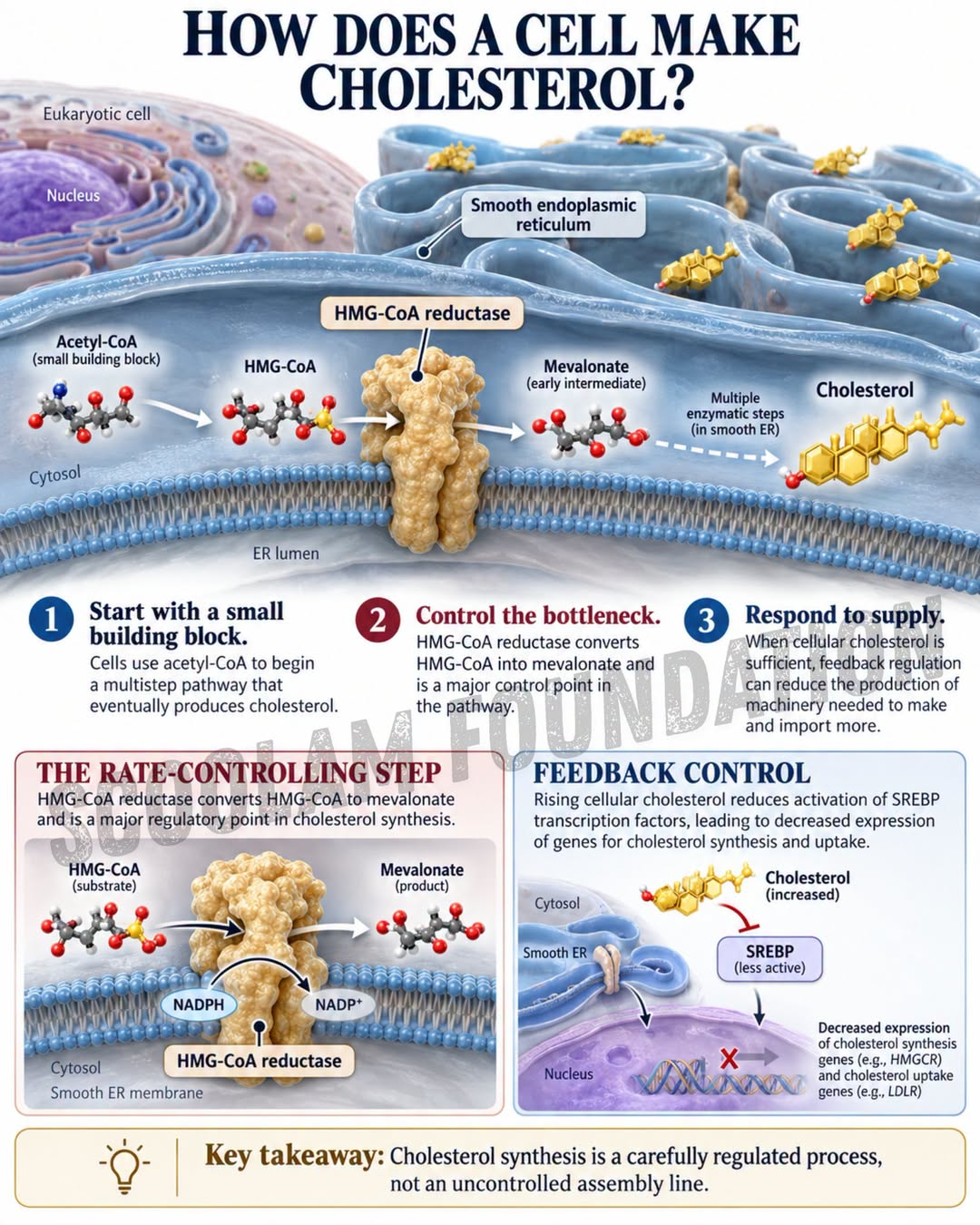
Louis notes that nearly every nucleated cell synthesizes its own cholesterol rather than relying on blood cholesterol, particularly cells in the brain. The shared explainer describes cholesterol biosynthesis through the mevalonate pathway with HMG-CoA reductase as the rate-limiting step. It frames why circulating cholesterol and tissue cholesterol are largely separate pools.

Lifelong cumulative LDL exposure ('cholesterol-years') drives atherosclerosis risk

Sep 01, 2025 · Gokhan Can ♥ 8

A detailed analysis argues that risk depends on both how high LDL is and for how long, drawing on Mendelian randomization, long-term cohorts and familial hypercholesterolemia. Lifelong lower LDL gives a far larger benefit per mg/dL than late statin treatment, which supports early and sustained control.

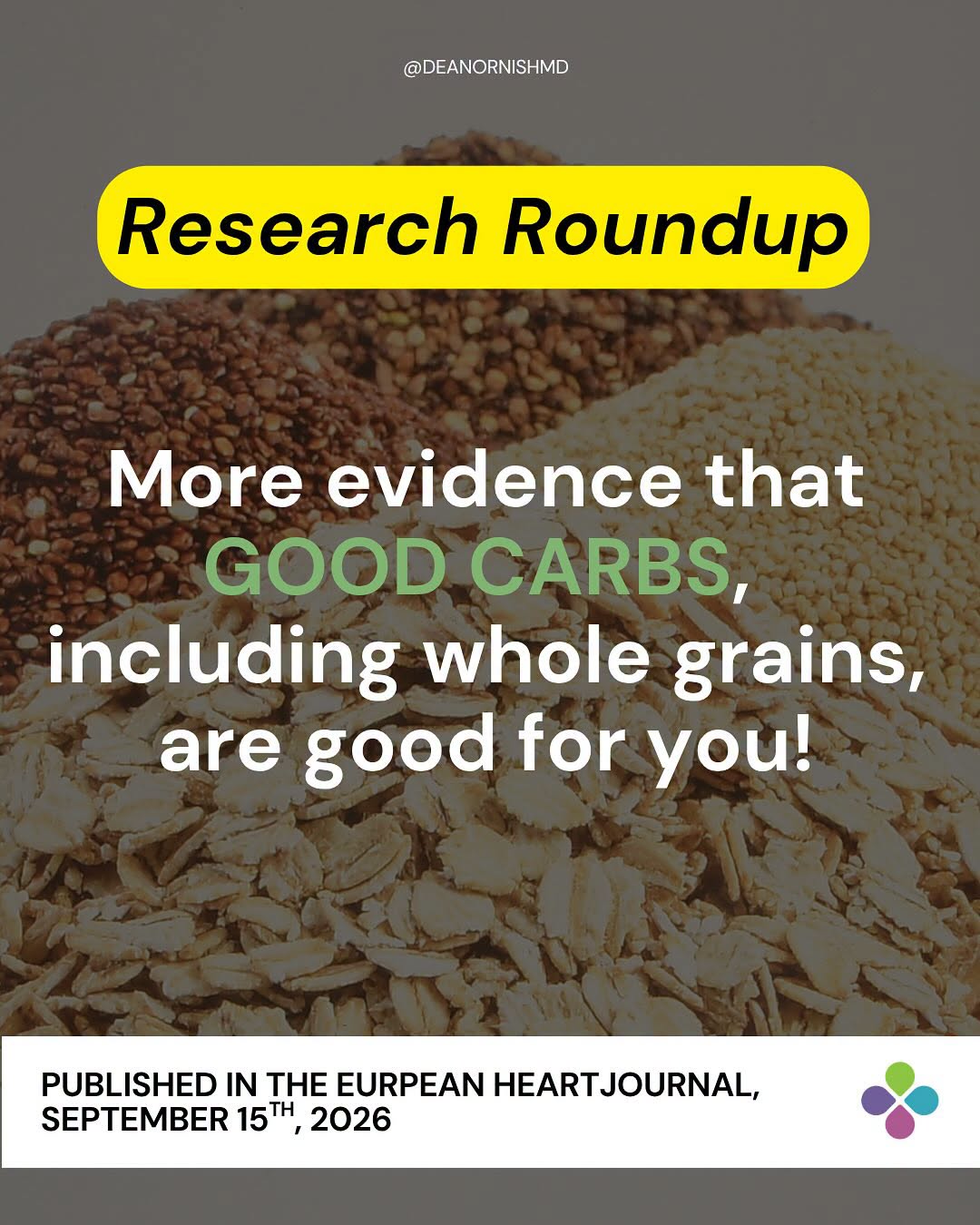
Meta-analysis of 87 trials: whole grains improved LDL, glucose, blood pressure, weight

Oct 02, 2026 · Louis Nervegna ♥ 9 Carbs, fiber, sugar & whole grains

A European Heart Journal meta-analysis of 87 randomized trials found greater whole-grain intake improved LDL and total cholesterol, triglycerides, fasting glucose and systolic blood pressure, and reduced body weight, waist and IL-6. Effects were estimated per 48 g/day and were generally largest around 60-100 g/day, though certainty of evidence varied.

Keto-CTA omitted its primary plaque outcome: median NCPV rose 18.8 mm3, 2.5x forecast

Apr 13, 2025 · Louis Nervegna ♥ 6 Plaque, CAC & CT angiography

Louis quotes Alex Leaf's critique: the Keto-CTA paper barely mentioned non-calcified plaque volume (NCPV), the primary outcome, saying only 'most participants presented with stable NCPV'. The lead author later gave a median increase of 18.8 mm3, over 2.5x the 7 mm3 predicted, comparable to metabolic syndrome over 3 years or type 2 diabetes per year, and nearly 3x SMARTool high-risk non-statin users.

Why elevated cholesterol harms: ApoB particles drive plaque and inflammatory aging

Nov 09, 2025 · Gokhan Can ♥ 10

Explains that cholesterol is essential, but too many ApoB-containing particles like LDL get trapped in artery walls and drive plaque, and high circulating cholesterol may push bone-marrow stem cells toward inflammatory myeloid lineages. Keeping ApoB/LDL low is described as a powerful lever for arterial health.

Fact check: TG/HDL under 1 does not nullify statin or LDL/ApoB benefit

Apr 10, 2026 · Louis Nervegna ♥ 7

Louis uses Gemini AI to fact-check the claim that statin trials show no benefit when TG/HDL is below 1, concluding it is inaccurate as a categorical rule since TG/HDL marks insulin resistance and small dense LDL but does not nullify statin benefit.

Why insulin resistance lowers HDL, and why improving insulin sensitivity beats chasing HDL

Mar 21, 2024 · Louis Nervegna ♥ 5 ↩ 10

Louis lists six mechanisms by which insulin resistance lowers HDL: impaired HDL maturation (lower LCAT), reduced apoA-I production, faster HDL catabolism (hepatic lipase, CETP), altered HDL composition and function, higher triglycerides making small dense HDL, and inflammation and oxidative stress. He concludes the best way to raise HDL is improving insulin sensitivity (lose visceral fat, exercise, cut refined starch and sugar), since insulin resistance is causal in heart disease while large RCTs suggest HDL itself is probably not.

Why low LDL-C correlates with higher mortality: causation versus correlation

Nov 17, 2023 · Gokhan Can ♥ 5 · 💬 1 ↩ 2

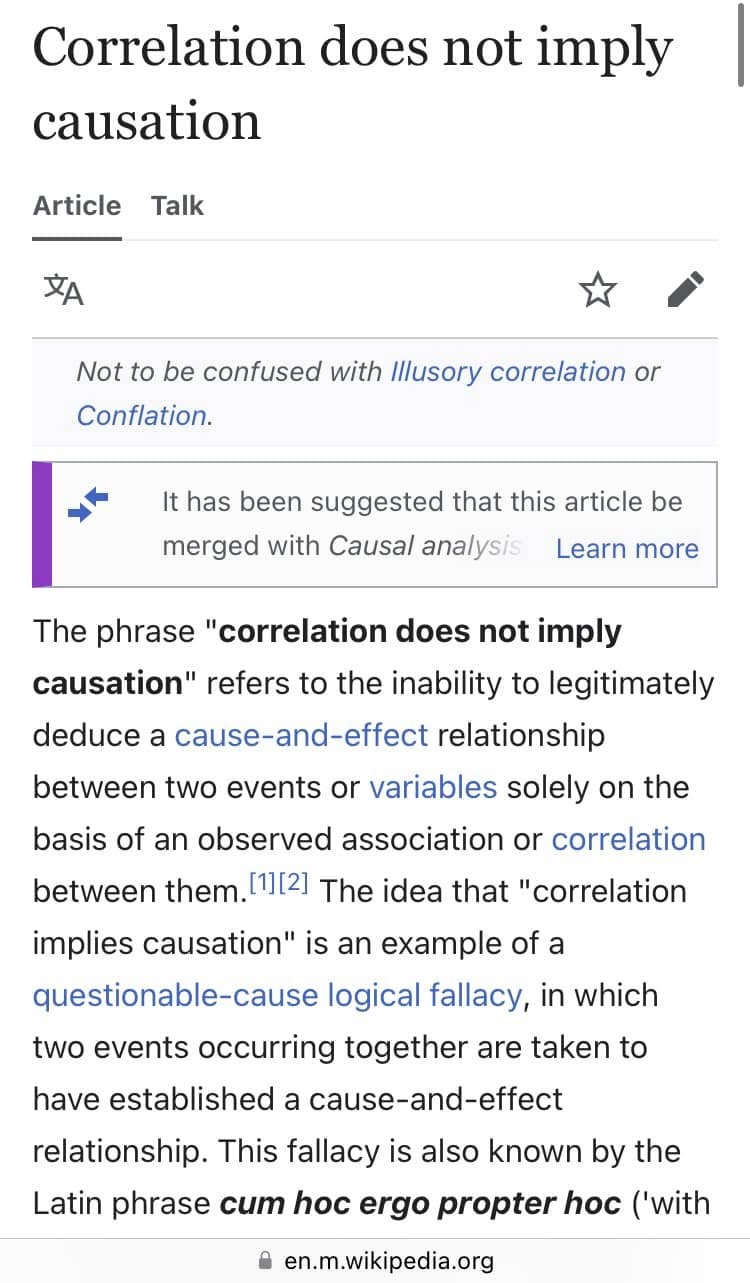
Points to a video on how ignoring the difference between correlation and causation can mislead, and argues that the association of low LDL-C with higher mortality is a marker of illnesses such as cancer or liver disease rather than a cause. Also links a paper from the author's cardiologist on causal roles of LDL-C, HDL, triglycerides and inflammation.

Fiber and longevity: observational links plus RCTs showing better risk factors

Oct 06, 2026 · Louis Nervegna ♥ 2 · 💬 1 Carbs, fiber, sugar & whole grains

A summary explaining that most evidence linking fiber to longer life is observational but consistent across countries and populations. Randomized trials, though too short for mortality, show fiber improves glucose, HbA1c, insulin resistance, blood pressure and LDL. The lack of a decades-long mortality trial is not evidence of no benefit.

Keto-CTA vs DISCO-CT: plaque progression on keto in LMHR versus DASH diet plus statins

Oct 25, 2026 · Louis Nervegna ♥ 3 Low-carb, keto & carnivore

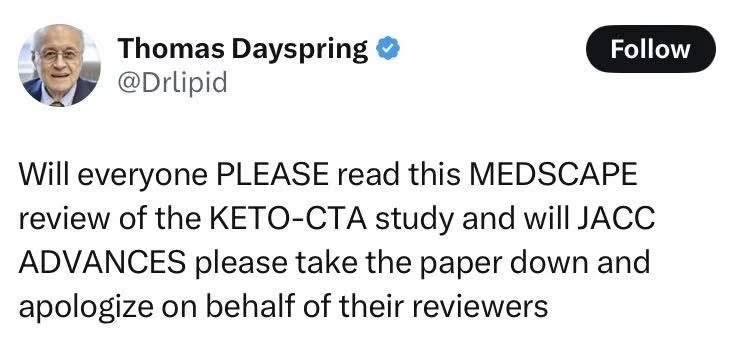
A comparison of the KETO-CTA and DISCO-CT trials. The original 2025 JACC Advances KETO-CTA paper in lean mass hyper-responders was retracted over concerns about the Cleerly plaque software. It reported non-calcified plaque progression of 18.8 mm3 in a year versus about 5 mm3 typical of unmedicated Western populations, and re-analysis with HeartFlow and QAngio gave different values.

Mendelian randomization shows genetically lower LDL does not raise cancer risk

May 25, 2026 · Louis Nervegna ♥ 3 ↩ 1

Louis explains that old observational links between low LDL and cancer are largely reverse causality. MR studies find genetically lowered LDL does not increase overall cancer risk, and genetically higher LDL is linked to more breast and prostate cancer; statin proxies lower colorectal cancer risk.

Full-fat cheese raises LDL less than butter, possibly due to the cheese matrix

Oct 29, 2026 · Louis Nervegna ♥ 4 Meat, eggs & dairy

Louis shares a summary suggesting full-fat cheese affects LDL less than butter or cream despite similar saturated fat. In a randomized trial full-fat cheese lowered LDL more than reduced-fat cheese supplemented with butter, and another study found cheese eaters excreted more fat in stool than butter eaters. Results are not perfectly consistent and benefits may level off around 50 g/day.

Why ApoB, Lp(a), UACR and HbA1c add to a standard cholesterol panel

Sep 25, 2026 · Louis Nervegna ♥ 2 · 💬 1

A promotional explainer says ApoB counts atherogenic particles and predicts heart attack and stroke risk better than LDL, while Lp(a), UACR and HbA1c reveal risks that standard labs miss. It gives no studies or numbers beyond a claim that 20% of people carry Lp(a) risk.

Each ~40 mg/dL LDL drop cuts heart attack and stroke risk about 20% (relative)

Nov 09, 2026 · Louis Nervegna ♥ 1

Louis explains the rule of thumb from dozens of randomized trials that every roughly 40 mg/dL LDL reduction lowers relative risk of heart attack and stroke by about 20%. He shows how to convert to absolute risk: a 20% 10-year risk becomes 16% after a 40 mg/dL drop. People with prior events get more absolute benefit, hence LDL goals under 55 or even 40.

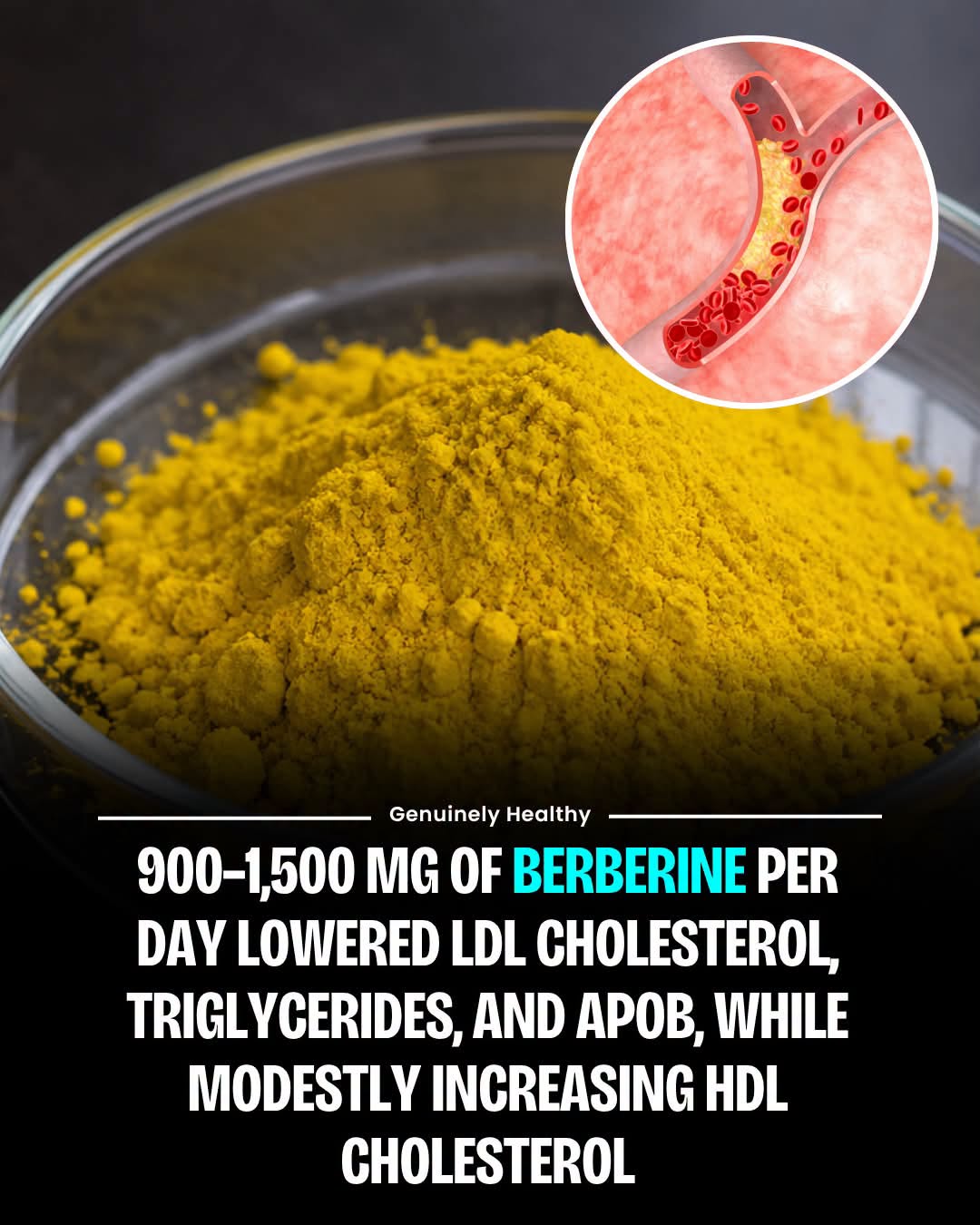
Berberine 500 mg twice daily lowered ApoB in two trials; CVD prevention unproven

Oct 29, 2026 · Louis Nervegna ♥ 1 Supplements & vitamins

A shared summary says two randomized trials of 500 mg berberine twice daily reduced ApoB, with a reduction nearly three times greater in women, though across separate trials. A newer study of 84 men identified a 'Berberine Signature' of 92 proteins linked to about 13% lower odds of ischemic heart disease in UK Biobank, but those participants were not necessarily taking berberine, so it does not prove prevention.

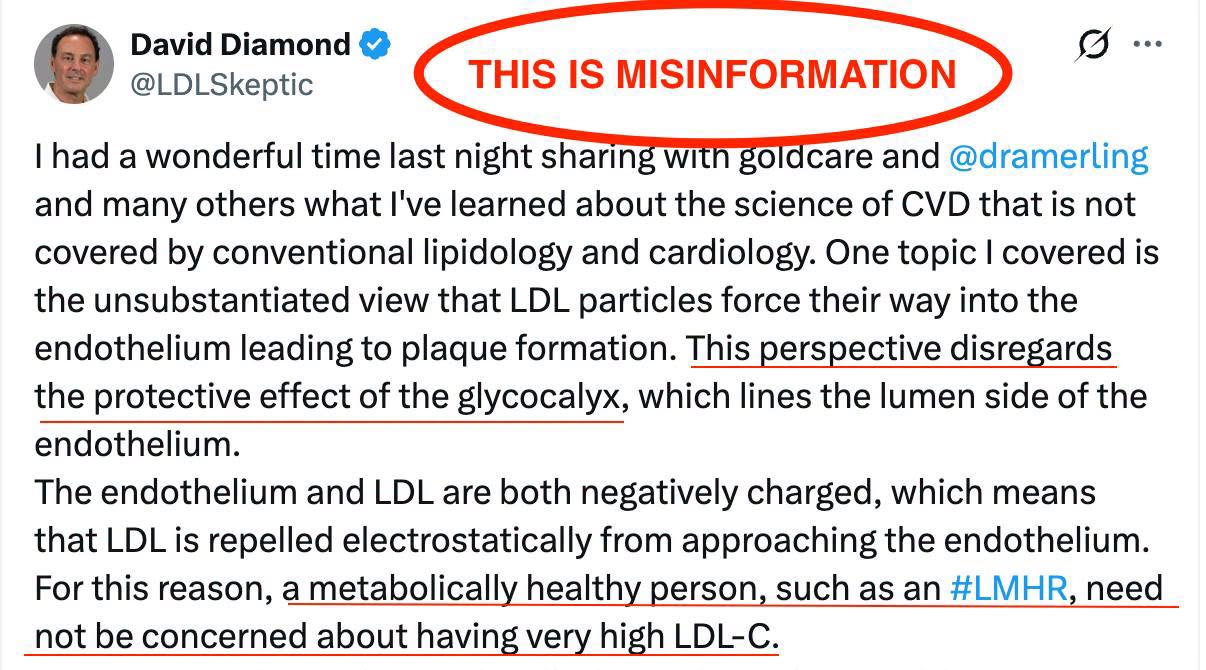
A healthy glycocalyx does not protect against high LDL/ApoB, despite keto-carnivore claims

Oct 28, 2026 · Louis Nervegna ♥ 1 Blood vessels, circulation & endothelium

A shared post rebuts the argument, popular among keto and carnivore advocates, that metabolically healthy people with very high LDL/apoB are shielded by their endothelial glycocalyx. It explains what the glycocalyx is and why its protection has limits. Louis recommends it as a good discussion of the endothelium and its limits in protecting against CVD.

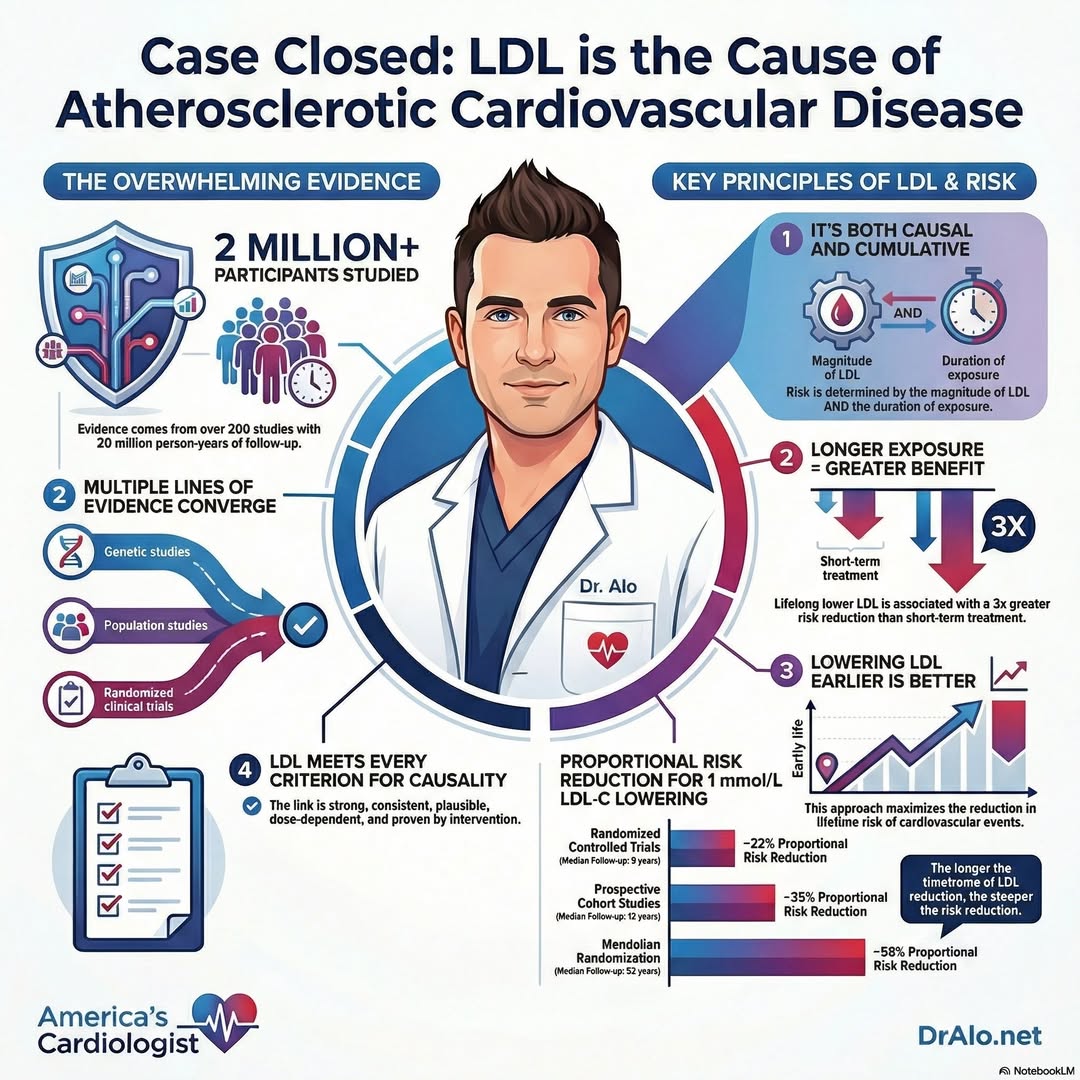
200+ studies and 2 million participants show LDL drives atherosclerosis dose-dependently

Oct 28, 2026 · Louis Nervegna ♥ 1

A shared post rebuts a claim that LDL research is incomplete and flawed. It cites over 200 prospective cohort, genetic and randomized studies involving over 2 million participants, 20 million person-years and 150,000+ cardiovascular events that consistently show a dose-dependent LDL-ASCVD relationship. It also addresses the U-shaped curve claim and Mendelian randomization.