AI summary & key facts
Joel Kahn's post, shared by Louis, warns that injecting growth-hormone-type peptides (ipamorelin, sermorelin, CJC-1295) can chronically elevate IGF-1. High IGF-1 is associated in observational data with breast and prostate cancer and with higher cancer, cardiovascular and all-cause mortality, and excess GH signaling in acromegaly causes cardiometabolic complications.
- High IGF-1 associated with breast and prostate cancer in large observational studies
- Possible link to higher all-cause and CV mortality at the high end
- Acromegaly shows cardiovascular and metabolic complications of excess GH
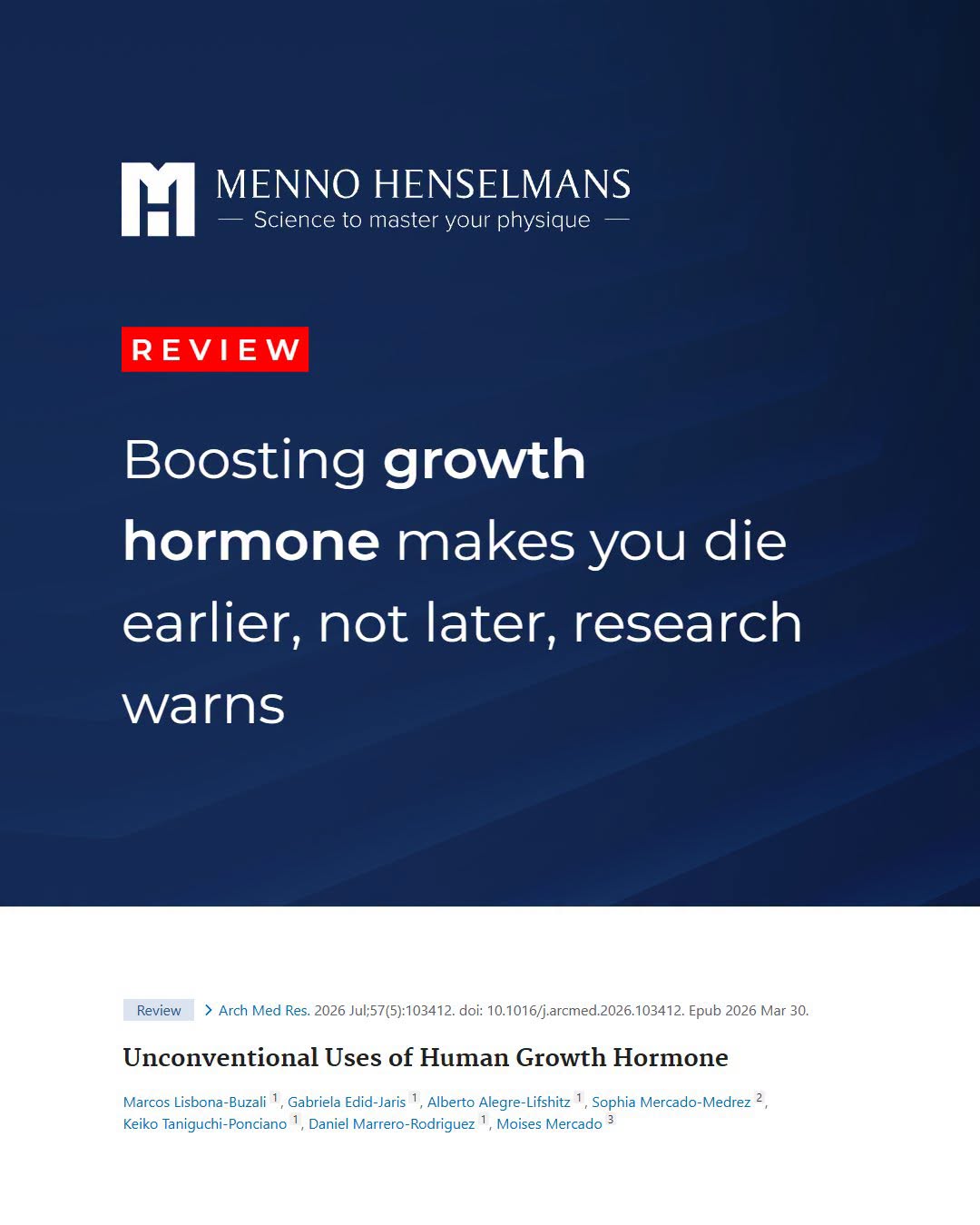
Are you injecting growth hormone type peptides like ipamorelin, sermorelin, CJC1295 etc? You should read this first.
Chronically elevated IGF-1 is associated with higher risk of some cancers—especially breast and prostate cancer in large observational studies—and may also be linked to higher all-cause and cardiovascular mortality at the high end of the range. It is also a hallmark of excess growth-hormone signaling, such as acromegaly, which can cause broader cardiovascular and metabolic complications.
Main risks
Higher cancer risk, particularly breast and prostate cancer, with some evidence also pointing to colorectal, thyroid, melanoma, and myeloma associations.
Increased risk of death from cancer, cardiovascular disease, and all causes at very high IGF-1 levels in some cohorts.
Acromegaly-related complications when IGF-1 is elevated because of excess growth hormone, including heart disease and other systemic effects.
Important nuance
The relationship is not perfectly linear. Some studies find a U-shaped pattern, where both very low and very high IGF-1 levels are associated with worse outcomes, so “more” is not always worse in a simple way. IGF-1 also reflects liver function, nutrition, and endocrine status, so interpretation depends on the clinical context.
When to pay attention
A persistently high IGF-1 should prompt evaluation for causes such as acromegaly or other hormonal abnormalities, especially if there are symptoms like enlarged hands or feet, jaw changes, headaches, sweating, or glucose intolerance.