This is one of the best videos that I’ve seen on the relationship between insulin/IGF1 and longevity.
The person making the video actually understands the major role that insulin/IGF1 plays in the lifespan of mammals, which is rare for an influencer making these kinds of videos. Most people don’t properly understand this subject at all.
High insulin/IGF1 in humans is associated with increased risk of several major diseases, especially cancer and diabetes.
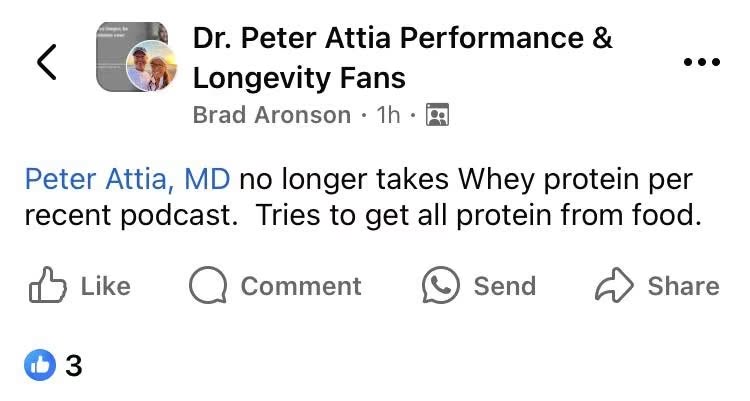
The biggest driver of insulin/IGF1 is diet. The foods that raise IGF1 the most are refined starch/sugar and excessive high-quality animal protein.
↪ Whey protein is highly insulinogenic; Willett wary of powders and IGF-1 cancer risk
(A typical meal at McDonald’s checks both of those boxes. It is the ideal meal to raise IGF1.)
Spoiler alert: Shorter people live longer and have less risk of cancer. This is very likey due to lower levels of IGF1 from birth.
↪ Taller people tend to live shorter lives, likely via growth hormone, IGF-1 and mTOR
This is true for many other species of mammals as well. For example, if you’ve ever owned dogs, then you know that the smaller breeds live much longer than the larger ones. This is likely due in large part to IGF1.
facebook.com/share/r/18hkP5Xtxz
↪ Loyal's dog longevity drug targets insulin/IGF-1; claims lack publications so far
The oldest lab mouse to have ever lived was genetically engineered from birth to have low IGF1. It lived 5 years, setting a world record— whereas a typical lab mouse only lives about 2.5 years.
He mentions the human disease Laron Syndrome in the video. These people have a genetic mutation that blocks their livers from using insulin to convert growth hormone into IGF1. As a result, they have very low IGF1 from birth.
There has NEVER been a documented case of a person with Laron Syndrome dying from cancer. Not a single one. In the few documented cases where they developed cancer, it progressed very slowly and did not ultimately kill them.
People with Laron syndrome almost never develop diabetes, even when very overweight. Rates of heart disease and Alzheimer’s are also considerably lower than in the general population.
#igf1HD #insulinHD #laronsyndromeHD #longevityHD #dogsHD #cancerHD #diabetesHD #mtorHD #alzheimersHD #cvdHD #heightHD #refinedstarchHD #refinedsugarHD #proteinHD #growthhormoneHD
 ▶