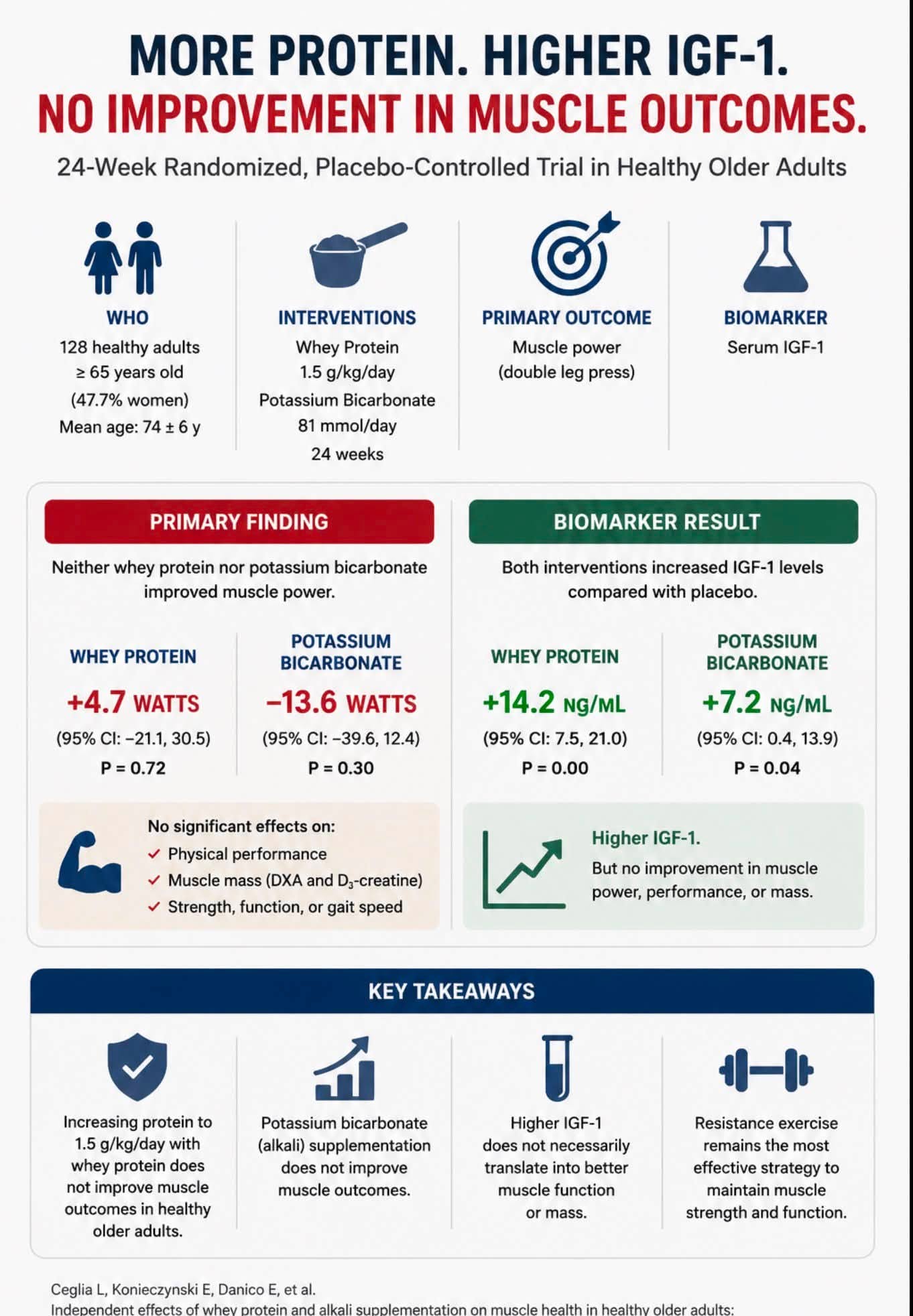
Your body does not need higher circulating levels of IGF1 to build muscle.
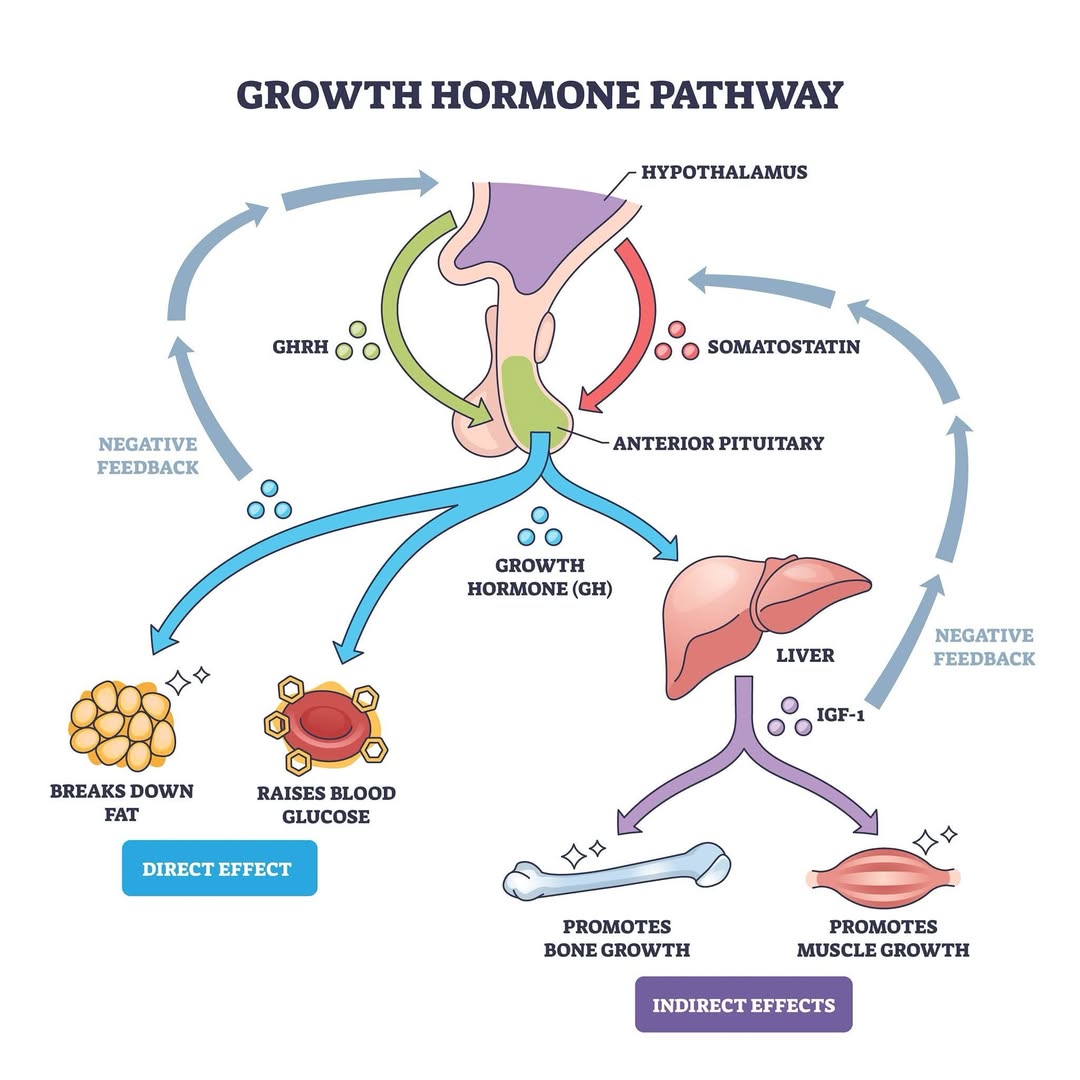
That is a myth.
You make IGF1 locally at the muscle in response to resistance training. This allows you to build plenty of muscle, even when circulating IGF1 is at the lower end of normal.
It is high circulating IGF1 that is dangerous. This is what likely raises risk for cancer and other diseases.
The local IGF1 that you make inside muscles in response to resistance exercise is not harmful.
Bad diet raises circulating IGF1.
Resistance exercise raises local IGF1.
Skip the bad diet. Focus on the resistance exercise.
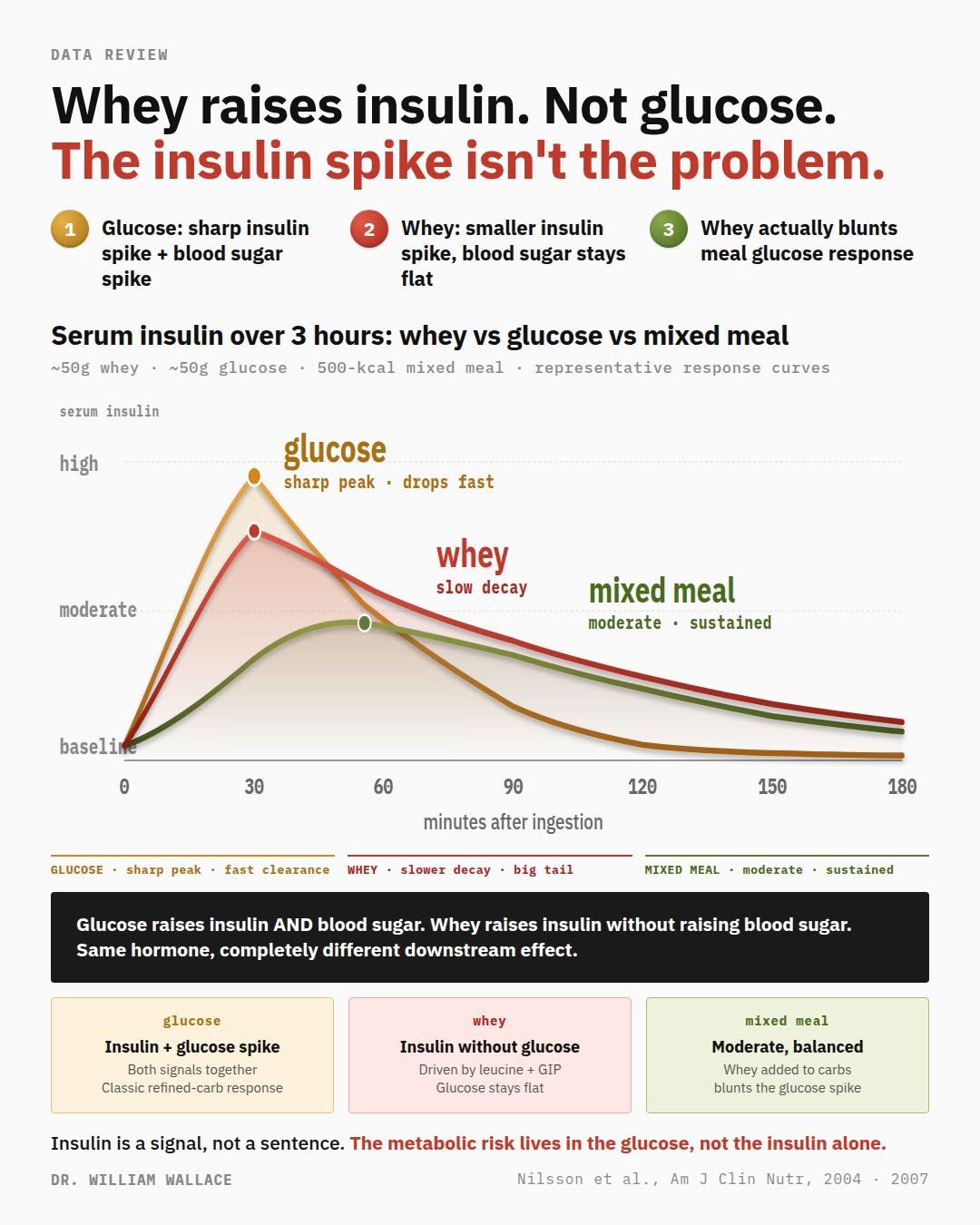
What kind of diet strongly raises circulating IGF1? A diet high in refined sugar, refined starch, and white potatoes. And a diet that includes excessive amounts of high-quality animal protein, particularly red meat and non-fermented dairy (and especially whey).
Fact checking this post with Gemini Al:
(I encourage everyone to do this to help ensure the accuracy of posts and comments in the group. You can learn how to do this here: ↪ How to fact-check posts and comments with Google Gemini.)
Prompt: Please critique and fact check this text for scientific accuracy. Do not include tables in your response.
Response:
This claim is accurate and aligns with modern exercise science and endocrinology.
The distinction made here between circulating (systemic) IGF-1 and locally produced IGF-1 is a crucial nuance that many people miss.
- Do you need high circulating IGF-1 to build muscle?
Fact Check: No.
Your liver produces the vast majority of your circulating (endocrine) IGF-1, which floats around in your bloodstream. While it is vital for childhood growth and bone health, studies have shown that it is not the primary driver of adult muscle hypertrophy (growth).
In famous animal models (like LID mice, which have the gene for liver-derived IGF-1 knocked out), circulating IGF-1 levels dropped by roughly 75–80%, yet the mice still grew muscle normally in response to mechanical loading.
- Does resistance training create local IGF-1?
Fact Check: Yes.
When you lift weights, the mechanical stress on the muscle fibers triggers the expression of the IGF-1 gene directly inside the muscle cell. This is called an autocrine/paracrine action, meaning it acts locally right where it was made, without ever needing to enter the general bloodstream.
One specific variant produced by mechanical tension is often called Mechano-Growth Factor (MGF) or IGF-1Ec. This local surge is what activates satellite cells (muscle stem cells) to repair and grow the worked muscle.
- Is high circulating IGF-1 dangerous?
Fact Check: Yes, chronically high levels are linked to disease.
Because circulating IGF-1 is systemic, it interacts with receptors all over your body, promoting cell division and inhibiting apoptosis (programmed cell death). Chronically elevated circulating IGF-1 is a well-established biomarker linked to higher risks of colorectal, breast, and prostate cancers.
Conversely, the IGF-1 you produce locally in your quadriceps after a heavy set of squats stays concentrated in that muscle tissue to handle local repair—it does not raise your systemic cancer risk.
- Does diet raise circulating IGF-1 while exercise raises local?
Fact Check: Yes.
- Diet: Chronically high intake of refined carbohydrates, sugars, and over nutrition in general (particularly high intake of dairy and certain animal proteins) strongly stimulates the liver to pump out more circulating IGF-1.
-Exercise: Intense resistance training stimulates the local, intramuscular expression of IGF-1 to handle tissue remodeling, without chronically elevating systemic baseline levels.
The Verdict: The advice is spot on. You do not need to chase high baseline blood levels of IGF-1 through overeating or supplements to build a muscular physique. Stimulating it locally at the tissue level via mechanical tension (lifting weights) is safer, highly effective, and avoids the systemic downsides of chronic hormonal elevation.