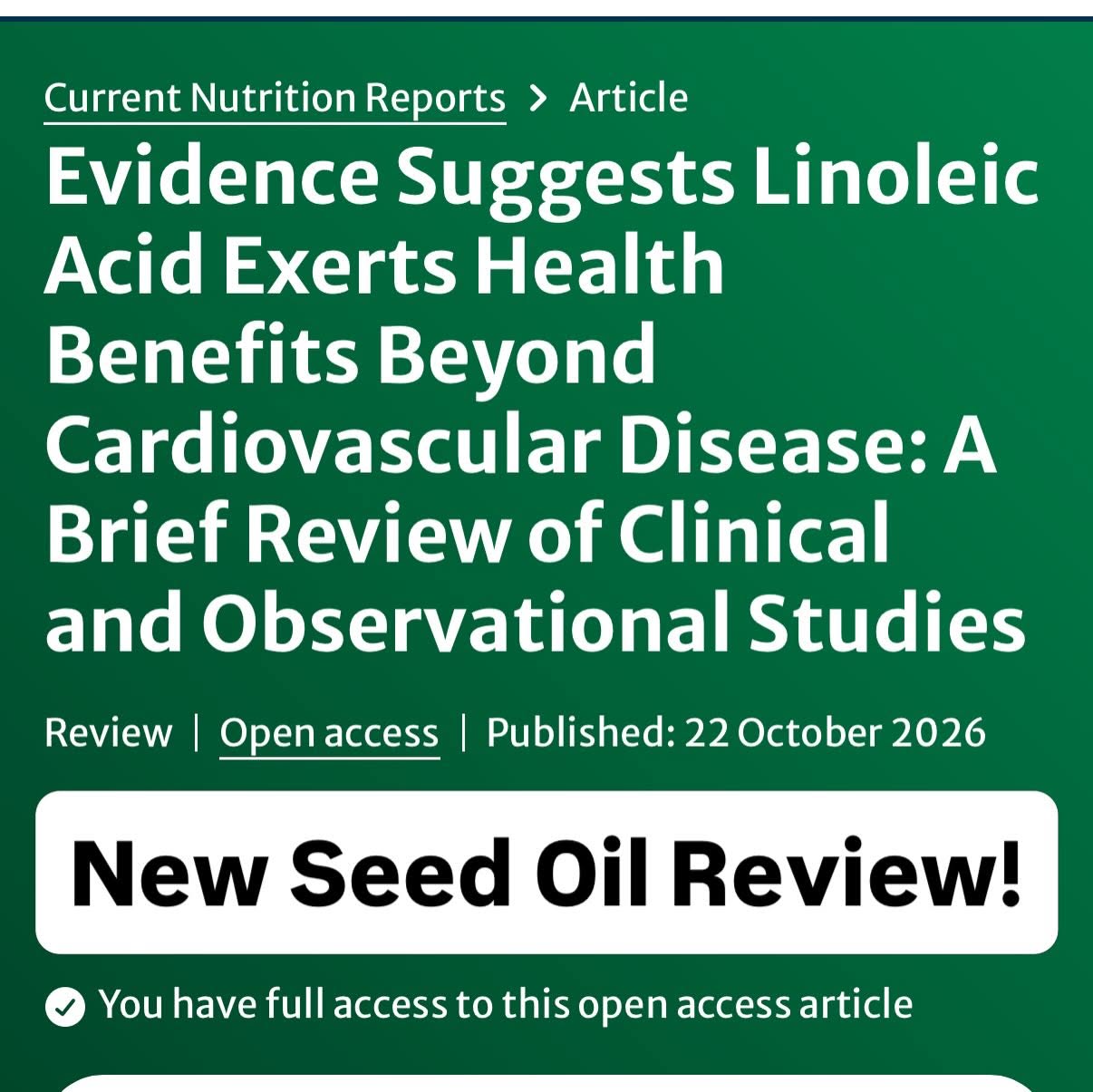
Your body makes DGLA from linoleic acid, which is found primarily in nuts and seeds (and their oils).
See this earlier post: ↪ Your body makes DGLA from linoleic acid, linking seed oils to a possible senolytic effect.
Link to journal paper:
Paper · CellCell articlecell.comQuoted:
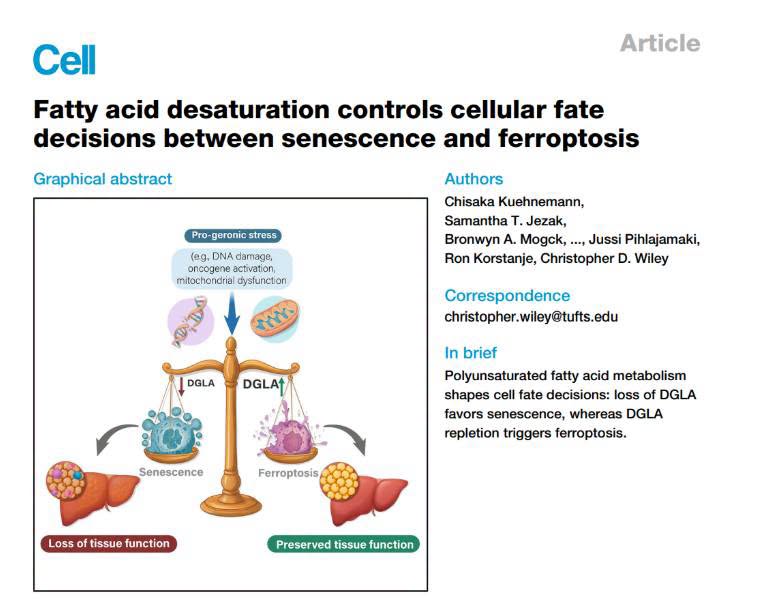
The elimination of damaged cells is important for tissue health, and such cells are normally cleared from the body through programmed cell death. However, some cells become senescent and persist in the body but no longer proliferate and disrupt normal tissue function. Their accumulation with age contributes to tissue degeneration and the development of several age-related diseases, including cardiovascular diseases and metabolic disorders.
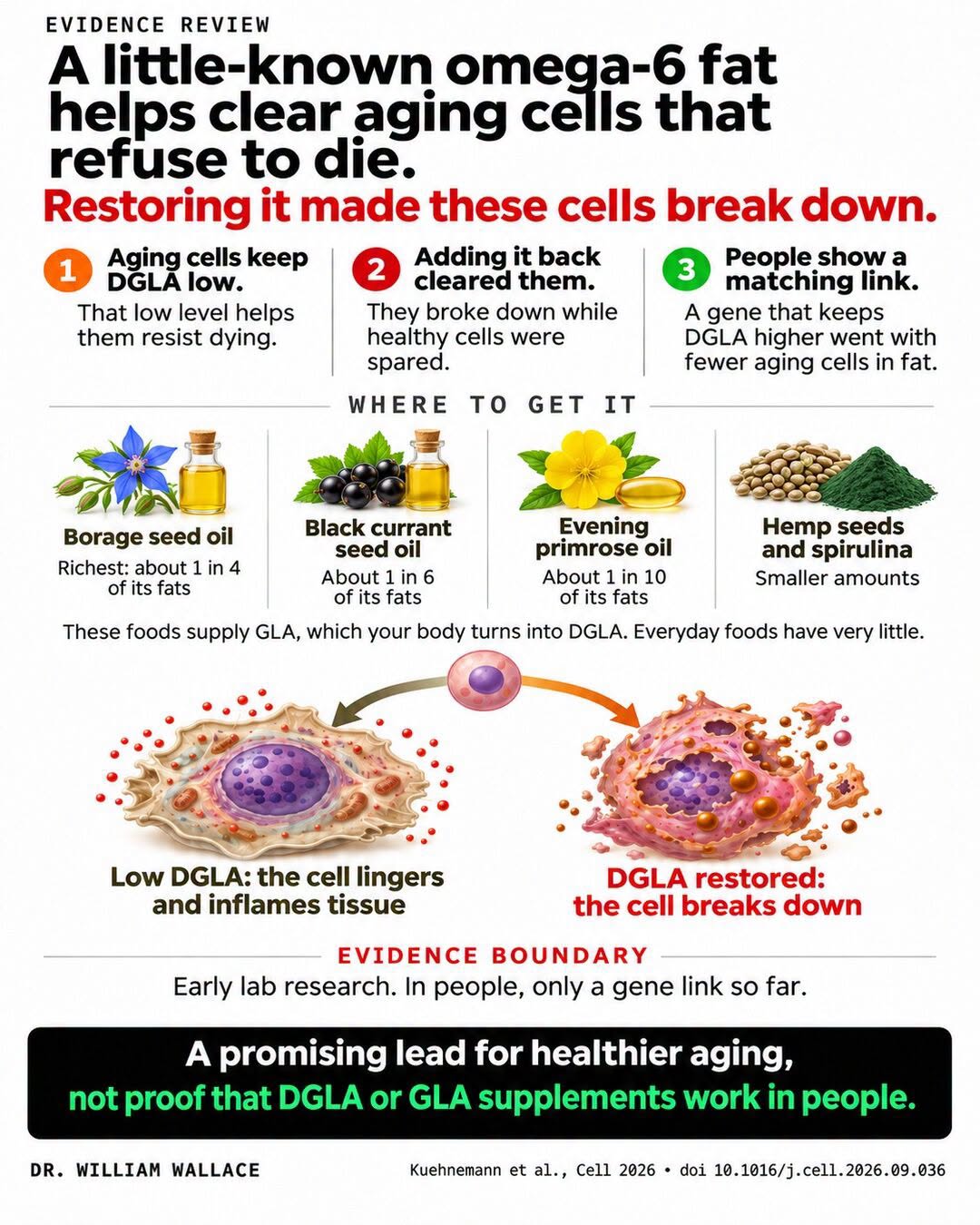
The study found that polyunsaturated fatty acid metabolism is altered in senescent cells, resulting in lower levels of a specific omega-6 fatty acid, dihomo-gamma-linolenic acid (DGLA). When DGLA was added to cells or the activity of the D5D enzyme, which regulates its metabolism, was inhibited, senescent cells died through a form of cell death known as ferroptosis, while healthy cells remained largely undamaged.
"The study shows that DGLA can selectively induce the death of senescent cells through ferroptosis," says university lecturer Maija Vaittinen of the University of Eastern Finland.
Ferroptosis is an iron-dependent form of programmed cell death primarily triggered by lipid peroxidation, i.e., the oxidation of polyunsaturated fatty acids such as DGLA in cell membranes.
In animal models, orally administered DGLA was found to reduce the number of senescent cells in aged mice and improve several age-related health indicators. For instance, the researchers observed reduced inflammation in adipose and liver tissues as well as signs of improved liver and kidney function.
The study also drew on data from the Kuopio Obesity Surgery Study (KOBS), conducted at the University of Eastern Finland and Kuopio University Hospital. A specific variant in the FADS1 gene, which encodes the D5D enzyme, promotes the accumulation of DGLA in the body.
Among participants in the KOBS study, this genetic variant was associated with lower levels of cellular senescence markers in adipose tissue. Therefore, DGLA metabolism appears to influence the accumulation of senescent cells also in humans.
"The findings suggest that fatty acid metabolism may determine whether a damaged cell remains alive in a senescent state or is eliminated from the body. This offers new insights into the biological mechanisms of aging and may help identify potential therapeutic targets," says Professor Jussi Pihlajamäki of the University of Eastern Finland.
According to the researchers, the finding could also support the development of future senolytic therapies designed to eliminate harmful senescent cells from the body.
#senolyticsHD #dglaHD #linoleicacidHD #omega6agingHD #omega6HD #seedoilsHD #agingHD #longevityHD #inflammationHD #ferroptosisHD #glaHD #nutsHD #seedsHD