As mentioned in previous posts on this study, your body naturally makes DGLA and GLA from linoleic acid, an essential omega 6 fat found primarily in nuts and seeds (and their oils).
Unlike other senolytics which are xenobiotics, DGLA is a molecule that your body already manufactures endogenously. It appears to be a natural inborn defense against senescent cells. This makes it particularly interesting.
#dglaHD #senolyticsHD #omega6HD #glaHD #linoleicacidHD #seedoilsHD #nutsHD #seedsHD #ferroptosisHD #omega6agingHD #agingHD #longevityHD #inflammationHD #senescenceHD
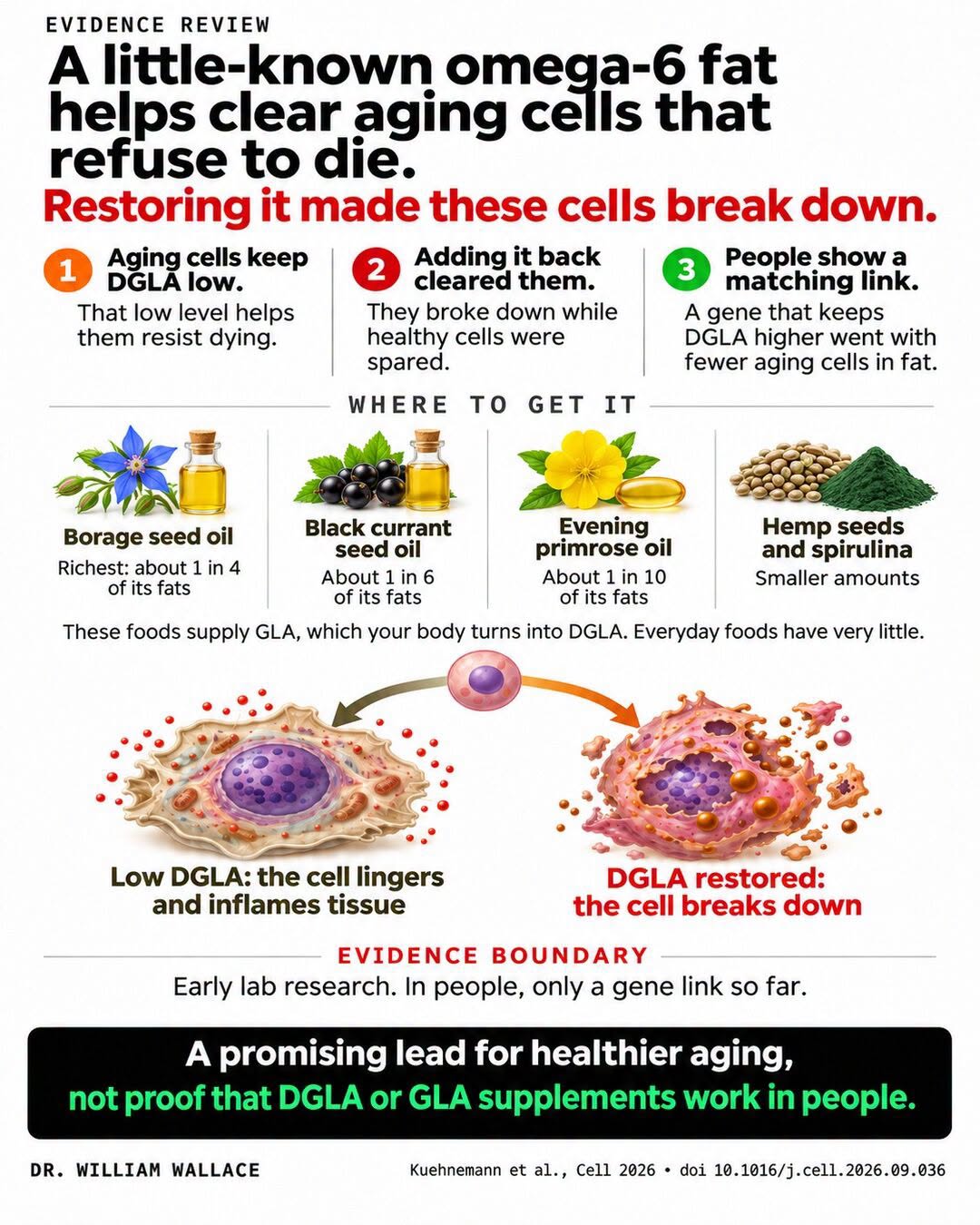
A little-known omega-6 fat called DGLA appears to be a weak spot for the damaged cells that build up in our bodies as we age.
As we get older, some damaged cells stop dividing but never die off, a state called senescence, and they linger in tissues while releasing inflammatory signals. Some of the strongest evidence that they matter came from a 2016 study in Nature, which found that clearing them from normal mice extended median lifespan and slowed the age-related decline of the kidneys, heart and fat tissue.
DGLA is rare in food, so your body builds it from GLA, an omega-6 fat concentrated in a few seed oils. Borage seed oil is the richest source at roughly a fifth to a quarter of its fat, black currant seed oil provides about a sixth, and evening primrose oil a little under a tenth. The body quickly converts GLA into DGLA, and because the next enzyme in the chain works slowly, much of it stays as DGLA and is used to make compounds such as prostaglandin E1 that are generally linked to calmer inflammation. In a controlled trial of 64 healthy adults, four weeks of borage oil raised blood DGLA by about half in some people and more than doubled it in others, depending on which version of the FADS1 gene they carried.
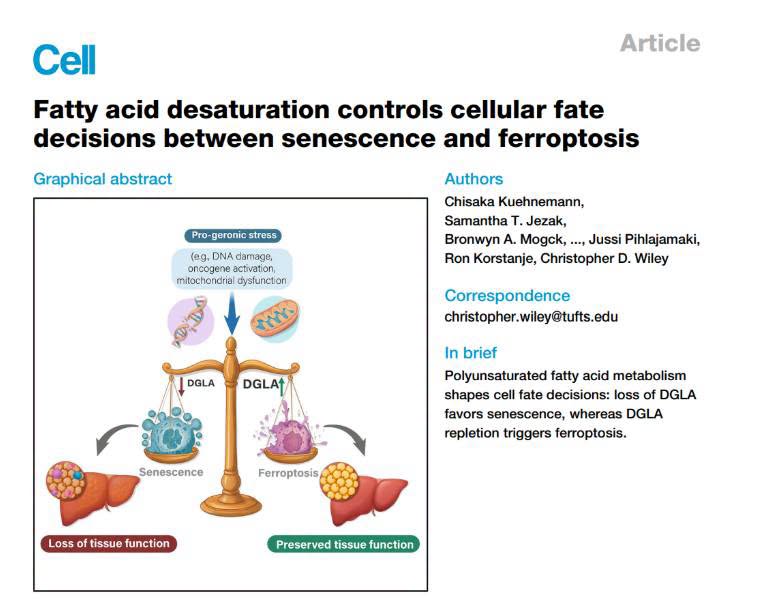
The new study in Cell shows why senescent cells avoid this fat. They keep DGLA unusually low because it can trigger ferroptosis, an iron-driven form of cell death in which the fats in a cell's membrane oxidize until it breaks apart, something earlier work had already shown in worms and human cancer cells. When the researchers restored DGLA, senescent cells died this way while healthy cells were largely spared. In old mice, five days of oral DGLA lowered markers of senescence in fat and liver, and the males developed less liver scarring. In 185 Finnish adults with obesity, people carrying a FADS1 variant that keeps DGLA higher had lower levels of a senescence marker in their fat tissue.
Because most of this evidence comes from cells and mice, and the human finding is a genetic association rather than a trial, nobody has yet shown that GLA oils or DGLA clear senescent cells in people. DGLA also increased liver fat in the mice, and human observational studies have linked higher blood DGLA to fatty liver and type 2 diabetes, so more is not automatically better. The study's senior author is also an inventor on patents covering this use. What the work offers is a clear, testable explanation of how one nutrient could shape aging biology, which is a reason to watch for human trials rather than to start supplementing.
Sources: Kuehnemann et al., Cell, 2026; Baker et al., Nature, 2016; Perez et al., Developmental Cell, 2020; Mustonen and Nieminen, International Journal of Molecular Sciences, 2023; Sergeant et al., American Journal of Clinical Nutrition, 2020.