HD-OPM Archive
Hashtags

#linoleicacid

32 posts

Blood omega-6 biomarker cohorts link higher levels to lower heart disease and diabetes

Nov 24, 2024 · Louis Nervegna ♥ 19 · 💬 45 ↩ 5 Fats & oils (saturated fat, seed oils, omega-6, olive oil)

Louis stresses that evidence for omega-6 protection does not rest on food questionnaires but on blood and tissue measurements tracked prospectively for years before disease. He cites a pooled analysis of 30 cohorts in which people with higher linoleic acid levels had less CVD. He argues that avoiding nuts and seeds to cut omega-6 is likely harmful, and that RCTs on this timescale are impractical.
Medical schools push back on seed-oil myths; pooled cohorts link omega-6 to lower risk

Jun 18, 2025 · Louis Nervegna ♥ 12 · 💬 26 Fats & oils (saturated fat, seed oils, omega-6, olive oil)

Louis says major medical and public health schools are countering influencer claims about seed oils. He notes a 2019 pooled analysis of 30 prospective cohorts found higher blood omega-6 (linoleic acid) predicted lower risk of heart disease and diabetes over 2.5 to 30 years, and points to earlier group posts.

Higher omega-6 biomarker levels linked to 22% lower CVD death in 30-cohort pooled analysis

Jan 20, 2024 · Louis Nervegna ♥ 13 · 💬 12 ↩ 7 Fats & oils (saturated fat, seed oils, omega-6, olive oil)

A pooled analysis of about 70,000 people from 30 prospective cohorts measured linoleic acid in blood and tissue rather than relying on food questionnaires. Higher levels were associated with lower total CVD, CVD mortality and ischemic stroke, which counters claims that omega-6 or seed oils drive heart disease.

Higher omega-6 (linoleic acid) biomarker levels linked to 43% lower type 2 diabetes risk

Jan 20, 2024 · Louis Nervegna ♥ 8 · 💬 7 ↩ 17 Fats & oils (saturated fat, seed oils, omega-6, olive oil)

A pooled analysis of 39,740 adults from 20 prospective cohorts used blood and tissue biomarkers rather than food questionnaires. Higher linoleic acid levels were associated with lower incident type 2 diabetes, and the authors conclude linoleic acid may have long-term preventive benefits and arachidonic acid is not harmful.

Higher blood linoleic acid predicts lower CVD risk in 68,000-person pooled analysis

Jul 18, 2025 · Louis Nervegna ♥ 6 · 💬 7 Fats & oils (saturated fat, seed oils, omega-6, olive oil)

Louis shares a Johns Hopkins piece citing the 2019 Marklund pooled analysis of over 68,000 participants in 30 cohorts across 13 countries. People with the highest blood linoleic acid had lower CVD risk, especially for CV mortality and stroke; controlled trials also show LA lowers LDL and may improve glucose metabolism. The association is observational, which the author notes.

Omega-6 unlikely to cause heart disease when blood biomarkers show an inverse association

Sep 12, 2024 · Louis Nervegna ♥ 12 · 💬 3 Fats & oils (saturated fat, seed oils, omega-6, olive oil)

Louis argues that causation requires at minimum a positive association, and omega-6 measured directly in blood and tissue shows an inverse association with heart disease and diabetes. He says these prospective biomarker studies are not nutritional epidemiology because no questionnaires are used. He re-shares the pooled analysis of about 70,000 people in 30 cohorts.

Layne Norton rebuts seed-oil claims with human evidence on inflammation, LDL and oxidation

Nov 03, 2026 · Louis Nervegna ♥ 3 · 💬 5 Fats & oils (saturated fat, seed oils, omega-6, olive oil)

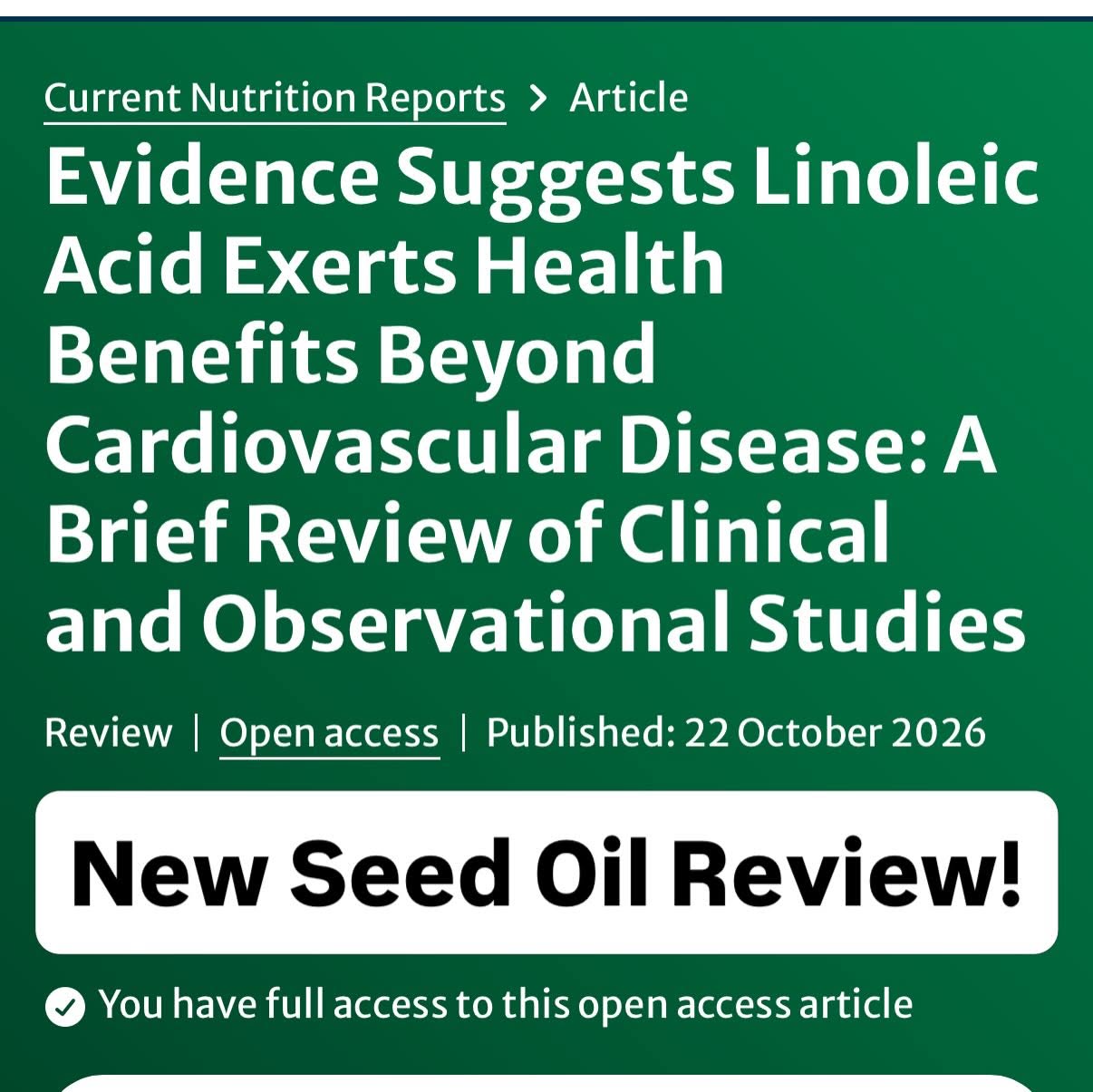
A shared post argues that human trial evidence does not support the claim that seed oils are harmful. Systematic reviews of randomized trials find that raising linoleic acid does not consistently increase inflammatory markers, replacing saturated fat with polyunsaturated fat lowers LDL and cuts coronary events, and trials show no significant increase in lipid peroxidation. It adds that LDL oxidation mostly occurs after retention in the artery wall, so LDL concentration still matters.

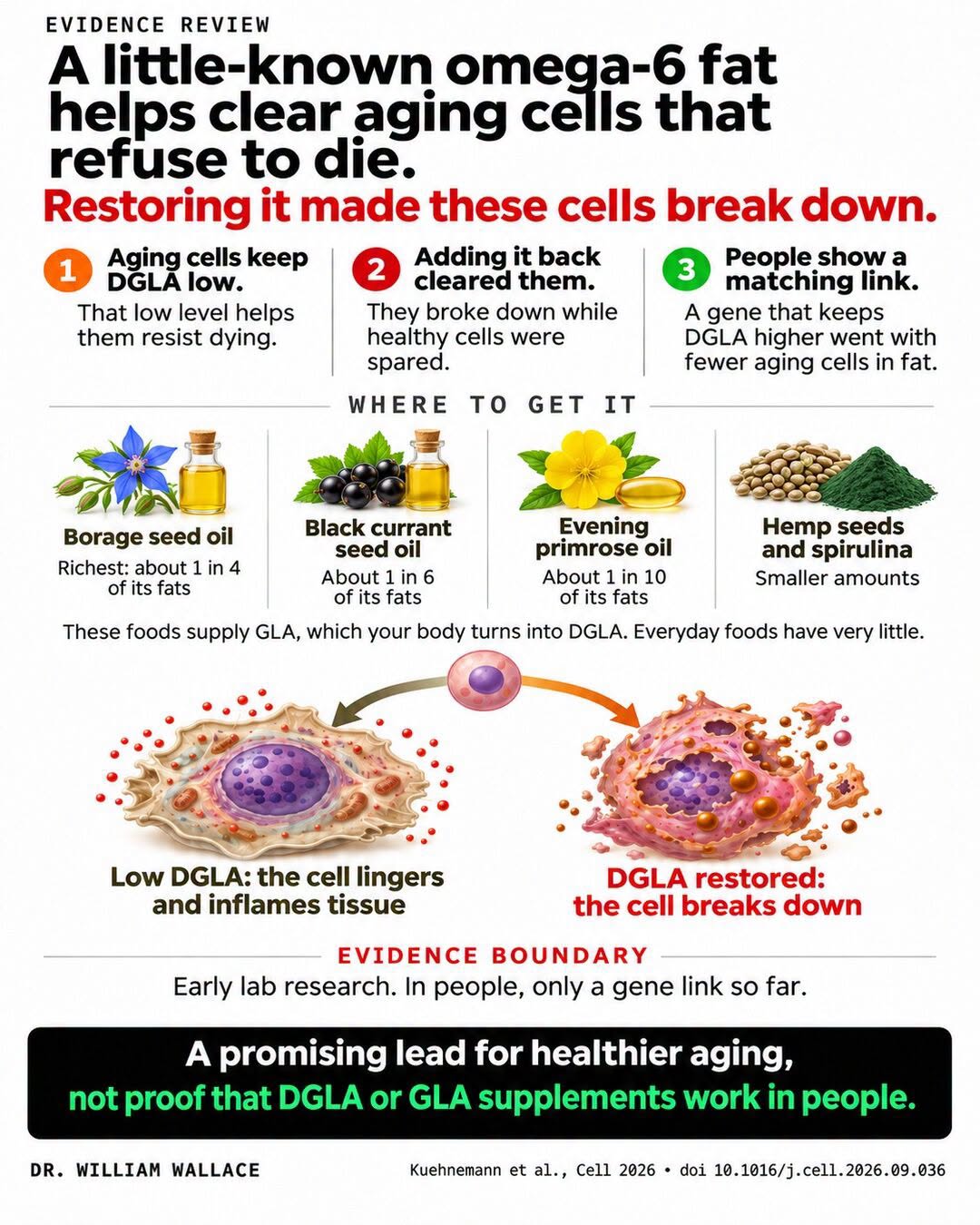
Your body makes DGLA from linoleic acid, linking seed oils to a possible senolytic effect

Nov 04, 2026 · Louis Nervegna ♥ 4 · 💬 4 ↩ 1 Fats & oils (saturated fat, seed oils, omega-6, olive oil)

Louis points out that the body makes DGLA from the omega-6 linoleic acid in seed oils and that this senolytic mechanism might explain some effects of GLA supplements. The shared Bryan Johnson post summarizes research in which DGLA killed zombie (senescent) cells in mice through ferroptosis. Low-linoleic-acid diets reduce DGLA production.

Higher red blood cell omega-6 linked to lower inflammation markers in Framingham Offspring

Apr 16, 2026 · Louis Nervegna ♥ 4 · 💬 1 ↩ 1 Fats & oils (saturated fat, seed oils, omega-6, olive oil)

A 2025 Nutrients analysis of the Framingham Offspring Study found that higher red blood cell omega-6 was not associated with inflammation and showed a small anti-inflammatory effect across 10 markers including hsCRP and IL-6. Louis notes 30+ randomized trials show omega-6 does not raise inflammatory markers.

Swapping saturated fat for polyunsaturated seed oils cut CVD events 29% in strict RCTs

Louis states adipose omega-6 is linked to lower mortality in cohorts, and that RCTs meeting strict criteria (no trans fats, supplied food, 2+ years, biomarker-verified adherence, validated events) show a 29% reduction in heart disease events from replacing saturated fat with polyunsaturated fat. He explains why the Minnesota Coronary Experiment, Sydney Heart Study and Rose Corn Oil Trial fail those criteria.

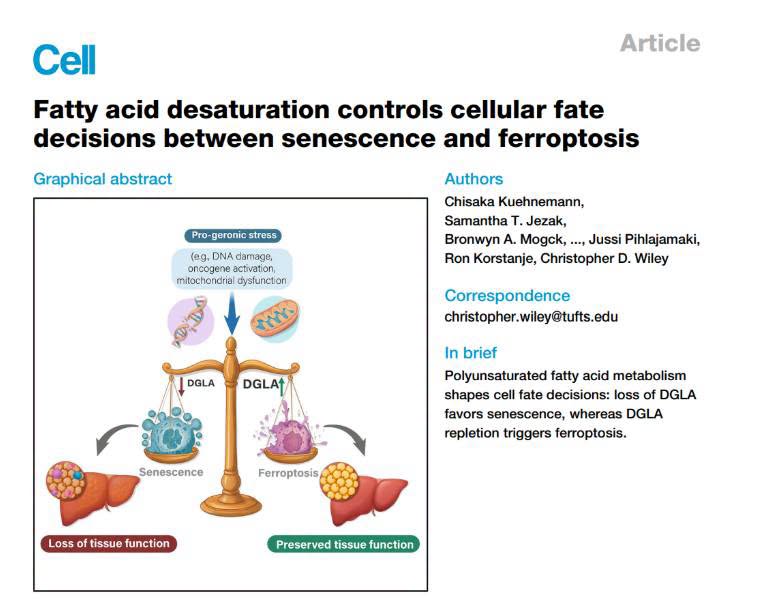
DGLA, an omega-6 fat made from linoleic acid, may selectively kill senescent cells

Louis shares a Cell study summary showing senescent cells keep the omega-6 fat DGLA unusually low because it triggers ferroptosis, making DGLA a possible natural senolytic. The body makes DGLA from GLA and linoleic acid, found in nuts, seeds and their oils, and Louis notes that unlike other senolytics it is made endogenously.

Omega-6 DGLA selectively killed senescent cells through ferroptosis in a Cell study

Louis shares a report on a Cell study in which the omega-6 fat DGLA, made from linoleic acid, selectively killed senescent cells via ferroptosis while sparing healthy cells. Oral DGLA reduced senescent cells in aged mice and improved inflammation and organ function markers. Senescent cells contribute to age-related diseases including cardiovascular disease.