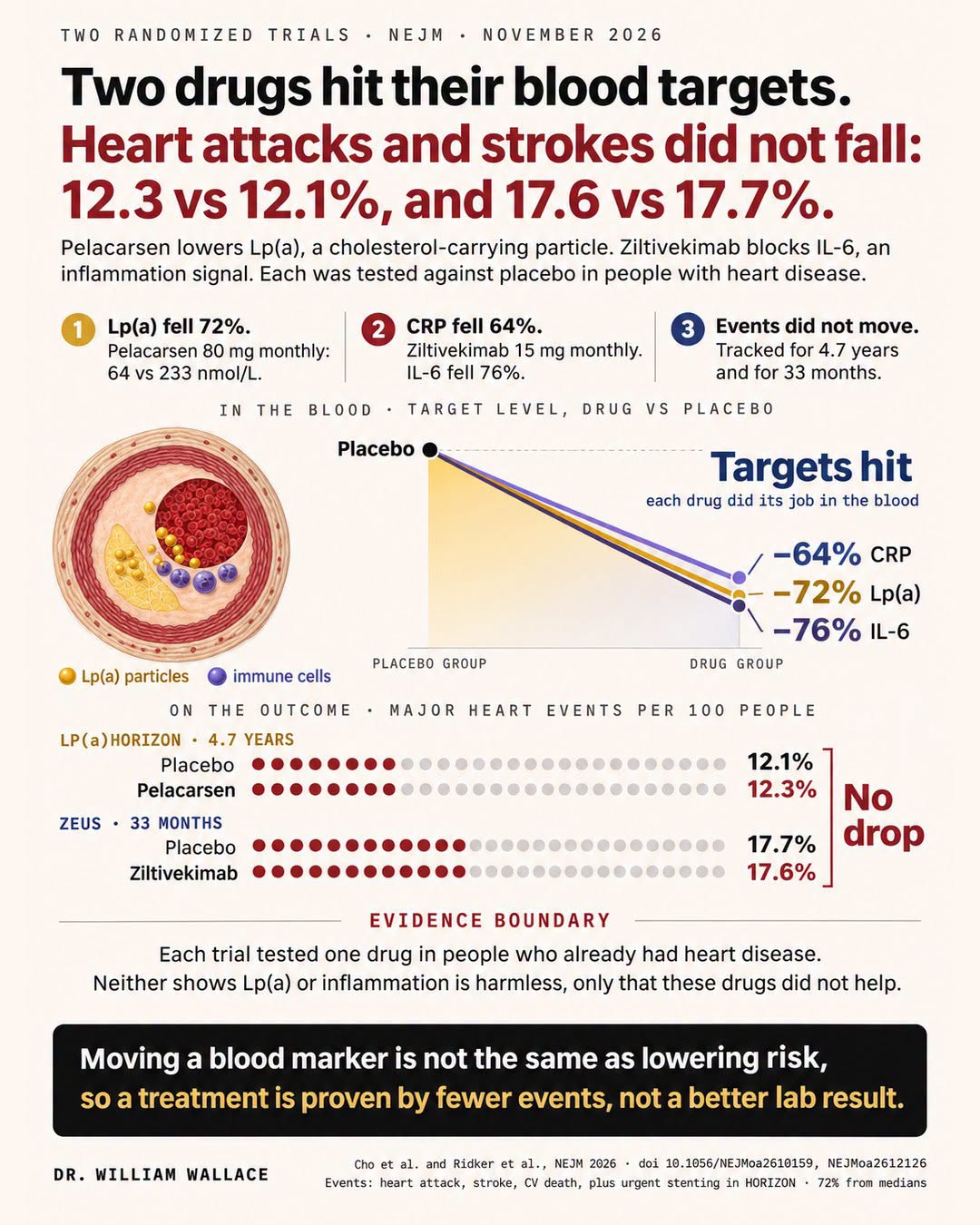
Did the newest AHA risk calculator predict the Lp(a) HORIZON trial would fail?
You can make the case that it did.
The accuracy of the American Heart Association calculator for predicting 10 year risk is not improved by adding Lp(a).
The researchers who developed the mathematical model behind this calculator spent a good deal of time trying to incorporate Lp(a) into the calculator.
However, they found that adding Lp(a) made no difference. The calculator was just as good at predicting risk, whether Lp(a) was included or not.
This surprising finding hinted that Lp(a) was not truly independent of the traditional risk factors previously included in the calculator.
According to the calculator, a person who has already optimized all of their traditional risk factors will see no added benefit from lowering Lp(a). This is exactly what happened in the HORIZON trial.
Quoted:
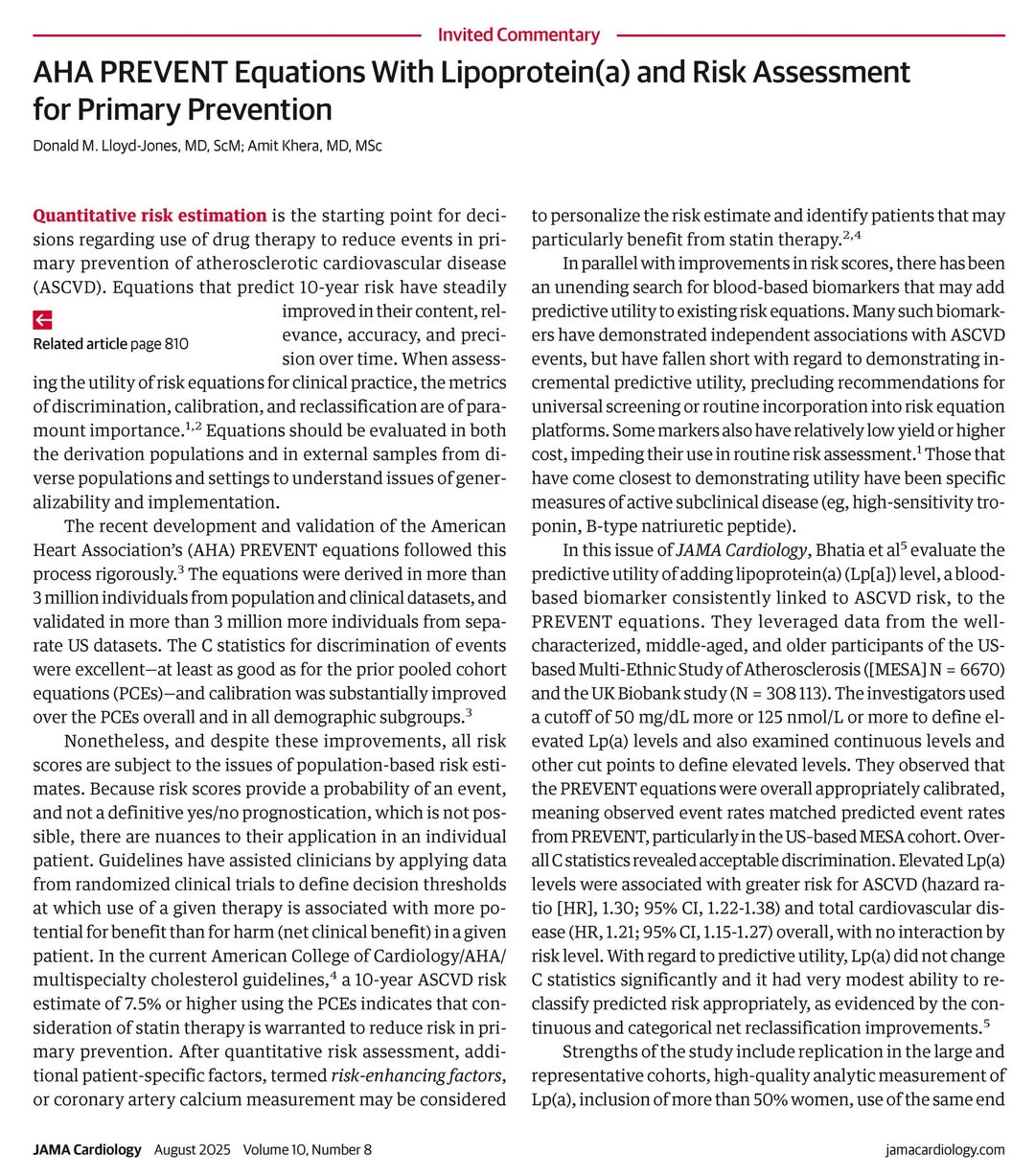
“In parallel with improvements in risk scores, there has been an unending search for blood-based biomarkers that may add predictive utility to existing risk equations. Many such biomarkers have demonstrated independent associations with ASCVD events, but have fallen short with regard to demonstrating incremental predictive utility, precluding recommendations for universal screening or routine incorporation into risk equation platforms.”
“In this issue of JAMA Cardiology, Bhatia et al evaluate the predictive utility of adding lipoprotein(a) (Lp[a]) level, a blood-based biomarker consistently linked to ASCVD risk, to the PREVENT equations.”
“With regard to predictive utility, Lp(a) did not change C statistics significantly and it had very modest ability to reclassify predicted risk appropriately, as evidenced by the continuous and categorical net reclassification improvements.”
#lpaHD #calculatorHD #ahaHD #preventHD #horizonHD #pelacarsenHD