HD-OPM Archive
Topics › Lp(a)

Adding Lp(a) does not improve PREVENT 10-year risk prediction, but personalizes risk

Louis Nervegna · Aug 16, 2025 · ♥ 8 reactions · 6 comments · original Facebook post
Lp(a)Risk assessment & lab tests
AI summary & key facts

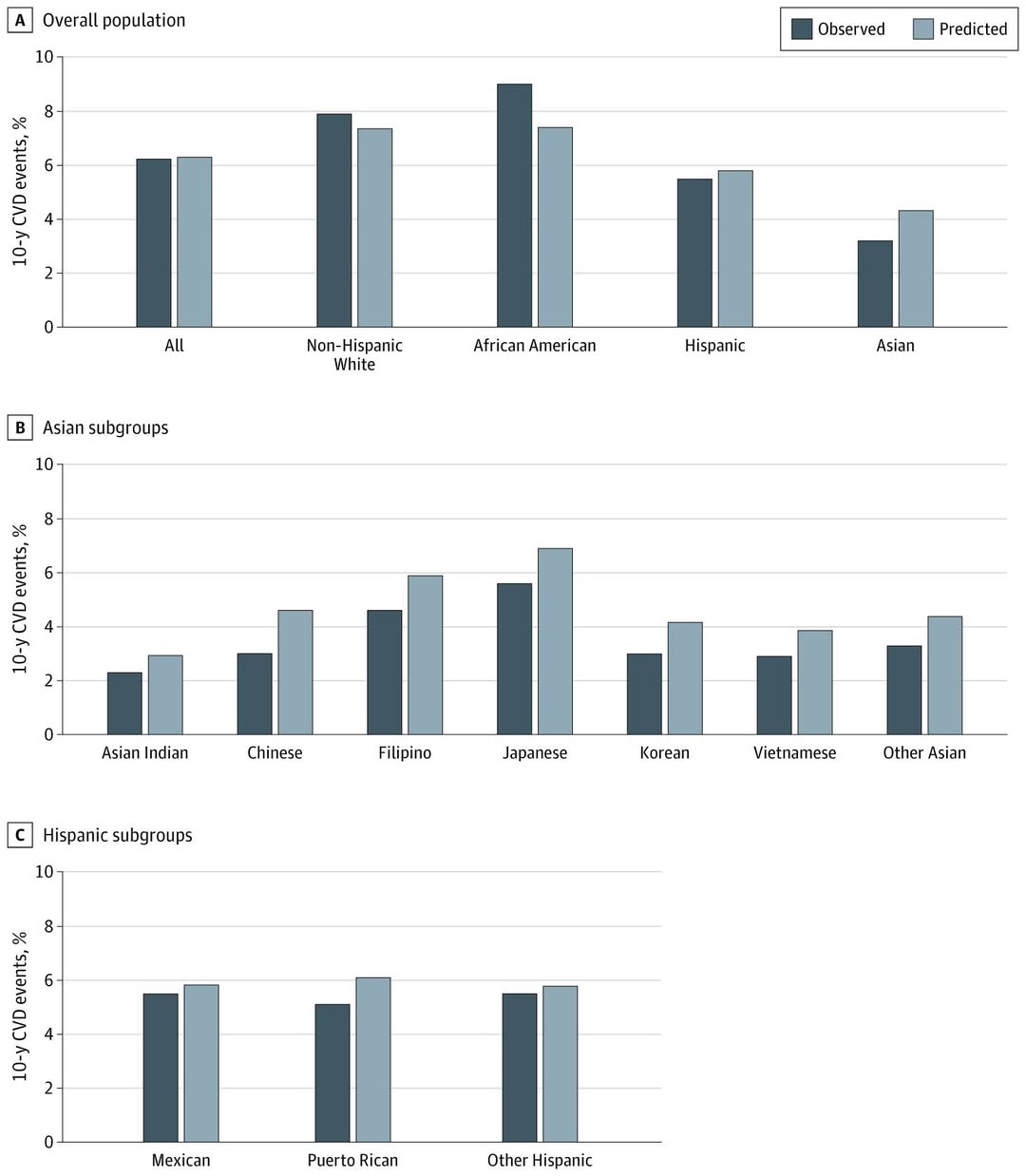
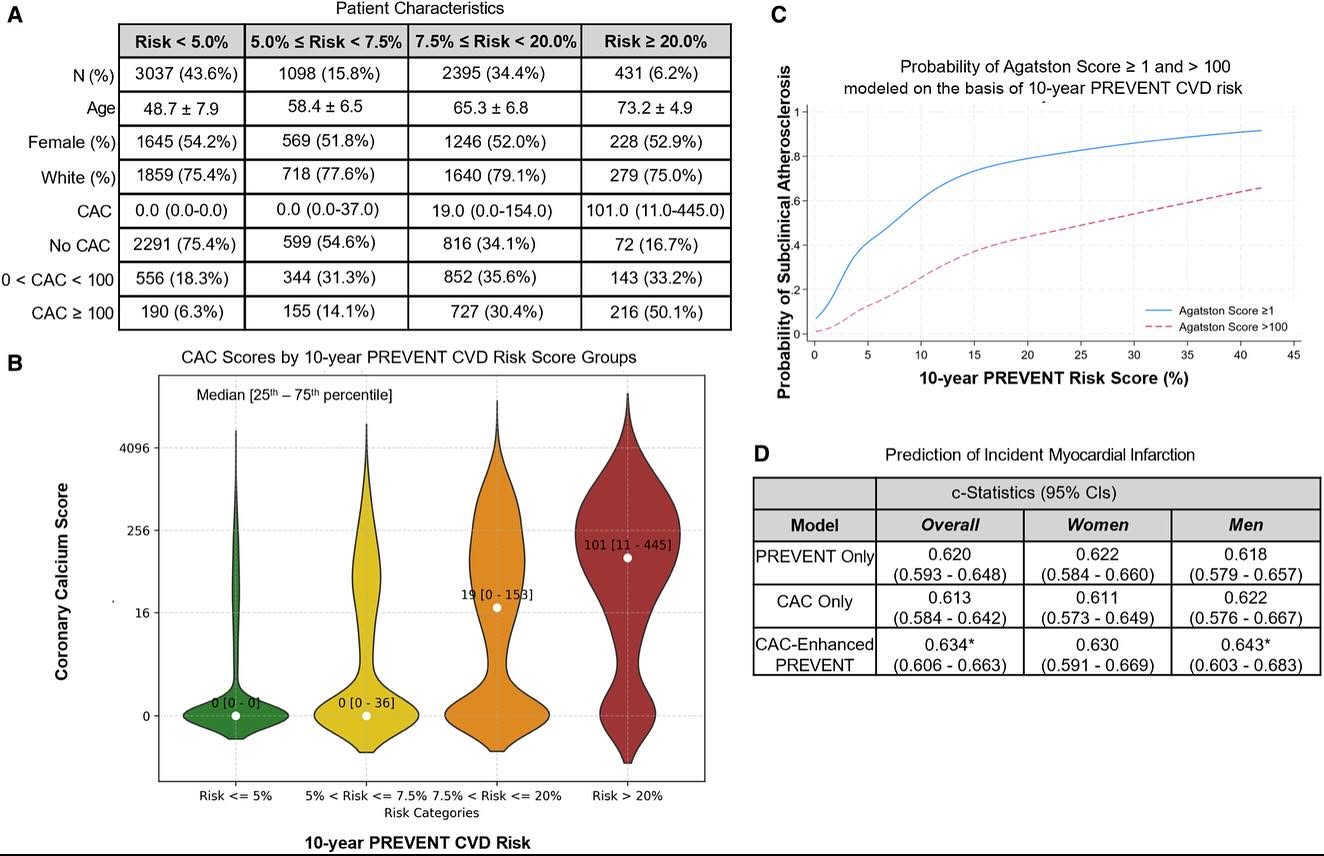
Louis quotes a JAMA Cardiology piece noting many biomarkers are associated with ASCVD but add little predictive accuracy to risk equations. The editorial adds that measuring Lp(a) can still personalize risk because it is a causal factor.

The accuracy of the American Heart Association calculator for predicting 10 year risk is not improved by adding Lp(a).

Quoted:

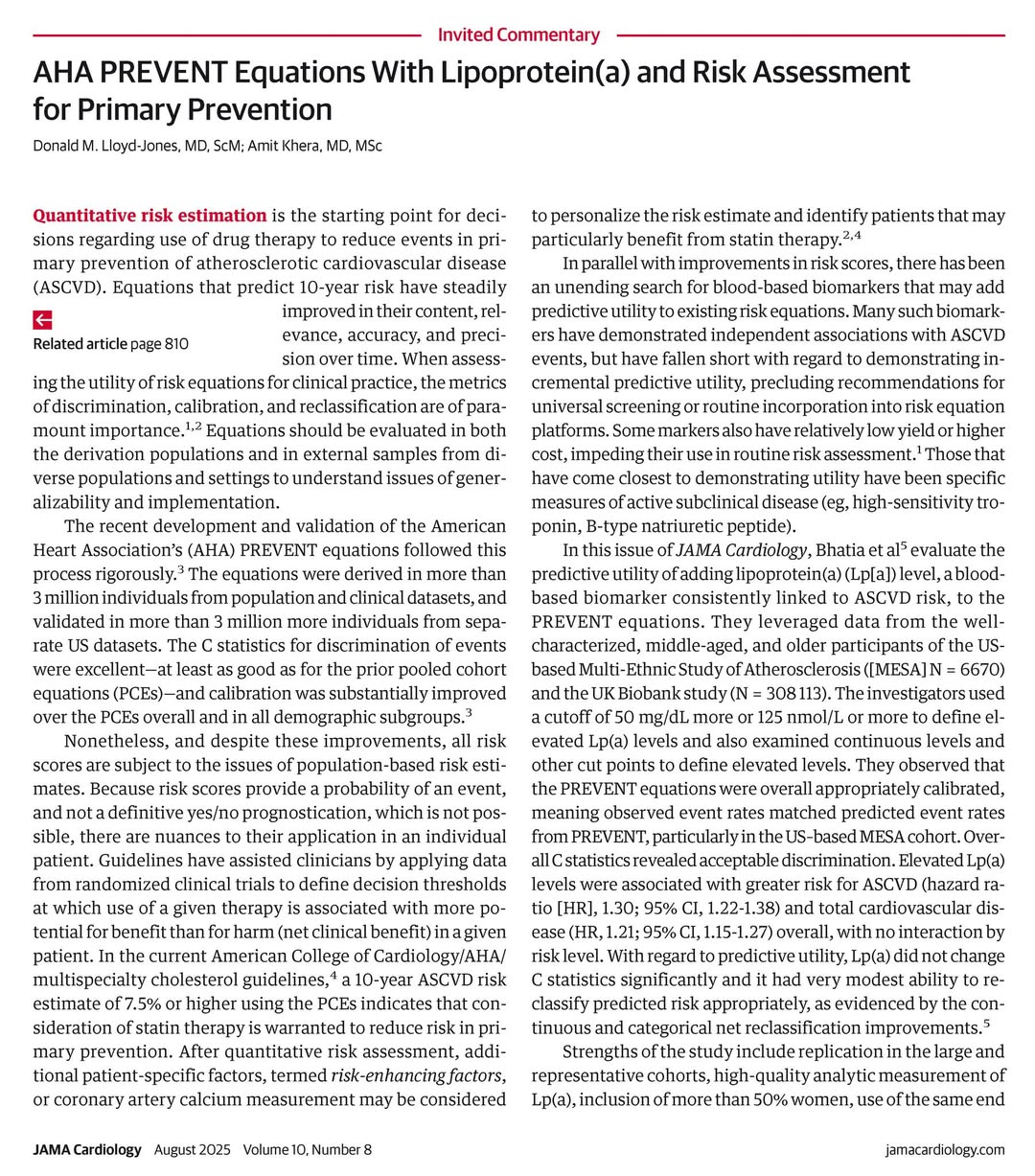
“In parallel with improvements in risk scores, there has been an unending search for blood-based biomarkers that may add predictive utility to existing risk equations. Many such biomarkers have demonstrated independent associations with ASCVD events, but have fallen short with regard to demonstrating incremental predictive utility, precluding recommendations for universal screening or routine incorporation into risk equation platforms.”

“In this issue of JAMA Cardiology, Bhatia et al evaluate the predictive utility of adding lipoprotein(a) (Lp[a]) level, a blood-based biomarker consistently linked to ASCVD risk, to the PREVENT equations.”

“With regard to predictive utility, Lp(a) did not change C statistics significantly and it had very modest ability to reclassify predicted risk appropriately, as evidenced by the continuous and categorical net reclassification improvements.”
facebook.com/share/1DwugCEono

#lpaHD #calculatorHD #ahaHD #preventHD

Research cited

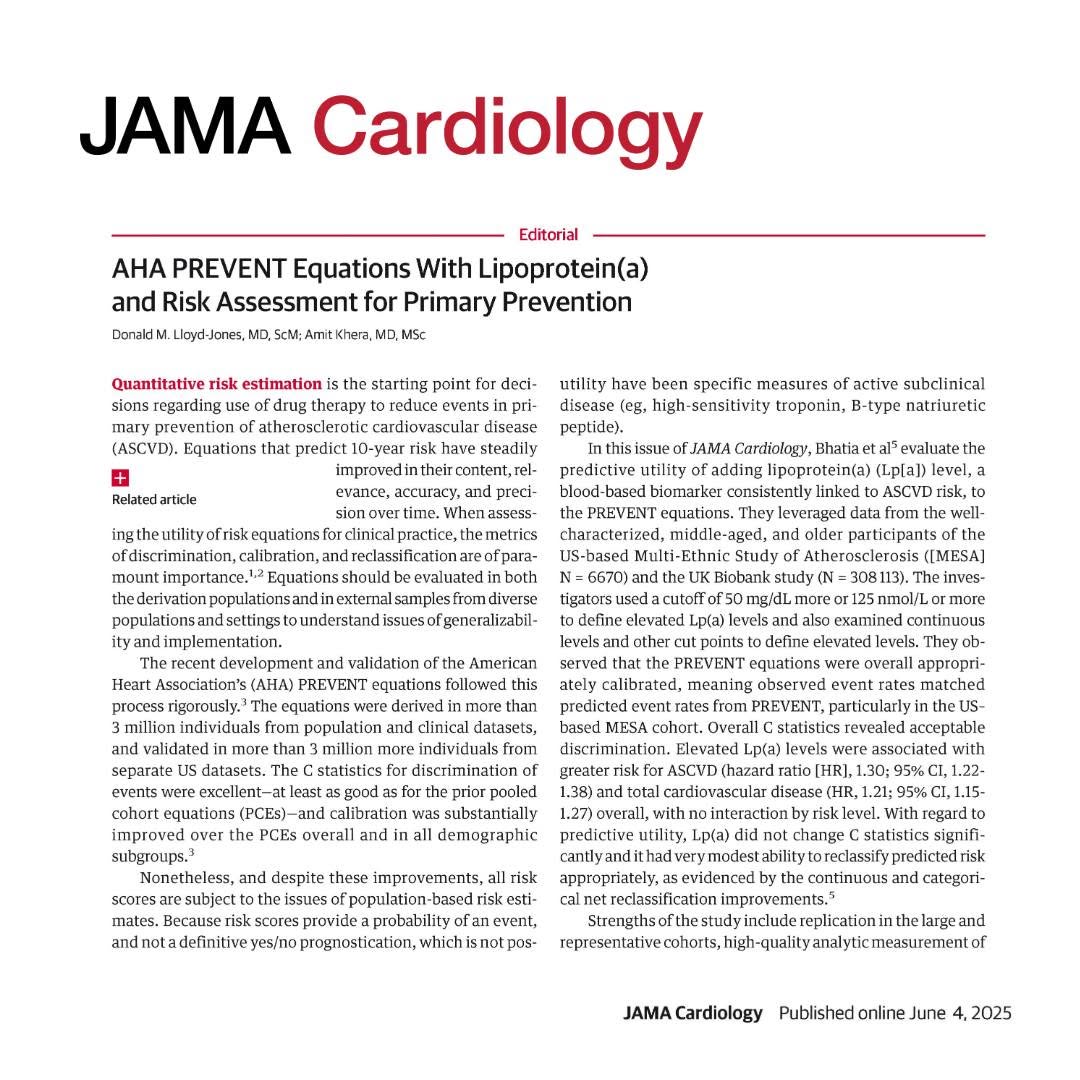
Editorial: The PREVENT equations enhance cardiovascular risk assessment, and while adding lipoprotein(a) doesn't improve prediction, measuring it can personalize risk due to its role as a causal factor. AHA PREVENT Equations With Lipoprotein(a) and Risk Assessment for Primary Prevention (JAMA Cardiol, 2025)

No photo description available.
← newer: Chronic high blood pressure injures vessels, heart, kidneys older: U-shaped curves in observational data usually reflect revers →