(no text — see the shared post below)
What is the difference between LDL-C and LDL-P?
People with low LDL-C might still be at elevated risk if their LDL-P is high.
Most standard blood tests only report LDL-C. If your lab report just says “LDL”, then it probably means LDL-C.
The best test way to know if you’re one of these people is to get a test for ApoB (instead of LDL-P).
facebook.com/share/p/zs3qDLRv264w6FUQ
All of this is explained below.
——
LDL-P is a direct measure of the number of LDL particles in blood circulation.
On the other hand, LDL-C is the amount of cholesterol inside all the LDL particles in circulation.
One measures number of particles and the other measures amount of cholesterol.
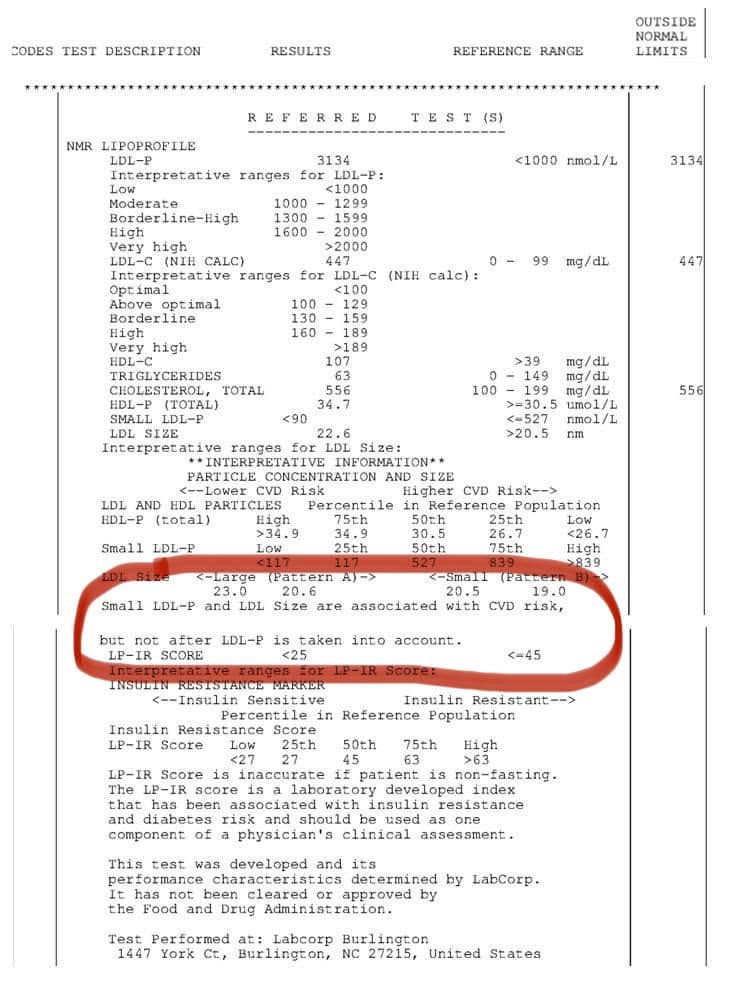
Sometimes there can be a discordance. For example, you can have a low LDL-C but still have a high LDL-P, because your LDL particles are very small. (There are a lot of them but each one carries only a very small amount of cholesterol.) People with this kind of discordance may be at higher risk than their low LDL-C predicts, because the number of atherogenic particles is more accurate in predicting risk than just the amount of cholesterol. This might be why your doctor would order a test for LDL-P.
The latest studies show that LDL particle size by itself has little effect on risk, once you properly account for total number of particles. It is the number of particles that really matter. Size by itself is not very useful for predicting risk, despite the nonsense that you hear on social media. It can still be useful as an indirect measure of insulin sensitivity and glycemic control (“metabolic health”) but there are far more accurate ways to directly measure those things.
↪ LDL particle size probably matters little once confounding and particle number are counted
↪ LDL particle size does not predict CVD risk once particle number or ApoB is accounted for
Note that LDL-P is NOT the same as ApoB. The ApoB test measures ALL of your ApoB tagged particles, of which LDL-P is only a subset.
The test that really matters is ApoB, because all ApoB particles are atherogenic. This is more accurate in predicting risk than just measuring LDL-C or LDL-P. When you measure ApoB, you are automatically measuring LDL-P as well because this is a subset of ApoB. You are also measuring the number of all other atherogenic particles, e.g. VLDL, etc.
↪ Video: why ApoB is a better CVD risk marker than LDL-C and what discordance means
#ldlHD #ldlcHD #ldlpHD #apobHD #particlesizeHD #discordanceHD