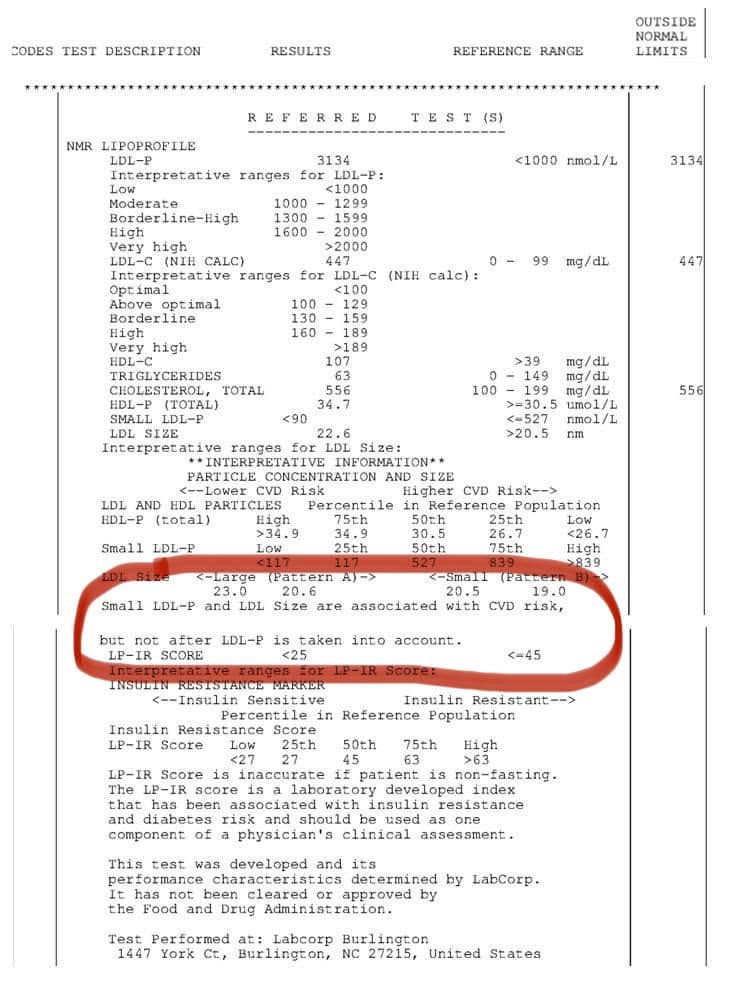
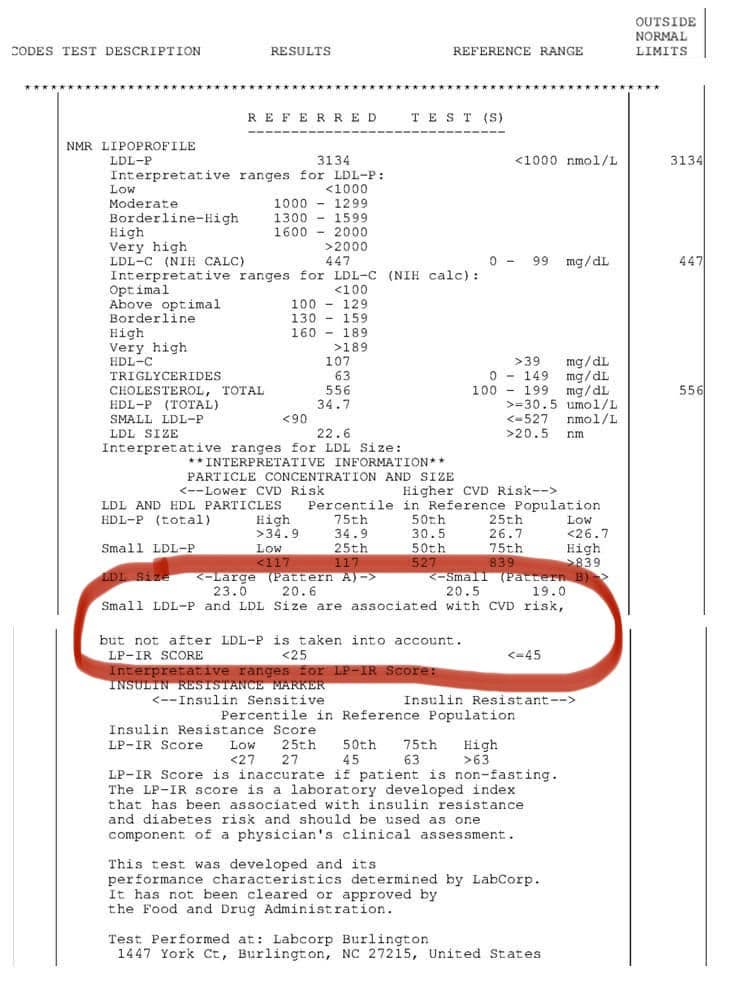
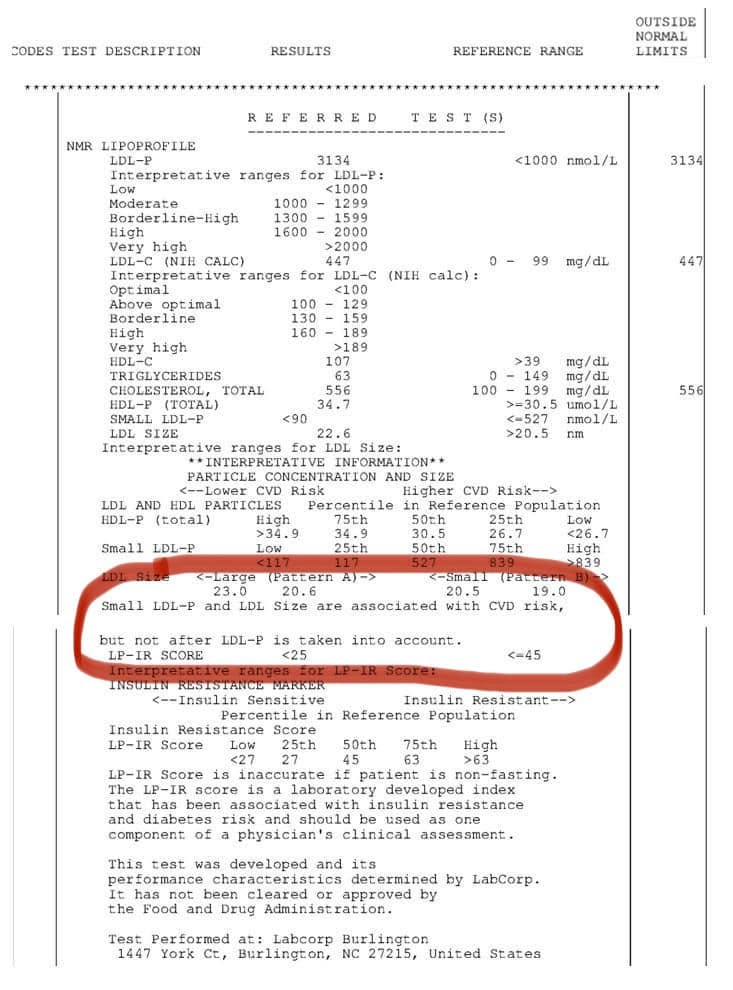
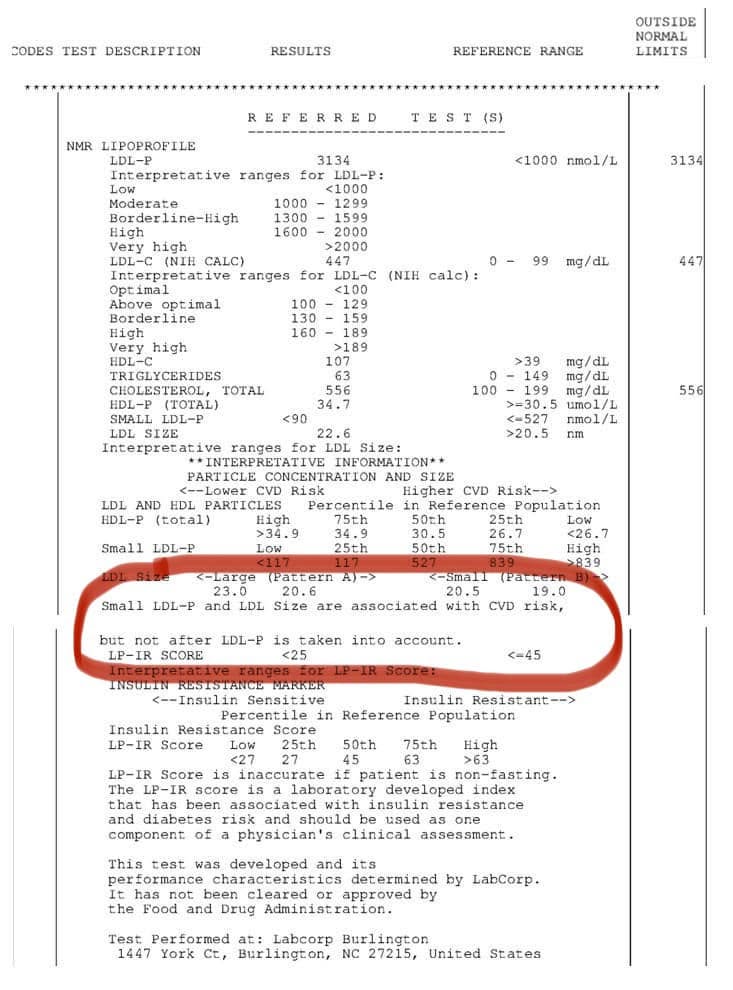
LDL particle size is not associated with risk for CVD, after the total number of LDL particles is properly adjusted for.
In simple terms, if you have high LDL or ApoB (indicating a large number of LDL particles) having a larger LDL particle size is unlikely to protect you.
Particle size is still useful as a measure of insulin sensitivity and glycemic control, but there are much more accurate tests that measure these directly.
↪ LDL particle size does not predict CVD risk once particle number (ApoB) is counted
↪ LDL particle size probably matters little once confounding and particle number are counted
↪ NMR reports state LDL particle size adds no risk information once LDL-P is accounted for
On NMR cholesterol tests for particle size, it literally says right on the report that LDL particle size does not matter.
They literally tell you right on the report that LDL particle size does not affect CVD risk once corrected for total number of LDL particles.
The report literally tells you that the only thing that matters for risk is the total number of LDL particles (LDL-P), not the size.
(Note that ApoB is an equivalent way to measure the number of LDL particles.)
Quoted from the report:
“Small LDL-P and LDL Size are associated with CVD risk, but not after LDL-P is taken into account.”
(They are putting this warning directly on the report so you can’t win a lawsuit against them after getting this test and then having a heart attack. They are explicitly warning you and your physician that studies have shown that having large particle size on this test will not protect you from high LDL-P or high Apo-B.)
#particlesizeHD #nmrHD #ldlpHD #apobHD #ldlHD