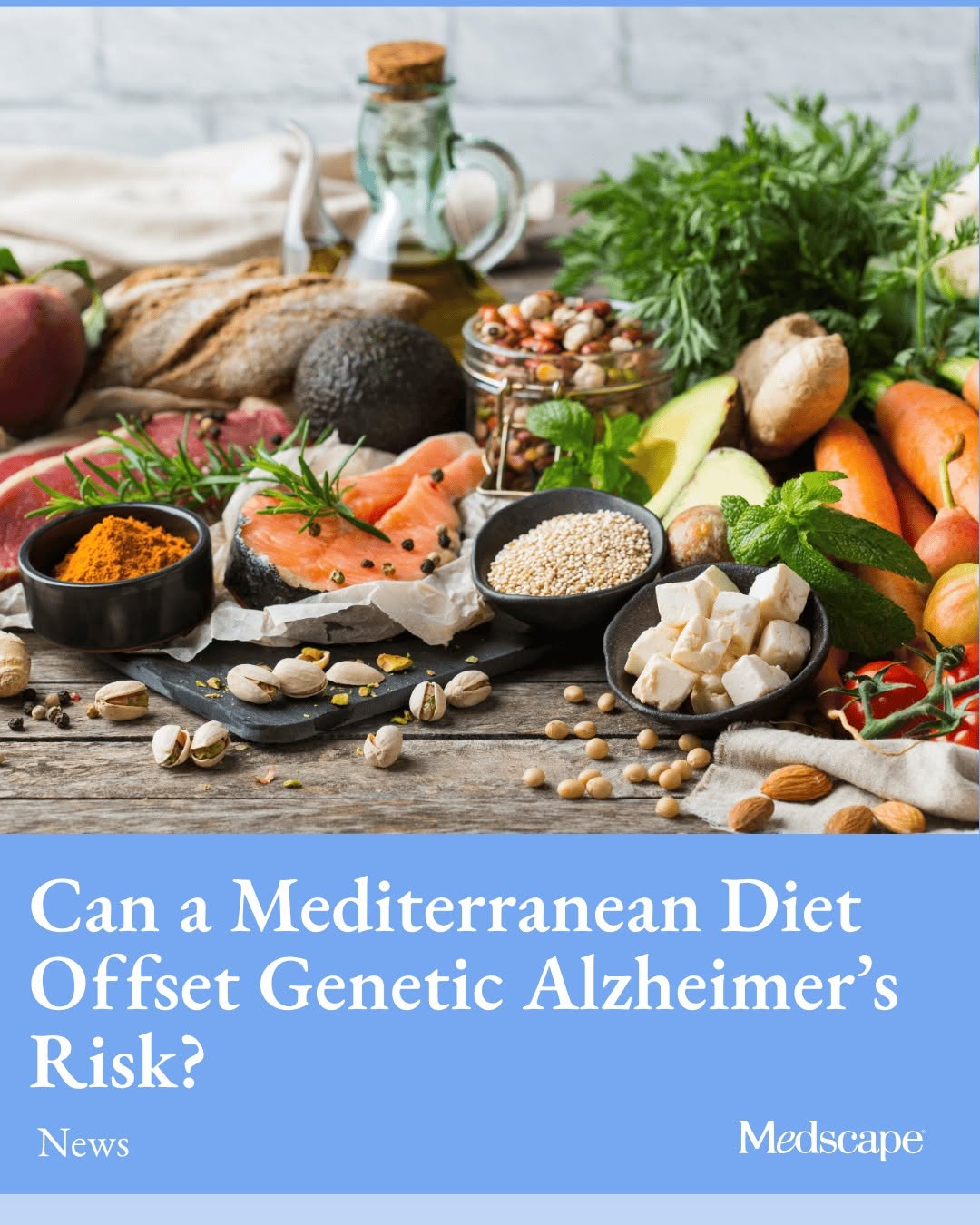
If you are unlucky enough to carry 2 copies of the ApoE4 allele (ApoE4/4), you may be able to cut your risk of developing Alzheimer’s by 35% if you follow a traditional Mediterranean diet.
This is what the latest data from the Harvard Nurses Study and Harvard Physicians Followup Study suggests.
The data also suggests that risk of Alzheimers is lowered for anyone on this diet, regardless of ApoE4 status.
Quoted:
"Consistent with the results from the
PREDIMED trial, we found that long-term adherence to the MedDiet was strongly associated with lower AD/RD [Alzheimer's dementia/related dementias] risk. We further examined whether this association varied by genetic predisposition. We went beyond the binary classification of APOE4 carrier [vs. non-carrier] status and found particularly strong associations only among APOE4 homozygotes.
#apoe4HD #mediterraneanHD #alzheimersHD #dementiaHD #harvardHD #hnsHD #hpfsHDat
ApoE 4/4 Risk of Alzheimer's Lessened by 35% with High Adherence to a Mediterranean Diet in Long-Running Observational Studies
medpagetoday.comLink to medpagetoday.commedpagetoday.com
Encouraging lifestyle prevention news for ApoE 4/4 carriers from researchers at Boston's Mass General Brigham and long-time participants in two observational AD studies:
"We found that greater adherence to the Mediterranean diet was associated with a lower risk of dementia and slower cognitive decline in the overall study population," said co-author Yuxi Liu, PhD, also of Mass General Brigham.
AND...
"The protective association was MOST pronounced among individuals carrying two copies of the APOE4 allele, where each one-unit increase in the Mediterranean diet score was associated with approximately a 35% lower risk of dementia. These findings suggest that adherence to the Mediterranean diet may mitigate the elevated genetic risk conferred by APOE4."
In other words, people who carried two copies of the Alzheimer's disease APOE4 risk gene had a lower risk of developing dementia if they followed a Mediterranean diet, according to this observational study of healthcare professionals.
Researchers followed 4,215 women in the Nurses Health Study from 1989 to 2023 (mean age, at baseline, 57 years). During the study, 485 female participants developed dementia. To see if the initial findings were replicated in men, they began following 1,490 men in the Health Professionals Follow-up Study (HPFS) from 1993 to 2023, with 121 dementia cases documented.
Key take-away for both groups: Adherence to the Mediterranean diet more effectively modulated dementia-related metabolites in APOE4 homozygotes than in people with lower genetic risk, wrote Dong Wang, MD, ScD, of Mass General Brigham in Boston, and colleagues.
Evidence suggests APOE4 affects Alzheimer's risk by stopping amyloid clearance and promoting amyloid aggregation. It is strongly linked to dysregulation in lipid metabolism and impaired cerebral glucose metabolism. BUT--A key distinction between metabolomics and genetics is that metabolites can be modified by external factors and may serve as targets for intervention in people at high genetic risk.
"The Mediterranean Diet (MedDiet), has been linked to cognitive health. We wanted to see whether this benefit might be different in people with varying genetic backgrounds, and to examine the role of blood metabolites, the small molecules that reflect how the body processes food and carries out normal functions," Liu said.
The open-access article notes that individual components of the MedDiet, such as nuts, fruit and monounsaturated fats, were strongly associated with overall metabolomic patterns. Greater adherence to the MedDiet was associated with higher levels of unsaturated glycerides and lower levels of saturated glycerides, lipid patterns potentially beneficial for cognitive health, as well as increased levels of established neuroprotective compounds, including piperine, betaine and pantothenic acid.
Analysis also identified nominally significant interactions between MedDiet and the APOE4 genotype in relation to 1,7-dimethyluric acid, a derivative of caffeine metabolism with established antioxidant properties and potential neuroprotective
effects.
The authors noted that Alzheimer's has long been considered a metabolic disease, largely due to the central role of APOE4 in lipid transport and metabolism and added:
"Consistent with the results from the PREDIMED trial, we found that long-term adherence to the MedDiet was strongly associated with lower AD/RD [Alzheimer's dementia/related dementias] risk. We further examined whether this association varied by genetic predisposition. We went beyond the binary classification of APOE4 carrier [vs. non-carrier] status and found particularly strong associations only among APOE4 homozygotes.
The authors stated that these mechanistic insights into the effects of a Mediterranean diet could lead to actionable prevention strategies targeting these pathways. They see important implications for public health messaging, highlighting the overall benefit of adhering to the MedDiet for ADRD prevention, as well as the potential for targeted interventions in genetically vulnerable populations.
The researchers believe that these findings suggest potential drug targets and will identify pathways for more effective and precise prevention and treatment strategies.
"In future research, we hope to explore whether targeting specific metabolites through diet or other interventions could provide a more personalized approach to reducing dementia risk," Liu said.
The study was based on well-educated individuals who largely were of European ancestry, the researchers acknowledged. Metabolomics are not part of most clinical risk prediction models for Alzheimer's disease, they added. The findings are observational and may have been influenced by unknown confounders.
The NHS and HPFS studies have been funded by the NIH in multiple grant cycles. Some of the data was collected by the National Cancer Registry.