Spoiler alert: If you’re an omnivore then— chances are— you are already getting any possible benefit from this study.
Most people who eat a MIND diet or traditional Mediterranean diet are already getting an average of at least 2.5oz of fish or poultry daily. That already puts you in the top 20% of APOE4’s in this study. These are the people who saw the max benefit.
As mentioned in the post below, the same benefit was seen in this study from fish or poultry as from red meat. That implies most people on this kind of diet are already equivalent to the top 20%. See the numbers in the post below.
To put this 2.5oz number in perspective:
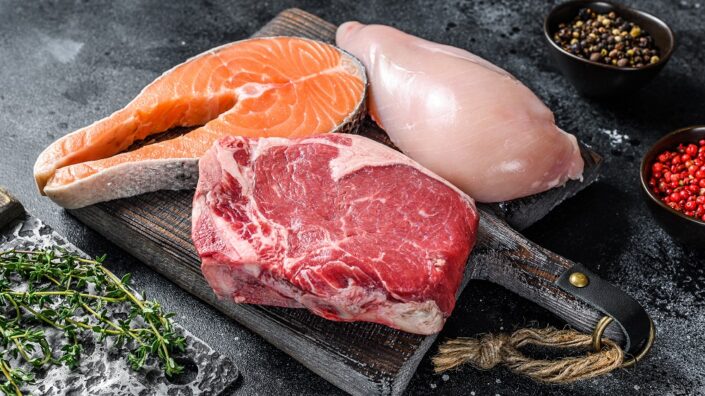
One chicken breast is 6-8oz.
One palm-sized salmon filet is 3-4oz.
You only need to eat a fraction of this each day to hit 2.5oz.
So even on the off chance that these results are causal (a big if), pretty much everyone who eats this kind of healthy diet is already getting the benefit. I am certainly in that category.
I would imagine that nearly every omnivore in this group is already consuming an average of at least 2.5oz of fish or poultry (or red meat) per day. That already puts you in the top 20% and gives you the max benefit seen in the study if you’re an APOE4.
This is an interesting new observational study, which has attracted a lot of attention online and in the media.
The study suggests that carriers of the APOE4 Alzheimer’s gene variants might see a lower risk of developing dementia if they consume unprocessed meat or fish in their diet. They might also see slower progression, if they already have dementia.
(Specifically those with the APOE 3/4 and 4/4 genotypes.)
No benefit was seen in non-APOE4’s.
Fish and poultry seemed to confer the same benefit as red meat in APOE4’s. There was no advantage to consuming one over the other.
Again, there was no benefit seen in non-APOE4’s.
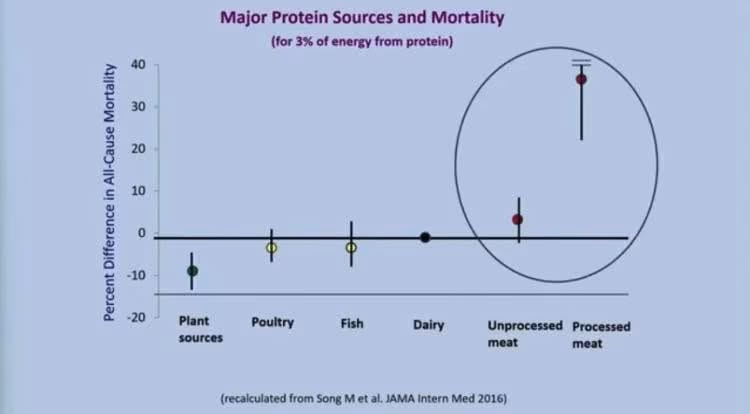
On the other hand, processed meat was associated with an INCREASED risk of dementia in ALL participants, regardless of APOE4 status.
(And yes, this includes the supposedly “natural” and “uncured” versions of popular processed meats like bacon, sausage, hot dogs, deli meats, etc. that are processed using celery powder instead of sodium nitrite: ↪ 'Uncured' and 'nitrate-free' processed meats can carry as many or more nitrosamines.)
Participants in this study were not having large amounts of meat or fish overall, at least not by American standards. So on the assumption that these results are indeed causal (a huge leap), it would not take much to see the benefit:
- Total meat (red meat + poultry + processed meat) per day was a mean of 77 grams, or about 2.7 ounces.
- The mean serving of red meat was about 39 grams/day, or 1.4 oz. in a 2000 calorie diet.
- APOE 3/4 and 4/4 participants in the highest 20% had a mean of 2.5 oz of red meat per day, while those in lowest 20% had a mean of 0.6 oz per day.
- Poultry was a mean of 14 grams, or 0.5 oz.
For more information on this study, also see this post:
↪ Yassine: Swedish APOE4 meat study underpowered for dementia but significant for cognition
The part that caught my attention right off the bat was this quote:
“While the outcomes may seem surprising, they align with patterns observed in two large cohort studies, the researchers said.
‘Viewed alongside reinterpreted evidence from the Nurses' Health Study and U.K. Biobank focusing on unprocessed meat, these findings point to a consistent gene-diet interaction, with important implications for public health,’ Norgren and co-authors wrote.
In the U.K. Biobank study of 494,000 participants, unprocessed red meat was inversely associated with dementia (P=0.01), which was driven by APOE4 carriers. In the Nurses' Health Study, supplementary analyses showed an APOE4 interaction (P<0.001) for unprocessed red meat. These patterns were not emphasized in the original publications, Norgren and colleagues noted.”
My note:
So at first glance, there does actually seem to be some precedent for this finding in large prospective cohort studies like the Harvard Nurses Study (although the researchers on the HNS might disagree). It will be interesting to see if this observation holds up to further analysis. Time will tell.
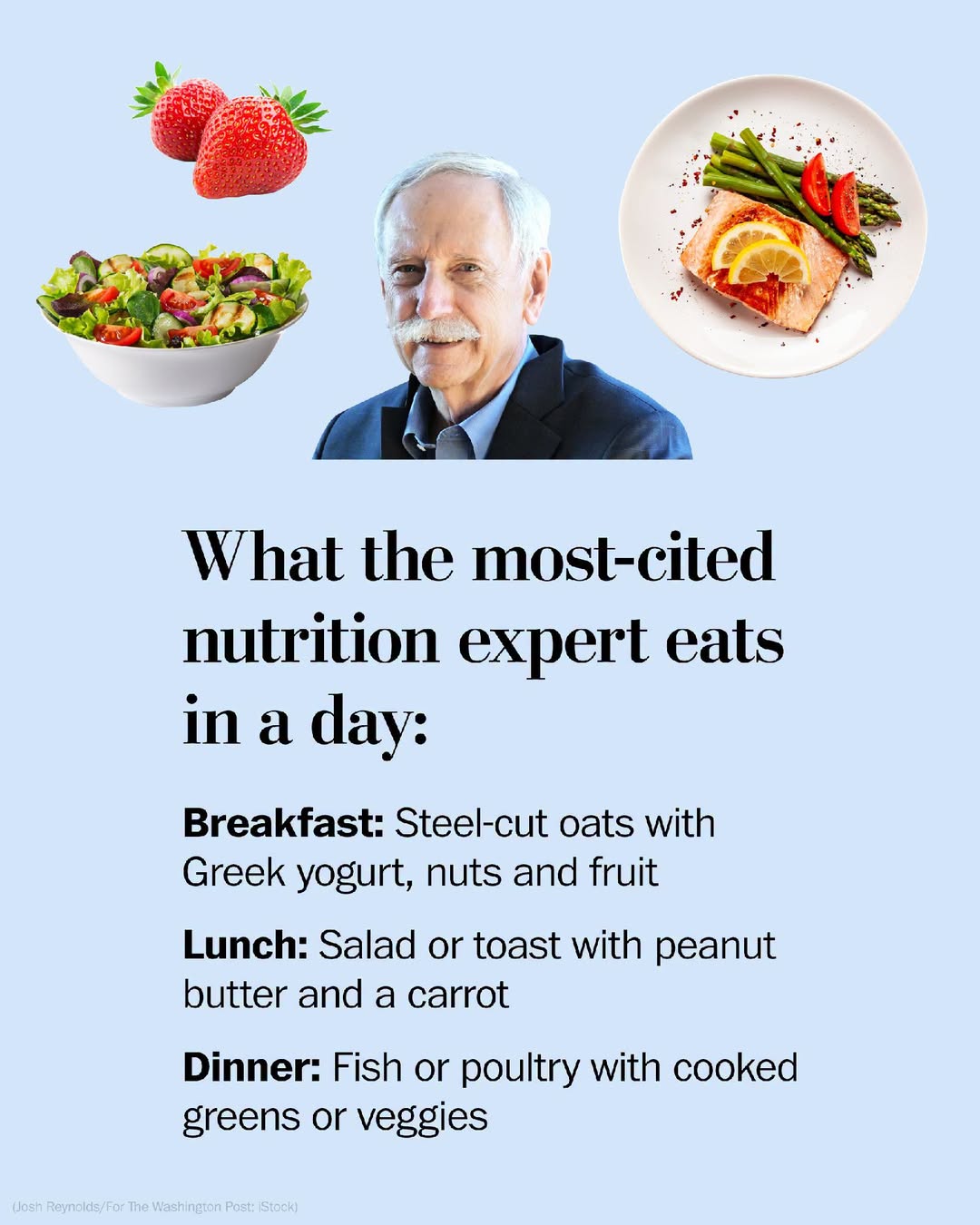
In the meantime, the best evidence we have to prevent dementia with nutrition is the MIND diet. This is what most neurologists now recommend. The studies show that it works regardless of APOE4 status. It encourages fish. It also allows poultry, and even a little red meat. But no processed meat. You can read the posts about it by searching the group for the tag #minddietHD.
Link to the full study:
Meat Consumption and Cognitive Health by APOE Genotype (JAMA Network Open, Mar. 2026)
Paper · JAMA Network OpenJAMA Network Open articlejamanetwork.com
Links to some of the media coverage:
medpagetoday.comLink to medpagetoday.commedpagetoday.com
 Lifespan Research Institute | Building a Future Free of Age-Related DiseaseMeat Consumption May Benefit APOE4 CarriersA new study has found a negative association between unprocessed meat consumption and cognitive decline in carriers of the “pro-Alzheimer’s” APOE ε4 allele.lifespan.io
facebook.com/share/p/184f6oAhEd
#redmeatHD #poultryHD #processedmeatHD #apoe4HD #dementiaHD #alzheimersHD #hnsHD #ukbiobankHD