Daily Coffee Tied to Brain Benefits
Paper · JAMAJAMA articlejamanetwork.com
🔹Key Takeaways:
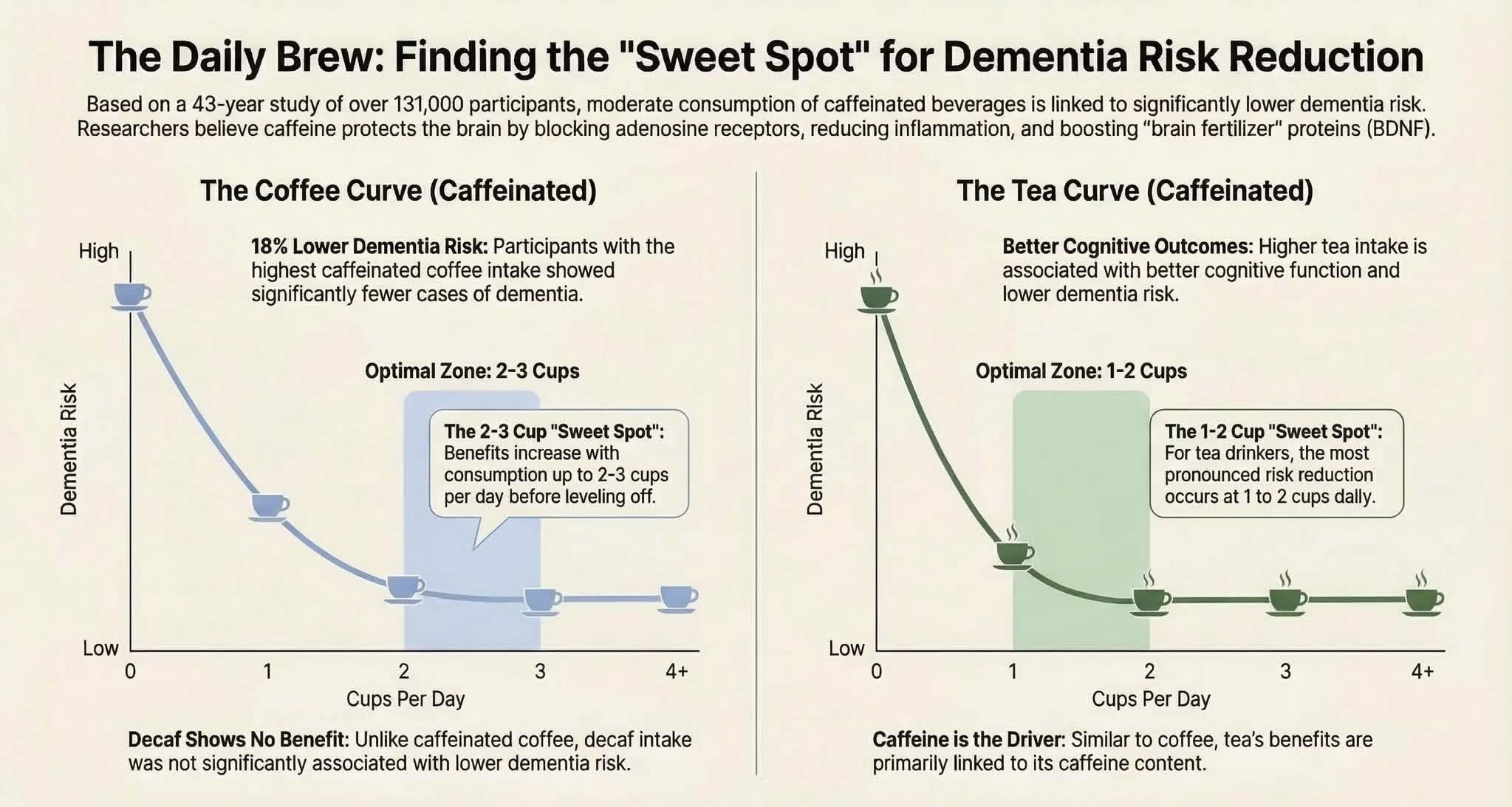
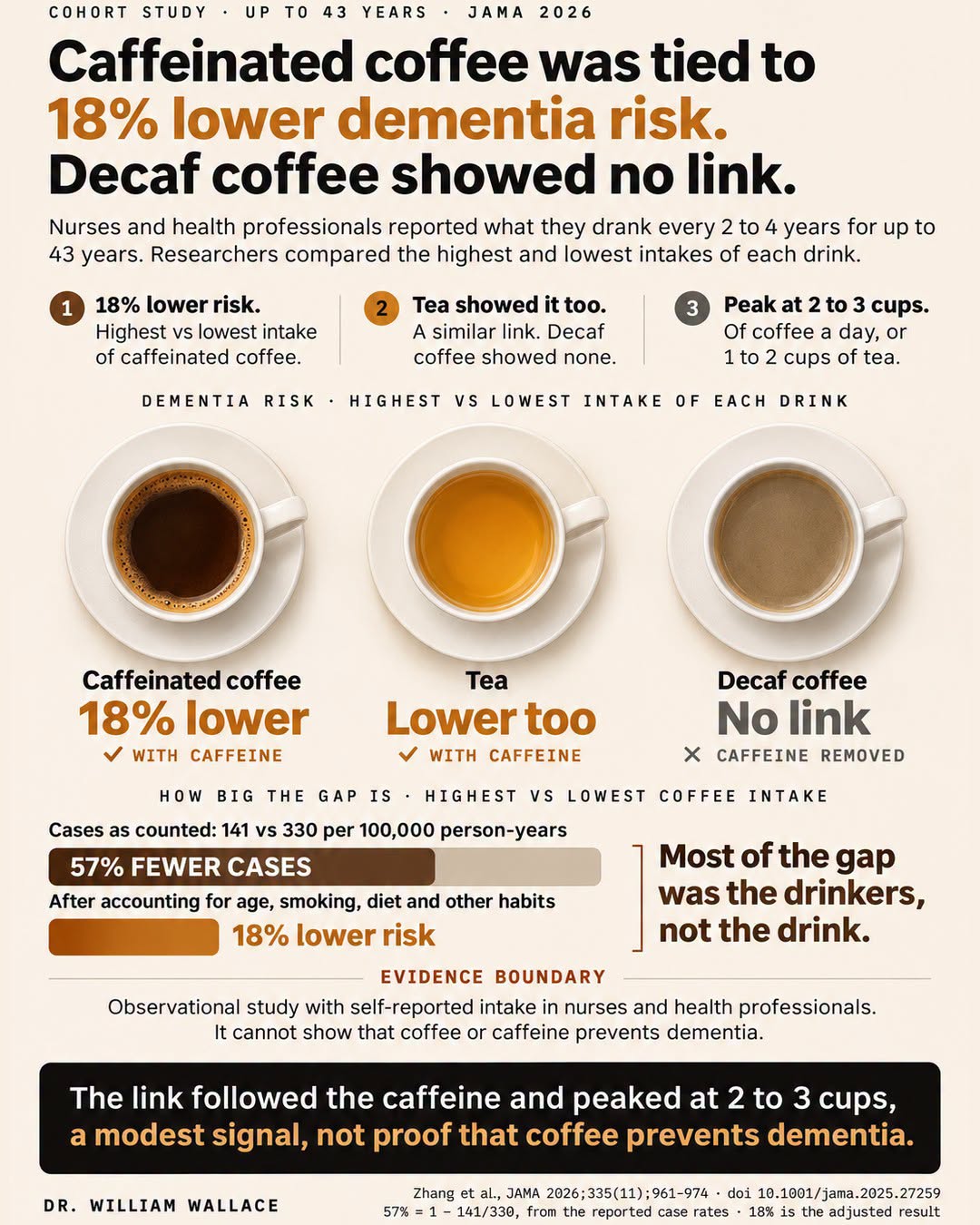
- In a study that followed health care professionals for an average of 37 years, moderate coffee or tea intake was linked with 18% lower risk of a diagnosis of dementia of any type and better cognitive performance.
- The greatest benefit was associated with 2-3 cups of caffeinated coffee or 1-2 cups of tea daily.
- Decaf coffee had no relationship with dementia risk or cognitive outcomes.
🔹Importance: Evidence linking coffee and tea to cognitive health remains inconclusive, and most studies fail to differentiate caffeinated from decaffeinated coffee.
🔹 Focus on prevention:
Coffee and tea contain bioactive ingredients like polyphenols and caffeine, which have emerged as possible neuro-protective factors that reduce inflammation and cellular damage while protecting against cognitive decline.
🔹Objective :
To investigate associations of coffee and tea intake with dementia risk and cognitive function.
🔹 Design, Setting, and Participants :
Prospective cohort study that included female participants from the Nurses’ Health Study (NHS; n = 86 ,606 with data from 1980-2023) and male participants from the Health Professionals Follow-up Study (HPFS; n = 45,215 with data from 1986-2023) who did not have cancer, Parkinson disease, or dementia at study baseline in the US.
[Editorial note: Health care professionals in the 1980's were extremely likely to be female nurses and male doctors, hence the design to survey female nurses and male doctors. Sigh....]
🔹Exposures:
The primary exposures were intakes of caffeinated coffee, decaffeinated coffee, and tea. Dietary intake was collected every 2 to 4 years using validated food frequency questionnaires.
🔹 Main Outcomes and Measures :
👉 The primary outcome was dementia, which was identified via death records and physician diagnoses.
👉 The secondary outcomes included subjective cognitive impairment (SCI) assessed by a questionnaire-based score and objective cognitive function assessed only in the NHS cohort using telephone-based neuropsychological tests such as the Telephone Interview for Cognitive Status (TICS) score and a measure of global cognition.
[Note: Mild Cognitive Impairment (MCI) was not used as a stage of disease at the beginning of this study, so it's possible that people with SCI may have had MCI.]
FINDINGS:
🔹Among 131,821 participants with a mean age at baseline of 46 years for females and 54 for males, with a median of 37 years of follow-up, there were 11,033 cases of dementia.
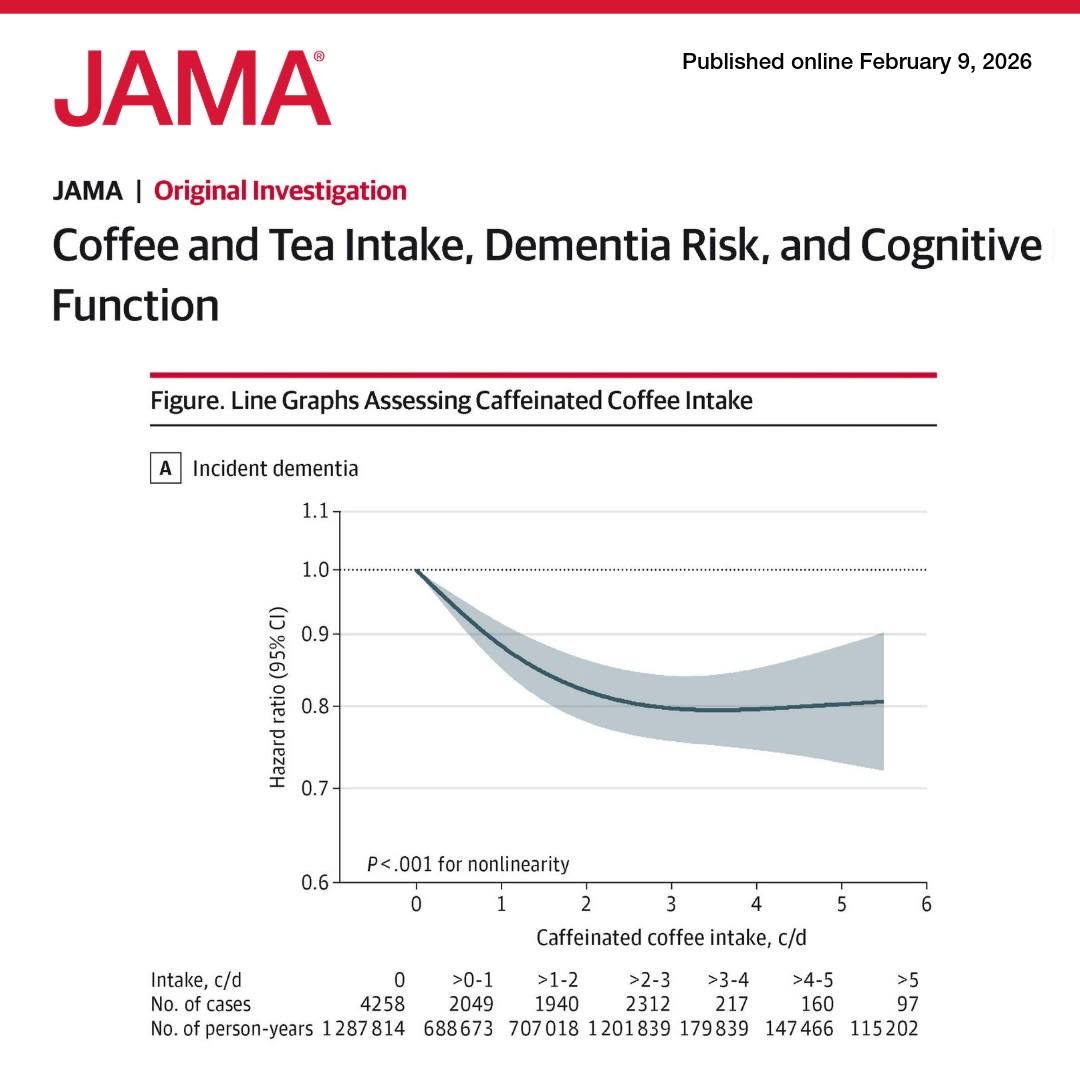
🔹 Greater consumption of caffeinated coffee and tea was associated with lower risk of dementia and modestly better cognitive function, The most pronounced associated differences were observed with intake of approximately 2 to 3 cups per day of caffeinated coffee or 1 to 2 cups per day of tea, approximately 300 mg of caffeine.
🔹 Both male and female participants with the highest intake of caffeinated coffee had an 18% lower risk of dementia compared with those who reported little or no caffeinated coffee consumption. Caffeinated coffee drinkers also had lower prevalence of subjective cognitive decline (7.8% versus 9.5%).
🔹 In the female cohort, those who drank caffeinated coffee also showed better performance on objective tests of overall cognitive function.
🔹Researcher's Take-Away:
Senior author Daniel Wang, MD, ScD, of Harvard Medical School and the Department of Nutrition at Harvard Chan School of Public Health noted that “While our results are encouraging, it’s important to remember that the effect size is small and there are lots of important ways to protect cognitive function as we age. Our study suggests that caffeinated coffee or tea consumption can be one piece of that puzzle.”
❤️ ApoE4 Good News:
“We also compared people with different genetic predispositions to developing dementia and saw the same results—meaning coffee or caffeine is likely equally beneficial for people with high and low genetic risk of developing dementia,” said lead author Yu Zhang, MBBS, MS, PhD student at Harvard Chan School and a research trainee at Mass General Brigham.
👉 The study's limitations included potential residual confounding and a lack of detail about tea type or coffee preparation, which may affect caffeine and bioactive compound concentrations. Each cohort included single-sex health professionals, which may limit generalizability to broader populations, the researchers acknowledged.
The study was funded by the National Institutes of Health (NIH).