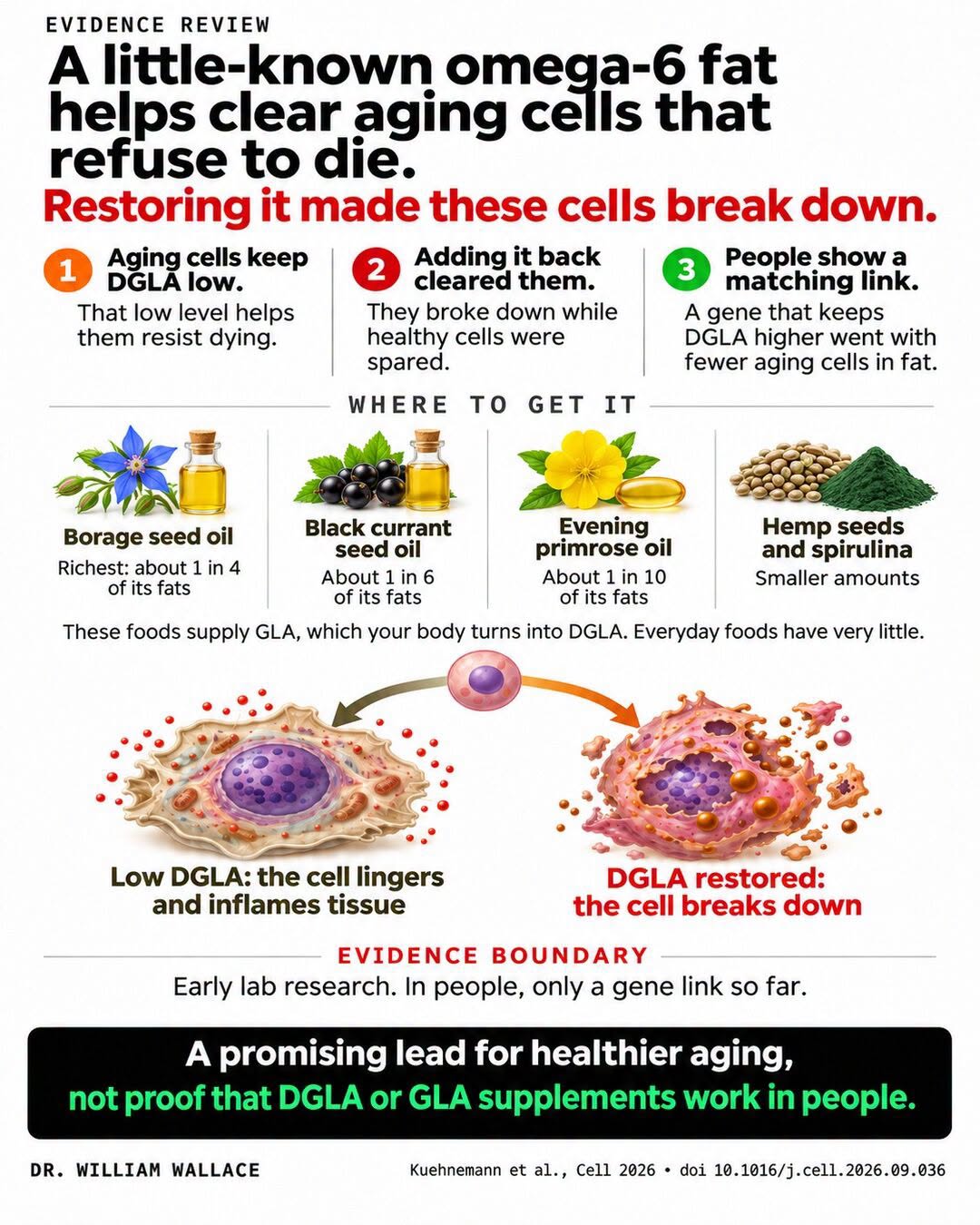
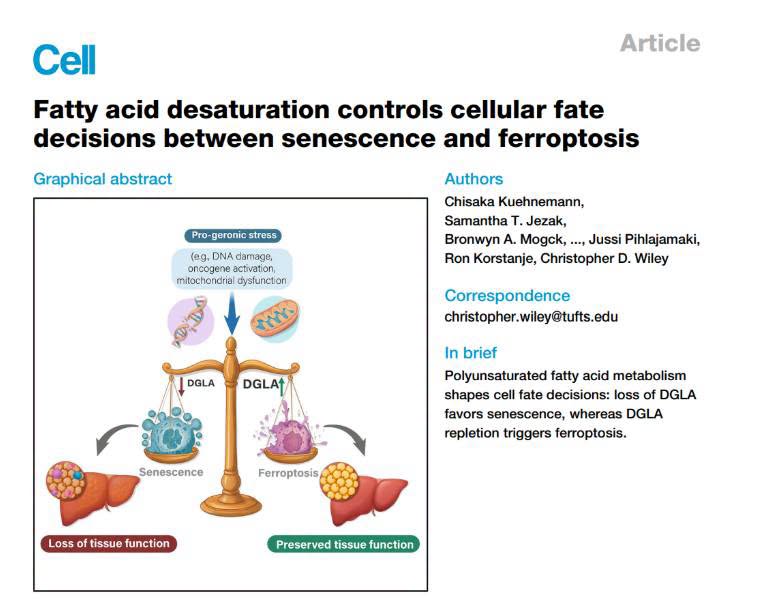
(no text — see the shared post below)
Omega 6 fats inhibit mTOR and activate autophagy; they extend lifespan of roundworms (C. Elegans) by 20-25%.
The same response is seen when testing human cells.
This research is from Harvard Medical School, and MGH/Brigham Hospital in Boston.
The senior author on the paper is Gary Ruvkun, recipent of the 2024 Nobel Prize in medicine.
This activation of autophagy occurs through both mTOR-dependent and mTOR-independent pathways, and results in co-activation of endogenous antioxidant defense systems (via hormesis).
You can read other posts on this topic by searching the group for the tag #omega6HD.
You can learn more about how the mTOR pathway extends lifespan in mammals by searching for the tag #mtorHD.
References:
Paper · Genes Dev · 2013ω-6 Polyunsaturated fatty acids extend life span through the activation of autophagy.Adaptation to nutrient scarcity depends on the activation of metabolic programs to efficiently use internal reserves of energy. Activation of these programs in abundant food regimens can extend life span. However, the common molecular and metabolic changes that promote adaptation to nutritional stress and extend life span are mostly unknown. Here we present a response to fasting, enrichment of ω-6 polyunsaturated…pmc.ncbi.nlm.nih.gov
Paper · Cell Death Dis · 2020ω-6 Polyunsaturated fatty acids (linoleic acid) activate both autophagy and antioxidation in a synergistic feedback loop via TOR-dependent and TOR-independent signaling pathwaysω-6 Polyunsaturated fatty acids (PUFAs) are essential fatty acids that participate in macroautophagy (hereafter referred to as autophagy) and the Kelch ECH-associating protein 1 (Keap1)—nuclear factor erythroid 2-related factor 2 (Nrf2) antioxidant system in organisms. However, the molecular mechanisms by which ω-6 PUFAs (linoleic acid) regulate autophagy and Keap1–Nrf2 antioxidant system are not completely…nature.com
Quoted from the Harvard press release:
Almost all the mechanisms of lifespan extension studied until now—sterility, insulin insensitivity and caloric restriction—have been shown to depend on activation of autophagy,” said O’Rourke. “Our finding that omega-6 supplementation activated roundworms’ cellular response to fasting—namely autophagy—even though the worms were eating normally suggests that consumption of omega-6 fatty acids may provide the benefits of caloric restriction without the need to limit food consumption. It also suggests that the reported benefits of omega-6 acids could depend in part on activation of an evolutionarily ancient program for surviving food deprivation.”
O’Rourke and her co-authors note that many investigators and clinicians believe that omega-6 fatty acids—commonly found in meats, poultry and vegetable oils—may increase the risk of cardiovascular disease, despite epidemiologic evidence that omega-6 consumption actually reduces cardiovascular risks. “We hope that our findings—made by investigating the cellular responses of a 1-millimeter roundworm—will lead the scientific and medical community to look back at all the epidemiologic, basic and clinical research data and to study the effects of omega-6 fatty acids on multiple types of human cells and live animals in order to gain better knowledge on how balanced intake of these nutrients benefits human health,” she said.
hms.harvard.eduWhy omega fatty acids are goodhms.harvard.edu
#seedoilsHD #omega6HD #linoleicacidHD #harvardHD #garyruvkunHD #hmsHD #mghHD #brighamHD #mtorHD #autophagyHD #antioxidantsHD #omega6agingHD