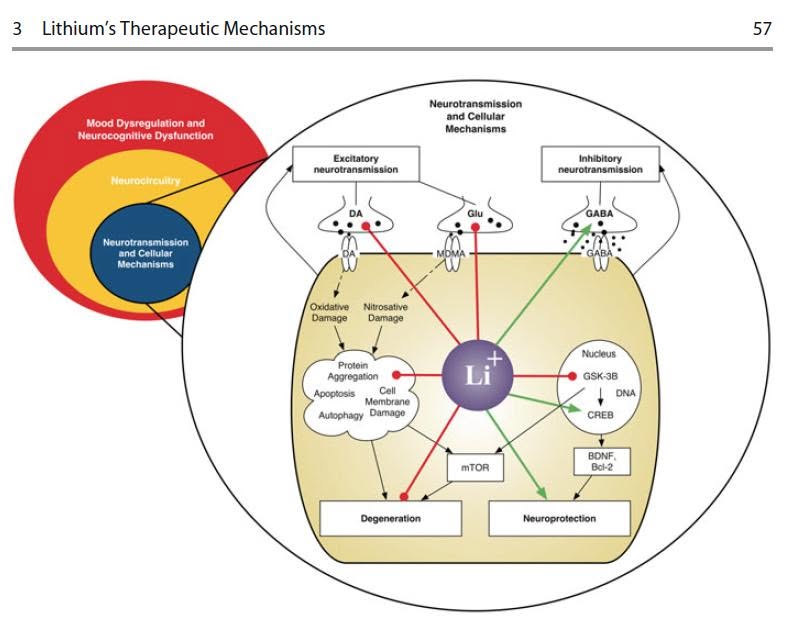
One correction to the text below: Low dose lithium is inhibiting overactive mTOR in the brain, as the figure shows. Not activating it in the figure. This is a good thing. Overactive mTOR in the brain causes neurodegeneration.
#lithiumHD #mtorHD #brainHD #alzheimersHD #dementiaHD
Lithium doesn’t just stabilize mood; it may help the brain protect and repair itself at doses far lower than those used to treat mood disorders.
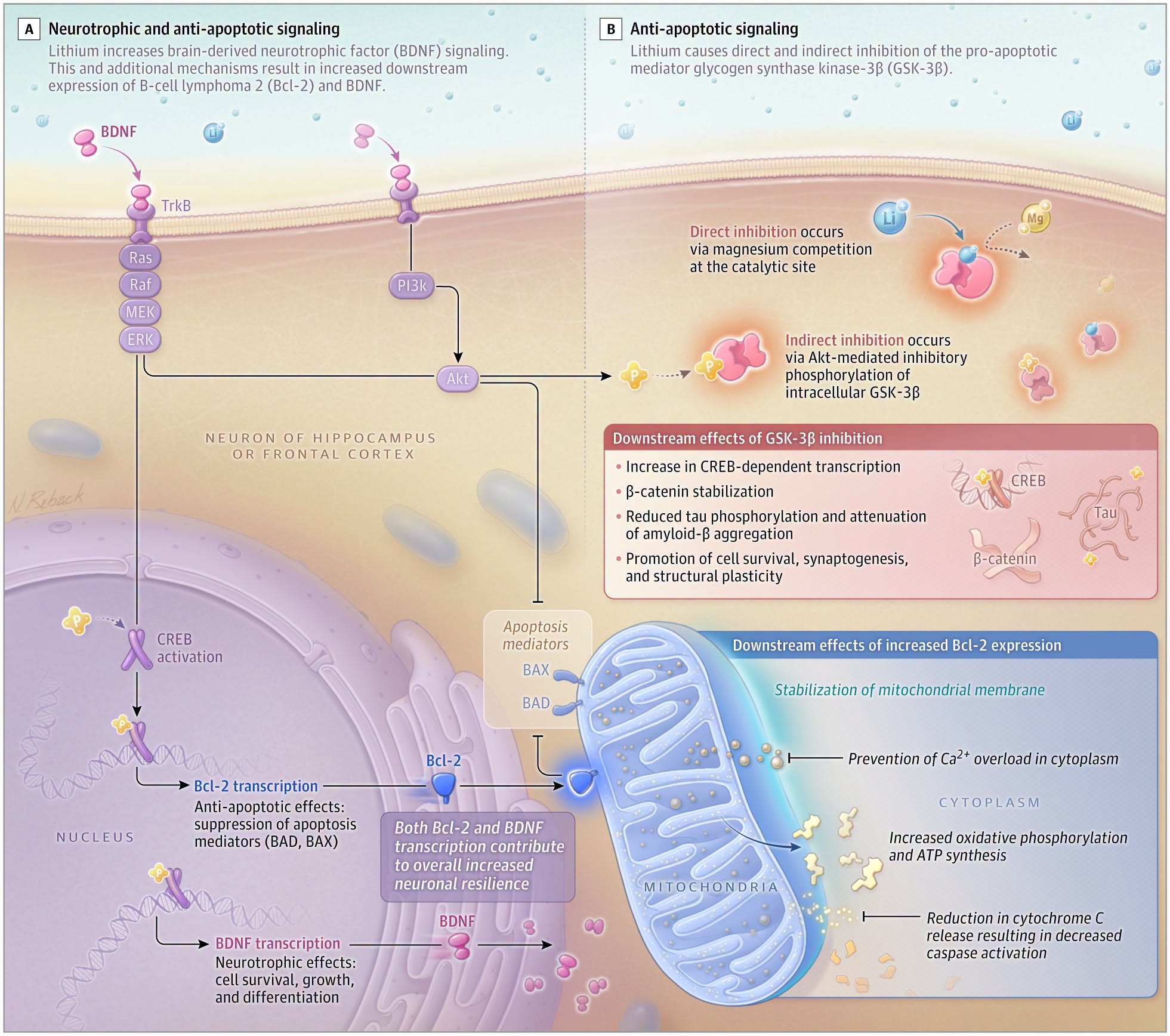
This figure shows how lithium, one of the oldest and most effective treatments for preventing mood episode recurrence, restores balance across brain chemistry and cellular health. It acts on multiple levels at once, from neurotransmitter activity to the molecular machinery that keeps neurons alive.
🟡 Balances brain communication
Lithium quiets overactive excitatory signals (dopamine and glutamate) and strengthens calming inhibitory ones (GABA), helping prevent the rapid mood shifts and overstimulation seen in bipolar disorder.
🟡 Reduces cellular stress
Inside neurons, lithium lowers oxidative and nitrosative stress, limits protein buildup, and improves mitochondrial function—all of which reduce inflammation and protect cells from damage.
🟡 Supports brain growth and resilience
Lithium activates signaling pathways (including BDNF and mTOR) that promote neuronal survival, new connections, and long-term cognitive stability.
Lithium’s benefits extend beyond mood regulation. By stabilizing both neural activity and cellular energy systems, it supports brain longevity—turning a simple mineral into one with profound potential as a tool for preserving mental health.
Microgram (300-1000 mcg) doses of lithium (orotate) have been proposed to support baseline coverage with no adverse events likely at those doses.
Image: The science and practice of lithium therapy