Caffeine metabolism and why coffee hits people differently
1️⃣ Absorption Is Fast
Caffeine is absorbed in the stomach & small intestine, peaking in blood within 30–60 min.
💡 why that morning espresso kicks in quick.
2️⃣ The Liver Is the Gatekeeper
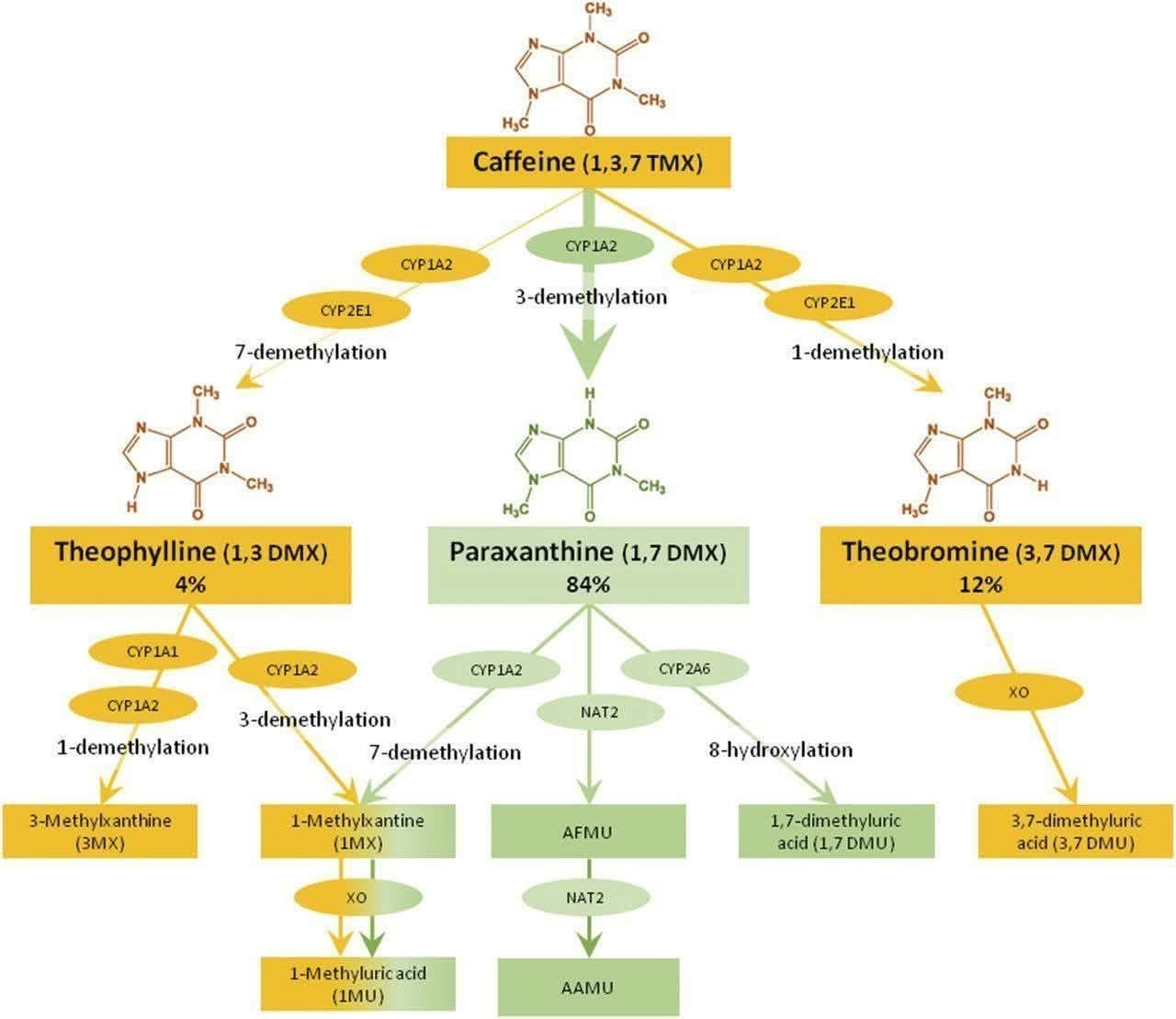
CYP1A2 enzyme (a liver detox enzyme) breaks caffeine down.
💡 Some people have a “fast” version, others a “slow” one.
3️⃣ Three Metabolites Dominate
Paraxanthine → boosts alertness, fat metabolism.
Theobromine → widens blood vessels (and is in chocolate).
Theophylline → relaxes airways (like old asthma drugs).
4️⃣ Genetics Decide Your Buzz
Fast metabolizers clear caffeine quickly (need more cups).
Slow metabolizers keep caffeine in their system for hours (jitters, insomnia).
5️⃣ Lifestyle Tweaks It
Smoking speeds caffeine breakdown.
Pregnancy & certain meds slow it.
💡 Same coffee, different effects.
6️⃣ Half-Life Matters
Caffeine’s half-life = ~5 hours, but in slow metabolizers it can stretch to 9+.
💡 That 3 p.m. latte may still be in your bloodstream at midnight.
7️⃣ Tolerance Builds
Regular caffeine users adapt at the receptor level, needing more to feel the same effect.
💡 Why quitting leads to headaches & fatigue.