I’m not a doctor, and this isn’t medical advice. This is my personal philosophy, built through countless hours of staring at research papers and then testing the ideas on myself.
I’m writing this because I believe most modern advice around Type 2 diabetes prioritizes comfort and adherence over what’s actually effective. The goal is usually long-term “management,” often with escalating medications, rather than aggressively pursuing reversal. That approach may be easier to follow, but it leaves the underlying metabolic dysfunction largely untouched.
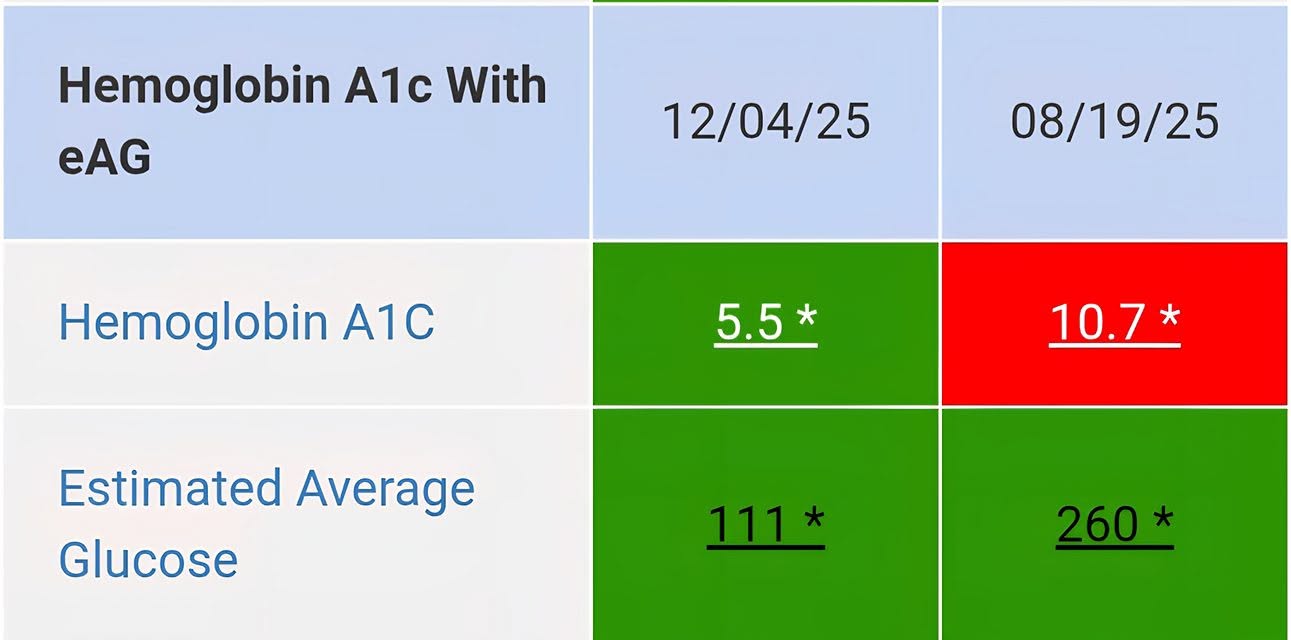
I dropped my A1C from 10.7 (Severe uncontrolled hypoglycemia) to 5.5 (Under even the pre-diabetes threshold) in about four months. It wasn’t easy. It wasn’t comfortable. And it didn’t come from walking more and eating more fiber. It came from treating Type 2 diabetes like the disease it actually is.
Here’s how I think about reversal.
First, diet has to force the pathology to unwind. Type 2 diabetes isn’t just high blood sugar. It’s insulin resistance driven largely by fat stored where it doesn’t belong, especially the liver and pancreas. That ectopic fat interferes with insulin signaling and beta-cell function, and it does not disappear at maintenance calories.
Until A1C and fasting glucose normalize, a caloric deficit is required. How aggressive that deficit should be depends on how much excess body fat someone is carrying, but the principle doesn’t change. Carbohydrates need to be limited during this phase to reduce constant glucose exposure. For me, that meant staying very low, roughly under 50 grams per day. Protein intake needs to be high enough to preserve muscle mass, support training, and increase energy expenditure through digestion. I targeted roughly one gram of protein per pound of lean body mass. This isn’t a forever diet, but it is a necessary phase if the goal is reversal rather than lifelong control.
Second, resistance training is non-negotiable, and it cannot be casual. Cardio helps overall health, but cardio alone rarely reverses Type 2 diabetes. Walking doesn’t create the physiological conditions needed to meaningfully improve insulin resistance.
Skeletal muscle is the body’s primary glucose sink. When muscle contracts under high relative effort, it triggers GLUT4 translocation, allowing glucose to be pulled into muscle cells independent of insulin. That matters because it lowers blood glucose without forcing an already dysfunctional insulin system to work harder. Training needs to be challenging and close to failure. That doesn’t mean everyone needs barbells or maximal weights. Machines, partial ranges of motion, controlled tempo, and stable positions all work, especially for people with obesity or mobility limitations. What doesn’t work is staying permanently in low-effort territory. Preserving and building muscle changes the disease. Recomposition matters more than the scale.
Third, hormones matter, whether people are comfortable talking about them or not. Type 2 diabetes and low testosterone often coexist, and they reinforce each other. Low testosterone promotes visceral fat gain and muscle loss, both of which worsen insulin resistance. If labs show true hypogonadism, addressing it under proper medical supervision can remove a major barrier to metabolic recovery. This isn’t about reckless use or ignoring long-term implications. It’s about not pretending hormones are irrelevant when they clearly affect metabolism.
Fourth, GLP-1 medications are tools, not shortcuts. Drugs like tirzepatide have strong evidence for reducing visceral fat, which directly improves insulin sensitivity. That’s why they work so well. The problem isn’t the medication, it’s how it’s often used.
GLP-1s commonly cause loss of lean mass along with fat if resistance training and protein intake aren’t prioritized. Losing muscle makes long-term weight maintenance harder because resting energy expenditure drops, and it makes glucose control harder because there’s less muscle available to absorb glucose through GLUT4-mediated uptake. Used without training, these drugs can improve numbers short-term while setting people up for rebound later. Used alongside resistance training and adequate protein, they can dramatically accelerate fat loss while preserving the tissue that keeps diabetes in remission.
Cortisol is another major factor that gets ignored. Chronic stress, poor sleep, and alcohol increase hepatic glucose output and impair insulin signaling. Some cortisol from hard training is unavoidable and even beneficial. Chronic elevation from lifestyle factors is not. You cannot out-train bad sleep or constant stress.
Medication management matters as numbers improve. Exogenous insulin lowers blood glucose, but it does not fix insulin resistance, and in excess it can reinforce fat storage and worsen the underlying problem. As A1C and fasting glucose come down, medications often need to be reassessed and adjusted to avoid hypoglycemia and to allow insulin sensitivity to improve. This must be done with a physician. Trying to manage this alone is dangerous.
Medical oversight matters throughout this entire process, especially when dealing with hormones, GLP-1s, or changes in glucose-lowering medications. Labs matter, and things can change quickly. The goal isn’t to reject medicine. It’s to work with clinicians who understand that Type 2 diabetes is not necessarily a one-way street.
The uncomfortable truth is this: Type 2 diabetes does not reverse with comfortable solutions. It reverses when energy balance is corrected, muscle is trained hard enough to matter, hormones are addressed when they’re broken, medications are managed intelligently, and sleep and stress are taken seriously.
This isn’t easy.
But it is possible.
And people deserve to know that.