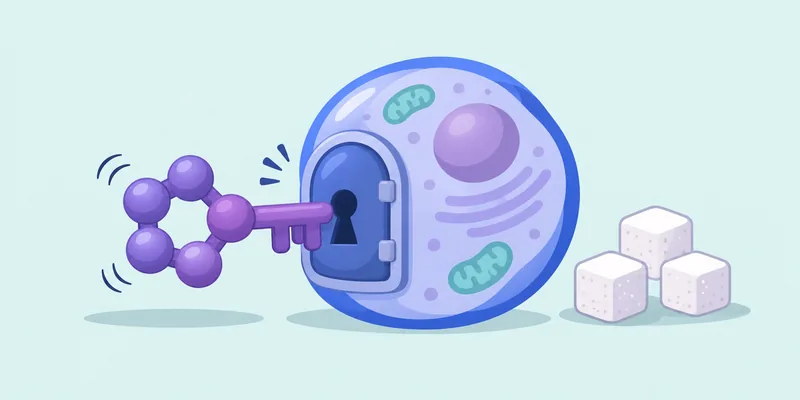
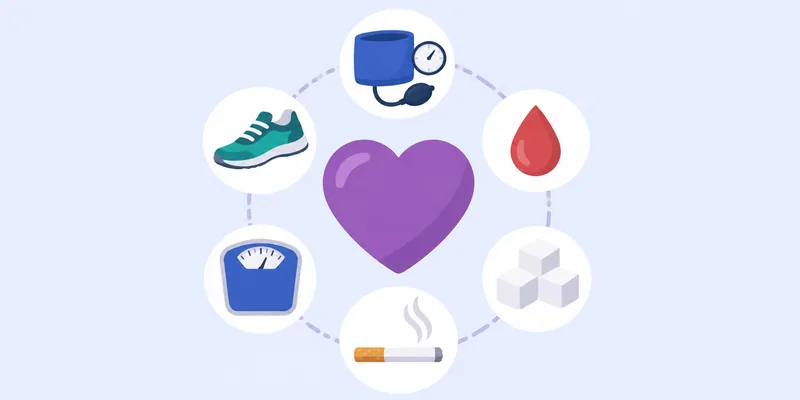
Type 2 diabetes is a condition in which the body stops responding properly to insulin (insulin resistance) and the pancreas eventually cannot make enough insulin to keep blood sugar in check. Prediabetes is the stage before that, when blood sugar is above normal but not yet in the diabetic range. The group's posts treat both as a continuum that starts years before diagnosis and is closely tied to heart and artery health. One shared paper reports that lipid abnormalities, including small HDL particles linked to coronary calcium, are already present in prediabetes1. Another notes that the gut-derived metabolite imidazole propionate is elevated in type 2 diabetes, atherosclerosis and heart failure alike2.
The more hopeful message from the group is that the process can often be reversed. Louis Nervegna, one of the admins, argues that the main driver is excess fat in the liver and pancreas, and that losing enough weight to clear it can bring prediabetes and even established type 2 diabetes into remission34. Gokhan Can, the other admin, is more sceptical of diet fights, noting that when calories are matched the diets tend to converge5.
This summary covers how the disease develops and is detected, what the evidence says about reversal, which lifestyle tools and supplements have been discussed, and how diabetes drugs and statins fit in. Much of the material is Louis's interpretation of the research, and the article says so where that matters.
How insulin resistance and diabetes develop
Insulin resistance comes first
When muscle, liver and fat cells lose sensitivity to insulin, the pancreas compensates by making more of it. Glucose stays normal while the compensation works, so standard screening reads "normal" even though the underlying problem is growing6. The Whitehall II study followed 6,538 British civil servants and reconstructed 13-year trajectories for the 505 who eventually developed type 2 diabetes. Fasting glucose rose linearly from 13 to 3 years before diagnosis, then accelerated, while HOMA insulin sensitivity was about 34% lower in the eventual cases across the entire window. Beta-cell function actually tracked higher than in controls for years, peaking at 92.6% and then collapsing to 62.4% at diagnosis6.
The practical point Louis draws is that fasting insulin, HOMA-IR (a calculated insulin-resistance score) and a 2-hour oral glucose tolerance test with insulin measured at 30, 60, 90 and 120 minutes catch the problem earliest6.
Where the fat goes
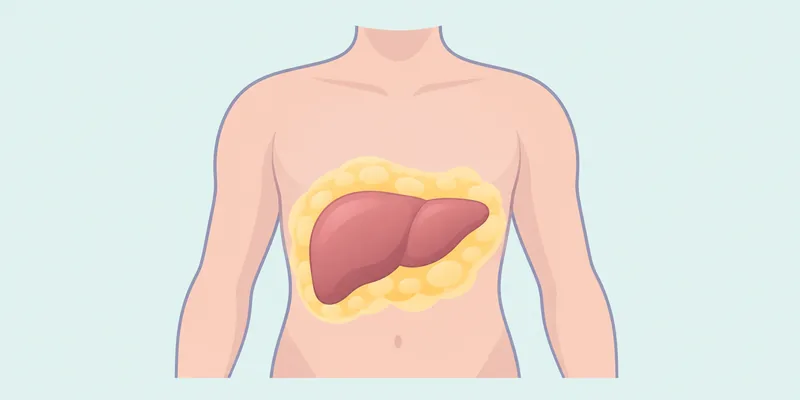
Louis's central model, which he credits to Roy Taylor, is that type 2 diabetes is insulin resistance driven largely by "ectopic" fat stored in the liver and pancreas, which disrupts insulin signalling and beta-cell function10. He calls ectopic liver fat "the true cause of insulin resistance"11.
Visceral fat is the fat packed around the abdominal organs beneath the abdominal muscles. Louis stresses that it can be significant even at a normal weight ("skinny fat"), and says Asians develop insulin resistance at considerably lower levels of visceral fat than Caucasians312.
A 2026 Cell Metabolism paper discussed by Louis proposes that insulin resistance in early type 2 diabetes is an active defence against chronic nutrient excess. Its authors note that drugs that only lower glucose (sulfonylureas, insulin) have not consistently improved long-term outcomes, whereas metformin, SGLT2 inhibitors and GLP-1 agonists often deliver more than their glucose lowering would predict13.
Testing: A1C, glucose monitors and the OGTT
HbA1c is formed when glucose binds irreversibly to hemoglobin in red blood cells without needing insulin or enzymes. Because red cells live roughly 120 days, it reflects average glucose exposure over about three months, weighted toward recent weeks14.
Louis considers the oral glucose tolerance test (OGTT) the definitive test for whether diabetes is truly resolved. His argument is that many people lower their A1C a great deal with low-carb or keto diets while still carrying significant liver and pancreas fat, and would fail an OGTT; he advises scepticism about "cure" claims unless backed by an OGTT9.
Continuous glucose monitors (CGMs) are a contested area in the group:
- A study of 153 children and adults without diabetes who wore a masked CGM for 10 days found the CGM-derived estimate of A1C (the glucose management indicator) ran 0.59% higher than the lab value. That is enough to turn a 5.1% into an apparent 5.7%, so the authors say it should not substitute for lab HbA1c in people without diabetes15.
- Louis argues CGMs mislead most people, who may swap oats and fruit for processed or red meat while the underlying liver fat goes unaddressed. He suggests a Fibroscan (liver elastography) is a better use of money, though a CGM can be useful if you know what you are doing11.
- He notes that protein can lower a glucose spike by driving the pancreas to release more insulin, so lower glucose does not mean lower insulin demand16. In the insulin index studies he cites, beef raised insulin more than equal calories of white pasta or oatmeal, and whey more than glucose or white bread17.
- A 2026 CGM study of elite footballers found average match glucose around 160 mg/dL. Louis argues such transient exercise-driven rises are harmless in insulin-sensitive people and that long-term insulin sensitivity is what matters18.
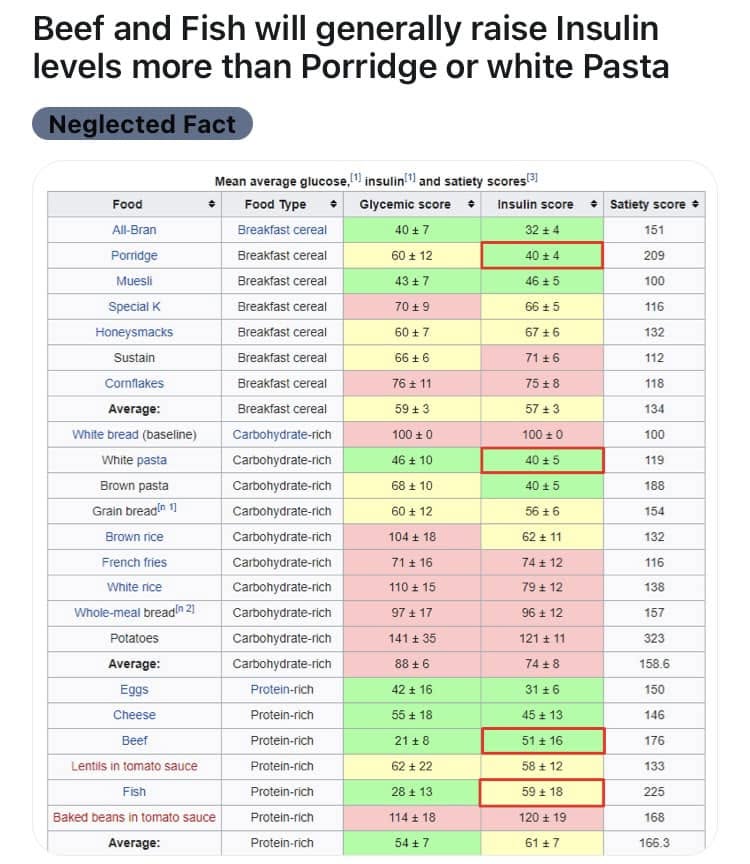
Louis reports an A1C of 4.7 with liver fat under 1% on elastography while eating whole grains at most meals1119. He argues that very low-carb diets rarely push A1C below 5 because carbohydrate restriction makes muscles temporarily insulin resistant ("adaptive glucose sparing" or "physiological insulin resistance") to preserve glucose for the heart and brain, which he says also explains why long-term keto dieters often fail glucose tolerance tests. This is his reasoning from physiology rather than a cited trial19.
Can it be reversed? The evidence
Roy Taylor's trials: clearing liver and pancreas fat
The strongest case the group makes for remission rests on Roy Taylor's randomized trials. Louis's description of the protocol, repeated across several posts:
- An 8-week very-low-calorie diet of liquid meal replacements with normal proportions of carbohydrate, protein and fat (described as about 700 kcal in some posts and 800 kcal in others), plus unlimited non-starchy vegetables or salad greens320.
- Average weight loss of about 15 kg (33 lb), which cleared fat from the liver within a couple of weeks and from the pancreas in about 8 weeks; insulin sensitivity and beta-cell function returned to normal in responders412.
- A transition to a normal-calorie traditional Mediterranean diet for maintenance. If participants regained significant weight, they went back on the very-low-calorie diet for a few weeks20.
He goes further and argues that in some patients this amounts to a cure rather than remission. He describes an advanced case whose pancreas regenerated on imaging over two years with beta-cell function fully restored, with no drugs202122. He says only one randomized trial has ever achieved this and that he stands by the word "cure"9. Note his own caveat: not everyone gets a full response like this patient did2021. These posts are Louis's reading of the trial and one illustrative imaging case, and they do not give remission rates for the whole trial.
Louis also highlights one person's account of A1C falling from 10.7 to 5.5 in about four months, an anecdote rather than a study1022.
Prediabetes remission and where the fat sits
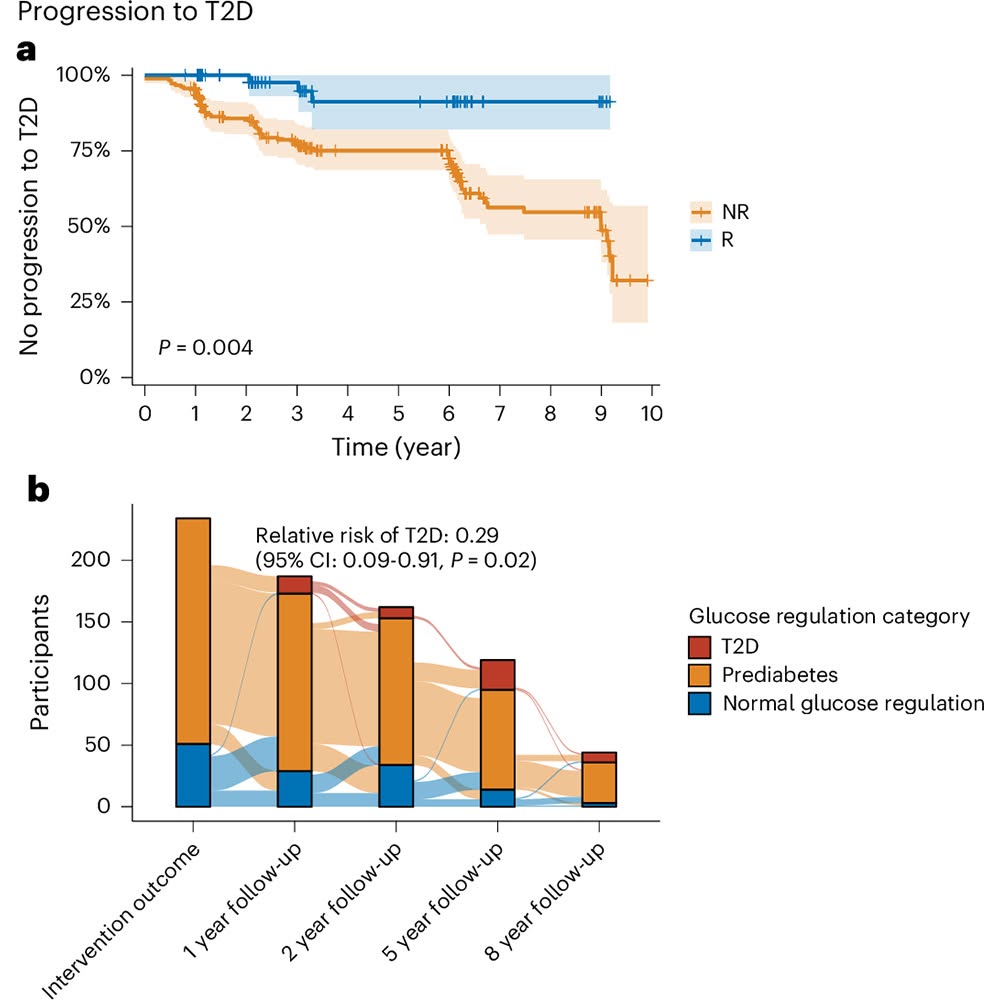
A 2025 Nature Medicine analysis, "Prevention of type 2 diabetes through prediabetes remission without weight loss," found that remission is possible without total weight loss provided fat shifts toward subcutaneous rather than visceral deposits. Louis reads this as meaning that, for most people, reversing prediabetes comes down to losing visceral (largely liver) fat, and that total weight matters less23.
Resistance training
The 2017 Resist Diabetes trial studied sedentary adults aged 50 to 69 with prediabetes. Two sessions a week on standard machines (leg press, chest press, rows, shoulder press) with low-to-moderate weights returned more than a third of participants to normal glucose after 12 weeks. The shared article describes muscle as a "glucose sink" and says a single full-body session can lower insulin and triglycerides within 24 hours7.
Fasting and timing
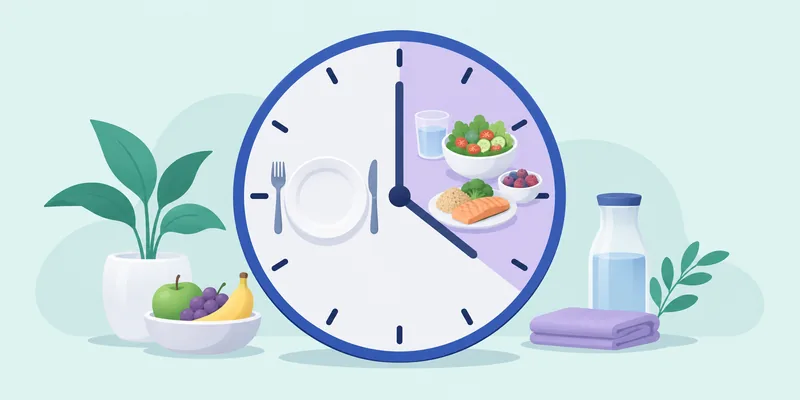
- A randomized crossover trial presented at the EASD meeting in 2024 found that an 8-hour eating window improved time in the normal glucose range and reduced fluctuations in adults at risk of type 2 diabetes, whether the window was early or late. The authors attribute it to the 16-hour fast, and benefits appeared within three days24.
- A small 6-week crossover trial in type 2 diabetes found that delaying breakfast from about 07:00 to mid-morning or midday lowered the post-breakfast glucose response; a 20-minute walk had only a small effect25.
- A trial reported by Healthline in recently diagnosed type 2 diabetes found 5:2 intermittent fasting with meal replacements produced more weight loss over 16 weeks than metformin or empagliflozin (21 lb versus 12 to 13 lb) and a larger HbA1c fall (1.9% versus 1.6% and 1.5%)26.
Which diet? Nuances and controversies
The group does not speak with one voice on diet, and the posts illustrate several tensions.
Low-carb: real early benefit that fades. Gokhan acknowledges low-carb puts more people with type 2 diabetes into remission at 6 months, then lays out the later data. A 2021 BMJ meta-analysis of 23 trials found large improvements at 6 months that diminished by 12, with 12-month remission "sparse" or trivial. A 2020 analysis of 37 trials (3,301 patients) found an HbA1c advantage of -0.17% at 3 months, no difference at 12 months, and +0.23% worse at 24 months. A 2-year calorie-matched trial found about 6.7 kg weight loss in both a ~14% carbohydrate and a ~53% carbohydrate arm, with HbA1c falling 0.6% versus 0.9%. Gokhan concludes the benefit comes mainly from adherence and calorie reduction rather than "metabolic magic"5. The trial's own abstract, however, notes the low-carb arm sustained greater reductions in diabetes medication needs and better glucose stability and lipids, so the picture is not entirely one-sided5.
Louis takes a related but different line: carb elimination without enough weight loss to clear the liver and pancreas "just covers up the problem", and he says people who get large glucose spikes from low-GI foods like steel-cut oats are probably prediabetic or diabetic12. He nevertheless says you can potentially cure diabetes on low-carb or keto provided you lose enough weight9.
A 2026 controlled feeding trial. Petersen et al. in Cell Metabolism provided all meals to 42 adults with obesity, prediabetes and fatty liver until each lost about 10% of body weight on a ketogenic (4% carbohydrate), Mediterranean (50%) or very low-fat plant-forward (70%) diet. Weight loss was matched at 10.1 to 10.4% and all diets improved muscle insulin sensitivity, but the ketogenic diet gave clearly larger improvements in liver metabolic function, liver fat and glycemic control27. Shared by Gokhan, this sits in tension with the "it's all just calories" view.
High-carb, very low-fat. Gokhan questions whether dietary sugar causes diabetes, citing one person who resolved diabetes on a high-carb, very low-fat diet and a blog article. This rests on an anecdote, not controlled trials28.
Fats and glucose control. Louis summarizes a 2016 PLoS Medicine meta-analysis of 102 randomized feeding trials: polyunsaturated fat, mostly omega-6 from vegetable oils, was the only macronutrient linked to lower fasting glucose, lower HbA1c, better HOMA-IR and better insulin secretion capacity, monounsaturated fat did well but less so, and swapping carbohydrate for saturated fat had no appreciable effect on glucose control293031. Gokhan's summary gives the effect sizes for 5%-of-energy swaps, such as carbohydrate to PUFA lowering HbA1c by 0.11%, which are small32. A pooled analysis of 39,740 adults from 20 cohorts found people in the top fifth of blood omega-6 had 43% lower diabetes risk than the bottom fifth3031. A cross-sectional study of about 1,900 people linked higher linoleic acid to lower glucose, insulin and HOMA-IR, though that design cannot prove causation3334.
Supplements and other adjuncts
Almost all of these are small or short trials, and the group's posts report them as modest signals rather than treatments. Several came from supplement-industry or news summaries.
- Taurine. In a 120-person trial of people with type 2 diabetes on a low-calorie diet, 3 g/day for 8 weeks lowered insulin, HOMA-IR, TNF, hs-CRP and the oxidative-stress marker MDA, but did not improve lipids, HbA1c or fasting glucose35. A 2024 meta-analysis of doses from 0.5 to 6 g/day found modest improvements, including fasting glucose -5.9 mg/dL and HOMA-IR -0.6936.
- Psyllium fiber. A shared post summarizing meta-analyses reports LDL -13 mg/dL, and in type 2 diabetes HbA1c -0.97% and fasting glucose -37 mg/dL, with larger effects the higher the baseline glucose and little effect when blood sugar is normal37. Louis separately states psyllium lowers A1C by about 0.5% and blunts post-meal spikes, but that post cites no source38.
- Glycine. A 2008 trial of 5 g three times daily for 3 months in type 2 diabetes lowered HbA1c versus placebo (8.3 to 6.9 in Louis's summary)39.
- Vitamin K. Louis cites a Life Extension summary of three MK-7 trials (90-360 mcg/day for 3 to 6 months) lowering fasting glucose and HbA1c in type 2 diabetes, plus a 2023 meta-analysis linking vitamin K to better fasting glucose and HOMA-IR. The source is a supplement-industry magazine404142.
- Magnesium. In a small 16-week trial of 71 older adults with prediabetes and magnesium deficiency, 360 mg/day lowered fasting glucose modestly (-0.5 mmol/L) but not HbA1c; benefit appears limited to the deficient43.
- Pistachios. A 12-week trial in 120 people with prediabetes found 60 g/day lowered HbA1c by 0.2% and post-meal spikes by 28% after breakfast and 17% after dinner, with fasting glucose unchanged44.
- Weaker evidence. A kombucha pilot reported lower fasting glucose45, and a shared piece praised nuts and seeds without citing studies46. A fecal-transplant trial in 124 people reportedly improved HOMA-IR, but the details could not be verified beyond the post47.
Medications and the heart
Diabetes and prevention drugs
In the MeMeMe randomized trial of 1,442 people with metabolic syndrome followed about 3 years, 1,700 mg/day of metformin reduced new type 2 diabetes by 80%, and by 92% when combined with a Mediterranean diet programme; the diet alone did not help. Incidence of major noncommunicable diseases was 6.7 and 6.9 per 100 person-years in the metformin arms versus 13.3 and 11.3 without it. Gokhan calls it a landmark study, but notes metformin showed no heart disease or cancer benefit8. A review Louis shared says gut bacteria contribute to metformin's glucose-lowering action48.
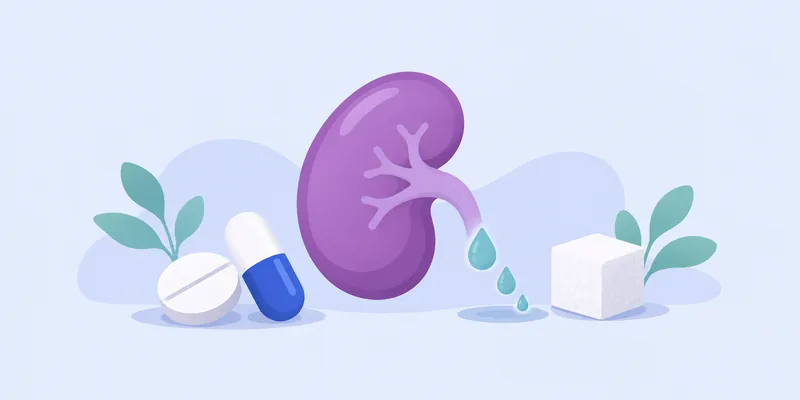
Louis highlights SGLT2 inhibitors, which cause daily urinary glucose loss of roughly 60 to 80 g, as possibly having benefits beyond diabetes, though most evidence comes from people with diabetes49. A JAMA Neurology report linked GLP-1 agonists and SGLT2 inhibitors to lower dementia risk in type 2 diabetes50.
Statins and blood sugar
Because people with prediabetes or diabetes are often candidates for statins, the group discusses the modest glucose effect at length:
- In JUPITER, rosuvastatin cut major cardiovascular events by 44% but raised physician-reported diabetes by 26-27%. A meta-analysis of 13 trials (over 91,000 people) found a 9% relative increase (OR 1.09), 12% higher on intensive versus moderate dosing. Roughly 255 people need to be treated for four years to cause one extra diabetes case, versus 5 to 9 major cardiovascular events prevented. The risk concentrates in people with impaired fasting glucose, obesity, metabolic syndrome or HbA1c above 6%, and is negligible with normal glycemic markers and weight51.
- Louis notes that in JUPITER high-dose rosuvastatin raised A1C by 0.1, bringing diagnosis about 5.4 weeks earlier over 2 years, "small but real"52. A UCLA Health summary says about 9% of statin users see a measurable glucose rise, most often at moderate-to-high doses and in people already near prediabetes53.
- A genetics-based post (written with AI assistance) argues the signal reflects LDL lowering itself, since variants mimicking HMGCR and NPC1L1 inhibition modestly raise diabetes risk54.
- Louis says one physician's A1C rise on rosuvastatin resolved on pitavastatin, a reasonable option for lower-risk people sensitive to glucose effects, but rosuvastatin has stronger large-trial evidence in high-risk patients, so switching should not be taken lightly55. He concludes the benefits of statins in diabetes far outweigh the small loss of insulin sensitivity1.
What this means for you
These points reflect what the group's admins and the shared research describe; they are not personal medical advice, and the group's admins would recommend discussing any plan with your doctor.
- Ask about early detection: fasting insulin, HOMA-IR and a 2-hour OGTT with insulin can show insulin resistance years before A1C6.
- Treat fat loss as the main lever. Louis's guidance is to lose the visceral and liver fat, on average about 30 lb, by any diet you can sustain, with drugs such as GLP-1 agonists if needed323.
- If you have significant diabetes, very-low-calorie approaches with Mediterranean maintenance have the most explicit trial backing in the group, but they warrant medical supervision420.
- Do not rely on a lower A1C alone as proof of remission; Louis suggests confirming with an OGTT9.
- Add resistance training; two machine-based sessions a week reversed prediabetes in over a third of participants in one trial7.
- Choose an eating pattern you can keep; low-carb's edge fades by 12 months in pooled trials5.
- Treat supplements as optional extras with modest effects43.
- If a statin is recommended and your glucose is borderline, the group's discussion suggests the heart benefit outweighs the small glucose effect5155.
Frequently asked questions
Does a normal A1C rule out insulin resistance?
No. A1C reflects roughly three months of glucose exposure14, and Louis argues insulin resistance shows up years earlier6.
Is type 2 diabetes reversible?
The group argues yes for many people. Louis cites trials in which a very-low-calorie diet cleared liver and pancreas fat and restored beta-cell function, with some patients showing pancreas regeneration on imaging, but he acknowledges not everyone responds fully421.
Do I need to be overweight to have prediabetes?
No. Louis notes that normal-weight people can carry too much liver or visceral fat, and a Nature Medicine analysis found prediabetes remission depended on fat distribution rather than total weight loss1223.
Does a low-carb diet cure diabetes?
It can lower A1C quickly, but Louis says that on its own it manages symptoms rather than curing the disease unless enough fat is lost from the liver and pancreas, and Gokhan shows the HbA1c advantage fades by 12 months in pooled trials59.
Do statins cause diabetes?
They modestly increase new diagnoses, mostly in people already at metabolic risk, and the group's admins judge the heart benefit to outweigh this5152.