The evidence that metformin protects against long covid is impressive.
Two large randomized trials, COVID-OUT and ACTIV-6, have both independently shown a big reduction in risk.
#metforminHD #covidHD #longcovidHD #metformincovidHD #covidoutHD #activ6HD
The Surprising Diabetes Drug That Could Prevent Long COVID: 5 Key Facts
For millions, the fear of COVID-19 isn't just about the acute illness but the lingering, debilitating symptoms of Long COVID. As researchers race to find solutions for this widespread condition, a surprising candidate has emerged from an unexpected place: the pharmacy shelf for diabetes treatment. Recent research has shown that metformin, a common and inexpensive medication, has significant promise in preventing Long COVID. Here are five surprising facts about this potential breakthrough.
1. A Diabetes Drug’s Secret History as a Virus Fighter
Using a medication primarily known for treating type 2 diabetes to fight an acute viral infection might seem strange, but the idea isn't new. The drug family that metformin belongs to, biguanides, was first explored for use against viruses and malaria around the 1940s. While other biguanides were sidelined due to safety concerns, metformin was eventually approved for diabetes because of its superior safety profile. Decades later, it was the drug’s underlying properties—the ability to cool inflammation and regulate the body's own immune response—that put this old diabetes drug back on the radar of virologists in the 2000s, long before COVID-19 appeared. This historical context provided a solid rationale for testing it against SARS-CoV-2.
2. The Evidence Isn't Just One Study—It's Four
The case for metformin as a Long COVID preventative isn't based on a single, isolated finding but on a consistent and growing body of evidence. This is powerful because it combines the "gold standard" of medical research with crucial real-world validation.
Randomized controlled trials (RCTs), which are the best way to prove cause-and-effect, produced compelling results:
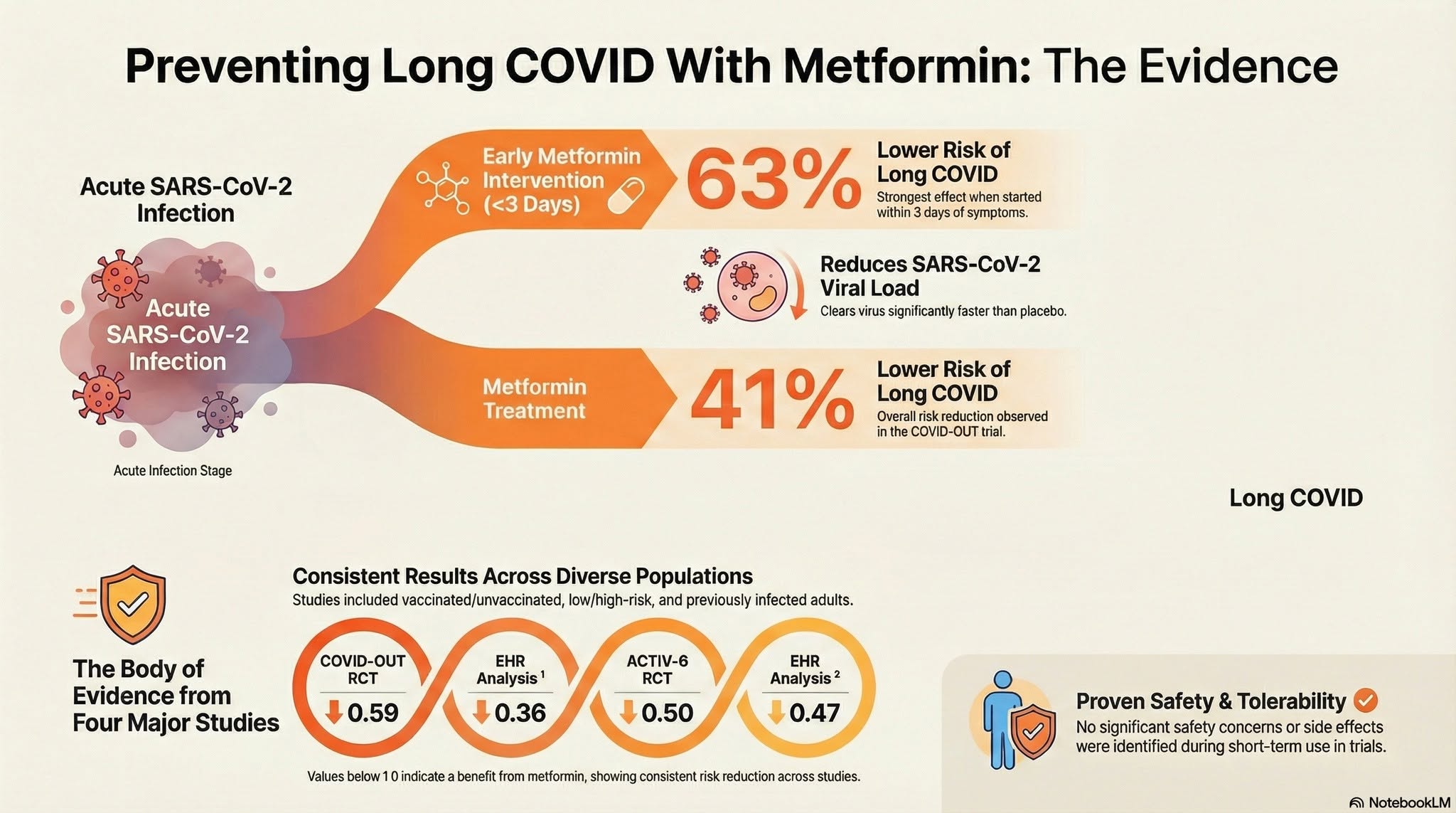
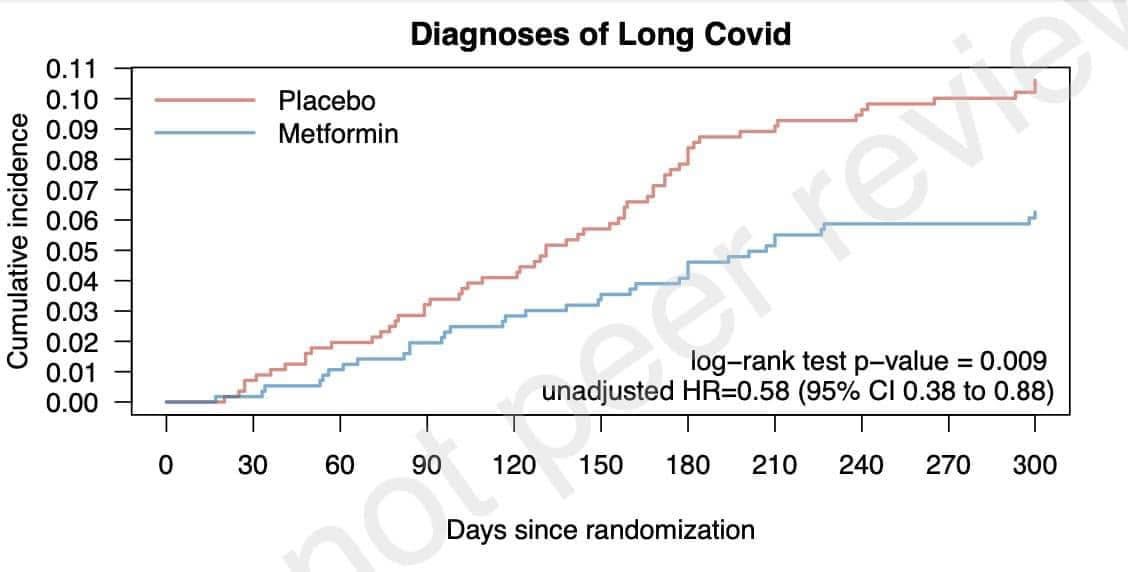
- The COVID-OUT trial found that participants who took metformin had a 41% lower risk of a Long COVID diagnosis (Hazard Ratio of 0.59). The benefit was even more pronounced for those who started the drug within three days of symptom onset, who saw a staggering 63% risk reduction.
- The ACTIV-6 trial confirmed these findings in an even broader population. Crucially, it included people with a normal Body Mass Index (BMI) and those with prior COVID-19 infections, answering the key question of whether the drug could work for a wider range of individuals. It found a nearly identical risk reduction (Risk Ratio of 0.50).
These two major trials were then validated by two separate electronic health record (EHR) analyses, which provide real-world evidence from vast patient populations. These analyses found risk ratios of 0.36 and 0.47, respectively. Across all four studies, the effect was remarkably consistent, with all figures indicating a clear benefit from metformin (all figures below 1.0 indicate a beneficial effect). This robust body of evidence, which included vaccinated and unvaccinated people during the Omicron wave, strengthens the case for its widespread use.
3. It's Inexpensive, Widely Available, and Surprisingly Safe
A common concern is whether it's safe to take a diabetes medication without having diabetes. According to the research, the short-term use of metformin during an acute COVID-19 infection is remarkably safe. Both the COVID-OUT and ACTIV-6 trials found no significant safety concerns. Specifically, metformin did not cause clinically significant gastrointestinal side effects.
Perhaps most surprisingly, the ACTIV-6 trial found that there were fewer episodes of participant-reported hypoglycemia (low blood sugar) in the metformin group (2 episodes) than in the placebo group (4 episodes). In other words, participants taking a placebo were ironically more likely to report low blood sugar than those taking the actual diabetes medication, underscoring the drug's safety in this context. These findings, combined with the fact that metformin is low-cost, widely available, and does not require monitoring during short-term use, make it an incredibly practical potential treatment.
4. The Clever Way Researchers Defined "Long COVID"
One of the biggest challenges researchers faced in 2021 was how to define and track Long COVID, a condition whose symptoms and official definition were still evolving. The team behind the COVID-OUT trial devised a simple and practical solution. They asked participants a single, direct question: "Have you been told by a medical provider that you have long COVID?"
This clever approach allowed them to capture the diagnosis as it was happening in real-world clinical practice by community clinicians who were not involved in the study. It also meant the diagnosis could be verified through medical records and, most importantly, the method remained valid and effective even as the official definition of Long COVID continued to change.
5. Repurposing Old Drugs Is a Classic Medical Playbook
Finding a new use for an old drug is not an anomaly; it's a classic strategy in medical innovation. The story of metformin for Long COVID fits into a long history of therapeutic repurposing. A landmark example occurred in the 1950s when iproniazid, a drug originally developed to treat tuberculosis, was found to have mood-lifting effects. Its subsequent repurposing for depression is considered the origin of modern psychopharmacology. This long-standing practice was famously summarized by the physician William Osler:
“The young physician starts life with 20 drugs for each disease, and the old physician ends life with one drug for 20 diseases”
The scientific process has delivered a clear and consistent answer from four separate studies: metformin, a drug with a decades-long safety record, significantly cuts the risk of Long COVID. It is inexpensive, globally available, and remarkably safe for short-term use. With such strong evidence for a medication we already have, the critical question becomes: what is the next step to making this a standard part of care for COVID-19?