Metformin, SGLT2 inhibitors, pioglitazone and acarbose were all developed to treat type 2 diabetes, yet the group keeps returning to them for two reasons. Several of these drugs seem to do more for the heart, kidneys and perhaps ageing than their blood-sugar effect alone would predict. Louis Nervegna puts it bluntly: drugs that only lower glucose, such as sulfonylureas and insulin, have not consistently improved long-term outcomes, whereas metformin, SGLT2 inhibitors and GLP-1 agonists produce results that exceed expectations from glucose lowering alone1.
The strength of evidence differs a lot from drug to drug. For metformin, the best human data show clear prevention of diabetes, intriguing signals for dementia and long Covid, and no demonstrated protection against heart attacks or cancer. For SGLT2 inhibitors, the posts lean on mechanisms, with claims for non-diabetic people largely inferred. Pioglitazone and acarbose rest on small trials. Admin interpretations are labelled as such.
This is a summary of what the group has discussed, not medical advice. Each of these drugs has indications, side effects and monitoring needs that belong in a conversation with your own doctor.
Why a diabetes drug matters for heart disease
Insulin resistance (cells responding poorly to insulin), prediabetes and type 2 diabetes raise cardiovascular risk. A recent paper in Cell Metabolism, shared by Louis, proposes that early insulin resistance and mild high blood sugar are not simply a broken system but an adaptive defence against nutrient excess, limiting glucose flow into vulnerable tissues1. Louis's reading is that the same metabolic damage from calorie excess also contributes to other major diseases and to ageing itself, which may be why drugs that address underlying metabolism seem to protect so many organs1.
Louis also notes that age is the single largest risk factor for heart disease, over 10 times larger than almost every other, which is why he follows drugs that might slow ageing89.
The Bale-Doneen protocol that Gokhan shared shows how these drugs are used in a multi-drug preventive clinic. Patients with new insulin resistance, metabolic syndrome or diabetes were started on oral insulin-sensitizing agents, primarily metformin and pioglitazone, alongside statins, blood pressure drugs and anti-inflammatories. In that 2016 community-based cohort, carotid intima-media thickness fell substantially over a median of 3 years10. Because the whole package was used together, that study cannot tell us what metformin or pioglitazone contributed on their own.
Metformin
What it is and how it works
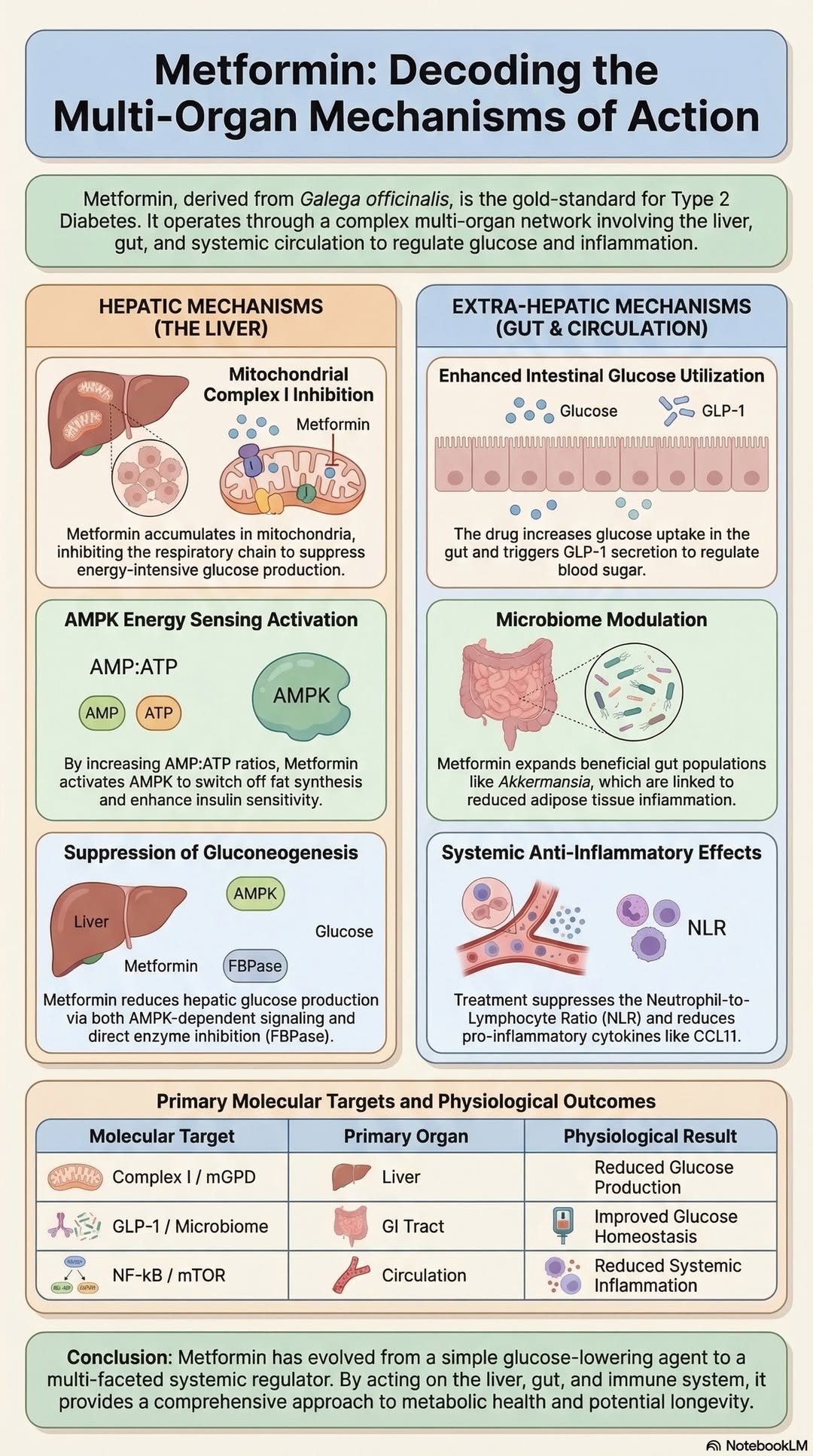
Metformin has been used for more than 60 years as a first-line drug for type 2 diabetes1112. It was long thought to work mainly by reducing glucose output from the liver, and the group has shared several newer findings that make the picture more complicated.
- The brain. A Baylor College of Medicine study in mice found metformin acts on a protein called Rap1 in the ventromedial hypothalamus. Mice engineered without Rap1 in that region did not respond to metformin, although they still responded to other anti-diabetic drugs1113. A tiny dose placed directly in the brain lowered blood glucose1314. This is mouse research11.
- The gut. A Nature Metabolism study reported in Scientific American found that metformin makes gut cells consume more glucose, turning the gut into a "sugar sink"15. Separate posts describe changes in gut bacteria, including more Akkermansia, as part of the glucose-lowering effect, though much of that evidence is from animals and organoids and no bacterial product has replaced metformin in large human trials1617.
- Mitochondria and AMPK. Louis explains that metformin mildly inhibits mitochondria, which switches on energy-sensing defence pathways such as AMPK. He calls this mitohormesis (a mild stress that triggers protective responses) and says it is why metformin acts like a calorie-restriction mimetic1819. He says the effect is mild and hormetic in human cells at normal doses, a claim he attributes to the current scientific understanding rather than to a single trial1520. The Scientific American article itself quotes the researcher noting that metformin inhibits mitochondria reversibly and that this may be beneficial when it happens in the right cells for the right length of time15.
Louis argues that statins act partly through the same mitohormesis mechanism, citing a 2006 Circulation study showing statins activate AMPK and endothelial nitric oxide synthase1821 and a 2012 European Heart Journal review on mitohormesis as a pleiotropic statin effect19. He says the dose matters, since the same substance that is protective at normal doses could be toxic at very high doses1920. This is his interpretation, and it should be read as a hypothesis.
What the human trials show
Preventing diabetes. The MeMeMe randomized trial in 1,442 adults aged 50-79 with metabolic syndrome tested 1,700 mg/day of metformin with or without a Mediterranean diet over about 3 years. Major noncommunicable diseases occurred at 6.7 per 100 person-years with metformin plus diet, 6.9 with metformin alone, 13.3 with placebo plus diet and 11.3 with placebo alone. The difference was fully explained by type 2 diabetes, which was 80% lower with metformin and 92% lower with metformin plus the diet2. Gokhan called it a landmark study, but noted that metformin showed no heart disease or cancer prevention, which may surprise the longevity community, and that the Mediterranean diet intervention failed to show an effect in this trial2.
The Diabetes Prevention Program. Louis shared a report on the 20-plus year follow-up (DPPOS) of the Diabetes Prevention Program, in which people at high risk of diabetes were randomized to lifestyle change, metformin or placebo for an initial 3.2 years7. In an analysis of 1,483 participants, dementia was eventually diagnosed in 1.9% of the metformin group, 4.2% of the intensive lifestyle group and 3.5% of the placebo group4. The post reports 60-62% lower odds of adjudicated dementia in the metformin group and modestly better memory over time7.
Both posts urge caution. After the randomized phase the study became open-label, and many people in the placebo group later developed diabetes and were prescribed metformin, which blurs the comparison7. The researchers quoted say the result is not conclusive, the mechanism is unknown, and it does not establish metformin as a dementia treatment47. The same follow-up reportedly found that metformin and intensive lifestyle reduced the long-term development of type 2 diabetes by 17% and 24% respectively and protected against small-vessel (eye and kidney) complications, but metformin had minimal impact on cancer and did not significantly lower heart attacks or strokes7.
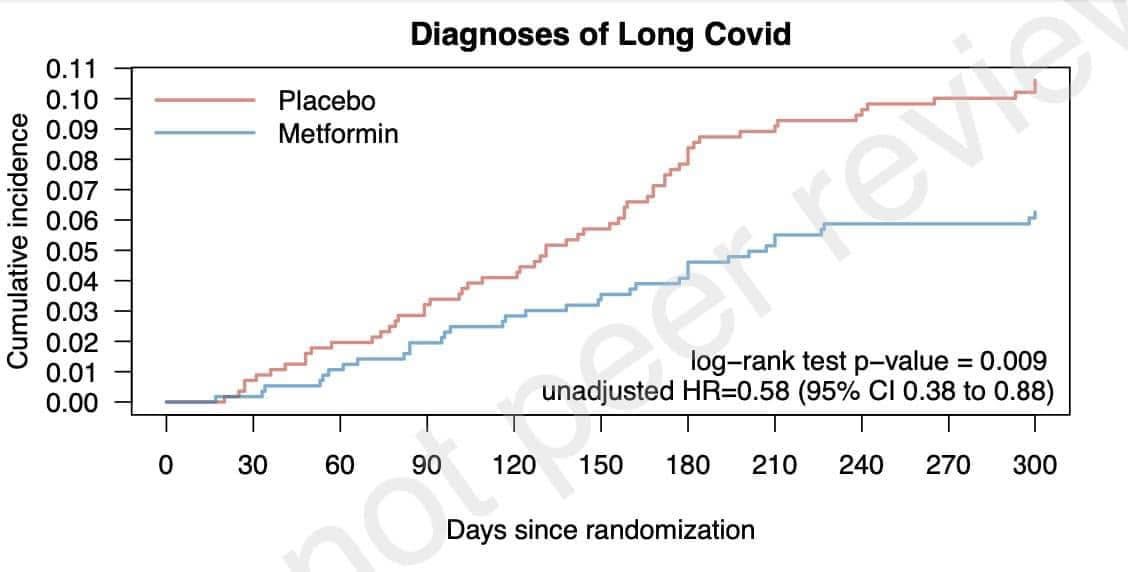
Long Covid. In the COVID-OUT randomized trial of over 1,000 mostly non-diabetic outpatients with a median age of 45, metformin lowered long Covid risk by 42% relative to placebo (4.3% absolute), and by 63% when started within 4 days of symptoms. The treatment ran for 14 days at doses rising to 500 mg in the morning and 1,000 mg in the evening. Ivermectin and fluvoxamine did not prevent long Covid in the same trial3. A later analysis reported a 3.6-fold lower SARS-CoV-2 viral load with metformin and a 58% lower odds of hospitalization or death through 28 days22. Louis also notes that a second large randomized trial, ACTIV-6, independently showed a big reduction in long Covid risk23.
Other small or early studies in non-diabetic people. Louis listed six benefits shown in randomized trials of non-diabetics: long Covid, Covid outcomes, periodontal disease, age-related muscle loss, knee osteoarthritis pain and oral pre-cancer lesions, and he suggests ageing as the common thread24. The details, where the posts give them, are modest:
- A small randomized trial found metformin helped prevent periodontal disease in non-diabetic people25.
- A small University of Utah trial found older adults on metformin during bed rest had less muscle atrophy, less fibrosis during recovery and fewer senescence markers in biopsies26.
- A JAMA 2025 trial reported reduced knee osteoarthritis pain at 6 months in people with overweight or obesity27.
- In a single-arm phase IIa trial (no control group) of 23 evaluable people with oral pre-cancer lesions, 12 weeks of metformin up to 2,000 mg/day produced a 60% histological response but only a 17% clinical response28.
A Medscape review shared by Louis captures the state of play: many trials are underway, and it is unclear whether the benefits come from glucose lowering and insulin sensitizing or from other actions such as mTOR inhibition29.
Ageing: monkeys and the TAME trial
A 40-month Cell study gave adult male cynomolgus monkeys metformin and reported slower multi-tissue ageing clocks, with a roughly 6-year regression in brain aging, preserved brain structure and better cognition, partly through Nrf2 activation in neurons30. Nature's news coverage described it as a small study and quoted a geroscientist who was not involved31. A review in Lab Animal also described improved health parameters in aged male monkeys32.
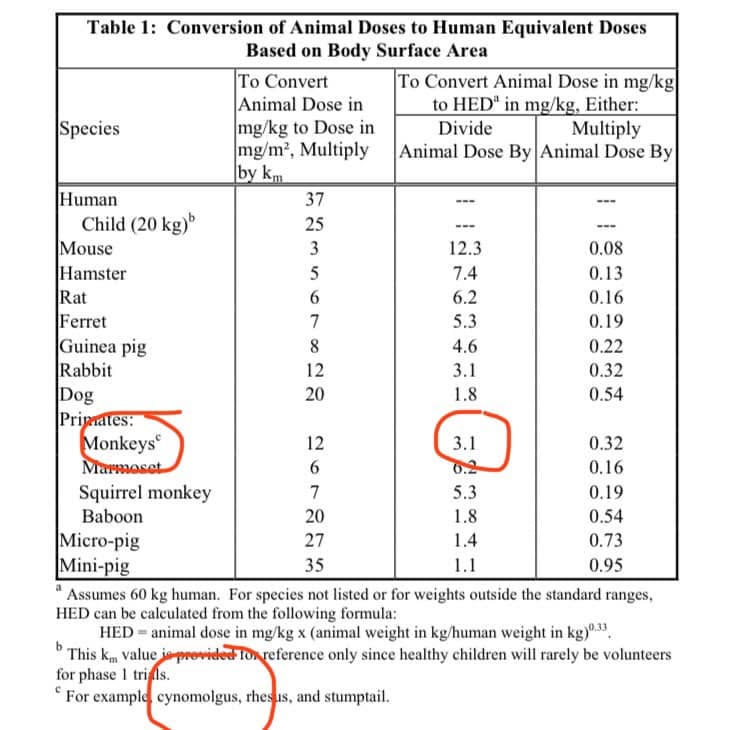
Two caveats are worth keeping in mind. Only males were studied, a point even the repost remarks on30. And on dose, Louis calculated from the paper's 20 mg/kg/day that, using the FDA allometric scaling factor of 3.1, the equivalent human dose is about 450 mg for a 70 kg person, roughly a quarter of the 2 g typically used in diabetes33. This is his own arithmetic from the paper, not a dosing recommendation.
The planned TAME trial (Targeting Aging with Metformin) is designed to test whether metformin slows ageing in humans24. Separately, the ARPA-H PROSPR programme awarded $144 million to seven teams to prepare the first phase 3 ageing trials, which would test rapamycin, an SGLT2 inhibitor and semaglutide. The central obstacle is the lack of a validated ageing biomarker that regulators will accept8.
Where metformin has fallen short
- Heart disease and cancer prevention. MeMeMe and the DPPOS follow-up showed no clear reduction in cardiovascular events or cancer27.
- Cancer treatment. A Knowable Magazine article shared by Louis reports that large clinical trials of metformin in prostate and breast cancer did not confirm early hopes34.
- Exercise. Earlier shorter trials suggested metformin might blunt training gains. The 6-month DEMFOS randomized trial in 114 older adults with obesity (mean age 72.8) found that adding metformin to an intensive exercise and diet program neither impaired nor improved strength, aerobic capacity or mobility. The accompanying editorial said the balance of evidence does not support a meaningful effect of metformin on physical function or frailty35.
- Weight and fasting. Gokhan lists metformin as giving about 5.6% weight loss, a small effect compared with tirzepatide at 22.5% and semaglutide at 17%36. In a 16-week trial in newly diagnosed type 2 diabetes, 5:2 fasting with meal replacements produced more weight loss and a larger HbA1c fall (-1.9%) than metformin (-1.6%) or empagliflozin (-1.5%)37.
Safety and common misconceptions
Lactate. Some people argue metformin is harmful because it mildly raises lactate. Louis counters that intense exercise also raises lactate and that physiological lactate may be beneficial, and he names Peter Attia as one who has repeated the lactate concern, calling it "nonsense"383940. He points to a 2026 EMBO Molecular Medicine study in prostate cancer patients, in which metformin raised Lac-Phe, an exercise-linked metabolite associated with appetite and weight control41. That study did not examine whether lactate itself is safe, and the argument remains Louis's position.
Vitamin B12. A shared study reported that metformin significantly lowered vitamin B12 without affecting other vitamins, with unclear mechanisms, reinforcing the recommendation to check B12 in people taking it42.
Pregnancy and conception. Two Harvard T.H. Chan School of Public Health studies found no higher risk of birth defects in infants born to men or women taking metformin43.
Side effects. A shared post notes that gastrointestinal side effects remain a practical issue for people taking metformin44. Harvard Health, quoted by Louis, calls its other potential benefits a welcome bonus for people who need it for diabetes45.
SGLT2 inhibitors
What they are
SGLT2 (sodium-glucose cotransporter 2) inhibitors block the kidneys from reabsorbing glucose, so sugar is lost in urine. The posts name empagliflozin (Jardiance), dapagliflozin (Farxiga), canagliflozin (Invokana), ertugliflozin (Steglatro) and bexagliflozin (Brenzavvy)5. A physician's article that Louis shared estimates that users excrete about 60-80 g of glucose per day, or 240-320 calories5, and another post puts it at up to 100 g per day6.
What the group's posts say they do
- Heart and kidneys. A mechanism summary shared by Louis says these drugs improve endothelial (blood vessel lining) function, reduce macrophage infiltration and inflammatory mediators such as TNF, IL-6 and MCP-1, reduce epicardial fat and dampen inflammasome signalling, and protect the kidneys through lower inflammation46.
- Early inflammation signal. A small Circulation pilot study led by Vanderbilt found empagliflozin lowered monocyte-platelet aggregates, clusters of immune cells and platelets linked to vascular damage, within two weeks. The authors say further research is needed to link this to long-term outcomes47.
- Body composition. A systematic review and meta-analysis of randomized trials in Endocrine Practice found patients lost a little over 7 lb of fat mass versus controls with no reduction in fat-free mass, which the sharing physician reads as suggesting no muscle-loss penalty48.
- Heart failure in genetic cardiomyopathy. A Nature Medicine study of more than 12,000 adults with type 2 diabetes found dapagliflozin associated with lower heart failure risk in carriers of cardiomyopathy-related gene variants. The "8-fold" figure comes from a news summary, so treat it cautiously49.
- Prostate cancer. A JAMA Oncology analysis found SGLT2 inhibitor use in men with prostate cancer on hormone therapy associated with lower treatment failure and delayed progression, which is an association, not a trial result6.
Ageing and the evidence gap
Louis shared a physician's argument that SGLT2 inhibitors may reduce the risk of heart disease, cancer and dementia, improve metabolic flexibility and even extend lifespan. The author's own caveat is that most research comes from people with diabetes and that benefits in non-diabetics are inferred from mechanisms5. Louis frames the class as possibly slowing ageing itself5. A Substack teaser he shared goes further, calling two diabetes drugs the best-proven longevity medicines, but only the teaser is available and the claim is that author's own50.
The cautious reading is that the benefit in people with diabetes is the best-supported part, as one sharing physician describes "profound heart and kidney benefits" there48, while use in healthy non-diabetics is a reasoned extrapolation. PROSPR's planned ageing trial includes an SGLT2 inhibitor, which shows the idea is being tested, not settled8. The physician who takes one off-label says he judges the benefits to outweigh "manageable risks"5; the excerpts do not list those risks, which is one more reason to review them with a prescriber.
Pioglitazone
Pioglitazone is a PPAR-gamma agonist (it acts on a receptor that influences fat and glucose handling) used to improve insulin sensitivity. Gokhan's overview of its effect on plaque draws on several imaging trials51:
- PERISCOPE (2008): 543 people with type 2 diabetes and coronary disease, 18 months, intravascular ultrasound. Percent atheroma volume changed by -0.16% with pioglitazone and rose by +0.73% with glimepiride (p=0.002). Pioglitazone also raised adiponectin and lowered hsCRP, suggesting an anti-inflammatory mechanism.
- Ogasawara 2009: 54 patients, 6 months. Total plaque volume did not change significantly, but necrotic core area fell by 4.6% with pioglitazone versus a rise of 1.1% in controls (p=0.001).
- Christoph 2015: 54 non-diabetic patients with acute coronary syndrome, 9 months of pioglitazone 30 mg. Plaque volume fell by 16.1 mm3 versus 1.8 mm3 with placebo (p=0.02).
Show data
| Pioglitazone | Comparator | |
|---|---|---|
| Percent atheroma volume (PERISCOPE, 543 people, 18 months, vs glimepiride) | -0.16% | 0.73% |
| Necrotic core area (Ogasawara, 54 patients, 6 months, vs controls) | -4.6% | 1.1% |
Gokhan's protocol post also lists low-dose pioglitazone among possible anti-inflammatory tools10. The posts describe imaging endpoints, not heart attacks or deaths, and the trials are small. The material available here does not cover pioglitazone's side effects, so that is an essential topic to raise with a doctor.
Acarbose and berberine
Acarbose blocks the digestive enzyme that breaks down starch in the small intestine. In a small 12-week randomized trial of 30 obese women with PCOS and impaired glucose tolerance, all three treatments (low-calorie diet, metformin, acarbose) reduced abdominal fat and insulin secretion, but only acarbose significantly lowered liver fat, triglycerides and free fatty acids52. Louis notes that acarbose effectively turns much starch into resistant starch, which lowered liver fat in another trial52. Gokhan lists acarbose as giving 3-7.5% weight loss in trials, and describes metformin, acarbose and SGLT2 inhibitors as helpful for small weight loss, with GLP-1 drugs and surgery needed for large, lasting loss36.
Berberine, a supplement often compared with metformin, is poorly absorbed (under 1% reaches the blood), so Louis concludes it works mainly in the gut and differently from metformin53.
Practical guidance: what this means for you
- If you have diabetes, prediabetes or metabolic syndrome, metformin has trial evidence for preventing diabetes (80% lower in MeMeMe), and an SGLT2 inhibitor is a main option the posts discuss for heart and kidney protection. The group's admins would encourage discussing both with your doctor24648.
- Do not expect metformin to prevent heart attacks or cancer on its own. The randomized evidence the group shared has not shown it27.
- Treat ageing, dementia and non-diabetic uses as promising but unproven. The monkey data are in males only, the dementia data are observational follow-up of a randomized trial, and TAME has not reported72430.
- If you take metformin, ask about periodic vitamin B12 checks42.
- If you exercise intensively, the 6-month DEMFOS trial found no blunting of fitness gains by metformin in older adults with obesity, although earlier shorter trials suggested mild blunting35.
- Lifestyle still matters: the DEMFOS editorial calls diet and exercise the gold standard for older adults with obesity35.
- Mouse mechanism studies, media summaries and small pilots are hypothesis-generating rather than conclusive134749.
Frequently asked questions
Does metformin slow ageing in humans?
Not proven. A 40-month study in male monkeys reported slower ageing clocks and a roughly 6-year regression in brain aging30, and human trials in non-diabetics show benefits for some conditions that Louis thinks share ageing as a risk factor24. The TAME trial is designed to test the question directly24.
Could metformin lower dementia risk?
The 20-year DPPOS follow-up is suggestive: 1.9% dementia on metformin versus 3.5% on placebo and 4.2% on intensive lifestyle4. Experts quoted call it the best available evidence short of a dedicated trial, but not conclusive, and the mechanism is unknown7.
Does metformin interfere with exercise?
Earlier shorter trials suggested it can attenuate adaptations to resistance and endurance training. The longer 6-month DEMFOS trial in older adults with obesity found no blunting35.
Are SGLT2 inhibitors only for people with diabetes?
They were designed for type 2 diabetes, and most research is in people with diabetes. A physician quoted in the group takes one off-label on mechanistic reasoning, but he acknowledges the benefit for non-diabetics is inferred rather than proven5.
Is pioglitazone a plaque treatment?
Small imaging trials show lower plaque volume or smaller necrotic cores, including in one non-diabetic acute coronary syndrome study51. The group's posts do not include hard-outcome trials, so it is better viewed as an adjunct that a doctor may consider in selected people with insulin resistance10.