Metformin has antiviral activity against RNA viruses, including Covid (SARS-CoV-2).
The mechanism seems to be suppression of viral protein translation via targeting the host mTOR pathway.
Quoted:
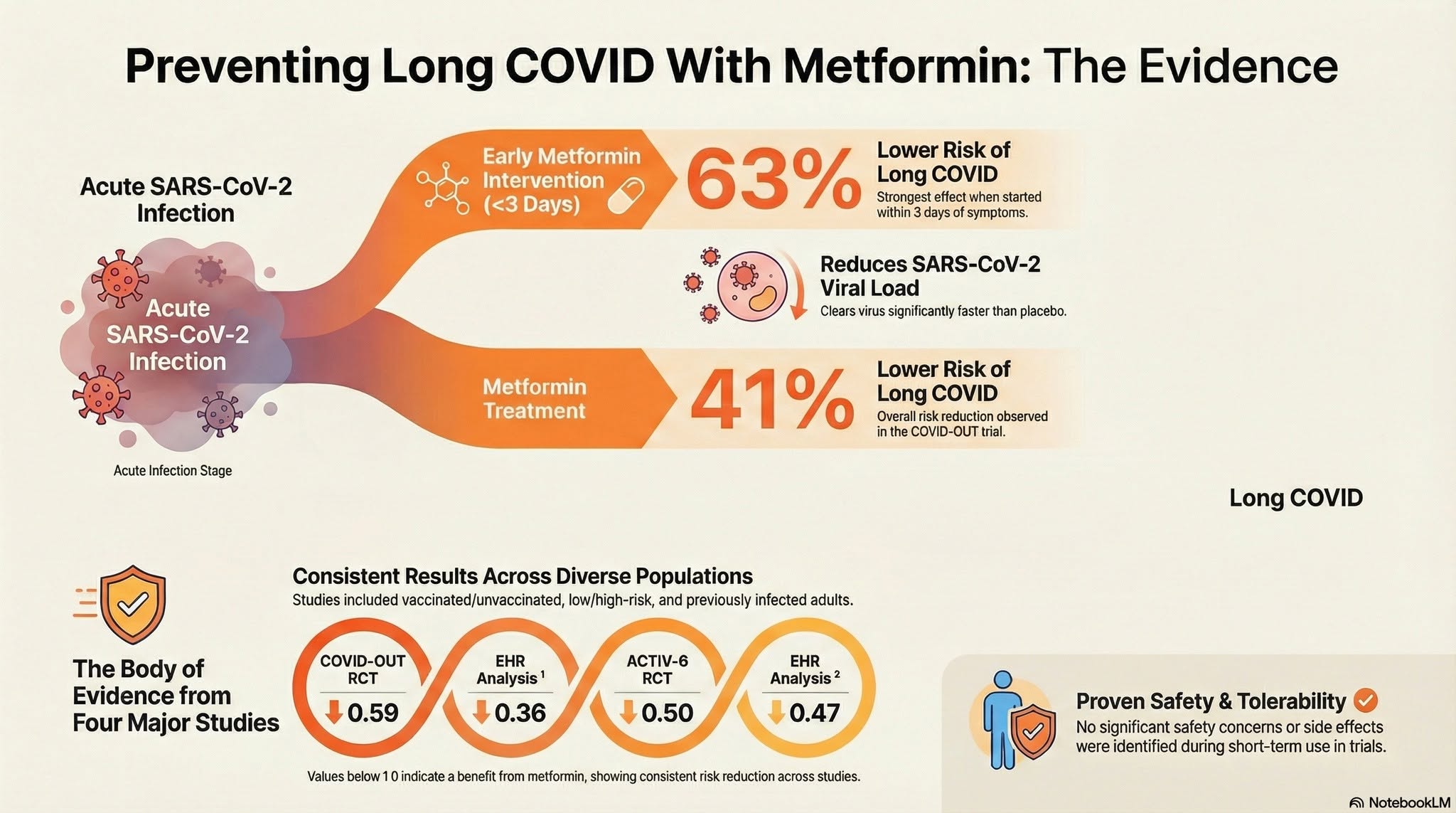
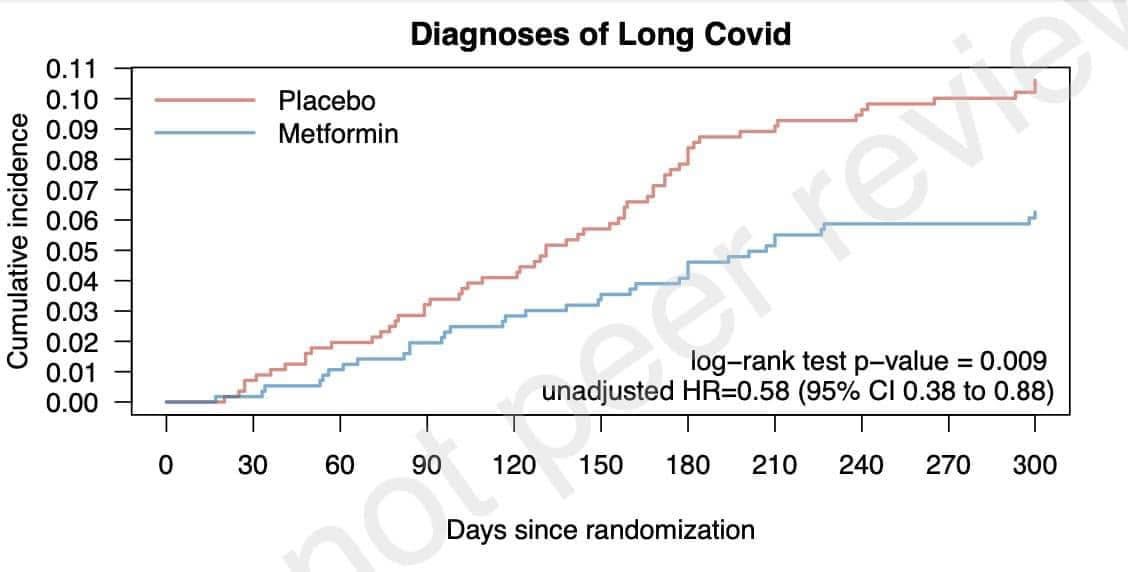
“In the COVID-OUT randomized trial for outpatient coronavirus disease 2019 (COVID-19), metformin reduced the odds of hospitalizations/death through 28 days by 58%, of emergency department visits/hospitalizations/death through 14 days by 42%, and of long COVID through 10 months by 42%.”
“The mean SARS-CoV-2 viral load was reduced 3.6-fold with metformin relative to placebo (−0.56 log10 copies/mL; 95% confidence interval [CI], −1.05 to −.06; P = .027). Those who received metformin were less likely to have a detectable viral load than placebo at day 5 or day 10 (odds ratio [OR], 0.72; 95% CI, .55 to .94). Viral rebound, defined as a higher viral load at day 10 than day 5, was less frequent with metformin (3.28%) than placebo (5.95%; OR, 0.68; 95% CI, .36 to 1.29). The metformin effect was consistent across subgroups and increased over time.”
PaperOxford Academic articleacademic.oup.com#metforminHD #antiviralsHD #covidHD #mtorHD #metformincovidHD #covidoutHD #longcovidHD